
Washington
Is Jaywalking Illegal in Washington? Crossing Rules and Fines
Independently fact-checked against primary sources (last audited October 10, 2026). · 22 primary sources cited on this page. How we verify our legal content
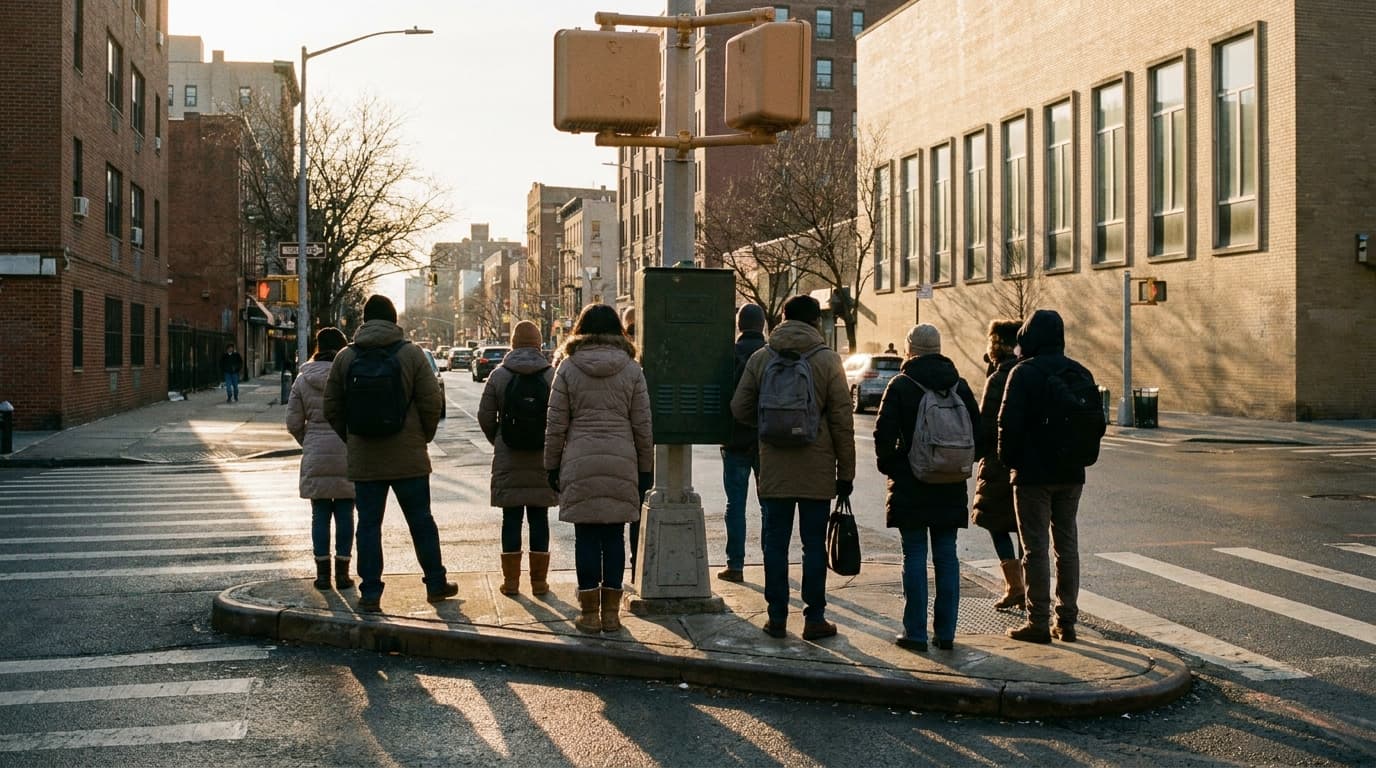
Washington's jaywalking rules are in RCW 46.61.240. A pedestrian crossing a roadway outside a marked crosswalk or an unmarked crosswalk at an intersection "shall yield the right-of-way to all vehicles upon the roadway." Crossing is barred outright between adjacent intersections with operating traffic-control signals (except in a marked crosswalk), diagonally across an intersection unless official devices allow it, and at an unmarked crosswalk where an official sign prohibits it. Pedestrian offenses are civil traffic infractions under RCW 46.63.020, and the state court rule IRLJ 6.2 schedules $33 for an infraction regarding pedestrians, not including the statutory assessments state law adds to it. To compare other states, see our guide to jaywalking laws by state.
Information last verified on 2026-10-10. This article has not been reviewed by a licensed lawyer.
Jurisdiction scope: This article covers Washington state law: the pedestrian sections of the Rules of the Road chapter (RCW 46.61.230 to 46.61.255), the signal sections RCW 46.61.050, 46.61.055 and 46.61.060, shared streets under RCW 46.61.197, the crosswalk definitions in RCW 46.04.160 and 46.04.290, local authority under RCW 46.08.020, limited access highways under RCW 46.61.160, stops and identification under RCW 46.61.021 and 46.61.022, the infraction rules in RCW 46.63.020, 46.63.070 and 46.63.110, the assessments in RCW 3.62.090, and the court penalty schedule in Infraction Rules for Courts of Limited Jurisdiction (IRLJ) 6.2. It does not cover the text of any city or county ordinance, the total amount payable once fees are added, driving-record effects, injury claims after a crash, or the law of other states.
Is jaywalking illegal in Washington?
Mostly, crossing away from a crosswalk in Washington is a duty to yield, not a ban: you may cross under state law, but vehicles go first, and a city or county may add rules (RCW 46.08.020). A few rules are flat bans that apply even when no car is coming, and the signal rules are strict. Any breach is a civil traffic infraction.
| Situation | Washington rule |
|---|---|
| Crossing outside a marked crosswalk or an unmarked crosswalk at an intersection | Allowed if the pedestrian yields the right-of-way to all vehicles (RCW 46.61.240(1)); local ordinances may add restrictions (RCW 46.08.020) |
| Crossing where a pedestrian tunnel or overhead crossing has been provided | The pedestrian must yield the right-of-way to all vehicles (RCW 46.61.240(3)) |
| Crossing between adjacent intersections with traffic-control signals in operation | Only in a marked crosswalk (RCW 46.61.240(4)) |
| Crossing an intersection diagonally | Barred unless authorized by official traffic-control devices (RCW 46.61.240(5)) |
| Crossing at an unmarked crosswalk where an official sign prohibits it | Barred (RCW 46.61.240(6)) |
| Suddenly leaving a curb into the path of a vehicle so close the driver cannot stop | Barred (RCW 46.61.235(2)) |
| Entering the roadway on a steady or flashing DON'T WALK or hand symbol | Barred (RCW 46.61.060(2)) |
| Entering the roadway on a steady circular yellow or yellow arrow, or a steady circular red alone, with no pedestrian signal directing otherwise | Barred (RCW 46.61.055) |
| Walking along a roadway where sidewalks are provided and accessible | Unlawful (RCW 46.61.250(1)) |
| Standing in a roadway to solicit employment or business from vehicle occupants | Barred (RCW 46.61.255(4)) |
| Crossing on a designated shared street | RCW 46.61.240 does not apply (RCW 46.61.240(7)) |
| Walking on a limited access highway (freeway) where the Department of Transportation or a local authority has prohibited pedestrians and posted traffic control devices | Barred (RCW 46.61.160) |
| Soliciting a ride from within a limited access highway right-of-way | Barred unless permission is given and posted by the highway authority (RCW 46.61.255(2)) |
Crossing outside a crosswalk
The basic rule is RCW 46.61.240(1):
"(1) Every pedestrian or personal delivery device crossing a roadway at any point other than within a marked crosswalk or within an unmarked crosswalk at an intersection shall yield the right-of-way to all vehicles upon the roadway."
This is a yield rule. A pedestrian who waits for a gap and lets vehicles pass meets it, unless one of the flat bans below applies or a local rule adds one. Under RCW 46.08.020, "Local authorities may, however, adopt additional vehicle and traffic regulations which are not in conflict with the provisions of this title," so a city or county can add crossing rules of its own.
Limited access highways are different. Under RCW 46.61.160, the Department of Transportation by order, and local authorities by ordinance or resolution, may prohibit pedestrians on a limited access highway; the authority must erect official traffic control devices, "and when so erected no person may disobey the restrictions stated on such devices."
Subsection (2) adds a curb-ramp rule for people with disabilities:
"(2) Where curb ramps exist at or adjacent to intersections or at marked crosswalks in other locations, persons with disabilities or personal delivery devices may enter the roadway from the curb ramps and cross the roadway within or as closely as practicable to the crosswalk. All other pedestrian rights and duties as defined elsewhere in this chapter remain applicable."
Subsection (3) applies the yield duty to anyone "crossing a roadway at a point where a pedestrian tunnel or overhead pedestrian crossing has been provided." It is written as a duty to yield to all vehicles when crossing at street level there.
What counts as a crosswalk
Two definitions matter. RCW 46.04.160 defines the crosswalk at an intersection:
"'Crosswalk' means the portion of the roadway between the intersection area and a prolongation or connection of the farthest sidewalk line or in the event there are no sidewalks then between the intersection area and a line ten feet therefrom, except as modified by a marked crosswalk."
RCW 46.04.290 defines the painted kind: "'Marked crosswalk' means any portion of a roadway distinctly indicated for pedestrian crossing by lines or other markings on the surface thereof."
Under the first definition, an intersection has an unmarked crosswalk even with no sidewalks: it runs from the intersection area to a line ten feet away. That is why RCW 46.61.240(6) matters: a city can close an unmarked crosswalk only with "an official sign" prohibiting the crossing.
Flat bans: signalized blocks, diagonals and signed crossings
Subsections (4) through (6) of RCW 46.61.240 are not yield rules:
"(4) Between adjacent intersections at which traffic-control signals are in operation pedestrians shall not cross at any place except in a marked crosswalk. (5) No pedestrian or personal delivery device shall cross a roadway intersection diagonally unless authorized by official traffic-control devices; and, when authorized to cross diagonally, pedestrians and personal delivery devices shall cross only in accordance with the official traffic-control devices pertaining to such crossing movements. (6) No pedestrian or personal delivery device shall cross a roadway at an unmarked crosswalk where an official sign prohibits such crossing."
Subsection (4) applies only on a stretch between two adjacent intersections where signals are operating. On that stretch, yielding is not enough; the crossing must be in a marked crosswalk.
Where a rule depends on a sign or other device, RCW 46.61.050(2) limits enforcement: "No provision of this chapter for which official traffic control devices are required shall be enforced against an alleged violator if at the time and place of the alleged violation an official device is not in proper position and sufficiently legible or visible to be seen by an ordinarily observant person." A section that does not require a device "shall be effective even though no devices are erected or in place."
Everywhere, RCW 46.61.235(2) adds: "No pedestrian, bicycle, or personal delivery device shall suddenly leave a curb or other place of safety and walk, run, or otherwise move into the path of a vehicle which is so close that it is impossible for the driver to stop."
Shared streets
A 2025 law (2025 c 300) added shared streets. Under RCW 46.61.197, a local authority with procedures for establishing shared streets may designate a nonarterial highway as one, and "Vehicular traffic traveling along a shared street shall yield the right-of-way to any pedestrian, bicyclist, or operator of a micromobility device on the shared street." The statute defines a shared street as "a city street designated by placement of official traffic control devices where pedestrians, bicyclists, and vehicular traffic share a portion or all of the same street." On a shared street, RCW 46.61.240 "does not apply" (RCW 46.61.240(7)), and the walking-along rules in RCW 46.61.250(1), (2) and (4) do not apply either (RCW 46.61.250(6)).
WALK, DON'T WALK and traffic lights
RCW 46.61.230 ties pedestrians to signals: "Pedestrians shall be subject to traffic-control signals at intersections as provided in RCW 46.61.060, and at all other places pedestrians shall be accorded the privileges and shall be subject to the restrictions stated in this chapter." RCW 46.61.050(1) also requires every pedestrian to obey "the instructions of any official traffic control device applicable thereto."
Where pedestrian signals are installed, RCW 46.61.060 controls:
- WALK or walking person symbol (subsection (1)): "Pedestrians or personal delivery devices facing such signal may cross the roadway in the direction of the signal. Vehicle operators shall stop for pedestrians who or personal delivery devices that are lawfully moving within the intersection control area on such signal as required by RCW 46.61.235 (1)."
- Steady or flashing DON'T WALK or hand symbol (subsection (2)): "Pedestrians or personal delivery devices facing such signal shall not enter the roadway. Vehicle operators shall stop for pedestrians who or personal delivery devices that have begun to cross the roadway before the display of either signal as required by RCW 46.61.235 (1)."
The ban covers a flashing hand as well as a steady one, and it has no "if traffic is coming" qualifier. A pedestrian who started on WALK is protected: drivers must stop for anyone who began crossing before the signal changed.
Where there is no pedestrian signal, the ordinary light in RCW 46.61.055 governs pedestrians:
- On green: pedestrians "facing any green signal, except when the sole green signal is a turn arrow, may proceed across the roadway within any marked or unmarked crosswalk" (RCW 46.61.055(1)(c)).
- On steady yellow: pedestrians "facing a steady circular yellow or yellow arrow signal, unless otherwise directed by a pedestrian control signal as provided in RCW 46.61.060 shall not enter the roadway" (RCW 46.61.055(2)(b)).
- On steady red: pedestrians "facing a steady circular red signal alone shall not enter the roadway" unless a pedestrian control signal directs otherwise (RCW 46.61.055(3)(b)).
What Washington drivers owe pedestrians
Washington's driver duty is to stop and stay stopped. RCW 46.61.235(1) provides:
"(1) The operator of an approaching vehicle shall stop and remain stopped to allow a pedestrian, bicycle, or personal delivery device to cross the roadway within an unmarked or marked crosswalk when the pedestrian, bicycle, or personal delivery device is upon or within one lane of the half of the roadway upon which the vehicle is traveling or onto which it is turning. For purposes of this section 'half of the roadway' means all traffic lanes carrying traffic in one direction of travel, and includes the entire width of a one-way roadway."
The duty applies at unmarked crosswalks as well as painted ones, and to drivers turning onto the road. If a person is found to have committed an infraction under that section "within a school, playground, or crosswalk speed zone," the person "must be assessed a monetary penalty equal to twice the penalty assessed under RCW 46.63.110. The penalty may not be waived, reduced, or suspended" (RCW 46.61.235(5)(a)). IRLJ 6.2 schedules failure to yield the right of way at $48; the sections listed for that entry include RCW 46.61.235.
When a vehicle is stopped at a marked crosswalk or at an unmarked crosswalk at an intersection to let a pedestrian cross, "the driver of any other vehicle approaching from the rear shall not overtake and pass such stopped vehicle" (RCW 46.61.235(4)). At a signal, "Vehicle operators turning right or left shall also stop for pedestrians who or personal delivery devices that are lawfully within the intersection control area" (RCW 46.61.055(1)(a)). A driver may not drive into or upon a crosswalk while a pedestrian or wheelchair user using a white cane, dog guide, service animal, wheelchair or power wheelchair is crossing or attempting to cross (RCW 70.84.040).
RCW 46.61.245(1) adds a general duty: "Notwithstanding the foregoing provisions of this chapter every driver of a vehicle shall exercise due care to avoid colliding with any pedestrian upon any roadway and shall give warning by sounding the horn when necessary and shall exercise proper precaution upon observing any child or any obviously confused or incapacitated person upon a roadway." A due-care infraction committed within a school, playground or crosswalk speed zone is assessed at twice the RCW 46.63.110 penalty, which "may not be waived, reduced, or suspended" (RCW 46.61.245(2)(a)).
Walking along the road and roadside solicitation
RCW 46.61.250 covers walking along a road:
"(1) Where sidewalks are provided and are accessible, it is unlawful for any pedestrian to walk or otherwise move along and upon an adjacent roadway."
Where sidewalks are not provided or are inaccessible, a pedestrian must "(a) When shoulders are provided and are accessible, walk or move on the shoulder of the roadway as far as is practicable from the edge of the roadway, facing traffic when a shoulder is available in this direction; or (b) When shoulders are not provided or are inaccessible, walk or move as near as is practicable to the outside edge of the roadway facing traffic, and when practicable, move clear of the roadway upon meeting an oncoming vehicle" (RCW 46.61.250(2)). Under RCW 46.61.250(4), "When walking or otherwise moving along and upon an adjacent roadway, a pedestrian shall exercise due care to avoid colliding with any vehicle upon the roadway."
RCW 46.61.255(1) bars standing "in or on a public roadway or alongside thereof at any place where a motor vehicle cannot safely stop off the main traveled portion thereof for the purpose of soliciting a ride." RCW 46.61.255(4) provides: "No person shall stand in a roadway for the purpose of soliciting employment or business from the occupant of any vehicle." On hitchhiking, the state "preempts the field of the regulation of hitchhiking in any form," except that a county, city or town may regulate or prohibit hitchhiking in an area where it has determined that prostitution is occurring and that doing so will help reduce it (RCW 46.61.255(6)).
Can police stop you for jaywalking in Washington?
Yes. Under RCW 46.61.021, "Any person requested or signaled to stop by a law enforcement officer for a traffic infraction has a duty to stop." The officer may detain the person "for a reasonable period of time necessary to identify the person, check for outstanding warrants," and complete and issue a notice of traffic infraction, and a person asked to identify themselves during a traffic-infraction investigation has a duty to give their name and current address.
That duty carries a criminal penalty. Under RCW 46.61.022, a person who wilfully fails to stop when signaled by an officer, or to comply with RCW 46.61.021(3), "is guilty of a misdemeanor." RCW 46.63.020 lists RCW 46.61.022 among the exceptions to the rule that traffic offenses are civil infractions.
Jaywalking fine and penalty in Washington
A pedestrian violation is a civil traffic infraction. RCW 46.63.020 provides that failing to perform a required act or performing a prohibited act under the motor vehicle title, "or an equivalent administrative regulation or local law, ordinance, regulation, or resolution relating to traffic including parking, standing, stopping, and pedestrian offenses, is designated as a traffic infraction and may not be classified as a criminal offense," except for offenses in the specific provisions that section lists.
| Question | Answer | Source |
|---|---|---|
| How is a pedestrian violation classed? | A traffic infraction, not a criminal offense, apart from the provisions RCW 46.63.020 lists as exceptions | RCW 46.63.020 |
| Scheduled amount for a state pedestrian infraction | $33 for "any infraction regarding pedestrians (not defined by city or county ordinance)" | IRLJ 6.2 |
| Statutory assessments added to the $33 | A public safety and education assessment of 70 percent of the penalty, plus an additional assessment of 50 percent of that assessment; fees of $5, $10 and $10 per infraction; and an additional penalty of $24 | RCW 3.62.090(1)-(2); RCW 46.63.110(7), (8)(a) |
| Can the court go lower? | The court "may impose on a defendant a lesser penalty in an individual case," and may waive or remit monetary obligations unless state law prohibits it. The RCW 3.62.090 assessments "shall not be suspended or waived," the three RCW 46.63.110(7) fees may not "be reduced or waived," and the $24 penalty may be reduced, waived or suspended only if the court finds the person indigent | IRLJ 6.2(a); RCW 46.63.110(1)(b), (7), (8)(a); RCW 3.62.090 |
| Paying without contesting | An order is entered in the court's records and a record of the response and order is furnished to the Department of Licensing | RCW 46.63.070(2) |
| Not responding | A $25 penalty for failure to respond to a notice of traffic infraction | RCW 46.63.110(4) |
| Ceiling | "No penalty may exceed $250 for each offense unless authorized by this chapter or title" | RCW 46.63.110(1)(a) |
| Local pedestrian ordinance | The IRLJ 6.2 schedule "does not apply to penalties for ... pedestrian infractions established by municipal or county statute"; those follow the local statute or local court rule | IRLJ 6.2(c) |
The Washington Supreme Court sets the penalty schedule by rule (RCW 46.63.110(3)), and IRLJ 6.2 is that schedule. The $33 figure is a base penalty "not including statutory assessments" (IRLJ 6.2(d)); the assessments in the table are added to it. Where the base penalty plus assessments is not an even dollar amount, IRLJ 6.2(a) raises the base penalty to produce "the next greatest even dollar total." A ticket under a city ordinance, such as one written under a local crossing rule, carries the penalty the local ordinance or local court rule sets.
If a pedestrian is hit by a car
Whether a pedestrian was crossing lawfully under RCW 46.61.240 can come up after a collision, alongside the driver duties in RCW 46.61.235 and 46.61.245. For how fault and insurance work after a crash, see Washington car accident laws. Scooter riders follow their own rules, covered in Washington e-scooter laws.
Related pages
- Jaywalking laws by state
- Washington car accident laws
- Washington e-scooter laws
- Oregon jaywalking laws
- Idaho jaywalking laws
This article provides general legal information about Washington law, not legal advice. For advice about a specific situation, contact a lawyer licensed in Washington.
Last updated: 2026-10-10.
Frequently Asked Questions
Is jaywalking illegal in Washington?
Crossing outside a marked or unmarked crosswalk is allowed under RCW 46.61.240(1) if you yield the right-of-way to all vehicles. It is barred between adjacent signalized intersections except in a marked crosswalk, diagonally unless devices authorize it, and at an unmarked crosswalk where an official sign prohibits it (RCW 46.61.240(4)-(6)). Local rules can add to these under RCW 46.08.020.
What is the jaywalking fine in Washington?
The court rule IRLJ 6.2 schedules $33 for any infraction regarding pedestrians not defined by city or county ordinance. Statutory assessments are added: public safety and education assessments under RCW 3.62.090, fees of $5, $10 and $10 under RCW 46.63.110(7) and a $24 additional penalty under RCW 46.63.110(8)(a). A court may impose a lesser base penalty, but the RCW 3.62.090 assessments and the RCW 46.63.110(7) fees may not be waived, and the $24 penalty may be waived only for indigency. No traffic-infraction penalty may exceed $250 per offense unless authorized by statute (RCW 46.63.110(1)(a)). A city or county ordinance sets its own penalty.
Is jaywalking a crime in Washington?
RCW 46.63.020 designates pedestrian offenses, including those under local ordinances, as traffic infractions that may not be classified as criminal offenses, apart from the specific provisions that statute lists as exceptions. One of those exceptions is RCW 46.61.022: wilfully failing to stop for an officer, or to give your name and current address, during a traffic-infraction stop is a misdemeanor.
Can police stop you for jaywalking in Washington?
Yes. A person signaled to stop for a traffic infraction has a duty to stop, the officer may detain the person long enough to identify them, check for outstanding warrants and issue the notice, and the person must give their name and current address (RCW 46.61.021). Wilfully failing to stop or to identify is a misdemeanor (RCW 46.61.022).
Can I cross on a flashing DON'T WALK in Washington?
RCW 46.61.060(2) says pedestrians facing a steady or flashing DON'T WALK or hand symbol shall not enter the roadway. Drivers must still stop for pedestrians who began crossing before either signal was displayed.
Do drivers have to stop for pedestrians in Washington?
Yes. A driver must stop and remain stopped for a pedestrian crossing in a marked or unmarked crosswalk when the pedestrian is on or within one lane of the half of the roadway the vehicle is on or turning onto (RCW 46.61.235(1)). In a school, playground or crosswalk speed zone the penalty is doubled and may not be waived, reduced or suspended (RCW 46.61.235(5)(a)).
Which side of the road should I walk on in Washington?
Use the sidewalk where one is provided and accessible (RCW 46.61.250(1)). Without one, walk on an accessible shoulder as far from the roadway edge as practicable, facing traffic when a shoulder is available in that direction; with no shoulder, walk near the outside edge facing traffic (RCW 46.61.250(2)). When moving along a roadway, a pedestrian must exercise due care to avoid colliding with any vehicle (RCW 46.61.250(4)).
Updates
Independently fact-checked against the cited primary sources
The Law Behind This Article
This article rests on the statutory provisions below, held in our own legal record and retrieved from the official source. Tap a section to read the operative text.
Revised Code of Washington
§ 46.61.240Crossing at other than crosswalks.In force
(1) Every pedestrian or personal delivery device crossing a roadway at any point other than within a marked crosswalk or within an unmarked crosswalk at an intersection shall yield the right-of-way to all vehicles upon the roadway. (2) Where curb ramps exist at or adjacent to intersections or at marked crosswalks in other locations, persons with disabilities or personal delivery devices may enter the roadway from the curb ramps and cross the roadway within or as closely as practicable to the crosswalk. All other pedestrian rights and duties as defined elsewhere in this chapter remain applicable. (3) Any pedestrian crossing a roadway at a point where a pedestrian tunnel or overhead pedestrian crossing has been provided shall yield the right-of-way to all vehicles upon the roadway. (4) Between adjacent intersections at which traffic-control signals are in operation pedestrians shall not cross at any place except in a marked crosswalk.
Official text (excerpt) · last checked 2026-07-29 · Read the full text in our law library · Verify at app.leg.wa.gov
§ 46.61.235Crosswalks.In force
(1) The operator of an approaching vehicle shall stop and remain stopped to allow a pedestrian, bicycle, or personal delivery device to cross the roadway within an unmarked or marked crosswalk when the pedestrian, bicycle, or personal delivery device is upon or within one lane of the half of the roadway upon which the vehicle is traveling or onto which it is turning. For purposes of this section "half of the roadway" means all traffic lanes carrying traffic in one direction of travel, and includes the entire width of a one-way roadway. (2) No pedestrian, bicycle, or personal delivery device shall suddenly leave a curb or other place of safety and walk, run, or otherwise move into the path of a vehicle which is so close that it is impossible for the driver to stop. (3) Subsection (1) of this section does not apply under the conditions stated in RCW 46.61.240(2). (4) Whenever any vehicle is stopped at a marked crosswalk or at any unmarked crosswalk at an intersection to permit a pedestrian, bicycle, or personal delivery device to cross the roadway, the driver of any other vehicle approaching from the rear shall not overtake and pass such stopped vehicle.
Official text (excerpt) · last checked 2026-07-29 · Read the full text in our law library · Verify at app.leg.wa.gov
§ 46.61.060Pedestrian control signals—Pedestrians, personal delivery devices.In force
Whenever pedestrian control signals exhibiting the words "Walk" or the walking person symbol or "Don't Walk" or the hand symbol are operating, the signals shall indicate as follows: (1) WALK or walking person symbol—Pedestrians or personal delivery devices facing such signal may cross the roadway in the direction of the signal. Vehicle operators shall stop for pedestrians who or personal delivery devices that are lawfully moving within the intersection control area on such signal as required by RCW 46.61.235(1). (2) Steady or flashing DON'T WALK or hand symbol—Pedestrians or personal delivery devices facing such signal shall not enter the roadway. Vehicle operators shall stop for pedestrians who or personal delivery devices that have begun to cross the roadway before the display of either signal as required by RCW 46.61.235(1). (3) Pedestrian control signals having the "Wait" legend in use on August 6, 1965, shall be deemed authorized signals and shall indicate the same as the "Don't Walk" legend. Whenever such pedestrian control signals are replaced the legend "Wait" shall be replaced by the legend "Don't Walk" or the hand symbol.
Official text (excerpt) · last checked 2026-07-29 · Read the full text in our law library · Verify at app.leg.wa.gov
Search our full record of US law — 2.1 million sections, every state + federal →
Sources and References
- RCW 46.61.240, Crossing at other than crosswalks(app.leg.wa.gov).gov
- RCW 46.63.020, Violations as traffic infractions, exceptions(app.leg.wa.gov).gov
- IRLJ 6.2, Monetary Penalty Schedule for Infractions(courts.wa.gov).gov
- RCW 46.08.020, Precedence over local vehicle and traffic regulations(app.leg.wa.gov).gov
- RCW 46.04.160, Crosswalk(app.leg.wa.gov).gov
- RCW 46.04.290, Marked crosswalk(app.leg.wa.gov).gov
- RCW 46.61.050, Obedience to and required traffic control devices(app.leg.wa.gov).gov
- RCW 46.61.235, Crosswalks(app.leg.wa.gov).gov
- RCW 46.61.197, Shared streets(app.leg.wa.gov).gov
- RCW 46.61.250, Pedestrians on roadways(app.leg.wa.gov).gov
- RCW 46.61.230, Pedestrians subject to traffic regulations(app.leg.wa.gov).gov
- RCW 46.61.060, Pedestrian control signals(app.leg.wa.gov).gov
- RCW 46.61.055, Traffic control signal legend(app.leg.wa.gov).gov
- RCW 46.63.110, Monetary penalties for traffic infractions(app.leg.wa.gov).gov
- RCW 46.61.245, Drivers to exercise care(app.leg.wa.gov).gov
- RCW 46.61.255, Pedestrians soliciting rides or business(app.leg.wa.gov).gov
- RCW 3.62.090, Public safety and education assessment, amount(app.leg.wa.gov).gov
- RCW 46.61.021, Duty to obey law enforcement officer, authority of officer(app.leg.wa.gov).gov
- RCW 46.61.022, Failure to obey officer, penalty(app.leg.wa.gov).gov
- RCW 46.61.160, Restrictions on limited access highway, use by bicyclists(app.leg.wa.gov).gov
- RCW 70.84.040, Precautions for drivers approaching a wheelchair user or pedestrian using a white cane, dog guide, or service animal(app.leg.wa.gov).gov
- RCW 46.63.070, Response to notice, contesting determination, hearing, failure to respond or appear(app.leg.wa.gov).gov