
Washington
Washington Fireworks Laws (2026): Sale and Discharge Windows
Independently fact-checked against primary sources (last audited September 18, 2026). · 15 primary sources cited on this page. How we verify our legal content
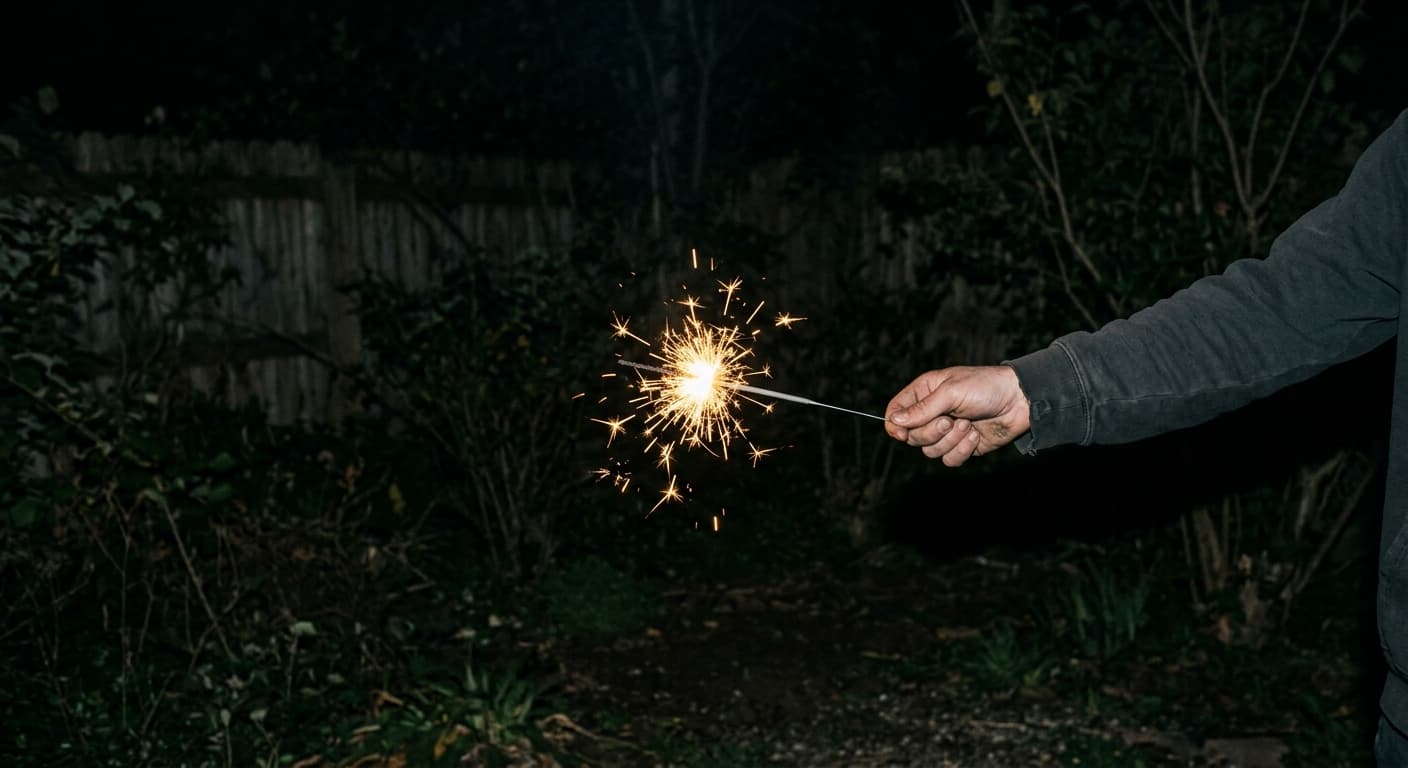
Washington allows CPSC-compliant "consumer fireworks" to be sold and discharged within statutory date-and-hour windows, but it names four device classes, sky rockets, firecrackers, salutes, and chasers, that may not be sold as consumer fireworks at all, even if they meet the federal weight limits. Washington also runs two different calendars: the days and hours you may buy fireworks are not the same as the days and hours you may legally set them off, and the gap is largest around New Year's.
Jurisdiction scope: This article addresses Washington's statewide fireworks law under RCW Chapter 70.77, covering the consumer fireworks category, the four banned device classes, the sale and discharge windows, the purchase age, local authority, and the possession and sale penalties. It does not catalog individual city or county ordinances that further restrict fireworks beyond state law.
What Fireworks Are Legal in Washington
Washington's baseline is permissive for a defined "consumer fireworks" category:
"'Consumer fireworks' means any small firework device designed to produce visible effects by combustion and which must comply with the construction, chemical composition, and labeling regulations of the United States consumer product safety commission, as set forth in 16 C.F.R. Parts 1500 and 1507 and including some small devices designed to produce audible effects, such as whistling devices, ground devices containing 50 mg or less of explosive materials, and aerial devices containing 130 mg or less of explosive materials and classified as fireworks UN0336 by the United States department of transportation at 49 C.F.R. Sec. 172.101 as of June 13, 2002, and not including fused setpieces containing components which together exceed 50 mg of salute powder."
RCW 70.77.136
Consumer fireworks may only be sold at a fixed place of business by a licensed retailer, under RCW 70.77.515(1). Separately, a small year-round category falls outside the consumer-fireworks seasonal rules entirely:
"Toy paper caps containing not more than twenty-five hundredths grain of explosive compound for each cap and trick or novelty devices not classified as consumer fireworks may be sold at all times unless prohibited by local ordinance."
RCW 70.77.405
So toy paper caps and non-consumer-fireworks novelty devices can be sold at any time of year, not just within the statutory sale window below, unless a local ordinance says otherwise.
What's Banned: Rockets, Firecrackers, Salutes, and Chasers
Washington then names four device classes that are off the table as consumer fireworks regardless of composition:
"No fireworks may be sold or offered for sale to the public as consumer fireworks which are classified as sky rockets, or missile-type rockets, firecrackers, salutes, or chasers as defined by the United States department of transportation and the federal consumer products safety commission except as provided in RCW 70.77.311."
RCW 70.77.401
A device that would otherwise meet Washington's 50mg/130mg composition caps is still banned from consumer sale if it falls into one of those four named classes. The only path back in is the religious and private-organization exemption below.
Religious and Private-Organization Exemption
Washington makes a narrow exception to the ban on selling firecrackers, salutes, and chasers to the public:
"No license is required for religious organizations or private organizations or persons to purchase or use consumer fireworks and such audible ground devices as firecrackers, salutes, and chasers if: (a) Purchased from a licensed manufacturer, importer, or wholesaler; (b) For use on prescribed dates and locations; (c) For religious or specific purposes; and (d) A permit is obtained from the local fire official. No fee may be charged for this permit."
RCW 70.77.311(2)
When You Can Buy Fireworks (Sale Window)
Washington's sale window is defined by date and hour together:
"It is legal to sell and purchase consumer fireworks within this state from twelve o'clock noon to eleven o'clock p.m. on the twenty-eighth of June, from nine o'clock a.m. to eleven o'clock p.m. on each day from the twenty-ninth of June through the fourth of July, from nine o'clock a.m. to nine o'clock p.m. on the fifth of July, from twelve o'clock noon to eleven o'clock p.m. on each day from the twenty-seventh of December through the thirty-first of December of each year, and as provided in RCW 70.77.311."
RCW 70.77.395(1)
In practical terms: noon to 11 p.m. on June 28; 9 a.m. to 11 p.m. daily June 29 through July 4; 9 a.m. to 9 p.m. specifically on July 5; and noon to 11 p.m. daily December 27 through 31. That window governs consumer fireworks specifically; toy paper caps and non-consumer novelty devices can be sold at any time of year under RCW 70.77.405, described above, unless a local ordinance prohibits it.
When You Can Legally Discharge Fireworks (Use Window)
The use (discharge) window is a separate subsection with its own dates and hours, and it is not identical to the sale window above:
"Consumer fireworks may be used or discharged each day between the hours of twelve o'clock noon and eleven o'clock p.m. on the twenty-eighth of June and between the hours of nine o'clock a.m. and eleven o'clock p.m. on the twenty-ninth of June to the third of July, and on July 4th between the hours of nine o'clock a.m. and twelve o'clock midnight, and between the hours of nine o'clock a.m. and eleven o'clock p.m. on July 5th, and from six o'clock p.m. on December 31st until one o'clock a.m. on January 1st of the subsequent year, and as provided in RCW 70.77.311."
RCW 70.77.395(2)
The June and early-July discharge hours track the sale hours closely, with July 4 extended to midnight. The December discharge window is the sharpest difference from the sale window: sale is legal all five days, December 27 through 31, noon to 11 p.m. each day, but discharge is legal only from 6 p.m. on December 31 through 1 a.m. on January 1. A consumer can lawfully buy fireworks December 27 through 30 that Washington law does not permit them to set off until the evening of December 31.
Purchase Age: 16
Washington sets a statewide minimum purchase age, distinct from any local rule:
"No licensee may sell any fireworks to any person under the age of sixteen."
RCW 70.77.515(2)
Local Option: Cities and Counties Can Restrict Further, With a One-Year Delay
A Washington county or city may adopt a fireworks ordinance more restrictive than state law, but the state builds in a mandatory advance-notice period before that stricter rule can bind anyone:
"The chief of the Washington state patrol, through the director of fire protection, shall adopt those rules as are necessary to ensure statewide minimum standards for the enforcement of this chapter. Counties and cities shall comply with these state rules. Any ordinances adopted by a county or city that are more restrictive than state law shall have an effective date no sooner than one year after their adoption."
RCW 70.77.250(4)
That one-year delay is unusual: a locality cannot ban or further restrict fireworks on short notice, so a rule you read about being "adopted" may not actually be enforceable yet. Confirm the ordinance's effective date, not just its adoption date, with the specific city or county before assuming a local restriction already applies. A separate, now-lapsed transitional provision let a city or county act within 60 days of the statute's June 13, 2002 effective date to restrict the December 27-31, 2002 window specifically; that one-time window closed decades ago and is not a standing mechanism today.
Penalties
Discharging consumer fireworks outside the RCW 70.77.395(2) window described above is not covered by a dedicated fine provision; it falls under the chapter's general catch-all penalty:
"Except as otherwise provided in this chapter, any person violating any of the provisions of this chapter or any rules issued thereunder is guilty of a misdemeanor."
RCW 70.77.540
Discharging fireworks recklessly is punished more severely, and separately, than simply discharging outside the window:
"It is unlawful for any person to discharge or use fireworks in a reckless manner which creates a substantial risk of death or serious physical injury to another person or damage to the property of another. A violation of this section is a gross misdemeanor."
RCW 70.77.488
Each day of an ongoing violation counts on its own:
"A person is guilty of a separate offense for each day during which he or she commits, continues, or permits a violation of any provision of, or any order, rule, or regulation made pursuant to this chapter."
RCW 70.77.545
Separately, Washington ties its possession penalty to the weight of fireworks involved:
"It is unlawful to possess any class or kind of fireworks in violation of this chapter. A violation of this section is: (1) A misdemeanor if involving less than one pound of fireworks, exclusive of external packaging; or (2) A gross misdemeanor if involving one pound or more of fireworks, exclusive of external packaging. For the purposes of this section, 'external packaging' means any materials that are not an integral part of the operative unit of fireworks."
RCW 70.77.485
Selling or transferring consumer fireworks outside a licensed retailer's fixed place of business, or to a person under 16, is its own gross misdemeanor:
"It is unlawful for any person to offer for sale, sell, or exchange for consideration, any consumer fireworks to a consumer or user other than at a fixed place of business of a retailer for which a license and permit have been issued... No licensee may sell any fireworks to any person under the age of sixteen... A violation of this section is a gross misdemeanor."
RCW 70.77.515
Washington's general punishment statutes set the ranges for the misdemeanor and gross-misdemeanor classifications above: a misdemeanor carries up to 90 days in jail, a fine of up to $1,000, or both, under RCW 9.92.030; a gross misdemeanor carries up to 364 days in jail, a fine of up to $5,000, or both, under RCW 9.92.020. So discharging outside the legal window, standing alone, is a misdemeanor under RCW 70.77.540 punishable under RCW 9.92.030; discharging recklessly is a gross misdemeanor under RCW 70.77.488 punishable under RCW 9.92.020; and each additional day of a continuing violation is its own separate offense under RCW 70.77.545. Separately, the State Patrol's fire protection director may assess a civil penalty of up to $1,000 per day for each violation, subject to the procedural requirements of RCW 70.77.252, administered apart from these criminal tracks, under RCW 70.77.250(6).
Federal Law on Transporting Fireworks Across State Lines
Federal law sets the floor: 16 CFR 1500.17 and Part 1507 define which consumer devices may be sold at all; 27 CFR 555.141(a)(7) exempts the importation, distribution and storage of consumer fireworks from ATF licensing (manufacture is not exempt); 18 U.S.C. 836 makes it a federal offense, punishable by up to one year, to transport fireworks into any state whose law specifically prohibits or regulates their use, in violation of that law, except in the course of continuous interstate transportation, with exceptions for common or contract carriers, water carriers, and transport for the use of federal agencies; and USPS Publication 52 § 341.22 bars fireworks from the mail entirely. Because Washington bans sky rockets, firecrackers, salutes, and chasers outright regardless of composition, bringing those device classes in from a neighboring state can violate both Washington's device ban and this federal transport statute at once.
Fireworks Laws in Nearby States
For neighboring-state comparison, see Oregon's fireworks laws and Idaho's fireworks laws, a novelties-only neighbor with a narrower legal category than Washington's. For how Washington compares with every other state, see the fireworks laws by state comparison. For Washington's separate open-container rules, see Washington open container laws.
Disclaimer: This article provides general legal information about fireworks laws in Washington as of September 2026. It is not legal advice. Fireworks statutes, local ordinances, sale and use windows, and penalties change and are often further restricted by city or county ordinance beyond what state law requires. Verify the current rule for your specific city and county before buying, selling, or using fireworks, and consult a lawyer licensed in Washington for advice about a specific situation.
Statutes cited reflect their in-force version as of 2026-09-17. Last updated: 2026-09-17.
Frequently Asked Questions
Are fireworks legal in Washington State?
Yes, generally. CPSC-compliant consumer fireworks are legal to sell and use within statutory windows under RCW 70.77.395, but sky rockets, firecrackers, salutes, and chasers are specifically banned as consumer fireworks regardless of their composition, under RCW 70.77.401.
When can you buy fireworks in Washington?
Consumer fireworks may be sold noon to 11 p.m. on June 28; 9 a.m. to 11 p.m. from June 29 through July 4; 9 a.m. to 9 p.m. on July 5; and noon to 11 p.m. from December 27 through 31, under RCW 70.77.395(1). Toy paper caps and non-consumer novelty devices are exempt from that window and can be sold at any time of year unless a local ordinance prohibits it, under RCW 70.77.405.
When can you legally set off fireworks in Washington?
The discharge window differs from the sale window. It runs noon to 11 p.m. June 28, 9 a.m. to 11 p.m. June 29 through July 3, 9 a.m. to midnight July 4, and 9 a.m. to 11 p.m. July 5, plus a narrow New Year's window from 6 p.m. December 31 through 1 a.m. January 1, under RCW 70.77.395(2).
Is there an age minimum to buy fireworks in Washington?
Yes. No licensee may sell fireworks to a person under 16, under RCW 70.77.515(2).
Can a Washington city ban fireworks that are legal under state law?
Yes, but not immediately. A county or city may adopt a more restrictive ordinance at any time, but it cannot take effect sooner than one year after adoption, under RCW 70.77.250(4).
What is the penalty for discharging fireworks outside the legal window in Washington?
Violating the chapter, including discharging consumer fireworks outside the RCW 70.77.395(2) window, is a misdemeanor under RCW 70.77.540, punishable by up to 90 days in jail and a fine of up to $1,000 under RCW 9.92.030. Discharging fireworks recklessly is a separate, harsher gross misdemeanor under RCW 70.77.488, and each additional day of a continuing violation counts as its own separate offense under RCW 70.77.545. Possessing under one pound of fireworks unlawfully is a misdemeanor; one pound or more is a gross misdemeanor punishable by up to 364 days in jail and a fine of up to $5,000, under RCW 70.77.485 and RCW 9.92.020.
Updates
Independently fact-checked against the cited primary sources
Sources and References
- RCW 70.77.136 - Definitions, Consumer fireworks(app.leg.wa.gov).gov
- RCW 70.77.395 - Dates and times consumer fireworks may be sold or discharged(app.leg.wa.gov).gov
- RCW 70.77.401 - Sale of certain fireworks prohibited(app.leg.wa.gov).gov
- RCW 70.77.311 - Exemptions from licensing; religious or private organization purchase(app.leg.wa.gov).gov
- RCW 70.77.515 - Unlawful sales or transfers of consumer fireworks; penalty(app.leg.wa.gov).gov
- RCW 70.77.405 - Authorized sales of toy caps, tricks, and novelties(app.leg.wa.gov).gov
- RCW 70.77.485 - Unlawful possession of fireworks; penalties(app.leg.wa.gov).gov
- RCW 70.77.488 - Unlawful discharge or use of fireworks; penalty(app.leg.wa.gov).gov
- RCW 70.77.540 - Penalty(app.leg.wa.gov).gov
- RCW 70.77.545 - Separate offense for each day(app.leg.wa.gov).gov
- RCW 70.77.250 - Chief of the Washington state patrol to enforce and administer; local ordinance delay; civil penalty(app.leg.wa.gov).gov
- RCW 70.77.252 - Civil penalty, notice, remission, mitigation, review (procedural requirements for the 70.77.250(6) civil penalty)(app.leg.wa.gov).gov
- RCW 9.92.020 - Punishment of gross misdemeanor when not fixed by statute(app.leg.wa.gov).gov
- RCW 9.92.030 - Punishment of misdemeanor when not fixed by statute(app.leg.wa.gov).gov
- 18 U.S.C. 836 - Transportation of fireworks into a state prohibiting or regulating their use(uscode.house.gov).gov