
Arizona
Arizona Fireworks Laws (2026): Legal Devices, Local Rules, Penalties
Independently fact-checked against primary sources (last audited September 18, 2026). · 11 primary sources cited on this page. How we verify our legal content
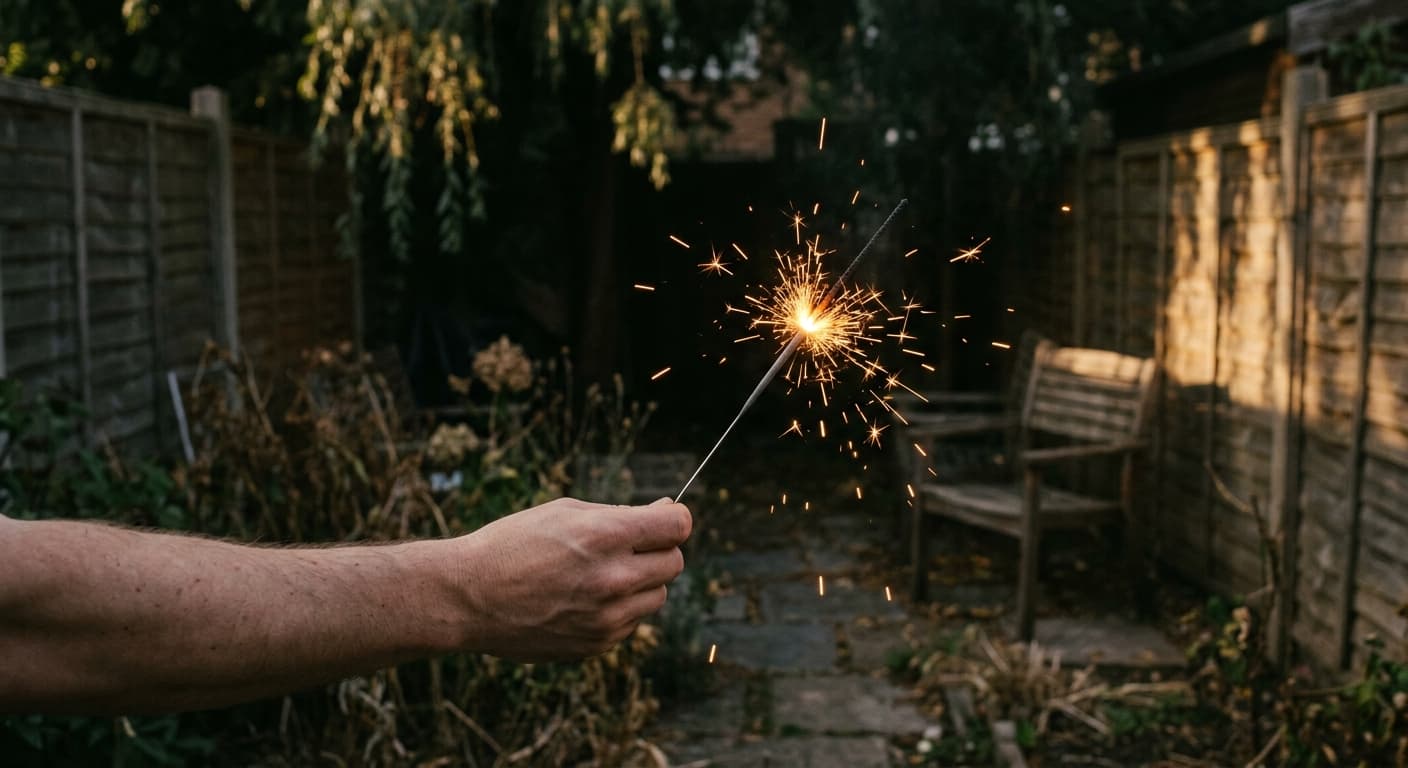
Arizona bans fireworks in general, but carves out ten ground-based device categories, called "permissible consumer fireworks," that can be sold and used statewide under Ariz. Rev. Stat. §§ 36-1601 and 36-1602. State law itself sets no sale or use calendar for those devices; instead, § 36-1606(A) caps how far a city, town, or county may narrow sale and use to specific dates, a nightly curfew, and other local limits, and nothing is restricted beyond the general ban unless a local government has actually adopted such an ordinance. Aerial and airborne devices, including firecrackers, bottle rockets, and roman candles, stay illegal statewide.
Jurisdiction scope: This article covers Arizona's state fireworks law under Ariz. Rev. Stat. §§ 36-1601 through 36-1610, including the device list, the bounds within which local governments may set sale and use date windows, the age minimum, the local-option structure, the penalty structure, and the federal rules that apply on top of state law. It does not name every city, town, or county's individual ordinance; those must be checked locally.
What's Legal and What's Banned
Arizona starts from a general prohibition, not a general allowance. Under § 36-1602, it is unlawful to sell, offer or expose for sale, use, explode, or possess any fireworks, except as otherwise provided by the article.
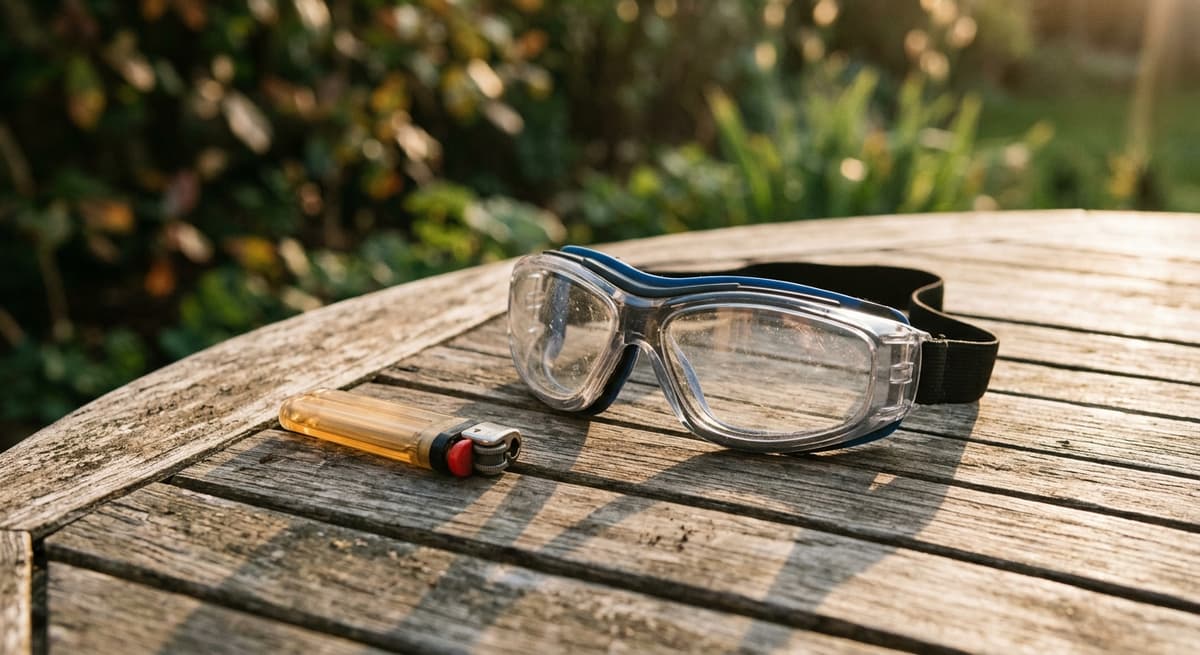
The exception that matters to consumers is "permissible consumer fireworks," and § 36-1601(7)(a) spells out exactly what qualifies: ground and handheld sparkling devices, cylindrical fountains, cone fountains, illuminating torches, wheels, ground spinners, flitter sparklers, toy smoke devices, wire sparklers or dipped sticks, and multiple-tube versions of the fountains, sparkling devices, or torches, all defined under the APA 87-1 standard. In counties with more than 500,000 residents, "adult snappers" are included in the permissible-consumer-fireworks definition itself under subsection (7)(b), a device consisting of a paper-wrapped or plastic tube with no fuse that produces a single report and meets applicable fuseless-firecracker requirements; this is a matter of statutory definition, not local discretion.
Subsection (7)(c) draws the hard line: permissible consumer fireworks does "not include anything that is designed or intended to rise into the air and explode or to detonate in the air or to fly above the ground," and it names the excluded categories directly: firecrackers, bottle rockets, sky rockets, missile-type rockets, helicopters, aerial spinners, torpedoes, roman candles, mine devices, shell devices, and aerial shell kits or reloadable tubes. Those stay flatly illegal to sell, offer for sale, use, or possess anywhere in the state. Arizona's carve-out is a ground-only sparkler-and-fountain list, not a broader 1.4G consumer classification; § 36-1601(2) separately defines "consumer firework" as the wider federal 1.4G class, and that broader term is not what a retailer may actually sell under Arizona law.
Novelties You Can Use Year-Round
Some items never fall under the "fireworks" restrictions at all. § 36-1601(4)(b)(iii) is the operative authority: it excludes federally deregulated novelty items, specifically snappers, snap caps, party poppers, glow worms, snakes, toy smoke devices, and sparklers, from the statutory definition of "fireworks," so no seasonal window and no local sale/use ordinance reaches them. The optional retailer sign text at § 36-1606(B) corroborates that reading in plain language, stating that "snappers (pop-its)" and the other listed novelties "are permitted at all times," though that sign text is a permissive posting provision, not itself the source of the rule. Peace officers also have authority under § 36-1607 to seize and remove illegal fireworks, at the owner's expense.
Arizona's statute does not fully reconcile this novelty exclusion with a separate device it also names: § 36-1601(7)(a)(ix) lists "wire sparklers or dipped sticks" as one of the ten "permissible consumer fireworks" categories, the same seasonal/local-option category as fountains and ground spinners. The statute never explains whether the plain "sparklers" excluded as a year-round novelty in (4)(b)(iii) is the same product as the "wire sparklers" listed as a permissible consumer firework in (7)(a)(ix). Until that ambiguity is resolved in the statute or by a court or agency, treat a handheld wire or dipped-stick sparkler as a permissible consumer firework, subject to whatever local sale/use ordinance applies, rather than assuming it is always legal year-round.
State Law Controls Sale, But Local Governments Can Trim the Windows
Arizona's statute declares that whether permissible consumer fireworks can be sold is a matter of statewide concern under § 36-1606(A), taking the decision to ban sale away from cities, towns, and counties entirely. That preemption is not absolute, though: the same subsection lets a city, town, or county regulate sale consistent with NFPA 1124 and prohibit sale on days outside the local date windows described below. A local government cannot ban the sale of permissible consumer fireworks outright, and absent a local ordinance there is no sale-date restriction at all. Where a local government does adopt one, § 36-1606(A) only lets it prohibit sale on days outside the statutory windows described below; the statute gives it no separate power to subdivide or narrow the sale period within those windows, apart from the small-county fire-restriction suspension described below.
Use has its own, separately worded exception. § 36-1605(A) lists what "this article does not prohibit," and paragraph 7 is the general-public use exception:
"The use of permissible consumer fireworks by the general public, unless the use is prohibited by a governing body of an incorporated city or town."
Ariz. Rev. Stat. § 36-1605(A)(7)
That is an exception to the general fireworks ban in § 36-1602(A), not an independent grant of a right: using permissible consumer fireworks is not itself illegal. § 36-1605(A)(7)'s own text contemplates a city or town's governing body prohibiting use outright, but § 36-1606(A) is an express preemption whose local exceptions are exhaustive: the only use restrictions it lets a governing body adopt are a prohibition on days outside the date windows described below, the nightly curfew, and the preservation-land and wilderness buffers. The statute does not reconcile the two provisions; this article follows § 36-1606(A)'s bounded list of local powers rather than reading § 36-1605(A)(7) as a separate, unbounded local power to ban use outright. Whether it is legal to buy and light permissible consumer fireworks in a given place, and on what dates, ultimately depends on whether that city, town, or county has adopted its own ordinance within those bounds.
When You Can Buy and Use Fireworks
Arizona's fireworks statute sets no calendar of its own for permissible consumer fireworks. Instead, § 36-1606(A) sets the outer bounds within which a city, town, or county may narrow sale and use to specific dates. Absent a local ordinance doing that, permissible consumer fireworks can be sold and used at any time of year.
Where a large county (population over 500,000), or a city or town within it, adopts such an ordinance, it may confine sale to April 25-May 6, May 20-July 6, and December 10-January 3 (plus the two days before Diwali through its third day), and confine use to May 4-6, June 24-July 6, and December 26-January 4 (plus Diwali's second and third days). A small county (population under 500,000), or a city or town within it, may confine sale only to May 20-July 6 and December 10-January 3, with no April window and no Diwali dates, and may confine use only to June 24-July 6 and December 26-January 4, also with no May 4-6 period and no Diwali dates; both the sale and use windows in a small county may also be further suspended, only for the days a federal or state agency has declared a stage-one-or-higher fire restriction.
A governing body may also, as a local option rather than a statewide rule, prohibit use between 11:00 p.m. and 8:00 a.m. on all days (with a New Year's Eve/Day and July 4-5 overnight carve-out). It may separately bar use, on all days regardless of county size, within one mile of preservation land owned by a city or town that has purchased more than 15,000 acres of land for preservation purposes, and it may bar use within one mile of a municipal or county mountain preserve, desert park, regional park, designated conservation area, national forest, or wilderness area; that second buffer applies only during a stage-one-or-higher fire restriction in large counties, but on all days in small counties. None of this is automatic: each restriction applies only where the specific city, town, or county has actually adopted it, so check the local ordinance before assuming a date, curfew, or buffer restriction is in effect. Retailers separately operate under the NFPA 1124 (2013 ed.) fire-code compliance rules adopted under § 36-1609.
Age
Arizona sets a statewide floor. Ariz. Rev. Stat. § 36-1609(B) is the operative prohibition: "A person shall not sell or permit or authorize the sale of permissible consumer fireworks to a person who is under sixteen years of age." The same rule, phrased as "Permissible consumer fireworks may not be sold to persons under sixteen years of age," also appears in the optional retailer sign text at § 36-1606(B), but § 36-1609(B) is the statute that actually imposes the duty. That age minimum applies to the sale transaction; retail sale is additionally governed by the NFPA 1124 (2013 ed.) fire code adopted under § 36-1609(A).
Crossing State Lines
Arizona's statewide sale rule does not travel with the fireworks once they leave the state. Separately, it is a federal crime under 18 U.S.C. § 836 to transport fireworks, other than in the course of continuous interstate transportation through a state, into any state whose law specifically prohibits or regulates the use of fireworks, knowing they will be delivered, possessed, stored, transshipped, distributed, sold, or otherwise dealt with in a manner or for a use prohibited by that state's law; a violation is punishable by a fine or up to one year of imprisonment, or both. The statute exempts common and contract carriers, international or domestic water carriers engaged in interstate commerce, and transportation into a state for federal agencies' own operations.
USPS Publication 52 § 341.22 separately bans mailing fireworks, stating that "all types of fireworks are prohibited from mailing," with no listed exception for sparklers or other novelty items.
Penalties
Arizona's penalty structure mixes civil and criminal exposure; it is not purely civil despite the statute's title. § 36-1608(A) sets a $1,000 civil penalty for a general violation of the article. § 36-1608(B) is different in kind: using fireworks or permissible consumer fireworks on preservation land owned by a city or town that has purchased more than 15,000 acres of land for preservation purposes is a class 1 misdemeanor, carrying a fine of at least $1,000, a floor rather than a fixed amount. That is Arizona's most serious fireworks offense. Separately, § 36-1610 lets the state fire marshal impose its own $1,000 civil penalty for each incident of prohibited fireworks use on state land.
For how Arizona's rule compares with the rest of the country, see fireworks laws by state. Arizona also has its own Arizona open container law covering a different vehicle-related rule.
Disclaimer: This article provides general legal information about fireworks laws in the United States as of September 2026. It is not legal advice. Fireworks statutes, local ordinances, sale/use windows, and penalties change frequently and are often further restricted by city or town ordinance beyond what state law requires; verify the current rule for your specific city or town before buying, selling, or using fireworks, and consult a lawyer licensed in your state for advice about a specific situation.
Statutes cited reflect their in-force version as of 2026-09-18. Last updated: 2026-09-18.
Frequently Asked Questions
Are fireworks legal in Arizona?
Only ground-based devices. Ariz. Rev. Stat. § 36-1601(7)(a) limits "permissible consumer fireworks" to ten APA 87-1 categories, including sparklers, fountains, wheels, ground spinners, and torches. Anything designed to rise into the air or explode, including firecrackers, bottle rockets, sky rockets, and roman candles, stays illegal statewide under § 36-1601(7)(c).
What fireworks are banned in Arizona?
Firecrackers, bottle rockets, sky rockets, missile-type rockets, helicopters, aerial spinners, torpedoes, roman candles, mine devices, shell devices, and aerial shell kits or reloadable tubes are all excluded from the "permissible consumer fireworks" definition under § 36-1601(7)(c) and remain illegal to sell, use, or possess anywhere in the state.
When can you legally buy and use fireworks in Arizona?
Arizona itself sets no fireworks calendar; § 36-1606(A) only caps how far a city, town, or county may narrow sale and use if it chooses to regulate. Where a local government in a county over 500,000 people has adopted such an ordinance, it can confine sale to April 25-May 6, May 20-July 6, and December 10-January 3, and use to May 4-6, June 24-July 6, and December 26-January 4. In a county under 500,000, the allowed sale window is May 20-July 6 and December 10-January 3 only, with no April window, and the allowed use window is June 24-July 6 and December 26-January 4 only, with no May 4-6 period; neither window in a small county carries a Diwali date. A local government may also separately add an 11:00 p.m. to 8:00 a.m. nightly use curfew. None of this applies unless the specific city, town, or county has actually adopted it, so check locally.
Is there an age minimum to buy fireworks in Arizona?
Yes. Ariz. Rev. Stat. § 36-1609(B) bars selling permissible consumer fireworks to anyone under sixteen years of age.
Can a city in Arizona ban fireworks even though state law allows them?
A city or town cannot ban the sale of permissible consumer fireworks outright, because sale is preempted as a matter of statewide concern under § 36-1606(A). But a city or town can regulate sale consistent with NFPA 1124, can prohibit sale and use outside the local date windows the statute permits, can adopt an 11:00 p.m. to 8:00 a.m. use curfew, and can bar use near specified preservation land and wilderness areas. § 36-1605(A)(7)'s text separately contemplates a city or town prohibiting use outright, but § 36-1606(A)'s preemption bounds what a governing body may actually prohibit to the date windows, curfew, and buffer zones above, and the statute does not reconcile the two provisions. Check local rules before lighting anything.
What is the penalty for illegal fireworks use in Arizona?
A general violation is a $1,000 civil penalty under § 36-1608(A). Using fireworks on preservation land owned by a city or town that has purchased more than 15,000 acres for preservation purposes is a class 1 misdemeanor under § 36-1608(B), with a fine of at least $1,000. Use on state land draws a separate $1,000 civil penalty under § 36-1610.
Are sparklers and snap-its legal in Arizona year-round?
It depends which sparkler. § 36-1601(4)(b)(iii) excludes federally deregulated novelty "sparklers," along with snappers, snap caps, party poppers, glow worms, snakes, and toy smoke devices, from the definition of "fireworks" entirely, so those are legal year-round with no local sale/use restriction. But § 36-1601(7)(a)(ix) separately lists "wire sparklers or dipped sticks" as a permissible consumer firework, the same category as fountains and ground spinners that a city, town, or county can narrow to seasonal dates under § 36-1606(A). Arizona's statute does not spell out the line between the two, so treat a handheld wire or dipped-stick sparkler as subject to the same local sale/use rules as other permissible consumer fireworks unless a specific local ordinance says otherwise.
Updates
Independently fact-checked against the cited primary sources
Sources and References
- Ariz. Rev. Stat. § 36-1601 - Definitions (permissible consumer fireworks; novelty exclusion)(azleg.gov).gov
- Ariz. Rev. Stat. § 36-1602 - Unlawful acts(azleg.gov).gov
- Ariz. Rev. Stat. § 36-1605 - Permitted uses of consumer fireworks(azleg.gov).gov
- Ariz. Rev. Stat. § 36-1606 - State preemption; bounds within which local governments may set sale/use date windows, a curfew, and preservation-land buffers(azleg.gov).gov
- Ariz. Rev. Stat. § 36-1607 - Seizure and removal of illegal fireworks(azleg.gov).gov
- Ariz. Rev. Stat. § 36-1608 - Violation; civil penalty; classification(azleg.gov).gov
- Ariz. Rev. Stat. § 36-1609 - Fire code compliance (NFPA 1124, 2013 ed.); sale to persons under sixteen prohibited(azleg.gov).gov
- Ariz. Rev. Stat. § 36-1610 - Additional civil penalties; state land(azleg.gov).gov
- 16 CFR 1507.1 - CPSC consumer fireworks (1.4G) construction/safety scope(ecfr.gov).gov
- 18 U.S.C. § 836 - Federal crime to transport fireworks into any state whose law specifically prohibits or regulates fireworks use; fine or up to one year imprisonment; carrier, water-carrier, and federal-agency exceptions(uscode.house.gov).gov
- USPS Publication 52 § 341.22 - Nonmailable explosives (fireworks)(pe.usps.com).gov