
Pennsylvania
Pennsylvania Laws on Recording in Public: What Is Legal (2026)
Independently fact-checked against primary sources (last audited August 22, 2026). · Reviewed by the RecordingLaw editorial team. · Law checked current as of August 22, 2026. · 8 primary sources cited on this page. How we verify our legal content
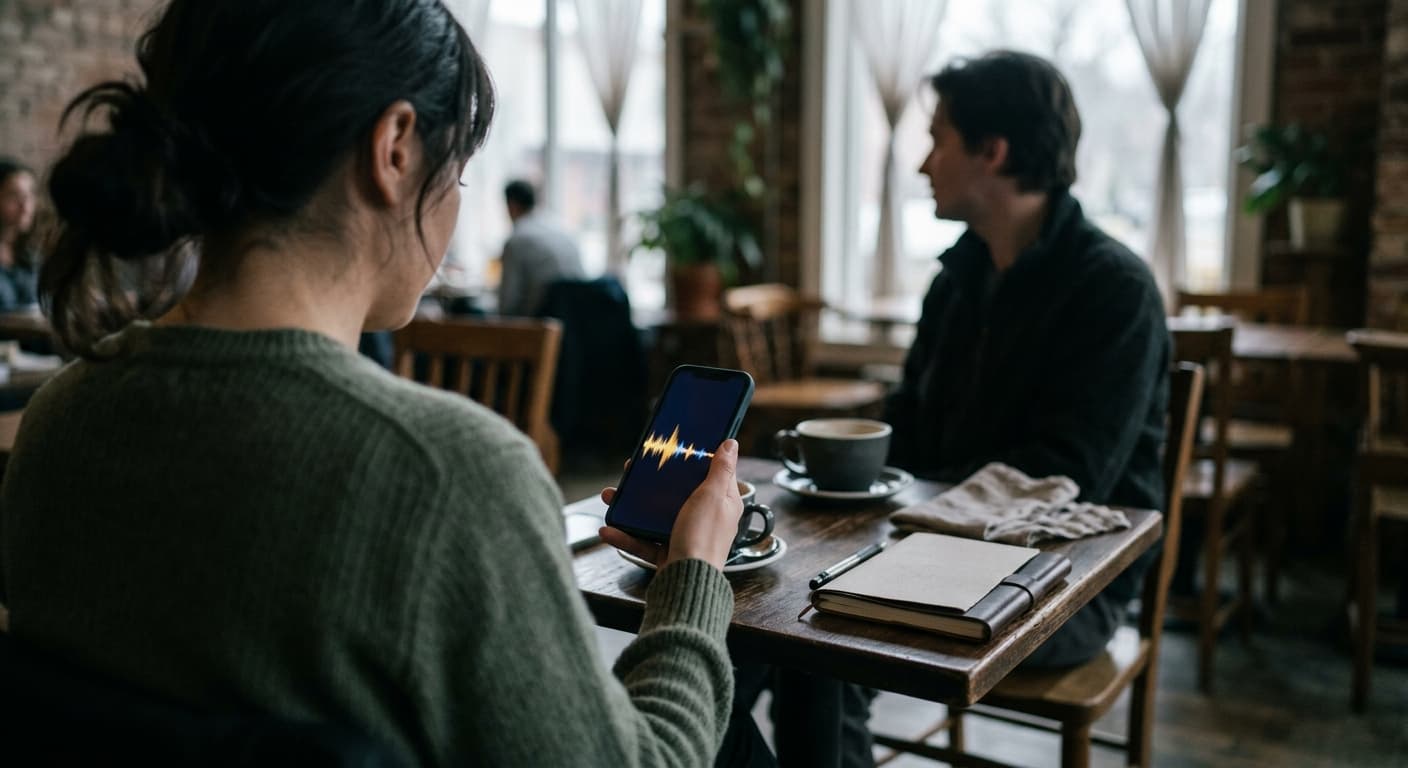
In Pennsylvania, silent video recording in public spaces is broadly legal. Audio recording depends on whether the people being recorded have a reasonable expectation that their conversation is private under 18 Pa.C.S. 5703. If bystanders can easily overhear the exchange, the Wiretap Act generally does not apply.
Recording in public in Pennsylvania involves a nuanced legal framework that distinguishes between what you can see and what you can hear. Silent video recording in genuinely public spaces is broadly permitted, but audio recording depends on whether the people being recorded have a reasonable expectation of privacy. This guide explains the rules for recording in public in Pennsylvania in 2026, covering street photography, filming events, recording government meetings, live streaming, and the limits that still apply even in open public spaces.
The General Rule: Public Places and Privacy Expectations
Pennsylvania's Wiretap Act (18 Pa.C.S. § 5703) prohibits intercepting "oral communications" without all-party consent. However, the statute defines "oral communications" as conversations where the parties have a reasonable expectation that the communication is not being intercepted.
In genuinely public spaces where conversations can be easily overheard by passersby, speakers generally do not have a reasonable expectation of privacy. This means:
- Recording in public is often legal, but the legality depends on the specific circumstances rather than the location alone.
- The key question is always: Did the people being recorded have a reasonable expectation that their conversation was private?
When Public Recording Is Legal
Recording in public is generally legal when:
- You are filming or photographing in an open public space (streets, sidewalks, parks, plazas)
- The people being recorded are speaking at normal volume in a setting where others can overhear
- The recording captures public events, protests, rallies, or performances
- You are filming buildings, scenery, traffic, or general activity
- You are recording a public government meeting under the Sunshine Act
- You are filming police officers performing their public duties
When Public Recording May Be Illegal
Even in public spaces, recording can violate the law when:
- You use audio recording to capture a private conversation between people speaking quietly in a public space where they took steps to ensure privacy (e.g., a whispered conversation on a park bench away from others)
- You record someone's intimate areas without their consent for the purpose of arousing or gratifying sexual desire, violating 18 Pa.C.S. § 7507.1
- You trespass on private property to record
- You use recording equipment to harass, stalk, or intimidate someone
- You interfere with police operations while recording
Street Photography and Public Filming

Pennsylvania does not have a specific statute governing street photography or public filming. The legality is determined by general privacy principles and the Wiretap Act.
Your Rights as a Photographer or Videographer
- You can photograph or film any person, building, or activity that is visible from a public space.
- You do not need anyone's permission to take their photograph in public.
- You can publish, share, or sell photographs taken in public spaces (though commercial use of someone's likeness may require a model release).
- You can use a tripod, professional equipment, and lighting on public property, though some municipalities may require permits for commercial productions that obstruct sidewalks or roads.
Limitations on Public Photography
- Private property: You cannot trespass on private property to take photographs. If a property owner asks you to leave, you must comply.
- Intimate areas: Photographing someone's intimate areas without consent for the purpose of arousing or gratifying sexual desire violates § 7507.1, even in public.
- Harassment: Using photography to harass, intimidate, or stalk someone can result in criminal charges under Pennsylvania's harassment and stalking statutes.
- Commercial restrictions: Using someone's likeness for commercial purposes (advertising, merchandise) without their consent may violate their right of publicity.
Recording Public Events
Pennsylvania residents have broad rights to record public events.
Events on Public Property
You can record any event held on public property, including:
- Protests, demonstrations, and marches
- Public speeches and political rallies
- Parades and festivals
- Street performers and musicians
- Public ceremonies and dedications
- Sporting events visible from public spaces (though event organizers may restrict recording within ticketed venues)
Events on Private Property
Recording rights at events on private property depend on the property owner's rules:
- Concert venues, stadiums, and theaters can prohibit recording as a condition of entry. Your ticket purchase constitutes agreement to the venue's terms.
- Shopping malls and retail stores are private property. Owners can restrict recording.
- Restaurants and bars can prohibit recording. However, if the establishment allows recording, conversations in noisy public areas may not carry a privacy expectation.
- Museums, galleries, and cultural venues often restrict photography for copyright or preservation reasons.
If a private property owner tells you to stop recording, you must comply. Continuing to record after being asked to stop could result in trespassing charges.
Recording Government Meetings: The Sunshine Act
The Pennsylvania Sunshine Act (65 Pa.C.S. § 711) provides one of the clearest and strongest recording rights in the state.
Your Right to Record Public Meetings
Section 711(a) states that any person attending a meeting of a government agency has the right to use recording devices to record all proceedings. This right is explicit, statutory, and cannot be overridden by agency policy.
What the Sunshine Act Covers
The Act applies to meetings of all "agencies," which includes:
- Municipal councils and borough councils
- County commissioners and county councils
- School boards
- Township supervisors and boards
- Zoning hearing boards
- Planning commissions
- Water and sewer authorities
- State legislative proceedings
- Any body established by a political subdivision that performs a governmental function
Key Protections
- No advance permission required. You do not need to ask the agency for permission to record.
- No prior notification required. You do not need to inform the agency in advance that you plan to record.
- Audio and video both permitted. You can use audio recorders, video cameras, smartphones, or any other recording device.
- Wiretap Act does not apply. Public government meetings have no expectation of privacy, so the all-party consent requirement under WESCA does not apply.
- Reasonable rules only. Agencies may adopt reasonable rules about equipment placement and noise (to avoid disrupting proceedings), but cannot prohibit recording.
What Agencies Cannot Do
- Prohibit recording at public meetings
- Require advance notice or permission to record
- Confiscate recording equipment
- Limit recording to certain portions of the meeting
- Restrict recording to credentialed journalists only
The Pennsylvania Office of Open Records has confirmed that policies requiring advance permission to record violate the Sunshine Act because they create unreasonable barriers to access.
Filming Police in Public
The Third Circuit Court of Appeals established in Fields v. City of Philadelphia, 862 F.3d 353 (3d Cir. 2017) that the First Amendment protects the right to photograph, film, and record police officers performing their official duties in public.
Your Rights
- Film police from any public space at a reasonable distance.
- Record without announcing that you are recording.
- Refuse to stop recording if ordered to do so by an officer.
- Refuse to delete footage or surrender your device without a warrant.
Your Responsibilities
- Do not physically interfere with police operations.
- Comply with lawful orders to maintain a safe distance.
- Do not obstruct officers from performing their duties.
- Remain calm and avoid escalation.
For a comprehensive guide to recording police in Pennsylvania, see our dedicated police recording page.
Live Streaming in Public
Live streaming from public places in Pennsylvania follows the same general rules as other forms of public recording, with some additional considerations.
When Live Streaming Is Legal
- Streaming from public sidewalks, parks, and streets
- Streaming public events, protests, and demonstrations
- Streaming government meetings under the Sunshine Act
- Streaming your own activities in public spaces
Additional Considerations for Live Streaming
- Real-time distribution: Unlike a stored recording that might never be shared, a live stream immediately broadcasts to an audience. This can amplify privacy concerns.
- Bystander privacy: Live streaming in a public area may incidentally capture bystanders who did not consent to being broadcast. While this is generally legal in public spaces, streaming someone in a way that reveals sensitive personal information could raise concerns.
- Platform rules: Social media platforms have their own terms of service regarding live streaming content. Violating platform rules can result in account suspension even if the stream was legal under Pennsylvania law.
- Audio capture: If your live stream captures audio of private conversations, the same WESCA rules apply as for any other recording.
Recording on Public Transportation
Pennsylvania's public transportation systems have their own rules about recording:
- SEPTA (Philadelphia): SEPTA operates security cameras throughout its system. Passengers generally can record their own experiences on public transit, as conversations on buses and trains typically do not carry a reasonable expectation of privacy due to the public nature of the setting.
- Port Authority (Pittsburgh): Similar rules apply. Conversations in the open seating areas of buses and trains are generally not considered private.
- Audio recording on transit: While video recording on public transit is broadly permissible, audio recording of quiet, private conversations between passengers could raise WESCA concerns in some circumstances.
Recording in Courthouses and Government Buildings
Courtrooms
Recording in Pennsylvania courtrooms is governed by the Rules of Judicial Administration. Rule 1910 generally prohibits cameras and recording devices in courtrooms during proceedings without the presiding judge's permission. Some exceptions exist for certain appellate proceedings and ceremonial events.
Government Building Lobbies and Public Areas
Public areas of government buildings (lobbies, hallways, public counters) are generally open to recording, but individual agencies may have policies restricting photography or recording in certain areas for security reasons.
Legislative Proceedings
Pennsylvania House and Senate proceedings are public and can be recorded. The legislature provides its own video feeds of floor sessions and committee hearings through PCN (Pennsylvania Cable Network).
Drones and Public Recording
Drone photography and videography in public airspace is governed by both federal FAA regulations and state privacy principles:
- Public spaces: Drone footage of public areas is generally permissible, subject to FAA airspace rules.
- Private property: Flying a drone over private property to record may constitute trespass or invasion of privacy.
- Audio: Drones equipped with microphones that capture private conversations are subject to WESCA.
- FAA compliance: All drone operators must comply with FAA Part 107 or recreational flying rules, including altitude limits, visual line-of-sight requirements, and airspace restrictions.
More Pennsylvania Recording Laws
Audio Recording | Video Recording | Voyeurism & Hidden Cameras | Workplace Recording | Recording Police | Phone Call Recording | Security Cameras | Recording in Public | Landlord-Tenant | Dashcam Laws | Schools | Medical Recording
Back to Pennsylvania Recording Laws
More Pennsylvania Recording Topics
More Pennsylvania Laws
Frequently Asked Questions
Can I record video in public in Pennsylvania?
Yes. Silent video recording in genuinely public spaces where no one has a reasonable expectation of privacy is legal in Pennsylvania. You can film streets, sidewalks, parks, public events, and buildings visible from public spaces. You cannot record someone's intimate areas without consent for the purpose of arousing or gratifying sexual desire, even in public, and you must not trespass on private property to record.
Can I audio record a conversation in a public place in Pennsylvania?
It depends on whether the participants have a reasonable expectation of privacy. A conversation at normal volume in a crowded public area where others can overhear is generally not protected by the Wiretap Act. However, a quiet, private conversation in a public setting, such as a whispered exchange on a park bench, may still be protected. When in doubt, obtain consent from all parties.
Can I record a city council meeting in Pennsylvania?
Yes. The Pennsylvania Sunshine Act (65 Pa.C.S. § 711) grants anyone attending a public government meeting the right to record the entire proceedings with audio and video equipment. No advance permission or notification is required. The agency cannot prohibit recording, though it may adopt reasonable rules about equipment placement to avoid disrupting proceedings.
Can a store owner tell me to stop recording in their store?
Yes. Stores are private property, and the owner or manager has the right to set rules for their premises, including prohibiting recording. If you are asked to stop recording and refuse, you can be asked to leave. Remaining after being told to leave constitutes trespassing. However, you generally have the right to record from a public sidewalk outside the store.
Can I live stream from public spaces in Pennsylvania?
Yes. Live streaming from public sidewalks, parks, and streets follows the same legal rules as any other form of public recording. You can stream public events, government meetings, and your own activities in public spaces. Be aware that live streaming amplifies privacy concerns because content is immediately broadcast, and platform terms of service may impose additional restrictions.
Updates
Independently fact-checked against the cited primary sources; governing law re-checked for recent changes
Added the required 'for the purpose of arousing or gratifying sexual desire' element to two statements of the § 7507.1 intimate-areas rule; the statute does not criminalize recording intimate areas without that specific purpose.
Added the required sexual-purpose element to a remaining FAQ answer describing 18 Pa.C.S. section 7507.1's intimate-area recording prohibition, matching the statute's actual scope.
Governing law re-checked for recent changes
Reviewed and approved by an editor
The Law Behind This Article
This article rests on the statutory provisions below, held in our own legal record and retrieved from the official source. Tap a section to read the operative text.
Pennsylvania Consolidated Statutes Title 18 (Crimes and Offenses)
§ 5703Interception, disclosure or use of wire, electronic or oral communicationsIn forcecited in 38 of our articles
Except as otherwise provided in this chapter, a person is guilty of a felony of the third degree if he: (1) intentionally intercepts, endeavors to intercept, or procures any other person to intercept or endeavor to intercept any wire, electronic or oral communication; (2) intentionally discloses or endeavors to disclose to any other person the contents of any wire, electronic or oral communication, or evidence derived therefrom, knowing or having reason to know that the information was obtained through the interception of a wire, electronic or oral communication; or (3) intentionally uses or endeavors to use the contents of any wire, electronic or oral communication, or evidence derived therefrom, knowing or having reason to know, that the information was obtained through the interception of a wire, electronic or oral communication.
Official text (excerpt) · last checked 2026-08-31 · Read the full text in our law library · Verify at palegis.us
Cited in 121 court opinions in our collectionLatest citing opinion in our collection: 2026
In the courts (editorial summary, independently checked):Commonwealth v. Brachbill (1989) held Section 5703(1) is not limited to interceptions made with an intercepting device, so an officer who listened on a telephone extension without the prior approval Section 5704(2)(ii) requires violated the section, and the testimony had to be suppressed.
Opinions citing this section in our collection:
- Commonwealth v. Schaeffer (Supreme Court of Pennsylvania 1987, 370 Pa. Super. 179)“…and other electronic interceptions of communications, see 18 Pa.C.S. § 5703, carved out limited exceptions to these…”
- Commonwealth v. Bennett (Superior Court of Pennsylvania 1976, 245 Pa. Super. 457)“…ode, Act of Dec. 6, 1972, P.L. 1482, No. 334, § 1 et seq. 18 Pa.C.S. § 5703, as amended Dec. 27, 1974, P.L. 1007, N…”
- Commonwealth v. Brachbill (Supreme Court of Pennsylvania 1989, 520 Pa. 533)✓A state trooper listened on an extension phone to a call between a former inmate and a guard charged with abusing him; the court held section 5703 bars any willful interception, not only one using an intercepting device, so the trooper's testimony should have been suppressed.
Identified automatically from the court opinions citing this section — not a ranking of which case controls.
Also relied on in: Pennsylvania Voyeurism and Hidden Camera Laws: Penalties and Protections (2026), Pennsylvania Smart Glasses Recording Laws (2026), Pennsylvania Audio Recording Laws: All-Party Consent Rules and Felony Penalties (2026)
§ 7507.1Invasion of privacyIn forcecited in 23 of our articles
(a) Offense defined.--Except as set forth in subsection (d), a person commits the offense of invasion of privacy if he, for the purpose of arousing or gratifying the sexual desire of any person, knowingly does any of the following: (1) Views, photographs, videotapes, electronically depicts, films or otherwise records another person without that person's knowledge and consent while that person is in a state of full or partial nudity and is in a place where that person would have a reasonable expectation of privacy. (2) Photographs, videotapes, electronically depicts, films or otherwise records or personally views the intimate parts, whether or not covered by clothing, of another person without that person's knowledge and consent and which intimate parts that person does not intend to be visible by normal public observation. (3) Transfers or transmits an image obtained in violation of paragraph (1) or (2) by live or recorded telephone message, electronic mail or the Internet or by any other transfer of the medium on which the image is stored.
Official text (excerpt) · last checked 2026-07-29 · Read the full text in our law library · Verify at palegis.us
Cited in 29 court opinions in our collectionLatest citing opinion in our collection: 2026
In the courts (editorial summary, independently checked):In Com. v. Dinell, Z. (2022), the Superior Court read section 7507.1(a)(1) as requiring four elements, including that the defendant acted for the purpose of arousing or gratifying sexual desire, and vacated a guilty plea where the defendant denied any sexual purpose and was told no such element existed.
Opinions citing this section in our collection:
- Commonwealth v. Muniz, J., Aplt. (Supreme Court of Pennsylvania 2017, 164 A.3d 1189)“…18 Pa.C.S. §6312(d) (relating to sexual abuse of children); 18 Pa.C.S. §7507.1 (relating to invasion of privacy); 18 U…”
- Com. v. Dinell, Z. (Superior Court of Pennsylvania 2022, 270 A.3d 530)✓A care home worker pled guilty to 14 counts of invasion of privacy for phone photos of nude residents, but said nothing sexual was involved. The court held section 7507.1(a)(1) requires a sexual purpose as an element and let him withdraw the plea.
- Commonwealth, Aplt v. Kingston, S. (Supreme Court of Pennsylvania 2016, 636 Pa. 438)“…olations” of a particular criminal offense. See, e.g., 18 Pa.C.S. § 7507.1(a.1) (listing circumstances under which…”
Identified automatically from the court opinions citing this section — not a ranking of which case controls.
Also relied on in: Pennsylvania Dashcam Laws: Mounting Rules, Audio Recording, and Evidence (2026), Pennsylvania Landlord-Tenant Recording and Surveillance Laws (2026), Pennsylvania School Recording Laws: Students, Teachers, and Campus Rules (2026)
Pennsylvania Consolidated Statutes Title 65 (Public Officers)
§ 711Use of equipment during meetingsIn forcecited in 12 of our articles
(a) Recording devices.--Except as provided in subsection (b), a person attending a meeting of an agency shall have the right to use recording devices to record all the proceedings. Nothing in this section shall prohibit the agency from adopting and enforcing reasonable rules for their use under section 710 (relating to rules and regulations for conduct of meetings). (b) Rules of the Senate and House of Representatives.--The Senate and House of Representatives may adopt rules governing the recording or broadcast of their sessions and meetings and hearings of committees.
Official text (excerpt) · last checked 2026-07-29 · Read the full text in our law library · Verify at palegis.us
Also relied on in: Pennsylvania Laws on Recording Police: Your Rights and Limits (2026), Pennsylvania Video Recording Laws: Filming, Surveillance, and Consent Rules (2026), Pennsylvania Recording Laws (2026): All-Party Consent Rules
Search our full record of US law — 2.1 million sections, every state + federal →
Sources and References
- 18 Pa.C.S. \u00A7 5703 - Interception Prohibited(legis.state.pa.us).gov
- 18 Pa.C.S. \u00A7 7507.1 - Invasion of Privacy(palegis.us).gov
- Pennsylvania Sunshine Act - 65 Pa.C.S. \u00A7 711(legis.state.pa.us).gov
- PA Office of Open Records - Sunshine Act(openrecords.pa.gov).gov
- Fields v. City of Philadelphia (3d Cir. 2017)(law.justia.com)
- Title 18 Chapter 57 - WESCA(legis.state.pa.us).gov
- 18 Pa.C.S. \u00A7 5703 - Interception, Disclosure or Use Prohibited(pacodeandbulletin.gov).gov
- Pennsylvania Sunshine Act - 65 Pa.C.S. \u00A7 711(pacodeandbulletin.gov).gov
- Fields v. City of Philadelphia, 862 F.3d 353 (3d Cir. 2017)(courtlistener.com)
- Title 18 Chapter 57 - Wiretapping and Electronic Surveillance(pacodeandbulletin.gov).gov