
Pennsylvania
Pennsylvania Voyeurism and Hidden Camera Laws: Penalties and Protections (2026)
Independently fact-checked against primary sources (last audited August 22, 2026). · Reviewed by the RecordingLaw editorial team. · Law checked current as of August 22, 2026. · 7 primary sources cited on this page. How we verify our legal content

Pennsylvania's invasion of privacy statute, 18 Pa.C.S. 7507.1, makes it a criminal offense to secretly record a person in a state of nudity or to capture intimate areas without consent. A first conviction is a third-degree misdemeanor and triggers mandatory sex offender registration under Pennsylvania's Megan's Law.
Pennsylvania has two separate legal frameworks that address voyeurism and hidden camera offenses. The invasion of privacy statute (18 Pa.C.S. § 7507.1) targets visual recording in private settings, while the Wiretapping and Electronic Surveillance Control Act addresses hidden audio recording. Together, these laws create strong protections against secret surveillance and carry severe penalties including prison time and mandatory sex offender registration. This guide covers everything you need to know about Pennsylvania's voyeurism and hidden camera laws in 2026.
18 Pa.C.S. § 7507.1: Invasion of Privacy
Pennsylvania's primary voyeurism statute is 18 Pa.C.S. § 7507.1. This statute defines three distinct criminal acts.
Offense 1: Recording Nudity Without Consent
A person commits invasion of privacy if they, for the purpose of arousing or gratifying the sexual desire of any person, knowingly do any of the following without another person's knowledge and consent:
- View the person
- Photograph the person
- Videotape the person
- Electronically depict the person
- Film the person
- Otherwise record the person
...while that person is in a state of full or partial nudity and is in a place where they have a reasonable expectation of privacy.
This covers hidden cameras in bathrooms, bedrooms, changing rooms, hotel rooms, locker rooms, and any other location where a person reasonably expects to be unobserved while undressed.
Offense 2: Recording Intimate Areas
The statute also prohibits photographing, videotaping, electronically depicting, filming, or otherwise recording the intimate parts of another person, whether or not covered by clothing, without that person's knowledge and consent, when those intimate parts are not intended to be visible by normal public observation.
This provision addresses "upskirting," "downblousing," and similar conduct where a camera is used to capture views that the victim did not intend to expose. Unlike the first offense, this provision does not require that the victim be in a private location. It applies in public places as well.
Offense 3: Distribution of Voyeuristic Images
Transferring or transmitting any image obtained through either of the above violations is a separate offense. The statute covers distribution by:
- Telephone message
- Electronic mail (email)
- The internet (including social media platforms)
- Any other transfer of the medium on which the image is stored
This means that both the person who secretly recorded the images and any person who distributes them can face criminal charges.
Penalties for Voyeurism in Pennsylvania
The criminal penalties depend on whether the offender has prior violations.
| Offense Level | Classification | Maximum Prison | Maximum Fine |
|---|---|---|---|
| First offense | Third-Degree Misdemeanor | Up to 1 year | Up to $2,500 |
| Multiple violations | Second-Degree Misdemeanor | Up to 2 years | Up to $5,000 |
Mandatory Sex Offender Registration
The most devastating consequence of a § 7507.1 conviction is mandatory registration as a sex offender under Pennsylvania's Sex Offender Registration and Notification Act (SORNA), which implements the state's version of Megan's Law.
Sex offender registration requirements include:
- Registration with the Pennsylvania State Police within the required timeframe after conviction
- Periodic in-person verification of registration information
- Community notification in certain cases
- Restrictions on where you can live and work in some jurisdictions
- Public listing on the state sex offender registry that is searchable by the public
The registration requirement applies even to first offenses. Under 42 Pa.C.S. § 9799.14(b), a § 7507.1 conviction is classified as a Tier I sexual offense, which under 42 Pa.C.S. § 9799.15 requires 15 years of registration (a person separately adjudicated a sexually violent predator must register for life, regardless of tier). This consequence alone makes a § 7507.1 conviction life-altering, even when the underlying criminal penalty is relatively modest compared to a felony.
Hidden Cameras and the Wiretap Act: A Separate Felony

When a hidden camera captures audio of private conversations, the offense also violates 18 Pa.C.S. § 5703, the Wiretap Act. This creates the possibility of being charged under both statutes simultaneously.
How Both Laws Apply
| Hidden Camera Scenario | Invasion of Privacy (§ 7507.1) | Wiretap Act (§ 5703) |
|---|---|---|
| Silent video in bathroom | Yes (misdemeanor + sex offender registration) | No |
| Video with audio in bathroom | Yes (misdemeanor + sex offender registration) | Yes (third-degree felony) |
| Silent video of intimate areas in public | Yes (misdemeanor + sex offender registration) | No |
| Audio-only hidden recording in private | No (unless nudity involved) | Yes (third-degree felony) |
| Video with audio in private office | No (unless nudity/intimate areas) | Yes (third-degree felony) |
A person who places a hidden camera with audio in a bathroom faces both a misdemeanor with sex offender registration and a third-degree felony with up to 7 years in prison and a $15,000 fine. The combined exposure is devastating.
Common Hidden Camera Scenarios
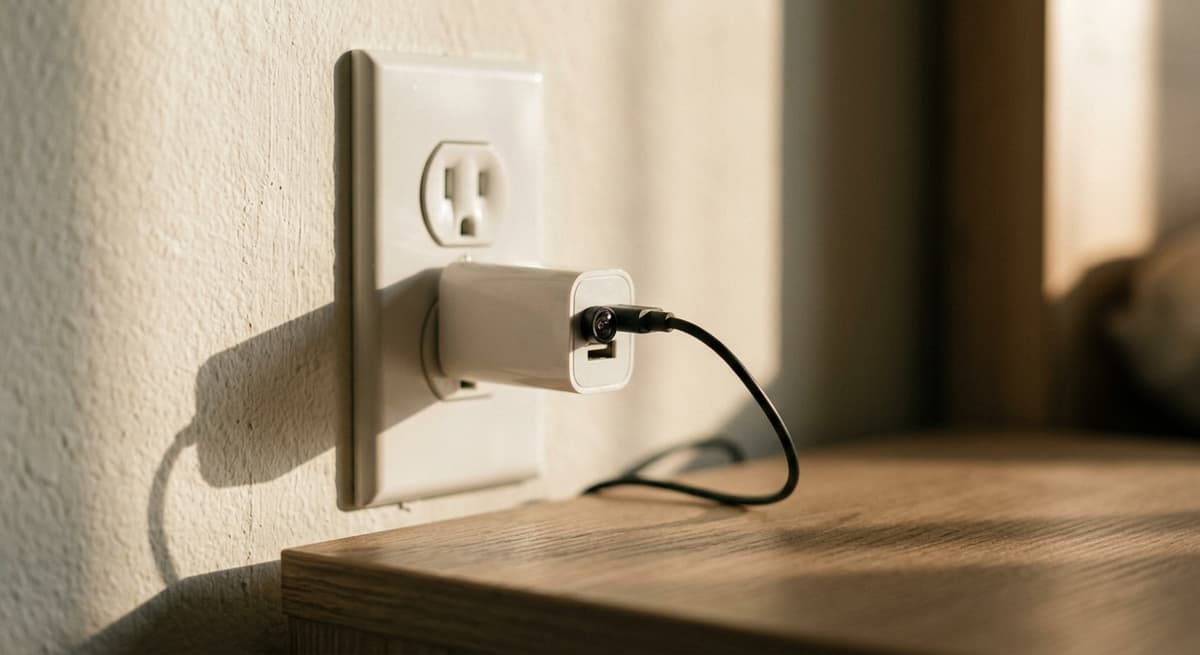
Hidden Cameras in Rental Properties
Landlords who install hidden cameras in rental units face severe criminal liability. Tenants have a reasonable expectation of privacy throughout their rented living space. A landlord who places a hidden camera:
- In a bathroom or bedroom faces both § 7507.1 charges (with sex offender registration) and Wiretap Act charges if audio is captured.
- In a living room with audio faces Wiretap Act felony charges.
- In common areas of multi-unit buildings may face charges depending on whether audio is captured and whether tenants have a reasonable expectation of privacy.
Hidden Cameras in Hotels and Short-Term Rentals
Guests in hotels, motels, Airbnb properties, and other short-term rentals have a reasonable expectation of privacy in their rooms. Property owners or operators who install hidden cameras in guest rooms face the same criminal exposure as landlords.
If you discover a hidden camera in a Pennsylvania hotel or rental property:
- Do not touch or remove the device (preserve evidence).
- Take photographs showing the camera's location.
- Contact local law enforcement immediately.
- Document the discovery with written notes.
- Contact the hotel management or rental platform.
Hidden Cameras in the Workplace
Employers who install hidden cameras in areas where employees have a reasonable expectation of bodily privacy face criminal liability:
- Restrooms and locker rooms: Hidden cameras in these locations violate § 7507.1 and potentially the Wiretap Act.
- Private offices: Hidden cameras with audio violate the Wiretap Act even if no nudity is involved.
- Common work areas: Silent video surveillance in common areas is generally permissible, but hidden cameras specifically designed to be undetectable raise additional legal concerns.
Intimate Partner Surveillance
Spouses and partners who install hidden cameras to monitor their partner's private activities face criminal liability under § 7507.1. Being in a relationship does not create blanket consent to recording. A person who hides a camera in a shared bathroom or bedroom to monitor their partner without consent can be charged with invasion of privacy and required to register as a sex offender.
Statute of Limitations
Prosecutions under § 7507.1 are subject to specific time limits:
- Standard limitation: A prosecution must commence within two years from the date the offense occurred.
- Delayed discovery: If the victim did not realize at the time that the offense occurred, the prosecution must commence within three years from the time the victim first learns of the violation.
The delayed discovery provision is important because many hidden camera offenses are not discovered until well after they occur. A victim who finds a hidden camera two years after it was installed still has three years from the date of discovery to pursue criminal charges.
Nonconsensual Pornography (Revenge Porn)
Pennsylvania addressed nonconsensual pornography through 18 Pa.C.S. § 3131, which was enacted to combat the distribution of intimate images without consent. This statute works alongside § 7507.1:
- § 7507.1 covers the initial act of secretly recording someone.
- § 3131 covers the distribution of intimate images, whether obtained secretly or originally shared consensually.
Disseminating a visual depiction of a current or former sexual or intimate partner in a state of nudity or engaged in sexual conduct, with intent to harass, annoy, or alarm that person, is a criminal offense in Pennsylvania under § 3131(a)(1), regardless of how the image was originally obtained. Section 3131(a)(2) separately criminalizes disseminating an artificially generated sexual depiction of any individual, with the same harassment intent, even outside a partner relationship.
Defenses and Exceptions
Law Enforcement Exception
The invasion of privacy statute does not apply to conduct performed by law enforcement officers during a lawful criminal investigation. This exception is narrow and requires that the surveillance be part of an authorized investigation.
Consent
Consent is a complete defense to both § 7507.1 and the Wiretap Act. If the person being recorded knowingly agreed to the recording, no offense occurred. However, consent must be informed and voluntary. Consent obtained through deception, coercion, or intoxication may not be legally valid.
Public Visibility
The intimate areas provision of § 7507.1 applies only when the intimate parts are "not intended to be visible by normal public observation." If someone is visibly exposed in a public setting, recording that visibility may not violate the statute. However, using a camera angle or zoom to capture views that would not be visible to a normal observer would likely violate the law.
Civil Remedies for Victims
Beyond criminal prosecution, victims of hidden camera recording and voyeurism have civil remedies available:
- Civil lawsuit for invasion of privacy under Pennsylvania common law, seeking compensatory damages for emotional distress, humiliation, and reputational harm.
- Civil action under § 5725 if the hidden camera captured audio in violation of the Wiretap Act, allowing recovery of $100 per day or $1,000 minimum, plus punitive damages and attorney fees.
- Protection from Abuse (PFA) orders if the voyeurism involves a current or former intimate partner.
- Tort claims for intrusion upon seclusion, public disclosure of private facts, or intentional infliction of emotional distress.
How to Detect Hidden Cameras
Pennsylvania residents concerned about hidden cameras can take these steps:
- Visual inspection: Check for unusual objects, holes in walls, or devices positioned to face beds, showers, or changing areas.
- Check for indicator lights: Many cameras have small LED lights that may be visible in a darkened room.
- Use a flashlight: Camera lenses reflect light. Sweep a flashlight across suspicious areas and look for reflections.
- RF detector: Radio frequency detectors can identify wireless cameras that transmit signals.
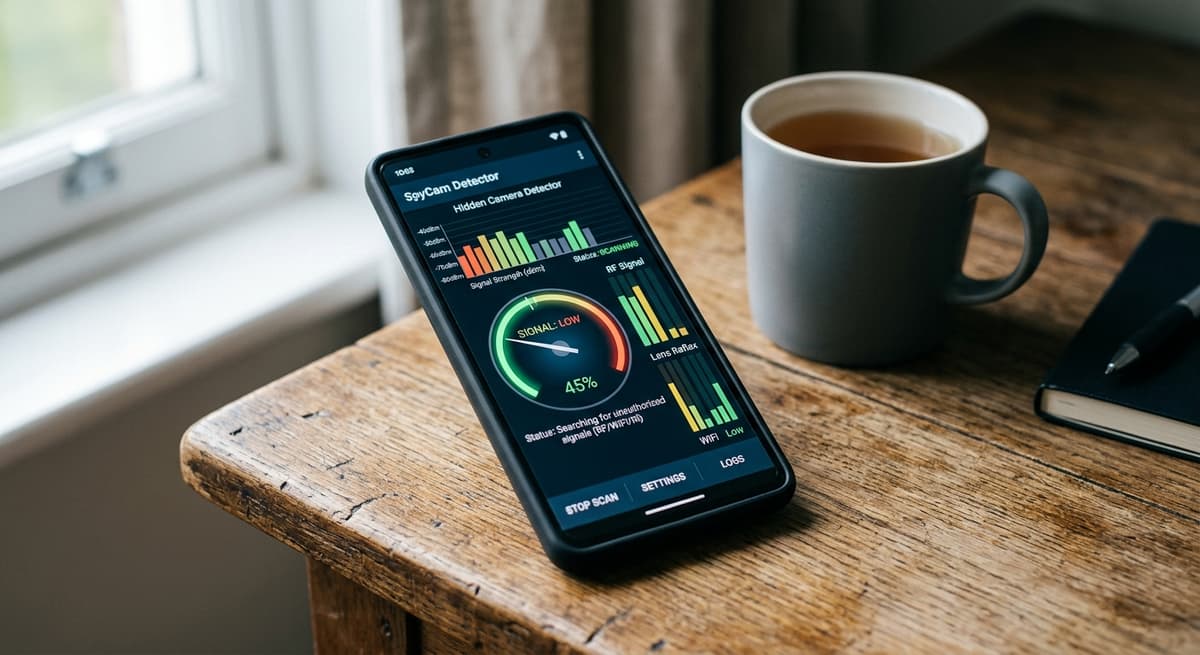
- Smartphone apps: Some apps claim to detect cameras using your phone's sensors, though their reliability varies.
- Professional sweep: For sensitive situations, consider hiring a professional surveillance detection service.
More Pennsylvania Recording Laws
Audio Recording | Video Recording | Voyeurism & Hidden Cameras | Workplace Recording | Recording Police | Phone Call Recording | Security Cameras | Recording in Public | Landlord-Tenant | Dashcam Laws | Schools | Medical Recording
Back to Pennsylvania Recording Laws
More Pennsylvania Recording Topics
More Pennsylvania Laws
Frequently Asked Questions
What are the penalties for hidden camera voyeurism in Pennsylvania?
A first offense under 18 Pa.C.S. § 7507.1 is a third-degree misdemeanor with up to 1 year in prison and a $2,500 fine. Multiple violations are a second-degree misdemeanor with up to 2 years and a $5,000 fine. The most severe consequence is mandatory sex offender registration, which applies to all convictions. If the hidden camera also captures audio, the Wiretap Act applies separately, adding potential third-degree felony charges with up to 7 years in prison.
Do I have to register as a sex offender for a voyeurism conviction in Pennsylvania?
Yes. A conviction under 18 Pa.C.S. § 7507.1 triggers mandatory sex offender registration under Pennsylvania's SORNA. This applies even to first offenses. Section 7507.1 is classified as a Tier I sexual offense under 42 Pa.C.S. § 9799.14(b), which requires 15 years of registration under 42 Pa.C.S. § 9799.15 (life if the person is separately adjudicated a sexually violent predator). Registration requires periodic in-person verification, community notification, and public listing on the state registry.
Is upskirting illegal in Pennsylvania?
Yes. Pennsylvania's invasion of privacy statute (18 Pa.C.S. § 7507.1) specifically prohibits photographing, videotaping, or recording the intimate parts of another person without their knowledge and consent when those parts are not intended to be visible by normal public observation. This covers upskirting, downblousing, and similar conduct, even in public places.
What should I do if I find a hidden camera in my Pennsylvania rental?
Do not touch or remove the device. Take photographs documenting its location. Contact local law enforcement immediately and file a police report. Write detailed notes about when and how you discovered the camera. Contact the rental platform (Airbnb, VRBO) or hotel management. Consider consulting an attorney about civil remedies including invasion of privacy claims and potential Wiretap Act violations.
Can my spouse legally put a hidden camera in our home in Pennsylvania?
Being married does not create blanket consent to hidden camera recording. A spouse who installs a hidden camera in a bathroom, bedroom, or other area where the other spouse has a reasonable expectation of privacy can be charged under 18 Pa.C.S. § 7507.1. If the camera captures audio, the Wiretap Act also applies. A conviction results in sex offender registration and potential felony charges.
Updates
Replaced dead pacodeandbulletin.gov and palegis.us statute citation links (including the page's sole citation for its title statute, § 7507.1) with working legis.state.pa.us mirrors; no legal claims changed.
Independently fact-checked against the cited primary sources; governing law re-checked for recent changes
Corrected an overstated claim about Pennsylvania's nonconsensual-intimate-image law: § 3131 requires the images depict a current or former sexual/intimate partner (or be an AI-generated sexual depiction) and requires intent to harass, annoy, or alarm, not a blanket ban on distributing any intimate image.
Corrected the SORNA registration claim: a 18 Pa.C.S. § 7507.1 conviction is specifically classified as a Tier I sexual offense under 42 Pa.C.S. § 9799.14(b), which fixes registration at 15 years under 42 Pa.C.S. § 9799.15 (not a variable 15/25-year/life range), absent a separate sexually-violent-predator determination.
Governing law re-checked for recent changes
Reviewed and approved by an editor
The Law Behind This Article
This article rests on the statutory provisions below, held in our own legal record and retrieved from the official source. Tap a section to read the operative text.
Pennsylvania Consolidated Statutes Title 18 (Crimes and Offenses)
§ 7507.1Invasion of privacyIn forcecited in 23 of our articles
(a) Offense defined.--Except as set forth in subsection (d), a person commits the offense of invasion of privacy if he, for the purpose of arousing or gratifying the sexual desire of any person, knowingly does any of the following: (1) Views, photographs, videotapes, electronically depicts, films or otherwise records another person without that person's knowledge and consent while that person is in a state of full or partial nudity and is in a place where that person would have a reasonable expectation of privacy. (2) Photographs, videotapes, electronically depicts, films or otherwise records or personally views the intimate parts, whether or not covered by clothing, of another person without that person's knowledge and consent and which intimate parts that person does not intend to be visible by normal public observation. (3) Transfers or transmits an image obtained in violation of paragraph (1) or (2) by live or recorded telephone message, electronic mail or the Internet or by any other transfer of the medium on which the image is stored.
Official text (excerpt) · last checked 2026-07-29 · Read the full text in our law library · Verify at palegis.us
Cited in 29 court opinions in our collectionLatest citing opinion in our collection: 2026
In the courts (editorial summary, independently checked):In Com. v. Dinell, Z. (2022), the Superior Court read section 7507.1(a)(1) as requiring four elements, including that the defendant acted for the purpose of arousing or gratifying sexual desire, and vacated a guilty plea where the defendant denied any sexual purpose and was told no such element existed.
Opinions citing this section in our collection:
- Commonwealth v. Muniz, J., Aplt. (Supreme Court of Pennsylvania 2017, 164 A.3d 1189)“…18 Pa.C.S. §6312(d) (relating to sexual abuse of children); 18 Pa.C.S. §7507.1 (relating to invasion of privacy); 18 U…”
- Com. v. Dinell, Z. (Superior Court of Pennsylvania 2022, 270 A.3d 530)✓A care home worker pled guilty to 14 counts of invasion of privacy for phone photos of nude residents, but said nothing sexual was involved. The court held section 7507.1(a)(1) requires a sexual purpose as an element and let him withdraw the plea.
- Commonwealth, Aplt v. Kingston, S. (Supreme Court of Pennsylvania 2016, 636 Pa. 438)“…olations” of a particular criminal offense. See, e.g., 18 Pa.C.S. § 7507.1(a.1) (listing circumstances under which…”
Identified automatically from the court opinions citing this section — not a ranking of which case controls.
Also relied on in: Pennsylvania Dashcam Laws: Mounting Rules, Audio Recording, and Evidence (2026), Pennsylvania Landlord-Tenant Recording and Surveillance Laws (2026), Pennsylvania Laws on Recording in Public: What Is Legal (2026)
§ 3131Unlawful dissemination of intimate imageIn forcecited in 6 of our articles
(a) Offense defined.--Except as provided in sections 5903 (relating to obscene and other sexual materials and performances), 6312 (relating to sexual abuse of children) and 6321 (relating to transmission of sexually explicit images by minor), a person commits the offense of unlawful dissemination of intimate image if, with intent to harass, annoy or alarm another, the person disseminates: (1) A visual depiction of the current or former sexual or intimate partner in a state of nudity or engaged in sexual conduct. (2) An artificially generated sexual depiction of an individual. (b) Defense.--It is a defense to a prosecution under this section that the actor disseminated the visual depiction with the consent of the person depicted. (c) Grading.-- (1) An offense under subsection (a)(1) shall be: (i) A misdemeanor of the first degree, when the person depicted is a minor. (ii) A misdemeanor of the second degree, when the person depicted is not a minor. (2) An offense under subsection (a)(2) shall be: (i) A misdemeanor of the first degree, when the person depicted is a minor. (ii) A misdemeanor of the second degree, when the person depicted is not a minor.
Official text (excerpt) · last checked 2026-07-29 · Read the full text in our law library · Verify at palegis.us
Cited in 4 court opinions in our collectionLatest citing opinion in our collection: 2021
Opinions citing this section in our collection:
- Haines, E. v. Suchevits, M. (Superior Court of Pennsylvania 2021)“…arass, annoy or alarm [the] former sexual . . . partner[.]” 18 Pa.C.S. § 3131(a).…”
- Com. v. Ortiz v. Jr. (Superior Court of Pennsylvania 2020)“…41 counts of unlawful dissemination of an intimate image (18 Pa.C.S. § 3131A); one count of intimidation of a witn…”
- Com. v. Canganelli, E. (Superior Court of Pennsylvania 2019)“…partner in a state of nudity or engaged in sexual conduct. 18 Pa.C.S. § 3131(a) Nudity is defined in sectio…”
Identified automatically from the court opinions citing this section — not a ranking of which case controls.
Also relied on in: Pennsylvania Deepfake Laws: AI Images, Voice Cloning & Penalties (2026), Pennsylvania Sexting Laws: Legal Consequences and Penalties
§ 5703Interception, disclosure or use of wire, electronic or oral communicationsIn forcecited in 38 of our articles
Except as otherwise provided in this chapter, a person is guilty of a felony of the third degree if he: (1) intentionally intercepts, endeavors to intercept, or procures any other person to intercept or endeavor to intercept any wire, electronic or oral communication; (2) intentionally discloses or endeavors to disclose to any other person the contents of any wire, electronic or oral communication, or evidence derived therefrom, knowing or having reason to know that the information was obtained through the interception of a wire, electronic or oral communication; or (3) intentionally uses or endeavors to use the contents of any wire, electronic or oral communication, or evidence derived therefrom, knowing or having reason to know, that the information was obtained through the interception of a wire, electronic or oral communication.
Official text (excerpt) · last checked 2026-08-31 · Read the full text in our law library · Verify at palegis.us
Cited in 121 court opinions in our collectionLatest citing opinion in our collection: 2026
In the courts (editorial summary, independently checked):Commonwealth v. Brachbill (1989) held Section 5703(1) is not limited to interceptions made with an intercepting device, so an officer who listened on a telephone extension without the prior approval Section 5704(2)(ii) requires violated the section, and the testimony had to be suppressed.
Opinions citing this section in our collection:
- Commonwealth v. Schaeffer (Supreme Court of Pennsylvania 1987, 370 Pa. Super. 179)“…and other electronic interceptions of communications, see 18 Pa.C.S. § 5703, carved out limited exceptions to these…”
- Commonwealth v. Bennett (Superior Court of Pennsylvania 1976, 245 Pa. Super. 457)“…ode, Act of Dec. 6, 1972, P.L. 1482, No. 334, § 1 et seq. 18 Pa.C.S. § 5703, as amended Dec. 27, 1974, P.L. 1007, N…”
- Commonwealth v. Brachbill (Supreme Court of Pennsylvania 1989, 520 Pa. 533)✓A state trooper listened on an extension phone to a call between a former inmate and a guard charged with abusing him; the court held section 5703 bars any willful interception, not only one using an intercepting device, so the trooper's testimony should have been suppressed.
Identified automatically from the court opinions citing this section — not a ranking of which case controls.
Also relied on in: Pennsylvania Smart Glasses Recording Laws (2026), Pennsylvania Audio Recording Laws: All-Party Consent Rules and Felony Penalties (2026), Pennsylvania Laws on Recording Doctors and Medical Appointments (2026)
Search our full record of US law — 2.1 million sections, every state + federal →
Sources and References
- 18 Pa.C.S. § 7507.1 - Invasion of Privacy(legis.state.pa.us).gov
- 18 Pa.C.S. \u00A7 5703 - Interception Prohibited(legis.state.pa.us).gov
- 18 Pa.C.S. \u00A7 5725 - Civil Action(legis.state.pa.us).gov
- 18 Pa.C.S. § 3131 - Nonconsensual Intimate Images(legis.state.pa.us).gov
- Pennsylvania State Police - SORNA(psp.pa.gov).gov
- Title 18 Chapter 57 - WESCA(legis.state.pa.us).gov
- 42 Pa.C.S. § 9799.15 - Period of Registration(legis.state.pa.us).gov