
Pennsylvania
Pennsylvania Audio Recording Laws: All-Party Consent Rules and Felony Penalties (2026)
Independently fact-checked against primary sources (last audited August 22, 2026). · Reviewed by the RecordingLaw editorial team. · Law checked current as of August 22, 2026. · 8 primary sources cited on this page. How we verify our legal content

Pennsylvania is an all-party consent state. Under 18 Pa.C.S. 5703, every participant in a wire, electronic, or oral communication must consent before any audio recording begins. Recording without that consent is a third-degree felony carrying up to seven years in prison and a $15,000 fine, making Pennsylvania's penalties among the harshest in the country.
Pennsylvania has one of the strictest audio recording laws in the United States. The Wiretapping and Electronic Surveillance Control Act (WESCA) requires consent from every party to a conversation before any audio recording can take place. Violating this law is not a misdemeanor or a civil infraction. It is a third-degree felony that carries up to 7 years in prison and a $15,000 fine. This guide explains every aspect of Pennsylvania's audio recording laws in 2026, including what counts as a protected communication, when you can and cannot record, the exceptions that apply, and the criminal and civil consequences of violations.
The Foundation: 18 Pa.C.S. § 5703
Pennsylvania's audio recording prohibition comes from 18 Pa.C.S. § 5703, which makes it a third-degree felony to "intentionally intercept, endeavor to intercept, or procure any other person to intercept or endeavor to intercept any wire, electronic or oral communication."
The statute covers three distinct types of communications:
- Wire communications: Any voice transmission made through wire, cable, or similar connection, including traditional phone calls and VoIP calls.
- Electronic communications: Any transfer of signs, signals, writing, images, sounds, data, or intelligence transmitted electronically, including emails, text messages, and digital voice transmissions.
- Oral communications: Any spoken communication where at least one party has a reasonable expectation of privacy, including face-to-face conversations in private settings.
Each of these communication types receives full protection under WESCA. The method of interception does not matter. Using a smartphone, a dedicated voice recorder, a smartwatch, a hidden microphone, or any other device to capture audio without all-party consent violates the statute.
The All-Party Consent Standard
Unlike the roughly 38 states that follow one-party consent rules, Pennsylvania demands that every person involved in a communication agree to its recording. This applies whether two people are talking or twenty people are on a conference call. If even one participant has not consented, the recording is illegal.
The term "two-party consent" is commonly used to describe this standard, but it is technically inaccurate. Pennsylvania's requirement is more accurately described as "all-party consent" because every participant must agree, not just two of them.
What Counts as a Protected "Oral Communication"
Not every spoken word in Pennsylvania is protected by WESCA. The statute specifically protects "oral communications," which are defined as conversations where the parties have a reasonable expectation of privacy.
When Conversations Are Protected
A conversation is protected under WESCA when the participants reasonably believe their exchange is private and not being overheard or recorded. Examples include:
- A private conversation between two people in a closed office
- A discussion in a conference room with the door shut
- A whispered exchange in a quiet corner of a restaurant
- A conversation in someone's home
- A private discussion between a doctor and patient in an exam room
When Conversations Are Not Protected
Conversations that take place in settings where privacy cannot reasonably be expected are generally not protected. Examples include:
- Shouting across a crowded public park
- Speaking at a podium during a public event
- Talking loudly in a busy coffee shop where others can easily overhear
- Conversations at government public meetings covered by the Pennsylvania Sunshine Act
- Statements made to a crowd or audience
The key factor is whether the parties took steps to keep their conversation private or spoke in a manner that indicated they expected privacy. Courts evaluate this on a case-by-case basis, considering the location, the volume of the conversation, the presence of third parties, and any steps taken to ensure privacy.
The Gray Areas
Many real-world situations fall into a gray area between clearly private and clearly public:
- Open-plan offices: A conversation at a desk in an open office may not carry a reasonable expectation of privacy if coworkers can easily overhear it.
- Restaurant booths: A quiet conversation at a restaurant booth might be considered private, while the same conversation at a busy bar counter might not.
- Hallways and lobbies: Conversations in semi-public spaces like apartment hallways or office lobbies may or may not be protected, depending on who else is present and how easily the conversation can be overheard.
- Parked cars: A conversation inside a parked car with the windows up typically carries a reasonable expectation of privacy.
When in doubt, treat the conversation as protected and obtain consent before recording. The consequences of guessing wrong are severe.
Exceptions to the All-Party Consent Rule

WESCA provides several exceptions under 18 Pa.C.S. § 5704. These exceptions are narrowly defined and do not provide broad permission to record.
Law Enforcement Exceptions
- Court-ordered wiretaps: A judge may authorize audio interception based on probable cause, following strict procedural requirements.
- One-party consent with prosecutorial approval: Law enforcement officers may record with the consent of one party, but only after review and approval by the Attorney General, a deputy attorney general, or a district attorney.
- Emergency interceptions: In situations involving immediate danger of death or serious physical injury, interception may occur without a court order, but a court order must be sought within 48 hours.
The Telemarketing and Customer Service Exception
Under § 5704(15), personnel of a business engaged in telephone marketing or customer service may intercept calls for training, quality control, or monitoring purposes, provided at least one party consents. This exception is limited to business telephone communications and does not extend to in-person conversations.
The 2024 Telemarketer Exception
As of February 12, 2024, Act 53 of 2023 (HB 1278) allows Pennsylvania consumers to record incoming telemarketing calls and robocalls without the caller's consent. This exception applies only when the recording is made to enforce the federal TCPA, Pennsylvania's Consumer Protection Law, or the Telemarketer Registration Act.
Public Meetings Under the Sunshine Act
The Pennsylvania Sunshine Act (65 Pa.C.S. § 711) expressly permits anyone attending a public government meeting to record the entire proceedings. The Wiretap Act does not apply to public meetings because there is no reasonable expectation of privacy.
Types of Audio Recording Devices and the Law
Pennsylvania's wiretapping law is technology-neutral. The type of device used to capture audio does not change the legal analysis.
Smartphones and Voice Recorder Apps
Using a smartphone's built-in voice recorder or a third-party recording app to capture a conversation requires all-party consent. The fact that smartphones are ubiquitous does not reduce the expectation of privacy that other people have in their conversations.
Dedicated Voice Recorders
Handheld voice recorders, pen recorders, and other dedicated audio capture devices are subject to the same all-party consent requirement. Carrying a recorder in your pocket during a meeting and capturing audio without consent is a felony.
Wearable Devices
Smartwatches, AI voice recorders, smart glasses, and other wearable recording devices that capture audio fall under the same rules. The discreet nature of these devices does not change the legal requirement for all-party consent. In fact, the hidden nature of wearable recorders may make it harder to demonstrate that consent was obtained.
Smart Home Devices
Devices like Amazon Alexa, Google Home, and Apple HomePod that continuously listen for wake words occupy a unique legal space. While these devices technically process audio, their primary function is to respond to voice commands rather than to record conversations. However, using a smart home device's features to intentionally capture and store a private conversation without consent could violate WESCA.
Security Systems with Audio
Home and business security systems that include audio recording capabilities must comply with WESCA. While silent video surveillance is generally permitted, enabling audio recording on a security camera that captures private conversations without consent violates the law.
Criminal Penalties for Illegal Audio Recording
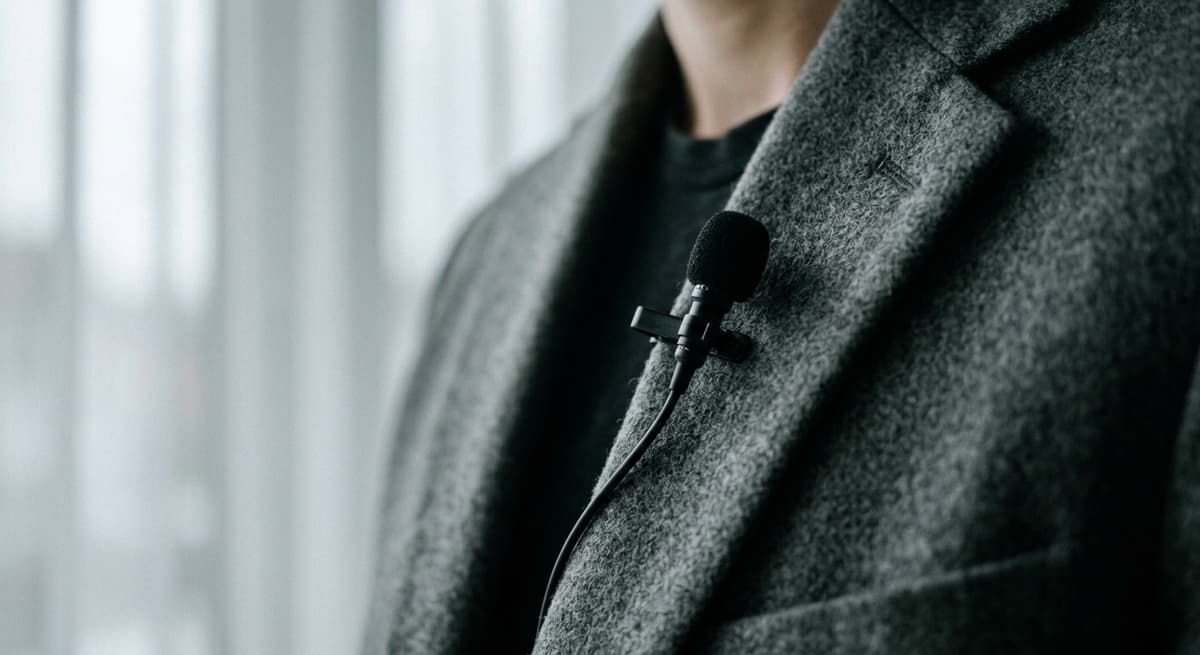
Pennsylvania imposes the harshest penalties in the nation for illegal audio recording.
| Offense | Classification | Maximum Prison | Maximum Fine |
|---|---|---|---|
| Illegal interception | Third-Degree Felony | Up to 7 years | Up to $15,000 |
| Illegal disclosure of contents | Third-Degree Felony | Up to 7 years | Up to $15,000 |
| Illegal use of contents | Third-Degree Felony | Up to 7 years | Up to $15,000 |
The statute punishes not only the act of recording but also the disclosure or use of illegally recorded material. If someone shares an illegally recorded conversation with a third party, both the person who made the recording and the person who disclosed it can face separate felony charges.
Collateral Consequences of a Felony Conviction
A third-degree felony conviction in Pennsylvania carries consequences beyond the immediate sentence:
- A permanent felony record that appears on background checks
- Loss of the right to possess firearms under both state and federal law
- Potential loss of professional licenses (law, medicine, teaching, nursing, real estate, and others)
- Difficulty obtaining employment, housing, and loans
- Immigration consequences for non-citizens, potentially including deportation
Civil Remedies Under § 5725
Victims of illegal audio recording can pursue civil damages under 18 Pa.C.S. § 5725. Available remedies include:
- Actual damages for any harm suffered
- Liquidated damages of $100 per day of violation, or $1,000 minimum, whichever is greater
- Punitive damages at the court's discretion
- Reasonable attorney fees and litigation costs
The statute also waives sovereign immunity, meaning government employees who violate the law can be held personally liable. This is an unusual provision that provides additional protection to Pennsylvania residents.
Evidence Suppression
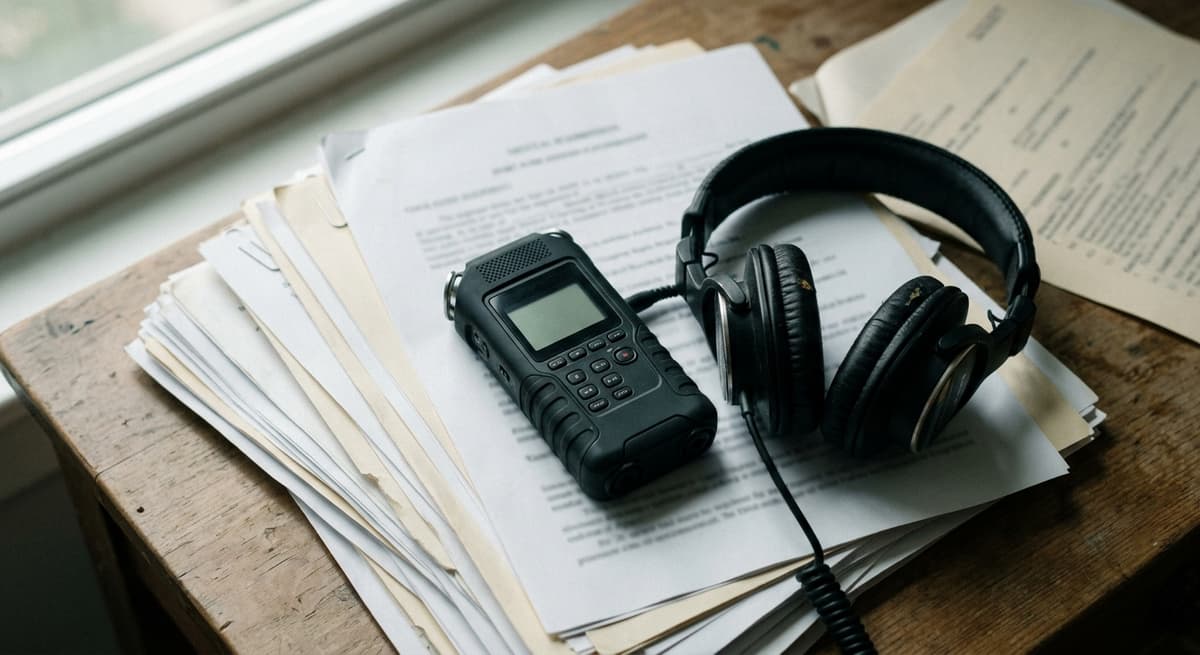
Under 18 Pa.C.S. § 5721.1, any audio recording obtained in violation of WESCA is inadmissible in any court, hearing, grand jury, or other proceeding. This exclusionary rule applies broadly and prevents the use of illegally obtained recordings even when they contain evidence of criminal activity by the recorded party.
This means that if you secretly record someone admitting to a crime, that recording cannot be used against them in court. The person who made the illegal recording, however, can be prosecuted for the felony of illegal interception.
WESCA's Sunset Provision and 2029 Extension
Pennsylvania's Wiretapping and Electronic Surveillance Control Act contains a sunset provision, meaning the legislature must periodically vote to extend it. In late 2023, the General Assembly passed and Governor Josh Shapiro signed Act 53 of 2023 (HB 1278), which extended WESCA through 2029.
The same bill also added the telemarketer recording exception and expanded body camera authorization to parole agents and corrections officers conducting internal affairs investigations.
How Pennsylvania Compares to Neighboring States
Pennsylvania's audio recording laws are among the strictest in the region.
| State | Consent Type | Penalty for Violation |
|---|---|---|
| Pennsylvania | All-Party | Third-degree felony: up to 7 years, $15,000 |
| New York | One-Party | Class E felony: up to 4 years |
| New Jersey | One-Party | Third-degree crime: 3-5 years (N.J.S.A. 2A:156A-4(d)) |
| Ohio | One-Party | Fourth-degree felony: up to 18 months |
| Delaware | All-Party (contested) | Class E felony: up to 5 years, $10,000 fine |
| Maryland | All-Party | Misdemeanor: up to 5 years |
| West Virginia | One-Party | Misdemeanor: up to 1 year |
Pennsylvania stands out as having the most severe criminal penalty in the region. Delaware's classification above is marked "contested" because its wiretap statute, 11 Del. C. § 2402(c)(4), is one-party consent on its face; the state's all-party reputation actually comes from tension with a separate privacy statute, 11 Del. C. § 1335. If you live near a state border or regularly travel between states, you must be aware of each state's consent requirements.
Practical Guidelines for Audio Recording in Pennsylvania
When You Can Record
- After obtaining clear consent from every person whose voice will be captured
- At public government meetings under the Sunshine Act
- In genuinely public settings where no one has a reasonable expectation of privacy
- Telemarketing calls and robocalls (as of February 2024)
- With law enforcement authorization under a court order or prosecutorial approval
When You Cannot Record
- Private conversations without all-party consent
- Phone calls without every participant's agreement
- Workplace meetings or discussions without consent from all attendees
- Private conversations in homes, offices, medical facilities, or other private settings
- Any conversation where participants have a reasonable expectation of privacy
Best Practices
- Always ask before recording. Make it a habit to announce your intent to record and wait for confirmation from every person present.
- Get consent on the record. When recording begins, state that all parties have agreed to the recording. This creates proof of consent within the recording itself.
- Respect refusals. If anyone declines to be recorded, do not record. Proceeding despite an objection is a felony.
- Be cautious with technology. Review settings on all devices that have audio recording capabilities, including smartphones, smartwatches, and security systems. Disable features that record audio automatically.
- Consult an attorney when facing situations where recording might be legally justified but the law is unclear.
More Pennsylvania Recording Laws
Audio Recording | Video Recording | Voyeurism & Hidden Cameras | Workplace Recording | Recording Police | Phone Call Recording | Security Cameras | Recording in Public | Landlord-Tenant | Dashcam Laws | Schools | Medical Recording
Back to Pennsylvania Recording Laws
More Pennsylvania Recording Topics
More Pennsylvania Laws
Frequently Asked Questions
Is it illegal to audio record someone in Pennsylvania without their knowledge?
Yes. Pennsylvania requires consent from every party before an audio recording can be made. Recording someone without their knowledge in a setting where they have a reasonable expectation of privacy is a third-degree felony under 18 Pa.C.S. § 5703, punishable by up to 7 years in prison and a $15,000 fine.
Can I record a conversation in a public place in Pennsylvania?
It depends on whether the parties have a reasonable expectation of privacy. If the conversation takes place in an open public area where others can easily overhear it, the law may not require consent. However, a quiet, private conversation in a public venue like a restaurant booth may still be protected. When in doubt, obtain consent from all parties.
Does Pennsylvania's audio recording law apply to security cameras?
Silent video recording is generally permitted, but security cameras that capture audio must comply with the all-party consent requirement under WESCA. Enabling audio recording on a security camera that captures private conversations without consent from all parties is a third-degree felony. Most security experts recommend disabling audio on security cameras in Pennsylvania.
Can I use a voice recorder app on my phone in Pennsylvania?
You can use a voice recorder app only if you obtain consent from every person whose voice will be recorded. Using a recording app to secretly capture a private conversation is a third-degree felony. Disable any auto-record features and always announce the recording before starting it.
What is the statute of limitations for illegal audio recording in Pennsylvania?
Pennsylvania does not specify a separate statute of limitations for wiretapping offenses. Under 42 Pa.C.S. § 5552, the general rule is a two-year limitations period; the five-year period in § 5552(b) applies only to specific enumerated Title 18 offenses, which do not include WESCA violations. Civil claims under § 5725 must be filed within two years of discovering the violation.
Updates
Corrected the neighboring-states comparison table: New Jersey is one-party consent (not all-party), and Delaware's wiretap penalty is a Class E felony up to 5 years with a $10,000 fine (not a Class D felony up to 8 years); also replaced dead pacodeandbulletin.gov and palegis.us statute citation links (both in the citations list and inline in the article) with working legis.state.pa.us mirrors.
Independently fact-checked against the cited primary sources; governing law re-checked for recent changes
Fixed the mislabeled § 5704(4) business-call exception (correct cite is § 5704(15)) and corrected the statute-of-limitations claim: WESCA/§ 5703 is not on § 5552(b)'s enumerated five-year offense list, so the general two-year period applies.
Governing law re-checked for recent changes
Reviewed and approved by an editor
The Law Behind This Article
This article rests on the statutory provisions below, held in our own legal record and retrieved from the official source. Tap a section to read the operative text.
Pennsylvania Consolidated Statutes Title 18 (Crimes and Offenses)
§ 5703Interception, disclosure or use of wire, electronic or oral communicationsIn forcecited in 38 of our articles
Except as otherwise provided in this chapter, a person is guilty of a felony of the third degree if he: (1) intentionally intercepts, endeavors to intercept, or procures any other person to intercept or endeavor to intercept any wire, electronic or oral communication; (2) intentionally discloses or endeavors to disclose to any other person the contents of any wire, electronic or oral communication, or evidence derived therefrom, knowing or having reason to know that the information was obtained through the interception of a wire, electronic or oral communication; or (3) intentionally uses or endeavors to use the contents of any wire, electronic or oral communication, or evidence derived therefrom, knowing or having reason to know, that the information was obtained through the interception of a wire, electronic or oral communication.
Official text (excerpt) · last checked 2026-08-31 · Read the full text in our law library · Verify at palegis.us
Cited in 121 court opinions in our collectionLatest citing opinion in our collection: 2026
In the courts (editorial summary, independently checked):Commonwealth v. Brachbill (1989) held Section 5703(1) is not limited to interceptions made with an intercepting device, so an officer who listened on a telephone extension without the prior approval Section 5704(2)(ii) requires violated the section, and the testimony had to be suppressed.
Opinions citing this section in our collection:
- Commonwealth v. Schaeffer (Supreme Court of Pennsylvania 1987, 370 Pa. Super. 179)“…and other electronic interceptions of communications, see 18 Pa.C.S. § 5703, carved out limited exceptions to these…”
- Commonwealth v. Bennett (Superior Court of Pennsylvania 1976, 245 Pa. Super. 457)“…ode, Act of Dec. 6, 1972, P.L. 1482, No. 334, § 1 et seq. 18 Pa.C.S. § 5703, as amended Dec. 27, 1974, P.L. 1007, N…”
- Commonwealth v. Brachbill (Supreme Court of Pennsylvania 1989, 520 Pa. 533)✓A state trooper listened on an extension phone to a call between a former inmate and a guard charged with abusing him; the court held section 5703 bars any willful interception, not only one using an intercepting device, so the trooper's testimony should have been suppressed.
Identified automatically from the court opinions citing this section — not a ranking of which case controls.
Also relied on in: Pennsylvania Voyeurism and Hidden Camera Laws: Penalties and Protections (2026), Pennsylvania Smart Glasses Recording Laws (2026), Pennsylvania Dashcam Laws: Mounting Rules, Audio Recording, and Evidence (2026)
§ 5704Exceptions to prohibition of interception and disclosure of communicationsIn forcecited in 19 of our articles
It shall not be unlawful and no prior court approval shall be required under this chapter for: (1) An operator of a switchboard, or an officer, agent or employee of a provider of wire or electronic communication service, whose facilities are used in the transmission of a wire communication, to intercept, disclose or use that communication in the normal course of his employment while engaged in any activity which is a necessary incident to the rendition of his service or to the protection of the rights or property of the provider of wire or electronic communication service. However, no provider of wire or electronic communication service shall utilize service observing or random monitoring except for mechanical or service quality control checks. (2) Any investigative or law enforcement officer or any person acting at the direction or request of an investigative or law enforcement officer to intercept a wire, electronic or oral communication involving suspected criminal activities, including, but not limited to, the crimes enumerated in section 5708 (relating to order authorizing interception of wire, electronic or oral communications), where: (i) (Deleted by amendment).
Official text (excerpt) · last checked 2026-07-29 · Read the full text in our law library · Verify at palegis.us
Cited in 126 court opinions in our collectionLatest citing opinion in our collection: 2026
In the courts (editorial summary, independently checked):Commonwealth v. Schaeffer (1987) concluded Article I, Section 8 requires a warrant for one party consensual electronic eavesdropping, reading 5704(2) as only exempting that practice, not authorizing it. Commonwealth v. Baumhammers (2008) held 5704(14)(i)(C) permits disclosing a recorded inmate call in any criminal prosecution.
Opinions citing this section in our collection:
- Commonwealth v. Baumhammers (Supreme Court of Pennsylvania 2008, 599 Pa. 1)✓The Commonwealth used a recorded jail phone call between an inmate and his parents at his murder trial; the court held section 5704(14) was not violated because all three knew the call was being recorded, and the contents were properly divulged for a criminal prosecution.
- Commonwealth v. Arrington (Supreme Court of Pennsylvania 2014, 624 Pa. 506)✓A murder defendant sought to suppress a call the victim recorded, on which he asked repeatedly whether he was being taped and said he did not care; the court addressed whether that amounted to prior consent under section 5704(4) but did not resolve it, finding any error harmless.
- Commonwealth v. Schaeffer (Supreme Court of Pennsylvania 1987, 370 Pa. Super. 179)✓Police sent a wired informant into Schaeffer's home to record a marijuana buy without a warrant; the en banc court read section 5704(2) as only exempting participant monitoring from the Wiretap Act, not authorizing it, and held the state constitution still required a warrant.
Identified automatically from the court opinions citing this section — not a ranking of which case controls.
Also relied on in: Pennsylvania Phone Call Recording Laws: Consent Rules and Penalties (2026), Pennsylvania Recording Laws (2026): All-Party Consent Rules, Pennsylvania AI Meeting Recording Laws: All-Party Consent and Felony Penalties (2026)
§ 5721.1Evidentiary disclosure of contents of intercepted communication or derivative evidenceIn forcecited in 20 of our articles
(a) Disclosure in evidence generally.-- (1) Except as provided in paragraph (2), no person shall disclose the contents of any wire, electronic or oral communication, or evidence derived therefrom, in any proceeding in any court, board or agency of this Commonwealth. (2) Any person who has obtained knowledge of the contents of any wire, electronic or oral communication, or evidence derived therefrom, which is properly subject to disclosure under section 5717 (relating to investigative disclosure or use of contents of wire, electronic or oral communications or derivative evidence) may also disclose such contents or evidence in any matter relating to any criminal, quasi-criminal, forfeiture, administrative enforcement or professional disciplinary proceedings in any court, board or agency of this Commonwealth or of another state or of the United States or before any state or Federal grand jury or investigating grand jury. Once such disclosure has been made, then any person may disclose the contents or evidence in any such proceeding.
Official text (excerpt) · last checked 2026-07-29 · Read the full text in our law library · Verify at palegis.us
Cited in 29 court opinions in our collectionLatest citing opinion in our collection: 2025
Opinions citing this section in our collection:
- Commonwealth v. Arrington (Supreme Court of Pennsylvania 2014, 624 Pa. 506)“…e contents of any wire communication in a court proceeding. 18 Pa.C.S. § 5721.1(a). An “aggrieved person,” party to a c…”
- Commonwealth v. Ruder (Superior Court of Pennsylvania 2013, 62 A.3d 1038)“…sionary rule that extends to non-constitutional violations. 18 Pa.C.S. § 5721.1(b); Commonwealth v. Spangler, 570 P…”
- Commonwealth v. Spangler (Supreme Court of Pennsylvania 2002, 570 Pa. 226)“…procurement of a court order, or without probable cause. 18 Pa.C.S. § 5721.1. [7] Presently, the Commonwealth and…”
Identified automatically from the court opinions citing this section — not a ranking of which case controls.
Also relied on in: Pennsylvania Laws on Recording Doctors and Medical Appointments (2026), Pennsylvania Security Camera and Surveillance Laws: Home and Business Rules (2026), Pennsylvania Video Recording Laws: Filming, Surveillance, and Consent Rules (2026)
§ 5725Civil action for unlawful interception, disclosure or use of wire, electronic or oral communicationIn forcecited in 14 of our articles
(a) Cause of action.--Any person whose wire, electronic or oral communication is intercepted, disclosed or used in violation of this chapter shall have a civil cause of action against any person who intercepts, discloses or uses or procures any other person to intercept, disclose or use, such communication; and shall be entitled to recover from any such person: (1) Actual damages, but not less than liquidated damages computed at the rate of $100 a day for each day of violation, or $1,000, whichever is higher. (2) Punitive damages. (3) A reasonable attorney's fee and other litigation costs reasonably incurred. (b) Waiver of sovereign immunity.--To the extent that the Commonwealth and any of its officers, officials or employees would be shielded from liability under this section by the doctrine of sovereign immunity, such immunity is hereby waived for the purposes of this section. (c) Defense.--It is a defense to an action brought pursuant to subsection (a) that the actor acted in good faith reliance on a court order or the provisions of this chapter.
Official text (excerpt) · last checked 2026-07-29 · Read the full text in our law library · Verify at palegis.us
Cited in 54 court opinions in our collectionLatest citing opinion in our collection: 2025
Opinions citing this section in our collection:
- Agnew v. Dupler (Supreme Court of Pennsylvania 1998, 553 Pa. 33)“…and shall be entitled to recover from any such person ... 18 Pa.C.S. § 5725(a). The Wiretap Act defines an “oral co…”
- McCulligan v. Pennsylvania State Police (Commonwealth Court of Pennsylvania 2015, 123 A.3d 1136)“…ust and proper pursuant to Section 5725 of the Wiretap Act, 18 Pa. C.S. § 5725. In April 2015, Responde…”
- Keppley v. School District of Twin Valley (Commonwealth Court of Pennsylvania 2005, 866 A.2d 1165)“…lectronic or oral communication. Section 5725 of the Act, 18 Pa.C.S. § 5725, authorizes a civil action by any perso…”
Identified automatically from the court opinions citing this section — not a ranking of which case controls.
Also relied on in: Pennsylvania Employee Monitoring Laws (2026): Workplace Surveillance Rights, Pennsylvania Ring Doorbell Laws: What You Need to Know in 2026
Pennsylvania Consolidated Statutes Title 42 (Judiciary and Judicial Procedure)
§ 5552Other offensesIn forcecited in 4 of our articles
(a) General rule.--Except as otherwise provided in this subchapter, a prosecution for an offense must be commenced within two years after it is committed. (b) Major offenses.--A prosecution for any of the following offenses must be commenced within five years after it is committed: (1) Under the following provisions of Title 18 (relating to crimes and offenses): Section 901 (relating to criminal attempt) involving attempt to commit murder where no murder occurs. Section 902 (relating to criminal solicitation) involving solicitation to commit murder where no murder occurs. Section 903 (relating to criminal conspiracy) involving conspiracy to commit murder where no murder occurs. Section 911 (relating to corrupt organizations). Section 2702 (relating to aggravated assault). Section 2706 (relating to terroristic threats). Section 2713 (relating to neglect of care-dependent person). Section 2901 (relating to kidnapping). Section 3301 (relating to arson and related offenses). Section 3502 (relating to burglary). Section 3701 (relating to robbery).
Official text (excerpt) · last checked 2026-07-29 · Read the full text in our law library · Verify at palegis.us
Cited in 114 court opinions in our collectionLatest citing opinion in our collection: 2026
Opinions citing this section in our collection:
- Commonwealth v. Goldhammer (Supreme Court of Pennsylvania 1985, 507 Pa. 236)“…that they were barred by a two-year statute of limitations. 42 Pa.C.S. § 5552(a). 322 Pa.Super. 242 , 469 A.2d 6…”
- Commonwealth, Aplt. v. Rose, S. (Supreme Court of Pennsylvania 2015, 633 Pa. 659)“…S. § 2501(a). The Commonwealth observes that, pursuant to 42 Pa.C.S. § 5552, “[a]n offense is committed either when…”
- Commonwealth v. Johnson (Supreme Court of Pennsylvania 1989, 520 Pa. 165)“…effective in 60 days (“Act 122”), the legislature amended 42 Pa.C.S. § 5552 to extend the statute of limitations fo…”
Identified automatically from the court opinions citing this section — not a ranking of which case controls.
Also relied on in: Pennsylvania Statute of Limitations: Filing Deadlines by Case Type
Pennsylvania Consolidated Statutes Title 65 (Public Officers)
§ 711Use of equipment during meetingsIn forcecited in 12 of our articles
(a) Recording devices.--Except as provided in subsection (b), a person attending a meeting of an agency shall have the right to use recording devices to record all the proceedings. Nothing in this section shall prohibit the agency from adopting and enforcing reasonable rules for their use under section 710 (relating to rules and regulations for conduct of meetings). (b) Rules of the Senate and House of Representatives.--The Senate and House of Representatives may adopt rules governing the recording or broadcast of their sessions and meetings and hearings of committees.
Official text (excerpt) · last checked 2026-07-29 · Read the full text in our law library · Verify at palegis.us
Also relied on in: Pennsylvania Laws on Recording Police: Your Rights and Limits (2026), Pennsylvania Laws on Recording in Public: What Is Legal (2026)
Explore the law
The laws cited above reference these related sections in their own text:
- Pennsylvania Consolidated Statutes Title 18 (Crimes and Offenses) § 3122.1 — Statutory sexual assault view in our statute record · read at the official source
- Pennsylvania Consolidated Statutes Title 18 (Crimes and Offenses) § 3124.1 — Sexual assault view in our statute record · read at the official source
Related law for further reading — not part of this article’s citations.
Search our full record of US law — 2.1 million sections, every state + federal →
Sources and References
- 18 Pa.C.S. \u00A7 5703 - Interception, Disclosure or Use Prohibited(legis.state.pa.us).gov
- 18 Pa.C.S. \u00A7 5704 - Exceptions to Prohibition of Interception(legis.state.pa.us).gov
- 18 Pa.C.S. \u00A7 5725 - Civil Action for Unlawful Interception(legis.state.pa.us).gov
- 18 Pa.C.S. § 5721.1 - Evidentiary disclosure of contents of intercepted communication(legis.state.pa.us).gov
- House Bill 1278 - WESCA Extension and Telemarketer Exception(palegis.us).gov
- Title 18 Chapter 57 - Wiretapping and Electronic Surveillance(legis.state.pa.us).gov
- Pennsylvania Sunshine Act - 65 Pa.C.S. \u00A7 711(legis.state.pa.us).gov
- 42 Pa.C.S. \u00A7 5552 - Statute of Limitations(legis.state.pa.us).gov