
Arizona
Leyes de Montaje en el Parabrisas en Arizona (Guía 2026)
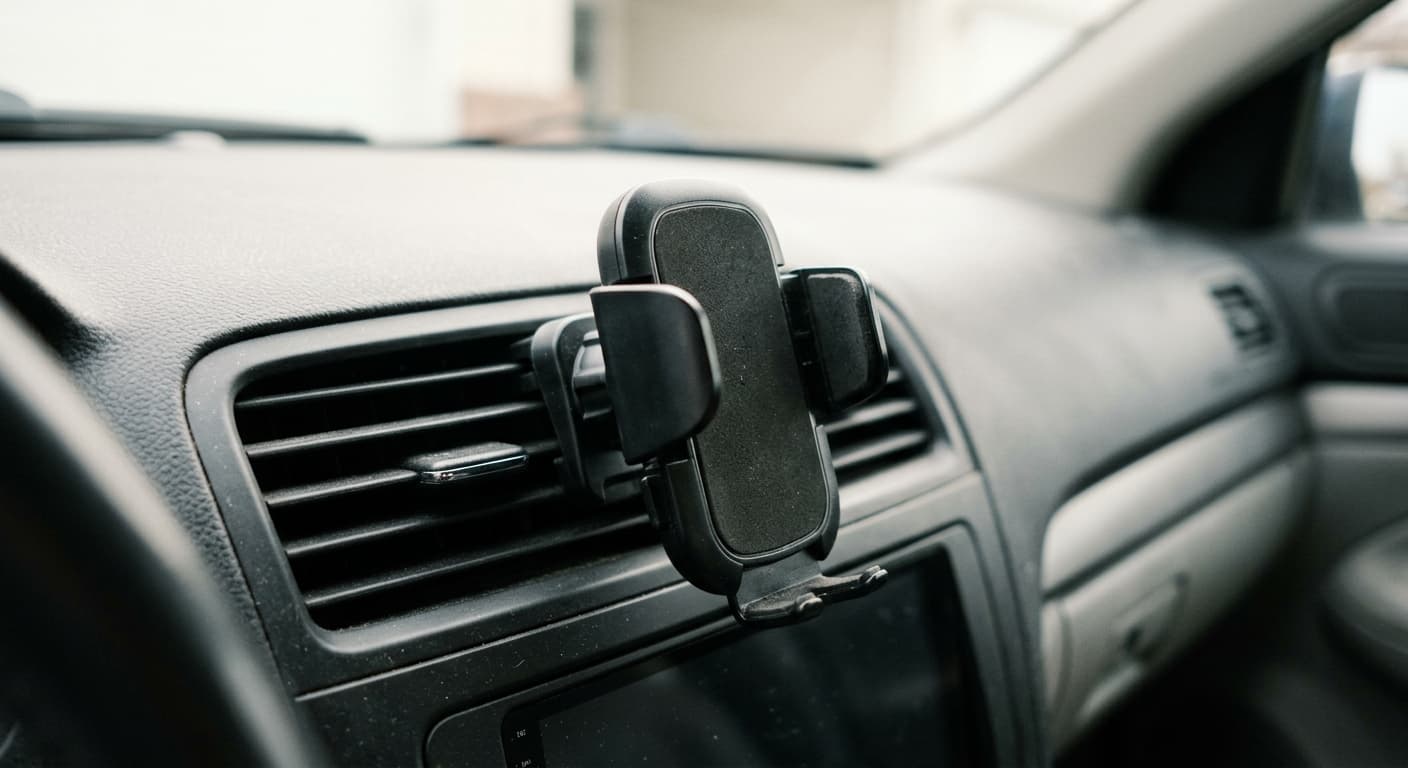
Arizona permite las cámaras de tablero, las unidades de GPS y los soportes para teléfono montados en el parabrisas conforme a ARS 28-959.01, siempre que el dispositivo no obstruya la visión clara del conductor. Las zonas de esquina inferior de 5 y 7 pulgadas del estatuto están redactadas para letreros, calcomanías y otros materiales, no para dispositivos electrónicos; una cámara de tablero puede en cambio calificar como equipo de monitoreo de seguridad montado inmediatamente detrás, ligeramente arriba o ligeramente abajo del espejo retrovisor, y un soporte de GPS o de teléfono es, por lo demás, más seguro en el tablero.
Arizona regula lo que los conductores pueden colocar en sus parabrisas mediante ARS 28-959.01, titulada "Materiales en las ventanas o el parabrisas; excepciones; requisitos; infracción; definiciones". La ley establece reglas estrictas de colocación y tamaño para cualquier objeto montado en el parabrisas, al tiempo que establece exenciones específicas para el equipo de seguridad, las calcomanías y las necesidades médicas.
Esta guía cubre cada parte de la ley que afecta a los soportes de GPS, las cámaras de tablero, los soportes para teléfono, los transpondedores de peaje y el polarizado.
Prohibición Central Conforme a ARS 28-959.01
El fundamento de la ley de montaje en el parabrisas de Arizona es una sola regla: una persona no puede operar un vehículo motorizado con un objeto o material colocado, exhibido, instalado, fijado o aplicado en el parabrisas o en las ventanas laterales o traseras de una manera que obstruya o reduzca la visión clara del conductor.
Este lenguaje aparece en ARS 28-959.01(B). No señala ningún tipo de dispositivo en particular. Cualquier objeto, ya sea un soporte de GPS, un soporte para teléfono, una cámara de tablero, un ambientador o una calcomanía, está sujeto a esta regla si afecta la visibilidad.
Una ley separada, ARS 28-893, refuerza este principio. Prohíbe operar un vehículo cuando la carga o los pasajeros obstruyen la visión del conductor hacia adelante o hacia los lados, o interfieren con el control del vehículo por parte del conductor.
Dónde se Pueden Montar los Dispositivos en el Parabrisas
La ley de Arizona no prohíbe todos los objetos montados en el parabrisas. ARS 28-959.01(A) enumera doce categorías de excepciones. Las dos más relevantes para los dispositivos de consumo son las zonas de calcomanías/materiales y la exención de equipo de monitoreo de seguridad.
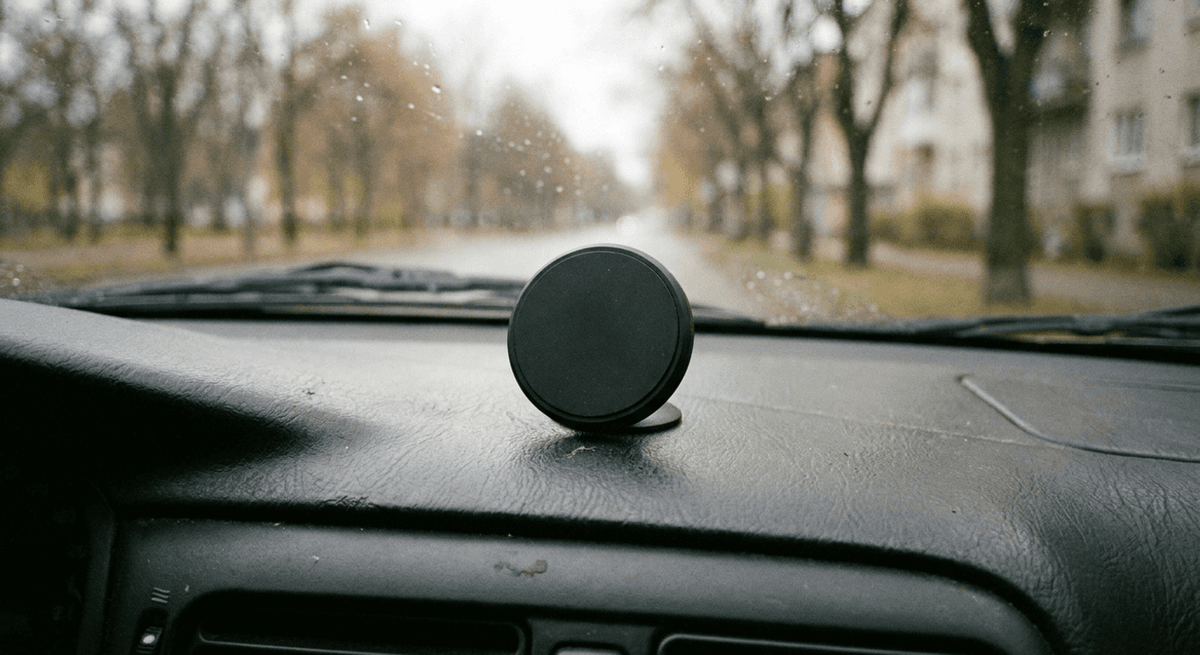
La Regla de Colocación en las Esquinas
Conforme a ARS 28-959.01(A), los letreros, calcomanías u otros materiales pueden exhibirse en cualquiera de estas ubicaciones:
| Ubicación | Tamaño Máximo |
|---|---|
| Esquina inferior del parabrisas más alejada del conductor (lado del pasajero) | Cuadrado de 7 pulgadas |
| Esquina inferior del parabrisas más cercana al conductor (lado del conductor) | Cuadrado de 5 pulgadas |
ARS 28-959.01(A)(5) redacta esta excepción para letreros, calcomanías u otros materiales, no para dispositivos electrónicos, por lo que cubre elementos como permisos de estacionamiento, calcomanías de transpondedores de peaje y calcomanías de inspección, en lugar de unidades de GPS, soportes para teléfono o cámaras de tablero. Un GPS, un soporte para teléfono o una cámara de tablero se evalúa, en cambio, conforme a la exención de equipo de monitoreo de seguridad de (A)(12) o al estándar general de obstrucción de ARS 28-959.01(B).
Exención de Equipo de Monitoreo de Seguridad
ARS 28-959.01(A)(12) establece una exención separada para los dispositivos de "equipo de monitoreo de seguridad y retroalimentación del conductor". Estos pueden montarse en cualquiera de las siguientes ubicaciones:
- Inmediatamente detrás, ligeramente arriba o ligeramente abajo del espejo retrovisor
- Donde normalmente se posicionaria el espejo retrovisor si el vehículo no tiene un espejo retrovisor montado en el parabrisas
Esta exención es importante para los usuarios de cámaras de tablero. Una cámara de tablero que califica como equipo de monitoreo de seguridad puede montarse detrás del espejo retrovisor sin necesidad de caber dentro de las zonas de esquina de 5 o 7 pulgadas. La mayoría de las cámaras de tablero para consumidores están diseñadas para montarse en esta ubicación.
La ley no define "equipo de monitoreo de seguridad", lo que otorga cierta discreción a las fuerzas del orden. Sin embargo, los dispositivos que registran eventos de conducción, monitorean el comportamiento del conductor o proporcionan advertencias de colisión generalmente se ubican dentro de esta categoría según su función.
Franja de Polarizado en la Parte Superior del Parabrisas
El material transparente puede aplicarse en la parte superior del parabrisas si el borde inferior esta a una altura de al menos 29 pulgadas por encima del asiento del conductor sin comprimir, medido desde un punto 5 pulgadas delante de la parte inferior del respaldo con el asiento en su posición más retrasada y más baja sobre una superficie nivelada. Esta disposición regula las franjas de polarizado (a veces llamadas "cejas") en la parte superior del parabrisas.
Soportes para GPS y Teléfono
Arizona no tiene una ley que aborde específicamente por nombre los dispositivos de GPS o los soportes para teléfonos inteligentes. Estos dispositivos se rigen por las reglas generales de obstrucción del parabrisas de ARS 28-959.01.
Opciones Legales de Colocación
Un soporte de GPS o teléfono es legal en Arizona si cumple una de estas condiciones:
- Detrás del espejo retrovisor: Si el dispositivo califica como equipo de monitoreo de seguridad conforme a ARS 28-959.01(A)(12)
- Soporte para el tablero: Montar en el tablero evita por completo las restricciones del parabrisas, siempre que el dispositivo no obstruya la visión a través del parabrisas
La excepción de esquina inferior de 5 y 7 pulgadas de ARS 28-959.01(A)(5) se aplica a letreros, calcomanías y otros materiales, no a dispositivos electrónicos, por lo que un soporte de GPS o de teléfono colocado en esas esquinas no está específicamente autorizado y, en cambio, se evaluaría conforme al estándar general de obstrucción de ARS 28-959.01(B).
Interacción con la Ley de Manos Libres
ARS 28-914, la ley de manos libres de Arizona vigente desde el 1 de enero de 2021, prohíbe sostener físicamente un dispositivo portátil de comunicación inalámbrica mientras se opera un vehículo. Se permite usar un dispositivo debidamente montado para navegación o GPS en manos libres.
La ley permite la comunicación y la navegación "sin el uso de ninguna de las manos del conductor, excepto para activar o desactivar una función del dispositivo". Un teléfono montado en el parabrisas o en el tablero usado para navegación cumple con este requisito siempre que el conductor no sostenga el dispositivo.
Multas conforme a la ley de manos libres:
| Infracción | Rango de Multa |
|---|---|
| Primera infracción | $75 a $149 |
| Infracciones posteriores | $150 a $250 |
Estas multas son independientes de cualquier citación por obstrucción del parabrisas.
Leyes sobre Cámaras de Tablero en Arizona
Las cámaras de tablero son legales en Arizona. El estado no prohíbe la grabación de video desde una cámara montada en el vehículo, y la ley de Arizona incorpora específicamente a las cámaras de tablero mediante la exención de equipo de monitoreo de seguridad.
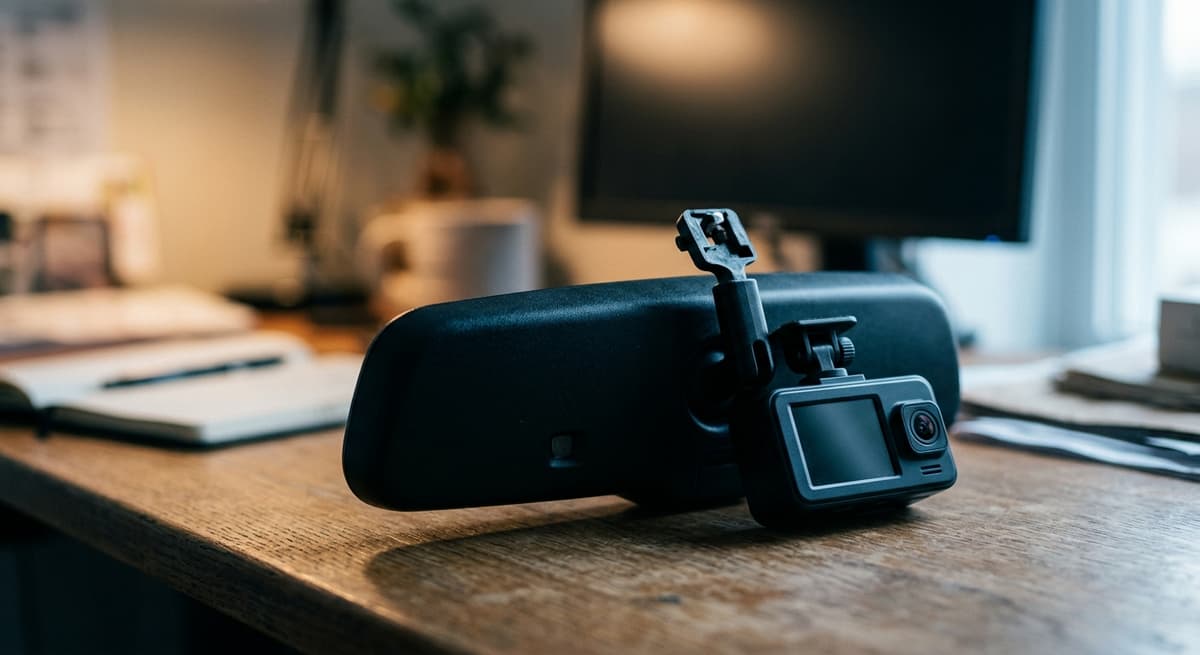
Requisitos de Montaje
Una cámara de tablero puede montarse legalmente en Arizona en cualquiera de estas posiciones:
- Detrás del espejo retrovisor conforme a la exención de equipo de monitoreo de seguridad de ARS 28-959.01(A)(12). Esta es la posición más común y recomendada.
- En el tablero, completamente fuera del parabrisas
Las zonas de esquina inferior de 5 y 7 pulgadas de ARS 28-959.01(A)(5) están redactadas para letreros, calcomanías y otros materiales, no para una cámara de tablero ni otro dispositivo electrónico.
La mayoría de las cámaras de tablero compactas caben cómodamente detrás del espejo retrovisor y no obstruyen la visión del conductor, lo que las hace totalmente conformes con la ley de Arizona.
Grabación de Audio y Consentimiento
Arizona es un estado de consentimiento de una sola parte para la grabación de audio conforme a ARS 13-3005. Esto significa que puede grabar legalmente conversaciones en su vehículo siempre que al menos una persona en la conversación (incluido usted, el conductor) consienta la grabación.
Si su cámara de tablero graba audio, su uso es legal en Arizona siempre que usted este presente en el vehículo. Grabar conversaciones entre pasajeros cuando usted no participa requeriría el consentimiento de al menos uno de esos pasajeros.
Interceptar comunicaciones sin el consentimiento de ninguna de las partes es un delito grave de Clase 5 conforme a ARS 13-3005, castigado con 6 meses a 2.5 años de prisión y multas de hasta $150,000. Esta sanción se aplica a la grabación secreta de conversaciones de las que usted no forma parte, no al uso estándar de una cámara de tablero por parte del conductor del vehículo.
Grabación de Video en Vías Públicas
Grabar video en vías públicas en Arizona no requiere el consentimiento de nadie. Las personas no tienen una expectativa razonable de privacidad en las vías públicas. ARS 13-3019 aborda la grabación subrepticia, pero se aplica a entornos privados donde una persona tiene una expectativa razonable de privacidad, no al metraje de cámara de tablero capturado en calles públicas.
Restricciones de Polarizado de Ventanas
ARS 28-959.01(C) prohíbe colocar material transparente en el parabrisas o en las ventanas laterales o traseras si el material altera el color o reduce la transmisión de luz del vidrio. Los estándares específicos son:
| Ventana | Reflectancia Luminosa Máxima | Transmisión de Luz Mínima |
|---|---|---|
| Ventanas laterales delanteras (conductor y pasajero) | 35% (+/- 3%) | 33% (+/- 3%) |
| Ventanas laterales traseras | 35% (+/- 3%) o menos | Sin mínimo (cualquier oscuridad) |
| Ventana trasera | 35% (+/- 3%) o menos | Sin mínimo (si el vehículo tiene ambos espejos laterales) |
| Parabrisas | No especificada en ARS 28-959.01 para la franja superior permitida | Solo se permite polarizado en la parte superior del parabrisas, con el borde inferior al menos 29 pulgadas por encima del asiento del conductor sin comprimir, y que no sea de color rojo ni ámbar |
Restricción de Polarizado Rojo y Ámbar
La única prohibición específica de color en ARS 28-959.01 es el párrafo A(11)(b): el material transparente aplicado en la parte superior del parabrisas no debe ser de color rojo ni ámbar. Arizona no tiene ninguna disposición separada que prohíba específicamente la película roja en todas las ventanas. La película en las ventanas laterales y traseras se rige, en cambio, por la subsección C, que prohíbe cualquier material transparente que altere el color o reduzca la transmisión de luz del parabrisas o de las ventanas laterales o traseras, sujeto a las excepciones enumeradas en la subsección A.
Certificación del Fabricante
Conforme a ARS 28-959.01(D), los fabricantes de película para ventanas o materiales transparentes deben certificar que sus productos cumplen con los estándares de reflectancia y transmisión de Arizona cuando se instalan correctamente.
Divulgación del Vendedor e Instalador
ARS 28-959.01(F) exige que cualquier persona que venda o instale película para ventanas divulgue de manera visible que la instalación puede ser ilegal en algunos estados. Esto protege a los consumidores que conducen entre distintos estados.
Exenciones Médicas
ARS 28-959.01(G) permite que el Departamento de Transporte de Arizona (ADOT) emita una exención médica de las restricciones de polarizado de ventanas. Para calificar, una persona debe:
- Tener una condición médica que requiera protección contra la luz solar directa
- Obtener una declaración escrita de un médico con licencia conforme al Título 32, Capítulo 13, 14 o 17 de Arizona
- Presentar la solicitud ante ADOT usando el Formulario 40-1511
La exención se aplica únicamente a las ventanas laterales y traseras. ARS 28-959.01(G) autoriza a una persona a operar un vehículo, alterar el color o reducir la luz transmitida a través de las ventanas laterales o traseras de un vehículo bajo una exención, por lo que no autoriza ningún polarizado del parabrisas.
La exención médica cubre un vehículo motorizado que pertenece al solicitante o un vehículo en el que el solicitante es pasajero habitual.
Restricciones de Dispositivos de Pantalla de Imágenes
ARS 28-963 agrega una capa separada de regulación para las pantallas visibles para el conductor. Mientras un vehículo esta en movimiento en una vía publica, el conductor no puede ver:
- Imágenes de televisión transmitida
- Contenido visual dinamico de un DVD u otro dispositivo de almacenamiento
- Cualquier imagen que cambie rápidamente y que no este relacionada con la navegación o la operación del vehículo
Las pantallas permitidas mientras se conduce incluyen:
- Mapas de navegación y GPS
- Información y controles del vehículo
- Imágenes de fondo estaticas
- Pantallas que mejoran la visión del conductor del área alrededor del vehículo (como las cámaras traseras)
- Dispositivos que muestran información destinada a mejorar la seguridad del tránsito
Esta ley interactúa con el uso de cámaras de tablero: una cámara de tablero que muestra una transmisión en vivo al conductor mientras conduce está permitida porque mejora la visión del conductor del área circundante. Sin embargo, ver una reproducción grabada en cualquier pantalla mientras se conduce infringiría ARS 28-963.
Reglas para Vehículos Comerciales
Los vehículos motorizados comerciales que operan en Arizona deben cumplir con las reglas estatales y federales de montaje en el parabrisas. La Administración Federal de Seguridad de Transportistas de Carga (FMCSA) emitió una regla final vigente desde el 6 de mayo de 2022, que modifico 49 CFR 393.60(e) para ampliar el área de montaje autorizada para la tecnología de seguridad vehicular en los parabrisas de vehículos motorizados comerciales.
Conforme a la regla de la FMCSA, los dispositivos pueden montarse hasta 8.5 pulgadas por debajo del borde superior del área barrida por los limpiaparabrisas. Esto es más permisivo que el límite anterior de 4 pulgadas. Los dispositivos cubiertos incluyen:
- Sistemas de cámara del conductor
- Sistemas de advertencia y asistencia de frenado
- Sistemas de advertencia de salida de carril
- Sistemas de GPS y navegación
- Sistemas de reconocimiento de señales de tránsito
Para los vehículos comerciales, la regla federal se aplica junto con los requisitos estatales de Arizona. Cuando las reglas estatales y federales difieren, el estándar más restrictivo rige la colocación del equipo de seguridad.
Requisitos sobre el Estado del Parabrisas
Más allá de las restricciones de montaje, la ley de Arizona establece requisitos básicos para el parabrisas en si.
Se Requiere Parabrisas
ARS 28-957.01 exige un parabrisas adecuado en todos los vehículos de pasajeros, camiones y tractocamiones. Existen excepciones para:
- Motocicletas, cuatrimotos y carritos de golf fabricados antes del 17 de junio de 1998
- Equipo agrícola clasificado como implementos agropecuarios
- Vehículos antiguos o clásicos que originalmente no estaban equipados con parabrisas
- Vehículos totalmente autónomos incapaces de ser operados por humanos
Vidrio de Seguridad
ARS 28-959 exige que todo el vidrio en las puertas, ventanas y parabrisas del vehículo sea vidrio de seguridad, definido como vidrio fabricado para evitar sustancialmente que se rompa y salga volando al ser golpeado o quebrado. El vidrio de reemplazo también debe ser vidrio de seguridad que cumpla con los estándares federales.
Grietas y Daños en el Parabrisas
Arizona no exige inspecciones de seguridad vehicular periódicas. Sin embargo, un parabrisas con grietas o daños que obstruyan la visión del conductor puede resultar en una citación conforme a las disposiciones generales de obstrucción de ARS 28-959.01(B). Las pautas federales utilizadas como puntos de referencia para la aplicación de la ley incluyen:
- No más de una grieta que se extienda hacia el área central del parabrisas (el espacio sobre el volante, que se extiende hasta 2 pulgadas de la parte superior y 1 pulgada de cada lado)
- Las astillas o grietas mayores a 3/4 de pulgada en la línea de visión directa del conductor deben repararse
- No se aceptan múltiples grietas, fisuras ramificadas o daños conectados en el área central
Limpiaparabrisas
ARS 28-957 exige limpiaparabrisas funcionales que el conductor pueda controlar y que sean capaces de eliminar la lluvia, la nieve y otra humedad.
Multas por Infracciones
Las infracciones de montaje y obstrucción del parabrisas conforme a ARS 28-959.01 son faltas civiles de tránsito en Arizona. No existe un monto de multa fijo a nivel estatal. En cambio, cada tribunal de condado establece su propio programa de multas.
| Jurisdicción | Multa Típica por Infracción de ARS 28-959.01 |
|---|---|
| Condado de Coconino | $164 |
| Condado de Mohave | $105 a $212 |
| Condado de Maricopa (área de Phoenix) | $150 a $250 |
| Otros condados | Varía según el tribunal |
Además de la multa base, los tribunales de Arizona agregan recargos y cargos adicionales que pueden aumentar el monto total adeudado. Una infracción no agrega puntos a su historial de conducción, ya que se clasifica como un asunto civil (no penal) de tránsito.
Los oficiales tienen discreción en la aplicación de la ley. Es poco probable que una cámara de tablero pequeña y bien colocada detrás del espejo retrovisor genere una citación. Es más probable que una unidad de GPS grande que bloquea una parte significativa del parabrisas resulte en una detención y una multa.
Resumen de las Reglas de Colocación
| Tipo de Dispositivo | Opciones Legales de Colocación | Ley Clave |
|---|---|---|
| GPS / Navegación | Tablero, o detrás del espejo si califica como equipo de monitoreo de seguridad | ARS 28-959.01(A)(12), (B) |
| Soporte para teléfono (manos libres) | Tablero, o detrás del espejo si califica como equipo de monitoreo de seguridad | ARS 28-959.01(A)(12), (B), ARS 28-914 |
| Cámara de tablero | Detrás del espejo retrovisor (preferido, como equipo de seguridad), tablero | ARS 28-959.01(A)(12) |
| Transpondedor de peaje | Esquinas inferiores (zonas de 5" o 7") | ARS 28-959.01(A) |
| Permiso de estacionamiento / calcomanía | Esquinas inferiores (zonas de 5" o 7") | ARS 28-959.01(A) |
| Franja de polarizado | Parte superior del parabrisas, por encima de 29" desde el asiento | ARS 28-959.01(A) |
Más Leyes de Arizona
- Leyes de Grabación de Arizona
- Ley del Limón de Arizona
- Leyes de Arizona sobre Accidentes con Fuga
- Leyes de Arizona sobre Asientos para Niños
Preguntas frecuentes
¿Puedo poner un GPS o teléfono en el parabrisas en Arizona?
Sí, con restricciones. Conforme a ARS 28-959.01, el dispositivo no debe obstruir su visión a través del parabrisas. Las zonas de esquina inferior de 5 y 7 pulgadas del estatuto se aplican a letreros y calcomanías, no a dispositivos electrónicos, por lo que las ubicaciones legales más seguras para un soporte de GPS o de teléfono son el tablero o, si califica como equipo de monitoreo de seguridad, detrás del espejo retrovisor. La ley de manos libres de Arizona (ARS 28-914) exige que los teléfonos se usen en manos libres mientras se conduce.
¿Dónde debo montar una cámara de tablero en Arizona?
La mejor ubicación es detrás del espejo retrovisor. ARS 28-959.01(A)(12) exime al equipo de monitoreo de seguridad montado inmediatamente detrás, ligeramente arriba o ligeramente abajo del espejo retrovisor. Esta posición mantiene la cámara de tablero fuera de la línea de visión del conductor y cumple con la ley. Las zonas de tamaño de esquina inferior de ARS 28-959.01(A)(5) están redactadas para letreros y calcomanías, no para cámaras de tablero, por lo que montarla en el tablero es una mejor alternativa que las zonas de esquina.
¿Es legal grabar audio con la cámara de tablero en Arizona?
Sí. Arizona es un estado de consentimiento de una sola parte conforme a ARS 13-3005. Siempre que usted (el conductor) este presente y consienta la grabación, su cámara de tablero puede grabar legalmente el audio de las conversaciones en su vehículo. Grabar conversaciones de las que usted no forma parte sin el consentimiento de ninguna de las partes es un delito grave de Clase 5.
¿Cuál es la multa por una infracción de obstrucción del parabrisas en Arizona?
Las multas varían según el condado porque Arizona no establece un monto único a nivel estatal para las faltas civiles de tránsito. Las multas típicas van de $100 a $250 antes de los recargos. El Condado de Coconino, por ejemplo, tiene una multa de $164 para las infracciones de ARS 28-959.01.
¿Puedo obtener una exención médica para un polarizado de ventanas más oscuro en Arizona?
Sí. Conforme a ARS 28-959.01(G), ADOT puede otorgar una exención si un médico certifica que usted tiene una condición médica que requiere protección contra la luz solar. La exención cubre únicamente las ventanas laterales y traseras y no autoriza el polarizado del parabrisas. Presente la solicitud usando el Formulario 40-1511 de ADOT.
Actualizaciones
Se corrigieron las secciones de polarizado de ventanas y exención médica de Arizona: se eliminaron las referencias a una línea AS-1 inexistente en ARS 28-959.01, se reemplazaron con la medida de 29 pulgadas de la parte superior del parabrisas que sí establece el estatuto, se limitó la exención médica a las ventanas laterales y traseras, y se corrigió la afirmación sobre el polarizado rojo para restringirla a la franja superior del parabrisas (que también excluye el color ámbar).
Se corrigió la orientación de colocación para GPS, soportes de teléfono y cámaras de tablero: la excepción de esquina de 5/7 pulgadas del parabrisas (ARS 28-959.01(A)(5)) aplica a letreros, calcomanías y materiales similares, no a dispositivos electrónicos, que en cambio dependen de la exención de equipo de monitoreo de seguridad cerca del espejo o de un soporte en el tablero.
La ley detrás de este artículo
Este artículo se apoya en las disposiciones legales a continuación, conservadas en nuestro propio registro jurídico y obtenidas de la fuente oficial. Toque una sección para leer el texto vigente.
Arizona Revised Statutes, Title 28 (Transportation), Chapter 3 (TRAFFIC AND VEHICLE REGULATION), Article 16 (Equipment)
§ 28-959.01Materials on windows or windshield; exceptions; requirements; violation; definitionsVigentecitada en 5 de nuestros artículos
A. This section does not apply to: 1. Front side wing vents and windows that have a substance or material in conjunction with glazing material that has a light transmission of thirty-three percent plus or minus three percent and a luminous reflectance of thirty-five percent plus or minus three percent. 2. Front side wing vents and windows that have a substance or material not attached in conjunction with glazing material that is used by a vehicle operator on a moving vehicle during daylight hours as provided in section 28-922. 3. Rearview mirrors. 4. Adjustable nontransparent sun visors that are mounted forward of the side windows and that are not attached to the glass. 5. Signs, stickers or other materials that are either: (a) Displayed in a seven inch square in the lower corner of the windshield farthest removed from the driver. (b) Displayed in a five inch square in the lower corner of the windshield nearest the driver. 6. Side windows that are to the rear of the driver and rear windows that have a substance or material in conjunction with glazing material that has a luminous reflectance of thirty-five percent plus or minus three percent or less. 7.
Texto oficial (extracto) · verificado el 2026-09-07 · Lea el texto completo en nuestra biblioteca legal · Verifique en azleg.gov
Citada en 2 resoluciones judiciales de nuestra colecciónResolución más reciente que la cita en nuestra colección: 2016
Resoluciones que citan esta sección en nuestra colección:
- State of Arizona v. Jesus Ramiro Moreno (Court of Appeals of Arizona 2014, 236 Ariz. 347)“…vehicle based on mistaken view of the law). 4Under A.R.S. § 28-959.01(A)(1), window tint on the front-side wi…”
- State v. Meza-Contreras (Court of Appeals of Arizona 2016)“…er that obstructs or restricts the driver’s clear view. See A.R.S. § 28-959.01.B; see also A.R.S. § 28- 1594 (An offic…”
Identificado automáticamente a partir de las opiniones judiciales que citan esta sección; no es un ranking de qué caso prevalece.
§ 28-963Image display device; prohibition; exceptions; definitionVigentecitada en 2 de nuestros artículos
A. While a person is driving a motor vehicle and the motor vehicle is in motion on a public roadway or on an off-highway vehicle trail as defined in section 28-1171, the person shall not: 1. View a broadcast television image or a visual image from an image display device within the motor vehicle unless the visual image is a static background image or imagery in support of mapping services or applications. 2. Watch a video or movie on a portable wireless communication device or stand-alone electronic device other than watching data related to the navigation of the motor vehicle, except that a person may view data related to the navigation of the motor vehicle, vehicle information or information related to driving a motor vehicle. 3. Record or broadcast a video on a portable wireless communication device or stand-alone electronic device, except that the person may use the devices for the sole purpose of continuously recording or broadcasting video within or outside of the motor vehicle. B. A person shall not operate a motor vehicle with an image display device that is visible to a driver seated in a normal driving position when the vehicle is in motion. C.
Texto oficial (extracto) · verificado el 2026-08-04 · Lea el texto completo en nuestra biblioteca legal · Verifique en azleg.gov
§ 28-957.01Windshields required; exceptionsVigentecitada en 2 de nuestros artículos
A. The following vehicles shall be equipped with an adequate windshield: 1. A passenger vehicle, except a motorcycle, an all-terrain vehicle and a golf cart manufactured or modified before June 17, 1998. 2. A motor truck or truck tractor, except fire trucks, fire engines or other fire apparatus, whether publicly or privately owned. B. This section does not apply to any of the following: 1. An implement of husbandry. 2. An antique, classic or horseless carriage automobile if it was not originally equipped with a windshield. 3. A fully autonomous vehicle that is incapable of operation by a human driver.
Texto oficial (extracto) · verificado el 2026-08-04 · Lea el texto completo en nuestra biblioteca legal · Verifique en azleg.gov
Citada en 2 resoluciones judiciales de nuestra colecciónResolución más reciente que la cita en nuestra colección: 2003
Resoluciones que citan esta sección en nuestra colección:
- State v. Vera (Court of Appeals of Arizona 1999, 196 Ariz. 342)“…iously cracked "windshield. ¶ 7 Appellee argues that A.R.S. § 28-957.01(A) is unduly vague as to what constitut…”
- United States v. Alfred Garcia-Rivera (Court of Appeals for the Ninth Circuit 2003, 353 F.3d 788)“…ated for driving a motor vehicle with a cracked windshield. A.R.S. § 28-957.01; State v. Vera, 196 Ariz…”
Identificado automáticamente a partir de las opiniones judiciales que citan esta sección; no es un ranking de qué caso prevalece.
§ 28-959Safety glass required; applicability; denial or suspension of registration; definitionVigente
A. A person shall not sell and the department shall not register a new motor vehicle as specified in this section unless the vehicle is equipped with safety glass wherever glass is used in doors, windows and windshields. B. This section applies to passenger motor vehicles, other than golf carts, including passenger buses and school buses. For trucks, including truck tractors, the requirements of this section for safety glass apply to all glass used in doors, windows and windshields in the drivers' compartments of the vehicles. C. The director shall not register a new motor vehicle unless it is equipped with an approved type of safety glass. The director shall suspend the registration of any motor vehicle that is subject to this section and that the director finds is not equipped with an approved type of safety glass. The suspension shall continue until the motor vehicle is made to conform to the requirements of this section. D. A person shall not replace glass or glazing materials used in partitions, doors, windows, windshields or wind deflectors in a motor vehicle with a material other than safety glass. E.
Texto oficial (extracto) · verificado el 2026-08-04 · Lea el texto completo en nuestra biblioteca legal · Verifique en azleg.gov
§ 28-957Windshield wipers required; exceptionsVigente
A. The windshield on a motor vehicle shall be equipped with a device for cleaning rain, snow or other moisture from the windshield. The device shall be constructed in a manner to be controlled or operated by the driver of the vehicle. B. A windshield wiper on a motor vehicle shall be maintained in good working order. C. This section does not apply to a golf cart or a fully autonomous vehicle that is incapable of operation by a human driver.
Texto oficial (extracto) · verificado el 2026-08-04 · Lea el texto completo en nuestra biblioteca legal · Verifique en azleg.gov
Arizona Revised Statutes, Title 28 (Transportation), Chapter 3 (TRAFFIC AND VEHICLE REGULATION), Article 15 (Miscellaneous Rules)
§ 28-893Obstruction to view; interference with drivingVigente
A. A person shall not drive a vehicle when the vehicle's load or passengers obstruct the driver's view to the front or sides of the vehicle or interfere with the driver's control over the vehicle's driving mechanism. B. A passenger in a vehicle shall not ride in a position that interferes with the driver's view ahead or to the sides or that interferes with the driver's control over the vehicle's driving mechanism.
Texto oficial (extracto) · verificado el 2026-08-04 · Lea el texto completo en nuestra biblioteca legal · Verifique en azleg.gov
Citada en 3 resoluciones judiciales de nuestra colecciónResolución más reciente que la cita en nuestra colección: 1988
Resoluciones que citan esta sección en nuestra colección:
- Alires v. Southern Pacific Company (Arizona Supreme Court 1963, 93 Ariz. 97)“…ecord, a proper instruction incorporating the provisions of A.R.S. § 28-893 would unlawfully permit the jury to spe…”
- Mitchell v. Colquette (Arizona Supreme Court 1963, 93 Ariz. 211)“…times, be left to the juryi” • 3 . See A.R.S. § 28-893 (B) “No passenger in a vehicle shall ri…”
- Santiago v. Phoenix Newspapers, Inc. (Court of Appeals of Arizona 1988, 162 Ariz. 86)“…ot violate the statutes governing traffic in Arizona. See A.R.S. §§ 28-893 and 28-956. At most, a vehicle with a l…”
Identificado automáticamente a partir de las opiniones judiciales que citan esta sección; no es un ranking de qué caso prevalece.
§ 28-914Use of portable wireless communication device while driving; prohibition; civil penalty; state preemption; definitionsVigentecitada en 2 de nuestros artículos
A. Unless a motor vehicle is parked or stopped pursuant to section 28-645, subsection A, paragraph 3 or section 28-851, a person may not operate a motor vehicle on a street or highway if the person does either of the following: 1. Physically holds or supports with any part of the person's body either of the following: (a) A portable wireless communication device, except that a person may use a portable wireless communication device with an earpiece, headphone device or device worn on a wrist to conduct a voice-based communication. (b) A stand-alone electronic device. 2. Writes, sends or reads any text-based communication, including a text message, instant message, email or internet data, on a portable wireless communication device or stand-alone electronic device. This paragraph does not apply to either of the following: (a) The use of voice-based communications, including through the use of a portable wireless communication device or stand-alone electronic device, to direct the writing, sending, reading or other communicating of any text-based communication.
Texto oficial (extracto) · verificado el 2026-08-04 · Lea el texto completo en nuestra biblioteca legal · Verifique en azleg.gov
Citada en 1 resoluciones judiciales de nuestra colecciónResolución más reciente que la cita en nuestra colección: 2025
Resoluciones que citan esta sección en nuestra colección:
- Sanchez v. Lily Transportation Corporation (District Court, D. Arizona 2025)“…ited by 26 statute, is punishable only by civil penalty. A.R.S. § 28-914(D). Although the absence of 27 crimi…”
Identificado automáticamente a partir de las opiniones judiciales que citan esta sección; no es un ranking de qué caso prevalece.
Arizona Revised Statutes, Title 13 (Criminal Code), Chapter 30 (EAVESDROPPING AND COMMUNICATIONS)
§ 13-3005Interception of wire, electronic and oral communications; installation of pen register or trap and trace device; classification; exceptionsVigentecitada en 23 de nuestros artículos
A. Except as provided in this section and section 13-3012, a person is guilty of a class 5 felony who either: 1. Intentionally intercepts a wire or electronic communication to which he is not a party, or aids, authorizes, employs, procures or permits another to so do, without the consent of either a sender or receiver thereof. 2. Intentionally intercepts a conversation or discussion at which he is not present, or aids, authorizes, employs, procures or permits another to so do, without the consent of a party to such conversation or discussion. 3. Intentionally intercepts the deliberations of a jury or aids, authorizes, employs, procures or permits another to so do. B. Except as provided in sections 13-3012 and 13-3017, a person who intentionally and without lawful authority installs or uses a pen register or trap and trace device on the telephone lines or communications facilities of another person which are utilized for wire or electronic communication is guilty of a class 6 felony.
Texto oficial (extracto) · verificado el 2026-08-31 · Lea el texto completo en nuestra biblioteca legal · Verifique en azleg.gov
Citada en 7 resoluciones judiciales de nuestra colecciónResolución más reciente que la cita en nuestra colección: 2025
En los tribunales (resumen editorial, verificado de forma independiente):State v. Morrison (2002) sostuvo que 13-3005 penaliza la interceptación ilícita pero no ordena excluir pruebas, por lo que una grabación hecha en su violación no es inadmisible de forma automática. State v. Hauss (1984) sostuvo que la sección no aplicaba a una conversación en la sala de entrevistas de una comisaría, donde no había expectativa razonable de privacidad.
Resoluciones que citan esta sección en nuestra colección:
- State v. Morrison (Court of Appeals of Arizona 2002, 203 Ariz. 489)“…ause it was made without his or her consent in violation of A.R.S. § 13-3005 and 18 U.S.C. § 2511 and was, therefo…”
- State v. Hauss (Court of Appeals of Arizona 1984, 142 Ariz. 159)✓La policía grabó en secreto la conversación de un sospechoso ya arrestado con su novia en una sala de entrevistas de la estación, tras avisarle a ella que la sala estaba siendo vigilada; la corte sostuvo que no había una expectativa razonable de privacidad en ese entorno, así que la sección 13-3005 no aplicaba.
- State v. Allgood (Court of Appeals of Arizona 1992, 171 Ariz. 522)“…communication.” (Emphasis added.) See also A.R.S. § 13-3005. (penalizing as a class 5 felony interc…”
Identificado automáticamente a partir de las opiniones judiciales que citan esta sección; no es un ranking de qué caso prevalece.
También citada en: Grabaciones como prueba: reglas judiciales por estado
§ 13-3019Surreptitious photographing, videotaping, filming or digitally recording or viewing; exemptions; classification; definitionsVigentecitada en 17 de nuestros artículos
A. It is unlawful for any person to knowingly photograph, videotape, film, digitally record or by any other means secretly view, with or without a device, another person without that person's consent under either of the following circumstances: 1. In a restroom, bathroom, locker room, bedroom or other location where the person has a reasonable expectation of privacy and the person is urinating, defecating, dressing, undressing, nude or involved in sexual intercourse or sexual contact. 2. In a manner that directly or indirectly captures or allows the viewing of the person's genitalia, buttock or female breast, whether clothed or unclothed, that is not otherwise visible to the public. B. It is unlawful to disclose, display, distribute or publish a photograph, videotape, film or digital recording made in violation of subsection A of this section without the consent or knowledge of the person depicted. C. This section does not apply to: 1.
Texto oficial (extracto) · verificado el 2026-09-23 · Lea el texto completo en nuestra biblioteca legal · Verifique en azleg.gov
Citada en 8 resoluciones judiciales de nuestra colecciónResolución más reciente que la cita en nuestra colección: 2026
En los tribunales (resumen editorial, verificado de forma independiente):State of Arizona v. Whytte Dragun Duncan (2024) determinó que una cámara oculta en un baño establecía probabilidad razonable de grabación subrepticia bajo 13-3019, lo que sustentó una orden de registro. State of Arizona v. Agustin Gonzalez Gongora (2014) contrastó la sección con el estatuto de voyerismo, que exige fin de estimulación sexual.
Resoluciones que citan esta sección en nuestra colección:
- State of Arizona v. Agustin Gonzalez Gongora (Court of Appeals of Arizona 2014, 235 Ariz. 178)✓Un hombre se agachó detrás de una compradora en una tienda y le miró debajo del vestido; condenado bajo el estatuto separado de voyeurismo, argumentó que un borrador de reforma de 2006 hacía que mirar debajo de la falda fuera solo un delito de la sección 13-3019, y la corte rechazó esa lectura de los dos estatutos.
- Tucson Unified School District v. Borek (Court of Appeals of Arizona 2014, 234 Ariz. 364)“…g or recording another person without their consent.” See A.R.S. § 13-3019(A), (D).…”
- State of Arizona v. Whytte Dragun Duncan (Court of Appeals of Arizona 2024, 548 P.3d 1128)✓Un padre de crianza escondió una cámara dentro de un cargador USB en el baño y grabó a adolescentes bañándose y desvistiéndose; la corte sostuvo que, aun excluyendo la tarjeta SD registrada ilegalmente, la declaración jurada mostraba probabilidad razonable de un delito de la sección 13-3019.
Identificado automáticamente a partir de las opiniones judiciales que citan esta sección; no es un ranking de qué caso prevalece.
También citada en: Leyes estatales sobre letreros de cámaras de seguridad
Code of Federal Regulations Title 49
§ 393.60Glazing in specified openings.Vigentecitada en 15 de nuestros artículos
(a) Glazing material. Glazing material used in windshields, windows, and doors on a motor vehicle manufactured on or after December 25, 1968, shall at a minimum meet the requirements of Federal Motor Vehicle Safety Standard (FMVSS) No. 205 in effect on the date of manufacture of the motor vehicle. The glazing material shall be marked in accordance with FMVSS No. 205 (49 CFR 571.205, S6). (b) Windshields required. Each bus, truck and truck-tractor shall be equipped with a windshield. Each windshield or portion of a multi-piece windshield shall be mounted using the full periphery of the glazing material. (c) Windshield condition. With the exception of the conditions listed in paragraphs (c)(1), (c)(2), and (c)(3) of this section, each windshield shall be free of discoloration or damage in the area extending upward from the height of the top of the steering wheel (excluding a 51 mm (2 inch) border at the top of the windshield) and extending from a 25 mm (1 inch) border at each side of the windshield or windshield panel.
Texto oficial (extracto) · verificado el 2026-07-28 · Lea el texto completo en nuestra biblioteca legal · Verifique en ecfr.gov
Citada en 3 resoluciones judiciales de nuestra colecciónResolución más reciente que la cita en nuestra colección: 2021
En los tribunales (resumen editorial, verificado de forma independiente):El mínimo de 70 por ciento de transmisión de luz del 49 CFR 393.60(d) cubre el parabrisas y las ventanas inmediatamente a la derecha e izquierda del conductor. Grooms Hauling, LLC v. Robinson (2020) lo aplicó mediante la adopción de Pensilvania y rechazó reclamos de discriminación racial por las multas de polarizado; State v. Ford (2021) señaló que Kansas también lo adopta.
Resoluciones que citan esta sección en nuestra colección:
- United States of America, Government v. Robert L. Pierre, Defendant (District Court, D. New Hampshire 2015, 2015 DNH 083)“…rallel luminous transmittance of not less than 70 percent.” 49 C.F.R. 393.60(c). Neither the Government nor the defe…”
- GROOMS HAULING, LLC v. ROBINSON (District Court, E.D. Pennsylvania 2020)✓Agentes citaron repetidamente a una empresa de acarreo de dueños afroamericanos cuyas ventanas dejaban pasar solo del 17 al 20 por ciento de la luz; al tomar el estándar de 70 por ciento de 49 CFR 393.60 como regla aplicable, el tribunal otorgó juicio sumario a los agentes.
- State v. Ford (Court of Appeals of Kansas 2021)“…Relevant to this appeal are regulations on window tinting (49 C.F.R. § 393.60[d]), medical examiner certificates (49…”
Identificado automáticamente a partir de las opiniones judiciales que citan esta sección; no es un ranking de qué caso prevalece.
Fuentes y referencias
- ARS 28-959.01 - Materiales en las ventanas o el parabrisas; excepciones; requisitos; infracción; definiciones(azleg.gov).gov
- ARS 28-893 - Obstrucción de la visión; interferencia con la conducción(azleg.gov).gov
- ARS 28-914 - Uso de dispositivo portátil de comunicación inalámbrica al conducir; prohibición; sanción civil; prevalencia estatal; definiciones(azleg.gov).gov
- ARS 13-3005 - Interceptación de comunicaciones por cable, electrónicas y orales; clasificación; excepciones(azleg.gov).gov
- ARS 13-3019 - Fotografiar, videograbar, filmar o grabar digitalmente de manera subrepticia; exenciones; clasificación(azleg.gov).gov
- ARS 28-963 - Dispositivo de pantalla de imágenes; prohibición; excepciones; definición(azleg.gov).gov
- ARS 28-957.01 - Se requieren parabrisas; excepciones(azleg.gov).gov
- ARS 28-959 - Se requiere vidrio de seguridad; aplicabilidad; definición(azleg.gov).gov
- Formulario 40-1511 de ADOT - Solicitud de Exención Médica para Polarizado de Ventanas(apps.azdot.gov).gov
- ADOT - Exención de Polarizado de Ventanas(azdot.gov).gov
- Regla Final de la FMCSA - Área de Parabrisas Autorizada para Tecnología de Seguridad Vehicular (49 CFR 393.60)(federalregister.gov).gov