
Pennsylvania
Pennsylvania Self-Driving Car Laws: Act 130 and PennDOT (2026)
Independently fact-checked against primary sources (last audited September 30, 2026). · 20 primary sources cited on this page. How we verify our legal content
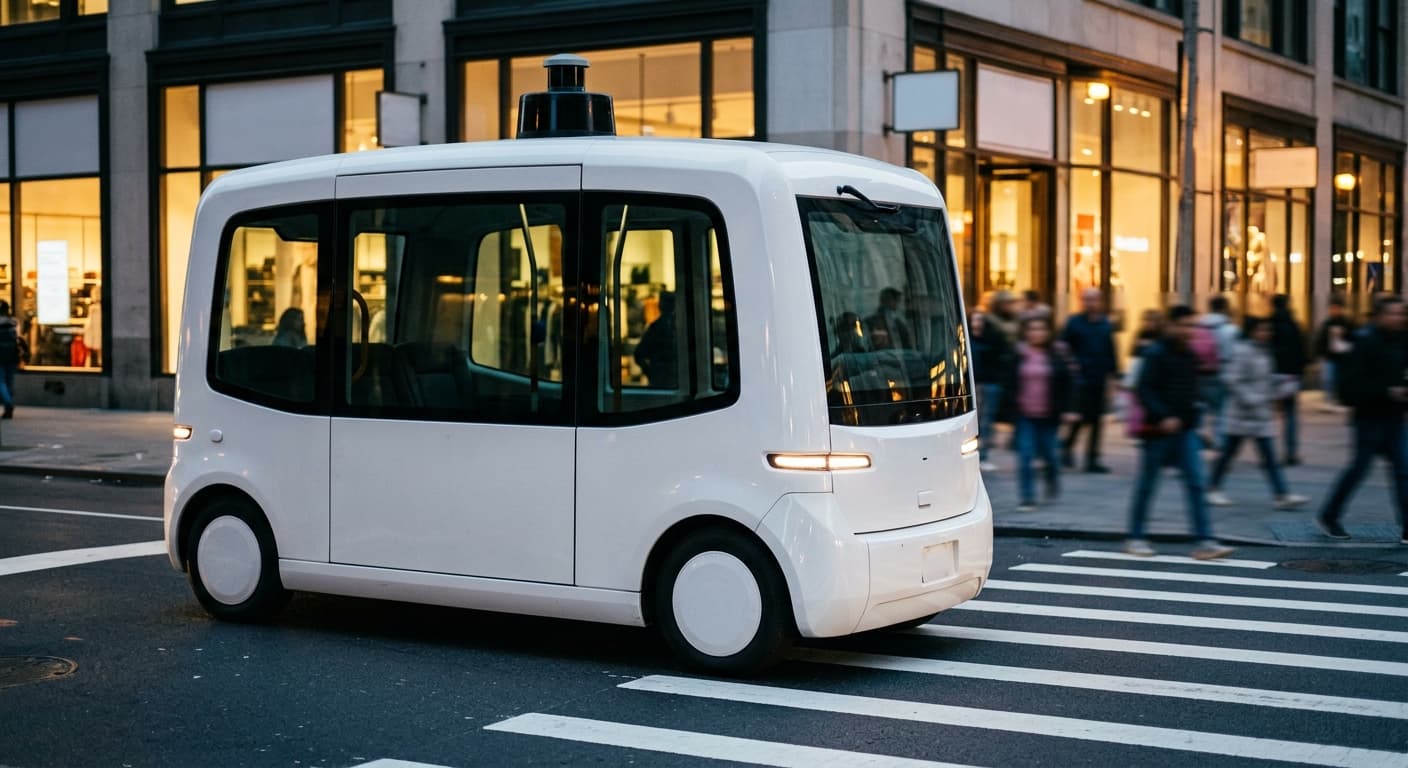
Yes, self-driving cars may operate on Pennsylvania roads, including with no one inside, but only if the company running them holds a certificate of compliance from the Pennsylvania Department of Transportation (PennDOT). The rules are in Chapter 85 of the Vehicle Code (Title 75), rewritten by Act 130 of 2022. As of September 2026, every company on PennDOT's public list of certificate holders, Waymo included, is listed as operating with a human "HAV driver on board."
Are self-driving cars legal in Pennsylvania?
Yes, for companies that hold a PennDOT certificate of compliance. Section 8508(a) says a certificate holder "may operate, subject to the operation requirements of this section, a highly automated vehicle with or without a highly automated vehicle driver on a highway in this Commonwealth."
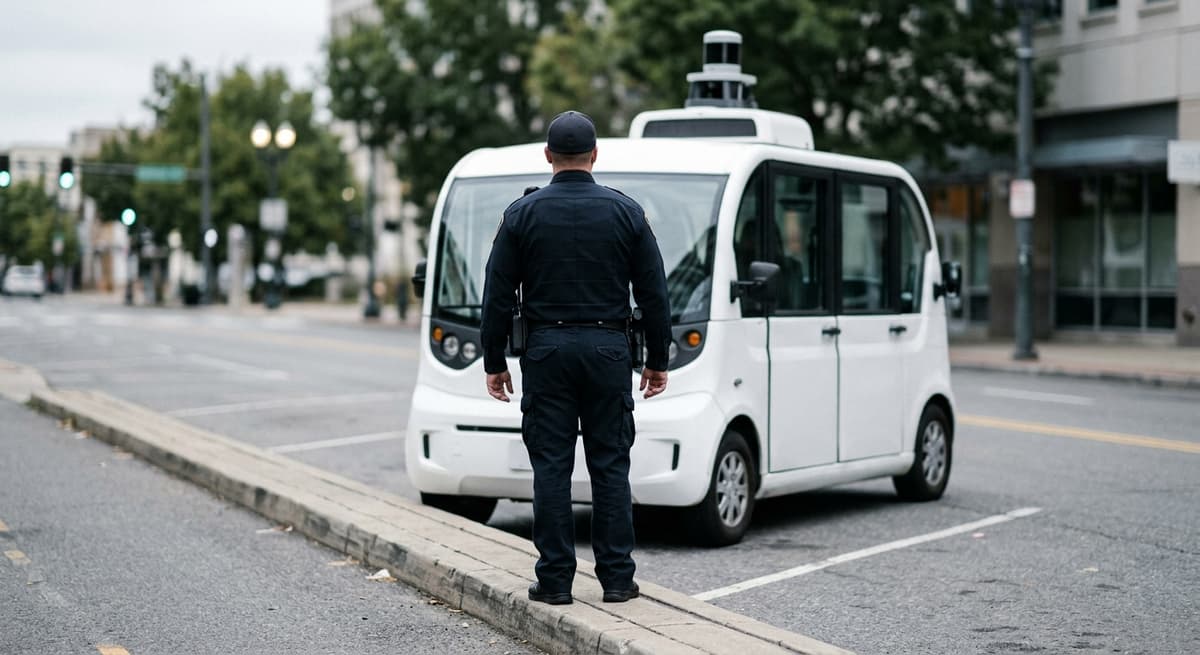
The same certificate covers testing and commercial service. PennDOT describes Act 130, signed in November 2022, as the law that "legalized commercial operations of HAVs" and authorizes them to run at Level 3, 4 or 5 "with or without a human driver." Most of Act 130 took effect on July 1, 2023, according to PennDOT's Act 130 summary.
Pennsylvania has regulated this field since Act 117 of 2018, which created the advisory committee and platooning rules. Act 130 replaced the earlier testing-guidance approach with the current certificate system and added the driverless pathway.
What counts as a "highly automated vehicle"
Title 75 defines a highly automated vehicle as "a motor vehicle equipped with an automated driving system." The automated driving system, or ADS, is the hardware and software "collectively capable of performing the entire dynamic driving task on a sustained basis," at Level 3, 4 or 5 under the SAE J3016 standard.
That line matters for ordinary drivers. A system that steers and brakes but needs you to watch the road at all times, such as adaptive cruise control with lane centering, is not capable of performing the entire driving task, so it is not an ADS. You remain the driver, and every normal rule applies to you. Our guide to the levels of driving automation explains where the lines fall.
A few other definitions shape the rest of the chapter:
- Highly automated vehicle driver. An authorized employee or contractor of a certificate holder who is responsible for all or part of the driving task and is either on board or "in a remote location within the United States" and able to monitor and control the vehicle.
- Minimal risk condition. "A stable, stopped condition" the vehicle reaches to reduce crash risk when a trip "cannot or should not be continued."
- Operational design domain (ODD). The conditions, such as geography, weather and time of day, a given system is designed to handle.
- Personal delivery devices (sidewalk delivery robots) are expressly excluded from the HAV definition and are governed by a separate subchapter.
Can I own and use a self-driving car in Pennsylvania?
Not under the current law. Section 8504 bars anyone from operating an HAV on a Pennsylvania highway unless "the firm, copartnership, association, corporation or educational or research institution is a certificate holder," or the person is an HAV driver approved by a certificate holder. Individuals are not on that list.
PennDOT's own Act 130 summary says it plainly: "individuals are not recognized as certificate holders for HAVs, and new legislation will be needed to authorize the personal ownership of an HAV at Levels 3 to 5." The HAV Advisory Committee's 2025 annual report notes that consumer-grade Level 3 vehicles are already available to the public and records focus-group recommendations to allow individual ownership. Those are recommendations, not law.
How PennDOT's certificate of compliance works
A company gets a certificate by self-certifying to PennDOT (section 8506). The form must include:
- The applicant's name and contact details, including a point of contact for accident claims and a registered agent for service of process.
- Vehicle identification and proof of registration.
- Proof of the insurance required by section 8508(f).
- A safety management plan covering the vehicle, its ADS, its operational design domain and, if used, its HAV drivers.
- Nonproprietary documents the company filed with the National Highway Traffic Safety Administration, including any federal exemptions.
- Consent that the vehicle will obey Pennsylvania and federal law, and consent to the jurisdiction of Pennsylvania courts "for actions arising out of or resulting from any accident involving the highly automated vehicle in this Commonwealth."
PennDOT's review is deliberately limited (section 8507). If the department does not reject the form within 30 days, the form "shall be considered complete and a certificate of compliance shall be issued." PennDOT may reject only an incomplete form, a form that does not certify the vehicle meets Title 75, or one with materially inaccurate information when the applicant does not answer clarifying questions. PennDOT may not require the certificate to be renewed.
PennDOT's Certificate of Compliance Guidelines (Publication 950) add detail, such as separate certifications for vehicles run with an on-board driver, a remote driver, or no driver. For driverless vehicles, the guidelines require the company to certify, among other things, that the vehicle can identify and obey traffic-control devices and can identify and yield to emergency services responding to incidents.
Other conditions apply before a vehicle moves:
- HAV title. The vehicle must be titled as a highly automated vehicle (section 8508(h)). Assigning its title without that notice is a summary offense with a $200 fine (section 1106(b)).
- Municipal notice. The certificate holder must notify each municipality's governing body in writing at least 10 days before starting operations there (section 8508(i)).
- Visual identifier. PennDOT, in consultation with the State Police, sets standards for an outside identifier that gives owner, vehicle and insurance information for crashes (section 8508(d)).
Can a self-driving car operate with no one inside in Pennsylvania?
Yes, if three conditions in section 8508(b) are met. A highly automated vehicle may operate on a highway without an HAV driver only if:
- The automated driving system is engaged.
- The vehicle can operate in compliance with the Vehicle Code's traffic and safety provisions, unless PennDOT has granted an exemption.
- If the system fails and can no longer perform the entire driving task within its operational design domain, the vehicle achieves a minimal risk condition.
When a human HAV driver is used, that person may control all or part of the driving, must be properly licensed for the type and class of vehicle, and either the vehicle or the driver must reach a minimal risk condition if the system fails (sections 8508(c) and (e)). PennDOT may not require an HAV driver to hold any extra license beyond the normal license and endorsement (section 8505(c)).
Low-speed, goods-only HAVs, which are built to operate without an occupant, may not use roads posted above 35 miles per hour (except to cross or with the Secretary's permission) and may never use a freeway (section 8508(g)).
Who is certified in Pennsylvania (as of September 2026)
Section 8505 requires PennDOT to publish a list of certificate holders, where they expect to operate, and a contact for accident claims. As of September 2026, PennDOT's certificate holder page lists:
| Certificate holder | Where PennDOT lists it operating | Operations type |
|---|---|---|
| Aurora Operations, Inc. | Pittsburgh and nearby municipalities, including Millvale, Etna, Sharpsburg, O'Hara, Ross, Marshall and Cranberry | HAV driver on board |
| Motional AD Inc. | Pittsburgh (Hazelwood, Southside and Oakland neighborhoods) and unincorporated Allegheny County | HAV driver on board |
| Stack AV | Municipalities across southwestern Pennsylvania, including New Stanton, Hempfield, Monroeville, Cranberry and Moon | HAV driver on board |
| Carnegie Mellon University | Interstates including I-376, I-279, I-79, I-80 and I-70, the Pennsylvania Turnpike, and a list of counties | HAV driver on board |
| Perrone Robotics, Inc. | Philadelphia | HAV driver on board |
| Mapless AI, Inc. | City of Pittsburgh and Pittsburgh International Airport | HAV driver on board |
| Waymo | Philadelphia, Tinicum Township, Pittsburgh | HAV driver on board |
No holder on the list is shown operating without a driver on board. The advisory committee's 2025 annual report said commercial operations had not been realized in Pennsylvania, apart from the Navy Yard shuttle in Philadelphia, and that Waymo "has announced plans to launch commercial operations in Philadelphia in 2026." A change to driverless service would appear on PennDOT's page, which also gives each company's contact for accident claims.
Who gets the ticket when a self-driving car breaks a traffic law?
The company. Under section 8510.1(a)(1), the certificate holder "is considered a driver of a highly automated vehicle for the purpose of assessing compliance under any provision of this title relating to a driver," and "if a police officer charges for a violation of this title, the police officer shall charge the certificate holder for any applicable offense."
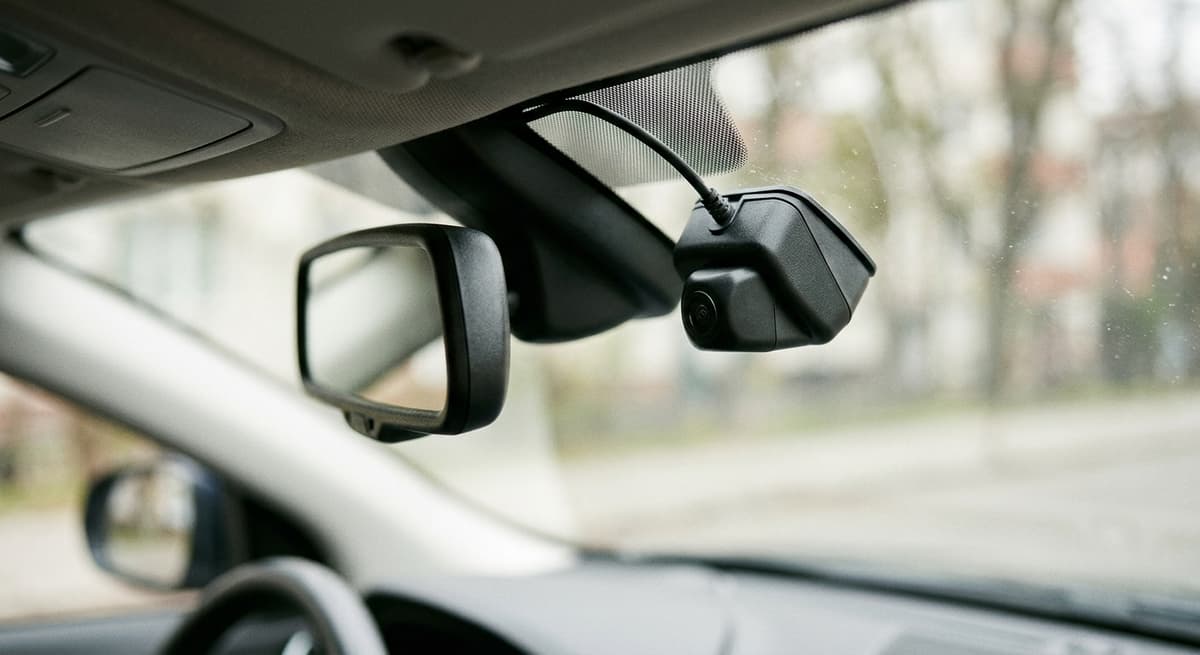
If no HAV driver is on board, the rules on showing a license and registration are satisfied if a registration card is in the vehicle, physically or electronically, for the officer to inspect.
This makes the company answerable for Vehicle Code offenses. It is not a rule about civil fault after a crash, and it does not make a passenger the driver. For how fault is decided in a lawsuit, see who is liable in a self-driving car accident, and for how other states handle citations, see can a self-driving car get a ticket.
Penalties under Chapter 85
| Violation | Penalty (section 8510.1(c)) |
|---|---|
| A certificate holder violates a provision of the HAV subchapter | Summary offense, fine of $25 to $1,000 |
| Anyone operates an HAV without the required certificate (section 8504) | Summary offense, fine of at least $500 |
| Knowingly operating without a certificate after it was suspended or revoked | Summary offense, fine of at least $1,000 |
| A certificate holder violates a Vehicle Code provision punished as a misdemeanor or felony | Subject to the organizational liability rules of 18 Pa.C.S. 307 |
PennDOT's own power over certificates is narrow. It may suspend or limit a certificate only if the vehicle or system does not meet the subchapter's requirements or the company gave materially false information. It may revoke a certificate only for knowingly operating while suspended or outside a limitation, or if the company is convicted of homicide by vehicle or aggravated assault by vehicle for a crash in which the system was engaged and no HAV driver was on board or in a remote location. Separately, the Secretary of Transportation may order an HAV off a highway where its operation "would constitute a hazard" (section 8505(b)(1)).
What insurance do self-driving cars need in Pennsylvania?
At least $1,000,000 per accident. Section 8508(f)(1) requires a certificate holder to be able to respond in damages "in the minimum amount of $1,000,000 per accident for death, bodily injury and property damage to a third party." It may be shown through an authorized insurer, an eligible surplus lines insurer, or self-insurance approved by PennDOT in consultation with the Insurance Department.
For comparison, the ordinary Pennsylvania financial responsibility minimum is $15,000 for injury to one person, $30,000 for injury to two or more people, and $5,000 for property damage (section 1702).
If the HAV is used for a rideshare (transportation network) service, the $1,000,000 is in addition to the insurance required of rideshare companies under state law (section 8508(f)(2)). The self-driving car insurance guide compares these requirements across states.
Robotaxis and commercial service in Pennsylvania
Section 8509 fits HAVs into the existing systems for commercial transport rather than creating a new one:
- Rideshare and public utility rules. The Public Utility Code applies to certificate holders and their HAVs, except provisions that by nature apply only to a human driver. A rideshare company licensed by the Pennsylvania Public Utility Commission (PUC) may use a certificate holder's HAVs.
- Philadelphia. In a city of the first class, a rideshare company licensed by the Philadelphia Parking Authority may use a certificate holder's HAVs under that city's rideshare law.
- What the PUC and the Parking Authority cannot demand. Neither may require an HAV to carry a human driver, impose additional testing, set operating standards substantially different from those for ordinary vehicles, or add standards for the vehicle's automated system or operational design domain.
- What an HAV may not do. It may not be operated as a school bus or school vehicle. It may not carry placarded hazardous materials unless the certificate holder receives PennDOT certification after regulations are adopted.
The PUC may still require its own authorization from a company directly providing a regulated service, as long as the requirement is consistent with the Public Utility Code and does not discriminate against HAVs. For how robotaxi crashes and claims have played out nationally, see Waymo and robotaxi accidents.
Self-driving trucks, platooning and work zones
Autonomous trucks. A highly automated vehicle that is also a motor carrier vehicle requiring a commercial driver's license "may operate on highways as a motor carrier with or without a highly automated vehicle driver" (section 8509(a)). Without a driver, it must follow federal and state commercial vehicle rules, except those that by nature apply only to a human driver. More in our guide to autonomous truck laws.
Platooning. A platoon is a group of buses, military vehicles or motor carrier vehicles traveling at electronically coordinated speeds at closer following distances than would otherwise be prudent. Under section 8532:
- A platoon may include no more than three vehicles.
- Platoons may travel only on limited-access or interstate highways unless PennDOT or the Turnpike Commission permits otherwise.
- A driver must be in each vehicle, except that the lead vehicle may run with a driver and one nonlead vehicle may run with its automated system engaged, with or without a driver.
- Nonlead vehicles are exempt from the following-too-closely rule, and each power unit must carry a visual identifier.
- The operator must file a plan for general platoon operations. If PennDOT does not approve, reject or ask for more information within 30 days, the plan is deemed approved.
Platoons, highly automated work zone vehicles, and HAVs registered in another state operating under an approved interstate agreement do not need a certificate of compliance (section 8504(b)).
Work zone vehicles. PennDOT or the Turnpike Commission may authorize locations for highly automated work zone vehicles, such as automated crash-cushion trucks, and a driver may be required in them in an active work zone (section 8531).
Can Pennsylvania cities ban or regulate self-driving cars?
Not specifically. Section 8510(a) states that the HAV subchapter "preempts and supersedes all ordinances, policies and rules of a local authority relating to highly automated vehicles," and section 8505(a) gives PennDOT "sole regulatory authority" over HAV operation on highways, except for the PUC and Parking Authority roles in commercial service.
Municipalities keep their ordinary traffic powers, such as regulating which kinds of traffic may use a street, but only if they do not "specifically burden or discriminate against highly automated vehicles." A rule that treats an HAV like any other vehicle of its type is allowed.
Municipalities do have a right to information. The company must give them 10 days' written notice before operating, and PennDOT must share certificate information, accident information and self-certification data (other than trade secrets and safety-sensitive material) with any requesting municipality where an HAV operates (section 8510.3).
The HAV Advisory Committee
The Highly Automated Vehicle Advisory Committee sits within PennDOT and is chaired by the Secretary of Transportation (section 8503). It includes state officials such as the Insurance Commissioner, the State Police Commissioner, the Turnpike Commission's chief executive and the PUC chair, the chairs and minority chairs of both Transportation Committees, and Governor-appointed members representing groups including transit, researchers, technology companies, automakers, cyclists and pedestrians, drivers and consumers, municipalities, insurers, labor and Pennsylvanians with disabilities.
The committee advises; it does not regulate or penalize. Its powers include developing technical guidance, reviewing laws, and evaluating crashes, based on PennDOT summaries, where the certificate holder or HAV driver was found at fault. PennDOT must consult it in a public meeting before issuing HAV regulations or guidelines, followed by a public comment period.
The committee must also send an annual report to the House and Senate Transportation Committees on how HAVs affect the workforce, the economy, accessibility for people with disabilities, and public mobility, with suggested law changes. Recommendations recorded in its 2025 report include letting individuals own HAVs, easing oversight of Level 3 vehicles, rethinking the 10-day municipal notice for vehicles only passing through, and lengthening the six-hour crash self-reporting window. They are recommendations, not law; changing these rules would require legislation.
What happens after a crash with a self-driving car in Pennsylvania
The Vehicle Code's crash duties were amended to work without a human driver. When an HAV is involved in a crash with its system engaged or with no HAV driver on board:
- Stopping. The HAV satisfies the duty to stop if it "stops at the scene of an accident or as close thereto as is safely possible and remains at the scene" until the information duties are met (sections 3742 and 3743).
- Information. The certificate holder, a person acting for it, or the vehicle itself must "immediately" contact a police department to report the crash and give the vehicle's registration and financial responsibility information (section 3744).
- Police notice. The same immediate contact satisfies the duty to notify police of crashes involving injury, death or a vehicle that must be towed (section 3746).
- Report to PennDOT. For crashes involving injury, death or property damage, PennDOT's guidelines require the certificate holder to file an initial report within 6 hours (including whether the automated system was engaged) and a follow-up within 24 hours (including whether the vehicle was inside its operational design domain).
Steps to take if you are hit by a self-driving car
- Get safe and call 911 if anyone is hurt. Police must investigate crashes reported under section 3746.
- Record the vehicle. Photograph the HAV, its plate, its exterior identifier and the scene. Note the company name and whether anyone was inside.
- Find the claims contact. PennDOT's certificate holder page lists each company's contact for accident claims and registered agent.
- Tell your own insurer promptly. Pennsylvania's own auto insurance rules still govern your policy; see the Pennsylvania car accident laws guide.
- Preserve evidence. Certificate holders certify to PennDOT that their HAVs store operational data, and the company's crash reports to PennDOT include system status. Ask a lawyer about a preservation letter early.
- Watch the deadline. Pennsylvania generally requires injury and wrongful death lawsuits to be filed within two years (42 Pa.C.S. 5524). See the Pennsylvania statute of limitations guide.
Two features of Pennsylvania law matter for a claim against an HAV company. Every certificate holder has consented to the jurisdiction of Pennsylvania courts for crashes in the state, and each must carry at least $1,000,000 in coverage. Pennsylvania's comparative negligence rule lets an injured person recover if their own negligence was "not greater than" the defendant's, with damages reduced by their share (42 Pa.C.S. 7102).
What about drinking and riding in a self-driving car?
Pennsylvania's DUI law makes it an offense for an individual to "drive, operate or be in actual physical control of the movement of a vehicle" while impaired. Chapter 85 does not create a DUI exception for HAV drivers and does not address passengers in a driverless HAV. Because individuals cannot operate their own HAVs under current law, a person behind the wheel of a privately owned car with driver-assist features remains the person driving it. See DUI in a self-driving car and the Pennsylvania DUI laws guide.
Recent and pending changes
- Chapter 85's current text reflects Act 117 of 2018 and Act 130 of 2022, the last substantial rewrite. Check the official consolidated statute for any later change before relying on a specific provision.
- PennDOT guidelines. PennDOT's detailed requirements are published as guidelines under section 8505(b)(5), including the Certificate of Compliance Guidelines (Publication 950) and the HAV crash reporting guidelines.
- Advisory committee recommendations. The 2025 annual report lists possible law changes, including individual ownership and Level 3 oversight, discussed above. They require legislation.
- Deployment. As of September 2026, PennDOT's list shows every certificate holder operating with an HAV driver on board. Check PennDOT's page for changes.
For the national picture, see the self-driving car laws by state hub, federal self-driving car laws, and nearby comparisons such as New York and the District of Columbia.
Frequently Asked Questions
Are driverless cars legal in Pennsylvania?
Yes, if a company holds a PennDOT certificate of compliance. Under 75 Pa.C.S. 8508, a certificate holder may run a highly automated vehicle with or without a human HAV driver, and a driverless vehicle must have its automated system engaged, be able to follow the Vehicle Code, and be able to reach a safe stop if the system fails. As of September 2026, PennDOT lists every certificate holder as operating with an HAV driver on board.
What is Act 130 in Pennsylvania?
Act 130 of 2022 rewrote Chapter 85 of Pennsylvania's Vehicle Code on highly automated vehicles. It created the PennDOT certificate of compliance, allowed operation with or without a human driver, made the certificate holder the driver for Vehicle Code purposes, set a $1,000,000 insurance minimum, and preempted local HAV rules. Most of it took effect on July 1, 2023.
Can I buy and use a self-driving car in Pennsylvania?
Not a Level 3, 4 or 5 highly automated vehicle under current law. Only firms, partnerships, associations, corporations and educational or research institutions can hold the required certificate, and PennDOT's Act 130 summary says new legislation would be needed for personal ownership. Driver-assist systems that require you to supervise them are not highly automated vehicles, and you remain the driver when using them.
Who gets a ticket if a self-driving car breaks the law in Pennsylvania?
The certificate holder. Section 8510.1 treats the certificate holder as the driver for Vehicle Code compliance and directs police to charge the certificate holder for any applicable offense. If no one is aboard, a registration card kept in the vehicle satisfies the license and registration display rules.
How much insurance does a self-driving car need in Pennsylvania?
At least $1,000,000 per accident for death, bodily injury and property damage to third parties, under 75 Pa.C.S. 8508(f). If the vehicle is used for a rideshare service, that amount is in addition to the rideshare insurance requirements.
Can Philadelphia or Pittsburgh ban robotaxis?
Not by a rule aimed at them. Chapter 85 preempts all local ordinances, policies and rules relating to highly automated vehicles. Cities keep general traffic powers that do not specifically burden or discriminate against HAVs, and in Philadelphia the Parking Authority may license rideshare companies using HAVs but may not require a human driver.
Does Waymo operate driverless in Pennsylvania?
As of September 2026, PennDOT lists Waymo as a certificate holder in Philadelphia, Tinicum Township and Pittsburgh with an HAV driver on board. PennDOT's advisory committee reported that Waymo has announced plans for commercial operations in Philadelphia in 2026.
What should I do if a self-driving car hits me in Pennsylvania?
Call police if anyone is hurt, photograph the vehicle and its identifier, and note the company. The HAV must stop and the company must report the crash to police with registration and insurance details. PennDOT's certificate holder page lists each company's contact for accident claims. Injury lawsuits generally must be filed within two years.
How does platooning work in Pennsylvania?
Up to three buses, military vehicles or motor carrier vehicles may travel together at electronically coordinated speeds on limited-access or interstate highways. A driver must be in each vehicle, except that the lead vehicle may have a driver while one nonlead vehicle runs with its automated system engaged, with or without a driver. The operator files a plan with PennDOT that is deemed approved if PennDOT does not act within 30 days.
Updates
Independently fact-checked against the cited primary sources
Sources and References
- 75 Pa.C.S. Chapter 85 (Highly Automated Vehicles), as amended by Act 130 of 2022: certificate of compliance, operation, commercial use, preemption, enforcement, platooning(www.palegis.us).gov
- 75 Pa.C.S. 102: definitions of automated driving system, certificate holder, highly automated vehicle and HAV driver(www.palegis.us).gov
- 75 Pa.C.S. 8508: operation requirements, driverless operation, $1,000,000 insurance minimum, HAV title, municipal notice(www.palegis.us).gov
- 75 Pa.C.S. 8510.1: certificate holder considered the driver; enforcement and penalties(www.palegis.us).gov
- 75 Pa.C.S. 8510: local preemption of HAV ordinances(www.palegis.us).gov
- 75 Pa.C.S. 8509: commercial operation, PUC and Philadelphia Parking Authority rules(www.palegis.us).gov
- 75 Pa.C.S. 8532: platooning(www.palegis.us).gov
- 75 Pa.C.S. 8503: Highly Automated Vehicle Advisory Committee(www.palegis.us).gov
- 75 Pa.C.S. 3744: duty to give information after a crash, including highly automated vehicles (see also 3742, 3743, 3746)(www.palegis.us).gov
- 75 Pa.C.S. 1702: basic financial responsibility minimums(www.palegis.us).gov
- 42 Pa.C.S. 5524: two-year limitation for personal injury and death actions(www.palegis.us).gov
- 42 Pa.C.S. 7102: comparative negligence(www.palegis.us).gov
- PennDOT: Certificate Holders list (operations locations, accident claims contacts, operations type)(www.pa.gov).gov
- PennDOT: Automated Vehicles overview of Act 130(www.pa.gov).gov
- PennDOT: Act 130 general summary Q&A (effective dates, individual ownership)(www.pa.gov).gov
- PennDOT Publication 950: HAV Certificate of Compliance Guidelines(www.pa.gov).gov
- PennDOT: HAV Accident Reporting Guidelines (September 2024)(www.pa.gov).gov
- PennDOT HAV Advisory Committee 2025 Annual Report(www.pa.gov).gov
- PennDOT: Highly Automated Vehicle Advisory Committee page(www.pa.gov).gov
- PennDOT: Platooning(www.pa.gov).gov