Waymo Accidents: Crash Data, Recalls and What to Do (2026)
Independently fact-checked against primary sources (last audited September 29, 2026). · 15 primary sources cited on this page. How we verify our legal content
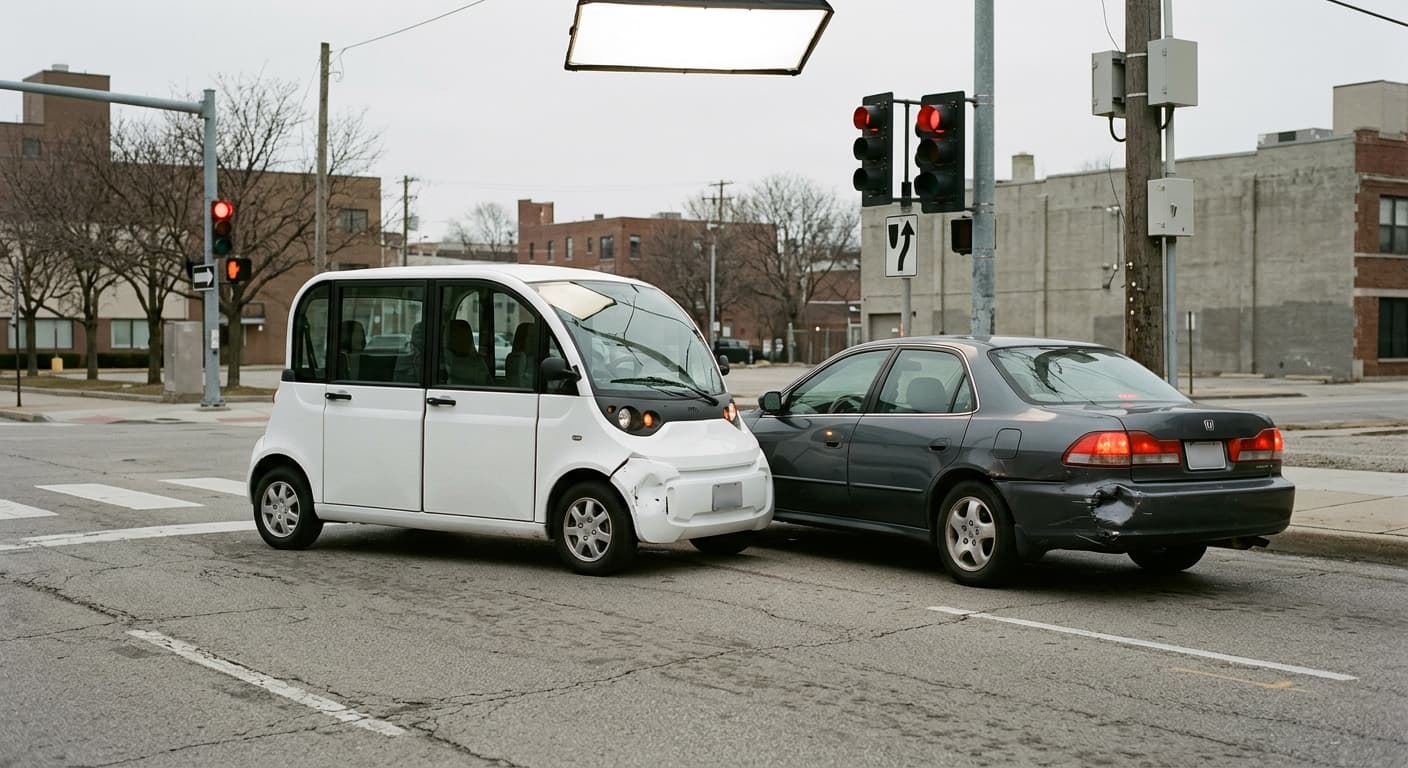
Waymo and other robotaxi companies must report certain crashes to the federal government, and NHTSA publishes those reports each month. The reports show crashes that involved a vehicle with an automated driving system engaged, not crashes the vehicle caused, so raw counts say little about fault or safety. If you are hit by a robotaxi, the steps are the same as any collision: get safe, call 911 if anyone is hurt, document everything, and report the crash to the company.
Status in this article is current as of September 2026. NHTSA's latest public crash-data release lists reports received through August 17, 2026.
How many accidents has Waymo had?
There is no single reliable number, and any page that gives you one without a date, a source and a definition is misleading you. Three separate things get called "Waymo accidents":
- Crashes reported to NHTSA under the Standing General Order, which include crashes where the Waymo was struck by someone else.
- Crashes Waymo counts in its own safety analysis, which uses Waymo's chosen benchmarks and methods.
- Crashes that were actually the fault of the robotaxi, which no public dataset records. Fault is decided by police, insurers, courts or arbitrators, case by case.
The federal data is the best public starting point, and the rest of this section explains how to read it. Do not divide report counts by miles to produce your own crash rate. The public files do not give you the inputs to do it honestly, as the IIHS explains below.
What the NHTSA Standing General Order requires
NHTSA's Standing General Order 2021-01 is an order, not a regulation. It requires the manufacturers and operators named in and served with it to report certain crashes involving vehicles with an automated driving system (ADS) or a Level 2 driver-assistance system. It imposes no reporting obligation on individual consumers.
In NHTSA's own description, a crash is reportable when the crash happened on a publicly accessible road in the United States and the automated system was engaged at the time of the crash or within 30 seconds before it.
Reports come in two tiers:
| Tier | What triggers it | When it is due |
|---|---|---|
| Five-day report | A crash involving an ADS or Level 2 vehicle that sends anyone to a hospital for medical treatment, involves a fatality, deploys an air bag, or involves a strike of a vulnerable road user. For ADS vehicles, also any crash that results in a tow-away. | Within five days after the company receives notice |
| Monthly report (ADS only) | Other ADS crashes involving property damage where the damage is reasonably expected to exceed $1,000, the vehicle was the only vehicle involved, or the vehicle struck another vehicle or object (as opposed to being struck) | By the 15th of the following month |
The current version is the third amended order, which took effect with the reporting period that began June 16, 2025. It was written to cut duplicate and empty reports, so counts from before and after that date are not directly comparable. NHTSA says it is developing a proposed rule to codify the reporting requirements into its regulations.
For scale, NHTSA reported that from June 2025 through the end of 2025 it received reports of 517 alleged crashes involving ADS and 787 alleged crashes involving Level 2 driver assistance. NHTSA also said that its engagement with reporting companies since the third amended order took effect, through July 2026, contributed to the opening of seven formal investigations and prompted seven recalls. For the federal framework behind this order, see our guide to federal self-driving car laws.
Where the public crash data lives, and how to read it
NHTSA publishes the reports as downloadable CSV files on its public website, with separate files for ADS crashes, Level 2 driver-assistance crashes and other reports. The ADS file covers Waymo, Zoox, Tesla's robotaxi operations and other companies. It is released about monthly. The release NHTSA lists most recently covers reports received through August 17, 2026, and the data dictionary is dated September 15, 2026.
Each row includes the reporting company, report type, city and state, what the vehicle crashed with, the highest injury severity alleged, the investigating agency and a free-text narrative written by the company. Some things to keep in mind when you use it:
- Reports are not fault findings. NHTSA's own notes say the data may be incomplete or unverified.
- One crash can appear more than once. NHTSA's notes say the same crash may have multiple reports, and updates create additional versions of a report.
- Dates are month-level only. The incident date is reported in month-and-year format, so you cannot match a report to a specific day.
- Narratives are the company's account. They are written by the reporting company, not by NHTSA or police.
- Redactions are common. Entries marked as redacted mean the company claimed the information is confidential business information. NHTSA states that this marking does not mean the agency has ruled on the claim.
- The files start where the current order starts. The current files cover reports from the third amended order forward. Earlier data is kept in NHTSA's archive section.
The narratives are worth reading. The two Waymo entries in the current ADS file that report a fatality both describe events involving another vehicle: a motorcyclist who fell after contact with a Waymo and was then struck by a passing car that left the scene, and a pedestrian struck by an SUV and sent toward the Waymo, according to Waymo's narratives. The report categories cannot tell you that. The narrative sometimes can, and even then it is the company's version.
What the company-reported and independent numbers say
Waymo's numbers. Waymo publishes a safety impact hub. It reports that through June 2026 it had driven 271.3 million rider-only miles, meaning miles without a human driver. The hub compares Waymo's crash rates with human benchmarks and says the results show its system avoids injury crashes and airbag-deployment crashes better than humans do. Those are Waymo's statements and Waymo's methods. For example, its injury comparison applies a 32 percent underreporting adjustment to police-reported human injury crashes, based on a published study. Treat the hub as a primary source for what Waymo claims, not as a neutral audit.

The IIHS study. In July 2026 the Insurance Institute for Highway Safety published research, based on crash reports from 2021 through 2024 and about 50 million driverless miles, finding that per vehicle mile traveled Waymo's driverless vehicles in San Francisco, Phoenix, Los Angeles and Austin were involved in 68 percent fewer crashes than human drivers overall. The Austin rate, from a small sample, was 4 percent higher. The sample was limited to crashes a person would typically report to the police. IIHS also explained why the comparison is hard:
- Companies must report crashes but are not required to report their miles, so IIHS notes that Waymo provides driverless mileage voluntarily and other companies do not.
- Human drivers do not report every crash. IIHS says around half of all crashes and a third of injury crashes go unreported.
- Until the 2025 amendment, automated-vehicle companies had to log minor incidents as crashes, such as a vehicle scraping its undercarriage turning into a parking lot.
IIHS President David Harkey said: "However, the present data collection system isn't good enough to allow continuous monitoring of a large-scale expansion." That is the honest state of the evidence. The best available analysis found fewer police-reportable crashes per mile, and the same researchers warn that the data system cannot yet support continuous monitoring as service grows.
NHTSA investigations, recalls and NTSB probes
Regulators look at patterns, not single crashes. Numbers below are as listed in NHTSA and NTSB records. A Preliminary Evaluation is an early-stage inquiry. It is not a finding that a defect exists, and a recall is a company software update, not an admission of legal liability.
Open matters (as of September 2026)
| Agency and number | Subject | What the record says |
|---|---|---|
| NHTSA PE25013 | Waymo and stopped school buses | Opened October 17, 2025. ODI opened a Preliminary Evaluation to investigate the Waymo system's performance around stopped school buses and how it is designed to comply with school bus traffic safety laws. Still open in NHTSA's investigation data. |
| NHTSA PE26001 | Waymo vehicle strikes a child near a Santa Monica school | Opened January 29, 2026. Waymo reported that the child sustained minor injuries. ODI is examining whether the vehicle exercised appropriate caution near the school during drop-off hours. Still open in NHTSA's investigation data. |
| NTSB HWY26FH007 | Austin, January 12, 2026: Waymo vehicle passed a stopped school bus | NTSB's preliminary report says six vehicles passed the school bus while it was stopped and that a crash did not occur. Under investigation to determine probable cause. |
| NTSB HWY26FH008 | Santa Monica, January 23, 2026: Waymo vehicle struck a student pedestrian | NTSB's report says the vehicle was traveling 17 mph and that the student reported minor injuries and did not require medical transport. Under investigation to determine probable cause. |
NTSB says it is determining probable cause with the intent of issuing safety recommendations to prevent similar incidents. Neither investigation is finished.
Closed Waymo investigation
NHTSA opened Preliminary Evaluation PE24016 in May 2024 into Waymo's unexpected driving behavior. It identified 367 incidents, including 109 crashes, and closed the evaluation in July 2025 after Waymo's recalls 24E049 and 25E034, saying it would continue to monitor crash reports and other data.
Waymo recalls filed with NHTSA
Each recall below is a software update to Waymo's automated driving system. The dates are the dates NHTSA lists as the report received date.
| Recall | Received | Vehicles | What NHTSA's record says |
|---|---|---|---|
| 24E-013 | Feb. 13, 2024 | 444 | The system may inaccurately predict the movement of a towed vehicle |
| 24E-049 | June 10, 2024 | 672 | The system could fail to avoid a pole or similar object |
| 25E-034 | May 12, 2025 | 1,212 | The software may cause vehicles to collide with certain roadway barriers, such as chains and gates |
| 25E-084 | Dec. 8, 2025 | 3,067 | The software may cause the vehicle to pass a stopped school bus even when the red lights are flashing and/or stop arm is extended |
| 26E-026 | May 1, 2026 | 3,791 | The software may allow the vehicle to slow and then drive into standing water on higher speed roadways. The final remedy was still under development; as an interim remedy Waymo increased weather-related constraints and updated maps |
| 26E-035 | June 13, 2026 | 3,871 | The software may allow the vehicle to enter a closed freeway construction zone and continue driving at speed. Waymo says it resumed freeway operations June 25, 2026 |
Other robotaxi companies have recalls too. Zoox, for example, filed recall 26E-044 in July 2026 for ADS software that may fail to detect heavy smoke. Recall search is free at NHTSA's website, and you can look up a company or vehicle.
Cruise: the enforcement history
Cruise shows what can happen when a company's crash reporting is itself the problem. On October 24, 2023, the California DMV suspended Cruise's autonomous vehicle deployment and driverless testing permits, citing among other bases that the vehicles were not safe for the public's operation and that Cruise had misrepresented information related to safety.
The federal case centered on the report. In November 2024 federal prosecutors in the Northern District of California charged Cruise by information with submitting a false report to impede a federal investigation, under 18 U.S.C. 1519, and under a deferred prosecution agreement filed November 15, 2024, Cruise agreed to pay a $500,000 criminal penalty. The agreement's statement of facts says the report Cruise sent NHTSA omitted that the vehicle had initiated a secondary movement and driven forward approximately 20 feet while dragging the woman underneath it. The agreement has a three-year term.
NHTSA's investigation of Cruise, PE23018, ended in January 2025. NHTSA wrote that Cruise had ceased business operations and no versions of its automated driving system were operating on public roads. Cruise is history now, but the lesson is current: the reports in the public files depend on companies describing their own crashes completely and accurately.
What to do if you are hit by a robotaxi
The legal rules for a robotaxi collision are mostly the ordinary rules for any collision. Nothing here is legal advice, and details vary by state.
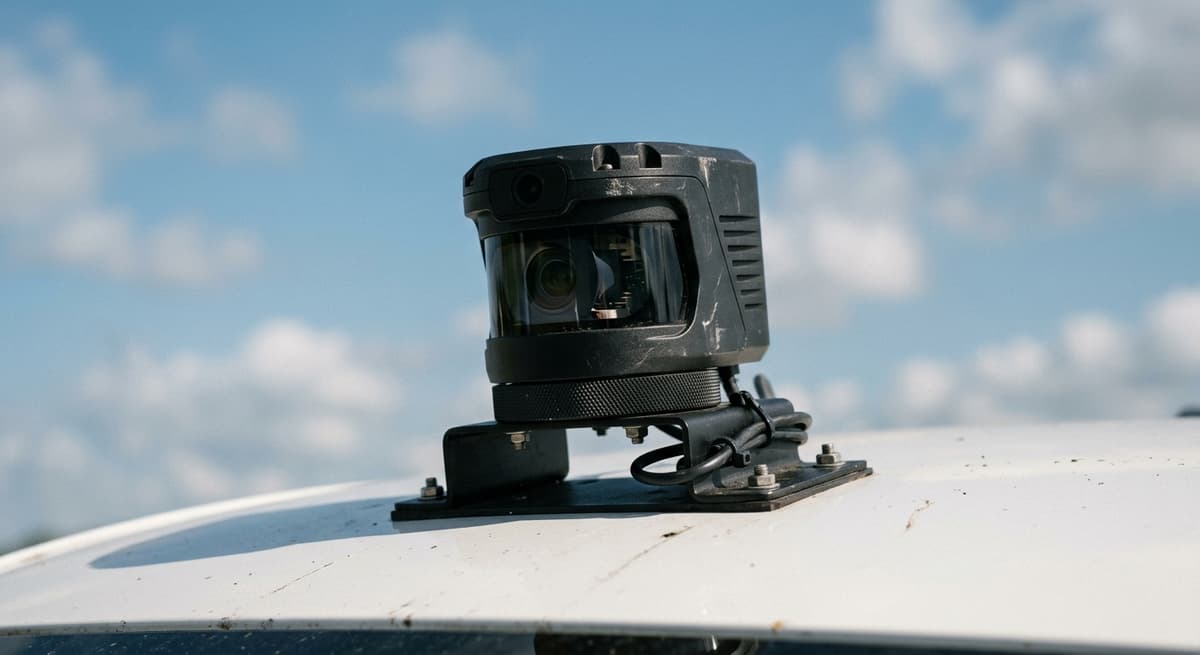
- Get safe and call 911 if anyone is hurt. Waymo's own guidance for people involved in a collision with one of its vehicles says the same. It also notes the vehicle may continue driving to reach a safe place to stop, and to look for the dome light signal that shows the vehicle knows an event occurred.
- Get a police report. Ask the responding officer to identify the vehicle as an automated vehicle in the report and get the report or incident number. Follow your local rules for reporting a collision.
- Photograph everything once it is safe. Capture the vehicle from all sides, its identifying marks and license plate, the fleet number or any visible ID, damage to all vehicles, the road, signals and signs, and your injuries. Robotaxis carry cameras and sensors, so also note nearby businesses or cameras that may have recorded the scene.
- Identify the company and the vehicle. Write down the plate, any fleet ID, the location and the time. Get names and contact details for witnesses.
- Report it to the company. Waymo's help page for people involved in a collision lists a phone line (1-844-263-9885), an online collision form, a QR code on the front doors and insurance@waymo.com. Waymo says its risk and insurance team reviews every collision. Keep the wording of what you say factual. Do not speculate about fault.
- Get medical care and keep the records. Even minor pain can be the start of a real injury. Keep every bill, visit summary and receipt.
- Notify your own insurer. Read your policy for the notice deadline and coverage that applies if the other party is a company fleet.
- Preserve evidence. Save texts, emails, photos, app screens and ride receipts. If you were a passenger, keep your ride history. Do not repair your vehicle before it has been documented. Ask the company in writing to preserve its vehicle data and video for your crash. A lawyer can send a formal preservation letter.
- Watch the deadlines. Filing deadlines differ by state. See our statute of limitations guide for your state's period, and remember that a contract you accepted as a rider may set a shorter one (see below).
Injured? Get a free case review from a personal-injury attorney
If someone else's negligence caused your injury, you may be owed compensation for medical bills, lost wages, and pain and suffering. Get a free, no-obligation review from a personal-injury attorney. Most work on contingency, so there is no upfront cost.
If you were riding in the robotaxi
Passengers face a different set of rules than pedestrians, cyclists or other drivers, because riders accepted the company's terms of service. Waymo's terms say, as of the version last updated September 22, 2026:
- Arbitration. Disputes are resolved through confidential, binding individual arbitration with JAMS rather than in court, and not as a class action. If the rider starts the arbitration, the rider pays JAMS filing fees up to $250 and Waymo pays the other JAMS costs; each side pays its own lawyer.
- One-year bar. Any demand for arbitration must be made within one year of discovery of the claim, "otherwise, the claim is permanently barred."
- Opt-out. A rider may opt out of binding arbitration within 30 days of first accepting the terms by emailing the address the terms specify. After that, the opportunity is gone.
- Exceptions. Small-claims disputes in the county of the rider's billing address, and a rider's individual claim arising from sexual assault, or unwelcome sexual behavior directed at the rider, by a Waymo agent or employee, are not required to go to arbitration.
These are the company's terms, not a statement of what a court or arbitrator would enforce against an injury claim. If you were injured as a rider, do not assume either the arbitration clause or the one-year period is the end of the analysis, and do not assume it is not. Get advice quickly, because the one-year clock in the terms may be shorter than your state's deadline for injury claims.
Waymo also states that it provides limited medical coverage for its riders regardless of who is at fault. That is a company statement and its scope is set by the company.
Who pays for a robotaxi crash
Who is responsible depends on the facts: the robotaxi company, the vehicle's manufacturer, another driver or a city that maintained a dangerous road can all be part of a claim. Arizona and Florida treat an engaged automated system as the driver or operator for traffic-law purposes. Texas words its rule more broadly: its statute says the engaged system is the operator of the vehicle, including for purposes of assessing compliance with traffic laws, and directs traffic citations to the owner or authorization holder. None of these provisions says who owes damages after a crash. Ordinary negligence and product-liability law still apply, and state insurance requirements determine how much financial backing a claim can reach. For the full breakdown by level of automation, state and party, read who is liable in a self-driving car accident.
Tickets are a separate question. Whether police can cite a driverless vehicle, and who receives the citation, is covered in can a self-driving car get a ticket. If your crash involved a driver-assist car like Tesla Autopilot or Full Self-Driving rather than a driverless robotaxi, see Tesla Autopilot and FSD lawsuits. For general collision guidance, see the car accident hub, and for the wider legal picture, the self-driving car laws hub.
Frequently Asked Questions
How many accidents has Waymo had?
No source gives a single reliable number. NHTSA publishes crash reports from Waymo and other companies under its Standing General Order, and its latest release lists reports received through August 17, 2026. Those reports include crashes where the Waymo was struck by another vehicle, and NHTSA says the data may be incomplete or unverified and the same crash may have multiple reports. Counts before and after June 16, 2025 are not directly comparable because the reporting rules changed.
What is the Waymo accident rate?
Waymo publishes its own comparisons, which are company-reported and rely on Waymo's chosen human benchmarks. The Insurance Institute for Highway Safety reported in July 2026, using 2021 to 2024 crash reports, that per vehicle mile Waymo's driverless vehicles in four cities were involved in 68 percent fewer police-reportable crashes than human drivers, while warning that the current data system cannot support continuous monitoring as service expands. A rate needs both crash and mileage data, so do not compute one from report counts alone.
Does a crash report mean Waymo caused the accident?
No. A report to NHTSA means a vehicle with an automated driving system was involved in a qualifying crash. Fault is decided by police, insurers, courts or arbitrators. Some reported crashes started with another driver or vehicle.
What is the NHTSA Standing General Order?
It is an order requiring named manufacturers and operators of automated driving system and Level 2 driver-assistance vehicles to report qualifying crashes to NHTSA. Serious crashes are due within five days, and other ADS crashes are due monthly. It places no reporting duty on individual drivers or riders.
Is Waymo under investigation?
As of September 2026, NHTSA has two open Preliminary Evaluations of Waymo, PE25013 on passing stopped school buses and PE26001 on a vehicle striking a child near a Santa Monica school. The NTSB has open investigations of related incidents, a Waymo passing a stopped school bus in Austin (HWY26FH007) and the Santa Monica crash (HWY26FH008). These are inquiries, not findings of fault.
What should I do if a Waymo hits me?
Get to a safe place and call 911 if anyone is hurt. Photograph the scene, the vehicle and any visible ID, get a police report number, collect witness details and notify the company. Waymo's help page lists a phone line, an online collision form and an insurance email address for people involved in a collision. Keep records and check your filing deadline.
Can I sue Waymo if I was a passenger?
Waymo's terms of service, last updated September 22, 2026, say disputes go to binding individual arbitration, and a demand for arbitration must be made within one year of discovery of the claim, unless the rider opted out within 30 days of accepting the terms. Small-claims disputes and individual claims arising from sexual assault, or unwelcome sexual behavior directed at the rider, by a Waymo agent or employee are exempt from arbitration. Whether those terms would be enforced against a particular injury claim is a legal question for a lawyer.
Who pays if a robotaxi hits me?
It depends on who is legally responsible and on the insurance behind that party. State rules that treat the automated system as the driver or operator do not themselves say who owes damages, so damages claims still run through negligence and product-liability law. See our liability guide for the breakdown.
Where can I look up a robotaxi recall?
NHTSA's recall database is searchable by manufacturer and vehicle. Recalls of automated driving systems are filed by the company as software recalls, for example Waymo campaign 25E-084 on stopped school buses.
Updates
Independently fact-checked against the cited primary sources
Sources and References
- Federal Register 2026-04240: NHTSA notice describing Standing General Order 2021-01 reporting tiers and criteria(federalregister.gov).gov
- Federal Register 2026-15483: NHTSA AV Framework update (third amended SGO, 517 ADS reports, seven investigations and recalls, codification rulemaking)(federalregister.gov).gov
- NHTSA SGO 2021-01 data element definitions and change log (caveats, redactions, release dates)(static.nhtsa.gov).gov
- NHTSA SGO 2021-01 ADS incident reports CSV(static.nhtsa.gov).gov
- NHTSA Office of Defects Investigation flat file: PE25013, PE26001, PE24016, PE23018(static.nhtsa.gov).gov
- NTSB investigation HWY26FH007 (Waymo, Austin school bus)(ntsb.gov).gov
- NTSB investigation HWY26FH008 (Waymo, Santa Monica student pedestrian)(ntsb.gov).gov
- NHTSA recall campaign 24E-013 record(api.nhtsa.gov).gov
- NHTSA recall campaign 24E-049 record(api.nhtsa.gov).gov
- NHTSA recall campaign 25E-034 record(api.nhtsa.gov).gov
- NHTSA recall campaign 25E-084 record(api.nhtsa.gov).gov
- NHTSA recall campaign 26E-026 record(api.nhtsa.gov).gov
- NHTSA recall campaign 26E-035 record(api.nhtsa.gov).gov
- NHTSA recall campaign 26E-044 record(api.nhtsa.gov).gov
- California DMV statement on Cruise LLC permit suspension(dmv.ca.gov).gov
- United States v. Cruise, LLC, N.D. Cal. 3:24-cr-00572: Information and Deferred Prosecution Agreement (docket)(courtlistener.com)
- Waymo Help: what to do after a collision (company statement)(support.google.com)
- Waymo Terms of Service, last updated September 22, 2026 (company statement)(waymo.com)
- Waymo safety impact hub (company-reported data)(waymo.com)
- IIHS: Waymo's driverless cars crash less often than people (July 23, 2026)(iihs.org)