Self-Driving Car Laws by State: Are They Legal? (2026)
Independently fact-checked against primary sources (last audited September 29, 2026). · 39 primary sources cited on this page. How we verify our legal content
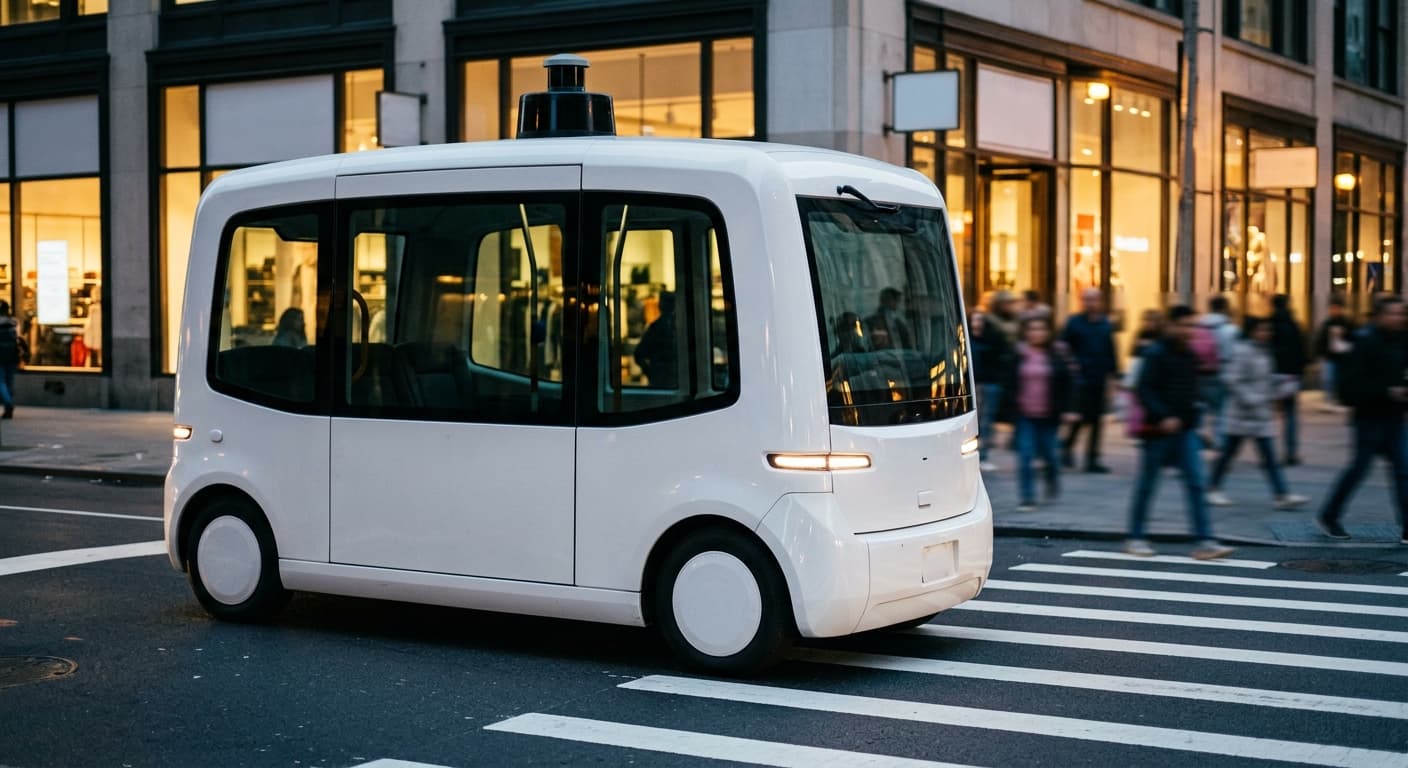
Whether self-driving cars are legal in the US depends on the state and on the level of automation. As of September 2026 no comprehensive federal statute authorizes or bans driverless operation, so each state decides whether a car may drive with no human at the wheel. At least 26 states have statutes that authorize it under conditions, a few allow testing only, and at least 13 states have no statute that addresses it.
Are self-driving cars legal in the US?
The honest answer is "in some states, under conditions, for some kinds of vehicles." A statute that authorizes driverless operation is one thing. A statute that says nothing is another, and silence is not permission. This page never calls a state "legal" unless a statute says so.
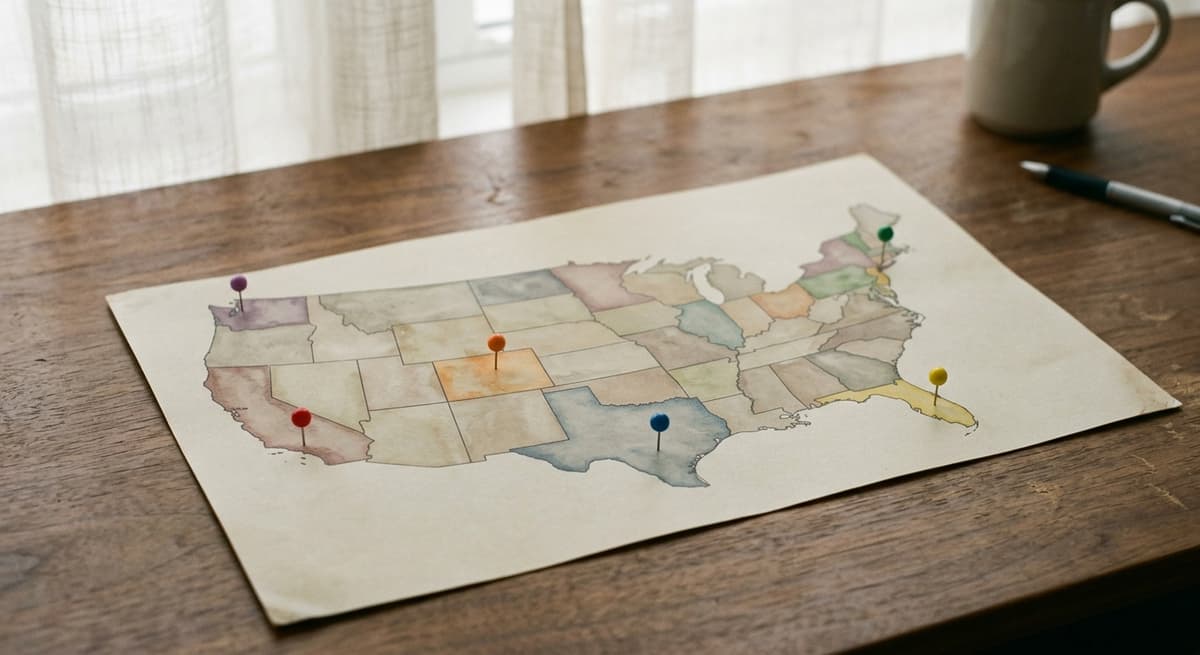
Three questions sort the states. Does the statute allow operation with no human driver? Does it require a human in the vehicle for some phase, such as testing? And when the system is driving, who counts as the driver or operator for traffic law?
Federal law does not answer those questions. NHTSA regulates vehicle safety standards, and state law governs licensing, traffic rules, insurance and registration. The federal picture is summarized further down.
Levels of automation: why "self-driving" is not one thing
Engineers describe automation with the SAE J3016 levels, from 0 to 5. The levels are an engineering taxonomy, not a legal category, and they matter in law only where a state adopts them. California does: its statute defines an autonomous vehicle by reference to SAE Levels 3, 4 and 5 and says the term does not include vehicles with collision avoidance features such as adaptive cruise control and lane keep assist.
In practical terms, at Level 2 the human is driving. Tesla Autopilot, Full Self-Driving (Supervised), Ford BlueCruise and GM Super Cruise are driver-assist systems, and the person in the driver's seat is responsible for monitoring and for obeying traffic law.
At Level 3 the system drives in limited conditions and a human must take over when asked. At Levels 4 and 5 no human fallback is expected within the system's operating domain, which is what driverless robotaxis and driverless trucks are. Most of the state statutes below are about Levels 4 and 5.
State-by-state table
The table covers all 50 states and the District of Columbia, as of September 2026. "Statute does not address" means the state's laws do not authorize or prohibit the point. It is not a statement that the activity is legal or illegal. "Not confirmed" means the point is not established well enough to state, so no claim is made.
| State | AV statute | Driverless operation | Human operator required | Who is the driver for traffic law |
|---|---|---|---|---|
| Alabama | Ala. Code ch. 32-9C | Allowed (conditions) | No, if the vehicle can reach a minimal risk condition | Engaged system is the operator for traffic law when conditions are met; if a commercial entity runs a vehicle (other than an automated commercial truck) with no human driver, the owner is deemed the operator and must be able to respond to damages |
| Alaska | No AV-specific statute | Statute does not address | Statute does not address | Human-based definition (person driving or in actual physical control) |
| Arizona | A.R.S. 28-9701 to 28-9708 | Allowed (filings with ADOT and DPS) | No | Engaged system is the driver or operator; filer can be cited |
| Arkansas | Ark. Code 27-51-2001 et seq.; 27 CAR pt. 115 | Allowed under a program approved by the State Highway Commission | First six months of an approved program, then removable with approval | No system-as-driver rule; statute speaks of human and remote operators |
| California | Veh. Code 38750 et seq. | Allowed (DMV permit) | Not under a driverless permit; yes in safety-driver testing | Person in the driver seat, or else the person who causes the technology to engage |
| Colorado | C.R.S. 42-4-242 | Allowed (system must be able to follow all laws) | No | Statute does not say who the driver is; human-only rules do not apply to the system |
| Connecticut | Conn. Gen. Stat. 13a-260 | Testing pilot only | Yes (operator physically inside the vehicle) | For the pilot, the person who engages the system while inside |
| Delaware | No AV-specific statute | Statute does not address | Statute does not address | Human-based definition (actual physical control) |
| District of Columbia | D.C. Code 50-2351 et seq. | Testing only (paid service not authorized by the code) | Test operator or remote operator required for testing | Testing entity is the operator during autonomous operation |
| Florida | Fla. Stat. 316.85 | Allowed (no state permit) | No | Engaged system is deemed the operator for traffic law |
| Georgia | O.C.G.A. 40-8-11 | Allowed (conditions) | No | Operator includes the person who causes the vehicle to move with the system engaged |
| Hawaii | Act 21, SLH 2020 (testing pilot) | Testing only; deployment not addressed | Yes, for testing under the pilot | Human-based definition (actual physical control) |
| Idaho | No AV-specific statute | Statute does not address | Statute does not address | Human-based definition (actual physical control) |
| Illinois | 625 ILCS 5/11-208(e-10) (local bans only) | Statute does not address | Statute does not address | Statute does not address |
| Indiana | No AV statute confirmed | Not confirmed | Not confirmed | Not confirmed |
| Iowa | Iowa Code 321.514 to 321.519 | Allowed (conditions) | No | Engaged system is deemed to perform the driver physical acts |
| Kansas | K.S.A. 8-2901 to 8-2911 | Allowed (law enforcement plan filed with the Highway Patrol) | Yes for the first 12 months of an entity's first in-service vehicles, unless an exception applies; not required afterward | Engaged system is deemed to perform the driver physical acts; violations enforceable as if a licensed human were driving |
| Kentucky | KRS 186.760 to 186.779 | Allowed (law enforcement plan, insurance, registration) | No; a human-driver rule for vehicles over 62,000 lb ran to July 31, 2026 | Owner is the operator |
| Louisiana | La. R.S. 32:400.1 to 32:400.8 | Autonomous commercial trucks only (conditions); other vehicles not addressed | Not for compliant autonomous commercial trucks | System licensed to operate; filer and system subject to traffic law |
| Maine | Pilot rules, 17-229 CMR ch. 800 | Not confirmed | Not confirmed | Not confirmed |
| Maryland | No AV-specific statute | Statute does not address | Statute does not address | Human-based definition (drive, operate, or be in actual physical control) |
| Massachusetts | No statute (MassDOT testing agreements) | Statute does not address; testing uses a human test driver | Required within the MassDOT testing program | Human-based definition (operator means a person) |
| Michigan | MCL 257.665 | Allowed | No (human monitor required for some testing) | Engaged system is the driver or operator |
| Minnesota | No AV-specific statute | Statute does not address | Statute does not address | Human-based definition (actual physical control) |
| Mississippi | Miss. Code 63-35-1 et seq. | Allowed (conditions) | No | Engaged system is the driver or operator |
| Missouri | No AV-specific statute | Statute does not address | Statute does not address | Statute does not address |
| Montana | MCA 61-6-401 et seq. | Allowed for Level 4 and 5, subject to Department rulemaking | Level 3 needs a fallback-ready human; no requirement stated for Levels 4 and 5 | Not designated by the Act; general definitions require a person in physical control |
| Nebraska | Neb. Rev. Stat. 60-3301 to 60-3311 | Allowed (conditions) | No | Engaged system is deemed to perform the driver physical acts |
| Nevada | NRS ch. 482A; NRS ch. 706B (paid service) | DMV certification pathway; paid service needs a Nevada Transportation Authority permit | Not required if the vehicle can reach a minimal risk condition (per DMV form) | Not confirmed |
| New Hampshire | RSA 242:1 | Allowed (conditions) | No | Engaged system is deemed to perform the driver physical acts |
| New Jersey | No AV statute confirmed | Not confirmed | Not confirmed | Not confirmed |
| New Mexico | HB 270 (2021); 18.24.1 NMAC | Allowed after filings with NMDOT | No | Operator is the person who engages the system |
| New York | L. 2017, ch. 55, Part FF (pilot), as extended by L. 2026, ch. 58 | Testing pilot only; no driverless path | Yes (a test vehicle operator must be present and ready to take control) | The test vehicle operator |
| North Carolina | N.C.G.S. 20-400 to 20-402 | Allowed (conditions) | No | Not confirmed |
| North Dakota | N.D.C.C. 39-01-01.2 | Allowed (conditions) | No | Person using the vehicle is not driving or in actual physical control |
| Ohio | ORC 4511.01 (no AV-specific rule confirmed) | Not confirmed | Not confirmed | Not confirmed |
| Oklahoma | 47 O.S. 1700 to 1711 | Allowed (law enforcement plan; $1,000,000 proof of financial responsibility) | No | Engaged system is considered the driver or operator |
| Oregon | ORS 184.667 (names ODOT as lead agency only) | Statute does not address | Statute does not address | Statute does not address |
| Pennsylvania | 75 Pa.C.S. ch. 85, subch. B | Allowed (PennDOT certificate) | No | Certificate holder is considered the driver |
| Rhode Island | No AV-specific statute | Statute does not address | Statute does not address | Statute does not address |
| South Carolina | No AV-specific statute | Statute does not address | Statute does not address | Human-based definition (actual physical control) |
| South Dakota | SDCL 32-41-1 to 32-41-13 | Allowed (conditions) | No | Engaged system is the driver and operator; owner can be charged |
| Tennessee | Tenn. Code 55-30-101 to 55-30-108 | Allowed (conditions) | No, if the chapter conditions are met | Not confirmed |
| Texas | Tex. Transp. Code 545.451 to 545.459 (SB 2807) | Allowed (commercial driverless service needs TxDMV authorization) | No | Engaged system is the operator; owner or authorization holder is issued any citation |
| Utah | Utah Code 41-26-101 to 41-26-108 | Allowed for Level 4 and 5 (conditions) | No | Engaged system is the operator |
| Vermont | 23 V.S.A. ch. 41 | Testing only; deployment not addressed | Yes, for permitted testing | Statutory operator exists only for testing |
| Virginia | No AV-specific statute | Statute does not address | Statute does not address | Human-based definition (actual physical control) |
| Washington | RCW 46.92.010 (testing) | Testing statute only; commercial driverless service not addressed | Statute does not address | Statute does not address |
| West Virginia | W. Va. Code 17H-1-1 et seq. | Allowed (conditions) | No | Engaged system is considered the driver or operator |
| Wisconsin | No AV-specific statute | Statute does not address | Statute does not address (WisDOT says an operator must be at the wheel) | Human-based definition (actual physical control) |
| Wyoming | No AV-specific statute | Statute does not address | Statute does not address | Human-based definition (actual physical control) |
Statute links go to the legislature or official code where one was available. Testing pilots, permit conditions and agency guidance change, so check the current statute or agency page before relying on a row.
Patterns across the states
Authorization. At least 26 states authorize driverless operation by statute, many of them by self-certification or registration rather than an agency permit. The permit or authorization regimes are the exception: California (DMV), Texas (TxDMV authorization for commercial driverless service), Nevada (DMV certification, plus a Transportation Authority permit for paid service), Pennsylvania (a PennDOT certificate) and Arkansas (a State Highway Commission-approved program).
Who is the driver. At least 14 states treat the engaged automated driving system as the driver or operator, or deem it to perform the driver's physical acts, for traffic law: Alabama, Arizona, Florida, Iowa, Kansas, Michigan, Mississippi, Nebraska, New Hampshire, Oklahoma, South Dakota, Texas, Utah and West Virginia. Other states choose someone else: Kentucky points to the owner, Pennsylvania to the certificate holder, and California to the person in the driver's seat or the person who engages the technology. The Florida statute deems the system the operator "regardless of whether a person is physically present," but it says nothing about who receives a citation.
Local rules. At least 20 states expressly limit what cities and counties may require of autonomous vehicles: Alabama, Arkansas, Arizona, Colorado, Florida, Iowa, Kansas, Kentucky, Mississippi, Nebraska, New Hampshire, New Mexico, North Carolina, Oklahoma, Pennsylvania, South Dakota, Tennessee, Texas, Utah and West Virginia. Arkansas, Kentucky and South Dakota carry carve-outs. Where a state is silent, cities can move first.
Insurance. Many statute states point to the ordinary financial-responsibility law. A few name an AV-specific amount; Oklahoma, for example, requires proof of at least $1,000,000 of coverage before driverless operation.
Human operators. Connecticut, Hawaii, New York and Vermont require a person in the vehicle under their testing statutes. Arkansas and Kansas phase a human requirement in or out, and Montana requires a fallback-ready human at Level 3 only.
Federal law and NHTSA
No comprehensive federal statute licenses or bans driverless operation. The federal Safety Act regulates vehicle safety standards. NHTSA says in a September 2026 Federal Register notice that it "does not approve or certify vehicles or equipment"; instead, "the Safety Act establishes a self-certification process under which each manufacturer is responsible for certifying that its products meet all applicable safety standards."
Federal law also limits states on vehicle design: where a federal safety standard is in effect, a state may set a standard for the same aspect of vehicle performance only if it is identical to the federal one. And federal law says that compliance with a safety standard "does not exempt a person from liability at common law."
NHTSA also requires certain crash reports. Under its Standing General Order, crashes involving vehicles with an automated driving system or Level 2 driver assistance that meet specified criteria must be reported within five calendar days, and other ADS crashes monthly. See federal self-driving car laws for exemptions, the crash-reporting order and pending federal bills.
Liability after a crash
The state statutes mostly answer who counts as the driver for traffic law, not who pays for injuries. Florida's statute, for instance, deems the system the operator for its traffic chapter, and Arizona's says operation with or without a human driver remains subject to all applicable federal and state laws. Ordinary negligence and product-liability claims still exist.
Who can be sued, and on what theory, depends on the vehicle, the state and the facts. Who is liable in a self-driving car accident covers the operator, owner, manufacturer and software company, and Waymo and robotaxi accidents covers what crash reports do and do not show. If you were hurt in a crash, the car accident hub covers the general process, and statute of limitations deadlines apply to injury claims.
Tesla Autopilot and Full Self-Driving lawsuits
Driver-assist crashes are litigated under ordinary product-liability and negligence law, because the human is the driver. In Benavides v. Tesla, a federal jury in the Southern District of Florida reached a verdict on August 1, 2025 in a case about a 2019 Autopilot-related accident. Tesla's own quarterly report says the jury awarded $129 million in compensatory damages, finding the driver 67 percent at fault and Tesla 33 percent at fault, plus $200 million in punitive damages. Because the jury assigned Tesla 33 percent of the fault, the court reduced the compensatory awards to that share and entered a judgment against Tesla of $242.57 million, including the $200 million in punitive damages.

Tesla reports that the court denied its post-trial motions on February 19, 2026 and that it filed its opening brief in the Eleventh Circuit on July 2, 2026. As of September 2026 the appeal is pending, and a jury verdict is not a final appellate holding. See Tesla Autopilot and FSD lawsuits for the case tracker.
DUI in a self-driving car
If you are the driver of a driver-assist car, DUI law applies to you as it would in any car. Many states reach a person in "actual physical control" of a vehicle. Whether a passenger in a driverless robotaxi could be charged is a different question, and several statutes in the table make the system the operator for traffic-law compliance without mentioning DUI. DUI in a self-driving car walks through the examples, and the DUI laws hub covers your state's law.
Can a self-driving car get a ticket?
It can, but only where a state has written rules for it, and the ticket rarely goes to the car. Arizona says the person who filed the statement for the vehicle "may be issued a traffic citation or other applicable penalty." Pennsylvania says the certificate holder is charged. California's Vehicle Code section 38752 lets an officer issue a notice of autonomous vehicle noncompliance to the manufacturer instead of a traditional citation. Texas says the owner, or the authorization holder for a vehicle operating under a TxDMV authorization, is issued any citation. Tennessee's 2026 law lets a law enforcement agency that adopts a policy mail a notice to the registered owner.
Other states name the system as the operator without saying who receives the ticket. Can a self-driving car get a ticket compares the mechanisms.
Do robotaxis record you?
Robotaxi companies describe their own recording practices in their privacy documents. Waymo's privacy policy says it records video inside the vehicle during trips and records audio only during active calls with Rider Support or when a rider turns in-car microphones on. It also says it uses external cameras and external microphones to detect emergency vehicle sirens. Those are the company's statements, not independent findings.
Wiretap and eavesdropping statutes are written around confidential communications, and how they apply to cabin video is not settled by anything cited here. See do robotaxis record you and the recording laws hub for the state consent rules.
What is changing
These items are pending or dated as of September 2026. None of them is law unless it says so.
- California SB 1246. The bill was enrolled and presented to the Governor on September 9, 2026, after the Senate concurred in Assembly amendments on August 31. The legislature's bill page shows the Governor's action as pending. It amends Vehicle Code and Penal Code provisions on autonomous vehicles, and nothing in this page treats its provisions as law.
- New York pilot sunset. New York's autonomous vehicle demonstration program was extended by Chapter 58 of the Laws of 2026, signed May 26, 2026, to expire April 1, 2028 instead of April 1, 2026. A licensed driver is still required under the pilot.
- Federal comment period. NHTSA asked for comments on interim guidance for its exemption process, with comments due September 30, 2026 after an extension. A request for comments is not a rule.
Legislatures in states without a statute meet again in early 2027, and bills that failed in 2026 can return. Check the state's legislature page for current status.
Frequently Asked Questions
Are self-driving cars legal in the US?
It depends on the state and the level of automation. At least 26 states have statutes that authorize driverless operation under conditions, a few states allow testing only, and at least 13 states have no statute that addresses driverless operation. Where a statute is silent, that is not a grant of permission. No comprehensive federal statute authorizes or bans driverless cars as of September 2026.
Which states allow fully driverless cars?
States whose statutes authorize operation without a human driver include Alabama, Arizona, Florida, Georgia, Iowa, Michigan, Mississippi, Nebraska, New Hampshire, North Carolina, Oklahoma, Pennsylvania, South Dakota, Tennessee, Texas, Utah and West Virginia, among others in the table above. Conditions differ. California and Nevada use DMV permit or certification systems, and Texas requires TxDMV authorization for commercial driverless service.
Is Tesla Full Self-Driving legal?
Full Self-Driving (Supervised) is a driver-assist feature, and the person in the driver's seat remains the driver. California's autonomous-vehicle statute, for example, excludes vehicles that cannot drive without the active control or monitoring of a human operator. A driver-assist system does not make a car driverless under the statutes in the table.
Can you sleep in a self-driving car?
Not in a driver-assist car, because the person in the driver's seat is the driver and must stay in control. In a driverless robotaxi you are a passenger and the statutes in the table treat the system, the owner or the permit holder as the responsible party. Whether a particular state's law says anything about a passenger's conduct is a separate question the table does not answer.
Who gets the ticket when a driverless car breaks a traffic law?
It depends on the state. Arizona says the person who filed the statement for the vehicle may be issued a citation, Pennsylvania says the certificate holder is charged, Texas says the owner or the authorization holder is issued any citation, and California uses a notice of autonomous vehicle noncompliance sent to the manufacturer. Some statutes, such as Florida's, name the system as the operator without saying who receives a citation. See [can a self-driving car get a ticket](/us-laws/self-driving-car-laws/can-a-self-driving-car-get-a-ticket/).
Who is liable if a self-driving car crashes?
The statutes in the table mostly answer who is treated as the driver for traffic law, not who pays for injuries. Ordinary negligence and product-liability rules still apply, and federal law says compliance with a safety standard does not exempt a person from liability at common law. See [who is liable in a self-driving car accident](/us-laws/self-driving-car-laws/who-is-liable-in-a-self-driving-car-accident/).
Is there a federal law on self-driving cars?
There is no comprehensive federal statute that licenses or bans driverless operation. The federal Safety Act governs vehicle safety standards and self-certification, and NHTSA has a crash-reporting order for automated driving systems. See [federal self-driving car laws](/us-laws/self-driving-car-laws/federal-self-driving-car-laws/).
Do robotaxis record passengers?
Waymo's privacy policy says it records video inside the vehicle during trips, and that it records audio only during active calls with Rider Support or when a rider turns in-car microphones on. That is the company's own statement of its practice. See [do robotaxis record you](/us-laws/self-driving-car-laws/do-robotaxis-record-you/).
Can I get a DUI in a self-driving car?
If you are the driver of a driver-assist car, yes, DUI law applies to you in full. Whether a passenger in a truly driverless robotaxi could be charged is a different question, and the sibling article explains what the statutes do and do not say. See [DUI in a self-driving car](/us-laws/self-driving-car-laws/dui-in-a-self-driving-car/).
Updates
Independently fact-checked against the cited primary sources
Sources and References
- Federal Register: NHTSA denial of petition (self-certification)(federalregister.gov).gov
- 49 U.S.C. 30103 (preemption and common-law liability)(govinfo.gov).gov
- Federal Register: NHTSA Standing General Order crash reporting notice(federalregister.gov).gov
- Federal Register: NHTSA AV framework interim guidance comment period(federalregister.gov).gov
- California Vehicle Code 38750(leginfo.legislature.ca.gov).gov
- California SB 1246 bill status(leginfo.legislature.ca.gov).gov
- New York A.10008 (ch. 58 of 2026) pilot extension(nyassembly.gov).gov
- Nevada DMV autonomous vehicle certification form OBL-326A(dmv.nv.gov).gov
- Tesla Form 10-Q for the quarter ended June 30, 2026 (company statement on Benavides v. Tesla)(sec.gov)
- Waymo Services Privacy Policy (company statement)(support.google.com)
- Alabama: Ala. Code ch. 32-9C(alison.legislature.state.al.us).gov
- Arizona: A.R.S. 28-9701 to 28-9708(azleg.gov).gov
- Arkansas: Ark. Code 27-51-2001 et seq.; 27 CAR pt. 115(arkleg.state.ar.us).gov
- Colorado: C.R.S. 42-4-242(leg.colorado.gov).gov
- Connecticut: Conn. Gen. Stat. 13a-260(cga.ct.gov).gov
- District of Columbia: D.C. Code 50-2351 et seq.(code.dccouncil.gov).gov
- Florida: Fla. Stat. 316.85(flsenate.gov).gov
- Georgia: O.C.G.A. 40-8-11(legis.ga.gov).gov
- Hawaii: Act 21, SLH 2020 (testing pilot)(data.capitol.hawaii.gov).gov
- Iowa: Iowa Code 321.514 to 321.519(legis.iowa.gov).gov
- Kansas: K.S.A. 8-2901 to 8-2911(ksrevisor.gov).gov
- Kentucky: KRS 186.760 to 186.779(apps.legislature.ky.gov).gov
- Louisiana: La. R.S. 32:400.1 to 32:400.8(legis.la.gov).gov
- Maine: Pilot rules, 17-229 CMR ch. 800(legislature.maine.gov).gov
- Michigan: MCL 257.665(legislature.mi.gov).gov
- Mississippi: Miss. Code 63-35-1 et seq.(billstatus.ls.state.ms.us).gov
- Montana: MCA 61-6-401 et seq.(mca.legmt.gov).gov
- Nebraska: Neb. Rev. Stat. 60-3301 to 60-3311(nebraskalegislature.gov).gov
- Nevada: NRS ch. 482A; NRS ch. 706B (paid service)(leg.state.nv.us).gov
- New Hampshire: RSA 242:1(gc.nh.gov).gov
- New Mexico: HB 270 (2021); 18.24.1 NMAC(nmlegis.gov).gov
- North Carolina: N.C.G.S. 20-400 to 20-402(law.justia.com)
- North Dakota: N.D.C.C. 39-01-01.2(ndlegis.gov).gov
- Oklahoma: 47 O.S. 1700 to 1711(oklegislature.gov).gov
- Oregon: ORS 184.667 (names ODOT as lead agency only)(oregonlegislature.gov).gov
- Pennsylvania: 75 Pa.C.S. ch. 85, subch. B(palegis.us).gov
- South Dakota: SDCL 32-41-1 to 32-41-13(sdlegislature.gov).gov
- Tennessee: Tenn. Code 55-30-101 to 55-30-108(law.justia.com)
- Texas: Tex. Transp. Code 545.451 to 545.459 (SB 2807)(capitol.texas.gov).gov
- Utah: Utah Code 41-26-101 to 41-26-108(le.utah.gov).gov
- Vermont: 23 V.S.A. ch. 41(legislature.vermont.gov).gov
- Washington: RCW 46.92.010 (testing)(app.leg.wa.gov).gov
- West Virginia: W. Va. Code 17H-1-1 et seq.(code.wvlegislature.gov).gov
- Benavides v. Tesla, Inc. (S.D. Fla.), Final Judgment (ECF 538)(courtlistener.com)