Can You Get a DUI in a Self-Driving Car or Waymo? (2026)
Independently fact-checked against primary sources (last audited September 29, 2026). · 13 primary sources cited on this page. How we verify our legal content
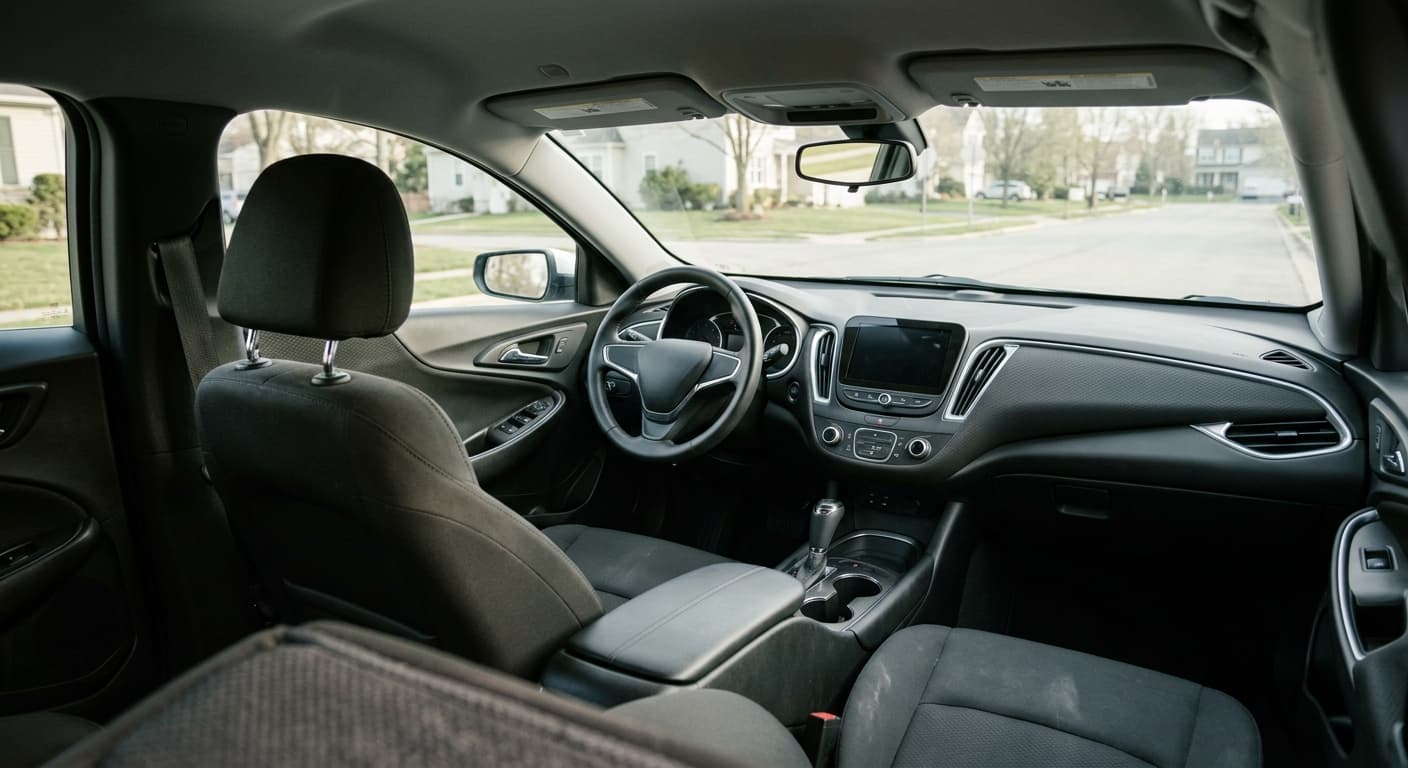
Yes, you can get a DUI in a self-driving car in most situations people actually encounter. If you are in the driver's seat of a car with Autopilot, Full Self-Driving (Supervised), BlueCruise or a similar driver-assist system, you are the driver and DUI law applies to you in full. Whether a passenger in a truly driverless robotaxi could be charged is a different question, and as of September 2026 no appellate decision on that question has been found.
Jurisdiction scope: This article covers state DUI and autonomous-vehicle statutes in California, Arizona, Florida, Texas and Utah as examples, current as of September 2026. It is general legal information, not advice on a specific arrest. DUI law varies by state; see the DUI laws hub for your state.
The short answer depends on which kind of car it is
The phrase "self-driving" covers very different products. A Tesla on Autopilot and a Waymo with nobody in the front seat sit at opposite ends of the same word, and the law treats the people inside them differently.
| Situation | Who is legally the driver | DUI exposure |
|---|---|---|
| Driver-assist car (Level 2), you are in the driver's seat | You | The DUI statute applies as it would in any car |
| Stopped car, you are in the driver's seat with it running | Depends on the state's test | Many states reach "actual physical control" |
| Level 3 car, system engaged, you are in the driver's seat | Statutes differ; California points to the person in the seat | No decision found; assume you are the responsible human |
| Fully driverless robotaxi, you are a passenger | Statutes often name the system | No appellate decision found; the statutes suggest a different analysis, with no guarantee |
If you are the driver of a Level 2 car
Autopilot, Full Self-Driving (Supervised), Ford BlueCruise and GM Super Cruise are driver-assist systems. They are built to help a human driver, not to replace one, and the law follows that design.
California's autonomous-vehicle statute is a clear example. It defines an autonomous vehicle by reference to SAE Levels 3, 4 and 5, and then says the term "does not include a vehicle that is equipped with one or more collision avoidance systems, including, but not limited to, electronic blind spot assistance, automated emergency braking systems, park assist, adaptive cruise control, lane keep assist, lane departure warning, traffic jam and queuing assist, or other similar systems that enhance safety or provide driver assistance, but are not capable, collectively or singularly, of driving the vehicle without the active control or monitoring of a human operator" (Cal. Veh. Code 38750). A car whose system needs a human's monitoring is outside that definition, so the ordinary DUI statute governs the person behind the wheel.
That statute is Vehicle Code 23152(a): "It is unlawful for a person who is under the influence of any alcoholic beverage to drive a vehicle" (Cal. Veh. Code 23152). Nothing in it carves out a driver whose car was steering itself. "The car was on Autopilot" is an explanation, not a defense written into the statute, and the person in the driver's seat is the person who would be charged.
Two practical points follow. A driver-assist feature is not a substitute for a sober driver, even on a long, empty highway. And the feature does not turn an impaired person in the driver's seat into a passenger for charging purposes. For how penalties, license suspension and chemical-test rules work, start with the DUI laws hub, then your state, such as California, Florida, Arizona or Texas.
Facing a warrant, DUI, or criminal charge? Get a free case review
An active warrant or a criminal charge like DUI puts your freedom, license, and record at risk, and deadlines to act, like challenging a license suspension or resolving a warrant before an arrest, can be just days away. Get a free, confidential review from a criminal defense attorney. Acting quickly protects your options.
"Actual physical control": you do not have to be moving
Many people assume a DUI requires driving down the road. In a lot of states it does not. The wording of the statute decides.
Statutes that reach "actual physical control." Arizona's DUI law says it is unlawful "for a person to drive or be in actual physical control of a vehicle in this state" while impaired (A.R.S. 28-1381). Florida's says a person is guilty of DUI "if the person is driving or in actual physical control of a vehicle within this state" and meets an impairment or alcohol-level condition (Fla. Stat. 316.193).
In Arizona, the question is decided on the totality of the circumstances. In State v. Zaragoza, 221 Ariz. 49, 209 P.3d 629 (2009), the Arizona Supreme Court affirmed a conviction of a man found in the driver's seat with a hand on the wheel, putting the key in the ignition of a car he had not yet started. The court recommended an instruction for future cases asking whether the defendant's current or imminent control of the vehicle presented a real danger to himself or others. The factors discussed include whether the vehicle was running or the ignition was on, where the key was, where the person was found in the vehicle, and whether the person was awake or asleep.
That is why sitting in the driver's seat with the engine running can be enough in states with this kind of test. It is also why a person asleep in a Level 2 car stopped on a highway shoulder is not automatically safe.
California's narrower word. California's statute says "drive," not "actual physical control." In Mercer v. Department of Motor Vehicles, 53 Cal.3d 753 (1991), the California Supreme Court concluded that section 23152 requires proof of volitional movement of a vehicle. The Legislature does use the broader phrase elsewhere: "A 'driver' is a person who drives or is in actual physical control of a vehicle" (Cal. Veh. Code 305). The practical effect is that a California case tends to turn on whether the defendant moved the vehicle, not only where the defendant sat.
None of this is a safe harbor. A person who put a car in motion earlier presents a very different case from one found in a legally parked car, and other California statutes, or other states with "operate" language, can produce different results on the same facts.
Passenger in a fully driverless robotaxi
This is the part with the least law. DUI statutes were written long before a vehicle with no one in the front seat existed, and the automated-vehicle statutes that followed do not mention intoxication offenses.
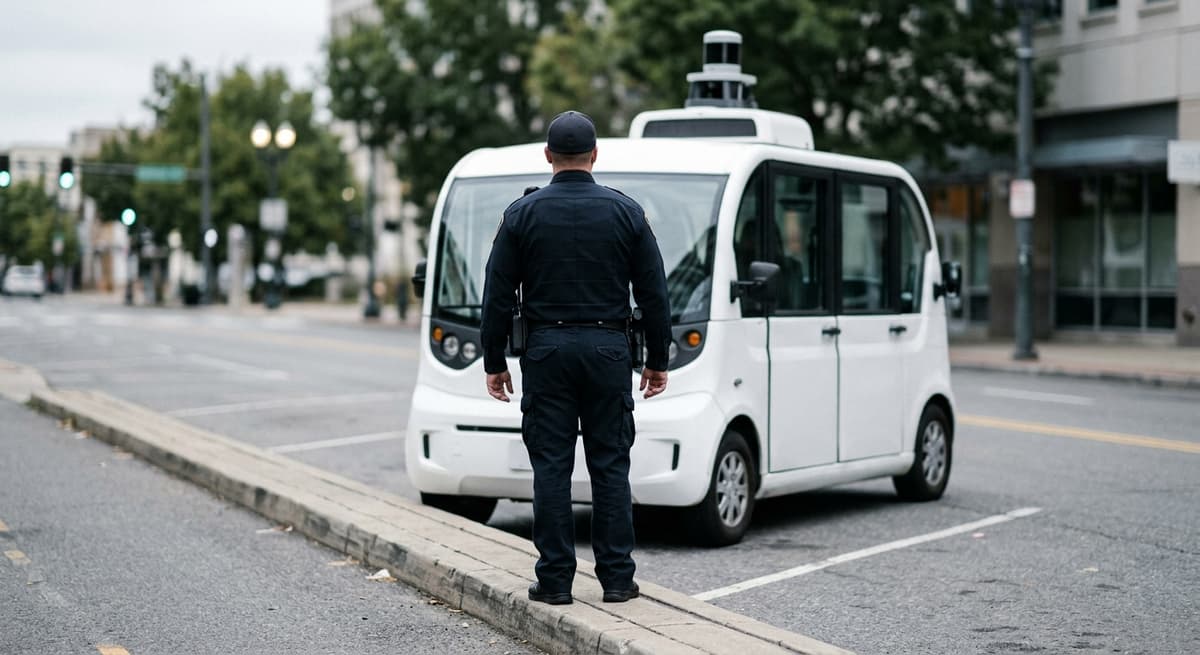
What no court has decided. As of September 2026, no appellate decision has been found that decides whether a passenger in a fully driverless vehicle drives, operates or is in actual physical control of it. No published opinion has been found applying a DUI statute to an occupant of a vehicle driven by an automated driving system. Trial-level charging decisions are not indexed the same way, so the absence of a published decision is not proof that no one has ever been charged.
What state statutes say about who the operator is. Several states have written the automated driving system into their definition of operator.
- Texas (amended in 2025 to delete the word "solely" from the earlier version): "When an automated driving system installed on a motor vehicle is engaged, the automated driving system is the operator of the vehicle, including for purposes of assessing compliance with applicable traffic or motor vehicle laws" (Tex. Transp. Code 545.454(a), as amended by SB 2807 (2025), effective September 1, 2025).
- Arizona: "When engaged, the automated driving system is considered the driver or operator of the autonomous vehicle for the purpose of assessing compliance with applicable traffic or motor vehicle laws" (A.R.S. 28-9702(E)). The same section says operation of autonomous vehicles, with or without a human driver, "is subject to all applicable federal and state laws."
- Florida: "For purposes of this chapter, unless the context otherwise requires, the automated driving system, when engaged, shall be deemed to be the operator of an autonomous vehicle" (Fla. Stat. 316.85(3)(a)), and the statute adds that "a licensed human operator is not required to operate a fully autonomous vehicle" (316.85(1)).
Arizona's provision is stated for assessing compliance with traffic or motor vehicle laws, and Florida's applies to its traffic chapter unless the context otherwise requires. Texas went further in 2025: it deleted "solely" and now says the system is the operator "including" for traffic-law purposes. None of the quoted passages mentions DUI, and no decision found applies any of them to a DUI charge.
Florida's DUI statute sits in the same chapter as its operator provision, and that chapter separately defines an operator as a person "in actual physical control of a motor vehicle upon the highway" (Fla. Stat. 316.003), the same phrase the DUI statute uses. One provision asks who is the operator when the system is engaged, the other asks who is driving or in actual physical control. No decision found resolves how they fit together for a rider.
The California wrinkle. California's definition works differently: "An 'operator' of an autonomous vehicle is the person who is seated in the driver's seat, or, if there is no person in the driver's seat, causes the autonomous technology to engage" (Cal. Veh. Code 38750). Someone could argue that a rider who summons a driverless car "causes the autonomous technology to engage." That definition sits in the code's autonomous-vehicle division, while the DUI statute is elsewhere and requires "drive" under Mercer. Whether the definition would ever be carried into a DUI charge has not been tested in any decision found.
What this does and does not mean. Nothing here says an intoxicated rider in a driverless car is legally in the clear, and nothing says the rider can be charged. The statutes do not answer the question, and silence is not permission. The statutes above describe the system as the operator, but they do not say what that means for a rider's DUI exposure, the law is unsettled, and the company's rules are stricter than the law (see below).
Level 3: when the system hands control back
Level 3 sits in between. The system drives within limits, and a human is expected to take over when the system asks. Only a small number of Level 3 systems have reached consumer vehicles. Utah's statute cuts both ways: for traffic-law compliance the engaged system is the operator, and at Level 3 it stays responsible after a request to intervene until it disengages (Utah Code 41-26-104), and the chapter defines a 'fallback-ready user' as a licensed human driver ready to take over when the system fails or asks.
Utah's statute allows a vehicle with a Level 3 system to operate on a highway if it is "operated, whether by the ADS or human driver with a valid driver license, in compliance with the applicable traffic and motor vehicle safety laws" (Utah Code 41-26-103). It defines a "fallback-ready user" as a human driver with a valid license who is "ready to operate the vehicle if: (i) a system failure occurs; or (ii) the ADS issues a request to intervene" (Utah Code 41-26-102.1). A person expected to be ready to take over is in a poor position to argue they were free to be impaired.
California's rule points the same direction: the operator of an autonomous vehicle is the person seated in the driver's seat. Whether an engaged Level 3 system makes that person a "driver" for DUI purposes has not been tested in any decision found. The prudent reading is that the person in the seat must be able to take over safely on request, which alcohol makes harder. See who is liable in a self-driving car accident for how responsibility is allocated when a crash follows a handoff.
Practical rules
- Do not sit in the driver's seat of any car you could not legally drive. In states with an "actual physical control" test, being in the driver's seat with the engine on or the key accessible is often the fact that matters, whatever the car is doing.
- Do not rely on a driver-assist feature to get you home. You are the driver, and the feature does not change that.
- California's open-container rule has no automated-vehicle exception. California makes it unlawful "for any passenger to keep in the passenger compartment of a motor vehicle, when the vehicle is upon any highway" an opened alcoholic beverage container (Cal. Veh. Code 23226(b)). Section 23229 exempts passengers in a "bus, taxicab, or limousine for hire licensed to transport passengers" from sections 23221 and 23223, but not from section 23226, which bars a passenger from keeping an open container in the passenger compartment (Cal. Veh. Code 23229). The statute does not say whether a driverless ride service counts as one of those vehicles.
- Robotaxi companies set their own rules. Waymo's rider rules say: "Any drug or alcohol use inside the car is against the rules, regardless of whether permitted by local law" (Waymo). That is the company's own statement, and a rule violation can cost you the service even where it is not a crime.
- Tickets for driverless vehicles are a separate question. For who receives a citation when there is no driver, see can a self-driving car get a ticket, and for the wider picture see the self-driving car laws hub.
If you have been arrested, speak to a criminal defense attorney licensed in the state where it happened. Whether the car was assisting you is one fact among many, and deadlines for challenging a license suspension can be short.
Related articles
- Self-driving car laws by state
- Who is liable in a self-driving car accident
- Can a self-driving car get a ticket
- DUI laws in the United States
Statutes cited reflect their in-force version as of September 2026.
Frequently Asked Questions
Can you get a DUI in a self-driving car?
Yes, if you are the driver. In a Level 2 car such as one using Autopilot, Full Self-Driving (Supervised) or BlueCruise, you remain the driver, and the DUI statute applies. California's autonomous-vehicle law excludes systems that cannot drive without the active control or monitoring of a human operator.
Can you get a DUI in a Waymo?
No appellate decision has been found on a DUI charge against a passenger in a driverless robotaxi as of September 2026. Texas, Arizona and Florida statutes treat the engaged automated driving system as the operator, but none of the quoted texts mentions DUI and no court decision found applies them to a rider's DUI charge. Waymo's own rules prohibit any alcohol use in the car.
Can you get a DUI for sleeping in a Tesla on Autopilot?
It is possible. Arizona and Florida reach a person in 'actual physical control' of a vehicle, and Arizona courts consider factors such as whether the engine was running and whether the person was asleep. California's statute uses 'drive', which requires volitional movement under Mercer v. DMV, so the analysis differs there. Autopilot does not make the person in the driver's seat a passenger.
What is actual physical control?
It is a standard some states use to reach a person who is not driving but is positioned to operate the vehicle. Arizona juries are asked whether, on the totality of the circumstances, the person's current or imminent control of the vehicle presented a real danger to themselves or others.
Is a Level 3 car different for DUI purposes?
The law is thinner. Utah defines a fallback-ready user as a licensed driver in a vehicle with an engaged Level 3 system who is ready to operate it on a system failure or a request to intervene, and California's operator definition points to the person in the driver's seat. Utah also treats the engaged system as the operator for traffic-law purposes. No decision found applies a DUI statute to an engaged Level 3 system.
Can you drink in a self-driving car as a passenger?
Do not assume so. Open-container statutes can apply to passengers, California's section 23229 exempts passengers in licensed buses, taxicabs and limousines for hire from the passenger-possession rule in section 23223, but not from section 23226, which bars passengers from keeping an open container in the passenger compartment, and Waymo's rider rules prohibit alcohol use inside the car.
Updates
Independently fact-checked against the cited primary sources
Sources and References
- Cal. Veh. Code 38750 - autonomous vehicle definition (Levels 3-5, driver-assist exclusion) and 'operator' definition(leginfo.legislature.ca.gov).gov
- Cal. Veh. Code 23152 - DUI requires driving(leginfo.legislature.ca.gov).gov
- Cal. Veh. Code 305 - 'driver' includes actual physical control(leginfo.legislature.ca.gov).gov
- Cal. Veh. Code 23226 - open container in passenger compartment(leginfo.legislature.ca.gov).gov
- Cal. Veh. Code 23229 - open container exemption for licensed for-hire vehicles(leginfo.legislature.ca.gov).gov
- A.R.S. 28-1381 - Arizona DUI, drive or actual physical control(azleg.gov).gov
- A.R.S. 28-9702 - autonomous vehicles subject to state law; ADS as driver or operator for traffic laws(azleg.gov).gov
- Fla. Stat. 316.193 - Florida DUI, driving or actual physical control(leg.state.fl.us).gov
- Fla. Stat. 316.85 - autonomous vehicles; ADS deemed operator(leg.state.fl.us).gov
- Texas Transp. Code 545.454(a), as amended by SB 2807 (89R, 2025), effective September 1, 2025 - ADS is the operator(capitol.texas.gov).gov
- Utah Code 41-26-103 - Level three ADS on highways(le.utah.gov).gov
- Utah Code 41-26-102.1 - fallback-ready user and request to intervene definitions(le.utah.gov).gov
- Mercer v. Department of Motor Vehicles, 53 Cal.3d 753 (1991) - section 23152 requires volitional movement(courtlistener.com)
- State v. Zaragoza, 221 Ariz. 49, 209 P.3d 629 (2009) - actual physical control, totality of circumstances, current or imminent control instruction(courtlistener.com)
- Waymo rider rules - alcohol and drug use inside the car (company statement)(support.google.com)
- Utah Code 41-26-104 - ADS is the operator; responsibility after a request to intervene(le.utah.gov).gov