Levels of Driving Automation: Is Level 3 Legal? (2026)
Independently fact-checked against primary sources (last audited September 30, 2026). · 20 primary sources cited on this page. How we verify our legal content

Level 3 autonomous driving is legal in some US states, but only under each state's conditions. As of September 2026, California's autonomous vehicle deployment list still names Mercedes-Benz, the maker of DRIVE PILOT, the Level 3 system the DMV approved in 2023, limited to certain freeways, daytime and 40 mph. Utah, Montana and North Carolina have statutes that expressly allow a car to drive itself while a human stays ready to take over, which is what Level 3 means, and Nevada's law sets conditions for it.
The levels themselves come from an engineering standard, SAE J3016, not from a law. They matter legally when a statute adopts them, and several states have. This page explains each level in plain terms, who counts as the driver at each one, and what the law expects of the person in the seat.
What are the levels of driving automation?
The levels are set out in SAE International's J3016, "Taxonomy and Definitions for Terms Related to Driving Automation Systems for On-Road Motor Vehicles." The April 2021 edition, the one cited in the California, Utah and West Virginia statutes discussed below, defines six levels:
- Level 0: No Driving Automation. You do all the driving. Warnings and brief emergency interventions, such as automatic emergency braking, do not count as automation.
- Level 1: Driver Assistance. The car helps with steering or with speed, not both. Adaptive cruise control on its own is the classic example.
- Level 2: Partial Driving Automation. The car can steer and control speed at the same time, but you must supervise continuously and step in whenever needed.
- Level 3: Conditional Driving Automation. The system does the whole driving task within defined conditions. A human must be ready to take over when the system asks or when something is evidently wrong.
- Level 4: High Driving Automation. The system drives within defined conditions and does not need a human to take over. If it cannot continue, it brings the car to a safe stop on its own.
- Level 5: Full Driving Automation. The system can drive everywhere a human could, with no human needed.
The key dividing line is between Level 2 and Level 3. Up to Level 2, the feature supports a human who is still driving. From Level 3 up, SAE calls the feature an automated driving system (ADS), because it performs the complete driving task while engaged.
SAE also says the level belongs to the feature that is engaged at the moment, not to the car as a whole. A car with a Level 3 highway feature is not operating at Level 3 when that feature is switched off.
The September 2026 revision
SAE lists a new edition, J3016_202609, dated September 19, 2026, as the current standard. Its short descriptions are reworded: Level 2 is "driver support for steering AND speed, with continual driver supervision necessary," and Level 3 is automated driving "under defined conditions, with human driving needed following an alert or evident vehicle malfunction." SAE notes that these simple descriptors are not the definitions themselves.
For most of these statutes the revision changes nothing until a legislature or agency acts. Utah's statute defines its levels by the April 2021 edition by name, and West Virginia's defines "SAE J3016" as the April 2021 publication. Washington lets its department adopt a later edition by rule, and Nevada's statute defines SAE J3016 as the September 30, 2016 edition and lets its DMV approve a later version by regulation. California is different: its definition refers to the April 2021 standard "as may be revised," so the statute's text does not settle whether the 2026 edition now applies there.
Why the level matters legally
A level is an engineering label. The law cares about it for one reason: many self-driving statutes switch on only at a certain level, and the level often decides who the law treats as the driver.
California is the clearest example. Its Vehicle Code defines an "autonomous vehicle" as one whose technology "meets the definition of Level 3, Level 4, or Level 5" of SAE J3016. The same section says an autonomous vehicle does not include a car with features such as adaptive cruise control, lane keep assist or traffic jam assist that cannot drive "without the active control or monitoring of a human operator."
So a car running Level 2 features is not an autonomous vehicle under California law. California's autonomous vehicle division does not apply to it, and the person behind the wheel is simply driving. Nevada's statute works the same way: an "autonomous vehicle" is one designed to function at level 3, 4 or 5 under SAE J3016.
Other states start even higher. Washington's testing law defines "autonomous" as a level four or five system, and West Virginia's Fully Autonomous Vehicle Act defines a "fully autonomous vehicle" as one designed to function without a human driver as a level 4 or 5 system. In those laws a Level 3 car is outside the definition.
Who is the driver at each level?
The table summarizes the practical answer. The legal answer for Level 3 varies by state, so it is explained in more detail below.

| Level | Who performs the driving task | Is a human expected to take over? | Who the law usually treats as the driver |
|---|---|---|---|
| 0, 1, 2 | The human, with the car assisting | Yes, at all times | The human. California's and Nevada's autonomous vehicle laws do not apply |
| 3 | The system, within its conditions | Yes, when the system requests it or fails | Depends on the state (see below) |
| 4 | The system, within its conditions | No. The system reaches a safe stop on its own | Varies by state. Utah makes the engaged system the operator; Nevada says no traffic law requires a human driver for a fully autonomous vehicle |
| 5 | The system, everywhere | No | Treated like Level 4 in the statutes that cover both |
Level 3: the fallback-ready user
Utah and Montana use a specific term for the person in the seat: the "fallback-ready user." Utah defines it as the user of a car with an engaged level three ADS who is "a human driver with a valid driver license" and is "ready to operate the vehicle if" the system fails or "issues a request to intervene." Montana's definition says this person is "responsible to operate the vehicle" when the system asks or fails.
That is the legal core of Level 3. The system does the driving within its limits, but you must remain a human driver who is ready to take back control promptly, and in Utah a licensed one.
Utah: the system is the operator while engaged
Utah assigns responsibility to the system directly. For the purpose of assessing compliance with traffic and motor vehicle laws, "when an ADS is operating a motor vehicle, the ADS is the operator." If an engaged level three ADS issues a request to intervene, "the ADS is responsible for the compliant operation of the vehicle until disengagement of the ADS."
Note the scope. Utah's rule is about compliance with traffic laws. It does not say who pays for a crash, which is a question of negligence and product liability covered in who is liable in a self-driving car accident.
California: the person in the driver's seat is the operator
California takes a different approach. Under Vehicle Code 38750, the "operator" of an autonomous vehicle "is the person who is seated in the driver's seat, or, if there is no person in the driver's seat, causes the autonomous technology to engage." For a Level 3 car, where someone must be in the seat, that person is the operator.
When it approved DRIVE PILOT, California's DMV described Level 3 in the same terms: the system drives "under certain conditions, though the driver must remain behind the wheel to take over when prompted."
Nevada and North Carolina
Nevada requires a human operator in an autonomous vehicle that is not fully autonomous. That person must be "seated in a position which allows the human operator to take immediate manual control" and be capable of taking over "in the event of a failure of the automated driving system or other emergency." A fully autonomous vehicle, meaning Level 4 or 5, may run with no human operator aboard if it meets the statute's conditions.
North Carolina's statute describes Level 3 without using the number. Operating a vehicle whose automated driving system can perform the entire driving task "with the expectation that a human operator will respond appropriately to a request to intervene is lawful under this Chapter and subject to the provisions of this Chapter."
Is Level 3 legal in the US?
There is no single national answer. NHTSA says it "does not approve or certify vehicles or equipment"; manufacturers certify their own vehicles to federal safety standards. As of September 2026, whether a Level 3 car may drive itself on a particular road is answered by state law.
The states below have statutes that expressly address Level 3, or systems that expect a human to respond to a request to intervene. A state missing from this table is not necessarily silent on the question; check its own law or the state pages linked from the hub.
| State | What the statute says about Level 3 | Source |
|---|---|---|
| California | Level 3 to 5 vehicles may not operate on public roads, other than for testing, until the DMV approves the manufacturer's application | Veh. Code 38750(c) |
| Nevada | Level 3 to 5 vehicles are autonomous vehicles; a non-fully-autonomous one needs a human operator seated to take immediate control; manufacturers self-certify to the DMV | NRS 482A.030, 482A.070; Nevada DMV |
| Utah | A vehicle with a level three ADS "may operate on a highway in this state" if it complies with traffic laws, meets federal certification when required, can reach a minimal risk condition or request intervention on failure, and is titled and registered | Utah Code 41-26-103 |
| Montana | Vehicles with automated driving systems level 1, level 2 and level 3 "may be used on the public highways of this state" | MCA 61-6-409 |
| North Carolina | Operation with the expectation that a human operator will respond to a request to intervene is lawful and subject to the motor vehicle chapter | N.C.G.S. 20-402 |
A statute that permits Level 3 is not the same as a Level 3 car you can buy. The law in these states sets the conditions; a manufacturer still has to build a system, certify it or obtain approval, and offer it for sale.
Where has a Level 3 system been approved?
California: Mercedes-Benz DRIVE PILOT
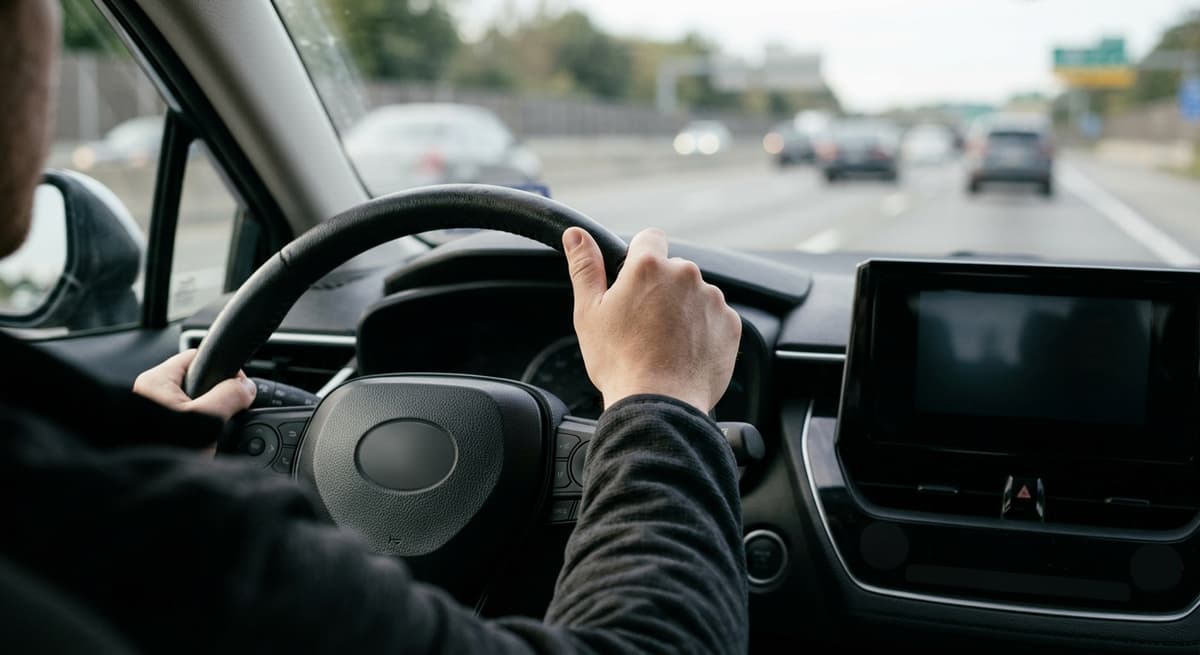
On June 8, 2023, the California DMV issued a deployment permit that let Mercedes-Benz offer DRIVE PILOT to the public. The DMV said Mercedes-Benz was the first company authorized to sell or lease vehicles with an automated driving system to the public. Its announcement set out the limits: the system "can only operate on highways during daylight at speeds not exceeding 40 miles per hour," and the permit excludes city or county streets, construction zones, heavy rain or fog, flooded roads and other conditions that affect the system.
The DMV also said owners must watch a mandatory video on how to engage and disengage the system before Mercedes-Benz activates it. The DMV's deployment list, dated November 21, 2025 and still posted in September 2026, names Mercedes-Benz Research and Development North America for freeways and highways in the Bay Area, Los Angeles, Sacramento and San Diego, Interstate 5 and Interstate 15 toward Nevada, in daytime, at 40 mph. The only other companies on that deployment list are Nuro and Waymo.
Nevada
California's DMV announcement said DRIVE PILOT would be available on Interstate 15 into Nevada, "where the system is also approved for use." Nevada's DMV describes its process as self-certification: it does not test technology, and certification is granted for a specific make, model and year.
Is DRIVE PILOT still offered?
Electrive, citing the German newspaper Handelsblatt, reported on January 12, 2026 that Mercedes-Benz would not offer DRIVE PILOT in the facelifted S-Class and that the EQS facelift planned for October would also exclude it, with a driver-assistance system described as Level 2++ taking its place. That report did not say what happens to DRIVE PILOT in cars already sold.
The California permit and any Nevada approval are separate from whether Mercedes puts the feature in new cars. If you own or are shopping for a car with DRIVE PILOT, ask Mercedes-Benz whether the feature is active on that specific vehicle and in which states.
What NHTSA has said
In a January 2025 proposal, NHTSA noted that "a limited number of Level 3 systems have recently become available on consumer-owned vehicles." NHTSA's Standing General Order on crash reporting treats automated driving systems and Level 2 driver assistance as separate categories: it requires the manufacturers and operators named in the order to report certain crashes involving an ADS or Level 2 ADAS equipped vehicle.
Level 2 marketing is not Level 3 law
Driver-assistance features are sold under many brand names. The name on the feature does not change the level, and the level decides your legal role.
California has written this into law. Vehicle Code 24011.5 bars a manufacturer or dealer from naming or describing a partial driving automation feature, defined as SAE Level 2, in a way that would lead a reasonable person to believe the car can "function as an autonomous vehicle." A violation counts as a misleading advertisement. A dealer or manufacturer selling a new car with such a feature must also give the buyer a distinct notice of the feature's name, functions and limitations.
Tesla Autopilot and Full Self-Driving (Supervised)
On December 16, 2025, the California DMV adopted an administrative law judge's decision that Tesla's use of "Autopilot" and "Full Self-Driving Capability" for its driver assistance features was misleading and violated state law. The DMV said vehicles with those features "could not at the time of those advertisements, and cannot now, operate as autonomous vehicles."
On February 17, 2026, the DMV said Tesla had stopped using "Autopilot" in its California marketing and so avoided a 30-day license suspension; the DMV also noted that Tesla had earlier replaced "Full Self-Driving Capability" with "Full Self-Driving (Supervised)." For a driver, the point is simple: with those features engaged you are driving, and the ordinary rules for drivers apply to you. The litigation is tracked in Tesla Autopilot and FSD lawsuits.
California law also says the marketing rule does not reduce a manufacturer's existing duty of care or civil liability for negligence or product defects.
What you may and may not do at each level
These are practical points drawn from the statutes above. Your state's own law controls.
Level 0 to Level 2 (driver assistance)
- You are the driver. Keep your hands and attention available as the feature's instructions require, because the law treats you as driving.
- Tickets, distracted-driving rules and DUI laws apply to you as the driver. See DUI in a self-driving car.
- A crash with the feature engaged is still, first, a crash you were driving in. The manufacturer's role is a separate product question. See car accident laws.
Level 3 (DRIVE PILOT and similar systems)
- Use it only where and when it is approved to work. In California that means designated freeways, in daytime, at up to 40 mph, and not in the excluded weather or road conditions.
- Stay in the driver's seat, licensed and able to take over promptly when the car asks. California's DMV describes this as remaining behind the wheel to take over when prompted. Utah defines the fallback-ready user as a licensed human driver ready to operate the vehicle, and Montana makes that person responsible to operate it.
- In Utah the fallback-ready user must be a licensed driver ready to operate the vehicle, so Level 3 is not permission to be impaired or asleep.
- Phone use depends on the state. Nevada's handheld-device law says a person is deemed not to be operating a vehicle "if the motor vehicle is driven autonomously and the autonomous operation of the motor vehicle is authorized by law." Do not assume another state has the same rule.
Level 4 and Level 5 (robotaxis and driverless fleets)
- Where a state allows driverless operation, you ride as a passenger. Utah's statute, for example, defines a passenger as a user "who has no role in the operation of that vehicle."
- How tickets work when no one is driving is covered in can a self-driving car get a ticket.
- If you are hurt in or by a robotaxi, the claims process differs from an ordinary crash. See Waymo and robotaxi accidents.
How the federal and state layers fit together
Federal law covers vehicle safety standards and crash reporting, and NHTSA does not approve vehicles. The states covered on this page decide who counts as the driver and which vehicles may operate without a human. That is why "is Level 3 legal" gets a state-by-state answer. The federal side is covered in federal self-driving car laws, and each state's rules are on the self-driving car laws hub, including the state pages for Texas, Arizona and Florida.
See self-driving car insurance for state minimums, and autonomous truck laws for commercial trucks. For other countries, see self-driving car laws around the world.
Frequently Asked Questions
Is Level 3 autonomous driving legal in the US?
In some states, under conditions. As of September 2026, California allows Level 3 vehicles on public roads once the DMV approves the manufacturer's application. Utah, Montana and North Carolina have statutes that expressly allow a system that drives while a human stays ready to take over, and Nevada sets conditions for it.
What is the difference between Level 2 and Level 3?
At Level 2 the car can steer and control speed, but you must supervise continuously and you are the driver. At Level 3 the system performs the whole driving task within defined conditions, and you must be ready to take over when it asks or fails.
Is Mercedes DRIVE PILOT legal?
In California, yes, within the limits of its approval. The DMV issued Mercedes-Benz a deployment permit in June 2023 for designated freeways, in daytime, at up to 40 mph, and the DMV's deployment list still named Mercedes as of September 2026. Electrive, citing Handelsblatt, reported in January 2026 that Mercedes would not offer DRIVE PILOT on the facelifted S-Class.
Is Tesla Full Self-Driving Level 3?
Not according to California's DMV. The DMV said in December 2025 that Tesla's Autopilot and Full Self-Driving features cannot operate as autonomous vehicles, and the DMV said in February 2026 that Tesla had switched to the name Full Self-Driving (Supervised), which signals that driver supervision is required. With it engaged, you are the driver.
Can I text or watch a video in a Level 3 car?
Only if your state's law allows it, and only while the system is engaged within its limits. Nevada's handheld-device law exempts a person when the vehicle is driven autonomously and that operation is authorized by law. Other states' distracted-driving laws should be checked directly, and you must still be ready to take over.
Who is responsible if a Level 3 car breaks a traffic law?
It depends on the state. Utah makes the engaged system the operator for traffic-law purposes and keeps it responsible after a request to intervene until the system disengages. California defines the operator as the person in the driver's seat.
Are the SAE levels part of federal law?
The levels come from SAE, a private standards body. NHTSA uses the vocabulary, such as ADS and Level 2 ADAS in its crash reporting order, and says it does not approve or certify vehicles. State statutes such as California's, Nevada's and Utah's adopt the levels by reference.
Did the new 2026 version of SAE J3016 change the law?
Not for statutes that name a fixed edition. SAE published a revised J3016 on September 19, 2026, but Utah's and West Virginia's statutes name the April 2021 edition and keep relying on it until they are amended. California's definition refers to the April 2021 standard "as may be revised," so whether the new edition applies there is not settled by the statute's text.
Updates
Independently fact-checked against the cited primary sources
Sources and References
- SAE International, J3016_202104 Taxonomy and Definitions for Terms Related to Driving Automation Systems (April 2021 edition, standard page with level names and scope)(sae.org)
- SAE International, J3016_202609 (current edition, revised September 19, 2026) standard page with revised level descriptors(sae.org)
- Cal. Veh. Code 38750: autonomous vehicle = SAE Level 3, 4 or 5; driver-assistance exclusion; operator definition; DMV approval before public-road operation(leginfo.legislature.ca.gov).gov
- Cal. Veh. Code 24011.5: partial driving automation (SAE Level 2) naming, marketing and buyer-notice rules(leginfo.legislature.ca.gov).gov
- California DMV, Autonomous Vehicle Permit Holders (deployment list naming Mercedes-Benz, Nuro and Waymo)(dmv.ca.gov).gov
- California DMV news release (June 8, 2023): DMV approves Mercedes-Benz DRIVE PILOT Level 3 system for certain highways and conditions(dmv.ca.gov).gov
- California DMV news release (December 16, 2025): DMV finds Tesla violated state law with Autopilot and Full Self-Driving Capability marketing(dmv.ca.gov).gov
- California DMV news release (February 17, 2026): Tesla takes corrective action to avoid DMV suspension(dmv.ca.gov).gov
- Utah Code 41-26-102.1: definitions incl. level three ADS by SAE J3016_202104, fallback-ready user, request to intervene, passenger(le.utah.gov).gov
- Utah Code 41-26-103: operation of vehicles with level three and level four or five ADS(le.utah.gov).gov
- Utah Code 41-26-104: ADS is the operator for traffic-law compliance; responsibility after a request to intervene(le.utah.gov).gov
- Mont. Code Ann. 61-6-409: vehicles with automated driving systems level 1, 2 and 3 may be used on public highways(mca.legmt.gov).gov
- Mont. Code Ann. 61-6-403 (2025): definitions of fallback ready user and automated driving system levels (enacted by SB 67 (2025), Ch. 355)(mca.legmt.gov).gov
- Nevada NRS Chapter 482A: autonomous vehicle (Level 3-5), fully autonomous vehicle (Level 4-5), SAE J3016 definition, human operator requirement, no human driver required for fully autonomous vehicles(leg.state.nv.us).gov
- Nevada NRS 484B.165(7): handheld-device law, person deemed not operating when vehicle is driven autonomously as authorized by law(leg.state.nv.us).gov
- Nevada DMV, Autonomous vehicles: self-certification by make, model and year(dmv.nv.gov).gov
- N.C. Gen. Stat. 20-402: vehicles expecting a human operator to respond to a request to intervene(ncleg.gov).gov
- Rev. Code Wash. 46.92.010: autonomous means a level four or five system under SAE J3016(app.leg.wa.gov).gov
- W. Va. Code 17H-1-3: fully autonomous vehicle (level 4 or 5) and SAE J3016 (April 2021) definitions(code.wvlegislature.gov).gov
- NHTSA, Denial of a Petition for Rulemaking, 91 FR 59755 (Sept. 21, 2026): NHTSA does not approve or certify vehicles(govinfo.gov).gov
- NHTSA, ADS-equipped Vehicle Safety, Transparency, and Evaluation Program proposed rule, 90 FR 4130 (Jan. 15, 2025): Level 3 systems on consumer-owned vehicles(govinfo.gov).gov
- NHTSA, Incident Reporting for ADS and Level 2 ADAS information collection notice, 91 FR 10682 (Mar. 4, 2026): Standing General Order 2021-01 scope(govinfo.gov).gov
- Electrive (Jan. 12, 2026), citing Handelsblatt: Mercedes pauses Level 3 DRIVE PILOT on S-Class and EQS facelifts(electrive.com)