Self-Driving Car Insurance: State Rules and Who Pays (2026)
Independently fact-checked against primary sources (last audited September 30, 2026). · 21 primary sources cited on this page. How we verify our legal content
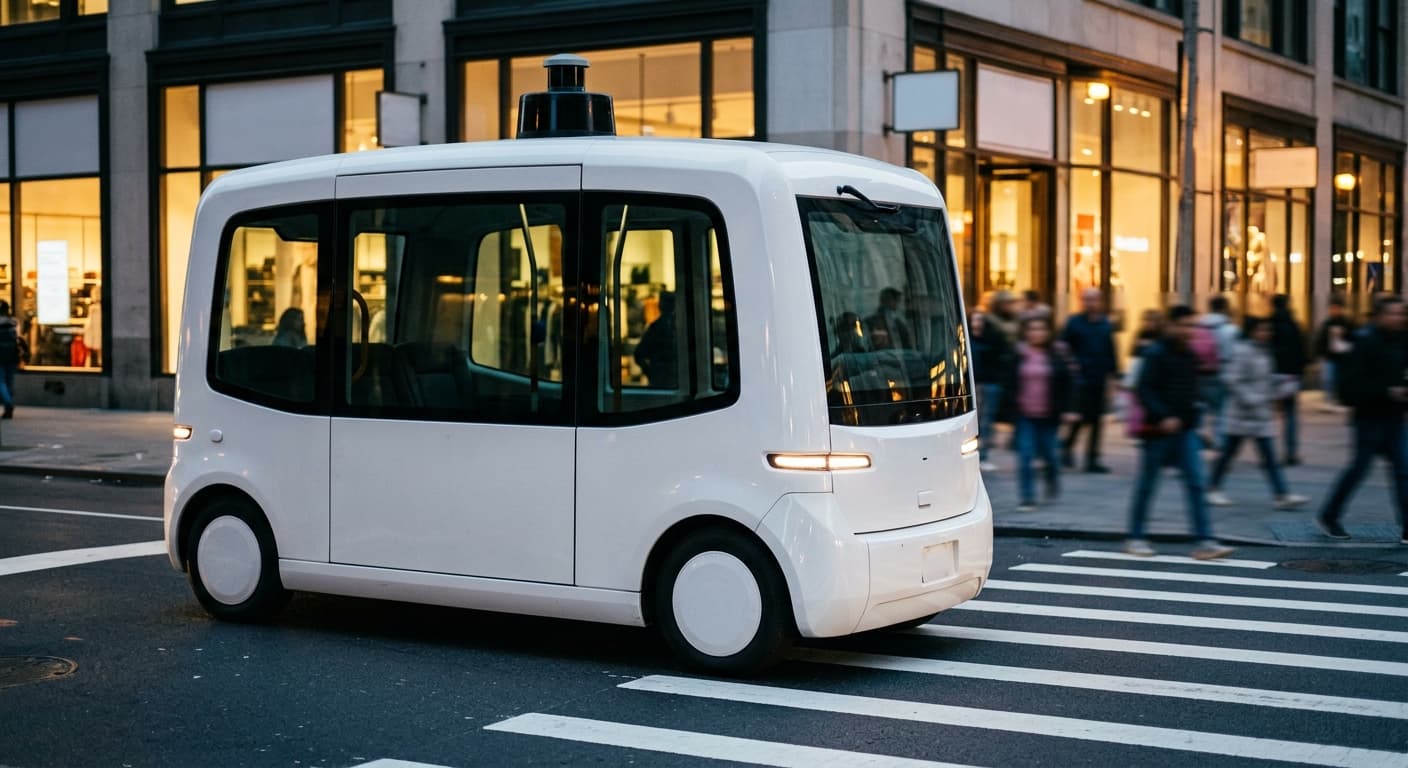
Who insures a self-driving car depends on what was driving. If you own a car with a driver-assist system such as Tesla Autopilot or Full Self-Driving (Supervised), you are still the driver, and your ordinary auto policy is the coverage in play, on whatever terms that policy sets. If no human is driving, as in a robotaxi, a growing number of states make the company or owner behind the vehicle carry specific coverage, from $100,000 to $5 million depending on the state and on whether the car is testing, carrying passengers or hauling freight.
Scope: This page covers insurance and financial responsibility rules for self-driving vehicles and driver-assist cars under US state law and federal motor carrier rules as they read in September 2026. It is general legal information, not legal advice, and it does not describe any particular insurer's policy.
Who insures a self-driving car? It depends on what is driving
"Self-driving" is used for very different technologies. Insurance law follows the same line the traffic statutes draw: is a human expected to drive, or is the software doing the whole job?
California's statute shows where the line sits. It defines an "autonomous vehicle" as one that meets the definition of SAE Level 3, 4 or 5, and it excludes vehicles whose collision avoidance and assist systems cannot drive "without the active control or monitoring of a human operator." A car whose system must be supervised by the person behind the wheel is outside that definition. Our guide to the levels of driving automation explains the categories.
| What was driving | Who is insured | Where the coverage rule comes from |
|---|---|---|
| Driver-assist system the human must supervise (Level 2) | The owner and driver, like any other car | The state's ordinary auto insurance law and the owner's policy terms |
| A self-driving car being tested | The company doing the testing | Testing statutes and permits, often $5 million |
| A driverless vehicle operating without a human driver | The owner, operator or authorization holder | State driverless-operation statutes, some with AV-specific amounts, many pointing to ordinary minimums |
| A driverless vehicle giving paid rides | The operator or the ride network | In Florida and Texas, ride-network insurance rules written into the statute |
State insurance requirements for self-driving cars
The table below lists states whose statute or motor vehicle agency sets an insurance rule specific to self-driving vehicles. It is not a list of every state with an AV law. Many states that allow driverless operation simply require the coverage that applies to any vehicle, and a missing state here means only that it is not covered on this page.
| State | When the rule applies | Minimum coverage | Source |
|---|---|---|---|
| Alabama | Fully autonomous vehicle on public roads | Single-limit liability of at least $100,000, proof filed with the Department of Revenue | Ala. Act SB 226 (2024), Sec. 3 |
| Alabama | Driverless vehicle run by a commercial entity (not an automated commercial truck), and ride-network vehicles | At least $1,000,000 per accident for death, bodily injury and third-party property damage | Ala. Act SB 226 (2024), Secs. 4(5) and 10 |
| California | Manufacturer testing on public roads | $5,000,000 insurance, surety bond or self-insurance | Veh. Code 38750(b)(3) |
| California | Manufacturer applying to operate (deploy) | Certification it will maintain $5,000,000 insurance, surety bond or self-insurance | Veh. Code 38750(c)(3) |
| Connecticut | Testers in the state's AV pilot program | At least $5 million liability insurance, self-insurance or surety bond | Gen. Stat. 13a-260 |
| District of Columbia | AV testing permit holders | Ability to respond to a judgment of $5 million (insurance, surety bond or self-insurance) | D.C. Code 50-2352.01 |
| Florida | Fully autonomous vehicle with the system engaged while logged on to a ride network or on a prearranged ride | $1 million primary liability, plus personal injury protection and uninsured/underinsured motorist coverage as required by Fla. Stat. 627.727 (the named insured may reject that coverage in writing) | Fla. Stat. 627.749 |
| Kentucky | Fully autonomous vehicle without a human driver (not a motor carrier) | Single-limit liability of at least $1,000,000 meeting KRS 304.39-080 | KRS 186.766 |
| Louisiana | Autonomous commercial motor vehicle without a driver present | At least $2 million liability coverage | La. R.S. 32:400.3 |
| Michigan | Vehicles in a manufacturer's SAVE project fleet | Insured under Michigan's no-fault insurance chapter; manufacturer assumes liability when the system is at fault | MCL 257.665b |
| Nevada | Entities testing an automated driving system | $5 million insurance, surety bond or cash deposit, plus Nevada's standard minimums for each vehicle | Nevada DMV form OBL-326 |
| New Hampshire | Testing entities | Ability to satisfy judgments of at least $5 million | RSA 242:1 |
| Oklahoma | Fully autonomous vehicle without a human driver | Insurance or self-insurance of at least $1,000,000 | 47 O.S. 1704 |
| Pennsylvania | Certificate holder of a highly automated vehicle | At least $1,000,000 per accident for death, bodily injury and property damage to a third party, as PennDOT summarizes Act 130 | Act 130 of 2022 (75 Pa.C.S. ch. 85), per PennDOT's 2025 report |
| Tennessee | ADS-operated vehicle operating without a human driver | No AV-specific amount found: the 2017 act's $5 million per-incident requirement was, by its own terms, deleted on July 1, 2021 | Tenn. Code 55-30-103; Acts 2017, ch. 474 |
| Texas | Automated motor vehicle with the system engaged | Coverage at least equal to what state or federal law requires for that type and use of vehicle | Transp. Code 545.455(b)(6) |
| Texas | Automated motor vehicle on a ride network | Rideshare rules apply: $1 million per incident during a ride; $50,000 / $100,000 / $25,000 while logged on between rides | Ins. Code 1954.003, 1954.052, 1954.053 |
| Vermont | Automated vehicle testing | At least $5 million insurance, self-insurance or surety bond | 23 V.S.A. 4203 |
| Washington | Entities testing under the self-certification pilot | Umbrella liability policy of at least $5 million per occurrence | RCW 46.30.050 |
A few patterns stand out. Testing rules cluster at $5 million where a state sets one. Rules for driverless operation are lower and more varied, and several are tied to a particular use, such as a ride network in Florida or a commercial truck in Louisiana.
California: $5 million for testing and for deployment
Before testing on public roads, the manufacturer must obtain "an instrument of insurance, surety bond, or proof of self-insurance in the amount of five million dollars ($5,000,000)" under Vehicle Code 38750(b)(3). A manufacturer applying to operate autonomous vehicles beyond testing must certify it will maintain the same $5 million amount, in the form the DMV's regulations specify.
That amount sits with the manufacturer. Section 38750 does not set a separate amount per passenger or per ride.
Florida: $1 million when a driverless car is on a ride network
Florida Statute 627.749 applies to a "fully autonomous vehicle with the automated driving system engaged while logged on to an on-demand autonomous vehicle network or engaged in a prearranged ride." That vehicle must carry primary liability coverage of at least $1 million for death, bodily injury and property damage, personal injury protection at Florida's required minimums, and uninsured and underinsured vehicle coverage as required by Fla. Stat. 627.727, which lets a named insured reject that coverage in writing on behalf of all insureds under the policy.
The owner's policy, the network's policy, or a combination of the two can satisfy the requirement. Section 316.85 repeats that a driverless vehicle logged on to a network "must meet the insurance requirements in s. 627.749." The $1 million figure is tied to network and ride activity; the statute does not attach it to a privately owned autonomous car used for personal trips.
Texas: ordinary minimums, and rideshare rules for robotaxis
Texas does not set a separate dollar figure for driverless cars in general. Under Transportation Code 545.455(b)(6), as amended by SB 2807 (effective September 1, 2025), an automated motor vehicle may not operate with its system engaged unless it is covered by liability coverage or self-insurance "in an amount equal to or greater than the amount of coverage that is required under the laws of this state or federal law, as applicable to the type and use of the vehicle."
The same bill added Insurance Code 1954.003, which says an automated motor vehicle "is considered a transportation network company driver" for the rideshare insurance subchapter. That brings in the rideshare minimums: while the vehicle is logged on and waiting for a request, $50,000 per person and $100,000 per incident for bodily injury and $25,000 for property damage; during a prearranged ride, a total limit of $1 million per incident for death, bodily injury and property damage. Uninsured or underinsured motorist and personal injury protection coverage are required in both phases where Texas insurance law requires them.
SB 2807 also makes the automated driving system "the operator of the vehicle, including for purposes of assessing compliance with applicable traffic or motor vehicle laws." That is a traffic-law rule. It does not by itself decide who pays for an injury, which is covered in our guide to who is liable in a self-driving car accident.
Pennsylvania: $1 million per accident for certificate holders (Act 130)
PennDOT's 2025 advisory committee report summarizes Pennsylvania's Act 130 of 2022 (an amendment to Title 75) this way: "certificate holders must maintain financial responsibility of at least $1,000,000 per accident for death, bodily injury, and property damage to a third party." The report describes a certificate holder of a highly automated vehicle, not driverless operation in general, and this page relies on PennDOT's summary rather than the statute's own text.
Kentucky, Oklahoma and Alabama: statutory minimums for driverless operation
Kentucky's KRS 186.766 requires proof, before a fully autonomous vehicle operates on a highway without a human driver, of single-limit liability coverage of at least $1,000,000 that satisfies KRS 304.39-080. Fully autonomous vehicles that are motor carriers instead must meet the requirements of KRS 281.655.
Oklahoma's 47 O.S. 1704 requires proof to the Department of Public Safety, before driverless operation, of insurance or self-insurance of at least $1,000,000 that satisfies the state's Compulsory Insurance Law.
Alabama's 2024 law (SB 226) is tiered. A fully autonomous vehicle may operate only if proof of single-limit coverage of at least $100,000 is filed with the Department of Revenue. When a commercial entity operates a driverless vehicle that is not an automated commercial truck, the owner is deemed the operator and must be able to respond in damages of at least $1,000,000 per accident, and vehicles on an on-demand network must meet that same requirement.
Tennessee: no AV-specific amount found
Tennessee's 2017 Public Chapter 474 (Acts 2017, ch. 474) allowed an ADS-operated vehicle to operate without a human driver present if it met listed conditions, and one of them required primary liability insurance of "at least five million dollars ($5,000,000) per incident." The act itself provides that "This subdivision (4) is deleted on July 1, 2021," and the 2021 Official Code of Tennessee Annotated release prints the subdivision as "[Effective until July 1, 2021.]" Under those terms, the $5,000,000 requirement ended on July 1, 2021. This page did not find a replacement AV-specific amount, unless the legislature has added one since. Check the current text of Tenn. Code 55-30-103 before relying on this.
Michigan: no-fault coverage and manufacturer liability in SAVE projects
Michigan's SAVE project statute, MCL 257.665b, sets the terms for a motor vehicle manufacturer that runs a participating fleet in a SAVE project. The manufacturer must insure each fleet vehicle under Michigan's no-fault insurance chapter. While the system is in control, the manufacturer "shall assume liability for each incident in which the automated driving system is at fault," subject to that chapter.
That assigns liability to the manufacturer directly, which is unusual among the statutes on this page, and it is limited to SAVE projects.
Arizona: ordinary insurance rules
Arizona allows a fully autonomous vehicle to operate without a human driver once a law enforcement interaction plan is submitted to the transportation and public safety departments and a written statement is submitted to the transportation department. One required acknowledgment is that the vehicle meets "all applicable certificate of title, registration, licensing and insurance requirements" of the vehicle title (A.R.S. 28-9702). No AV-specific amount is set, so the vehicle must meet whatever Title 28 requires for a vehicle of its type and use. For an owner's policy issued or renewed on or after July 1, 2020, the minimum is $25,000 for injury to one person, $50,000 for two or more, and $15,000 for property damage (A.R.S. 28-4009); self-insurers and commercial or for-hire operations are subject to different rules.
The $5 million testing states
Testing statutes favor a single large figure that the company must be able to pay. Nevada's DMV requires any entity testing an automated driving system to prove $5 million in coverage, a $5 million surety bond or a $5 million cash deposit, in addition to Nevada's standard minimums ($25,000 / $50,000 / $20,000) for each vehicle. If the insurance lapses, the testing certificate and plates become invalid.
Vermont (23 V.S.A. 4203), Connecticut's pilot program (Gen. Stat. 13a-260), Washington (RCW 46.30.050), New Hampshire (RSA 242:1) and the District of Columbia (D.C. Code 50-2352.01) set the same $5 million level for testing. New Hampshire handles driverless deployment differently: the owner or manufacturer must show insurance or self-insurance that satisfies the state's ordinary financial responsibility law, RSA 264.
A testing bond is not a passenger benefit
The large figures in testing laws are easy to misread. A $5 million surety bond or self-insurance certificate is meant to show that the company can pay judgments. It is not insurance written for riders, and it says nothing about deductibles, exclusions or how claims are handled. Whether an injured person can sue on a bond directly depends on its terms; Nevada's testing bond form, for example, lets a person injured by a violation of the state's AV law bring an action against the surety.
For a commercial ride, the more useful question is what coverage applies during the ride itself. Florida and Texas answer it through ride-network rules tied to their AV statutes, and Alabama through its commercial-entity and network requirement. Other states, such as Oklahoma, let a driverless network operate under the laws that govern rideshare companies and taxis, so those rules may also apply. Where no such rule applies, the coverage behind a robotaxi ride is set by the company's own insurance program, and the operator's rider terms may say how claims work.
If a robotaxi hits you, or you are hurt as a rider
The coverage that responds depends on where the crash happened and on the vehicle's status at the time.
- You were hit by a driverless vehicle. Statutes that set a driverless minimum mostly describe liability coverage, the kind that pays people the vehicle injures. PennDOT describes Pennsylvania's Act 130 amount as covering damage to a third party. Whether and how much a policy pays still depends on fault rules and the facts.
- You were a passenger. Florida's requirement is the clearest: personal injury protection and uninsured and underinsured motorist coverage as required by Fla. Stat. 627.727 (which the named insured may reject in writing) must be in place while the vehicle is on a network or a ride. Texas brings rideshare rules in, which include PIP and UM where Texas law requires them. Most of the other statutes on this page state a liability amount without spelling out separate rider coverage.
- Your own policy may also be involved. In no-fault states, injured people often turn first to their own personal injury protection, regardless of who caused the crash. How a no-fault state treats a crash with a driverless vehicle depends on that state's insurance code, not on the AV statute.
Rider terms can also matter. A company's terms of service may set arbitration rules or claim deadlines for riders who accepted them; someone struck by a vehicle never agreed to those terms. Our guide to Waymo and robotaxi accidents covers claims and reporting in more detail.
Does insurance cover Tesla Autopilot or FSD crashes?
For a car whose system must be supervised, the driver is still the driver, so the owner's ordinary auto policy is what normally applies. The state AV insurance statutes on this page are written for vehicles that drive themselves: "autonomous" vehicles at Level 3 and above in California, "fully autonomous" vehicles in Florida, Kentucky, Oklahoma and Alabama, and "automated motor vehicles" at Level 4 or 5 in Texas.
Whether a particular claim is paid, and on what terms, depends on the policy. Insurers write their own exclusions, definitions and endorsements, and they are regulated state by state. Read the declarations page and exclusions, and ask your insurer directly if you use Autopilot, Full Self-Driving (Supervised), Super Cruise, BlueCruise or a similar system.
A driver-assist crash can also lead to a product liability claim against the manufacturer, running alongside the insurance claim. If an insurer pays a claim, it may try to recover from a manufacturer it believes was at fault. Our page on Tesla Autopilot and FSD lawsuits covers how those cases have gone.
Where no-fault and PIP rules meet self-driving car law
Among the statutes on this page, these mention no-fault or personal injury protection coverage or tie the required coverage to a no-fault law, and each is narrow.
- Florida: a fully autonomous vehicle on a network or prearranged ride must carry personal injury protection at the minimums in Fla. Stat. 627.730 to 627.7405.
- Michigan: SAVE project vehicles must be insured under the no-fault insurance chapter (MCL 500.3101 to 500.3179), and the manufacturer's assumed liability is subject to that chapter.
- Kentucky: the $1,000,000 coverage for a driverless, non-motor-carrier vehicle must satisfy KRS 304.39-080, part of Kentucky's Motor Vehicle Reparations Act.
- Texas: a robotaxi on a ride network must carry personal injury protection where Texas Insurance Code 1952.152 requires it.
Outside those statutes, a no-fault state's ordinary rules decide how PIP works after a crash with a driverless vehicle. Do not assume an AV statute changes them.
Driverless trucks
Driverless freight trucks follow a separate path. Louisiana requires an autonomous commercial motor vehicle operating without a driver present to carry at least $2 million in liability coverage (La. R.S. 32:400.3). Interstate for-hire carriers of nonhazardous property in vehicles of 10,001 pounds or more must meet the federal minimum of $750,000 under 49 CFR 387.9, with higher amounts for hazardous materials. See our guide to autonomous truck laws and truck accident claims.

Questions to ask your insurer
If you own a car with driver-assist features, or you ride in or live near robotaxis, these questions get concrete answers faster than general advice:
- Does my policy define the "driver" or "operator" in a way that depends on whether a driver-assist system was engaged?
- Are there exclusions or endorsements that mention automated driving features, software updates or subscription features?
- If the car's system contributed to a crash, will you pursue the manufacturer, and does that affect my deductible or my claim?
- Do you offer any pricing tied to driver-assist use, and what vehicle data would you collect to price it?
- If a driverless vehicle hits me, what does my uninsured motorist or personal injury protection coverage do while the other company's claim is open?
- If I ride in a robotaxi, does my own policy cover me as a passenger in a vehicle I do not own or drive?
Ask for the answer in writing, and keep a copy with your policy.
After a crash with a self-driving car: getting the insurance information
Several statutes deal with how insurance information is exchanged when no human driver is present. Alabama exempts a driverless vehicle from the state's ordinary crash-duty chapter only if the owner promptly reports the crash, the vehicle alerts police or emergency services when it is capable of doing so, it stays at or near the scene until police arrive, and its registration and insurance information is given to the parties affected (SB 226, Section 4). Oklahoma requires the fully autonomous vehicle to remain at the scene when state law requires it, and the owner to report the crash.
Practical steps are the same in most places:
- Call the police and get the report number. The report is often where the operator's insurance information is recorded.
- Photograph the vehicle, including any fleet number or company name on its exterior.
- Report the crash to your own insurer promptly, as most policies require.
- Keep records of medical care and costs.
- Watch deadlines. Claims have time limits under each state's statute of limitations, and a company's rider terms may set their own.
For state-by-state crash rules, see our car accident laws guide, and for citations and tickets involving driverless vehicles, see can a self-driving car get a ticket. Our self-driving car laws hub covers the state statutes in full.
Frequently Asked Questions
Do I need special insurance for a self-driving car?
Not for a car with a driver-assist system you must supervise, such as Tesla Autopilot or Full Self-Driving (Supervised). You are the driver and the state's ordinary insurance rules apply, though your policy's terms decide what is covered. Special statutory amounts apply to companies testing or operating vehicles that drive without a human, such as $5 million for testing in California and $1 million for driverless operation in Kentucky and Oklahoma.
Who pays if a Waymo or other robotaxi hits me?
Claims usually run against the company operating the vehicle and its insurance, and in some cases the manufacturer. Where a state sets a minimum for these vehicles, it is usually liability coverage that pays people the vehicle injures, such as the $1,000,000 per accident for injury or damage to a third party that PennDOT describes for Pennsylvania certificate holders under Act 130. Fault rules and the facts of the crash still decide what is paid.
Is a robotaxi passenger covered by insurance?
It depends on the state. Florida requires a driverless vehicle on a ride network or prearranged ride to carry $1 million in liability coverage plus personal injury protection and uninsured and underinsured motorist coverage as required by Fla. Stat. 627.727, which the named insured may reject in writing. Texas treats a robotaxi on a ride network as a rideshare driver, so the rideshare minimums apply, including $1 million per incident during a ride. Most other state AV laws on this page set a liability amount without separate passenger coverage.
Does my car insurance cover a crash while Tesla Autopilot or FSD was engaged?
The driver remains the driver in a supervised driver-assist system, so the owner's ordinary policy is what normally applies. Whether a specific claim is paid depends on that policy's definitions, exclusions and endorsements. Ask your insurer directly and get the answer in writing.
How much insurance does a self-driving car company need in California?
California Vehicle Code 38750 requires a manufacturer testing on public roads to hold $5,000,000 in insurance, a surety bond or self-insurance. A manufacturer applying to operate autonomous vehicles beyond testing must certify it will maintain the same $5,000,000 amount.
Does a self-driving car make the manufacturer liable instead of the owner?
Not as a general rule. Most state statutes that treat the automated driving system as the driver or operator are written around traffic-law compliance, not around who pays. Michigan's SAVE project statute is an exception: a participating manufacturer assumes liability for incidents in which its automated driving system is at fault, subject to the state's no-fault insurance chapter.
What insurance does a driverless truck need?
Louisiana requires at least $2 million in liability coverage for an autonomous commercial motor vehicle operating without a driver present. Interstate for-hire carriers of nonhazardous property in vehicles of 10,001 pounds or more must carry at least $750,000 under federal rule 49 CFR 387.9, with higher amounts for hazardous materials.
Updates
Independently fact-checked against the cited primary sources
Sources and References
- California Vehicle Code 38750: autonomous vehicle definition (SAE Levels 3-5), $5,000,000 insurance, bond or self-insurance for testing and deployment(leginfo.legislature.ca.gov).gov
- Florida Statutes 627.749: insurance requirements for fully autonomous vehicles on an on-demand network or prearranged ride(leg.state.fl.us).gov
- Florida Statutes 316.85: autonomous vehicles; network vehicles must meet s. 627.749(leg.state.fl.us).gov
- Texas SB 2807 (2025), enrolled: Transportation Code 545.451-545.456 and Insurance Code 1954.003(capitol.texas.gov).gov
- Texas Insurance Code chapter 1954: transportation network company insurance, including 1954.003, 1954.052 and 1954.053(tcss.legis.texas.gov).gov
- PennDOT Highly Automated Vehicle Advisory Committee 2025 Annual Report: Act 130 insurance and liability summary(pa.gov).gov
- Kentucky Revised Statutes 186.766: insurance requirements for operation of a fully autonomous vehicle(apps.legislature.ky.gov).gov
- Oklahoma Statutes Title 47, sections 1704-1705: proof of financial responsibility and accidents for fully autonomous vehicles(oklegislature.gov).gov
- Alabama SB 226 (2024), enrolled: automated driving systems, liability coverage and crash procedures (Ala. Code ch. 32-9C)(alison.legislature.state.al.us).gov
- Michigan Compiled Laws 257.665b: SAVE projects, fleet insurance and manufacturer liability(legislature.mi.gov).gov
- Arizona Revised Statutes 28-9702: operation of fully autonomous vehicles without a human driver(azleg.gov).gov
- Arizona Revised Statutes 28-4009: minimum motor vehicle liability policy limits(azleg.gov).gov
- Nevada DMV form OBL-326: autonomous vehicle testing insurance or bond requirements(dmv.nv.gov).gov
- Vermont 23 V.S.A. 4203: automated vehicle testing requirements(legislature.vermont.gov).gov
- Connecticut General Statutes 13a-260: fully autonomous vehicle pilot program(cga.ct.gov).gov
- Washington RCW 46.30.050: autonomous vehicle testing umbrella liability insurance(app.leg.wa.gov).gov
- New Hampshire RSA 242:1: automated vehicle testing pilot program and deployment requirements(gc.nh.gov).gov
- District of Columbia Code 50-2352.01: autonomous vehicle testing permits(code.dccouncil.gov).gov
- Louisiana R.S. 32:400.3: autonomous commercial motor vehicle operation criteria(legis.la.gov).gov
- 49 CFR 387.9: federal minimum financial responsibility for motor carriers(ecfr.gov).gov
- Tennessee Public Chapter 474 (2017), Senate Bill 151: Automated Vehicles Act, including the $5,000,000 subdivision deleted July 1, 2021(publications.tnsosfiles.com).gov
- Official Code of Tennessee Annotated, Release 76 (2021), Title 55: prints the $5,000,000 subdivision as 'Effective until July 1, 2021'(unicourt.github.io)