
Michigan
Michigan Self-Driving Car Laws: MCL 257.665 and SAVE (2026)
Independently fact-checked against primary sources (last audited September 30, 2026). · 28 primary sources cited on this page. How we verify our legal content
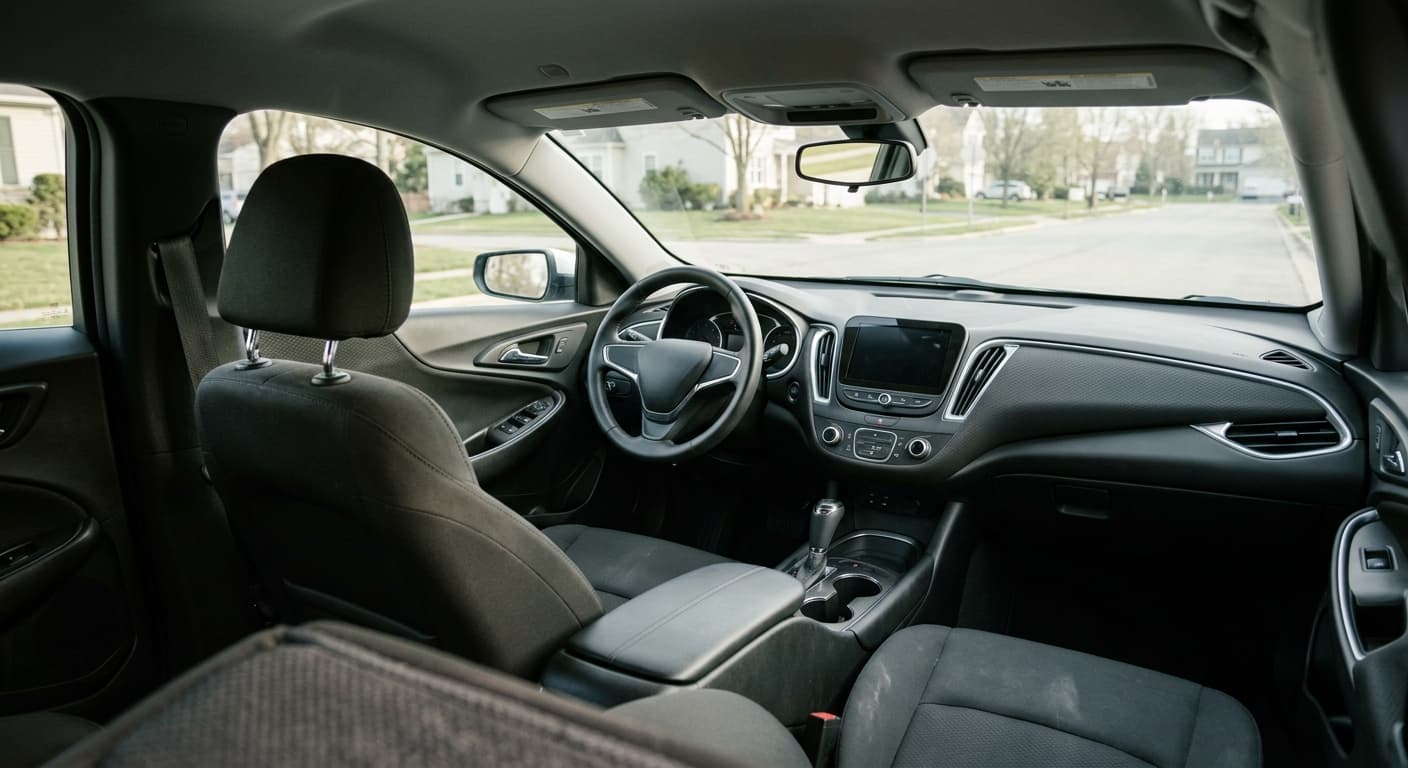
Yes, driverless cars can legally run on Michigan roads. The Michigan Vehicle Code says plainly that "an automated motor vehicle may be operated on a street or highway in this state," and no human needs to be aboard a vehicle that qualifies as an automated motor vehicle. Testing has extra conditions, and motor vehicle manufacturers that offer public driverless rides through a SAVE project must self-certify, insure every fleet vehicle under Michigan's no-fault law, and assume liability, subject to that law, for incidents in which their system is at fault while it is in control.
Are self-driving cars legal in Michigan?
Yes, under conditions set by statute. Section 665 of the Michigan Vehicle Code, MCL 257.665, states: "An automated motor vehicle may be operated on a street or highway in this state." That sentence stands on its own. It is not tied to a permit, a fee or a registration class, and the section does not require a human driver in the vehicle.

Michigan first enacted section 665 in 2013 (2013 PA 231). In 2016 it amended section 665 and added the SAVE project section for public on-demand service (2016 PA 332 and 333). A 2022 amendment (2022 PA 179) added automated vehicle roadways. The current text of section 665 was last amended by that 2022 act.
The practical questions are what counts as an "automated motor vehicle," when the stricter testing rules apply, and who answers for the vehicle's conduct. Each is covered below.
What counts as a self-driving car under Michigan law
The definitions are in MCL 257.2b:
- Automated driving system (ADS). Hardware and software "collectively capable of performing all aspects of the dynamic driving task for a vehicle on a part-time or full-time basis without any supervision by a human operator."
- Automated motor vehicle. A motor vehicle with an ADS installed by a manufacturer of automated driving systems or an upfitter "that enables the motor vehicle to be operated without any control or monitoring by a human operator."
- Dynamic driving task. Steering, braking, accelerating, monitoring the vehicle and the road, responding to events, changing lanes, turning and signaling. Choosing destinations is not part of it.
- Upfitter. A person who installs an ADS in a vehicle after it was built, converting it into an automated motor vehicle.
The definition of automated motor vehicle expressly leaves out cars with active safety or operator assistance systems, naming blind spot assistance, crash avoidance, emergency braking, parking assistance, adaptive cruise control, lane-keeping assistance, lane departure warning and traffic jam assistance. Those cars count only if the systems let the vehicle "operate without any control or monitoring by an operator."
In practice, a car whose system still needs you to watch the road is not an automated motor vehicle under Michigan law, and you remain its driver. Our guide to the levels of driving automation explains where that line usually falls.
Does a human need to be in a self-driving car in Michigan?
Not for an automated motor vehicle in ordinary operation. Section 665(4) allows it on the road without mentioning a driver, and the definition itself describes a vehicle that runs "without any control or monitoring by a human operator."
The answer changes in two situations:
- Research and testing. A person authorized by the company must be able to monitor the vehicle and, if necessary, promptly take control, unless the vehicle can reach a minimal risk condition on its own (section 665(2)(b)). The statute does not say where that person must be, only that they can monitor and take control.
- Truck platoons. If a platoon includes a commercial motor vehicle, "an appropriately endorsed driver who holds a valid commercial driver license shall be present behind the wheel of each commercial motor vehicle in the platoon" (section 665(7)(c)).
Testing self-driving cars in Michigan
Michigan does not issue a testing permit, but it does impose conditions. Before testing an automated motor vehicle or ADS on a Michigan street or highway, the manufacturer of automated driving systems or upfitter doing the testing "shall submit proof satisfactory to the secretary of state that the vehicle is insured under chapter 31 of the insurance code of 1956," which is Michigan's no-fault chapter (section 665(1)).
During testing, section 665(2) requires the company to make sure that:
- The vehicle is operated only by an employee, contractor or other person the company designates or authorizes.
- That person can monitor the vehicle's performance and promptly take control if needed. If the person does not or cannot take control, the vehicle must be capable of achieving a minimal risk condition.
- The person operating the vehicle and the person monitoring it may lawfully drive a motor vehicle in the United States.
University researchers and employees of the state transportation department or the Department of State who are researching or testing automated vehicles may operate them if they follow the same conditions (section 665(3)).
A "manufacturer of automated driving systems" is defined as a manufacturer or subcomponent producer "recognized by the secretary of state" that develops or produces automated driving systems or automated vehicles. Separately, MCL 257.244(3) lets a manufacturer of automated technology move or operate a vehicle on public roads "solely to transport or test automated technology" if it displays a special plate approved by the Secretary of State, subject to section 665.
Violating the automated vehicle division is a civil infraction under MCL 257.666, and it does not stop prosecution for any other violation arising from the same event.
Who is the driver of a self-driving car in Michigan?
For traffic law, the system. Section 665(5) says that when engaged, "an automated driving system allowing for operation without a human operator is considered the driver or operator of a vehicle for purposes of determining conformance to any applicable traffic or motor vehicle laws and is deemed to satisfy electronically all physical acts required by a driver or operator of the vehicle."
Read that sentence for what it covers: whether the traffic and motor vehicle laws were followed. It does not say who pays for a crash, and it does not turn a passenger into the driver. The same subsection adds that a company providing an automated vehicle roadway system is not an operator of a vehicle.
The person who starts the car can also be the "operator"
Michigan's general definitions point partly the other way. Under MCL 257.35a, "operate" includes "causing an automated motor vehicle to move under its own power in automatic mode upon a highway or street regardless of whether the person is physically present in that automated motor vehicle at that time," including by "engaging the automated technology." And MCL 257.36 defines an "operator" as a person who operates a motor vehicle or an automated motor vehicle on a highway or street.
So Michigan law treats the engaged system as the driver for traffic-law compliance, while also treating a person who sets an automated vehicle in motion as someone who "operates" it. The statute does not say how the two provisions interact in a particular ticket or criminal case.
Can a driverless car get a ticket in Michigan?
The statute does not say who receives a citation when a driverless vehicle breaks an ordinary traffic law. Section 665(5) makes the system the driver for judging compliance, but the general automated vehicle provisions do not name the owner, the manufacturer or a fleet operator as the person to cite for a moving violation. (For parking violations, MCL 257.675a generally creates a presumption that the registered owner parked the vehicle, with exceptions for leased and shared vehicles.) The civil infraction in section 666 covers violations of the automated vehicle division itself, not ordinary moving violations.
One narrow exception sits in the automated vehicle division itself. On an automated vehicle roadway or lane designated under section 665c, MCL 257.666a makes it a civil infraction to operate there without complying with section 642(3), presumes that the registered owner of the vehicle, including an automated motor vehicle, is the person who did not comply, and allows the citation to be mailed to the owner. The presumption can be rebutted, and it does not reach ordinary moving violations elsewhere. For how other states answer this, see can a self-driving car get a ticket.
Drunk in a self-driving car in Michigan
Michigan's drunk driving law, MCL 257.625, says a person "shall not operate a vehicle" on a highway or other place open to the public while intoxicated. Michigan's definition of "operate" includes causing an automated vehicle to move in automatic mode on a highway or street, including by engaging its automated technology, whether or not the person is inside. Under the Vehicle Code's own definition, a person who does that is operating the vehicle. Section 665(5) separately makes an engaged system the driver or operator for judging compliance with traffic and motor vehicle laws, and the statute does not say which provision controls a drunk driving charge against a person in a fully automated vehicle.
If the car is a driver-assist car rather than an automated motor vehicle, the person behind the wheel is simply the driver, and the drunk driving law applies in full. See Michigan DUI laws for penalties and DUI in a self-driving car for how other states treat the question.
SAVE projects: Michigan's on-demand driverless ride statute
Michigan's statute that specifically addresses public on-demand driverless ride networks is the SAVE project section, MCL 257.665b. The Vehicle Code does not say that SAVE is the only way a company may carry passengers in automated motor vehicles, which section 665(4) allows on Michigan streets and highways. A SAVE project is "an initiative that authorizes eligible motor vehicle manufacturers to make available to the public on-demand automated motor vehicle networks," meaning an app or digital network that connects passengers with automated vehicles for trips between points the passengers choose. Commercial motor vehicles are excluded from that network definition.
Who can run a SAVE project
Only a motor vehicle manufacturer. The statute states: "A person that is not a motor vehicle manufacturer may not participate in a SAVE project." A motor vehicle manufacturer is ordinarily a company that has made and distributed federally certified vehicles in the United States. For SAVE projects (and section 665a), the definition also includes a company that meets all of these tests (MCL 257.2b(12)):
- It has manufactured automated motor vehicles in the United States that are certified to comply with all applicable federal motor vehicle safety standards.
- It has operated automated vehicles on US public roads, with a test driver and the ADS engaged, for at least 1,000,000 miles.
- It holds insurance, a surety bond or proof of self-insurance of at least $10,000,000 and has given the department evidence of it.
What the manufacturer must self-certify
To join, the manufacturer self-certifies that:
- It is a motor vehicle manufacturer.
- Each vehicle in the fleet is owned or controlled by the manufacturer and has an ADS, automatic crash notification technology, and a data recording system that can record the ADS's status and other attributes, including speed, direction and location, for a period before a crash.
- The fleet complies with all applicable state and federal laws.
- Each vehicle can be operated in compliance with Michigan's traffic and motor vehicle laws.
Eligibility is "conditioned solely upon meeting the requirements" of the section. The manufacturer may start a SAVE project at any time after notifying the department (the Department of State) that it has self-certified. That notice also sets out the project's geographic boundaries. This is a self-certification and notice system, not a permit application.
Where SAVE vehicles may operate
The manufacturer chooses the boundaries. The statute lists examples: a designated area within a municipality, an area maintained by a regional authority, a university campus, a development that caters to senior citizens, or a similar geographic or demographic area. Public operation of the fleet "shall be confined to the boundaries selected by the motor vehicle manufacturer."
Data, safety reports and rider privacy
During a SAVE project the manufacturer must keep incident records and send periodic summaries on the fleet's safety and efficacy to the Department of State and the National Highway Traffic Safety Administration. A rider "is deemed by his or her participation to have consented" to that data collection while in a fleet vehicle. Before and during the project, the manufacturer must publish a privacy statement describing its data handling. For what robotaxi companies say they record, see do robotaxis record you.
Who is the driver in a SAVE vehicle
Section 665b(4) extends the system-as-driver rule: when engaged, "an automated driving system or any remote or expert-controlled assist activity shall be considered the driver or operator of the vehicle" for traffic-law compliance. Remote or expert-controlled assist activity in a SAVE fleet vehicle is therefore treated the same way as the system for that purpose.
Who offers driverless rides in Michigan (as of September 2026)
As of September 2026, Waymo's own rides page lists Detroit, MI under "Up Next," not among the cities where it currently serves riders, and Detroit does not appear on the list in Waymo's FAQ of cities where anyone can take a fully autonomous ride. Service plans change quickly; the company's own pages are the place to check current status. For how robotaxi crashes and claims have played out elsewhere, see Waymo and robotaxi accidents.
Who is liable when a self-driving car crashes in Michigan?
Michigan's automated vehicle law says something about who pays, in two narrow ways.
Manufacturer liability in SAVE projects
Section 665b(4) states that for each SAVE project, "during the time that an automated driving system is in control of a vehicle in the participating fleet, a motor vehicle manufacturer shall assume liability for each incident in which the automated driving system is at fault, subject to chapter 31 of the insurance code of 1956." The manufacturer must also insure each fleet vehicle under this act and that chapter.
Each limit matters. The rule applies only to SAVE project fleets, only while the ADS is in control, only to incidents where the system is at fault, and only within Michigan's no-fault system described below. It is not a general rule that manufacturers pay for every automated vehicle crash in Michigan. The national picture is in who is liable in a self-driving car accident.
No liability for someone else's modifications
Three provisions protect manufacturers from claims caused by other people's changes to a vehicle:
- MCL 257.817 makes a manufacturer of automated technology immune from civil liability for damages arising from a modification made by another person to a motor vehicle, an automated motor vehicle or automated technology.
- MCL 257.665a makes a manufacturer of automated driving technology, an ADS or a motor vehicle immune from liability arising from a modification made by another person "without the manufacturer's consent."
- MCL 600.2949b, which both sections refer to, says a vehicle manufacturer "is not liable and must be dismissed" from an action over damages from another person's conversion of the vehicle into an automated motor vehicle, installation of conversion equipment, or modification of the manufacturer's automated-mode equipment, "unless the defect from which the damages resulted was present in the vehicle when it was manufactured."
Section 600.2949b also shields a recognized subcomponent system producer from product liability for another person's modification of its conversion equipment, unless the defect was present when installed, and shields a mechanic or repair facility that repairs an automated motor vehicle according to the manufacturer's specifications from product liability for those repairs.
Insurance for self-driving cars in Michigan
Michigan's automated vehicle sections rely on the ordinary no-fault chapter, MCL 500.3101 to 500.3179, rather than creating a separate AV insurance scheme. The specific requirements:

| Situation | Requirement | Source |
|---|---|---|
| Testing an automated vehicle or ADS | Proof to the Secretary of State that the vehicle is insured under the no-fault chapter, before testing starts | MCL 257.665(1) |
| SAVE project fleet vehicle | Insured as required by the Vehicle Code and the no-fault chapter | MCL 257.665b(4) |
| Company qualifying as a manufacturer by the alternative test | At least $10,000,000 in insurance, surety bond or self-insurance | MCL 257.2b(12)(c) |
Outside those rules, the ordinary requirements apply. The owner or registrant of a motor vehicle required to be registered in Michigan must maintain personal protection insurance, property protection insurance and residual liability insurance (MCL 500.3101). For policies issued after July 1, 2020, the standard liability limits are $250,000 for injury or death of one person, $500,000 for two or more people and $10,000 for property damage in one accident (MCL 500.3009), though a policyholder may choose lower limits, not below $50,000 and $100,000, by completing the state form. The self-driving car insurance guide compares Michigan with other states.
Can Michigan cities regulate self-driving cars?
State law expressly overrides them in one area, and a general uniformity rule reaches further. MCL 257.665c lets the state transportation department designate automated vehicle roadways and lanes, set conditions for their use, reserve them for exclusive use, charge user fees and contract with private roadway system providers. That section "supersedes all local ordinances that regulate automated vehicle roadway systems, automated vehicle roadways, automated vehicle roadway lanes, or automated vehicle roadway system providers," although a local government may adopt or enforce an ordinance that does not conflict with it.
More generally, the automated vehicle sections sit in chapter VI of the Vehicle Code, and MCL 257.605 says a local authority "shall not adopt, enact, or enforce a local law that provides lesser penalties or that is otherwise in conflict with this chapter." Section 665(4) allows automated motor vehicles on Michigan streets and highways. Whether a given local rule conflicts with that provision depends on the rule's terms.
Self-driving trucks and platoons in Michigan
A platoon is a group of trucks or other vehicles traveling closely together with electronically coordinated speeds. Under section 665(6), a person may operate a platoon on a Michigan street or highway after filing a plan for general platoon operations with the Department of State Police and the state transportation department. If neither agency rejects the plan within 30 days after receiving it, the person may operate the platoon.
Section 665(7) adds that vehicles in a platoon are not a "combination of vehicles" under the Vehicle Code, the lead vehicle is not considered to be drawing the others, and a CDL holder with the proper endorsement must be behind the wheel of each commercial motor vehicle in the platoon. The SAVE project network definition excludes commercial motor vehicles. For trucks nationally, see autonomous truck laws.
What to do after a crash with a self-driving car in Michigan
If you are driving and are involved in a crash with an automated vehicle, your own duties are the same as in any Michigan crash. The driver must stop at the scene (MCL 257.617 and 257.618), give name, address and registration information and show a license to the police officer, the person struck or the other vehicle's occupants, and help secure medical aid for anyone injured (MCL 257.619). A crash that injures or kills anyone, or damages property to an apparent total of $1,000 or more, must be reported immediately to the police (MCL 257.622).
Those duties are written for a human driver. Section 665(5) deems an engaged ADS "to satisfy electronically all physical acts required by a driver," but the statute does not describe how a driverless vehicle exchanges information at a scene. Practical steps that help:
- Call the police so there is an official report, especially if the automated vehicle had no one aboard.
- Record the vehicle's identity: company name and any fleet or vehicle number on the body, the license plate, the time and the exact location.
- Photograph the scene and collect witness names. The company's own vehicle data and camera footage may matter later, and SAVE fleet vehicles must carry a data recorder that captures pre-crash information.
- Give prompt written notice to your own insurer if anyone is hurt.
How Michigan no-fault applies
The automated vehicle sections do not set aside Michigan's no-fault chapter. Testing and SAVE vehicles must be insured under it, and the SAVE statute makes the manufacturer's assumed liability "subject to" it. The chapter's basic rules, as the statutes state them:
- Injury benefits without fault. Personal protection insurance (PIP) pays benefits for accidental bodily injury arising from the ownership, operation, maintenance or use of a motor vehicle, and those benefits "are due under this chapter without regard to fault" (MCL 500.3105).
- Property damage. Property protection insurance pays for accidental damage to tangible property such as buildings and fences, also without regard to fault, capped at $1,000,000 per accident under one policy (MCL 500.3121), but it excludes damage to vehicles and their contents unless the vehicle was parked in a way that did not create an unreasonable risk of the damage (MCL 500.3123). Damage to your own car while it is being driven is handled by your collision coverage or the limited tort claim of up to $3,000 described below.
- Lawsuits are limited. Tort liability is abolished for a vehicle with the required security in effect, with exceptions including intentional harm, noneconomic loss when the injured person suffered death, serious impairment of body function or permanent serious disfigurement, allowable expenses, work loss and survivor's loss above PIP limits, and up to $3,000 in vehicle damage not covered by insurance for crashes after July 1, 2020 (MCL 500.3135). In a suit for noneconomic loss, damages are not awarded to a party more than 50% at fault.
Deadlines
A PIP lawsuit generally may not be started more than 1 year after the accident unless written notice of injury was given to the insurer within 1 year, or the insurer has already paid PIP benefits. A property protection claim must be brought within 1 year after the accident (MCL 500.3145). Most lawsuits for injury or death must be filed within 3 years (MCL 600.5805).
For the full rules, see Michigan car accident laws and the Michigan statute of limitations. The national overview of state and federal rules is on our self-driving car laws hub and the federal self-driving car laws page.
Frequently Asked Questions
Are driverless cars legal in Michigan?
Yes, under state law. MCL 257.665(4) says an automated motor vehicle may be operated on a street or highway in Michigan, and the statute does not require a human on board or a state permit for that operation. Testing requires proof of no-fault insurance and a person able to monitor and take control, and public on-demand rides in a SAVE project are limited to self-certified motor vehicle manufacturers.
What is a SAVE project in Michigan?
A SAVE project is Michigan's framework, in MCL 257.665b, that lets an eligible motor vehicle manufacturer offer the public on-demand rides in automated vehicles through an app or network. The manufacturer self-certifies its eligibility and fleet equipment, notifies the Department of State of the project boundaries it chooses, insures each vehicle under the no-fault chapter, reports safety data, and assumes liability for incidents in which its system is at fault.
Who is liable if a SAVE project robotaxi causes a crash in Michigan?
While the automated driving system is in control, the manufacturer running the SAVE project must assume liability for each incident in which the system is at fault, subject to Michigan's no-fault insurance chapter. That rule is limited to SAVE fleets. For other automated vehicles, ordinary Michigan no-fault and liability rules apply.
Does Michigan require a permit to test self-driving cars?
The statute does not create a testing permit. Before testing, the manufacturer of automated driving systems or upfitter must submit proof to the Secretary of State that the vehicle is insured under Michigan's no-fault chapter, and it must follow the operating conditions in MCL 257.665(2). A manufacturer testing under a special plate uses one approved by the Secretary of State under MCL 257.244(3).
Is Tesla Full Self-Driving a self-driving car under Michigan law?
Michigan's definition of an automated motor vehicle excludes cars with operator assistance systems unless those systems let the vehicle operate without any control or monitoring by a human. A system that requires the driver to supervise it does not meet that test, so the person behind the wheel remains the driver under ordinary traffic and drunk driving laws.
Can you be charged with drunk driving in a self-driving car in Michigan?
Michigan's drunk driving law bars a person from operating a vehicle while intoxicated, and the Vehicle Code defines operate to include causing an automated vehicle to move in automatic mode, whether or not the person is inside. Section 665(5) separately makes an engaged system the driver or operator for judging compliance with traffic and motor vehicle laws, and the statute does not say which provision controls a drunk driving charge against a person in a fully automated vehicle. In a car that needs a supervising driver, the person behind the wheel is the driver and the law applies in full.
Can Detroit or other Michigan cities ban self-driving cars?
MCL 257.665c expressly supersedes local ordinances on automated vehicle roadways, lanes and roadway system providers, and even there non-conflicting local ordinances are allowed. More generally, MCL 257.605 bars a local law that conflicts with chapter VI of the Vehicle Code, where the automated vehicle sections sit. Whether a given local rule conflicts with section 665(4), which allows automated motor vehicles on Michigan streets and highways, depends on its terms.
Is Waymo operating in Detroit?
As of September 2026, Waymo's rides page lists Detroit under Up Next rather than among the cities it currently serves, and Detroit is not on the FAQ list of cities where anyone can ride. Check the company's own pages for current status.
Updates
Independently fact-checked against the cited primary sources
Sources and References
- MCL 257.665: automated motor vehicle operation, testing conditions, ADS as driver or operator, platoons(www.legislature.mi.gov).gov
- MCL 257.2b: definitions of automated driving system, automated motor vehicle, motor vehicle manufacturer, SAVE project(www.legislature.mi.gov).gov
- MCL 257.665b: SAVE projects, self-certification, data, insurance and manufacturer liability(www.legislature.mi.gov).gov
- MCL 257.665a: manufacturer immunity for third-party modification(www.legislature.mi.gov).gov
- MCL 257.665c: automated vehicle roadways and local ordinance supersession(www.legislature.mi.gov).gov
- MCL 257.666: civil infraction for violating the automated vehicle division(www.legislature.mi.gov).gov
- MCL 257.35a: definition of operate, including causing an automated vehicle to move(www.legislature.mi.gov).gov
- MCL 257.36: definition of operator(www.legislature.mi.gov).gov
- MCL 257.12: definition of department (Department of State)(www.legislature.mi.gov).gov
- MCL 257.244: manufacturer special plates for testing automated technology(www.legislature.mi.gov).gov
- MCL 257.817: immunity of manufacturers of automated technology for modifications by others(www.legislature.mi.gov).gov
- MCL 600.2949b: vehicle manufacturer not liable for conversion to automated motor vehicle by another person(www.legislature.mi.gov).gov
- MCL 257.625: operating while intoxicated(www.legislature.mi.gov).gov
- MCL 257.617: duty to stop at the scene of a crash(www.legislature.mi.gov).gov
- MCL 257.618: duty to stop at the scene of a crash(www.legislature.mi.gov).gov
- MCL 257.619: duty to give information and render aid(www.legislature.mi.gov).gov
- MCL 257.622: reporting crashes to police(www.legislature.mi.gov).gov
- MCL 500.3101: required no-fault security(www.legislature.mi.gov).gov
- MCL 500.3009: automobile liability policy minimum limits(www.legislature.mi.gov).gov
- MCL 500.3105: personal protection insurance benefits without regard to fault(www.legislature.mi.gov).gov
- MCL 500.3121: property protection insurance(www.legislature.mi.gov).gov
- MCL 500.3135: tort liability limits under no-fault(www.legislature.mi.gov).gov
- MCL 500.3145: deadlines for PIP and property protection actions(www.legislature.mi.gov).gov
- MCL 600.5805: 3-year limitation for injury and death actions(www.legislature.mi.gov).gov
- Waymo rides page: cities served and Up Next list (company statement, as of September 2026)(waymo.com)
- Waymo FAQ: cities where anyone can ride (company statement, as of September 2026)(waymo.com)
- MCL 257.605: local authority may not adopt or enforce a local law in conflict with chapter VI(www.legislature.mi.gov).gov
- MCL 257.675a: registered-owner presumption for parking violations, with leased and shared vehicle exceptions(www.legislature.mi.gov).gov
- MCL 500.3123: exclusions from property protection insurance benefits(www.legislature.mi.gov).gov
- MCL 257.666a: automated vehicle roadway violations, registered-owner presumption and mailed citation(www.legislature.mi.gov).gov