
New York
New York Self-Driving Car Laws: Testing Only Until 2028
Independently fact-checked against primary sources (last audited September 30, 2026). · 21 primary sources cited on this page. How we verify our legal content
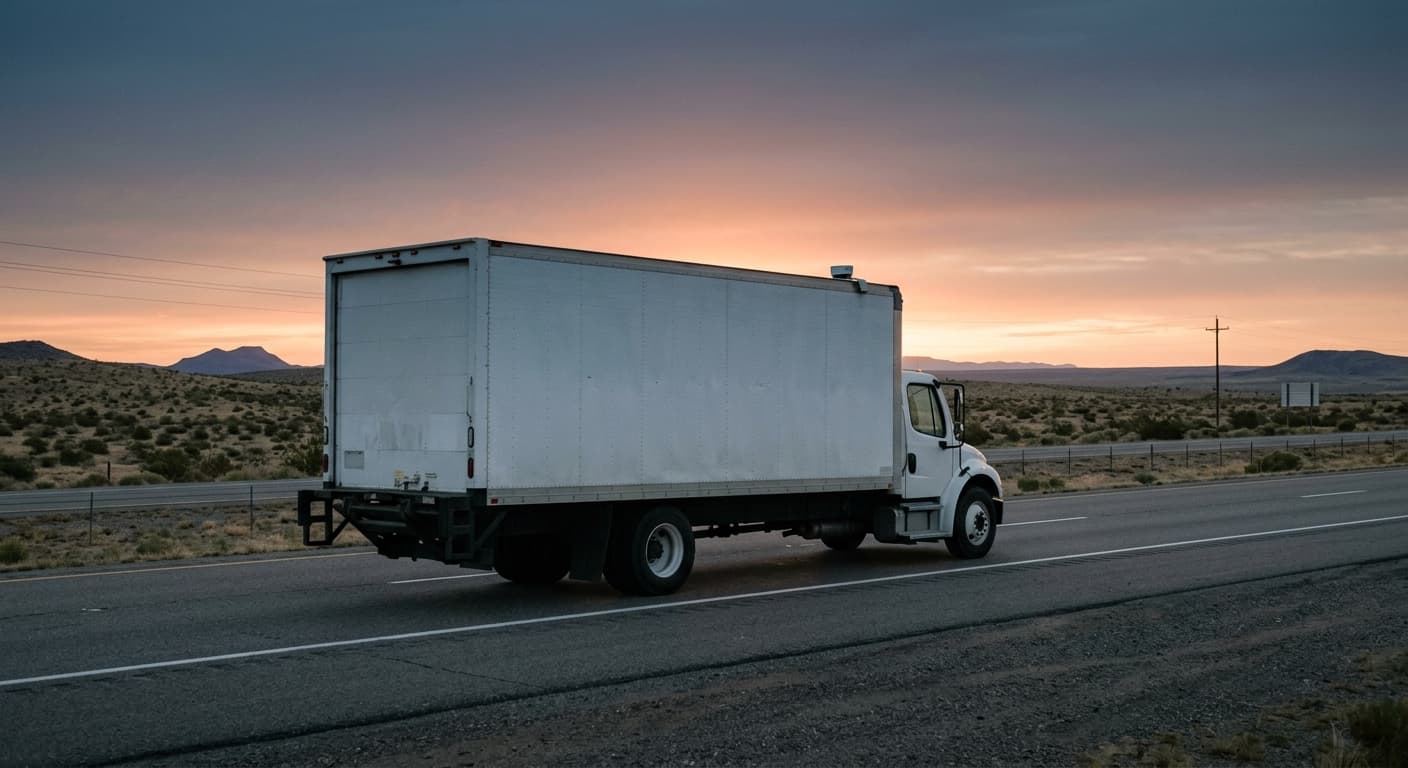
Not without a human driver, as of September 2026. New York's only self-driving car law is a temporary testing program: the Department of Motor Vehicles (DMV) may approve demonstrations and tests of autonomous vehicle technology on public roads, but only under the direct supervision of the New York State Police and only with a licensed person inside the vehicle. The program currently runs until April 1, 2028, and it creates no permit for driverless rides or a paid robotaxi service.
Are self-driving cars legal in New York?
Only as supervised test vehicles. The 2017 law lets the Commissioner of Motor Vehicles "approve demonstrations and tests consisting of the operation of a motor vehicle equipped with autonomous vehicle technology" on public highways. Its stated purpose is narrow: demonstrating and assessing the technology and beginning to identify its effects on safety, traffic control, traffic enforcement and emergency services.

That is the whole of New York's autonomous vehicle statute. It does not create a license for private owners, a deployment permit for companies, or a path for paid robotaxi rides. A company that wants to put a car on the road in automated mode must fit inside a DMV-approved test, with a licensed person in the vehicle.
If you drive a car with a driver-assistance feature, such as adaptive cruise control with lane centering, nothing in this program applies to you. You are the driver, and every ordinary rule of the road still binds you. Our guide to the levels of driving automation explains why those features are not "self-driving" in the legal sense.
What the law means by "autonomous vehicle technology"
The statute defines autonomous vehicle technology as "the hardware and software that are collectively capable of performing part or all of the dynamic driving task on a sustained basis." The dynamic driving task means the real-time operational and tactical functions of driving in traffic, not trip planning or choosing a destination.
The words "part or all" make this definition broader than some other states' laws, which cover only systems that can do the entire driving task. The DMV's application asks each company to list every test vehicle's SAE level of automation, from 1 to 4.
How New York's autonomous vehicle testing program works
The program lives in section 1 of Part FF of chapter 55 of the laws of 2017, as amended in 2018. Because it was passed as part of a budget bill rather than added to the Vehicle and Traffic Law, you will not find it by searching the VTL for "autonomous." It sits among the session laws and is kept alive by sunset extensions.
Who can get a permit
The DMV calls it an Autonomous Vehicle Technology Demonstration/Testing permit. Its application (form AV-1) says it "may only be completed by manufacturers of 'autonomous vehicle technology,' or entities creating such technology working in conjunction with manufacturers." An individual who buys a car cannot apply.
The application must be approved before any test or demonstration on public highways. Only the vehicles listed on it are covered; adding more requires a new application.
The conditions every test must meet
The statute and the DMV's application set these conditions:
- State Police supervision. Every demonstration and test "shall only take place under the direct supervision of the New York state police," in a form set by the Superintendent of State Police. Applicants file a State Police addendum (form AV-2).
- Law enforcement interaction plan. Since the 2018 amendment, each application must include a plan telling police and first responders how to interact with the vehicle in emergencies and traffic stops.
- A licensed person in the vehicle. The statute requires "a natural person holding a valid license for the operation of the motor vehicle's class" to be present in the vehicle whenever it is on public highways. The DMV's form puts that person in the driver's seat and says they "shall be prepared to and will assume vehicle control when required to operate safely and lawfully."
- Safety standards. Test vehicles must meet all federal motor vehicle safety standards and New York inspection standards.
- Traffic law. Nothing in the program lets a test vehicle violate article 22 or title 7 of the Vehicle and Traffic Law (the rules of the road), except section 1226, the hand-on-the-wheel rule.
- Insurance. Each listed vehicle must carry at least $5 million in financial security, as covered below.
Signed copies of the AV-1 and the State Police addendum must be carried in every test vehicle. The DMV may revoke a company's authority if it breaks the conditions or if an occurrence during a test raises a public health or safety concern.
Reports to the DMV
Companies agree to report on their tests to the Commissioner of Motor Vehicles. The current form sets a deadline of March 1, 2027 and asks for the purpose, dates, locations and parameters of the tests, total miles driven with the technology engaged, and any findings on safety, traffic control, traffic enforcement or emergency services.
Why driverless operation is not allowed under the program
The program's own text requires a licensed person in the vehicle for the entire time it is on public highways. NYC DOT summarizes the rule the same way: "New York State law requires that a test vehicle operator be present and ready to assume control of the vehicle while the AV technology is in operation."
So a test with no one aboard, or with only a remote operator, falls outside what the DMV can approve. The program also does not mention carrying paying passengers, and the DMV form says operation on public highways "will be restricted to demonstration or testing." That is the key difference from states such as Pennsylvania, Texas and Arizona, whose statutes set out a path for vehicles to run with no human driver.
How long does New York's AV law last?
Section 3 of Part FF sets the expiration date for the program, and the Legislature has pushed it back in every renewal since 2017. The latest change is Part E of chapter 58 of the laws of 2026, the transportation budget bill, which amended section 3 so that section 1 "shall expire and be deemed repealed April 1, [2026] 2028." It was signed May 26, 2026 and took effect immediately; unlike the 2023 and 2024 extensions, its text does not make it retroactive to April 1.
| Law | What it did to the program | Expiration date after the change |
|---|---|---|
| Ch. 55 of 2017, Part FF | Created the demonstration and testing program | April 1, 2018 |
| Ch. 58 of 2018, Part H | Added the State Police form requirement and the law enforcement interaction plan; extended the program | April 1, 2019 |
| Ch. 58 of 2019, Part M | Required annual reports while the program is in effect; extended it | April 1, 2021 |
| Ch. 58 of 2021, Part GG | Extended the program | April 1, 2023 |
| Ch. 58 of 2023, Part J | Extended the program | April 1, 2024 |
| Ch. 58 of 2024, Part J | Extended the program | April 1, 2026 |
| Ch. 58 of 2026, Part E | Extended the program | April 1, 2028 |
The 2026 amendment changed only the date. It did not add a driverless option, a commercial service permit, or any new rule about how tests are run. Unless the Legislature acts again, section 1, the part that authorizes the tests, is repealed on April 1, 2028.
Self-driving car testing in New York City
New York City adds its own layer. NYC DOT says it "oversees the testing of autonomous vehicles on streets and highways within the City of New York" through its AV testing permit program. A company must first hold the state DMV permit, then apply to NYC DOT and pay an annual $5,000 permit fee.
The city's application goes further than the state form. Among other things, the company certifies that:
- A test vehicle operator with a valid driver's license will be in the driver's seat whenever the vehicle is on a public highway in the city, able to take control if the technology fails.
- Operators are recruited and trained under named SAE industry practices, and the company files a roster of trained operators before testing starts.
- The company will track and pay all traffic and parking fines issued to its test fleet, including automated camera tickets.
- The company will notify NYC DOT and the NYPD of any crash involving a fatality, an injury or property damage "as soon as possible and no more than four hours after such occurrence."
- Each test vehicle has at least $5 million in automobile insurance.
A city permit has an initial term of up to one year and may be renewed. Companies must also file monthly and narrative data reports with the city.
Does Waymo operate in New York City?
Not as a public ride service. On August 22, 2025, the Mayor's Office and NYC DOT announced the city's first AV testing permit, issued to Waymo for up to eight vehicles in parts of Manhattan and Downtown Brooklyn, with "a trained AV-specialist behind the wheel at all times."
As of September 2026, NYC DOT's page lists Waymo under "active or expired" permits, with the permit shown as "active through March 31, 2026," a fleet of eight vehicles, and a test area of Manhattan south of 112th Street and Downtown Brooklyn. The page shows no later permit date. Even while that permit was active, it covered testing with a trained operator in the driver's seat, not driverless rides for the public. For how Waymo's service works where it does run, see our page on Waymo robotaxi accidents.
Robotaxis and the Taxi and Limousine Commission
NYC DOT states that companies using AVs "in for-hire transportation services must comply with the New York City Taxi and Limousine Commission's (TLC) rules and regulations, including obtaining a TLC license." In other words, a city testing permit is not permission to carry paying riders.
A City Council bill, Int. 94-2026, introduced January 29, 2026 by Council Member Gale Brewer, would go further. As introduced, it would require every TLC-licensed vehicle to be "operated by a human driver at all times" unless and until the TLC creates a separate license for autonomous taxis, and it would limit any such license to taxis. As of September 2026, the bill is pending in the Committee on Transportation and Infrastructure and is not law.
Driver-assist cars and the one-hand rule (VTL 1226)
Vehicle and Traffic Law section 1226 reads: "No person shall operate a motor vehicle without having at least one hand or, in the case of a physically handicapped person, at least one prosthetic device or aid on the steering mechanism at all times when the motor vehicle is in motion."
The AV testing law sets that rule aside only for approved demonstrations and tests: it opens with "Notwithstanding the provisions of section 1226." The text of section 1226 itself contains no exception for driver-assistance features. If you use a hands-free or lane-centering system on a New York road outside an approved test, keep in mind that the statute, as written, still speaks to the person operating the car.
The same logic applies to everything else. Under VTL 113, a "driver" is "every person who operates or drives or is in actual physical control of a vehicle." In a car you own, that is you, whatever the car is doing at the moment.
Who gets the ticket if a self-driving car breaks a traffic law in New York?
New York's testing law does not make a company or an automated system the "driver" for traffic tickets, the way some states' laws do. Test vehicles must obey the rules of the road in article 22 and title 7 of the Vehicle and Traffic Law, and each one carries a licensed person in the driver's seat.
In New York City, the DOT permit adds a practical rule: the company agrees to "track and pay all traffic and parking fines issued to its AV test fleet." For how other states handle tickets for cars with no one inside, see can a self-driving car get a ticket.
Can you get a DUI in a self-driving car in New York?
Yes, if you are operating it. VTL 1192 says "No person shall operate a motor vehicle while in an intoxicated condition," and a separate subdivision covers driving while ability impaired. New York's autonomous vehicle law gives a private owner no way to run a car without a human driver, and a driver-assistance feature does not change who is operating the car.
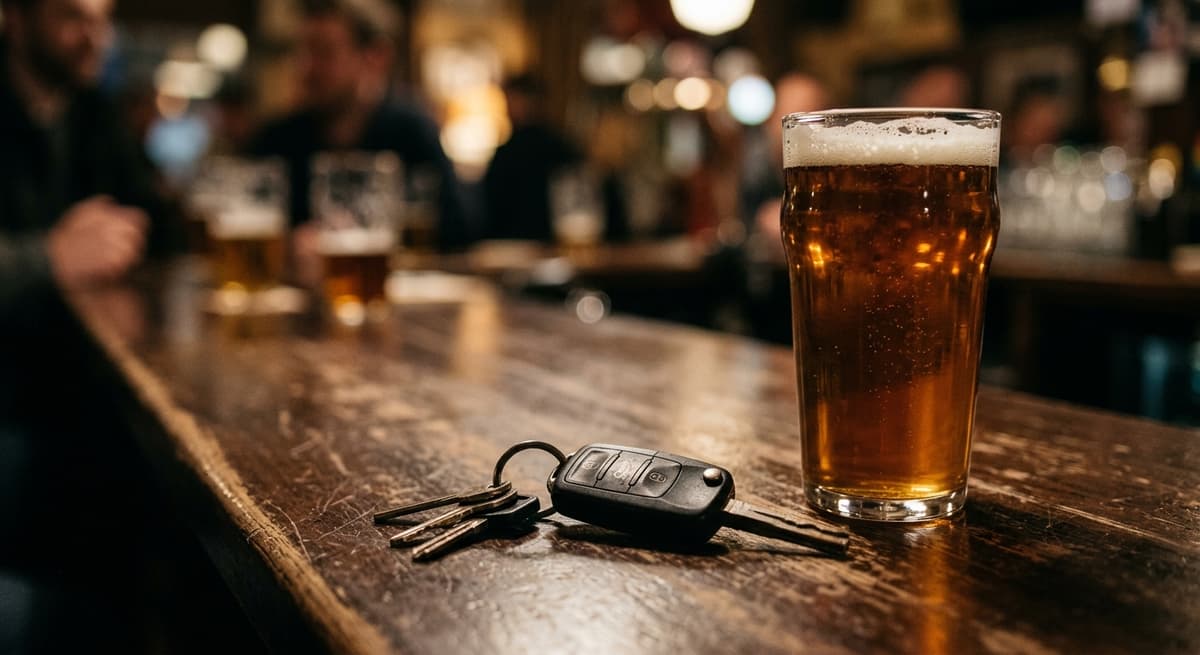
New York's testing program does not help here either: it requires a licensed person in the driver's seat, ready to take control. For the national picture, including passengers in driverless robotaxis in other states, read DUI in a self-driving car. New York's penalties are in our New York DUI laws guide.
Insurance requirements for self-driving cars in New York
The testing law requires each vehicle used in demonstrations and tests to carry "at a minimum, financial security in the amount of five million dollars." The DMV's application says that can be an insurance policy, a financial security bond, a financial security deposit, or qualification as a self-insurer under VTL 316, and it must be kept for as long as tests are approved.
NYC DOT asks for proof of at least $5 million in automobile insurance per test vehicle, plus a minimum of $3 million in personal liability insurance and $2 million in property damage insurance.
Compare that with the ordinary minimum in VTL 311: $25,000 for bodily injury to one person, $50,000 for death of one person, and $10,000 for property damage in any one accident, with higher limits when more people are hurt or killed. A private car with driver-assistance features is insured like any other car. Our overview of self-driving car insurance compares the states.
What to do after a crash with a self-driving car in New York
The steps are mostly the same as any New York crash:
- Stop and exchange information. VTL 600 requires a person operating a vehicle who knows or has cause to know that damage or injury resulted to stop and show their license and insurance identification card. In a test vehicle, the licensed person in the driver's seat is the one behind the wheel.
- Call 911 if anyone is hurt. Get the police report number. In New York City, a permitted AV company must also notify NYC DOT and the NYPD of an injury or damage crash within four hours.
- Document the vehicle. Photograph the car, its plate, and any company markings. Write down the company name and the test operator's name and license details.
- Report to the DMV if required. VTL 605 requires a written report to the Commissioner within ten days of an accident in which anyone is killed or injured, or in which property damage to any one person exceeds $1,000.
- Preserve evidence early. Test vehicles record large amounts of sensor and camera data. Our page on whether robotaxis record you explains what is captured and how it is requested.
Who pays depends on the facts: the test operator's driving, the company's responsibility for its operator and its system, and any defect in the vehicle. Our guide to who is liable in a self-driving car accident walks through negligence and product liability claims. New York's no-fault insurance rules and the rest of the claims process are covered in the New York car accident laws guide.
Time limits are strict. CPLR 214 generally gives three years to sue for personal injury, with exceptions; see New York statute of limitations for the details that may apply to you.
Federal rules still apply
State law decides who may operate a vehicle on New York roads. Federal law governs the vehicle itself, starting with the federal motor vehicle safety standards set by the National Highway Traffic Safety Administration. The New York program requires every test vehicle to meet federal motor vehicle safety standards. See federal self-driving car laws for that layer, and the self-driving car laws by state hub to compare New York with the rest of the country.
Frequently Asked Questions
Are self-driving cars legal in New York?
Only as supervised test vehicles, as of September 2026. The DMV may approve demonstrations and tests of autonomous vehicle technology on public roads under direct State Police supervision, with a licensed person in the vehicle. The law creates no permit for driverless operation or paid robotaxi service.
Can a car drive itself with no one inside in New York?
Not under New York's testing program. The statute requires a licensed person to be present in the vehicle for the whole time it is on public highways, and the DMV's application puts that person in the driver's seat, prepared to take control.
When does New York's autonomous vehicle law expire?
April 1, 2028, unless the Legislature extends it again. Chapter 58 of the laws of 2026, signed May 26, 2026, moved the expiration date from April 1, 2026 to April 1, 2028.
Does Waymo have a permit in New York City?
As of September 2026, NYC DOT's permit page lists Waymo with a testing permit shown as active through March 31, 2026, for eight vehicles in parts of Manhattan and Downtown Brooklyn, and shows no later date. That permit covered testing with a trained operator behind the wheel, not public rides.
How much insurance does a self-driving test car need in New York?
At least $5 million in financial security per test vehicle under the state program. NYC DOT also asks for proof of at least $5 million in automobile insurance per vehicle for testing in the city.
Is it legal to drive hands-free with a driver-assist system in New York?
VTL 1226 requires at least one hand on the steering mechanism at all times while a vehicle is moving, and its text contains no exception for driver-assistance features. The AV testing law sets that rule aside only for approved demonstrations and tests.
Can New York City ban robotaxis?
The city already requires its own DOT testing permit and a TLC license for any for-hire use. A pending City Council bill, Int. 94-2026, would require every TLC-licensed vehicle to have a human driver unless the TLC creates an autonomous taxi license. As of September 2026 it has not passed.
Updates
Independently fact-checked against the cited primary sources
Sources and References
- L. 2017, ch. 55 (A.3005-C), Part FF: New York autonomous vehicle demonstration and testing program, original text(nyassembly.gov).gov
- L. 2018, ch. 58 (A.9508-C), Part H: amended Part FF section 1 (State Police form, law enforcement interaction plan) and extended it to April 1, 2019(nyassembly.gov).gov
- L. 2019, ch. 58 (A.2008-C), Part M: annual reports; extension to April 1, 2021(nyassembly.gov).gov
- L. 2021, ch. 58 (A.3008-C), Part GG: extension to April 1, 2023(nyassembly.gov).gov
- L. 2023, ch. 58 (A.3008-C), Part J: extension to April 1, 2024(nyassembly.gov).gov
- L. 2024, ch. 58 (A.8808-C), Part J: extension to April 1, 2026(nyassembly.gov).gov
- L. 2026, ch. 58 (A.10008-C), Part E: extension of the AV program to April 1, 2028; signed May 26, 2026(nyassembly.gov).gov
- NYS DMV: Autonomous Vehicle Technology Demonstration/Testing permit (eligibility, driver's seat rule, $5 million insurance, report deadline)(dmv.ny.gov).gov
- NYS DMV form AV-1: Autonomous Vehicle Technology Demonstration/Testing Application (conditions, insurance, reporting)(dmv.ny.gov).gov
- NYC DOT: Autonomous Vehicles in New York City (permit program, $5,000 fee, TLC requirement, Waymo permit listing)(www.nyc.gov).gov
- NYC DOT Autonomous Vehicle Demonstration or Testing Permit Program application (operator certification, fines, crash notification, insurance, permit term)(www.nyc.gov).gov
- NYC Mayor's Office, Aug. 22, 2025: first NYC AV testing permit approved (Waymo)(www.nyc.gov).gov
- NYC Council Int. 0094-2026: licensing and use of autonomous vehicles as taxis (pending)(legistar.council.nyc.gov).gov
- N.Y. Veh. & Traf. Law 1226: hand on steering mechanism(www.nysenate.gov).gov
- N.Y. Veh. & Traf. Law 113: definition of driver(www.nysenate.gov).gov
- N.Y. Veh. & Traf. Law 1192: operating while impaired or intoxicated(www.nysenate.gov).gov
- N.Y. Veh. & Traf. Law 311: minimum liability insurance limits(www.nysenate.gov).gov
- N.Y. Veh. & Traf. Law 600: duties after an accident(www.nysenate.gov).gov
- N.Y. Veh. & Traf. Law 605: accident reports to the DMV(www.nysenate.gov).gov
- N.Y. Ins. Law 5103: no-fault first party benefits(www.nysenate.gov).gov
- N.Y. CPLR 214: three-year limitations period for personal injury(www.nysenate.gov).gov