
District of Columbia
DC Self-Driving Car Laws: Testing Only, Robotaxi Bill (2026)
Independently fact-checked against primary sources (last audited September 30, 2026). · 22 primary sources cited on this page. How we verify our legal content
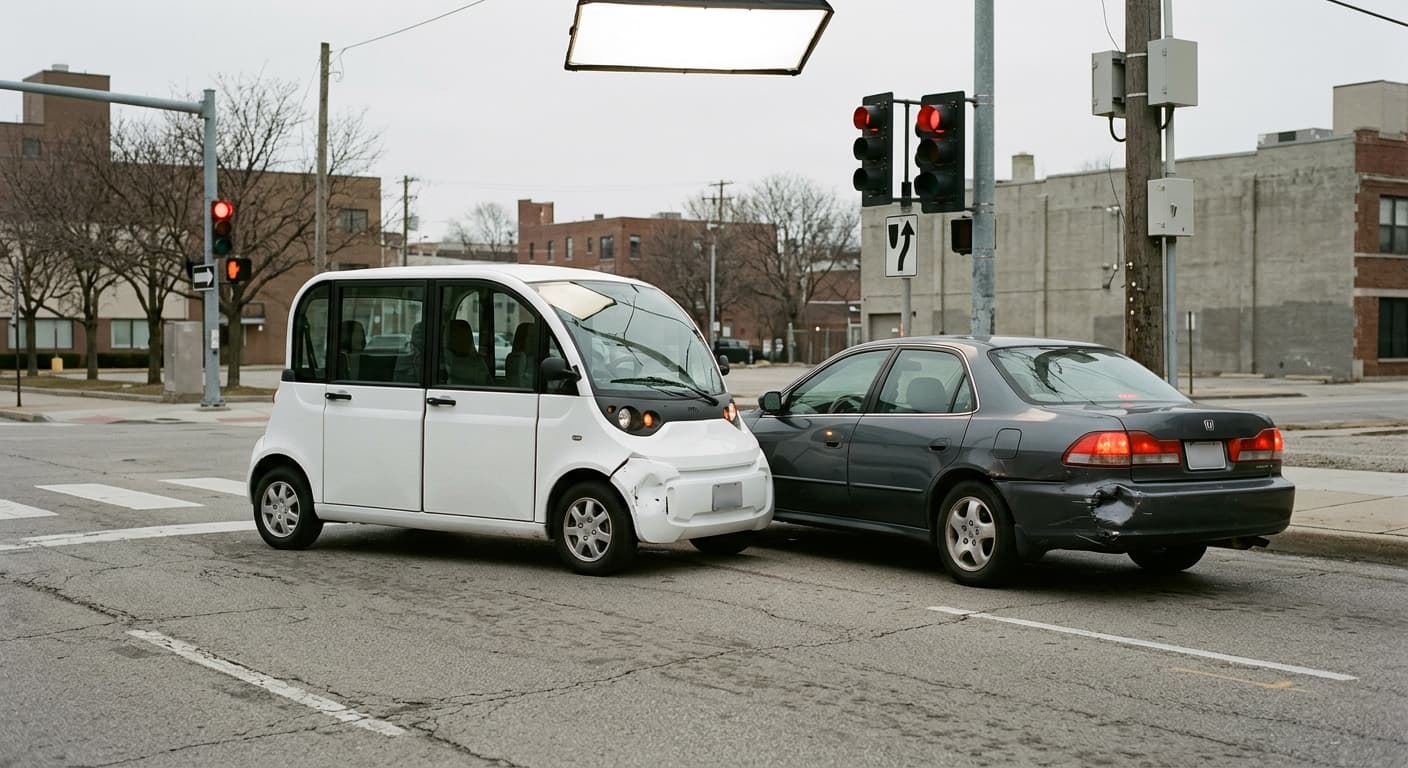
Only for testing, as of September 2026. The District's autonomous vehicle law, D.C. Code 50-2351 and the sections after it, sets up a testing program run by the District Department of Transportation (DDOT), and DDOT says the District "currently only allows testing of AVs," with an operator behind the wheel ready to take over. The D.C. Code does not authorize a paid driverless ride service, and a Council bill that would create one, B26-0684, is still pending.
Are self-driving cars legal in Washington, DC?
Self-driving cars may be tested on District roads, and that is all the D.C. Code currently provides for. The rules sit in Chapter 23A of Title 50, "Autonomous Vehicles," which began as the Autonomous Vehicle Act of 2012 (D.C. Law 19-278, effective April 23, 2013).

The Council rebuilt the chapter in the Autonomous Vehicles Testing Program Amendment Act of 2020 (D.C. Law 23-156). That law repealed the original section titled "Autonomous vehicles permitted" and replaced it with a testing program administered by DDOT. Its stated purpose was to establish the program, authorize DDOT to issue testing permits, set operational standards, require data and crash reporting, and have DDOT recommend how to accommodate full deployment later.
The most recent amendments came in the Public Life and Activity Zones Amendment ("PLAZA") Act of 2024 (D.C. Law 25-312, effective March 21, 2025). Among other transportation changes, it set "interim requirements" for AV testing "until an AV testing permit application is made available" by DDOT, let DDOT restrict testing for safety reasons, and required quarterly reports.
DDOT's own summary is short. Its autonomous vehicles page says: "The District currently only allows testing of AVs." It adds that under 50-2352.01(d), "all testing must have an operator behind the wheel, ready to take over from the automated driving system (the computer driver) if needed."
What counts as a self-driving car under DC law
The chapter turns on the phrase autonomous driving system: hardware and software "collectively capable of autonomous operation of a motor vehicle on a sustained basis" that meets the definition of Levels 3, 4, or 5 in SAE standard J3016 (D.C. Code 50-2351(1A)). An autonomous vehicle is any motor vehicle equipped with such a system, "regardless of whether the vehicle is under autonomous operation."
Autonomous operation means the system is performing the entire dynamic driving task, from the moment it takes over until it is disengaged. The dynamic driving task covers steering, braking and accelerating, watching the road, responding to objects and events, planning maneuvers and signaling. It does not include choosing a destination or route.
Because the definition starts at Level 3, Level 1 and Level 2 driver-assistance features, which still require the human driver to remain in control, fall outside the chapter. That includes features such as adaptive cruise control and lane centering. The levels of driving automation guide explains where each level begins and ends.
One older provision still applies to converted vehicles. Under D.C. Code 50-2353, the original manufacturer of a car that a third party converts into an autonomous vehicle is not liable for a defect caused by the conversion or the converter's equipment, unless the defect was present in the car as originally built. Conversions are limited to model year 2009 or later, or vehicles built within 4 years of conversion, whichever is newer.
Does a self-driving car need a human driver in DC?
Yes, as of September 2026: until DDOT offers a permit application, every test vehicle must carry a test operator. The testing program is built around permits, and the Code sets a separate rule for the period before DDOT offers a permit application. During that period, D.C. Code 50-2352.01(d) allows testing or operating an autonomous vehicle on a District roadway only if all three of these conditions are met:
- A test operator is physically present in the vehicle and is performing the driving task or is "prepared to take over the dynamic driving task from the autonomous driving system."
- The company complies with other local and federal laws and regulations.
- The company gives DDOT electronic notice at least 10 business days before it starts, listing the number of vehicles, their make, model and type, operator training and license information, the testing locations and the time period.
That is the rule DDOT points to when it says every test vehicle must have an operator behind the wheel. DDOT's page also says the requirements apply to roads the District owns, "which are most, but not all, of the roads in the District," and encourages testers to contact other road owners about roads the District does not control.
What the permit program would allow: remote operators and empty vehicles
The permit rules in 50-2352.01(c) go further than the interim rule. A company holding an AV testing permit must certify that each vehicle "shall be tested with either a test operator physically present in the vehicle or with a remote operator."
A remote operator is an employee, contractor or designee who is not in the vehicle but is "actively monitoring the autonomous operation of the vehicle in real time" and can operate the vehicle or communicate with its occupants (50-2351(3A)). Every test operator and remote operator must finish the company's training program before testing.
Testing with no one in the vehicle comes with two added steps. The system must first have been tested with a test operator aboard in the same operational design domain, and the company must have "reasonably determined" the vehicle can operate safely without one (50-2352.01(c)(5)(E)). A permit holder must also get DDOT's approval before switching from an in-vehicle test operator to none (50-2352.01(f)(1)(C)); DDOT must approve or deny such a change within 10 business days.
These options exist only for permit holders. Until DDOT issues permits, the interim rule and its in-vehicle operator requirement control.
DDOT's AV testing permit: what the law requires
D.C. Code 50-2352.01 tells DDOT to create an application process, set how long a permit lasts and set the fees. A company applying for an AV testing permit must submit:
- its name, address and main point of contact;
- vehicle information for each test vehicle, including tag number and issuing state, vehicle identification number, make, model, year and proof of registration;
- a safety and risk mitigation assessment covering functional safety and cybersecurity, or its most recent Voluntary Safety Self-Assessment filed with the National Highway Traffic Safety Administration;
- a description of the operational design domain where it plans to test, including when it would test with a remote operator; and
- a certification that its vehicles meet the chapter's safety requirements.
Those certified requirements include that each vehicle carries any federally required safety-standard certification label, can be operated "in compliance with the applicable traffic and motor vehicle laws of the District, regardless of whether the vehicle is under autonomous operation," can alert the test operator and either reach a minimal risk condition (such as a complete stop) or hand control to the operator when its system fails or leaves its operating area (with no test operator aboard, it must reach a minimal risk condition on its own), and is equipped to capture and store sensor data from the period before a crash.
After a permit is approved, the company needs DDOT's approval to change the scope of its operating area or its test locations, remove the in-vehicle test operator, change the make or type of vehicle, or add vehicles. It must also file a quarterly inventory of its test vehicles.
DDOT can restrict testing, and violations carry fines
Under 50-2352.02, DDOT may order a permitted testing company to temporarily restrict testing, while its vehicles are under autonomous operation, on selected roads or District-wide in circumstances DDOT identifies by rule, including failure to follow the chapter, emergencies, special events and roadway conditions that raise safety concerns.
A person or company that violates the chapter or its regulations faces a civil penalty of up to $1,000 per offense, and each day of a violation is a separate offense (50-2352.06). DDOT may also modify, suspend, revoke or deny a testing permit after notice and a chance for a hearing. A company can appeal a DDOT action to the Office of Administrative Hearings within 15 days, or 20 days if notice was mailed (50-2352.07).
Where DDOT's permit program stands
As of September 2026, DDOT's autonomous vehicles page describes testing under the interim notice rule, links a testing notification form and does not describe a permit application. It lists the companies that have notified DDOT of testing: Waymo and Zoox, plus Beep, Nuro and Perrone Robotics, each marked "short term, currently inactive."
Councilmember Charles Allen, who chairs the Council's Committee on Transportation and the Environment, wrote when introducing B26-0684 that "the District only allows AV companies to engage in testing with a test operator physically present in the vehicle" and that DDOT has been tasked with developing a driverless testing permit "for years now, but progress has stalled."
In April 2026, DDOT released a research report on automated vehicle policy. DDOT describes it as a research foundation that "does not yet offer policy recommendations."
Are robotaxis legal in DC? Can you ride in a Waymo?
Paid driverless ride service is not authorized by the D.C. Code as of September 2026. Chapter 23A creates only a testing program. It contains no permit, license or program for carrying paying passengers in autonomous vehicles.
The Code does not forbid everyone but the test operator from riding along. Its definition of testing expressly includes "operating an associated autonomous vehicle with occupants other than a test operator" (50-2351(3B)). What the Code lacks is any path from testing to a commercial service.
The Council saw that gap coming. D.C. Code 50-2352.04 directed DDOT to send the Council, within one year after October 1, 2021, a report with recommendations to "safely accommodate the deployment of autonomous vehicles on public roadways for commercial, personal, and any other use."
Waymo announced in March 2025 that its ride-hailing service "will be ready for riders in the nation's capital on the Waymo One app in 2026," and said it would work with policymakers "to formalize the regulations needed to operate without a human behind the wheel in the District." As of September 2026, the Code has not been changed to allow that, and DDOT lists Waymo among companies that have notified it of testing.
For how robotaxi crash claims work in cities where service is running, see Waymo robotaxi accidents.
Who is the "operator" of a self-driving car in DC?
The testing company. D.C. Code 50-2352.01(e) says: "The AV testing entity associated with an autonomous vehicle shall be considered the operator of the vehicle while the vehicle is under autonomous operation."
The Code defines operate as the activities a test operator or autonomous driving system performs "to perform the entire dynamic driving task" for a test vehicle (50-2351(2E)). A test operator is the company's employee, contractor or designee who engages the system and performs part or all of the driving task in real time.
Two limits on that rule matter. It applies only while the vehicle is under autonomous operation; once the system is disengaged and a person is driving, the ordinary rules for drivers apply. And the chapter does not spell out what follows from being "the operator," such as who receives a traffic ticket or how fault for a crash is divided. It sets no special civil liability rule for testing companies. For how courts and statutes elsewhere assign fault, see who is liable in a self-driving car accident.
Insurance requirements for self-driving cars in DC
A permitted testing company must be able to "respond to a judgment for damages, personal injury, death, or property damage from the operation of an autonomous vehicle on public roadways in the amount of $5 million" (50-2352.01(c)(5)(H)). It may meet that requirement with:
| Form of coverage | Who issues or approves it |
|---|---|
| Insurance | An insurer authorized to issue insurance in the District |
| Surety bond | An admitted surety insurer or an eligible surplus lines insurer (a deposit in place of a bond does not count) |
| Certificate of self-insurance | Issued or approved by the Department of Insurance, Securities, and Banking |
The $5 million figure is a capacity the company must show, not a cap on what an injured person can recover. The interim rule in 50-2352.01(d), which governs testing before permits are available, does not repeat the $5 million requirement; it requires compliance with other local and federal laws. The self-driving car insurance guide compares the District's figure with the states.
Crash reporting and data from test vehicles
Testing companies, including those testing under the interim rule, must report crashes to DDOT under 50-2352.03(c). The duty covers a crash involving a test vehicle "while under autonomous operation" that results in property damage, bodily injury or death:

- Within 12 hours: notice to DDOT with, to the extent known, the company's name, the general location, date and time, the severity of the crash and the company's contact person.
- Within 5 business days: a crash report with the names of any test operators involved, the date, time, location, roadway type, weather, a description of the event, the vehicle's movement before the crash, whether the system was engaged and whether a test operator tried to intervene.
DDOT may require more information to investigate a crash, in coordination with law enforcement. Permitted companies must also file quarterly reports with miles traveled, the number of crashes and the changes made afterward, and DDOT must publish those reports on its website.
Under 50-2352.01(h), records that a permit applicant or permit holder gives DDOT may not be disclosed to a third party, including in response to a public records request, except to comply with a subpoena or an active law enforcement or other government investigation, or to publish the reports and safety assessments that 50-2352.03(b) requires. Because DDOT has not yet offered permits, companies now testing under the interim notice rule are not permit applicants or holders, and the chapter does not say whether this confidentiality rule reaches their crash reports. Federal crash reporting to NHTSA is covered in federal self-driving car laws, and what the vehicles record is covered in do robotaxis record you.
Can a self-driving car get a ticket in DC?
The Code makes the testing company the vehicle's operator during autonomous operation, but Chapter 23A does not set a procedure for issuing traffic tickets to a driverless test vehicle. Under the current interim rule, every test vehicle must carry a test operator who is driving or ready to take over, so a police stop involves a person who can respond.
Each test vehicle must also be capable of operating in compliance with District traffic laws whether or not it is under autonomous operation. The chapter's own civil penalty, up to $1,000 per offense per day, applies to violations of the chapter and its regulations, which is a separate matter from an ordinary traffic infraction. The general rules are explained in can a self-driving car get a ticket.
B26-0684: the pending bill to allow commercial robotaxis in DC
B26-0684, the Autonomous Vehicle Deployment Authorization Amendment Act of 2026, is the proposal that would open the District to commercial driverless service. It is a bill, not law.
According to the Council's legislative record, Councilmember Allen introduced it on May 1, 2026, with Councilmembers Pinto and Frumin. It was referred on May 5, 2026 to the Committee on Transportation and the Environment, with comments from the Committee on Public Works and Operations and the Committee of the Whole. The committee held a public hearing on July 13, 2026. As of September 2026, the record shows no committee vote or Council reading after that hearing.
Under the Council's rules, a measure not finally adopted before the end of the Council Period in which it was introduced lapses, though it can be reintroduced. The current Council Period ends at noon on January 2, 2027. An adopted bill would still need the Mayor's approval (or a veto override) and a 30-day congressional review period before taking effect.
What B26-0684 would do, as introduced
The introduced text would amend the District's AV chapter in these main ways:
- Driverless testing permit. DDOT would have to make a permit for testing "without a test operator physically present in the vehicle" available within 60 days after the act takes effect.
- Commercial AV permit. DDOT would have to offer a commercial AV permit within 180 days. A first-time applicant would need at least 180 days in the District's testing program and at least 250,000 miles of AV testing in the District, and must be in good standing with that program.
- Fees and term. A nonrefundable application fee of $1,000,000 for an initial permit ($500,000 for later permits), a $5,000,000 permit fee on approval of an initial permit, $1,000,000 for renewals, and a three-year permit term.
- Insurance. Proof that each vehicle carries liability coverage or self-insurance of at least $5,000,000.
- Plans. A first responder interaction plan (including official motorcades and public demonstrations), a parking plan and a continuity of operations plan for power, network and weather outages.
- Fleet size and ride-hailing. Up to 200 vehicles per permittee until DDOT approves the company's comprehensive plan for an on-demand network. Such a network, which dispatches vehicles to carry passengers or goods for compensation, could launch "beginning January 1, 2028."
- Mileage tax. A tax of $0.15 per vehicle mile traveled by vehicles operating under a commercial AV permit, deposited in a new fund that, after program costs, would be split between public transit and workforce programs for ride-share drivers at risk of displacement.
- Who is the driver. The permittee, or the system's manufacturer if there is no permittee, would be considered the licensed driver or operator of a vehicle in autonomous operation "for the purpose of assessing compliance with applicable traffic or motor vehicle laws and liability," and would be responsible for resolving tickets.
- No forced arbitration. A permittee could not require customers to agree to arbitration over liability as a condition of service.
- Consumer vehicles. Manufacturers of Level 3, 4 and 5 systems sold or used in the District would have to register with DDOT, carry at least $5,000,000 in coverage and would be deemed the operator for traffic violations and injury claims when their system is engaged, with a rebuttable presumption that the system was engaged if it was active in the 30 seconds before a crash.
The committee can amend any of these provisions before a vote. Until the Council passes a bill and it takes effect, none of them is District law.
What to do after a crash with a self-driving car in DC
Most collisions with a test vehicle in the District will involve a test operator in the driver's seat, so the scene will look much like any other crash. A few steps protect a claim:
- Get help and call 911 if anyone is hurt. Any person who operates or is in physical control of a vehicle in a collision must stop and, if someone is injured, call for help and stay until police arrive (D.C. Code 50-2201.05c).
- Identify the company, not just the person. Photograph the vehicle, its markings, its tag number and the scene. Get the test operator's name and the company's contact information. Under 50-2352.01(e), the testing company is considered the operator while the system is driving.
- Ask whether the system was engaged. Note what the test operator says and what you saw. The company's crash report to DDOT must state whether the system was engaged and whether the operator tried to intervene.
- Make a police report and request a copy of it.
- Preserve the data. Test vehicles must record sensor data from the period before a crash. A written request asking the company to preserve that data, sent early, can matter later. A lawyer can seek DDOT's copy of the crash report by subpoena.
- Watch the deadlines. D.C. Code 12-301 sets three years for injury to property and three years for actions with no other specially prescribed limit; a wrongful death action must be brought within two years after the death (16-2702). The District of Columbia statute of limitations guide explains which applies.
D.C. Code 50-2204.52, titled a contributory negligence limitation, provides that a pedestrian's or other vulnerable road user's own negligence does not bar recovery after a collision with a motor vehicle unless it was a proximate cause of the injury and greater than the combined negligence of all defendants. The District of Columbia car accident laws guide covers how fault, insurance and claims work for everyone else.
For impaired-driving questions, see District of Columbia DUI laws and DUI in a self-driving car.
How DC compares with other states
The District is unusual. It has a detailed statute, with a permit program, $5 million in required coverage, a testing-company-as-operator rule and crash reporting, but it allows only testing with a person aboard while its permit process remains unfinished. Several states with far shorter statutes already allow driverless operation. Nearby comparisons and the full state table are on the self-driving car laws hub, including Texas, Georgia and Pennsylvania.
Frequently Asked Questions
Are driverless cars legal in DC?
Only for testing, as of September 2026. D.C. Code 50-2351 and the following sections set up a DDOT testing program, and DDOT says the District currently only allows testing, with an operator behind the wheel ready to take over. The Code does not authorize a paid driverless ride service.
Is Waymo operating in Washington, DC?
Not as a paid service, as of September 2026. DDOT lists Waymo among the companies that have notified it of testing. Waymo said in March 2025 that its service would be ready for riders in the District in 2026 and that it would work with policymakers on the rules needed to operate without a human behind the wheel. The D.C. Code has not been changed to authorize commercial service.
Does a self-driving car need a person inside in DC?
Yes, for now. Until DDOT makes an AV testing permit application available, D.C. Code 50-2352.01(d) allows testing only with a test operator physically present who is driving or prepared to take over. The permit rules would later allow remote operators and, with DDOT approval, vehicles with no test operator aboard.
Can I ride in a self-driving test car in DC?
The Code's definition of testing includes operating a test vehicle with occupants other than the test operator, so passengers are contemplated. The Code does not create any program for selling rides.
What is B26-0684?
The Autonomous Vehicle Deployment Authorization Amendment Act of 2026, a pending Council bill introduced May 1, 2026 by Councilmember Allen. As introduced, it would create a DDOT commercial AV permit, a driverless testing permit, fees, a $0.15 per mile tax and liability rules. It had a public hearing on July 13, 2026 and has not been passed.
Who is responsible when a self-driving test car crashes in DC?
The testing company is considered the operator of the vehicle while it is under autonomous operation (D.C. Code 50-2352.01(e)), and a permitted company must be able to respond to a $5 million judgment. The chapter does not set a special rule for dividing fault between the company, the test operator and anyone else involved.
Do self-driving car companies have to report crashes in DC?
Yes. A crash during autonomous operation that causes property damage, injury or death must be reported to DDOT within 12 hours, with a written crash report within 5 business days (D.C. Code 50-2352.03(c)).
Does Tesla Full Self-Driving count as a self-driving car under DC law?
DC's autonomous vehicle chapter covers only systems that meet SAE Levels 3, 4 or 5. A driver-assist feature that requires the driver to supervise at all times is not covered, and the person behind the wheel is the driver.
Updates
Independently fact-checked against the cited primary sources
Sources and References
- D.C. Code Title 50, Chapter 23A (Autonomous Vehicles): table of sections(code.dccouncil.gov).gov
- D.C. Code 50-2351: definitions (autonomous driving system, autonomous vehicle, remote operator, testing, test operator)(code.dccouncil.gov).gov
- D.C. Code 50-2352.01: Autonomous Vehicle Testing Program, permit application, interim testing rule, operator rule, $5 million requirement, record confidentiality(code.dccouncil.gov).gov
- D.C. Code 50-2352.02: DDOT restrictions on testing(code.dccouncil.gov).gov
- D.C. Code 50-2352.03: data and crash reporting(code.dccouncil.gov).gov
- D.C. Code 50-2352.04: DDOT report on full deployment of autonomous vehicles(code.dccouncil.gov).gov
- D.C. Code 50-2352.06: civil penalties and permit sanctions(code.dccouncil.gov).gov
- D.C. Code 50-2352.07: administrative appeals to the Office of Administrative Hearings(code.dccouncil.gov).gov
- D.C. Code 50-2352 (repealed): former 'Autonomous vehicles permitted' section(code.dccouncil.gov).gov
- D.C. Code 50-2353: vehicle conversion and limited liability of original manufacturer(code.dccouncil.gov).gov
- D.C. Law 23-156, Autonomous Vehicles Testing Program Amendment Act of 2020(code.dccouncil.gov).gov
- D.C. Law 25-312, Public Life and Activity Zones Amendment (PLAZA) Act of 2024, amending the Autonomous Vehicle Act of 2012(code.dccouncil.gov).gov
- D.C. Law 19-278, Autonomous Vehicle Act of 2012(code.dccouncil.gov).gov
- DDOT, Autonomous Vehicles: testing-only status, notification rule, companies that have notified DDOT(ddot.dc.gov).gov
- Council of the District of Columbia, LIMS: B26-0684 legislative history(lims.dccouncil.gov).gov
- B26-0684, Autonomous Vehicle Deployment Authorization Amendment Act of 2026: introduced text and introduction letter(lims.dccouncil.gov).gov
- Committee on Transportation and the Environment: notice of public hearing on B26-0684 (July 13, 2026)(lims.dccouncil.gov).gov
- Rules of Organization and Procedure for the Council of the District of Columbia, Council Period 26 (Rule 418; definition of Council Period)(dccouncil.gov).gov
- D.C. Code 50-2201.05c: duties after a collision(code.dccouncil.gov).gov
- D.C. Code 12-301: limitation periods(code.dccouncil.gov).gov
- D.C. Code 16-2702: wrongful death limitation period(code.dccouncil.gov).gov
- D.C. Code 50-2204.52: contributory negligence limitation for pedestrians and vulnerable users(code.dccouncil.gov).gov
- Waymo, 'Next stop for Waymo One: Washington, D.C.' (March 25, 2025), company announcement(waymo.com)