Easement Laws by State: Prescriptive Easements and Landlocked Land
Independently fact-checked against primary sources (last audited October 21, 2026). · 109 primary sources cited on this page. How we verify our legal content
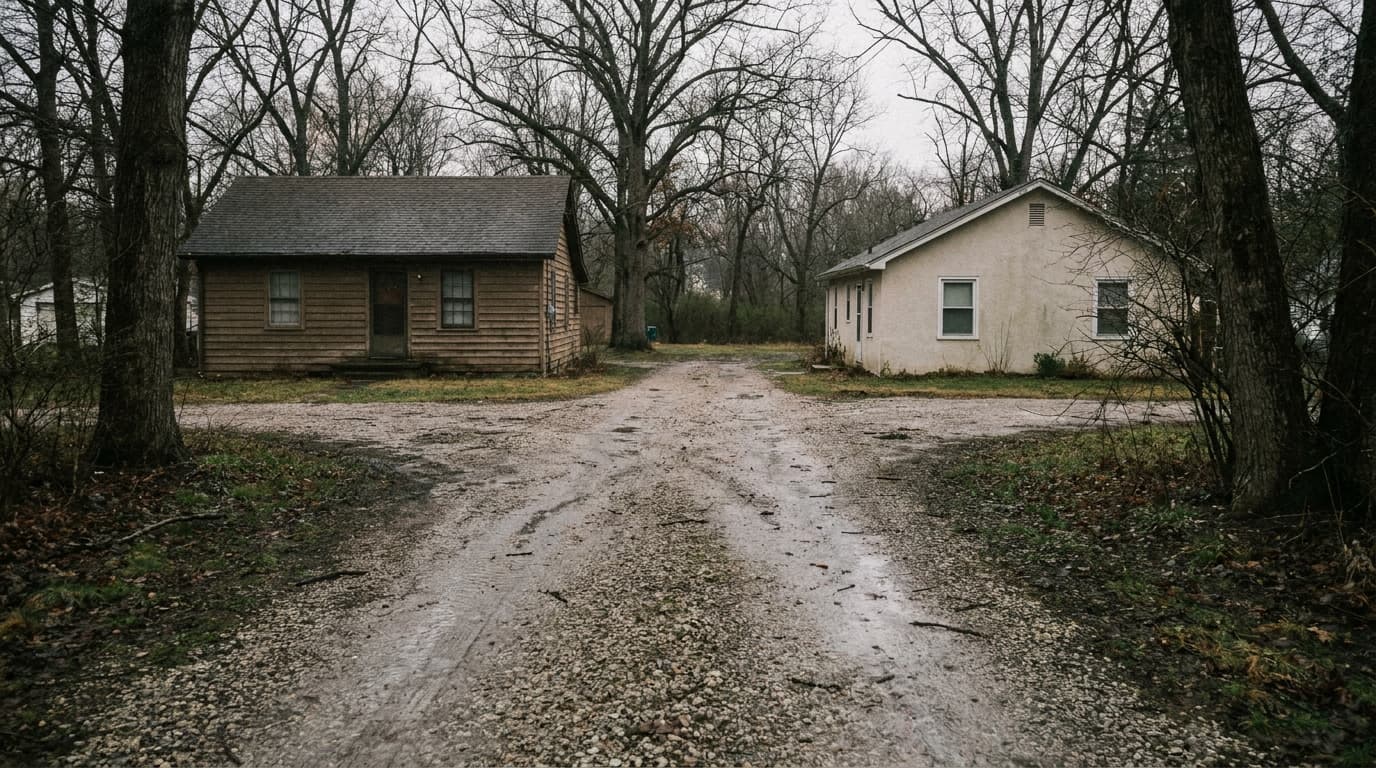
Easement rules differ from state to state. Each state's statutes and courts decide how long someone must use a path or driveway before a prescriptive easement arises, whether a landlocked owner can obtain a road across a neighbor's land, how an owner can stop a prescriptive claim from forming, and who pays to keep a shared road in repair. Prescriptive periods run from 5 years in California, Montana and Nevada to 30 years in New Jersey (60 years for woodlands or uncultivated tracts), and 20 years is the most common period. For questions about a government taking land, see our guide to eminent domain laws by state.
The comparison table below covers all 50 states and the District of Columbia, and each state name links to a full state page with the statutes, cases and exceptions.
Information last verified on 2026-10-21. This article has not been reviewed by a licensed lawyer.
Jurisdiction scope: This guide compares state law on private easements in the 50 states and the District of Columbia: prescriptive easements, landlocked land, notices that block prescription, shared road maintenance, relocation and termination, plus a short federal section on railroad corridors. It does not cover the details of government condemnation (see eminent domain laws by state), adverse possession of title (see squatters' rights and adverse possession), deeds (see quitclaim deeds by state), HOA covenants or local ordinances.
How long does a prescriptive easement take in each state?
A prescriptive easement is created by use, not by a deed. In general, the person claiming one must show use of another person's land that was open, continuous and adverse to the owner for the full period the state sets. Each state page lists that state's exact elements, because the wording differs: some states require exclusive use, while Missouri and Nevada do not, and Ohio's Supreme Court held that the use need not exclude the owner.
Grouped by the length of the period:
- 5 years (three states): California, Montana and Nevada. California's period comes from Civil Code § 1007, Montana's from Mont. Code Ann. § 23-2-322(1), and Nevada's from the Nevada Supreme Court's decision in Jordan v. Bailey (1997).
- 7 years: Arkansas, generally, from case law applying the adverse possession period. Georgia uses 7 years of uninterrupted use through improved lands but 20 years through wild lands (O.C.G.A. 44-9-1).
- 10 years (fourteen states): Alaska, Arizona, Iowa, Mississippi, Missouri, Nebraska, New Mexico, New York, Oregon, Rhode Island, Texas, Washington, West Virginia and Wyoming. Texas measures the period generally by its 10-year real-property limitation, and New York borrows the adverse-possession period by analogy.
- 15 years (seven states and the District of Columbia): Connecticut, the District of Columbia, Kansas, Kentucky, Michigan, Minnesota, Oklahoma and Vermont.
- 18 years: Colorado (C.R.S. 38-41-101).
- 20 years (nineteen states): Alabama, Delaware, Florida, Hawaii, Idaho, Illinois, Indiana, Maine, Maryland, Massachusetts, New Hampshire, North Carolina, North Dakota, South Carolina, South Dakota, Tennessee, Utah, Virginia and Wisconsin. Idaho's 20 years has applied since a 2006 amendment, and an easement already acquired by five years of qualifying use before that amendment keeps the shorter period. Hawaii's 20 years dates from a 1973 amendment, and an earlier ten-year period can still apply to use governed by prior law.
- 21 years: Ohio and Pennsylvania.
- 30 years: New Jersey, which borrows the adverse-possession periods of N.J.S.A. 2A:14-30: 30 years, or 60 years for woodlands or uncultivated tracts. The 20-year figure in older New Jersey decisions is no longer the period.
- Louisiana follows its Civil Code: only an apparent servitude, one visible from exterior signs such as a roadway, can be acquired by prescription, in 10 years with good faith and a written, recorded just title, or in 30 years without title or good faith (La. Civ. Code arts. 740, 742, 3483).
Where each state's period comes from
The source of the period differs, and the source matters when a court has to decide a close case.
- A statute written for easements or ways: California (Civ. Code § 1007), Connecticut (§ 47-37), Georgia (O.C.G.A. 44-9-1), Indiana (IC 32-23-1-1), Iowa (Iowa Code 564.1), Maine (14 M.R.S. § 812), Massachusetts (G.L. c. 187, § 2), Montana (§ 23-2-322) and Wisconsin (Wis. Stat. 893.28).
- Borrowed from the statute for recovering land: courts in Kansas (K.S.A. 60-503), Michigan (MCL 600.5801(4)), Minnesota (Minn. Stat. 541.02, applied by analogy because no statute sets a period for prescriptive easements), New York, Oklahoma (60 O.S. 333, tied to 12 O.S. 93(4)) and Texas take the period from the limitation on actions to recover real property, and New Jersey courts borrow the adverse-possession periods of N.J.S.A. 2A:14-30.
- Case law: in Alabama, Florida, Maryland, New Hampshire, New Mexico, North Carolina, Pennsylvania, South Carolina, South Dakota, Tennessee and Utah, the state page names a court decision, not an easement statute, as the source of the period. Florida's 20 years comes from Downing v. Bird (1958), a public-road case that Florida's district courts of appeal apply to private easements.
Burden of proof and the permission presumption
Many states set a demanding standard. Alaska, Delaware, Idaho, Indiana, Kansas, Minnesota, Mississippi, Missouri, Montana, New Mexico, New York, Ohio, Oregon, Rhode Island, South Carolina, South Dakota, Tennessee, Utah, Virginia and West Virginia require clear and convincing evidence, Nebraska requires clear, convincing and satisfactory evidence, and Florida, Oklahoma and Pennsylvania use the phrase clear and positive proof. A smaller group uses the ordinary civil standard: Arkansas, Colorado, Connecticut, the District of Columbia, Maine and New Jersey (a preponderance of the evidence), New Hampshire (a balance of probabilities) and North Carolina (the greater weight of the evidence).
The bigger practical divide is who must prove permission:
- Long open use presumed adverse, so the owner must show permission: Arizona, Maryland (after 20 years of open, continuous, unexplained use), Minnesota, Missouri, Montana, Nebraska, New Jersey, New York, South Dakota, Utah and Vermont, among others. Oregon's Supreme Court held in Feldman v. Knapp (1952) that the owners' mere acquiescence in long use of a driveway did not rebut the presumption.
- Use presumed permissive, so the claimant must prove adversity: Alabama, Alaska, Florida and North Carolina presume that use of another person's land is permissive (in Alaska, the presumption does not arise where the road was not established by the owner for its own use but was for many years the only means of passage to the claimant's land). Texas presumes that use of a way the owner also uses is with the owner's consent, and Wyoming generally presumes that a neighbor's use of a private road is permissive.
- Permission defeats the claim: in South Carolina, permission granted at any point during the 20 years defeats a prescriptive easement; North Dakota's Supreme Court held that acquiescence cannot be distinguished from permission; and in West Virginia, use that began with permission does not become adverse unless the permission is repudiated.
West Virginia's Supreme Court of Appeals also overruled earlier cases suggesting that ten years of continuous use is presumed adverse (O'Dell v. Stegall, 2010).
Wild, unenclosed and woodland property
Several states treat open country differently:
- Arkansas, Idaho and Washington presume that use of unenclosed land is permissive (in Arkansas and Idaho, wild, unenclosed and unimproved land). Maryland does the same for unimproved land in a general state of nature, Nebraska for unenclosed land opened to the public or to neighbors generally, and New Jersey for vacant, unimproved, unenclosed land where the use is casual rather than customary (Plaza v. Flak, 1951).
- Wisconsin's statute presumes that mere use of a way over unenclosed land is permissive (Wis. Stat. 893.28(3)), a rule the Wisconsin Supreme Court confined to wild, unimproved land in Shellow v. Hagen (1960).
- Arizona applies a different rule to large, unenclosed, rural parcels, and Oklahoma describes a heavier burden over unenclosed land.
- Pennsylvania bars acquiring a right of way by use through unenclosed woodland (68 P.S. § 411), Georgia requires 20 years through wild lands, and New Jersey requires 60 years for woodlands or uncultivated tracts.
Land and uses that cannot be acquired by prescription
Some property is protected no matter how long it is used:
- Government land: prescription does not run against state land in Alaska (AS 38.95.010), public-entity or public-utility property in California (Civ. Code § 1007), the state or listed public bodies in Colorado (C.R.S. 38-41-101(2)), or a municipal corporation, political subdivision or county road commission in Michigan (MCL 600.5821). In Wisconsin, neither period runs against government land for use that began on or after March 3, 1996, though rights already obtained on or before March 3, 2016 are not affected (Wis. Stat. 893.29).
- Registered land: no easement can be acquired by prescription over Land Court registered land in Hawaii (HRS 501-87) or registered land in Massachusetts (G.L. c. 185, § 53).
- Listed land and uses: Connecticut protects railroad land used for corporate purposes, certain conservation land and certain water-company land (§ 47-27). Rhode Island lists a footway (unless claimed with a right to pass with carriages), utility posts and wires, light and air through windows, and land a nonprofit holds for conservation, open space or a cemetery (R.I. Gen. Laws §§ 34-7-3 to 34-7-9). Iowa allows no prescriptive pedestrian way unless claimed together with a way for vehicles (Iowa Code 564.3), and New Hampshire says keeping utility wires on land for any length of time creates no easement (RSA 231:174).
- Recreational use: Hawaii (HRS 520-7), Kentucky (KRS 411.190(8), for claims based on use solely for recreational purposes, since July 15, 2002) and Montana (recreational use of surface waters or crossing land to reach them, Mont. Code Ann. § 23-2-322(2)) bar prescriptive rights from recreation. Alaska's recreational-use shield applies only while a recorded public recreational use easement is in place, and Indiana's presumption of adverse use does not extend to recreational use of a body of water.
- Negative easements: in the District of Columbia, a negative easement can be created only by express grant, never by prescription (Hefazi v. Stiglitz, 2004).
A few statutes run the other way and create prescriptive rights for public bodies or utilities on shorter or special terms: Alaska vests utility and public-access easements after 10 years of adverse notorious use (AS 09.45.052), Wisconsin gives certain utilities a 10-year period (Wis. Stat. 893.28(2)), Virginia gives a political subdivision 10 years for water and sewer easements (Va. Code § 15.2-2109.1), and Utah has 20-year statutory prescriptive easements for water conveyances and, on stated conditions, historical livestock trails.
Prescriptive easements and adverse possession are different claims
A prescriptive easement gives a right to use land; adverse possession can transfer title to it. States often apply different rules to the two. New Mexico requires color of title and payment of taxes for title by adverse possession, but neither appears among its easement elements. South Carolina's 10-year adverse possession statute and Virginia's 15-year recovery-of-land period do not govern prescriptive easements in those states, and Florida's 7-year period for actions to recover real property is a different clock from its 20-year easement period. California generally does not require a prescriptive easement claimant to pay property taxes, unless the claimed easement is so exclusive that it amounts to ownership. For the title side, see squatters' rights and adverse possession by state.
How can an owner stop a prescriptive easement?
Eight states have a statute that lets the owner interrupt a developing prescriptive claim with a formal notice:

- California: a sign under Civil Code § 1008 at each entrance or at intervals of not more than 200 feet along the boundary, or a recorded § 813 notice of permissive use, which must also be served by registered mail on users other than the general public.
- Connecticut: written notice of intent to dispute the use, served on the user (or as §§ 47-39 and 47-40 otherwise allow) and recorded with the return in the town land records within three months after service.
- Indiana: written notice served by an officer (or posted on the premises for at least 10 days if no one can be found) and recorded with the county recorder; it interrupts the use at the time of record (IC 32-23-1-2 to 32-23-1-4).
- Iowa: written notice of intention to dispute the use, which interrupts it only once served and recorded with the return of service within three months (Iowa Code 564.4 to 564.6).
- Maine: a notice posted on the land for 6 successive days, or served on a particular person by an officer; in the unorganized territory the notice is recorded instead and lasts 10 years, renewable (14 M.R.S. §§ 812, 812-B).
- Massachusetts: a notice posted on the premises for six successive days or served on particular users; an officer's certificate recorded with the notice within three months is conclusive evidence of the posting or service (G.L. c. 187, § 3).
- Rhode Island: written notice of intent to dispute, served and recorded with the return in the land evidence records within three months (§§ 34-7-6, 34-7-7).
- Wisconsin: a recorded affidavit of interruption with a survey, plus the notice the statute requires; this is not the only method, and a new period may begin after the recording (Wis. Stat. 893.305).
In Connecticut, Massachusetts and Rhode Island the notice also lets the user sue to try the right. Nevada has a narrower rule: posted signs or a recorded notice under NRS 11.165 and 111.3655 apply to land opened and improved for public pedestrian access.
The state pages for Alabama, Alaska, Illinois, New Hampshire, New Mexico, North Carolina, North Dakota, Oklahoma, South Carolina and South Dakota each name the code chapters that contain no posted-sign or recorded-notice procedure. In those states the permission and interruption rules carry the weight. Courts in several states have described what does and does not interrupt use: in West Virginia, unheeded requests, protests, objections or threats of litigation do not interrupt adverse use, but an act that actually makes the user stop, such as physically blocking the way or a successful lawsuit, does (O'Dell v. Stegall, 2010); in Alaska, signs usually do not interrupt use, and the owner ordinarily must physically block access (McDonald v. Harris, 1999); and Colorado's Court of Appeals has said a road's use is ordinarily not adverse where a gate obstructs free travel, even an unlocked one (Brown v. Faatz, 2008).
What if land is landlocked?
There are two broad routes to access for a parcel with no road: a statute that lets the owner obtain a road through a court or local board, and the court-made easement by necessity. Many states have both.
States with a statutory private road or way of necessity
Twenty-one states give the landlocked owner a statutory route to a private road, way of necessity or right of passage: Alabama, Arizona, Arkansas, Colorado, Florida, Georgia, Idaho, Kentucky, Louisiana, Minnesota, Mississippi, Missouri, Montana, New York, North Carolina, Oklahoma, Oregon, Pennsylvania, Tennessee, Washington and Wyoming. The details vary widely:
- Width limits: Georgia up to 20 feet, Tennessee up to 25 feet (15 in counties with a metropolitan government), Alabama, Kentucky and Wyoming up to 30 feet, Oregon generally up to 30 feet, North Carolina 18 to 30 feet, Missouri up to 40 feet, and Arkansas up to 50 feet.
- Who pays: the statutes generally require the landlocked owner to pay the neighbor. Alabama's applicant pays for the land taken and the damage, Montana's person benefited pays the damages and expenses, Oregon's petitioner pays the compensation set plus the affected owners' costs and reasonable attorney fees, and Washington requires compensation to be determined and paid before the land is taken. In Louisiana, the owner of an enclosed estate must compensate the neighbor, but passage is free when a voluntary alienation or judicial partition caused the enclosure, and no passage is owed if the owner's own voluntary act caused it.
- Who qualifies: Florida's statute covers land used or desired to be used for a dwelling, agriculture, timber raising or cutting, or stockraising; North Carolina's cartway covers listed uses such as cultivating land, cutting timber, quarries and mines, industrial or manufacturing plants and cemeteries; Kentucky's covers a landlocked tract on which the owner's residence sits, with exceptions; Minnesota's cartway covers tracts of at least five acres, or two to five acres that were a separate parcel of record on January 1, 1998; and Mississippi's private road petition is not available in incorporated cities and towns.
- Limits and conditions: Arizona's statutory way exists only if no implied way exists, and an adequate and reasonable alternative legal route defeats it. Colorado allows condemnation of a private way of necessity only where no other remedy gives access. Oklahoma's statutory way needs no common ownership but requires compensation, and its Supreme Court has read it to include access to utilities where necessary (Childers v. Arrowood, 2023). Tennessee bars a right-of-way where the owner's own intentional and knowing action cut the land off. Wyoming's private road requires that the owner have no legally enforceable access.
- Pennsylvania: the Private Road Act still allows petitions, but since In re O'Reilly (2010) a private road opening is a taking that must have the public as its primary and paramount beneficiary.
States where the road becomes public
In twelve states the landlocked owner's statutory route leads to a public road or public way rather than a private one: Illinois, Iowa, Kansas, Maine, Nebraska, New Hampshire, North Dakota, Ohio, South Dakota, Texas, Vermont and Wisconsin. In Kansas, the owner petitions the county commissioners for a road 40 to 100 feet wide and must pay all expenses and maintain it. Nebraska's county access road is open to the general public and is available only if the land was not isolated when bought (or came directly from the State), the owner did not cause the isolation, and access is needed for existing use. Texas lets an owner with no public access apply to the commissioners court for a public access road, with the county paying the costs of the proceeding. In Wisconsin and North Dakota the local board decides in its discretion or judgment, New Hampshire's petition asks the selectmen to re-lay out a previously discontinued highway or lay out a highway, and Vermont's route is a town highway petition by voters or landowners equal to at least five percent of the town's voters (19 V.S.A. § 708). Iowa's owner or lessee condemns a public way up to 40 feet wide (agricultural land or a single residence) or 66 feet (other uses).
Listed public use or narrow statutes only
Alaska and Utah list private roads or byroads to residences or farms as a public use for condemnation but set up no separate private petition procedure. California's statutes cover a parcel cut off by a public entity's own acquisition (CCP § 1240.350) and an owner's condemnation of an easement for utility service, not road access (Civ. Code § 1001). Indiana's statutes cover only land shut off by a straightened stream, a ditch or a public dam, and landlocked railroad land.
Common law only
In Connecticut, Delaware, the District of Columbia, Hawaii, Maryland, Massachusetts, Nevada, New Mexico, Rhode Island, South Carolina, Virginia and West Virginia, the state page names the code chapters that set no private-way petition procedure, so access rests on the common-law easement by necessity and related implied easements. Michigan's private roads act still prints in the Michigan Compiled Laws, but the Michigan Supreme Court struck it down as unconstitutional in Tolksdorf v. Griffith (2001). New Jersey addresses landlocked land through the common-law easement by necessity.
The common-law easement by necessity
Almost every state page describes the same core: one owner held both parcels, a conveyance divided them, and the division left a parcel without access. The states differ on how much necessity is required:
- Strict or absolute necessity: Delaware and New Jersey require absolute necessity judged at the original severance; California, Kentucky, Maryland, Michigan, Montana, Nebraska, Ohio, Texas and West Virginia require strict necessity. In Texas and West Virginia, any other access defeats the claim, however inconvenient, more difficult or more expensive, and Indiana requires that other access be impossible, not just impractical.
- Reasonable necessity: Connecticut (reasonable, not strict), Nevada, New Mexico, Pennsylvania, Rhode Island, Tennessee and Virginia use a reasonable-necessity test, and North Carolina does not require absolute necessity.
- Unity of title: Florida's statute requires unity of title from a common source other than the original grant from the state or the United States. New Mexico gives no way of necessity to a tract already landlocked before the conveyance, and Texas says a way of necessity cannot exist over a stranger's land.
Whether the easement lasts after access appears also differs. Courts in Colorado, Maryland, Michigan, New Jersey, Tennessee and Wisconsin describe a way of necessity that ends when the necessity ends, and the lead opinion in Mississippi's Broadhead v. Terpening (1992) said the same. Alaska's Supreme Court held the opposite for a parcel split from a larger tract: the implied easement does not end merely because the necessity later ceases (Williams v. Fagnani, 2007).
Shared driveways and private roads: maintenance and blocking
Nine states have a statute on who pays to maintain a shared private road or access easement when there is no agreement:
- California: easement owners maintain it, sharing costs in proportion to use (Civ. Code § 845).
- Connecticut: owners of homes served by the easement keep it in good repair, including snow removal, in proportion to benefit (§ 47-42f).
- Maine: residential owners share equally in reasonable and necessary repairs to a private road that is their primary means of access, subject to exceptions (23 M.R.S. § 3121).
- Missouri: one or more owners may ask the circuit court for a plan of maintenance, with costs apportioned by use and benefit (RSMo 228.369).
- Oregon: easement holders share repair costs in proportion to use, unless the recorded instrument or an agreement says otherwise; not for rights of way used by railroads, utilities and other public-service providers (ORS 105.175, 105.185).
- Pennsylvania: owners who share a common benefit contribute in proportion to their use, unless a written maintenance agreement or another listed exception applies (Act 75 of 2021).
- Rhode Island: owners of one- to four-family homes served by the easement share in proportion to benefit, and an owner who damages it repairs that damage (§ 34-9.1-2).
- Vermont: everyone who shares the benefit of a private road contributes rateably, and each may sue to enforce that duty (19 V.S.A. § 2702).
- Wisconsin: without a written agreement or similar instrument, each user pays an equitable share based on actual use, and a user who damages the road beyond reasonable wear and tear pays that repair; railroad, utility and government easements are excluded (Wis. Stat. 710.20).
South Carolina reaches a similar result through case law: absent an agreement, the easement owner ordinarily keeps it in repair, and costs may be apportioned equitably (Hayes v. Tompkins, 1985). Several landlocked-access statutes also assign upkeep of the new road to the owner who asked for it, including those in Kansas, Minnesota, New Hampshire, Oregon and Tennessee.
Statutes on blocking a way are less common. In Georgia, once a private way has been in constant and uninterrupted use for seven or more years and no legal steps have been taken to abolish it, it is unlawful for anyone to interfere with it (O.C.G.A. 44-9-54), and a landowner may not close a road used as a private way for as much as one year without first giving the common users 30 days' written notice (O.C.G.A. 44-9-56). Tennessee bars gates or fencing that restrict access to the land crossed by a statutory right-of-way. North Carolina makes willfully obstructing a highway, cartway, mill road or church road a Class 1 misdemeanor (G.S. 136-90). Arkansas runs the other way for public roads on easements: the public's right to use an unpaved road is abandoned if a gate keeps it closed and locked continuously for one year, subject to listed exceptions (Ark. Code § 18-61-101(e)).
Can an easement be moved?
Seven states have a statute that lets the owner of the burdened land ask a court to relocate an easement:
- Nebraska (Uniform Easement Relocation Act, since 2021), Utah (2022), Washington (chapter 64.65 RCW, 2023), Nevada (NRS chapter 111A, 2025) and Oklahoma (since November 1, 2025): relocation by court order, at the burdened owner's expense, only if the move does not materially harm the easement holder in the ways each act lists. Each act excludes some kinds of easements, such as public utility and conservation easements, and Nevada's right cannot be waived by agreement.
- Arkansas (Act 505 of 2023): court order in a civil action if the move does not materially harm the holder; not for utility, conservation, highway or public-entity easements.
- Virginia (since July 1, 2026): the circuit court must grant a petition to relocate or modify most easements unless the change would materially cause one of six listed harms, and the burdened owner pays all costs except attorney fees (Va. Code § 55.1-304).
Courts have also ruled on relocation without a statute. Massachusetts lets the burdened owner make reasonable changes at its own expense within three Restatement limits (M.P.M. Builders v. Dwyer, 2004), while the D.C. Court of Appeals held a unilateral relocation of a route fixed for some thirty years, without the holders' consent, invalid (Carrollsburg v. Anderson, 2002).
How does an easement end?
The common ways an easement ends, with examples from the state pages:
- Abandonment needs more than nonuse. Courts in Arkansas, Idaho, Illinois, Iowa, Kansas, Massachusetts, Missouri, Montana, New Jersey, New York, North Carolina, Rhode Island, South Carolina, Washington and Wyoming hold that nonuse of an easement, at least one created by deed or grant, does not by itself abandon it; abandonment also requires intent, usually shown by acts. Missouri adds a statute: an easement created after 2006 and abandoned for more than 10 years may be vacated for the original consideration unless that right was waived in writing (RSMo 527.188).
- Disuse statutes for easements acquired by use: Montana, North Dakota, Oklahoma and South Dakota end an easement acquired by enjoyment or use after disuse for the period it took to acquire it. Georgia sets no fixed term, but its Supreme Court held that for a prescriptive easement the nonuse period generally follows the prescriptive period. Louisiana ends any predial servitude after 10 years of nonuse.
- Adverse possession by the burdened owner: the District of Columbia, Maine, Massachusetts (20 years of wrongful adverse use), Montana, New Mexico (10 years), New York and Oregon recognize that the burdened owner's own adverse use can end an easement.
- Release, merger and destruction: Maryland and Vermont require a signed writing to release or surrender an easement, except where it arises by operation of law, and Minnesota and Oregon list a written release among the ways an easement ends. Merger, when one owner acquires both parcels, ends an easement in Louisiana, Montana, New Mexico, North Dakota, Oklahoma and Washington; South Dakota's 2025 amendment lets an owner create a valid easement while holding both parcels.
- Recording and marketable title acts: Connecticut, Florida, Illinois, Michigan, Ohio and Vermont protect easements that are observable, used or evidenced by a physical facility, in the terms each statute uses, and in several of them other old interests can be cut off unless preserved by a recorded notice. Wyoming's 40-year act protects clearly observable pipeline, highway, railroad and public utility easements and conservation easements, and a general reference to easements in the chain of title does not preserve others unless it specifically identifies the recorded instrument that created them (W.S. 34-10-104). Oklahoma's act does not bar or extinguish easements at all. Minnesota can bar a recorded claim over 40 years old on non-Torrens land unless a notice was recorded or the holder is in possession. In Vermont, an unrecorded easement by necessity that is not visibly used can be extinguished (Gray v. Treder, 2018), and in Wisconsin, the Court of Appeals held that an unrecorded prescriptive easement must be recorded within 30 years or the right can be lost (Schauer v. Baker, 2004). Michigan's 2025 PA 13 says generic "subject to easements and restrictions of record" wording in a deed recorded after March 28, 2019, with no liber and page or other county number, does not preserve those easements. California allows a quiet title action to treat an easement as abandoned after 20 years with no use, no separate tax assessment paid and no recorded instrument, unless a notice of intent to preserve is recorded in time (Civ. Code §§ 887.050, 887.060).
Recorded easements and title searches are covered state by state in our property records guides.
Express and implied easements
An easement can also be created on purpose. Maryland requires a signed writing to grant an easement unless it arises by act and operation of law (Real Prop. § 5-103), and a granted easement there lasts in perpetuity unless a contrary intention appears (§ 4-105). New Jersey's writing requirement for transfers of interests in real estate does not apply to easements created by prescription or implication. Wyoming voids an easement recorded after W.S. 34-1-141 took effect unless it specifically describes its location, with a narrow one-year exception. North Dakota requires easements that became binding after July 1, 1977 to describe the land covered and state a duration of no more than 99 years (N.D.C.C. § 47-05-02.1). Louisiana's Civil Code uses its own vocabulary: an easement is a predial servitude, a charge on one estate (the servient estate) for the benefit of another (the dominant estate) owned by someone else (La. Civ. Code art. 646).

Easements are also classed by what they benefit. An easement appurtenant is tied to a benefited parcel: the Colorado Supreme Court has said that "An easement appurtenant, on the other hand, runs with the land," and that "An easement is presumed to be appurtenant, rather than in gross" (Lobato v. Taylor, 2002), and the Tennessee Court of Appeals has stated that an easement appurtenant to land is favored over an easement in gross (Pevear v. Hunt, 1996). An easement in gross is not attached to land: Montana's Code lists servitudes that "may be granted and held though not attached to land," among them rights-of-way and the right of conserving open space (Mont. Code Ann. § 70-17-102).
Easements can also be implied from an obvious use that existed when a single tract was divided. Arizona, Colorado, Idaho, Maine, North Carolina and South Carolina recognize an easement implied from prior use, Idaho requiring only reasonable necessity and not requiring that the land be landlocked, while Florida requires absolute necessity for one. South Carolina also recognizes an easement implied by a deed that references a plat showing it.
Easement laws by state: comparison table
Short cells summarize each state page; "See state page" means the state page does not address that column in summary form. The last column links to each state's eminent domain section.
| State | Prescriptive period | Landlocked land: statutory route? | Notice or sign to block prescription | Eminent domain |
|---|---|---|---|---|
| Alabama | 20 years or more (case law, Bull v. Salsman) | Yes: probate court right-of-way up to 30 feet; applicant pays for land and damage (Ala. Code §§ 18-3-1 to 18-3-3) | None in the adverse-possession, recording or recreational-use provisions | Alabama rules |
| Alaska | Generally 10 years (Swift v. Kniffen; AS 09.10.030); never against state land | No petition procedure; private roads are a listed public use (AS 09.55.240(a)(6)) | No procedure; signs usually do not interrupt use (McDonald v. Harris) | Alaska rules |
| Arizona | 10 years (case law applying A.R.S. 12-526) | Yes: condemn a private way of necessity on reasonable necessity and pay just compensation (A.R.S. 12-1202) | See state page | Arizona rules |
| Arkansas | Generally 7 years (case law, Carson v. County of Drew) | Yes: county court petition after a refused written offer; road up to 50 feet, access only (Ark. Code §§ 27-66-401 to 27-66-405) | See state page | Arkansas rules |
| California | 5 years (Civ. Code § 1007); never against public-entity or public-utility property | Common-law way of necessity; statutes cover parcels cut off by a public acquisition (CCP § 1240.350) and utility service, not road access (Civ. Code § 1001) | Yes: § 1008 sign or recorded § 813 notice | California rules |
| Colorado | 18 years (C.R.S. 38-41-101) | Yes, where no other remedy gives access: condemn a private way of necessity and pay just compensation (C.R.S. 38-1-102(3)) | See state page | Colorado rules |
| Connecticut | 15 years (Conn. Gen. Stat. § 47-37) | No petition procedure in the named chapters; common-law easement by necessity (reasonable necessity) | Yes: notice served and recorded within three months (§§ 47-38 to 47-40) | Connecticut rules |
| Delaware | 20 years, clear and convincing proof (case law) | No private-road statute in the highway chapters; common-law easement by necessity (absolute necessity) | See state page | Delaware rules |
| District of Columbia | 15 years (D.C. Code § 12-301(a)(1)); not for actions by the D.C. government | None in the condemnation chapter (Title 16, ch. 13) | See state page | District of Columbia rules |
| Florida | At least 20 years (case law, Downing v. Bird) | Yes, for land used or desired for a dwelling, agriculture, timber or stock (Fla. Stat. §§ 704.01(2), 704.04) | See state page | Florida rules |
| Georgia | 7 years through improved land; 20 years through wild land (O.C.G.A. 44-9-1) | Yes: superior court petition to condemn an access easement up to 20 feet (O.C.G.A. 44-9-40(b)) | See state page | Georgia rules |
| Hawaii | 20 years (HRS 657-31); an earlier 10-year period can apply; never over Land Court land | No: HRS chapter 101 has no private-way procedure; common-law routes | See state page | Hawaii rules |
| Idaho | 20 years (Idaho Code § 5-203); 5 years for easements acquired before the 2006 amendment | Yes: byroad condemnation on reasonable necessity, paying just compensation (Idaho Code § 7-701(5)) | See state page | Idaho rules |
| Illinois | 20 years (case law, Petersen v. Corrubia) | Yes: petition for a township or district road, 50 feet or less; those benefited pay damages (605 ILCS 5/6-327) | None in the land-recovery limitation sections | Illinois rules |
| Indiana | At least 20 years, clear and convincing proof (IC 32-23-1-1) | Only narrow statutes (stream, ditch or dam cut-offs; landlocked railroad land); otherwise common law | Yes: notice served by an officer (or posted), then recorded (IC 32-23-1-2 to 32-23-1-4) | Indiana rules |
| Iowa | 10 years, with claim of right shown by independent evidence and express notice to the owner (Iowa Code 564.1) | Yes: condemn a public way up to 40 or 66 feet (Iowa Code 6A.4(2)) | Yes: notice served and recorded within three months (Iowa Code 564.4 to 564.6) | Iowa rules |
| Kansas | Generally 15 years (K.S.A. 60-503; Pyle v. Gall) | Yes: county commissioners petition for a public road 40 to 100 feet wide; benefited owner pays and maintains (K.S.A. 68-117) | See state page | Kansas rules |
| Kentucky | Generally at least 15 years (case law; KRS 413.010); recreation-only use cannot support a claim | Yes, for a landlocked tract with the owner's residence: right-of-way up to 30 feet, with exceptions (KRS 416.350) | See state page | Kentucky rules |
| Louisiana | Apparent servitudes only: 10 years in good faith with recorded just title, or 30 years without (Civ. Code arts. 742, 3483) | Yes: right of passage to the nearest public road for compensation, with exceptions (Civ. Code arts. 689, 693, 694) | See state page | Louisiana rules |
| Maine | 20 years (14 M.R.S. § 812) | Yes: municipal officers may lay out a public easement on petition (23 M.R.S. § 3022) | Yes: notice posted 6 successive days, or served; recorded in the unorganized territory (14 M.R.S. §§ 812, 812-B) | Maine rules |
| Maryland | 20 years (case law, Kirby v. Hook) | No private-road procedure in Real Prop. Title 12; common-law way of necessity | See state page | Maryland rules |
| Massachusetts | 20 years (G.L. c. 187, § 2); never over registered land | No petition procedure in chapter 187; common-law easement by necessity | Yes: notice posted 6 successive days, or served (G.L. c. 187, § 3) | Massachusetts rules |
| Michigan | 15 years (MCL 600.5801(4); case law) | Private roads act struck down (Tolksdorf v. Griffith, 2001); common-law easement by necessity | See state page | Michigan rules |
| Minnesota | 15 years, by analogy to Minn. Stat. 541.02 | Yes: town board cartway for qualifying tracts; petitioner pays damages (Minn. Stat. 164.08, subd. 2) | See state page | Minnesota rules |
| Mississippi | 10 years, clear and convincing proof (case law; compare Miss. Code § 15-1-13) | Yes: petition to the special court of eminent domain; not in incorporated cities and towns (Miss. Code § 65-7-201) | See state page | Mississippi rules |
| Missouri | 10 years, clear and convincing proof (case law, Whittom) | Yes: circuit court private road of strict necessity, up to 40 feet (RSMo 228.342 to 228.362) | See state page | Missouri rules |
| Montana | 5 years (Mont. Code Ann. § 23-2-322(1)) | Yes: private road under Mont. Code Ann. § 70-30-107; the person benefited pays | See state page | Montana rules |
| Nebraska | 10 years (Neb. Rev. Stat. 25-202) | Yes, on conditions: county board access road open to the public (Neb. Rev. Stat. 39-1713 to 39-1719) | See state page | Nebraska rules |
| Nevada | 5 years (Jordan v. Bailey) | No private condemnation of a private road under NRS chapter 37 (NRS 37.0095) | Only for land opened and improved for public pedestrian access (NRS 11.165, 111.3655) | Nevada rules |
| New Hampshire | 20 years (case law, Greenan v. Lobban) | Petition the selectmen to re-lay out a discontinued highway or lay out a highway (RSA 231:22, 231:8) | None in RSA 477, 508 or 231 | New Hampshire rules |
| New Jersey | 30 years, or 60 for woodlands or uncultivated tracts (case law borrowing N.J.S.A. 2A:14-30) | Common-law easement by necessity (absolute necessity) | See state page | New Jersey rules |
| New Mexico | 10 years, clear and convincing proof (case law, Algermissen v. Sutin) | No procedure in NMSA chapters 37, 42, 42A or 47; common-law easement by necessity | No statutory procedure in chapters 37, 42 or 47 | New Mexico rules |
| New York | 10 years, by analogy to adverse possession (CPLR 212(a); RPAPL 501) | Yes: application to the town superintendent; a jury decides necessity and damages (Highway Law § 300 and following) | See state page | New York rules |
| North Carolina | At least 20 years (case law, Potts v. Burnette); use presumed permissive | Yes, for listed uses only: cartway 18 to 30 feet; petitioner pays first (G.S. 136-68, 136-69) | None in G.S. 1-35 to 1-46 | North Carolina rules |
| North Dakota | 20 years (case law, Fischer v. Berger) | Petition for a public road, granted at the board's judgment (N.D.C.C. § 24-07-06) | No posting or recording statute | North Dakota rules |
| Ohio | 21 years (Pavey v. Vance; R.C. 2305.04) | Yes: petition the county commissioners for a public road; petitioner pays (R.C. 5553.41 to 5553.43) | See state page | Ohio rules |
| Oklahoma | Generally 15 years (60 O.S. 333; 12 O.S. 93(4)) | Yes: private way of necessity with compensation; no common ownership needed (27 O.S. 6) | None in the Title 60 easement chapter | Oklahoma rules |
| Oregon | 10 years, clear and convincing proof (case law, Thompson v. Scott) | Yes: county way-of-necessity petition, generally up to 30 feet (ORS 376.150 to 376.200) | See state page | Oregon rules |
| Pennsylvania | 21 years (case law, Walley v. Iraca); no right of way by use through unenclosed woodland | Yes: Private Road Act petition, subject to the O'Reilly (2010) public-beneficiary rule | See state page | Pennsylvania rules |
| Rhode Island | Generally 10 years (R.I. Gen. Laws § 34-7-1; Altieri v. Dolan) | No statutory private-way petition; common-law easement by necessity | Yes: notice served and recorded within three months (§§ 34-7-6, 34-7-7) | Rhode Island rules |
| South Carolina | 20 years, clear and convincing proof (case law) | No private-way condemnation procedure in the Title 57 road chapters or Title 28; common law | None in Title 15, chapters 3 and 67 | South Carolina rules |
| South Dakota | 20 years, clear and convincing proof (case law, Hamad Assam) | County petition for a public highway of not more than one mile; section-line highways (SDCL 31-3-23, 31-18-1) | None in chapters 43-13 or 15-3 | South Dakota rules |
| Tennessee | Generally 20 years (case law) | Yes: condemn a private right-of-way up to 25 feet (15 in metro-government counties) (Tenn. Code § 54-14-102) | See state page | Tennessee rules |
| Texas | Generally measured by the 10-year land limitation (CPRC § 16.026(a)) | Yes: application to the commissioners court for a public access road (Transp. Code § 251.053) | See state page | Texas rules |
| Utah | 20 years (case law, Orton v. Carter) | Byroads to a residence or farm are a listed public use (Utah Code § 78B-6-501(2)(g)); no separate private procedure | See state page | Utah rules |
| Vermont | Generally 15 years (case law; 12 V.S.A. § 501) | No private procedure in 19 V.S.A. chapters 7 or 27; town highway petition (19 V.S.A. § 708) | See state page | Vermont rules |
| Virginia | At least 20 years, clear and convincing proof (case law, Pettus v. Keeling) | No private-road condemnation in the easement article or Title 33.2, ch. 10; common law | See state page | Virginia rules |
| Washington | 10 years (case law, Gray v. McDonald) | Yes: condemn a private way of necessity, paying compensation first (RCW 8.24.010, 8.24.030) | See state page | Washington rules |
| West Virginia | At least 10 years, clear and convincing proof (O'Dell v. Stegall) | No statutory private-way procedure in chapter 54; common law (strict necessity) | See state page | West Virginia rules |
| Wisconsin | At least 20 years (Wis. Stat. 893.28(1)); 10 for certain utilities | Town board may lay out a highway on application, in its discretion (Wis. Stat. 82.27) | Yes: recorded affidavit of interruption with notice (Wis. Stat. 893.305) | Wisconsin rules |
| Wyoming | At least 10 years (Powder River Ranch; W.S. 1-3-103) | Yes: district court private road action, up to 30 feet; landlocked owner pays (W.S. 24-9-101, 24-9-103) | See state page | Wyoming rules |
Federal law: railroad corridors and rails-to-trails
Federal law adds rules for one important kind of easement, the railroad right of way, and for government-created rights of entry:
- In Marvin M. Brandt Revocable Trust v. United States (2014), the Supreme Court held that a right of way granted to a railroad under an 1875 federal statute was an easement that ended when the railroad abandoned it, leaving the landowner's property unburdened. The Court rejected the Government's contrary argument, noting that the Government "won when it argued the opposite before this Court more than 70 years ago."
- Federal law lets an unused rail corridor be kept for interim trail use, subject to restoration for railroad purposes, and that use "shall not be treated, for purposes of any law or rule of law, as an abandonment of the use of such rights-of-way for railroad purposes" (16 U.S.C. 1247(d)). In Preseault v. ICC (1990), the Supreme Court held that owners who claim a trail conversion took their property may seek compensation from the United States under the Tucker Act, reaffirming "that a Tucker Act remedy exists unless there are unambiguous indications to the contrary"; it did not decide whether a taking had occurred.
- In Cedar Point Nursery v. Hassid (2021), the Court held that a regulation granting union organizers a right to enter growers' land three hours per day, 120 days per year, "appropriates a right to invade the growers' property and therefore constitutes a per se physical taking."
For condemnation of easements and land by federal, state and local governments, see eminent domain laws by state.
Related easement and property guides
- Eminent domain laws by state
- Squatters' rights and adverse possession by state
- Property records by state
- Quitclaim deeds by state
This guide provides general legal information about state easement law, not legal advice. Easement disputes turn on deeds, surveys, recorded documents and the facts of each case, and the state pages linked above carry each state's full rules and exceptions. For advice about a specific situation, contact a lawyer licensed in the state where the land is located.
Last updated: 2026-10-21.
Frequently Asked Questions
How long does it take to get a prescriptive easement?
It depends on the state. The period is 5 years in California, Montana and Nevada; 10 years in 14 states including New York, Texas and Washington; 15 years in seven states and the District of Columbia; 20 years in 19 states including Florida, Illinois and Virginia; 21 years in Ohio and Pennsylvania; and 30 years in New Jersey (60 for woodlands or uncultivated tracts). Arkansas generally uses 7 years, Colorado 18, and Georgia 7 years through improved land or 20 through wild land.
Which states have the shortest prescriptive easement period?
California, Montana and Nevada, at 5 years. California's period comes from Civil Code § 1007, Montana's from Mont. Code Ann. § 23-2-322(1), and Nevada's from Jordan v. Bailey (1997). Arkansas generally uses 7 years, and Georgia uses 7 years of uninterrupted use through improved land.
What can an owner do if land is landlocked?
Most states offer one or both of two routes. 21 states have a statute that lets the landlocked owner obtain a private road or way of necessity, usually paying the neighbor, and 12 more provide a route to a public road or public way to the land. Every state page except Louisiana's, whose Civil Code gives an enclosed estate a right of passage instead, also describes the common-law easement by necessity, which generally requires that both parcels were once under one owner and that the division left the parcel without access.
Can a landowner stop someone from getting a prescriptive easement?
Eight states have a statute for it: California, Connecticut, Indiana, Iowa, Maine, Massachusetts, Rhode Island and Wisconsin let an owner interrupt the claim by a posted, served or recorded notice that follows the statute's steps. In other states, permission and actual interruption matter: use the owner permitted generally does not ripen into an easement, and in West Virginia physically blocking the way interrupts adverse use while protests and objections do not.
Who maintains a shared driveway or private road?
An agreement or the recorded easement usually controls. Without one, California, Connecticut, Maine, Missouri, Oregon, Pennsylvania, Rhode Island, Vermont and Wisconsin have statutes that assign the cost, most in proportion to use or benefit; Maine uses equal shares for residential owners whose primary access is the road. South Carolina case law puts repairs on the easement owner, with costs apportioned equitably.
Can a neighbor block an easement?
A few statutes address it directly. In Georgia, once a private way has been used constantly and without interruption for seven or more years and no legal steps have been taken to abolish it, it is unlawful for anyone to interfere with it (O.C.G.A. 44-9-54), and a road used as a private way for a year cannot be closed without 30 days' written notice to the users. Tennessee bars gates or fencing on a statutory landlocked right-of-way. Elsewhere, see the state page.
Does an easement end if no one uses it?
Usually not by nonuse alone. Courts in many states, including Illinois, Massachusetts, New York and Washington, hold that nonuse of an easement created by deed or grant does not end it without proof of intent to abandon. Montana, North Dakota, Oklahoma and South Dakota end an easement acquired by use after disuse for the prescriptive period, and Louisiana ends a servitude after 10 years of nonuse.
Can the owner of the burdened land move an easement?
In Arkansas, Nebraska, Nevada, Oklahoma, Utah, Virginia and Washington, a statute lets the burdened owner ask a court to relocate an easement, generally at that owner's expense and only if the move does not materially harm the easement holder. Utility, conservation and certain other easements are excluded. Massachusetts allows reasonable changes under case law, while a D.C. court held a unilateral relocation without the holders' consent invalid.
Is a prescriptive easement the same as adverse possession?
No. A prescriptive easement gives a right to use land, while adverse possession can transfer title. The rules often differ: New Mexico requires color of title and taxes only for title, and Virginia's and South Carolina's adverse possession periods do not govern prescriptive easements. Our squatters' rights guide covers adverse possession by state.
What is the difference between an easement appurtenant and an easement in gross?
An easement appurtenant benefits a particular parcel of land and runs with it; an easement in gross is not attached to land. The Colorado Supreme Court has said an easement is presumed to be appurtenant rather than in gross (Lobato v. Taylor, 2002), Tennessee courts favor an easement appurtenant over one in gross, and Montana's Code lists servitudes, among them rights-of-way, that may be granted and held though not attached to land (Mont. Code Ann. § 70-17-102).
What happens to a railroad easement when the railroad stops using it?
In Brandt v. United States (2014), the Supreme Court held that a railroad right of way granted under an 1875 federal statute was an easement that ended when the railroad abandoned it. Federal law also allows interim trail use of a rail corridor, and that use is not treated as an abandonment of the right-of-way for railroad purposes (16 U.S.C. 1247(d)).
Updates
Independently fact-checked against the cited primary sources
State-by-state comparison
Each state guide below is paired with the governing statute our editors adjudicated for it, held in our own legal record and verified against the official source.
Each statute shown is the same adjudicated anchor its state guide renders, independently verified against primary sources. A dash means not yet adjudicated in our record — never that no law exists.
Sources and References
- Bull v. Salsman, 435 So. 2d 27 (Ala. 1983)(www.courtlistener.com)
- Ala. Code § 18-3-1, Right-of-way to landlocked land; width(alison.legislature.state.al.us).gov
- AS 09.10.030, Actions to recover real property(www.akleg.gov).gov
- AS 09.55.240, Uses for which eminent domain is authorized; economic development limit(www.akleg.gov).gov
- Swift v. Kniffen, 706 P.2d 296 (Alaska 1985)(www.courtlistener.com)
- Spaulding v. Pouliot, 218 Ariz. 196 (App. 2008)(www.courtlistener.com)
- A.R.S. 12-1202, Right to private way of necessity; limitation(www.azleg.gov).gov
- Carson v. County of Drew, 354 Ark. 621 (2003)(courtlistener.com)
- Ark. Code § 27-66-401, Private roads: establishment(advance.lexis.com)
- Ark. Code §§ 27-66-403 to 27-66-405, Private roads: court order, obstruction, railroad limit(advance.lexis.com)
- Cal. Civ. Code § 1007, Title by prescription(leginfo.legislature.ca.gov).gov
- Cal. Civ. Code § 1008, Posted sign preventing prescription(leginfo.legislature.ca.gov).gov
- Cal. Civ. Code § 813, Recorded notice of consent to use(leginfo.legislature.ca.gov).gov
- Cal. Civ. Code § 845, Maintenance of private right-of-way(leginfo.legislature.ca.gov).gov
- C.R.S. 38-41-101, Limitation of eighteen years(olls.info).gov
- C.R.S. 38-1-102, Petition, contents, parties(olls.info).gov
- Conn. Gen. Stat. § 47-37, Acquisition of easement by adverse use(www.cga.ct.gov).gov
- Conn. Gen. Stat. §§ 47-38 to 47-41, Preventing acquisition of an easement by notice(www.cga.ct.gov).gov
- Conn. Gen. Stat. § 47-42f, Maintenance of private easement or right-of-way(www.cga.ct.gov).gov
- Dewey Beach Lions Club, Inc. v. Longanecker, 905 A.2d 128 (Del. Ch. 2006)(www.courtlistener.com)
- Pencader Associates, Inc. v. Glasgow Trust, 446 A.2d 1097 (Del. 1982)(static.case.law)
- D.C. Code § 12-301, Limitation of time for bringing actions(github.com)
- Chaconas v. Meyers, 465 A.2d 379 (D.C. 1983)(courtlistener.com)
- Downing v. Bird, 100 So. 2d 57 (Fla. 1958)(static.case.law)
- Fla. Stat. ch. 704, Easements (§§ 704.01-704.07, 704.09; § 704.09 added by ch. 2024-268)(leg.state.fl.us).gov
- O.C.G.A. 44-9-1, Methods of acquiring private ways(law.justia.com)
- O.C.G.A. 44-9-40, Petition to condemn a private way(law.justia.com)
- HRS 657-31, Twenty years (actions to recover land)(www.capitol.hawaii.gov).gov
- HRS 520-7, Recreational use: no rights by prescription(www.capitol.hawaii.gov).gov
- Idaho Code § 5-203, Action for recovery of real property, seizin within twenty years(legislature.idaho.gov).gov
- Idaho Code § 7-701, Uses for which eminent domain is authorized(legislature.idaho.gov).gov
- Petersen v. Corrubia, 21 Ill. 2d 525 (1961)(static.case.law)
- 605 ILCS 5/6-327, Township and district roads for private and public use(www.ilga.gov).gov
- Ind. Code § 32-23-1-1, Use for 20 years (prescriptive easements)(iga.in.gov).gov
- Ind. Code § 32-23-1-3, Notice to claimant; service or posting(iga.in.gov).gov
- Ind. Code § 32-23-1-4, Recording of notice; interruption of adverse use(iga.in.gov).gov
- Ind. Code § 32-23-11-15, Railroad easement of necessity in abandoned right-of-way(iga.in.gov).gov
- Iowa Code 564.1, Adverse possession, use as evidence(www.legis.iowa.gov).gov
- Iowa Code 564.4, Notice disputing a way or easement(www.legis.iowa.gov).gov
- Iowa Code 6A.4(2), Condemnation of a public way for landlocked land(www.legis.iowa.gov).gov
- Iowa Code 564.3, Pedestrian rights-of-way or easements(www.legis.iowa.gov).gov
- Iowa Code 564.5, 564.6 and 564.8, Effect, service and recording of notice; action to establish(www.legis.iowa.gov).gov
- Pyle v. Gall, 317 Kan. 499, 531 P.3d 1189 (2023)(www.kscourts.gov).gov
- K.S.A. 68-117, Access to public highway; petition; width of road; payment of expenses(www.ksrevisor.gov).gov
- Cole v. Gilvin, 59 S.W.3d 468 (Ky. Ct. App. 2001)(www.courtlistener.com)
- KRS 411.190, Obligations of owner to persons using land for recreation(apps.legislature.ky.gov).gov
- KRS 416.350, Right of condemnation by owner to gain ingress or egress to public road(apps.legislature.ky.gov).gov
- La. Civ. Code art. 742, Acquisitive prescription of apparent servitudes(www.legis.la.gov).gov
- La. Civ. Code art. 689, Enclosed estate; right of passage(www.legis.la.gov).gov
- La. Civ. Code art. 3483, Just title(www.legis.la.gov).gov
- 14 M.R.S. § 812, Acquisition of rights-of-way and easements by adverse possession; notice to prevent(legislature.maine.gov).gov
- 23 M.R.S. § 3121, Responsibility for cost of repairs to and maintenance of private roads that benefit residential properties(legislature.maine.gov).gov
- 23 M.R.S. § 3022, Laying out town ways and public easements(legislature.maine.gov).gov
- 14 M.R.S. § 812-A, Notice to prevent dedication(legislature.maine.gov).gov
- 14 M.R.S. § 812-B, Recording requirements(legislature.maine.gov).gov
- Kirby v. Hook, 347 Md. 380 (1997)(www.courtlistener.com)
- Hancock v. Henderson, 236 Md. 98 (1964)(www.courtlistener.com)
- G.L. c. 187, § 2, Easements by prescription(malegislature.gov).gov
- G.L. c. 187, § 3, Notice of intention to prevent acquisition of easement(malegislature.gov).gov
- G.L. c. 187, § 4, Notice as disturbance of easement(malegislature.gov).gov
- Kitras v. Town of Aquinnah, 474 Mass. 132 (2016)(www.courtlistener.com)
- MCL 600.5801, Limitation on actions for recovery of land(www.legislature.mi.gov).gov
- Tolksdorf v. Griffith, 464 Mich. 1 (2001)(www.courtlistener.com)
- MCL 565.104, Marketable Record Title Act exceptions(www.legislature.mi.gov).gov
- MCL 565.105a, Recorded instruments and easements of record(www.legislature.mi.gov).gov
- Minn. Stat. 541.02, Recovery of real estate, 15 years(www.revisor.mn.gov).gov
- Minn. Stat. 164.08, Cartways(www.revisor.mn.gov).gov
- Minn. Stat. 541.023, Marketable title (40-year rule)(www.revisor.mn.gov).gov
- Myers v. Blair, 611 So. 2d 969 (Miss. 1992)(www.courtlistener.com)
- Miss. Code Ann. § 65-7-201, Private way established(www.lexisnexis.com)
- Whittom v. Alexander-Richardson Partnership, 851 S.W.2d 504 (Mo. banc 1993)(courtlistener.com)
- RSMo 228.342, Establishment or widening of private road, strict necessity(revisor.mo.gov).gov
- RSMo 228.345, Private road width(revisor.mo.gov).gov
- RSMo 228.358, Exceptions to commissioners report, judgment, permanent easement(revisor.mo.gov).gov
- RSMo 228.362, Use of private road after satisfaction of damage award(revisor.mo.gov).gov
- RSMo 228.369, Plan of maintenance for private roads(revisor.mo.gov).gov
- Mont. Code Ann. § 23-2-322, Prescriptive easement not acquired by recreational use of surface waters(mca.legmt.gov).gov
- Mont. Code Ann. § 70-30-107, Private roads(mca.legmt.gov).gov
- Neb. Rev. Stat. 25-202, Actions for the recovery of title or possession of real estate(nebraskalegislature.gov).gov
- Neb. Rev. Stat. 39-1713, Isolated land; access; affidavit; hearing before county board(nebraskalegislature.gov).gov
- Neb. Rev. Stat. 39-1716, Isolated land; access road; required findings; damages and costs(nebraskalegislature.gov).gov
- Neb. Rev. Stat. 39-1719, Isolated land; access road; award; appeal(nebraskalegislature.gov).gov
- Neb. Rev. Stat. 76-2,130, Uniform Easement Relocation Act; right of servient estate owner to relocate easement(nebraskalegislature.gov).gov
- Neb. Rev. Stat. 76-2,131, Uniform Easement Relocation Act; commencement of civil action(nebraskalegislature.gov).gov
- Neb. Rev. Stat. 76-2,132, Uniform Easement Relocation Act; required findings; order(nebraskalegislature.gov).gov
- Neb. Rev. Stat. 76-2,133, Uniform Easement Relocation Act; expenses of relocation(nebraskalegislature.gov).gov
- Jordan v. Bailey, 113 Nev. 1038, 944 P.2d 828 (1997)(www.courtlistener.com)
- NRS 11.165, Easement by prescription when owner opens land for public pedestrian use(www.leg.state.nv.us).gov
- NRS 111A.300, Conditions for relocation of easement(www.leg.state.nv.us).gov
- NRS 111A.310, Civil action to relocate an easement(www.leg.state.nv.us).gov
- NRS 111A.330, Servient estate owner pays relocation expenses(www.leg.state.nv.us).gov
- Greenan v. Lobban (N.H. 1998)(courtlistener.com)
- RSA 231:22, Previously Discontinued Highway(gc.nh.gov).gov
- Leach v. Anderl, 218 N.J. Super. 18 (App. Div. 1987)(www.courtlistener.com)
- Randolph Town Center, L.P. v. County of Morris, 374 N.J. Super. 448 (App. Div. 2005)(www.courtlistener.com)
- Algermissen v. Sutin, 2003-NMSC-001, 133 N.M. 50 (prescriptive easements)(www.courtlistener.com)
- Di Leo v. Pecksto Holding Corp., 304 N.Y. 505 (1952)(courtlistener.com)
- N.Y. Highway Law § 300 (private road application)(nysenate.gov).gov
- N.Y. Highway Law § 312 (review of private road jury decision)(nysenate.gov).gov
- Potts v. Burnette, 301 N.C. 663 (1981)(www.courtlistener.com)
- N.C.G.S. 136-68, Special proceeding for establishment, alteration or discontinuance of cartways(www.ncleg.gov).gov
- N.C.G.S. 136-69, Cartways, tramways, etc., laid out(www.ncleg.gov).gov
- Fischer v. Berger, 2006 ND 48, 710 N.W.2d 886 (N.D. Supreme Court)(www.courtlistener.com)
- Pavey v. Vance, 56 Ohio St. 162 (1897)(static.case.law)
- Ohio Rev. Code 5553.41, Petition to obtain road through lands of another(codes.ohio.gov).gov
- Ohio Rev. Code 5553.43, Establishment of road and compensation(codes.ohio.gov).gov
- Okla. Stat. tit. 60, s. 333, Prescription(www.oscn.net).gov
- Childers v. Arrowood, 2023 OK 74 (Okla. 2023)(www.courtlistener.com)
- Okla. Stat. tit. 60, ss. 1501-1514, Oklahoma Uniform Easement Relocation Act (Title 60 PDF, pp. 288-295)(www.oklegislature.gov).gov
- Okla. Stat. tit. 60, s. 1505, Civil action to relocate an easement(www.oscn.net).gov
- Okla. Stat. tit. 60, s. 1507, Expenses of relocation(www.oscn.net).gov
- Thompson v. Scott, 270 Or. 542 (1974)(courtlistener.com)
- ORS 376.180, Conditions for way of necessity(oregonlegislature.gov).gov
- ORS 376.175, County order on way of necessity; appeal(oregonlegislature.gov).gov
- ORS 105.175, Easement to be kept in repair; sharing costs(oregonlegislature.gov).gov
- ORS 376.155, Petition to establish way of necessity(oregonlegislature.gov).gov
- ORS 376.190, Responsibility for maintenance of way of necessity(oregonlegislature.gov).gov
- ORS 376.200, Transfer of jurisdiction over ways of necessity to circuit court(oregonlegislature.gov).gov
- Walley v. Iraca, 360 Pa. Super. 436, 520 A.2d 886 (1987)(static.case.law)
- In re Opening a Private Road for Benefit of O'Reilly, 5 A.3d 246 (Pa. 2010)(static.case.law)
- Act 75 of 2021, private road maintenance (General Road Law § 15)(www.legis.state.pa.us).gov
- R.I. Gen. Laws § 34-7-1, Conclusive title by peaceful possession under claim of title(webserver.rilegislature.gov).gov
- R.I. Gen. Laws § 34-7-6, Notice of intent to dispute(webserver.rilegislature.gov).gov
- R.I. Gen. Laws § 34-9.1-2, Maintenance of private easements and rights-of-way(webserver.rilegislature.gov).gov
- Bundy v. Shirley, 412 S.C. 292 (2015)(courtlistener.com)
- Simmons v. Berkeley Electric Cooperative, 419 S.C. 223 (2016)(courtlistener.com)
- Hamad Assam Corp. v. Novotny, 2007 SD 84 (S.D. Supreme Court)(ujs.sd.gov).gov
- SDCL 31-3-23, Proceedings on short highway; payment of damages(sdlegislature.gov).gov
- Keebler v. Street, 673 S.W.2d 154 (Tenn. Ct. App. 1984)(courtlistener.com)
- Tenn. Code § 54-14-102, Condemnation to secure way of ingress and egress and extending utility lines(lexisnexis.com)
- Brooks v. Jones, 578 S.W.2d 669 (Tex. 1979)(static.case.law)
- Tex. Transp. Code § 251.053 (access roads for landlocked property)(statutes.capitol.texas.gov).gov
- Orton v. Carter, 970 P.2d 1254 (Utah 1998)(courtlistener.com)
- Utah Code § 57-13c-103, Right of servient estate owner to relocate easement(le.utah.gov).gov
- Utah Code § 57-13c-106, Expenses of relocation(le.utah.gov).gov
- Utah Code § 57-13c-104, Commencement of civil action(le.utah.gov).gov
- Utah Code § 57-13c-105, Required findings, order and recording of relocated easement(le.utah.gov).gov
- Community Feed Store, Inc. v. Northeastern Culvert Corp., 151 Vt. 152 (1989)(static.case.law)
- 19 V.S.A. § 2702, Private road maintenance(legislature.vermont.gov).gov
- Pettus v. Keeling, 232 Va. 483 (1987)(www.courtlistener.com)
- Va. Code § 55.1-304, Relocation or modification of easement(law.lis.virginia.gov).gov
- Gray v. McDonald, 46 Wn.2d 574 (1955)(courtlistener.com)
- RCW 8.24.010, Private ways of necessity, condemnation authorized(app.leg.wa.gov).gov
- RCW 8.24.030, Procedure for condemnation, fees and costs(app.leg.wa.gov).gov
- O'Dell v. Stegall (Supreme Court of Appeals of West Virginia, 2010)(static.case.law)
- Cobb v. Daugherty (Supreme Court of Appeals of West Virginia, 2010)(static.case.law)
- Wis. Stat. 893.28, Prescriptive rights by adverse user(docs.legis.wisconsin.gov).gov
- Wis. Stat. 82.27, Landlocked property and property with insufficient highway access(docs.legis.wisconsin.gov).gov
- Wis. Stat. 710.20, Maintenance and repair of private roads(docs.legis.wisconsin.gov).gov
- Wis. Stat. 893.305, Interruption of adverse possession or adverse use(docs.legis.wisconsin.gov).gov
- Powder River Ranch, Inc. v. Michelena, 2005 WY 1, 103 P.3d 876(static.case.law)
- W.S. 24-9-101 to 24-9-104, Private roads; water and timber ways(wyoleg.gov).gov
- Marvin M. Brandt Revocable Trust v. United States, 572 U.S. 93 (2014)(www.law.cornell.edu)
- 16 U.S.C. 1247(d), Interim use of railroad rights-of-way(www.law.cornell.edu)
- Preseault v. ICC, 494 U.S. 1 (1990)(tile.loc.gov).gov
- Cedar Point Nursery v. Hassid, 594 U.S. 139 (2021)(www.law.cornell.edu)
- W.S. 34-10-101 to 34-10-109, Marketable Record Title Act(wyoleg.gov).gov
- Plaza v. Flak, 7 N.J. 215 (1951)(www.courtlistener.com)
- N.J.S.A. 2A:14-30, Title by 30 or 60 years actual possession(lis.njleg.state.nj.us).gov
- Dault v. Shaw, 322 P.3d 84 (Alaska 2013)(www.courtlistener.com)
- McDonald v. Harris, 978 P.2d 81 (Alaska 1999)(static.case.law)
- Lobato v. Taylor, 71 P.3d 938 (Colo. 2002)(www.courtlistener.com)
- Pevear v. Hunt, 924 S.W.2d 114 (Tenn. Ct. App. 1996)(courtlistener.com)
- Mont. Code Ann. § 70-17-102, Servitudes not attached to land(mca.legmt.gov).gov