
Illinois
Illinois Easements, Landlocked Property and Eminent Domain (2026)
Independently fact-checked against primary sources (last audited October 20, 2026). · 48 primary sources cited on this page. How we verify our legal content
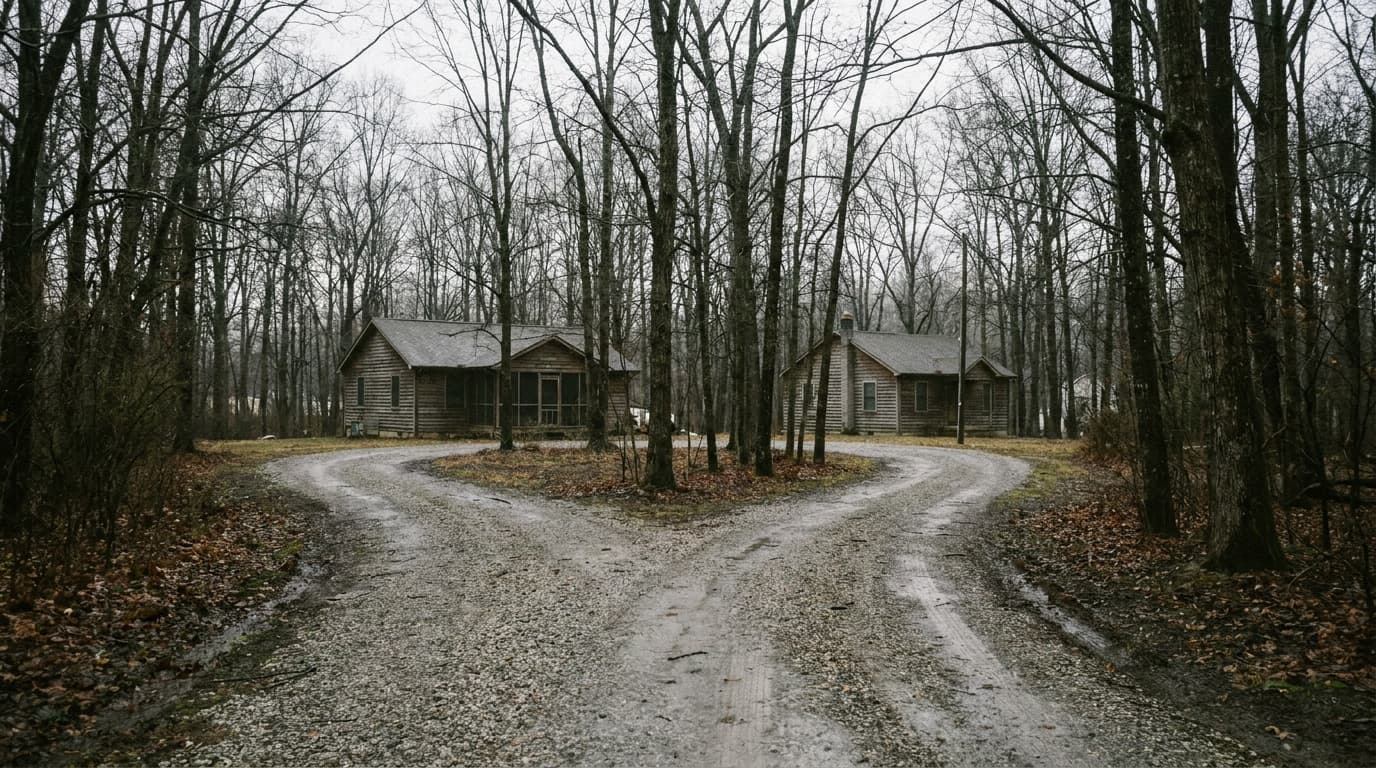
In Illinois, a prescriptive easement takes 20 years of use that is adverse, uninterrupted, exclusive, continuous and under a claim of right, as the Illinois Supreme Court stated in Petersen v. Corrubia (1961). On the eminent domain side, the Eminent Domain Act generally lets a condemning authority take property for private ownership or control only on clear and convincing proof that the taking is primarily for the public's benefit and necessary for a public purpose (735 ILCS 30/5-5-5(c)), with separate routes for blighted areas, utilities and listed project types.
This page covers both halves of Illinois law: easements between private landowners first, then the government's power to take private property. For other states, see our guide to easement laws by state.
Information last verified on October 20, 2026. This article has not been reviewed by a licensed lawyer.
Jurisdiction scope: This article addresses Illinois law on private easements (Illinois Supreme Court decisions, the statute of frauds, the recording act, the township private-road statute in the Highway Code and the Real Property Conservation Rights Act) and on condemnation of private property (Ill. Const. art. I, s. 15, the Eminent Domain Act at 735 ILCS 30 and the Carbon Dioxide Transportation and Sequestration Act). It does not address adverse possession of title (see our Illinois squatters' rights page), HOA covenants, zoning or regulatory takings, condemnation by the federal government, or local ordinances.
Types of easements in Illinois
An easement is a right to use another person's land for a limited purpose, such as a driveway, a utility line or a path to a road. Illinois law recognizes easements created by written grant, easements implied when a common owner divides land, ways of necessity, and prescriptive easements earned by long use.
An easement that benefits a particular parcel is called appurtenant. The Illinois Supreme Court has held that "An easement appurtenant passes by conveyance of the land to which it is annexed, even without being expressly mentioned, and the servient estate continues to be subject thereto until such right is terminated or abandoned" (Beloit Foundry Co. v. Ryan, 28 Ill. 2d 379 (1963)).
The same decision limits how far an easement reaches: an appurtenant easement "may not be extended by the owner of a dominant estate to accommodate other lands which he may own and for which the easement was not originally intended." In practice, the dominant owner cannot stretch the easement to serve other land the easement was not meant to benefit.
Written easements: the statute of frauds and recording
Illinois's statute of frauds reaches contracts for the sale of any interest in land. Under 740 ILCS 80/2, "No action shall be brought to charge any person upon any contract for the sale of lands, tenements or hereditaments or any interest in or concerning them, for a longer term than one year, unless such contract or some memorandum or note thereof shall be in writing, and signed by the party to be charged therewith, or some other person thereunto by him lawfully authorized in writing, signed by such party."
Recording protects a written easement against later buyers. Under the recording act, deeds and other recordable instruments take effect "as to all creditors and subsequent purchasers, without notice" only from the time they are filed for record, and until then they are "void as to all such creditors and subsequent purchasers, without notice" (765 ILCS 5/30). To check what easements are recorded against a parcel, see our guide to Illinois property records.
Prescriptive easements: the 20-year rule
The elements of a prescriptive easement in Illinois come from the Illinois Supreme Court. In Petersen v. Corrubia, 21 Ill. 2d 525 (1961), the court held: "In order to claim a prescriptive right, the use must have been adverse, uninterrupted, exclusive, continuous and under a claim of right."
The court gave "exclusive" a narrow meaning: it "does not mean that no one may or does use the way, except the claimant of the easement. It means no more than that his right to do so does not depend upon a like right in others."
Petersen also recognized a presumption that can help a long-time user: "There is, however, a rebuttable presumption of a grant or adverse right present where a way has been used openly, uninterruptedly, continuously and exclusively for more than 20 years and the origin of such way is not shown." Whether use was adverse under a claim of right for 20 years, or only permissive, "is almost wholly a question of fact."
The 20-year period matches the limitation period for recovering land. Under 735 ILCS 5/13-101, no person may commence an action for the recovery of lands, or enter them, "unless within 20 years after the right to bring such action or make such entry first accrued, or within 20 years after he, she or those from, by, or under whom he or she claims, have acquired title or possession of the premises," except as provided in sections 13-102 through 13-122. Our page on the Illinois statute of limitations covers other filing deadlines.
A prescriptive easement is different from adverse possession. The easement gives a right to use land that still belongs to someone else; adverse possession concerns ownership of the land itself, which our Illinois squatters' rights and adverse possession page explains.
How to stop a prescriptive easement in Illinois
The Code of Civil Procedure's land-recovery limitation sections (735 ILCS 5/13-101, 13-107, 13-107.1, 13-109, 13-109.1 and 13-110) contain no procedure for posting a sign or recording a notice to block a prescriptive easement. The protection Illinois courts describe is permission.
The Illinois Supreme Court put it directly in Petersen v. Corrubia: "Mere permission to use land cannot ripen into a prescriptive right, regardless of the length of time such permissive use is enjoyed." Because adverse versus permissive use is largely a question of fact, how the use began and what the parties said and did over time can decide a dispute.
Landlocked property: easements by necessity and private roads
Illinois offers two different routes for land without road access.
Way of necessity (court-made rule)
The Illinois Supreme Court held in Finn v. Williams, 376 Ill. 95 (1941): "Where an owner of land conveys a parcel thereof which has no outlet to a highway except over the remaining lands of the grantor or over the land of strangers, a way by necessity exists over the remaining lands of the grantor."
The right can survive a long chain of sales. The court continued: "If, at one time, there has been unity of title, as here, the right to a way by necessity may lay dormant through several transfers of title and yet pass with each transfer as appurtenant to the dominant estate and be exercised at any time by the holder of the title thereto."
A related rule covers uses that existed when land was divided. In Beloit Foundry Co. v. Ryan (1963), the Illinois Supreme Court stated that "upon the severance of such common ownership, easements and servitudes arise which correspond with the benefits and burdens existing at time of sale."
In Granite Properties Ltd. Partnership v. Manns, 117 Ill. 2d 425 (1987), the Illinois Supreme Court described "two types of implied easements," the easement by necessity and the easement implied from a preexisting use, and held that "when circumstances such as an apparent prior use of the land support the inference of the parties' intention, the required extent of the claimed easement's necessity will be less than when necessity is the only circumstance from which the inference of intention will be drawn." The court also stated that the degree of necessity needed to imply an easement in favor of the seller is greater than for the buyer.
Private road petition (605 ILCS 5/6-327)
The Illinois Highway Code provides a petition procedure for township and district roads. Under 605 ILCS 5/6-327, "Township and district roads for private and public use of the widths of 50 feet or less may be laid out from one or more dwellings or plantations to any public road, or from one public road to another, or from one or more lots of land to a public road or from one or more lots of land to a public waterway, on petition to the highway commissioner by any person directly interested."
The landowners who gain access pay most of the cost. The statute provides that damages "shall be paid by the person benefited thereby, to the extent and in proportion that they are benefited as determined and declared by the court," that damages owed by individuals are paid "before the road shall be opened for use," and that "the cost of the construction of the roadway, bridges and culverts and the maintenance thereof shall be borne by the parties paying for such road." Any remainder of the damages "shall be paid by the district as in other cases," and the highway commissioner's preliminary order can be appealed to the county superintendent of highways.
A separate statute covers mines. When a mine "cannot be conveniently worked without a road or railroad thereto, or ditch to drain the same or to convey water thereto," and the route must cross land owned or occupied by others, the mine's owner or operator may build it "upon complying with the law in relation to the exercise of the right of eminent domain" (765 ILCS 505/1).
How an easement ends in Illinois
An appurtenant easement burdens the servient land "until such right is terminated or abandoned" (Beloit Foundry Co. v. Ryan). Abandonment takes more than a period of disuse.
In Beloit Foundry, the Illinois Supreme Court stated the rule, citing its earlier decision in Kurz v. Blume, 407 Ill. 383: "mere nonuse will not constitute an abandonment of an easement created by grant, but that there must in addition thereto be circumstances showing an intention of the dominant owner to relinquish his right."
An easement can also end by release. The same decision held that an appurtenant easement "may be extinguished by surrender or release from the dominant owner to the servient owner," but that "a release as to one dominant tract does not thereby terminate the right as to other dominant tracts." For releasing an interest by recorded deed, see our Illinois quitclaim deed page.
Illinois also has a 40-year limitation on claims against record title. Under 735 ILCS 5/13-118, an action based on a claim arising more than 40 years before suit cannot be maintained to recover or establish an interest in land against a holder whose record chain of title runs at least 40 years, unless the claimant, within those 40 years, recorded a sworn statement describing the land, the interest claimed and the facts it rests on. The record holder does not get this protection if the land is in the adverse possession of another. Section 13-120 excludes from that bar "any easement or interest in the nature of an easement" whose existence "either is apparent from or can be proved by physical evidences of its use, whether or not such physical evidences of its use are visible from the surface," and any interest created or held for a public utility purpose.
Conservation rights
Illinois's Real Property Conservation Rights Act treats preservation restrictions as a distinct kind of right. Under 765 ILCS 120/1, a conservation right may be stated "in the form of a restriction, easement, covenant or condition" or in any other form in a deed, will, plat or other instrument, and its purposes include preserving structures of architectural, historical or cultural significance and land or water areas in their natural, scenic, open or wooded condition. Public Act 104-49 amended the Act effective January 1, 2026.
In a condemnation, the owner's compensation "shall not be diminished or reduced by virtue of the existence of the conservation right," and the holder of the conservation right "shall be entitled to just compensation for the value of the conservation right" (735 ILCS 30/10-5-5(b)).
Eminent Domain in Illinois
Illinois's takings clause covers damage as well as outright takings. Article I, section 15 of the Illinois Constitution provides: "Private property shall not be taken or damaged for public use without just compensation as provided by law. Such compensation shall be determined by a jury as provided by law." For a comparison with other states and federal condemnation, see our guide to eminent domain laws by state.
The Eminent Domain Act (735 ILCS 30), effective January 1, 2007 under Public Act 94-1055, governs condemnation procedure. It defines a "condemning authority" as "the State or any unit of local government, school district, or other entity authorized to exercise the power of eminent domain" (735 ILCS 30/1-1-5).
At the federal level, the U.S. Supreme Court held in Kelo v. City of New London, 545 U.S. 469 (2005), that because the city's plan "unquestionably serves a public purpose," the takings challenged there satisfied the public use requirement of the Fifth Amendment. The Court added that "nothing in our opinion precludes any State from placing further restrictions on its exercise of the takings power."
Public use limits after Kelo
Illinois added those further restrictions in section 5-5-5 of the Eminent Domain Act. Section 5-5-5(a) provides that, "In addition to all other limitations and requirements, a condemning authority may not take or damage property by the exercise of the power of eminent domain unless it is for a public use, as set forth in this Section."
The burden depends on who will own the property afterward:
- Public ownership (5-5-5(b)): the condemning authority must prove that the acquisition is necessary for a public purpose and that the property will be owned and controlled by the condemning authority or another governmental entity.
- Private ownership or control (5-5-5(c)): the condemning authority must prove "by clear and convincing evidence" that the acquisition is "(i) primarily for the benefit, use, or enjoyment of the public and (ii) necessary for a public purpose."
- Blight (5-5-5(c), (d)): an acquisition primarily to eliminate blight is rebuttably presumed to be for a public purpose and primarily for the public's benefit. If the blighting factors are challenged by motion, the authority must prove by a preponderance of the evidence that the required factors existed in the designated area, "but not necessarily in the particular property to be acquired." An ordinance designating an area as blighted "is not prima facie evidence of the existence of blight."
- Listed project types (5-5-5(e)): for certain uses, the authority proves necessity for a public purpose by a preponderance of the evidence and records a written agreement, deed restriction or similar encumbrance for at least 40 years. The listed uses include residential projects in which at least 20% of the units are made available for at least 15 years to low-income and very low-income households, property owned or used by a public utility or electric cooperative for utility purposes, and property owned or used by a railroad for passenger or freight transportation.
- Public ownership, private control (5-5-5(f)): where the property will be owned by the authority or another governmental entity but controlled by a private party operating a business or facility related to the authority's university, medical district, hospital, exposition or convention center, mass transportation facility or airport, the authority proves by a preponderance of the evidence that the acquisition is necessary for a public purpose.
Two kinds of acquisitions are exempt from subsections (b) through (f): acquisitions under the O'Hare Modernization Act (5-5-5(a-5)) and acquisitions in furtherance of a tax increment allocation redevelopment plan adopted before April 15, 2006 (5-5-5(a-10)). The TIF exemption covers only plans whose property assembly costs were, before that date, budgeted or described in the plan, and it does not reach areas added on or after April 15, 2006, extensions of a plan's completion date beyond the date set before then, conservation-area acquisitions filed more than 12 years after the Act took effect, or industrial park conservation areas. Section 5-5-5(g) adds that the Article "is a limitation on the exercise of the power of eminent domain, but is not an independent grant of authority."
The blight deadline is short. "Any challenge to the existence of blighting factors alleged in a complaint to condemn under this subsection shall be raised within 6 months of the filing date of the complaint to condemn, and if not raised within that time the right to challenge the existence of those blighting factors shall be deemed waived" (5-5-5(d)).
Before the Act, the Illinois Supreme Court had already stressed that "The right of a sovereign to condemn private property is limited to takings for a public use," and that although the line between public purpose and public use has blurred, "a distinction still exists" (Southwestern Illinois Development Authority v. National City Environmental, L.L.C., 199 Ill. 2d 225 (2002)).
Pipelines and utilities
Utilities get a presumption. Under 735 ILCS 30/5-5-5(c), evidence that the Illinois Commerce Commission (ICC) has granted a certificate or otherwise found public convenience and necessity for an acquisition for private ownership or control to be used for utility purposes "creates a rebuttable presumption" that the acquisition is primarily for the public's benefit and necessary for a public purpose. For utility, pipeline or railroad acquisitions that need no ICC certificate or finding, evidence that eminent domain is authorized under one of the laws the section lists, such as the Public Utilities Act, the Telephone Company Act or the Electric Supplier Act, creates the same presumption.
Carbon dioxide pipelines run through a separate statute. Under the Carbon Dioxide Transportation and Sequestration Act, a certificate of authority carries "the right to seek eminent domain authority from the Commission under Section 8-509 of the Public Utilities Act" (220 ILCS 75/20(i)(2)), and any power to acquire an easement under that Act "is subject to, and shall be exercised in accordance with, the Eminent Domain Act" (220 ILCS 75/25).
The same Act conditions certificates on federal safety rules. Section 20(g) provides that the ICC "shall not issue any certificate of authority under this Act until (i) the Pipeline and Hazardous Materials Safety Administration has adopted final revisions to its pipeline safety rules" in the rulemaking designated RIN 2137-AF60, and until the Commission has checked the application for compliance with those finalized rules. If, after July 1, 2026, PHMSA has not adopted those revisions, the ICC "may only approve a certificate of authority under this Section if it finds that the applicant has met all of the requirements of this Act, has already acquired all of its other necessary approvals, and is compliant with any requirements or conditions adopted by the Commission" under subsection (g-5). PHMSA's Fall 2025 regulatory agenda listed that rulemaking as a long-term action with its next stage to be determined, and no final rule under it has appeared in the Federal Register, so that alternative path is the one now in effect. This is a condition on certificates, not a ban on eminent domain. Where the ICC approves a project route width rather than a specific route, the applicant must give the Commission "at least 14 days' notice before filing a complaint for eminent domain in the circuit court with regard to any tract within the project route width" (220 ILCS 75/20(e)).
Landowners also have a damages right. Under 220 ILCS 75/22 (Public Act 104-390, effective January 1, 2026), "An affected landowner is entitled to reasonable compensation from an applicant who has been granted a certificate of authority under this Act for damages resulting from access to the landowner's property for required activities taken to construct the pipeline," including damage to growing crops, trees, shrubs, fences, roads, structures, improvements, personal property and livestock, and the loss of value of a commercial crop affected by installation. Unless otherwise agreed, undisputed damages must be paid no later than 60 days after the work is completed; for unpaid or disputed amounts the landowner may sue, and a landowner who prevails recovers reasonable damages and attorney's fees (220 ILCS 75/22(b), (c)).
Condemnation procedure and deadlines
Before a State agency files
This pre-filing letter duty falls on State agencies. "At least 60 days before filing a petition with any court to initiate a proceeding under this Act, a State agency shall send a letter" by certified mail with return receipt, by a designated private delivery service, or by personal service. The letter goes to the owner (or, for a corporation or other business organization, its registered agent) and must state the compensation the agency proposes and the basis for computing it, that the agency continues to seek a negotiated agreement, and that without an agreement the agency intends to go to court (735 ILCS 30/10-5-15(d)).
In court
No condemnation case may be heard "earlier than 20 days after service upon defendant or upon due publication against non-residents," except under the quick-take sections (735 ILCS 30/10-5-30).
Compensation is decided by a jury only if someone asks. "When the condemning authority is plaintiff, a defendant desirous of a trial by jury must file a demand for a trial by jury on or before the return date of the summons served on him or her," or by the date fixed in the publication for defendants served that way. "If no party in the condemnation action demands a trial by jury," the court decides without one (735 ILCS 30/10-5-5(a)).
Quick-take
Quick-take, which lets the condemnor take title and possession before final judgment, is not available to every condemning authority. Section 20-5-5 "applies only to proceedings under this Article that are authorized in this Article and in Article 25 of this Act." In those proceedings, the plaintiff may move, after filing the complaint and before judgment, to be vested with title (or a lesser interest or easement) and authorized to take possession.
The court's order on the matters it decides at that stage "is appealable and an appeal may be taken from that order by either party within 30 days after the entry of the order, but not thereafter, unless the court, on good cause shown, extends the time for taking the appeal" (735 ILCS 30/20-5-10(b)). An appeal does not stay the further proceedings "unless the appeal is taken by the plaintiff or unless an order staying further proceedings is entered" by the trial court or the court hearing the appeal.
After the condemnor deposits the amount the court preliminarily found to be just compensation, the court enters an order of taking and fixes the date the condemnor may take possession (20-5-15(a)). An owner who shows undue hardship or other good cause can have possession postponed, but if it is postponed more than 10 days after title vests (or more than 15 days after the order when the order does not vest title), that owner pays the condemnor a reasonable rental set by the court (20-5-15(b)).
An owner may apply to withdraw its share of the deposit only if no appeal of the order on the right to take has been or will be taken, or the appeal was decided for the condemnor, and must refund any amount withdrawn above the final award; if the refund is not made in the time the court fixes, the court enters judgment for the excess (20-5-20, 20-5-35). Taking these steps does not prejudice anyone's right to contest the final amount of just compensation (20-5-25).
Once the condemnor has taken possession under the order of taking, it "shall have no right to dismiss the complaint or to abandon the proceeding" as to the property taken, except with the consent of all affected parties (20-5-40). If the final award exceeds the amount the court preliminarily found to be just compensation, the plaintiff pays interest at 6% per year on the excess from the date the owners surrendered possession until payment (20-5-30).
How just compensation is calculated in Illinois
The standard is fair cash market value. Except for property designated as possessing a special use, it is "the amount of money that a purchaser, willing, but not obligated, to buy the property, would pay to an owner willing, but not obliged, to sell in a voluntary sale" (735 ILCS 30/10-5-60).

Value is generally fixed as of the date the complaint to condemn is filed. If the trial begins more than 2 years after filing, the court may, "in the interest of justice and equity," set a valuation date no sooner than the filing date and no later than the start of trial; in a quick-take case, the later date can be no later than the date the condemning authority took title. Any appreciation or depreciation "proximately caused by the improvement" is excluded, except when property is condemned "for a separate project conceived independently of and subsequent to the original project" (10-5-60).
Other rules adjust the figure:
- Benefits: section 10-5-55 directs that "due consideration shall be given to any special benefit that will result to the property owner from any public improvement to be erected on the property," while section 10-5-45 provides that "no benefits or advantages which may accrue to lands or property affected shall be set off against or deducted from such compensation, in any case." How the two apply in a given case is a question for the court.
- Construction easements: when a taking is for a construction easement only, a removed structure "shall be repaired, reestablished or relocated, at the option of the landowner, when the cost of the action does not exceed the just compensation otherwise payable" (10-5-20).
- Relocation: except when federal funds are available for direct financial assistance to displaced persons, the condemning authority pays displaced persons "reimbursement for their reasonable relocation costs, determined in the same manner as under the federal Uniform Relocation Assistance and Real Property Acquisition Policies Act of 1970" (10-5-62).
These compensation sections set fair cash market value plus relocation costs and contain no percentage bonus for a home or principal residence.
Attorney fees in Illinois condemnation cases
The Eminent Domain Act provides for an owner's fees in these situations:
- Failed or abandoned condemnation (10-5-70(a)): where the condemnor is not in possession under a quick-take order, if it dismisses the complaint before the court's order fixing payment of compensation, fails to pay full compensation within the time that order names, or the final judgment is that it "cannot acquire the property by condemnation," the court, on the owner's application, orders payment of "all costs, expenses, and reasonable attorney fees paid or incurred by the defendant or defendants in defense of the complaint, as upon the hearing of the application shall be right and just, and also for the payment of the taxable costs."
- Court-ordered condemnation for a physical taking (10-5-65(a)): "when the condemning authority is required by a court to initiate condemnation proceedings for the actual physical taking of real property," the court awards the owner reasonable costs, disbursements and expenses, "including reasonable attorney, appraisal, and engineering fees actually incurred."
- Private-ownership takings (10-5-110): this section "applies only to proceedings for the acquisition of property for private ownership or control that are subject to subsection (c), (d), (e), or (f) of Section 5-5-5." If the plaintiff does not accept the owner's offer and the final compensation equals or exceeds the owner's last written offer, the court must order the plaintiff to pay fees of 33% of the net benefit if it is $250,000 or less, 25% if it is more than $250,000 but less than $1 million, and 20% if it is $1 million or more. "Net benefit" is the difference, exclusive of interest, between the final judgment or settlement and the condemning authority's last written offer made before the complaint was filed. The owner's written offer must be served between the close of discovery (or another date the court sets or the parties agree) and 14 days before the compensation trial; an owner who makes no such offer "shall not be entitled to the attorney's fees and other reimbursement" the section provides. The plaintiff has 10 days to accept, and an offer not accepted in that time is deemed withdrawn and is not admissible at trial. When the award meets or beats the offer, the plaintiff also pays the owner's "reasonable costs and litigation expenses, including, without limitation, expert witness and appraisal fees, incurred after the making of the defendant's last written offer."
- Quick-take set aside (20-5-45): if, on an appeal under 20-5-10, the condemnor is found to lack authority to maintain the proceeding, or it dismisses or abandons with the consent of all affected parties as to property that is the subject of the appeal, the trial court revests title, returns possession and makes "such provision as is just for the payment of damages arising out of the plaintiff's taking and use of the property and also for costs, expenses, and attorney fees, as provided in Section 10-5-70."
Outside the Eminent Domain Act, a landowner who prevails in a suit for unpaid or disputed carbon dioxide pipeline construction damages recovers reasonable attorney's fees and costs (220 ILCS 75/22(b), (c)).
Sale and repurchase of condemned property
Section 10-5-105 governs the sale of property that was acquired after the Act's effective date by condemnation or threat of condemnation, for public ownership and control, and that has been publicly owned for a total of less than 5 years. Unless another law specifically authorizes or prohibits the disposition, a sale or public auction of such property by the State must follow the State Property Control Act's surplus-property procedure, one by a municipality must follow Section 11-76-4.1 or 11-76-4.2 of the Illinois Municipal Code, and one by another local government or school district must be authorized by published resolution, based on a written certified appraisal and approved by a two-thirds vote, "but in no event at a price less than 80% of the appraised value." The section does not give the former owner a right to buy the property back.
A former owner's first opportunity to buy back appears in a narrow setting. When a unit of local government takes property to build a body of water for a local government-owned public utility and intends to sell or lease it to a non-governmental entity, the prior titleholders "shall be allowed first opportunity to repurchase the property for a fair market value or first opportunity to lease the property for a fair market value" (735 ILCS 30/20-5-15(c)).
Recent changes
- Public Act 104-415 (effective August 15, 2025): amended 735 ILCS 30/10-5-15; the current text lets a State agency send the 60-day pre-filing letter by certified mail, designated private delivery service or personal service, and directs it to the registered agent of an owner that is a corporation or other business organization. The same act amended 10-5-10 so a condemnor may also file when the owner agrees on compensation but cannot convey clear title or provide required documents, or the agency does not receive documents needed to issue payment, and amended 10-5-10 and 20-5-5 to require the ICC to issue a final order within 6 months (extendable once by 3 months) on a Department of Transportation petition to take property of a railroad or other public utility.
- Public Acts 104-806 and 104-816 (effective August 7, 2026): added time-limited quick-take authority for listed properties for the Village of Hoffman Estates (one year, section 25-5-140) and the Village of Oak Park (two years, section 25-5-145).
- Public Act 104-390 (effective January 1, 2026): enacted the text of 220 ILCS 75/22, giving landowners a right to reasonable compensation from certificated carbon dioxide pipeline applicants for construction-access damage to crops, trees, fences, structures, livestock and other property listed in the section.
- Public Act 104-49 (effective January 1, 2026): amended the Real Property Conservation Rights Act, 765 ILCS 120.
- Public Act 103-651 (effective July 18, 2024): is the source of the current text of 220 ILCS 75/20, including the federal-rule condition on carbon dioxide pipeline certificates.
Illinois easement and eminent domain rules at a glance
| Question | Illinois rule | Source |
|---|---|---|
| Prescriptive easement period | 20 years of adverse, uninterrupted, exclusive, continuous use under a claim of right; permissive use never ripens | Petersen v. Corrubia (Ill. 1961) |
| Statute to prevent prescription | The land-recovery limitation sections (13-101, 13-107, 13-107.1, 13-109, 13-109.1, 13-110) contain no sign or notice procedure; permissive use never ripens | 735 ILCS 5/13-101 et seq.; Petersen |
| Landlocked land | Way by necessity over the seller's remaining land after a severance; township or district road petition, with damages paid by those benefited in proportion to their benefit and any remainder by the road district; mine access routes under the Mining Act | Finn v. Williams (Ill. 1941); 605 ILCS 5/6-327; 765 ILCS 505/1 |
| Ending an easement | Nonuse alone does not abandon a granted easement; intent to relinquish is also required; release by the dominant owner; the 40-year record-title limitation does not bar easements provable by physical evidence of use | Beloit Foundry Co. v. Ryan (Ill. 1963); 735 ILCS 5/13-118, 13-120 |
| Takings clause | Taken or damaged; jury determines compensation | Ill. Const. art. I, s. 15 |
| Private-ownership takings | Generally clear and convincing proof of primary public benefit and necessity; separate blight, listed-use and public-ownership/private-control routes; O'Hare acquisitions and certain TIF plans adopted before April 15, 2006 exempt | 735 ILCS 30/5-5-5 |
| Valuation | Fair cash market value, generally as of the complaint filing date | 735 ILCS 30/10-5-60 |
| Home bonus | None in the compensation sections; relocation costs as under the federal Uniform Relocation Act unless federal funds pay direct assistance | 735 ILCS 30/10-5-60, 10-5-62 |
| Attorney fees | When the taking fails or is dismissed; court-ordered condemnation for a physical taking; 33/25/20% net-benefit formula in certain private-ownership takings when the award meets or beats the owner's written offer served at least 14 days before trial | 735 ILCS 30/10-5-70, 10-5-65, 10-5-110 |
| Key owner deadlines | Jury demand by the summons return date; blight challenge within 6 months; in quick-take, appeal of the order on authority to take within 30 days unless extended | 735 ILCS 30/10-5-5, 5-5-5(d), 20-5-10 |
Related
- Easement laws by state
- Eminent domain laws by state
- Illinois squatters' rights and adverse possession
- Illinois property records
- Illinois statute of limitations
This article provides general legal information about Illinois easement and eminent domain law, not legal advice. For a specific situation, contact a lawyer licensed in Illinois.
Last updated: October 20, 2026.
Frequently Asked Questions
How long does it take to get a prescriptive easement in Illinois?
Illinois requires 20 years of use that is adverse, uninterrupted, exclusive, continuous and under a claim of right (Petersen v. Corrubia, Ill. 1961). The rule comes from case law; use by permission never ripens into an easement.
Is a prescriptive easement the same as adverse possession in Illinois?
No. A prescriptive easement gives a right to use someone else's land, while adverse possession concerns title. Petersen v. Corrubia sets 20 years for an easement; the general period for actions to recover land under 735 ILCS 5/13-101 is also 20 years, subject to the exceptions in sections 13-102 through 13-122.
What can I do if my land is landlocked in Illinois?
Illinois recognizes a way by necessity over the seller's remaining land when a common owner conveyed a parcel with no outlet to a highway (Finn v. Williams, Ill. 1941). Separately, 605 ILCS 5/6-327 lets a person directly interested petition the highway commissioner for a township or district road for private and public use, with damages paid by those benefited in proportion to their benefit (any remainder by the road district) and individuals' shares paid before the road opens.
Does an easement end if it is not used in Illinois?
Not by nonuse alone when the easement was created by grant. The Illinois Supreme Court has stated that there must also be circumstances showing the dominant owner intended to relinquish the right (Beloit Foundry Co. v. Ryan, 1963). An easement can also end by release from the dominant owner, and the 40-year limitation on claims against record title (735 ILCS 5/13-118) does not apply to an easement whose existence is apparent from or can be proved by physical evidence of its use (13-120).
Can Illinois take my property for a private developer?
A taking for private ownership or control generally requires clear and convincing proof that it is primarily for the benefit, use or enjoyment of the public and necessary for a public purpose (735 ILCS 30/5-5-5(c)). Blight takings, listed project types such as affordable housing and utilities, publicly owned but privately controlled facilities, O'Hare acquisitions and certain TIF plans adopted before April 15, 2006 follow different rules.
Can a pipeline company use eminent domain in Illinois?
A carbon dioxide pipeline holding a certificate of authority may seek eminent domain authority from the Illinois Commerce Commission under section 8-509 of the Public Utilities Act, exercised under the Eminent Domain Act (220 ILCS 75/20, 75/25). An ICC finding of public convenience and necessity for a utility acquisition creates a rebuttable presumption of public benefit and necessity (735 ILCS 30/5-5-5(c)).
How is just compensation calculated in Illinois?
Compensation is based on fair cash market value, the price a willing but not obligated buyer would pay a willing but not obliged seller, generally as of the date the complaint to condemn is filed (735 ILCS 30/10-5-60). Section 10-5-55 directs that special benefits to the owner from the improvement be given due consideration, while section 10-5-45 bars setting off benefits against or deducting them from the compensation award; and relocation costs are paid as under the federal Uniform Relocation Act unless federal funds cover direct assistance (10-5-62).
Does Illinois pay attorney fees in eminent domain cases?
The court orders fees when a condemnor not in quick-take possession dismisses, fails to pay on time, or cannot acquire the property (735 ILCS 30/10-5-70(a)), and in court-ordered condemnations for an actual physical taking (10-5-65(a)). In certain private-ownership takings, fees equal 33%, 25% or 20% of the net benefit when the award meets or beats the owner's last written offer, which must be served between the close of discovery (or a date the court sets or the parties agree) and 14 days before trial (10-5-110).
Do I get a jury in an Illinois eminent domain case?
Compensation is ascertained by a jury as provided in the Eminent Domain Act, but a defendant who wants a jury must file a demand on or before the return date of the summons. If no party demands a jury, the court decides without one (735 ILCS 30/10-5-5).
Updates
Independently fact-checked against the cited primary sources
The Law Behind This Article
This article rests on the statutory provisions below, held in our own legal record and retrieved from the official source. Tap a section to read the operative text.
Illinois Compiled Statutes Chapter 735, Act 30 (Eminent Domain Act)
§ 5-5-5Exercise of the power of eminent domain; public use; blightIn force
(a) In addition to all other limitations and requirements, a condemning authority may not take or damage property by the exercise of the power of eminent domain unless it is for a public use, as set forth in this Section. (a-5) Subsections (b), (c), (d), (e), and (f) of this Section do not apply to the acquisition of property under the O'Hare Modernization Act. A condemning authority may exercise the power of eminent domain for the acquisition or damaging of property under the O'Hare Modernization Act as provided for by law in effect prior to the effective date of this Act. (a-10) Subsections (b), (c), (d), (e), and (f) of this Section do not apply to the acquisition or damaging of property in furtherance of the goals and objectives of an existing tax increment allocation redevelopment plan. A condemning authority may exercise the power of eminent domain for the acquisition of property in furtherance of an existing tax increment allocation redevelopment plan as provided for by law in effect prior to the effective date of this Act.
Official text (excerpt) · last checked 2026-07-29 · Read the full text in our law library · Verify at ilga.gov
§ 10-5-60ValueIn force
Except as to property designated as possessing a special use, the fair cash market value of property in a proceeding in eminent domain shall be the amount of money that a purchaser, willing, but not obligated, to buy the property, would pay to an owner willing, but not obliged, to sell in a voluntary sale. For the acquisition or damaging of property under the O'Hare Modernization Act, the amount shall be determined as of the date of filing the complaint to condemn. For the acquisition of other property, the amount shall be determined and ascertained as of the date of filing the complaint to condemn, except that: (i) in the case of property not being acquired under Article 20 (quick-take), if the trial commences more than 2 years after the date of filing the complaint to condemn, the court may, in the interest of justice and equity, declare a valuation date no sooner than the date of filing the complaint to condemn and no later than the date of commencement of the trial; and (ii) in the case of property that is being acquired under Article 20 (quick-take), if the trial commences more than 2 years after the date of filing the complaint to condemn, the court may, in the interest of…
Official text (excerpt) · last checked 2026-07-29 · Read the full text in our law library · Verify at ilga.gov
§ 10-5-70JudgmentsIn force
(a) If the plaintiff is not in possession pursuant to an order entered under the provisions of Section 20-5-15 of this Act, the court, upon the report of the jury under Section 10-5-45 or upon the court's ascertainment and finding of the just compensation when there was no jury, shall proceed to adjudge and make such order as to right and justice shall pertain, ordering that the plaintiff shall enter upon the property and the use of the property upon payment of full compensation as ascertained, within a reasonable time to be fixed by the court. That order, together with evidence of payment, shall constitute complete justification of the taking of the property.
Official text (excerpt) · last checked 2026-07-29 · Read the full text in our law library · Verify at ilga.gov
§ 10-5-110Offers of settlement by defendant; attorney's fees and litigation expensesIn force
(a) This Section applies only to proceedings for the acquisition of property for private ownership or control that are subject to subsection (c), (d), (e), or (f) of Section 5-5-5. (b) At any time between (i) the close of discovery in accordance with Supreme Court Rule 218(c), as now or hereafter amended, or another date set by the court or agreed to by the parties, and (ii) 14 days before the commencement of trial to determine final just compensation, any defendant may serve upon the plaintiff a written offer setting forth the amount of compensation that the defendant will accept for the taking of that defendant's interest in the property. If the defendant does not make such an offer, the defendant shall not be entitled to the attorney's fees and other reimbursement provided under subsection (e) of this Section. (c) If, within 10 days after service of the offer, the plaintiff serves written notice upon that defendant that the offer is accepted, then either of those parties may file a copy of the offer and a copy of the notice of acceptance together with proof of service of the notice. The court shall then enter judgment.
Official text (excerpt) · last checked 2026-07-29 · Read the full text in our law library · Verify at ilga.gov
§ 10-5-65Reimbursement; inverse condemnationIn force
(a) Except as provided in subsection (b), when the condemning authority is required by a court to initiate condemnation proceedings for the actual physical taking of real property, the court rendering judgment for the property owner and awarding just compensation for the taking shall determine and award or allow to the property owner, as part of that judgment or award, further sums as will, in the opinion of the court, reimburse the property owner for the owner's reasonable costs, disbursements, and expenses, including reasonable attorney, appraisal, and engineering fees actually incurred by the property owner in those proceedings.
Official text (excerpt) · last checked 2026-07-29 · Read the full text in our law library · Verify at ilga.gov
§ 10-5-62Relocation costsIn force
Except when federal funds are available for the payment of direct financial assistance to persons displaced by the acquisition of their real property, in all condemnation proceedings for the taking or damaging of real property under the exercise of the power of eminent domain, the condemning authority shall pay to displaced persons reimbursement for their reasonable relocation costs, determined in the same manner as under the federal Uniform Relocation Assistance and Real Property Acquisition Policies Act of 1970, as amended from time to time, and as implemented by regulations promulgated under that Act. This Section does not apply to the acquisition or damaging of property under the O'Hare Modernization Act.
Official text (excerpt) · last checked 2026-07-29 · Read the full text in our law library · Verify at ilga.gov
§ 10-5-5Compensation; juryIn force
(a) Private property shall not be taken or damaged for public use without just compensation and, in all cases in which compensation is not made by the condemning authority, compensation shall be ascertained by a jury, as provided in this Act. When compensation is so made by the condemning authority, any party, upon application, may have a trial by jury to ascertain the just compensation to be paid. A demand on the part of the condemning authority for a trial by jury shall be filed with the complaint for condemnation of the condemning authority. When the condemning authority is plaintiff, a defendant desirous of a trial by jury must file a demand for a trial by jury on or before the return date of the summons served on him or her or on or before the date fixed in the publication in case of defendants served by publication. If no party in the condemnation action demands a trial by jury, as provided for by this Section, then the trial shall be before the court without a jury.
Official text (excerpt) · last checked 2026-07-29 · Read the full text in our law library · Verify at ilga.gov
§ 10-5-15State agency proceedings; informationIn force
(a) This Section applies only to the State and its agencies, and only to matters arising after December 31, 1991. (b) Before any State agency initiates any proceeding under this Act, the agency must designate and provide for an appropriate person to respond to requests arising from the notifications required under this Section. The designated person may be an employee of the agency itself or an employee of any other appropriate State agency. The designated person shall respond to property owners' questions about the authority and procedures of the State agency in acquiring property by condemnation and about the property owner's general rights under those procedures. However, the designated person shall not provide property owners with specific legal advice or specific legal referrals. (c) At the time of first contact with a property owner, whether in person or by letter, the State agency shall advise the property owner, in writing, of the following: (1) A description of the property that the agency seeks to acquire. (2) The name, address, and telephone number of the State official designated under subsection (b) to answer the property owner's questions.
Official text (excerpt) · last checked 2026-07-29 · Read the full text in our law library · Verify at ilga.gov
§ 20-5-5Quick-takeIn force
(a) This Section applies only to proceedings under this Article that are authorized in this Article and in Article 25 of this Act. (b) In a proceeding subject to this Section, the plaintiff, at any time after the complaint has been filed and before judgment is entered in the proceeding, may file a written motion requesting that, immediately or at some specified later date, the plaintiff either: (i) be vested with the fee simple title (or such lesser estate, interest, or easement, as may be required) to the real property, or a specified portion of that property, which is the subject of the proceeding, and be authorized to take possession of and use the property; or (ii) only be authorized to take possession of and to use the property, if possession and use, without the vesting of title, are sufficient to permit the plaintiff to proceed with the project until the final ascertainment of compensation.
Official text (excerpt) · last checked 2026-07-29 · Read the full text in our law library · Verify at ilga.gov
§ 20-5-10Preliminary finding of compensationIn force
(a) The court shall fix a date, not less than 5 days after the filing of a motion under Section 20-5-5, for the hearing on that motion and shall require due notice to be given to each party to the proceeding whose interests would be affected by the taking requested, except that any party who has been or is being served by publication and who has not entered his or her appearance in the proceeding need not be given notice unless the court so requires, in its discretion and in the interests of justice. (b) At the hearing, if the court has not previously, in the same proceeding, determined that the plaintiff has authority to exercise the right of eminent domain, that the property sought to be taken is subject to the exercise of that right, and that the right of eminent domain is not being improperly exercised in the particular proceeding, then the court shall first hear and determine those matters. The court's order on those matters is appealable and an appeal may be taken from that order by either party within 30 days after the entry of the order, but not thereafter, unless the court, on good cause shown, extends the time for taking the appeal.
Official text (excerpt) · last checked 2026-07-29 · Read the full text in our law library · Verify at ilga.gov
§ 20-5-30Interest paymentsIn force
The plaintiff shall pay, in addition to the just compensation finally adjudged in the proceeding, interest at the rate of 6% per annum upon: (1) Any excess of the just compensation finally adjudged, over the amount preliminarily found by the court to be just compensation in accordance with Section 20-5-10 of this Act, from the date on which the parties interested in the property surrendered possession of the property in accordance with the order of taking, to the date of payment of the excess by the plaintiff. (2) Any portion of the amount preliminarily found by the court to be just compensation and deposited by the plaintiff, to which any interested party is entitled, if the interested party applied for authority to withdraw that portion in accordance with Section 20-5-20 of this Act, and upon objection by the plaintiff (other than on grounds that an appeal under subsection (b) of Section 20-5-10 of this Act is pending or contemplated), authority to withdraw was denied; interest shall be paid to that party from the date of the plaintiff's deposit to the date of payment to that party.
Official text (excerpt) · last checked 2026-07-29 · Read the full text in our law library · Verify at ilga.gov
§ 20-5-15Deposit in court; possessionIn force
(a) If the plaintiff deposits with the county treasurer money in the amount preliminarily found by the court to be just compensation, the court shall enter an order of taking, vesting in the plaintiff the fee simple title (or such lesser estate, interest, or easement, as may be required) to the property, if such vesting has been requested and has been found necessary by the court, at a date the court considers proper, and fixing a date on which the plaintiff is authorized to take possession of and to use the property. (b) If, at the request of any interested party and upon his or her showing of undue hardship or other good cause, the plaintiff's authority to take possession of the property is postponed for more than 10 days after the date of vesting of title or more than 15 days after the entry of the order of taking when the order does not vest title in the plaintiff, then that party shall pay to the plaintiff a reasonable rental for the property in an amount determined by the court.
Official text (excerpt) · last checked 2026-07-29 · Read the full text in our law library · Verify at ilga.gov
§ 10-5-105Sale of certain property acquired by condemnationIn force
(a) This Section applies only to property that (i) has been acquired after the effective date of this Act by condemnation or threat of condemnation, (ii) was acquired for public ownership and control by the condemning authority or another public entity, and (iii) has been under the ownership and control of the condemning authority or that other public entity for a total of less than 5 years. As used in this Section, "threat of condemnation" means that the condemning authority has made an offer to purchase property and has the authority to exercise the power of eminent domain with respect to that property. (b) Any governmental entity seeking to dispose of property to which this Section applies must dispose of that property in accordance with this Section, unless disposition of that property is otherwise specifically authorized or prohibited by law enacted by the General Assembly before, on, or after the effective date of this Act. (c) The sale or public auction by the State of property to which this Section applies must be conducted in the manner provided in the State Property Control Act for the disposition of surplus property.
Official text (excerpt) · last checked 2026-07-29 · Read the full text in our law library · Verify at ilga.gov
§ 10-5-55Special benefitsIn force
In assessing damages or compensation for any taking or property acquisition under this Act, due consideration shall be given to any special benefit that will result to the property owner from any public improvement to be erected on the property. This Section is applicable to all private property taken or acquired for public use and applies whether damages or compensation are fixed by negotiation, by a court, or by a jury.
Official text (excerpt) · last checked 2026-07-29 · Read the full text in our law library · Verify at ilga.gov
§ 10-5-20Construction easementIn force
If a taking is for a construction easement only, any structure that has been removed or taken shall be repaired, reestablished or relocated, at the option of the landowner, when the cost of the action does not exceed the just compensation otherwise payable to the landowner.
Official text (excerpt) · last checked 2026-07-29 · Read the full text in our law library · Verify at ilga.gov
§ 10-5-30HearingIn force
Except as provided in Sections 20-5-10, 20-5-15, 20-5-20, and 20-5-45 of this Act, no cause shall be heard earlier than 20 days after service upon defendant or upon due publication against non-residents. Any number of separate parcels of property, situated in the same county, may be included in one complaint, and the compensation for each shall be assessed separately by the same or different juries, as the court may direct. Amendments to the complaint, or to any paper or record in the cause, may be permitted whenever necessary to a fair trial and final determination of the questions involved. Should it become necessary at any stage of the proceedings to bring in a new party in the litigation, the court has the power to: (i) make any rule or order in relation thereto as may be deemed reasonable and proper; (ii) make all necessary rules and orders for notice to parties of the pendency of the proceedings; and (iii) issue all process necessary to the enforcement of orders and judgments.
Official text (excerpt) · last checked 2026-07-29 · Read the full text in our law library · Verify at ilga.gov
§ 1-1-5DefinitionsIn force
As used in this Act, except with respect to the acquisition or damaging of property authorized under the O'Hare Modernization Act: "Acquisition of property", unless the context otherwise requires, includes the acquisition, damaging, or use of property or any right to or interest in property. "Blighted area", "blight", and "blighted" have the same meanings as under the applicable statute authorizing the condemning authority to exercise the power of eminent domain or, if those terms have no defined meaning under the applicable statute, then the same meanings as under Section 11-74.4-3 of the Illinois Municipal Code. "Condemning authority" means the State or any unit of local government, school district, or other entity authorized to exercise the power of eminent domain.
Official text (excerpt) · last checked 2026-07-29 · Read the full text in our law library · Verify at ilga.gov
Illinois Compiled Statutes Chapter 605, Act 5 (Illinois Highway Code)
§ 6-327Township and district roads for private and public use of the widths of 50 feet or less may be laid out from one or more dwellings or plantations to any public road, or from one public road to another, or from one or more lots of land to a public road or from one or more lots of land to a public waterway, on petition to the highway commissioner by any person directly interestedIn force
Upon receiving such petition, proceedings shall be had respecting the laying out of such road as in the case of other township and district roads. In case the highway commissioner or upon appeal, the county superintendent of highways, shall enter a preliminary order for the laying out of such road, such highway officer or officers making such preliminary order shall, if possible, and the parties are competent to contract, agree upon the total amount of damages, together with the portion thereof to be paid by the district, if any, as well as by each of the land owners benefited by such road. In case such damages cannot be determined or apportioned by agreement, the same shall be fixed as in the case of other township and district roads. The amount of such damages shall be paid by the person benefited thereby, to the extent and in proportion that they are benefited as determined and declared by the court. The remainder of the amount of damages, over and above that to be paid by the parties aforesaid, if any, shall be paid by the district as in other cases.
Official text (excerpt) · last checked 2026-07-29 · Read the full text in our law library · Verify at ilga.gov
Illinois Compiled Statutes Chapter 735, Act 5 (Code of Civil Procedure)
§ 13-101Twenty years - Recovery of landIn forcecited in 2 of our articles
No person shall commence an action for the recovery of lands, nor make an entry thereon, unless within 20 years after the right to bring such action or make such entry first accrued, or within 20 years after he, she or those from, by, or under whom he or she claims, have acquired title or possession of the premises, except as provided in Sections 13-102 through 13-122 of this Act.
Official text (excerpt) · last checked 2026-09-08 · Read the full text in our law library · Verify at ilga.gov
Also relied on in: Illinois Squatters Rights and Adverse Possession Laws (2026)
Illinois Compiled Statutes Chapter 740, Act 80 (Frauds Act)
§ 2No action shall be brought to charge any person upon any contract for the sale of lands, tenements or hereditaments or any interest in or concerning them, for a longer term than one year, unless such contract or some memorandum or note thereof shall be in writing, and signed by the party to be charged therewith, or some other person thereunto by him lawfully authorized in writing, signed by such partyIn force
This section shall not apply to sales for the enforcement of a judgment for the payment of money or sales by any officer or person pursuant to a judgment or order of any court in this State.
Official text (excerpt) · last checked 2026-07-29 · Read the full text in our law library · Verify at ilga.gov
Illinois Compiled Statutes Chapter 765, Act 5 (Conveyances Act)
§ 30In forcecited in 2 of our articles
Official text (excerpt) · last checked 2026-07-29 · Read the full text in our law library · Verify at ilga.gov
Also relied on in: Illinois Quitclaim Deed: Requirements, Recording and Transfer Tax
Illinois Compiled Statutes Chapter 765, Act 120 (Real Property Conservation Rights Act)
§ 1(a) A conservation right is a right, whether stated in the form of a restriction, easement, covenant or condition, or, without limitation, in any other form in any deed, will, plat, or without limitation any other instrument executed by or on behalf of the owner of land or in any condemnation order of taking, appropriate to preserving: (i) the significant physical character and visual characteristics of structures having architectural, historical, or cultural significance, together with any associated real property, whether or not improved; or (ii) land or water areas predominantly in their natural, scenic, open or wooded condition, or as suitable habitat for fish, plants, or wildlife; or (iii) the integrity of cultural heritage sites or archaeological sites and the artifacts or information which they may contain pending properly supervised excavation and investigationIn force
Without limiting the generality of the foregoing, the instrument conveying or reserving a conservation right may, with respect to either the grantor or grantee, require, prohibit, condition, limit or control any or all of the following: (1) access or public visitation; (2) affirmative acts of alteration, restoration, rehabilitation, repair, maintenance, investigation, documentation, payment of taxes, or compliance with public law and regulations; (3) conditions of operation, use, restoration, alteration, repair or maintenance; (4) acts detrimental to the preservation of a place; (5) the construction, placement, maintenance in a particular condition, alteration, or removal of roads, signs, billboards or other advertising, utilities or other structures on or above the ground; (6) the dumping or placing of soil or other substance or material as landfill, or dumping or placing of trash, waste or other materials; (7) the excavation, dredging or removal of loam, peat, gravel, soil, rock or other material substance in such manner as to affect the surface or to otherwise alter the topography of the area; (8) the removal or destruction of trees, shrubs or other vegetation; (9) surface use…
Official text (excerpt) · last checked 2026-07-29 · Read the full text in our law library · Verify at ilga.gov
Illinois Compiled Statutes Chapter 220, Act 75 (Carbon Dioxide Transportation and Sequestration Act)
§ 20ApplicationIn force
(a) No person or entity may construct, operate, or repair a carbon dioxide pipeline unless the person or entity possesses a certificate of authority. Nothing in this Act requires a legacy carbon dioxide pipeline to obtain a certificate of authority. (b) The Commission, after a hearing, may grant an application for a certificate of authority authorizing the construction and operation of a carbon dioxide pipeline if it makes a specific written finding as to each of the following: (1) the application was properly filed; (2) the applicant is fit, willing, and able to construct and operate the pipeline in compliance with this Act and with Commission regulations and orders of the Commission or any applicable federal agencies; (3) the applicant has entered into one or more agreements with a source or sources that will result in the reduction of carbon dioxide emissions from that source or sources and the applicant has filed such agreement or agreements as part of its application; (4) the applicant has filed with the Pipeline and Hazardous Materials Safety Administration of the U.S.
Official text (excerpt) · last checked 2026-07-29 · Read the full text in our law library · Verify at ilga.gov
§ 22Compensation for damages to the surfaceIn force
(a) An affected landowner is entitled to reasonable compensation from an applicant who has been granted a certificate of authority under this Act for damages resulting from access to the landowner's property for required activities taken to construct the pipeline, including, but not limited to, the following: (1) compensation for damage to growing crops, trees, shrubs, fences, roads, structures, improvements, personal property, and livestock thereon and compensation for the loss of the value of a commercial crop impacted by pipeline installation; the value of the crop shall be calculated based on local market price by: (A) determining the average per acre yield for the same crop on comparable adjacent acreage; (B) determining the price received for the sale of the same crop on comparable adjacent acreage; (C) determining the acreage of the area impacted by pipeline activities and applying the determined price; and (D) making an initial determination of the value of the crop, which shall be determined by the affected landowner and submitted to the applicant who has been granted a certificate of authority under this Act; (2) compensation to return the surface estate, including soil…
Official text (excerpt) · last checked 2026-07-29 · Read the full text in our law library · Verify at ilga.gov
Search our full record of US law — 2.1 million sections, every state + federal →
Sources and References
- Petersen v. Corrubia, 21 Ill. 2d 525 (1961)(static.case.law)
- 735 ILCS 30/5-5-5, Exercise of the power of eminent domain; public use; blight(www.ilga.gov).gov
- Beloit Foundry Co. v. Ryan, 28 Ill. 2d 379 (1963)(static.case.law)
- 740 ILCS 80/2, Frauds Act(www.ilga.gov).gov
- 765 ILCS 5/30, Conveyances Act, recording(www.ilga.gov).gov
- 735 ILCS 5/13-101, Twenty years, recovery of land(www.ilga.gov).gov
- Finn v. Williams, 376 Ill. 95 (1941)(static.case.law)
- 605 ILCS 5/6-327, Township and district roads for private and public use(www.ilga.gov).gov
- Public Act 104-49, Real Property Conservation Rights Act (765 ILCS 120)(www.ilga.gov).gov
- Ill. Const. 1970, art. I, s. 15, Right of eminent domain(www.ilga.gov).gov
- 735 ILCS 30/1-1-5, Eminent Domain Act definitions(www.ilga.gov).gov
- Kelo v. City of New London, 545 U.S. 469 (2005)(tile.loc.gov).gov
- Southwestern Illinois Development Authority v. National City Environmental, L.L.C., 199 Ill. 2d 225 (2002)(static.case.law)
- 220 ILCS 75/20, Carbon Dioxide Transportation and Sequestration Act, application(www.ilga.gov).gov
- Public Act 104-390, 220 ILCS 75/22, compensation for damages to the surface(www.ilga.gov).gov
- 735 ILCS 30/10-5-15, State agency proceedings; information(www.ilga.gov).gov
- 735 ILCS 30/10-5-30, Hearing(www.ilga.gov).gov
- 735 ILCS 30/10-5-5, Compensation; jury(www.ilga.gov).gov
- 735 ILCS 30/20-5-5, Quick-take(www.ilga.gov).gov
- 735 ILCS 30/20-5-45, Payment of costs(www.ilga.gov).gov
- 735 ILCS 30/20-5-30, Interest payments(www.ilga.gov).gov
- 735 ILCS 30/10-5-60, Value(www.ilga.gov).gov
- 735 ILCS 30/10-5-55, Special benefits(www.ilga.gov).gov
- 735 ILCS 30/10-5-20, Construction easement(www.ilga.gov).gov
- 735 ILCS 30/10-5-62, Relocation costs(www.ilga.gov).gov
- 735 ILCS 30/10-5-70, Judgments; costs and attorney fees(www.ilga.gov).gov
- 735 ILCS 30/10-5-65, Reimbursement; inverse condemnation(www.ilga.gov).gov
- 735 ILCS 30/10-5-110, Offers of settlement by defendant; attorney's fees(www.ilga.gov).gov
- 735 ILCS 30/10-5-105, Sale of certain property acquired by condemnation(www.ilga.gov).gov
- 735 ILCS 30/20-5-15, Deposit in court; possession(www.ilga.gov).gov
- 735 ILCS 30/20-5-10, Preliminary finding of compensation(www.ilga.gov).gov
- 735 ILCS 30/20-5-40, Dismissal; abandonment(www.ilga.gov).gov
- 735 ILCS 30/20-5-20, Withdrawal by persons having an interest(www.ilga.gov).gov
- 735 ILCS 30/20-5-25, Persons contesting not to be prejudiced(www.ilga.gov).gov
- 735 ILCS 30/20-5-35, Refund of excess deposit(www.ilga.gov).gov
- 735 ILCS 30/10-5-45, View of premises; jury's report(www.ilga.gov).gov
- 735 ILCS 30/10-5-10, Parties(www.ilga.gov).gov
- 735 ILCS 5/13-118, Forty year limitation on claims to real estate(www.ilga.gov).gov
- 735 ILCS 5/13-120, Limitation on sections(www.ilga.gov).gov
- 735 ILCS 5/13-107, Seven years with possession and record title(www.ilga.gov).gov
- 735 ILCS 5/13-107.1, Seven years possession and record title; government entity(www.ilga.gov).gov
- 735 ILCS 5/13-109, Payment of taxes with color of title(www.ilga.gov).gov
- 735 ILCS 5/13-109.1, Payment of taxes; government entity(www.ilga.gov).gov
- 735 ILCS 5/13-110, Vacant land, payment of taxes with color of title(www.ilga.gov).gov
- 765 ILCS 120/1, Real Property Conservation Rights Act(www.ilga.gov).gov
- 765 ILCS 505/1, Mining Act of 1874, drains, roads or railroads(www.ilga.gov).gov
- 220 ILCS 75/22, Compensation for damages to the surface(www.ilga.gov).gov
- 220 ILCS 75/25, Procedures(www.ilga.gov).gov
- Granite Properties Ltd. Partnership v. Manns, 117 Ill. 2d 425 (1987)(static.case.law)
- Public Act 104-415 (Eminent Domain Act amendments)(www.ilga.gov).gov
- Public Act 104-806 (quick-take, Village of Hoffman Estates)(www.ilga.gov).gov
- Public Act 104-816 (quick-take, Village of Oak Park)(www.ilga.gov).gov
- Unified Agenda, RIN 2137-AF60, Pipeline Safety: Safety of Carbon Dioxide and Hazardous Liquid Pipelines (Fall 2025)(www.reginfo.gov).gov