
Alaska
Alaska Easements, Landlocked Property and Eminent Domain (2026)
Independently fact-checked against primary sources (last audited October 21, 2026). · 35 primary sources cited on this page. How we verify our legal content
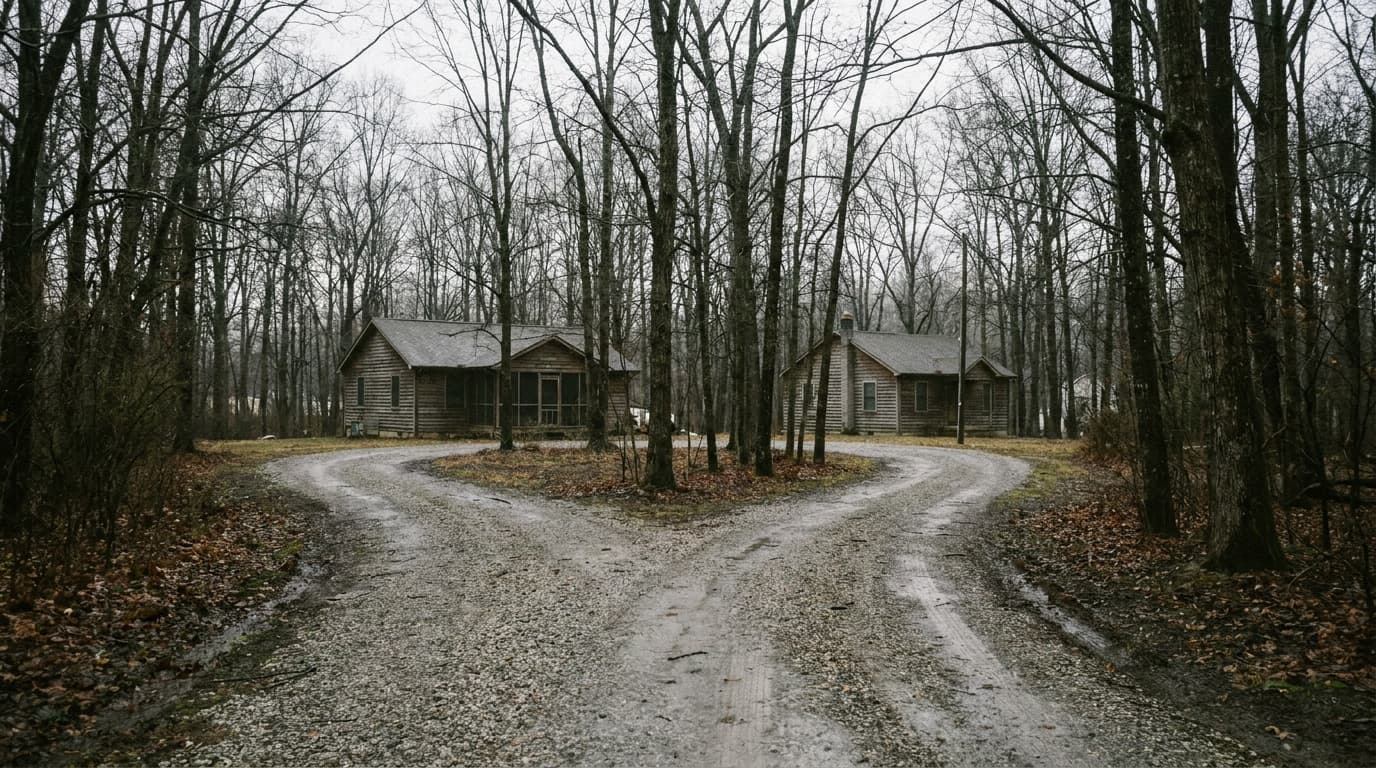
In Alaska, a prescriptive easement generally takes 10 years of continuous, hostile and visible use, each element proved by clear and convincing evidence. That period comes from Alaska Supreme Court cases applying the 10-year limit in AS 09.10.030, not from a statute written for easements. On the eminent domain side, AS 09.55.240(d), added in 2006, bars the government from taking property from one private person to transfer it to another private person for economic development, subject to six listed exceptions.
This page covers easements between private landowners first, then the government's power to take private property. For other states, see our guide to easement laws by state.
Information last verified on 2026-10-20. This article has not been reviewed by a licensed lawyer.
Jurisdiction scope: This article covers Alaska state law on private easements (AS 09.10.030, 09.45.052, 09.65.202, 09.25.010, 40.17.080 and Title 34 easement statutes, plus Alaska Supreme Court decisions) and on condemnation of private property (Alaska Const. art. I, sec. 18 and art. VIII, sec. 18; AS 09.55.240 to 09.55.460; AS 34.60; Alaska Civil Rule 72). It does not cover adverse possession of title (see Alaska squatters rights and adverse possession), homeowners association covenants, zoning or regulatory takings, condemnation by the federal government, or local ordinances.
Easement Basics in Alaska
An easement is a right to use someone else's land for a specific purpose, such as a driveway, a utility line or a trail. Many Alaska easement rules come from Alaska Supreme Court decisions; the statutes cover how written easements are created and recorded and a few special kinds of easement.
Written easements. An easement is an interest in real property, and AS 09.25.010(b) (the statute of frauds) provides:
"No estate or interest in real property, other than a lease for a term not exceeding one year, nor any trust or power concerning the property may be created, transferred, or declared, otherwise than by operation of law, or by a conveyance or other instrument in writing subscribed by the party creating, transferring, or declaring it or by that party's agent under written authority and executed with the formalities that are required by law."
Recording. Under AS 40.17.080(b), an unrecorded conveyance of real property (other than a lease for less than one year) "is void as against a subsequent innocent purchaser in good faith for valuable consideration" whose conveyance is recorded first, but it "is valid as between the parties to it and as against one who has actual notice of it." Our guide to Alaska property records explains how to look up recorded documents.
Solar and conservation easements. An easement to protect a property's exposure to direct sunlight "must be created in writing and is subject to the recording requirements for other conveyances of real property" (AS 34.15.145(a)). Conservation easements are governed by AS 34.17.010 to 34.17.060, which "do not affect the power of a court to modify or terminate a conservation easement under the principles of law and equity" (AS 34.17.020(b)).
Prescriptive Easements in Alaska
A prescriptive easement is a right of use gained by using another person's land, without permission, for the required period. Alaska has no statute that sets a period specifically for prescriptive easements. The Alaska Supreme Court has applied the 10-year time requirement of AS 09.10.030, and it treats the claim as close kin to adverse possession. In Swift v. Kniffen, 706 P.2d 296 (Alaska 1985), the court explained:

"To establish a claim for prescriptive easement, a claimant must show essentially the same elements as for adverse possession."
The court listed those elements as: "(1) the possession must have been continuous and uninterrupted; (2) the possessor must have acted as if he were the owner and not merely one acting with the permission of the owner; and (3) the possession must have been reasonably visible to the record owner." It added that "the claimant must prove each element by clear and convincing evidence," for the period needed "to satisfy the ten-year statutory time requirement. AS 09.10.030."
The presumption of permission. The burden on a claimant is heavy. Swift held that a person who uses another's property is presumed to do so "with the rightful owner's permission and in subordination to his title," and that this presumption "is overcome only by showing that such use of another's land was not only continuous and uninterrupted, but was openly adverse to the owner's interest, i.e., by proof of a distinct and positive assertion of a right hostile to the owner of the property." The court also noted that "the hostility element turns on the distinction between acquiescence and permission," and it explained that if the owner merely acquiesced in the use, rather than permitting it, the use was "adverse and hostile."
Driveways and private roads. In Dault v. Shaw, 322 P.3d 84 (Alaska 2013), the majority applied "the presumption that the use of a drive across another's property is permissive," and held that the exception to it "applies only where the 'roadway was not established by the owner of the servient estate for its own use.'" In McDonald v. Harris, 978 P.2d 81 (Alaska 1999), the court stated the exception in full: the presumption "does not arise if 'a roadway was not established by the owner of the servient estate for its own use but was for many years the only means of passage to the dominant estate.'"
An open question about use after 2003. Today, AS 09.10.030(a) still says an action to recover real property must be "commenced within 10 years," but subsection (b) lets a person whose ownership interest is recorded bring an action "at any time" to quiet title or to eject a person from the property. In Dault, the court said that if a claim depended on a period of use after the 2003 effective date of the amended statutes, "substantial questions would exist as to whether and how they should be applied to prescriptive easement claims." It did not decide those questions. The 2003 act took effect July 18, 2003, and it provides that amended AS 09.10.030 "applies to actions that have not been barred before the effective date of this Act" under the earlier version of the statute (ch. 147, secs. 5 and 6, SLA 2003). In Prax v. Zalewski, 400 P.3d 116 (Alaska 2017), the court applied the 2003 amendments to an adverse possession claim that "had not vested in 2003." A prescriptive easement claim whose 10 years of use were not complete by July 18, 2003 therefore faces an unsettled area of Alaska law. Our guide to the Alaska statute of limitations covers other filing deadlines.
Public prescriptive easements. In Price v. Eastham, 254 P.3d 1121 (Alaska 2011), the court held that a public prescriptive easement "requires the same elements as a private prescriptive easement," except that it "requires qualifying use by the public."
Statutory easements for utilities and public access. AS 09.45.052 adds two 10-year rules that apply "Notwithstanding AS 09.10.030":
- Under subsection (c), "the uninterrupted adverse notorious use of real property by a public utility for utility purposes for a period of 10 years or more vests in that utility an easement in that property for that purpose."
- Under subsection (d), 10 years of "uninterrupted adverse notorious use, including construction, management, operation, or maintenance, of private land for public transportation or public access purposes, including highways, streets, roads, or trails, by the public, the state, or a political subdivision of the state" vests "an appropriate interest in that land in the state or a political subdivision of the state." The subsection "does not limit or expand the rights of a state or political subdivision under adverse possession or prescription as the law existed on July 17, 2003."
Public land. AS 38.95.010 provides that "No title or interest to land under the jurisdiction of the state may be acquired by adverse possession or prescription, or in any other manner except by conveyance from the state." Separately, AS 29.71.010 provides that "A municipality may not be divested of title to real property by adverse possession."
Easements compared with adverse possession of title. Gaining ownership is a separate track. Under AS 09.45.052(a), possession is conclusively presumed to give title after seven years under color and claim of title, or after 10 years where the possessor held the land because of a good faith but mistaken belief that it lay within the boundaries of the possessor's adjacent property, except as against the state or the United States. See Alaska squatters rights and adverse possession for that law.
How to Stop a Prescriptive Easement in Alaska
Alaska's statutes on adverse possession, actions to recover real property and recreational use (AS 09.45.052, 09.10.030, 09.65.202 and 34.17.100) contain no procedure for blocking prescription by posting a sign or recording a notice. Protection comes mainly from the case law above: under Swift, a claimant must show use made as an owner would and "not merely one acting with the permission of the owner," and Alaska courts start from a presumption that use is permissive.
Posting signs usually does not interrupt the period. In McDonald v. Harris (1999), the Alaska Supreme Court said the owner "must usually do more than merely post signs against trespassing; the owner or party ordinarily needs to physically block access to the easement." In Swift, posted signs and an advertisement were not enough by themselves to interrupt the use; the court said an interruption "must be caused by the record owner or third parties," and that leaving a road unplowed "for a few weeks in winter" did not show abandonment.
There is one narrow statutory shield for recreational access. AS 09.65.202(e) provides that "Except as provided for under AS 09.45.052(d), land use allowed by a landowner for a recreational activity without charge may not form the basis of a claim for adverse possession, prescriptive easement, or a similar claim." Under subsection (b), that section "applies only during the time that a landowner allows recreational use under a recorded grant of a public recreational use easement." AS 34.17.100(a) provides that such an easement is created by recording the grant in the recorder's office for the recording district where the land is located, on a form provided by the Department of Natural Resources.
Landlocked Property and Implied Easements in Alaska
Easements implied from prior use. When one owner divides land, an easement can arise without a writing. In Methonen v. Stone, 941 P.2d 1248 (Alaska 1997), the Alaska Supreme Court held:
"An easement will be implied upon the severance of an estate when the use made of the servient parcel is manifest, continuous and reasonably necessary to the enjoyment of the dominant parcel."
The court applies "the same standard, 'regardless of whether the easement is one of implied grant or implied reservation,'" and once implied, the easement "runs with the land and is enforceable against subsequent purchasers of the servient estate so long as it retains its continuous and apparent nature and remains reasonably necessary to the enjoyment of the dominant estate." Methonen concerned access to a well. For access to a landlocked parcel, the court held in Williams v. Fagnani, 175 P.3d 38 (Alaska 2007), that Norken Corp. v. McGahan, 823 P.2d 622 (Alaska 1991), controls instead. Williams states that an implied easement arises when there is "(1) a quasi-easement at the time of contract of sale or conveyance, (2) which is apparent, (3) reasonably necessary for the enjoyment of the land retained or the land conveyed, and (4) continuous in nature," and quotes Norken: "the existence of reasonable necessity is determined as of the time of severance," and "Having once arisen, the implied easement is not extinguished merely because the reasonable necessity ceases to exist."
Reasonable necessity is not strict necessity. Applying the implied-easement standard to a tidelands access statute in Talbot's, Inc. v. Cessnun Enterprises, Inc., 566 P.2d 1320 (Alaska 1977), the court said that "strict or absolute necessity is not required," but "something more than mere convenience must be shown."
No private-road petition statute. The Alaska eminent domain article (AS 09.55.240 to 09.55.460) and the right-of-way statutes in AS 19.10.010, 19.10.015 and 19.30.400 contain no procedure that lets a landlocked owner petition a court or local government for a private road. Instead:
- AS 09.55.240(a)(6) lists "private roads leading from highways to residences, mines, or farms" among the public uses for eminent domain.
- Article VIII, section 18 of the Alaska Constitution provides that "Proceedings in eminent domain may be undertaken for private ways of necessity to permit essential access for extraction or utilization of resources," and that just compensation "shall be made for property taken or for resultant damages to other property rights."
- The economic-development bar in AS 09.55.240(d) does not apply where "the transferred property is used for a private way of necessity to permit essential access for extraction or use of resources" (subsection (d)(3)).
Under AS 09.55.240(g), "The power of eminent domain may only be delegated by statute."
Public rights-of-way that can matter for access. Under AS 19.10.010, "A tract 100 feet wide between each section of land owned by the state, or acquired from the state, and a tract four rods wide between all other sections in the state, is dedicated for use as public highways," with the section line as the center of the right-of-way. Under AS 19.30.400(a), "The state claims, occupies, and possesses each right-of-way granted under former 43 U.S.C. 932 that was accepted either by the state or the territory of Alaska or by public users" (the federal grant known as RS 2477).
Easement Scope and How an Easement Ends in Alaska
Scope. In Price v. Eastham, 75 P.3d 1051 (Alaska 2003), the Alaska Supreme Court held that although the use of a prescriptive easement "may evolve beyond the original prescriptive uses, new uses cannot substantially increase the burden on the servient estate or change the nature and character of the easement's original use." It applied that rule again in the same case in 2011 (254 P.3d 1121).
Ending an easement by prescription. In Hansen v. Davis, 220 P.3d 911 (Alaska 2009), the Alaska Supreme Court held "that an easement can be extinguished by prescription and that the prescriptive period for adverse use of an easement commences when the conduct of the servient estate owner unreasonably interferes with the current or prospective use of the easement by the easement holder." The party claiming extinguishment "must prove continuous and open and notorious use of the easement area for a ten-year period by clear and convincing evidence."
Extinguishment can be partial. In Reeves v. Godspeed Properties, LLC, 426 P.3d 845 (Alaska 2018), a processing plant "extinguished the portion of the easement on which it stood," but the evidence about gravel piles and equipment "was insufficient to support extinguishing the entire easement."
Conservation easements can also be modified or terminated by a court "under the principles of law and equity" (AS 34.17.020(b)).
Eminent Domain in Alaska
Eminent domain is the government's power to take private property for public use. For the federal rules and a comparison with other states, see our guide to eminent domain laws by state.
Article I, section 18 of the Alaska Constitution provides:
"Private property shall not be taken or damaged for public use without just compensation."
The clause covers property "taken or damaged" for public use. In Kelo v. City of New London, 545 U.S. 469 (2005), the U.S. Supreme Court held that takings under an economic development plan that "unquestionably serves a public purpose" satisfied the federal public use requirement, and it emphasized "that nothing in our opinion precludes any State from placing further restrictions on its exercise of the takings power."
Can Alaska Take Property for a Private Developer or a Pipeline?
The economic-development bar. In 2006 the Alaska Legislature (ch. 84 SLA 2006, SCS CSHB 318(FIN)) added AS 09.55.240(d):
"The power of eminent domain may not be exercised to acquire private property from a private person for the purpose of transferring title to the property to another private person for economic development purposes. This subsection does not apply to transfers of private property to another private person if one or more of the following apply: (1) the landowner consents, either before or after a condemnation proceeding has been filed, to the use of the property for a private commercial enterprise or other economic development; (2) the private person has been expressly authorized by statute either to exercise the power of eminent domain or to receive an interest in land acquired by the exercise of eminent domain; (3) the transferred property is used for a private way of necessity to permit essential access for extraction or use of resources; (4) the acquisition is used, in part, for leasing property to a private person that occupies a portion of public property or a public facility, including a private business that occupies a portion of an airport, port, or public building; (5) the property is transferred to a person by oil and gas lease under AS 38.05.180; (6) the property is transferred to a common carrier."
"Economic development" means "development of property for a commercial enterprise carried on for profit or to increase tax revenue, tax base, or employment" (AS 09.55.240(h)(2)). The 2006 act took effect October 3, 2006, and "applies only to condemnation actions filed on or after" that date (ch. 84, sec. 6, SLA 2006).
Homes and recreation projects. AS 09.55.240(e) provides that eminent domain "may not be exercised for the purpose of developing a recreational facility or project if the property to be acquired includes an individual landowner's personal residence or recreational structure or that portion of an individual's property attached to and within 250 linear feet of an individual landowner's personal residence or recreational structure unless the landowner consents either before or after a condemnation proceeding has been filed." The statute defines "personal residence" in subsection (h).
Legislative override. Under AS 09.55.240(f), "Notwithstanding the limitations on the power of eminent domain in (d) and (e) of this section, the legislature may approve the exercise of eminent domain against private property in an Act, the subject of which is limited to the transfer of the property for a purpose otherwise restricted under (d) or (e) of this section."
Municipalities. The same 2006 act added a matching limit to the municipal eminent domain statute, now AS 29.35.030(b): municipal eminent domain "may not be exercised to acquire private property from a private person for the purpose of transferring title to the property to another private person for economic development, except as provided by AS 09.55.240(d)(1) - (6), and may not be exercised for purposes expressed in AS 09.55.240(e)." The section applies to home rule and general law municipalities (AS 29.35.030(c)). A municipality may condemn "only within its boundaries," and a second class city's taking must be by ordinance submitted to the voters (AS 29.35.030(a)).
Pipelines and power lines. AS 09.55.240(a) lists "electric power lines" (paragraph (11)) and "the location of pipelines for gathering, transmitting, transporting, storing, or delivering natural or artificial gas or oil or any liquid or gaseous hydrocarbons, including pumping stations, terminals, storage tanks, or reservoirs, and related installations" (paragraph (12)) among public uses. Who may condemn depends on a statute (AS 09.55.240(g)). A public utility "may exercise the power of eminent domain for public utility uses," but that section "does not authorize the use of a declaration of taking" (AS 42.05.631). A pipeline right-of-way lessee under AS 38.35 may, if the commissioner delegates the function to it, condemn by declaration of taking on behalf of and as agent for the state (AS 38.35.130(a)). The economic-development bar does not apply where a private person "has been expressly authorized by statute" to condemn (AS 09.55.240(d)(2)). Its separate common-carrier exception uses the definition in AS 04.16.125, which covers "a motor vehicle, watercraft, aircraft, or railroad car available for public hire to transport freight or passengers."
What Must Happen Before Alaska Takes Property
Required showings. AS 09.55.270 provides: "Before property can be taken, it shall appear that (1) the use to which it is to be applied is a use authorized by law; (2) the taking is necessary to the use; (3) if already appropriated to a public use, the public use to which it is to be applied is a more necessary public use."
What can be taken. Under AS 09.55.250, a fee simple may be taken for uses such as "public buildings or grounds, or for permanent buildings, for reservoirs and dams and permanent flooding occasioned by them," and "an easement when taken for any other use."
The complaint. Alaska Civil Rule 72 governs condemnation cases. The condemnor's complaint must include a statement of just compensation, which "constitutes a judicial admission by the plaintiff," and "The decisional document for the taking and a map or plat of the property to be taken must be attached as exhibits to the complaint" (Rule 72(c)).
Federally funded projects. AS 34.60.120 provides that a state agency or other entity acquiring real property "for any project or program in which federal or federal-aid funds are used shall to the greatest extent practicable comply with" a list of acquisition policies. They include appraising the property before negotiations begin and giving the owner "an opportunity to accompany the appraiser"; offering an amount that may not be "less than the approved appraisal of the fair market value of the property," with "a written statement of, and a summary of the basis for," that amount; not requiring the owner to surrender possession before payment or a deposit of at least the approved appraisal; no "coercive action" to compel agreement on the price; and an offer for the entire property where taking only part would leave "an uneconomic remnant." Another is scheduling the project so that, to the greatest extent practicable, a lawful occupant is not required to move from a dwelling, business or farm "without at least 90 days' written notice of the date by which the move is required."
Deadlines to Challenge an Alaska Taking
Alaska's condemnation deadlines are short, and missing the first one waives objections to the taking itself:

- 20 days to answer. An owner who "objects to the authority and necessity for the taking or to the validity of the declaration of taking" must file an answer stating all objections and defenses "within twenty days after service of the summons." Under Rule 72(e)(4), failing to answer in that time "constitutes a waiver by the defendant of all objections and defenses to the authority and necessity for the taking and to the validity of the declaration of taking."
- 20 days to file a notice of appearance. An owner who disputes the amount of just compensation or claims any part of it must file a notice of appearance "within twenty days after service of the summons," which "preserves all claims concerning the amount of compensation to be paid and its distribution" (Rule 72(e)(2)). A late notice, absent good cause, "does not relieve a defendant of the effect of prior orders entered by the court or a final determination of just compensation," and the court may enter a default judgment against an owner who has not filed one (Rule 72(e)(4)).
- 30 days for a motion to dismiss (declaration-of-taking cases). If a timely objection is made, the objecting party "must, within thirty days after service of the summons, file a motion to dismiss setting forth the objections with specificity." The court "shall hold a hearing within twenty days after a request for hearing is filed," and its order is a final judgment for purposes of appeal under Appellate Rule 202 (Rule 72(h)(2)(A), (E)). In a case with neither a declaration of taking nor a possession motion under AS 09.55.390 to 09.55.400, a party may move for a ruling on authority and necessity no earlier than 60 days after service of the summons on all defendants (Rule 72(h)(2)(C)).
- 45 days to exchange appraisals. Each party, within 45 days after filing its complaint, answer or appearance, must exchange all appraisals of the property within the scope of the taking completed in the five years before the date of taking (Rule 72(h)(1)(B)).
- 10 or 15 days to appeal the master's report. Rule 72 provides for a master's hearing on compensation. A trial de novo may be had by filing a memorandum to set trial within 10 days after service of the master's report for the condemnor, or 15 days for an owner (Rule 72(h)(5)(A)).
- 20 days to demand a jury. After an appeal from the master's report, "a jury trial may be had if demand is made by any party within twenty days after filing of the appeal" (Rule 72(h)(6)(B)). If all parties waive the master's hearing, the demand is due within 20 days after service of the notice of waiver (Rule 72(h)(6)(A)).
Quick-Take: Declarations of Taking and Possession in Alaska
Who may use it. Under AS 09.55.420(a), when the state brings a condemnation proceeding, it "may file a declaration of taking with the complaint or at any time after the filing of the complaint, but before judgment." A municipality may also use a declaration of taking for "street or highway, off-street automobile parking facilities, school, sewer, water, telephone, electric, other utility, and slum clearance purposes or use granted to cities of the first class," but not for parking unless there has first been published notice once a week for four consecutive weeks and a public hearing. A public utility may not use the procedure (AS 42.05.631), and a pipeline right-of-way lessee may use it only by delegation (AS 38.35.130(a)). The procedure "may not be used with relation to the property of rural electrification or telephone cooperatives or nonprofit associations receiving financial assistance from the federal government under the Rural Electrification Act."
Title and interest. Under AS 09.55.440(a), title vests in the condemnor when the declaration is filed and the estimated compensation is deposited with the court. "The judgment must include interest at the rate of 10.5 percent a year on the amount finally awarded that exceeds the amount paid into court under the declaration of taking," running "from the date title vests to the date of payment of the judgment." Under subsection (b), the court may order all or part of the deposit paid to the persons entitled to it. If the compensation finally awarded is less than the amount paid to an owner, the court enters judgment against the owner for the overpayment (AS 09.55.440(b); Civil Rule 72(j)).
Possession. Under AS 09.55.450(a), the right of entry may not be granted "until after the running of the time for the defendant to file an objection to the declaration of taking or until after the hearing on any objection." If the person in possession "withdraws any part of the award and remains in possession, the court may fix a reasonable rental for the premises to be paid by that party to the plaintiff during such possession."
Appeals do not stop the taking. "An appeal or a bond or undertaking given does not operate to prevent or delay the vesting of title to real property or the right to possession of it" (AS 09.55.460(a)). The condemnor may not be divested of title or possession "except where the court finds that the property was not taken by necessity for a public use or purpose in a manner compatible with the greatest public good and the least private injury" (AS 09.55.460(b)).
Withdrawing a deposited assessment. After a jury verdict or master's report, where the condemnor deposits the amount of the assessment, continues in or takes possession of the property, and there is no dispute as to its ownership, AS 09.55.380 lets the owner "demand and receive from the court the money deposited," and doing so "does not bar or preclude the defendant from the right of appeal." However, "if the amount of the assessment is reduced on appeal by either party," the owner who received the money "is liable to the plaintiff for the difference between the amount received by the defendant and the amount finally assessed with legal interest from the time the defendant received the money deposited."
Payment after judgment. The condemnor must, "within 30 days after final judgment, pay the sum of money assessed" (AS 09.55.350). If it does not, the owner may have execution as in civil cases, and if the money cannot be obtained on execution, the court "shall set aside and annul the entire proceedings and restore possession of the property to the defendants if possession has been taken by the plaintiff" (AS 09.55.360).
How Just Compensation Is Calculated in Alaska
Valuation date. Under AS 09.55.330, the right to compensation and damages "accrues at the date of issuance of the summons, and its actual value at that date is the measure of compensation of the property to be actually taken." "Improvements put upon the property after the date of the service of summons may not be included in the assessment of compensation or damages." If an order lets the condemnor into possession under AS 09.55.380, the award draws "lawful interest from the date of the order."
Partial takings. When only part of a parcel is taken, AS 09.55.310(a) requires a separate assessment of damages to the remainder and of how much the remainder "will be benefited, if at all" by the project. If the benefit equals the damages, the owner is "allowed no damages except the value of the portion taken"; if the benefits are less, they are "deducted from" the damages, and the remainder is "the only damages allowed in addition to the value."
Business losses. In State, Department of Transportation & Public Facilities v. Alaska Laser Wash, Inc., 382 P.3d 1143 (Alaska 2016), the Alaska Supreme Court held "that a business owner may recover business damages when the State condemns the business only if it is not feasible for the business owner to relocate."
No home premium. The condemnation article (AS 09.55.240 to 09.55.460) and the relocation chapter (AS 34.60.040 to 34.60.100) contain no extra percentage or multiplier for a home.
Attorney Fees, Expenses and Relocation in Alaska Takings
Civil Rule 72(k). The rule lists five situations in which "Costs and attorney's fees incurred by a defendant must be assessed against the plaintiff":
- the taking of the property is denied;
- the condemnor appeals from the master's award and the owner does not appeal;
- the court's award was "at least ten (10) percent larger than the amount deposited by the condemning authority or the allowance of the master from which an appeal was taken by the defendant";
- the action was dismissed under Rule 72(i); or
- allowing costs and attorney fees "appears necessary to achieve a just and adequate compensation of the defendant."
Fees allowed under Rule 72(k) "must be commensurate with the time expended by the attorney throughout the proceedings."
Offers of judgment. Civil Rule 68 offers of judgment apply in condemnation cases with changes (Rule 72(l)). If the condemnor makes a successful offer of judgment, the owner "may not recover costs and fees incurred after the making of the offer of judgment except as reasonable and necessary to evaluate the offer of judgment," though Rule 72(k) costs and fees incurred before the offer remain available, and "In no event shall a defendant be required to pay the costs and fees of the plaintiff" (Rule 72(l)(1)). If the owner makes a successful offer, the owner "is entitled to recover full reasonable and necessary costs and attorney's fees without regard to Civil Rule 72(k)" (Rule 72(l)(2)).
Dismissal. Under Rule 72(i)(1), the condemnor may dismiss as of right if no hearing on compensation has begun and it has not acquired title or an interest in, or taken possession of, the property. A dismissal under Rule 72(i) is one of the fee triggers in Rule 72(k).
Utility easement cases. In a possession action brought under AS 09.55.390, "Costs or attorney fees may not be assessed against the defendant" (AS 09.55.400).
Failed or abandoned state condemnations. When a state agency's condemnation ends in a final judgment that the agency "cannot acquire the real property by condemnation," or the agency abandons the proceeding, the court "shall award" the owner reasonable costs, disbursements and expenses, "including reasonable attorney, appraisal, and engineering fees, actually incurred because of the condemnation proceedings," paid by the agency (AS 34.60.080(a), (b)).
Claims against state agencies. Under AS 34.60.080(c), when a court awards an owner compensation in "a proceeding brought against a state agency" for the taking of property by that agency (often called inverse condemnation), or the agency settles, the owner is reimbursed for "reasonable costs, disbursements and expenses, including reasonable attorney, appraisal and engineering fees, actually incurred because of the proceeding." If that section conflicts with the Alaska Rules of Civil Procedure, the rules govern (AS 34.60.080(d)).
Relocation and closing costs. AS 34.60 states its purpose as fair treatment of persons displaced by "federally assisted public construction and improvement projects and programs" (AS 34.60.010). Alaska's relocation chapter requires a state agency to make an additional payment, "not to exceed the amount described in 42 U.S.C. 4623(a)(1), as amended," to a person displaced from a dwelling the person owned and occupied for at least 90 days before negotiations began (AS 34.60.050(a)). The federal statute sets that amount at $31,000 "as adjusted by regulation," and the current federal regulation caps the replacement housing payment for a 90-day homeowner-occupant at $41,200 (49 C.F.R. 24.401(b)). That payment may be made only to a person who buys and occupies a replacement dwelling by the end of one year after the later of final payment for the acquired dwelling or the date the person moves out (AS 34.60.050(b)). The chapter also pays actual reasonable moving expenses (AS 34.60.040(a)); a displaced business or farm may instead take a fixed payment subject to the limits in 42 U.S.C. 4622(c), and may receive reestablishment expenses up to the amount in 42 U.S.C. 4622(a)(4) (AS 34.60.040(c), (d)); and a person displaced from a dwelling occupied for at least 90 days who does not receive the homeowner payment may receive rental or down-payment help up to the amount in 42 U.S.C. 4624(a) (AS 34.60.060). The current federal regulations set those limits at $53,200 for the fixed business payment, $33,200 for reestablishment and $9,570 for rental or down-payment help (49 C.F.R. 24.305, 24.304, 24.402). AS 34.60.070 requires a state agency to reimburse the owner, to the extent it considers fair and reasonable, for expenses such as "recording fees, transfer taxes, and similar expenses incidental to conveying the real property to the state agency."
No buyback right. The condemnation article (AS 09.55.240 to 09.55.460), the relocation chapter (AS 34.60) and the transportation department's acquisition statutes (AS 35.20.010 to 35.20.060) contain no right for a former owner to repurchase condemned land that is not used.
Alaska Easement and Eminent Domain Rules at a Glance
| Question | Alaska rule | Source |
|---|---|---|
| Prescriptive easement period | Generally 10 years, by clear and convincing evidence; how the 2003 amendments apply to a claim whose 10 years were not complete by July 18, 2003 is unsettled | Swift v. Kniffen (1985); Dault v. Shaw (2013); AS 09.10.030 |
| Use of a private drive | Presumed permissive, unless the road was not established by the servient owner for its own use but was for many years the only means of passage to the dominant estate | McDonald v. Harris (1999); Dault v. Shaw (2013) |
| Prescription against state land | Not allowed | AS 38.95.010 |
| Utility and public-access easements | Vest after 10 years of adverse notorious use | AS 09.45.052(c), (d) |
| Sign or notice to block prescription | No procedure in AS 09.45.052, 09.10.030 or 09.65.202; signs usually do not interrupt use, and the owner ordinarily must physically block access; recreational-use shield only while a recorded public recreational use easement is in place | McDonald v. Harris (1999); AS 09.65.202(b), (e) |
| Landlocked parcel split from a larger tract | Implied easement if access was reasonably necessary at severance; it does not end merely because the necessity later ceases | Williams v. Fagnani (2007) |
| Landlocked owner petition | No petition procedure in the eminent domain article; private roads are a listed public use | AS 09.55.240(a)(6); Alaska Const. art. VIII, sec. 18 |
| Taking for economic development | Barred in actions filed on or after October 3, 2006, with six exceptions and a legislative override | AS 09.55.240(d), (f) |
| Deadline to object to a taking | Answer within 20 days after service of the summons, or objections are waived; a notice of appearance within the same 20 days preserves compensation claims | Alaska R. Civ. P. 72(e) |
| Valuation date | Date the summons is issued | AS 09.55.330 |
| Interest on quick-take awards | 10.5 percent a year on the amount above the deposit | AS 09.55.440(a) |
| Owner's attorney fees | Assessed against the condemnor in five listed situations, including an award at least 10 percent above the deposit or master's allowance appealed from; generally no fees incurred after a successful condemnor offer of judgment | Alaska R. Civ. P. 72(k), (l) |
Related Alaska Property Guides
- Easement laws by state
- Eminent domain laws by state
- Alaska squatters rights and adverse possession
- Alaska property records
- Alaska statute of limitations
This article provides general legal information about Alaska easement and eminent domain law. It is not legal advice. For advice about a specific property or condemnation case, contact a lawyer licensed in Alaska.
Last updated: 2026-10-20.
Frequently Asked Questions
How long does it take to get a prescriptive easement in Alaska?
Alaska courts generally require 10 years of continuous, hostile and reasonably visible use, proved by clear and convincing evidence, applying the 10-year limit in AS 09.10.030 (Swift v. Kniffen, 1985). In Dault v. Shaw (2013) the Alaska Supreme Court said substantial questions would exist about how the 2003 amendments apply to a claim that depends on use after their July 18, 2003 effective date, which includes a claim whose 10 years were not complete by that date.
Can you get a prescriptive easement on a shared driveway in Alaska?
Alaska courts presume that use of a drive across another person's property is permissive, and permissive use does not meet the hostility element. The presumption does not arise where the roadway was not established by the owner of the servient estate for its own use but was for many years the only means of passage to the dominant estate (McDonald v. Harris, 1999; Dault v. Shaw, 2013).
Can you get a prescriptive easement across state land in Alaska?
No. AS 38.95.010 provides that no title or interest to land under the jurisdiction of the state may be acquired by adverse possession or prescription, or in any other manner except by conveyance from the state.
What can I do if my land is landlocked in Alaska?
Alaska's eminent domain article (AS 09.55.240 to 09.55.460) contains no procedure for a landlocked owner to petition for a private road. Access questions turn on easements implied when a parcel was split, judged by whether access was reasonably necessary at the time of the split; such an easement is not extinguished merely because the necessity later ceases (Williams v. Fagnani, 2007), public rights-of-way such as section-line easements (AS 19.10.010) and RS 2477 rights-of-way (AS 19.30.400), and the eminent domain statute, which lists private roads leading from highways to residences, mines or farms as a public use (AS 09.55.240(a)(6)).
How do I stop someone from getting a prescriptive easement in Alaska?
Alaska's statutes on adverse possession, actions to recover real property and recreational use (AS 09.45.052, 09.10.030, 09.65.202) contain no posted-sign or recorded-notice procedure. Under Swift v. Kniffen (1985), a claimant must show use made as an owner and not merely with the owner's permission. The Alaska Supreme Court has said an owner must usually do more than post signs against trespassing and ordinarily needs to physically block access to interrupt the use (McDonald v. Harris, 1999). AS 09.65.202(e) bars claims based on free recreational use while a recorded public recreational use easement is in place, except as AS 09.45.052(d) provides.
Can Alaska take my property for a private developer?
AS 09.55.240(d) bars taking property from a private person to transfer title to another private person for economic development, but it lists six exceptions, including landowner consent, a person authorized by statute to condemn or receive condemned land, and a transfer to a common carrier (defined as a motor vehicle, watercraft, aircraft or railroad car for public hire). The bar applies to condemnation actions filed on or after October 3, 2006. Under AS 09.55.240(f) the legislature may approve such a taking in a single-subject act.
Can Alaska use eminent domain for a pipeline?
AS 09.55.240(a)(12) lists the location of oil and gas pipelines and related installations among public uses, and the power of eminent domain may only be delegated by statute (AS 09.55.240(g)). A public utility may condemn for public utility uses but may not use a declaration of taking (AS 42.05.631), and a pipeline right-of-way lessee may, if the commissioner delegates the function, condemn by declaration of taking on behalf of the state (AS 38.35.130(a)). The economic-development bar does not apply to a person expressly authorized by statute to condemn (AS 09.55.240(d)(2)).
How is just compensation calculated in Alaska?
AS 09.55.330 measures compensation by the property's actual value at the date the summons is issued, and improvements made after service of the summons are not included. In a partial taking, benefits to the remaining land are deducted from the damages to it (AS 09.55.310), and business damages are recoverable only if relocating the business is not feasible (State v. Alaska Laser Wash, 2016).
Does the government pay attorney fees in an Alaska eminent domain case?
Civil Rule 72(k) requires the condemnor to pay the owner's costs and attorney fees in five situations, such as when the taking is denied or the court award is at least 10 percent larger than the deposit or the master's allowance the owner appealed from, and Rule 72(l) provides that an owner is never required to pay the condemnor's costs and fees. If the condemnor makes a successful offer of judgment, the owner generally may not recover costs and fees incurred after the offer (Rule 72(l)(1)). AS 34.60.080 separately covers attorney, appraisal and engineering fees when a state agency's condemnation fails or is abandoned, or when an owner wins compensation from a state agency.
How long do I have to respond to an eminent domain lawsuit in Alaska?
An owner who objects to the authority and necessity for the taking or to the validity of a declaration of taking must file an answer within 20 days after service of the summons, or those objections are waived (Alaska R. Civ. P. 72(e)). An owner who disputes the amount of compensation or claims any part of it must file a notice of appearance within 20 days after service of the summons (Rule 72(e)(2)). In a declaration-of-taking case, a timely objection must be followed by a motion to dismiss within 30 days after service of the summons (Rule 72(h)(2)(A)).
Updates
Independently fact-checked against the cited primary sources
The Law Behind This Article
This article rests on the statutory provisions below, held in our own legal record and retrieved from the official source. Tap a section to read the operative text.
Alaska Statutes, Title 9. Code of Civil Procedure, Chapter 55. Special Actions and Proceedings
§ 09.55.240Uses for which authorized; rights-of-wayIn force
(a) Except as provided in (d) and (e) of this section, the right of eminent domain may be exercised for the following public uses: (1) all public uses authorized by the government of the United States; (2) public buildings and grounds for the use of the state and all other public uses authorized by the legislature of the state; (3) public buildings and grounds for the use of an organized or unorganized borough, city, town, village, school district, or other municipal division, whether incorporated or unincorporated; canals, aqueducts, flumes, ditches, or pipes conducting water, heat, or gas for the use of the inhabitants of an organized or unorganized borough, city, town, or other municipal division, whether incorporated or unincorporated; raising the banks of streams, removing obstructions from them, and widening, deepening, or straightening their channels; and roads, streets, and alleys, and all other public uses for the benefit of an organized or unorganized borough, city, town, or other municipal division whether incorporated or unincorporated, or its inhabitants, which may be authorized by the legislature; (4) wharves, docks, piers, chutes, booms, ferries, bridges of all…
Official text (excerpt) · last checked 2026-07-31 · Read the full text in our law library · Verify at akleg.gov
§ 09.55.440Vesting of title and compensationIn force
(a) Upon the filing of the declaration of taking and the deposit with the court of the amount of the estimated compensation stated in the declaration, title to the estate as specified in the declaration vests in the plaintiff, and that property is condemned and taken for the use of the plaintiff, and the right to just compensation for it vests in the persons entitled to it. The compensation shall be ascertained and awarded in the proceeding and established by judgment. The judgment must include interest at the rate of 10.5 percent a year on the amount finally awarded that exceeds the amount paid into court under the declaration of taking. The interest runs from the date title vests to the date of payment of the judgment. (b) Upon motion of a party in interest and notice to all parties, the court may order that the money deposited or a part of it be paid immediately to the person or persons entitled to it for or on account of the just compensation to be awarded in the proceedings. If the compensation finally awarded exceeds the amount of money deposited, the deposit shall be offset against the award.
Official text (excerpt) · last checked 2026-07-31 · Read the full text in our law library · Verify at akleg.gov
Alaska Statutes, Title 9. Code of Civil Procedure, Chapter 45. Actions Relating to Real Property
§ 09.45.052Adverse possessionIn forcecited in 2 of our articles
(a) The uninterrupted adverse notorious possession of real property under color and claim of title for seven years or more, or the uninterrupted adverse notorious possession of real property for 10 years or more because of a good faith but mistaken belief that the real property lies within the boundaries of adjacent real property owned by the adverse claimant, is conclusively presumed to give title to the property except as against the state or the United States. For the purpose of this section, land that is in the trust established by the Alaska Mental Health Enabling Act of 1956, P.L. 84-830, 70 Stat. 709, is land owned by the state. (b) Except for an easement created by Public Land Order 1613, adverse possession will lie against property that is held by a person who holds equitable title from the United States under paragraphs 7 and 8 of Public Land Order 1613 of the Secretary of the Interior (April 7, 1958). (c) Notwithstanding AS 09.10.030, the uninterrupted adverse notorious use of real property by a public utility for utility purposes for a period of 10 years or more vests in that utility an easement in that property for that purpose.
Official text (excerpt) · last checked 2026-09-07 · Read the full text in our law library · Verify at akleg.gov
Cited in 21 court opinions in our collectionLatest citing opinion in our collection: 2026
In the courts (editorial summary, independently checked):Tenala affirmed title to a deed-described strip under the former seven-year color-of-title rule. Cowan held pre-2003 law governed possession allegedly completed before the amendment and remanded. Price declined to apply the later public-access subsection retroactively.
Opinions citing this section in our collection:
- Tenala, Ltd. v. Fowler (Alaska Supreme Court 1996, 921 P.2d 1114)✓A deed described the disputed strip, which the occupants openly treated as their own. The court affirmed title to that strip under the former seven-year color-of-title rule.
- Cowan v. Yeisley (Alaska Supreme Court 2011, 255 P.3d 966)✓The trial court applied the amended good-faith rule to possession allegedly completed earlier. The supreme court held pre-2003 law governed and remanded to decide adverse possession.
- Price v. Eastham (Alaska Supreme Court 2011, 254 P.3d 1121)✓A public snowmachine easement had vested before the later public-access subsection existed. The court declined to apply that subsection retroactively to require a government holder.
Identified automatically from the court opinions citing this section — not a ranking of which case controls.
Also relied on in: Alaska Squatters Rights and Adverse Possession Laws (2026)
Alaska Statutes, Title 9. Code of Civil Procedure, Chapter 10. Limitations of Actions
§ 09.10.030Actions to recover real propertyIn forcecited in 2 of our articles
(a) Except as provided in (b) of this section, a person may not bring an action for the recovery of real property or for the recovery of the possession of it unless the action is commenced within 10 years. An action may not be maintained under this subsection for the recovery unless it appears that the plaintiff, an ancestor, a predecessor, or the grantor of the plaintiff was seized or possessed of the premises in question within 10 years before the commencement of the action. (b) An action may be brought at any time by a person who was seized or possessed of the real property in question at some time before the commencement of the action or whose grantor or predecessor was seized or possessed of the real property in question at some time before commencement of the action, and whose ownership interest in the real property is recorded under AS 40.17, in order to (1) quiet title to that real property; or (2) eject a person from that real property.
Official text (excerpt) · last checked 2026-07-31 · Read the full text in our law library · Verify at akleg.gov
Cited in 46 court opinions in our collectionLatest citing opinion in our collection: 2025
Opinions citing this section in our collection:
- Bauman v. Day (Alaska Supreme Court 1995, 892 P.2d 817)“…a suit to recover possession of real property is ten years. AS 09.10.030. . Alaska Statute 09.10.230 expre…”
- McGill v. Wahl (Alaska Supreme Court 1992, 839 P.2d 393)“…eir action as one brought under the statute of limitations, AS 09.10.030. 4 Alaska Statute 09.1…”
- Tenala, Ltd. v. Fowler (Alaska Supreme Court 1996, 921 P.2d 1114)“…1. After a three-day bench trial, the court held that under AS 09.10.030 Mayo had adversely possessed the easter…”
Identified automatically from the court opinions citing this section — not a ranking of which case controls.
Alaska Statutes, Title 9. Code of Civil Procedure, Chapter 65. Actions, Immunities, Defenses, and Duties
§ 09.65.202Tort immunity for landowners' allowing recreational activity; adverse possessionIn force
(a) A landowner that allows a recreational activity on the landowner's land without charge does not, by allowing that activity, (1) owe a duty of care to maintain the land safe for entry or use for a recreational activity or to eliminate, alter, or control the inherent risks of a recreational activity; (2) owe a duty to warn persons using the land for a recreational activity of any dangerous condition, known or unknown, apparent or hidden; (3) owe a duty to curtail or prevent use of the land for recreational activities; (4) implicitly ensure that the land is safe for any purpose; (5) confer a legal status, such as invitee or licensee, to which a special duty of care is owed; or (6) assume responsibility for any injury to persons or property. (b) This section applies only during the time that a landowner allows recreational use under a recorded grant of a public recreational use easement as required in AS 34.17.100. (c) This section does not apply to a civil action (1) if the landowner collects a charge for entry on the land for a recreational activity; or (2) that is based on intentional, reckless, or grossly negligent conduct of the landowner.
Official text (excerpt) · last checked 2026-07-31 · Read the full text in our law library · Verify at akleg.gov
Alaska Statutes, Title 34. Property, Chapter 60. Relocation Assistance and Real Property Acquisition Practices
§ 34.60.080Litigation expensesIn force
(a) The state court having jurisdiction of a proceeding instituted by the state agency to acquire real property by condemnation shall award the owner of any right to, or title to, or interest in, the real property a sum that will in the opinion of the court reimburse the owner for reasonable costs, disbursements, and expenses, including reasonable attorney, appraisal, and engineering fees, actually incurred because of the condemnation proceedings, if (1) the final judgment is that the state agency cannot acquire the real property by condemnation; or (2) the proceeding is abandoned by the state agency. (b) An award made under (a) of this section shall be paid by the state agency for whose benefit the condemnation proceedings were instituted.
Official text (excerpt) · last checked 2026-07-31 · Read the full text in our law library · Verify at akleg.gov
Alaska Statutes, Title 29. Municipal Government, Chapter 35. Municipal Powers and Duties
§ 29.35.030Eminent domainIn force
(a) Except as provided in (b) of this section, a municipality may, only within its boundaries, exercise the powers of eminent domain and declaration of taking in the performance of a power or function of the municipality under the procedures set out in AS 09.55.250 09.55.460. In the case of a second class city, the exercise of the power of eminent domain or declaration of taking must be by ordinance that is submitted to the voters at the next general election or at a special election called for that purpose. A majority of the votes on the question is required for approval of the ordinance. (b) The power of eminent domain may not be exercised to acquire private property from a private person for the purpose of transferring title to the property to another private person for economic development, except as provided by AS 09.55.240(d)(1) (6), and may not be exercised for purposes expressed in AS 09.55.240(e). (c) This section applies to home rule and general law municipalities. (d) In this section, (1) economic development has the meaning given in AS 09.55.240; (2) private person has the meaning given in AS 09.55.240.
Official text (excerpt) · last checked 2026-07-31 · Read the full text in our law library · Verify at akleg.gov
Search our full record of US law — 2.1 million sections, every state + federal →
Sources and References
- AS 09.10.030, Actions to recover real property(www.akleg.gov).gov
- AS 09.55.240, Uses for which eminent domain is authorized; economic development limit(www.akleg.gov).gov
- AS 09.45.052, Adverse possession(www.akleg.gov).gov
- AS 38.95.010, Prescription and adverse possession against state land(www.akleg.gov).gov
- AS 29.71.010, Adverse possession against municipalities(www.akleg.gov).gov
- AS 09.65.202, Recreational use and adverse possession(www.akleg.gov).gov
- Alaska Rules of Civil Procedure, Rule 72 (Eminent domain)(courts.alaska.gov).gov
- AS 09.25.010, Statute of frauds(www.akleg.gov).gov
- AS 40.17.080, Effect of recording(www.akleg.gov).gov
- AS 34.15.145, Solar easements(www.akleg.gov).gov
- AS 34.17.010 to 34.17.060, Conservation easements(www.akleg.gov).gov
- Swift v. Kniffen, 706 P.2d 296 (Alaska 1985)(www.courtlistener.com)
- Dault v. Shaw, 322 P.3d 84 (Alaska 2013)(www.courtlistener.com)
- McDonald v. Harris, 978 P.2d 81 (Alaska 1999)(static.case.law)
- Ch. 147 SLA 2003 (CSSB 93(JUD) am H), amendments to AS 09.10.030 and 09.45.052(www.akleg.gov).gov
- Prax v. Zalewski, 400 P.3d 116 (Alaska 2017)(static.case.law)
- Price v. Eastham, 75 P.3d 1051 (Alaska 2003)(static.case.law)
- Price v. Eastham, 254 P.3d 1121 (Alaska 2011)(www.courtlistener.com)
- AS 34.17.100, Public recreational use easements(www.akleg.gov).gov
- Methonen v. Stone, 941 P.2d 1248 (Alaska 1997)(www.courtlistener.com)
- Williams v. Fagnani, 175 P.3d 38 (Alaska 2007)(static.case.law)
- Norken Corp. v. McGahan, 823 P.2d 622 (Alaska 1991)(static.case.law)
- Talbot's, Inc. v. Cessnun Enterprises, Inc., 566 P.2d 1320 (Alaska 1977)(static.case.law)
- Alaska Constitution, art. I, sec. 18 and art. VIII, sec. 18(ltgov.alaska.gov).gov
- AS 19.10.010, Dedication of land for public highways (section lines)(www.akleg.gov).gov
- AS 19.30.400, RS 2477 rights-of-way(www.akleg.gov).gov
- Hansen v. Davis, 220 P.3d 911 (Alaska 2009)(www.courtlistener.com)
- Reeves v. Godspeed Properties, LLC, 426 P.3d 845 (Alaska 2018)(static.case.law)
- Kelo v. City of New London, 545 U.S. 469 (2005)(tile.loc.gov).gov
- Ch. 84 SLA 2006 (SCS CSHB 318(FIN)), eminent domain for economic development; AS 29.35.030(www.akleg.gov).gov
- AS 29.35.030, Municipal eminent domain(www.akleg.gov).gov
- AS 42.05.631, Eminent domain by public utilities(www.akleg.gov).gov
- AS 38.35.130, Pipeline right-of-way condemnation(www.akleg.gov).gov
- AS 04.16.125, Definition of common carrier(www.akleg.gov).gov
- AS 09.55.270, AS 09.55.250, Prerequisites to taking; estates subject to taking(www.akleg.gov).gov
- AS 34.60.120, Acquisition policies for federally funded projects(www.akleg.gov).gov
- AS 09.55.420, AS 09.55.440, AS 09.55.450, AS 09.55.460, Declaration of taking, vesting, possession and appeals(www.akleg.gov).gov
- AS 09.55.380, Withdrawal of deposited assessment(www.akleg.gov).gov
- AS 09.55.330, AS 09.55.310, Measure of compensation; partial takings(www.akleg.gov).gov
- State, DOT&PF v. Alaska Laser Wash, Inc., 382 P.3d 1143 (Alaska 2016)(www.courtlistener.com)
- AS 09.55.390, AS 09.55.400, Utility easement possession; no costs against owner(www.akleg.gov).gov
- AS 34.60.080, Litigation expenses(www.akleg.gov).gov
- AS 34.60.010 to 34.60.060, Purpose and relocation payments(www.akleg.gov).gov
- 42 U.S.C. 4623, Replacement housing for homeowners(www.law.cornell.edu)
- 49 C.F.R. 24.401, Replacement housing payment for 90-day homeowner-occupants(www.ecfr.gov).gov
- 49 C.F.R. 24.304, Reestablishment expenses for nonresidential moves(www.ecfr.gov).gov
- 49 C.F.R. 24.305, Fixed payment for moving expenses (nonresidential moves)(www.ecfr.gov).gov
- 49 C.F.R. 24.402, Replacement housing payment for 90-day occupants(www.ecfr.gov).gov
- AS 34.60.070, Incidental expenses(www.akleg.gov).gov