
Maine
Maine Easement and Eminent Domain Laws (2026)
Independently fact-checked against primary sources (last audited October 21, 2026). · 45 primary sources cited on this page. How we verify our legal content
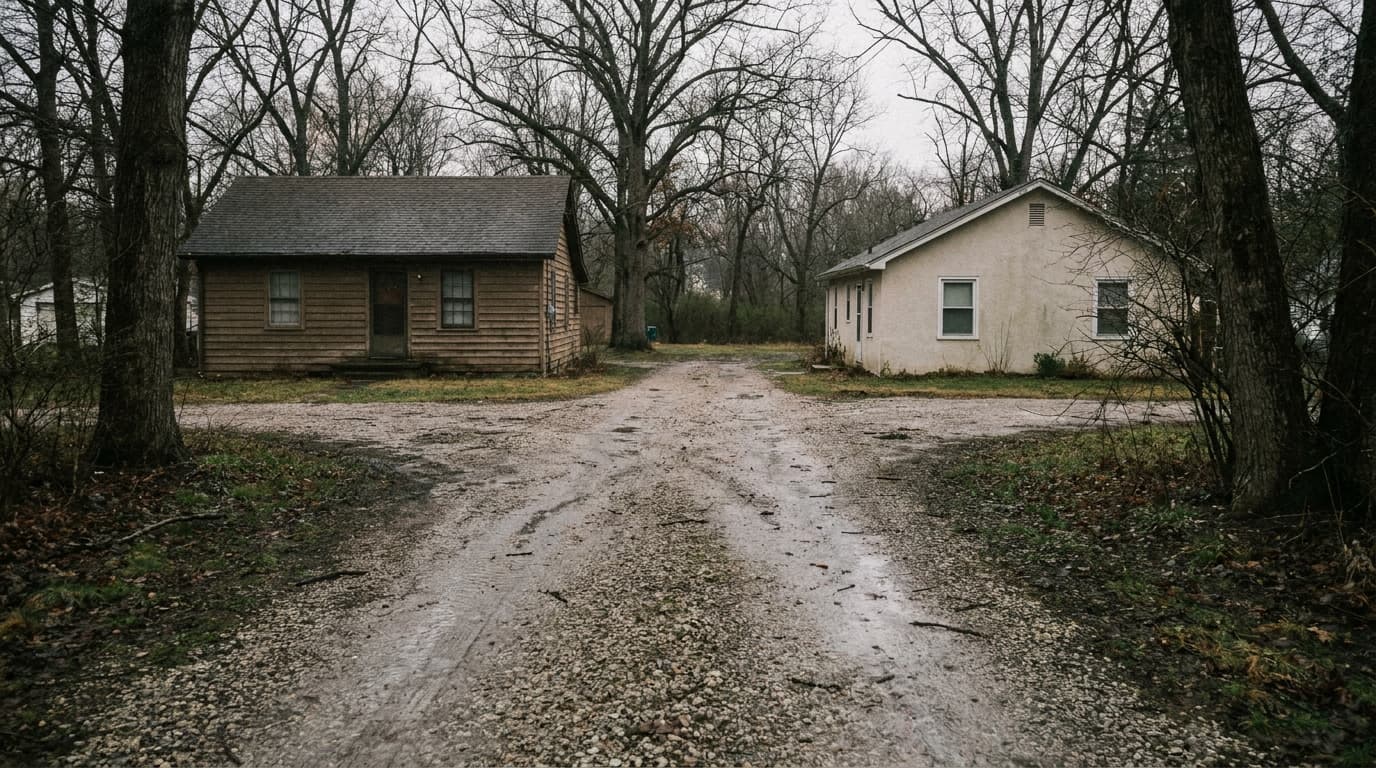
In Maine, a prescriptive easement takes 20 years of uninterrupted adverse use under 14 M.R.S. § 812, and the same section lets a landowner block one from forming by posting a notice on the land for 6 successive days. On the eminent domain side, 1 M.R.S. § 816 bars the state, local governments and any other condemning entity from taking farm, fishing, forest or improved land for private development, mainly to raise tax revenue, or to hand it to a private business, with exceptions for blight under a redevelopment plan and for utilities.
This page covers both halves of Maine law: easements between private landowners first, then the government's power to take private property. For other states, see our guide to easement laws by state.
Information last verified on October 19, 2026. This article has not been reviewed by a licensed lawyer.
Jurisdiction scope: This article covers Maine statutes and Maine Supreme Judicial Court (Law Court) decisions on private easements, and Maine law on the condemnation of private property by the state, municipalities and utilities. It does not cover adverse possession of title (see Maine squatters rights and adverse possession), condominium or homeowner association covenants, zoning, regulatory takings, condemnation by the federal government, or local ordinances.
Easement Basics in Maine
An easement is a right to use someone else's land for a specific purpose, such as a driveway, a path to the shore or a utility line. The Maine rules below cover easements created in writing, easements a court implies when land is divided, and easements acquired by long adverse use.
The Law Court distinguishes easements that benefit a particular parcel from easements that belong to a person. In Stickney v. City of Saco, 2001 ME 69, it said:
"Generally, because it is purely a personal right, an easement in gross is not assignable, absent evidence of the parties' intent to the contrary, and terminates upon the death of the individual for whom it was created."
Several Maine statutes shape written easements:
- Utilities in a right-of-way. Under 33 M.R.S. § 458, the owner of an easement or right-of-way does not have the right by implication to install utility services on or under it if the easement was "originally established in a written instrument executed on or after January 1, 1990" and the instrument "does not expressly include the right to install utility services." Older and non-written easements fall outside that rule.
- Deeds that border a road. Under 33 M.R.S. § 460, a conveyance of land abutting a town or private way, county road, highway or proposed, unaccepted way on a recorded subdivision plan is deemed to convey the grantor's interest in the abutting portion of the road, subject to exceptions; for a town or private way, county road or highway, an easement of access needed for ingress and egress to adjoining property is preserved "unless the grantor expressly reserves his title to the road or way by a specific reference to the road or way contained in the conveyance."
- Solar easements. Under 33 M.R.S. § 1401, an easement to ensure access to direct sunlight "must be created in writing" and "shall be recorded and indexed in the same way as other conveyances of real property interests." Solar easements must be appurtenant and run with the land.
To look up the deeds and other documents recorded against a property, see our guide to Maine property records.
Landlocked Property and Easements by Necessity
Title 23 offers landlocked land a public route to access. On petition, a town's municipal officers "may ... lay out a public easement for any occupant of land or for owners who have cultivated land in the municipality if the land will be connected to a town way or highway after the establishment of the public easement," and once it is laid out it "may be taken pursuant to section 3023," the town-way eminent domain section (23 M.R.S. § 3022). A public easement is "an easement held by a municipality for purposes of public access to land or water not otherwise connected to a public way" (23 M.R.S. § 3021(2)), and one laid out this way is limited to access by foot or motor vehicle (23 M.R.S. § 3022).

The statute says "may": the decision belongs to the municipal officers, and the section does not require them to grant a petition. In the unorganized areas, responsible persons may present a written petition describing a way to the county commissioners, who "may act upon the petition" and may lay out highways there (23 M.R.S. § 2051). Apart from those public routes, the Law Court recognizes the common-law easement by necessity.
In Morrell v. Rice, 622 A.2d 1156 (Me. 1993), the Law Court explained:
"An easement by necessity, an easement implied in the law, may be created when a grantor conveys a lot of land from a larger parcel and that conveyed lot is 'landlocked' by the grantor's surrounding land and cannot be accessed from a road or highway. Because of the strict necessity of having access to the landlocked parcel, an easement over the grantor's remaining land benefitting the landlocked lot is implied as a matter of law irrespective of the true intent of the common grantor."
Three limits follow from the Law Court's decisions:
- The claimant carries the burden. Morrell holds that "it is the burden of the landowner claiming an easement by necessity to demonstrate that an alternative land route was not available." The court added that "a showing of access to land across navigable water could in some circumstances defeat a claim of an easement by necessity."
- Common ownership is required. In Tripp v. Huff, 606 A.2d 792 (Me. 1992), the Law Court upheld a ruling that no easement by necessity or by implication existed "because the requisite unity of title did not exist" when the parcel was divided.
- Scope can include utilities. Morrell says an easement created by necessity "can include not only the right of entry and egress, but also the right to make use of the easement for installation of utilities, essential for most uses to which property may reasonably be put in these times."
The Law Court also recognizes an easement implied from prior use when a single owner divides land. In Frederick v. Consolidated Waste Services, Inc., 573 A.2d 387 (Me. 1990), it required that (1) the property, while in single ownership, was "openly used in a manner constituting a 'quasi-easement,'" meaning apparent, observable conditions on the retained land that clearly benefit the land conveyed; (2) the common grantor "manifested an intent that the quasi-easement should continue as a true easement"; and (3) the owners of the conveyed land continued to use it as a true easement. The court noted that necessity "need not be strict and absolute" for this kind of easement, though it bears on the grantor's intent.
Road discontinuance can also leave land without public access. When municipal officers start discontinuing a town way, 23 M.R.S. § 3026-A(1-A) requires them, in the cases that subsection covers, to wait one year from the notice "to allow abutting property owners the opportunity to grant private easements that run with the title of the property owners' land for the purpose of allowing travel along the way for all abutting property owners and their lessees and guests." After that wait, the officers may discontinue the way without keeping a public easement only if private easements for all abutting owners have been filed with the registry of deeds, and an order of discontinuance keeps the public easement unless it explicitly says otherwise (23 M.R.S. § 3026-A(1-A), (2)).
Prescriptive Easements: 20 Years of Adverse Use
The period comes from 14 M.R.S. § 812:
"No person, class of persons or the public shall acquire a right-of-way or other easement through, in, upon or over the land of another by the adverse use and enjoyment thereof, unless it is continued uninterruptedly for 20 years."
The elements come from case law. In Town of Manchester v. Augusta Country Club, 477 A.2d 1124 (Me. 1984), the Law Court stated:
"As a general rule, the party asserting an easement by prescription must prove continuous use for at least 20 years under a claim of right adverse to the owner, with his knowledge and acquiescence, or a use so open, notorious, visible, and uninterrupted that knowledge and acquiescence will be presumed."
Points the Law Court has added:
- Acquiescence is required. Manchester says acquiescence by the owner "is essential," and that in this respect a prescriptive easement "differs from the acquisition of title by adverse possession." Acquiescence means "passive assent or submission to the use," as distinguished from a license or permission the owner can withdraw.
- Standard of proof. In Stickney v. City of Saco (2001), the Law Court said the elements "must be proved by a preponderance of the evidence," and that "under a claim of right" means the claimant "is in possession as owner, with intent to claim the land as [its] own, and not in recognition of or subordination to [the] record title owner."
- Public recreation on wild land. Manchester held that for public recreation easements claimed by prescription over "wild and uncultivated land," open and continuous use "raises a rebuttable presumption that the use was permissive." That case concerned public recreational use of a beach, and the rule as stated is limited to public recreation easements over wild and uncultivated land.
- Private roads in the unorganized territory. Under 14 M.R.S. § 814, in roads privately owned in the unorganized territory "no title or interest shall be acquired against the owners thereof by adverse possession, prescription or acquiescence, however exclusive or long continued."
A prescriptive easement gives a right to use land, not ownership of it. Claims to title by adverse possession run under a separate 20-year rule in 14 M.R.S. § 801; see Maine squatters rights and adverse possession.
How to Prevent a Prescriptive Easement in Maine
Section 812 gives the landowner a notice procedure. The owner:
"may give public notice of his intention to prevent the acquisition of such easement by causing a copy of such notice to be posted in some conspicuous place upon the premises for 6 successive days, or in the case of land in the unorganized territory, by causing a copy of such notice to be recorded in the registry of deeds for the county where his land lies, and such posting or recording shall prevent the acquiring of such easement by use for any length of time thereafter; or he may prevent a particular person or persons from acquiring such easement by causing an attested copy of such notice to be served by an officer qualified to serve civil process upon him or them in hand or by leaving it at his or their dwelling house"
Two details matter in practice. For land in the unorganized territory, a recorded notice must describe the land specifically or by reference to the source of title, not as whatever land the owner holds in the county, and it "shall expire after 10 years," though a new 10-year notice may be recorded at any time (14 M.R.S. § 812-B). And a certificate by the officer who served or posted the notice, recorded with the notice in the registry of deeds within 3 months, is "conclusive evidence of such service or posting" (14 M.R.S. § 812).
For land in the unorganized territory, an owner may also record a notice that it has no intent to dedicate the land to public use, and "such recording shall prevent such dedication"; not recording one "shall not create any implication of dedication" (14 M.R.S. § 812-A). The same 10-year limit applies (14 M.R.S. § 812-B).
Separately, the Manchester decision treats permission as the opposite of acquiescence: use under a license the owner can revoke is not the passive assent a prescriptive claim needs.
Shared Driveways and Private Road Maintenance
Maine has a default rule for private road upkeep. Under 23 M.R.S. § 3121, added by Public Law 2021, chapter 13:
"In the absence of any such agreement, restriction, covenant, declaration, road association or method elected under section 3101, each residential property owner, after reasonable due process and notice, shall share equally in the cost of reasonable and necessary repairs to and maintenance of the private road when the private road is the primary means of access to the benefited property."
The rule yields to any agreement, covenant, road association or method chosen under 23 M.R.S. § 3101, and the section has exceptions, including roads built or used mainly for commercial or forest-management purposes. Each residential property is assessed only one share, however many owners it has, and if an owner does not pay after a written demand, the other benefited owners may bring a legal claim for the amount owed (23 M.R.S. § 3121(1), (3)).
The location of a deeded right-of-way is also protected. In Davis v. Bruk, 411 A.2d 660 (Me. 1980), the Law Court held that, as a general rule, "the location of an easement, when once established, cannot be changed or the easement relocated without the mutual consent of the owners of the dominant and servient estates," unless the grant itself expressly or impliedly authorizes relocation.
How an Easement Ends in Maine
In Stickney v. City of Saco (2001), the Law Court listed the ways an easement ends:
"An easement can be extinguished in five ways: (1) by expiration; (2) by an act of the dominant owner (either by release or abandonment); (3) by the act of the servient owner (by prescription or conveyance to a bona fide purchaser without notice); (4) by conduct of both parties (merger or estoppel); or (5) by eminent domain, mortgage, foreclosure, or tax sale."
On abandonment, the same opinion holds that the party alleging abandonment of a right-of-way "has the burden of proving, by clear and convincing evidence, either: (1) a history of nonuse coupled with an act or omission evincing a clear intention to abandon, or (2) adverse possession by the servient estate."
Blocking an easement does not end it quickly. Under 14 M.R.S. § 813, an easement is not extinguished by adverse obstruction "unless such adverse obstruction has been continued uninterruptedly for 20 years," and the easement owner can interrupt the obstruction with a written notice of intent to contest the extinguishment, "duly served and recorded as provided in section 812."
Public ways have their own rule. Under 23 M.R.S. § 3028-A, added by Public Law 2021, chapter 145, municipal officers or county commissioners may vote to declare a town way discontinued by abandonment if, "for a period of 30 or more consecutive years, the town way was not kept passable for the use of motor vehicles at the expense of the municipality or county," along with the section's other requirements. Affected owners must receive mailed notice at least 30 days before the vote, the officers must also vote on whether a public easement is retained, and a person affected by the vote has only 10 days after it to file a written appeal request (23 M.R.S. § 3028-A(2), (3), (7)).
Eminent Domain in Maine
Eminent domain is the government's power to take private property for public use with compensation. For the federal rules and how other states compare, see our guide to eminent domain laws by state.

Article I, section 21 of the Maine Constitution provides:
"Private property shall not be taken for public uses without just compensation; nor unless the public exigencies require it."
The clause speaks of property "taken"; it contains no language extending compensation to property "damaged" for public use.
Limits on takings for private development after Kelo
In Kelo v. City of New London (2005), the U.S. Supreme Court held that takings under New London's development plan, which served a public purpose, satisfied the federal public-use requirement, and added that "nothing in our opinion precludes any State from placing further restrictions on its exercise of the takings power." Maine responded by statute rather than by constitutional amendment. Under 1 M.R.S. § 816(1), enacted by Public Law 2005, chapter 579 (effective August 23, 2006, and by its terms applying retroactively to June 23, 2005):
"the State, a political subdivision of the State and any other entity with eminent domain authority may not condemn land used for agriculture, fishing or forestry or land improved with residential homes, commercial or industrial buildings or other structures: A. For the purposes of private retail, office, commercial, industrial or residential development; B. Primarily for the enhancement of tax revenue; or C. For transfer to an individual or a for-profit business entity."
Two exceptions limit that bar:
- Blight. Subsection 1 "does not apply to the use of eminent domain by any municipality, housing authority or other public entity based upon a finding of blight in an area covered by any redevelopment plan or urban renewal plan pursuant to Title 30-A, chapter 201, 203 or 205, but just compensation, in all cases, must continue to be made to the owner."
- Utilities. Subsection 1 "does not limit the exercise of eminent domain by or for the benefit of public utilities or other entities engaged in the generation, transmission or distribution of telephone, gas, electric, water, sewer or other utility products or services."
Subsection 4 adds that the section does not prohibit a municipal or county governing body from using eminent domain "for purposes not otherwise prohibited by subsection 1."
Utilities, transmission lines and pipelines
Utility condemnation follows Title 35-A:
- Natural gas pipelines. Under 35-A M.R.S. § 4710, "a natural gas utility may take and hold by right of eminent domain lands or rights in lands necessary to the safe, economical and efficient operation of a pipeline and to the provision of adequate service to the public," subject to the conditions in that section. A natural gas utility may not take dwelling houses, meetinghouses or public or private burying grounds without the owner's consent, and it needs Public Utilities Commission approval of the location after a hearing at which "the burden of proof to show the necessity of the particular taking rests on the utility" (35-A M.R.S. § 4710(1)(C), (3)).
- Transmission and distribution lines. Under 35-A M.R.S. § 3136, the eminent domain power that section grants transmission and distribution utilities "does not apply to: A. Lands or easements located within 300 feet of an inhabited dwelling," among other exclusions listed in the section. The Public Utilities Commission must approve a location before the utility can take it (35-A M.R.S. § 3136(4)). For a high-impact electric transmission line (one built to carry direct current, or capable of operating at 345 kilovolts or more, with exceptions) on a parcel of 200 contiguous acres or less, a utility seeking less than the whole parcel must show it offered to buy both the whole property and the portion it wants; the county commissioners must estimate damages both ways; and the owner "has the option to require" the utility to take the entire property (35-A M.R.S. § 3136(4)(A), (6), (9)). Damages for transmission-line takings are measured by the highway methods in 23 M.R.S. §§ 154 to 154-F (35-A M.R.S. § 3136(5)).
Who decides compensation, and the deadlines
Maine has separate procedures depending on who is taking the land. Each has short deadlines.
State highway takings (Title 23, chapter 3). The Department of Transportation must give the owner or the owner's representative "an opportunity to accompany the appraisers during the appraiser's inspection of the property," and where the department and the owner do not agree on value, "or if the owner requests, the department shall perform an appraisal" (23 M.R.S. § 153-B). Under 23 M.R.S. § 154:
"If the offer is not acceptable and the State cannot negotiate an agreement on the amount of just compensation within 60 days from the date of taking, the owner may apply to the department within said 60 days and have the matter referred to the State Claims Commission for assessment of the damage. Acceptance and cashing this check will not jeopardize negotiation and will not be construed as acceptance of the offer"
Title passes before the money is settled: "The recording of the notice of condemnation is the date of taking and vests title to the property therein described in the State," and the department serves its check for the offered amount with a copy of the notice (23 M.R.S. § 154). The 60 days is the department's negotiation period; if no agreement is reached by its end, "the department shall immediately file a petition with the State Claims Commission" (23 M.R.S. § 155).
The Commission's award can be appealed. Under 23 M.R.S. § 157, the department "or any party or parties aggrieved by an award by the State Claims Commission may appeal to the Superior Court in the county where the land is situated within 30 days from the date of issuance of the commission award." The appeal is heard de novo, and the appealing party must give the other party a copy of the complaint within the same 30 days. An appeal carries risk in both directions: if the final award, exclusive of interest, is less than the Commission's gross damage, the court enters judgment for the department for the excess and its costs from the time of appeal (23 M.R.S. § 157). Both windows are short and run from fixed dates: the date of taking and the date the award issues.
The department may not use pressure tactics: "In no event shall the department either advance the time of condemnation, or defer negotiations or condemnation or take any other action coercive in nature, in order to compel an agreement on the price to be paid for property or property rights" (23 M.R.S. § 154-B). No lawful occupant may be required to move from a dwelling, business or farm "without at least 90 days written notice from the department of the date by which such move is required" (23 M.R.S. § 154-D). An occupant who stays after the acquisition date may be required to pay compensation from that date, not exceeding fair rental value based on short-term occupancy (23 M.R.S. § 154-D).
Municipal town-way takings (Title 23, chapter 304). Under 23 M.R.S. § 3029, a person aggrieved by the damages awarded "may, within 60 days after the day of taking, appeal to the Superior Court in the county where the property lies." The court determines damages by jury verdict or, if all parties agree, by the court without a jury or by referees. A challenge to the municipality's action itself, rather than to the amount of damages, goes to the Superior Court under Rule 80B of the Maine Rules of Civil Procedure, which sets its own filing deadline (23 M.R.S. § 3029). Title passes to the municipality on service of the condemnation order and check, or on recording, whichever comes first (23 M.R.S. § 3023).
Municipal takings for other public uses. A municipality may take real estate or easements "for any public use" using the town-way procedure in Title 23, chapter 304, but under that general power it "may not take any land without the consent of the owner if, at the time of the taking, the owner or the owner's family resides in a dwelling house located on the land." Land taken under the section may be used only for the purposes for which it was taken (with a narrow national-park exception), and displaced businesses, farms and residents receive moving and replacement-housing payments under 23 M.R.S. §§ 244 to 244-C. These limits do not apply to a taking authorized by another law (30-A M.R.S. § 3101).
Utility takings (Title 35-A, chapter 65). Owners "are entitled to damages for all property taken by eminent domain as if the land were taken for highway purposes," and "upon written application of either party made within 3 years after the taking, the county commissioners shall estimate the damages and the taker shall pay the damages" (35-A M.R.S. § 6503). Under 35-A M.R.S. § 6511, the owner's failure to apply for the assessment within 3 years "may not be held to be a waiver." A person aggrieved by the commissioners' decision may appeal to Superior Court "within 30 days from the date the commissioners' report is made" (35-A M.R.S. § 6507). On the owner's request, the county commissioners must require the taker to deposit security for damages and costs within 30 days, and if damages remain unpaid more than 30 days after they are due and demanded, or the security is not deposited, the owner may ask the Superior Court to enjoin the taker's use of the land (35-A M.R.S. §§ 6503(5), 6509).
Damages claims for a taking. An action to recover damages caused by a taking of land or rights for a public purpose authorized by the Legislature must be "commenced within 3 years after the cause first accrued," and no compensation may be awarded "for damages sustained for more than 3 years before the commencement of proceedings" (14 M.R.S. § 868).
How compensation is measured
The highway statute protects the value of the part taken. Under 23 M.R.S. § 154-F, "where special benefits are found, the owner or owners of record shall be compensated at least for the fair market value of the property and any rights or interest therein taken." Interest is due "on the net amount of the award from the date of taking to the date of the award," but not on the part of the net damage already paid to the owner (23 M.R.S. § 156). Any decrease or increase in value caused by the project itself, or by the likelihood of acquisition, is disregarded (23 M.R.S. § 154-A). If taking only part of a property would leave an uneconomic remnant, the department "may, or at the request of the owner shall," acquire the entire property (23 M.R.S. § 154-C). The department may waive an appraisal for property estimated at $15,000 or less where value can be established another way (23 M.R.S. § 153-B(2)).
The department also reimburses certain closing costs, "to the extent the department deems fair and reasonable," including "recording fees, transfer taxes and similar expenses" (23 M.R.S. § 161). Maine's highway and utility compensation sections (23 M.R.S. §§ 154-F, 161, 244-A and 244-B; 35-A M.R.S. § 3136) and 1 M.R.S. §§ 815 and 816 contain no percentage bonus for taking a home.
Attorney fees and relocation
The highway and utility damages chapters contain no general rule making the condemnor pay the owner's attorney fees. Specific rules apply:
- Department appeals. Under 23 M.R.S. § 157, "if the department appeals and if the department does not prevail, interest where such is due and costs shall be paid by the department and the owner or owners shall be reimbursed by the department for a reasonable attorney's fee."
- Abandoned highway condemnations. If the department institutes a condemnation proceeding and then abandons it, the owner "must be reimbursed by the department for reasonable attorney, appraisal and engineering fees, actually incurred because of the condemnation proceedings" (23 M.R.S. § 154).
- High-impact transmission lines. Under 35-A M.R.S. § 3136(8), added by Public Law 2023, chapter 644, if the award "is more than 40% and at least $25,000 greater than the last written offer of compensation," the county commissioners or the court "shall award the owner reasonable attorney's fees, litigation expenses, appraisal fees, other experts' fees and other related costs." If the award is at least 20% but not more than 40%, and at least $10,000, greater than that offer, they "may" award those fees; no attorney's fees may be awarded under the subsection if the award is $25,000 or less; and below 20% the owner bears its own costs (35-A M.R.S. § 3136(8)(B) to (D)). The "last written offer" is the utility's last offer for the portion it sought, not the whole-property offer. The subsection applies only to the high-impact electric transmission lines it covers.
Relocation help on state highway projects is set by 23 M.R.S. § 244, which allows actual reasonable expenses "not to exceed $2,500" in searching for a replacement business or farm, and reestablishment expenses for a displaced farm, nonprofit organization or small business up to "the amount allowed under the federal Uniform Relocation Assistance and Real Property Acquisition Policies Act of 1970." For federally assisted projects, the federal agency must obtain assurances that the state acquiring agency will be guided, "to the greatest extent practicable under State law," by the federal land acquisition policies (42 U.S.C. § 4655(a)).
A displaced business or farm that meets the department's criteria may elect a fixed payment of "not less than $1,000 nor more than $100,000" instead of actual moving costs (23 M.R.S. § 244(3)). A homeowner who owned and occupied the dwelling at least 90 days before negotiations began may receive a replacement-housing payment up to the federal Uniform Relocation Act amount (23 M.R.S. § 244-A), and an eligible tenant may receive the amount needed to rent a comparable dwelling for up to 42 months, also capped at the federal amount (23 M.R.S. § 244-B).
Right to buy back unused land
Under 1 M.R.S. § 815, "if an entity that has taken property by eminent domain fails to use the property for the project or purpose for which that property was taken, the condemnee or the condemnee's heirs have a right of first refusal to purchase the property." The price is "the total compensation paid to the condemnee for the taking plus an adjustment for any improvements made to the property and for changes in inflation based upon the Consumer Price Index." The right does not apply to property taken in whole or in part with federal funds or under federal authority, taken to expand existing transportation or utility corridors such as highways, bridges, railroad lines or utility lines, that does not meet lot-size or frontage requirements, or that was taken before October 1, 2001 (1 M.R.S. § 815(4)). It ends once the property is used for its purpose, which "may be passive in nature, including conservation or preservation." If the land is unused 8 years after the taking, the entity must publicly reaffirm its purpose, and every 3 years after that; if it does not, it must notify the former owner or heirs, who have 90 days to respond before the entity may dispose of the land free of the right (1 M.R.S. § 815(1), (2)).
Maine Easement and Eminent Domain Rules at a Glance
| Question | Maine rule | Source |
|---|---|---|
| Prescriptive easement period | 20 years of uninterrupted adverse use | 14 M.R.S. § 812 |
| Prescriptive easement elements | Claim of right, adverse, with owner's knowledge and acquiescence (or use so open that acquiescence is presumed); preponderance of the evidence | Manchester (1984); Stickney (2001) |
| Preventing prescription | Post notice on the land 6 successive days (record it in the unorganized territory, where a recorded notice lasts 10 years and can be renewed), or serve a particular person | 14 M.R.S. §§ 812, 812-B |
| Landlocked land | Municipal public-easement petition (the officers decide); common-law easement by necessity with unity of title and no alternative land route; easement implied from prior use | 23 M.R.S. § 3022; Morrell (1993); Tripp (1992); Frederick (1990) |
| Private road upkeep | Equal shares for residential owners when the road is the primary access, unless an agreement or other arrangement applies; exceptions | 23 M.R.S. § 3121 |
| Abandonment of an easement | Clear and convincing proof of nonuse plus intent to abandon, or adverse possession by the servient estate | Stickney (2001) |
| Takings for private development | Barred for the listed land and purposes; exceptions for blight plans and utilities | 1 M.R.S. § 816 |
| Highway taking deadlines | 60-day negotiation period from the recorded taking, then the Claims Commission (owner may request referral; department must petition if no agreement); 30 days to appeal the award | 23 M.R.S. §§ 154, 155, 157 |
| Damages action for a legislatively authorized taking (outside the award and appeal procedures above) | 3 years after the cause first accrues; no damages for more than 3 years before suit | 14 M.R.S. § 868 |
| Owner's attorney fees | When the Department of Transportation appeals and loses, or abandons a condemnation it started; high-impact transmission line takings (mandatory above 40% and $25,000 over the last written offer, discretionary at 20% to 40% and $10,000) | 23 M.R.S. §§ 154, 157; 35-A M.R.S. § 3136(8) |
| Buy-back right | Right of first refusal if land is not used for its purpose; 90 days to respond to notice; exemptions include federally funded and corridor-expansion takings and takings before Oct. 1, 2001 | 1 M.R.S. § 815 |
Recent Changes
- 2021: Public Law 2021, chapter 13 enacted the default cost-sharing rule for private roads serving residential property (23 M.R.S. § 3121).
- 2021: Public Law 2021, chapter 145 enacted 23 M.R.S. § 3028-A, which lets municipal officers or county commissioners declare a town way discontinued by abandonment after 30 or more consecutive years without public upkeep.
- 2024: Public Law 2023, chapter 644 (LD 2087, an emergency law signed April 22, 2024) changed transmission-line condemnation in 35-A M.R.S. § 3136: the two-offer rule and the owner's option to require a whole-property taking for parcels of 200 acres or less, damages measured by the highway methods, certified-mail notice and educational materials, and the tiered attorney-fee rule in subsection 8.
Related Maine Guides
- Easement laws by state
- Eminent domain laws by state
- Maine squatters rights and adverse possession
- Maine property records
This article provides general legal information about Maine law, not legal advice. Easement and condemnation disputes turn on the deeds, surveys and facts of each property. For advice about a specific situation, contact a lawyer licensed in Maine.
Last updated: October 19, 2026.
Frequently Asked Questions
How long does it take to get a prescriptive easement in Maine?
Twenty years. Under 14 M.R.S. § 812, no easement is acquired by adverse use unless the use is continued uninterruptedly for 20 years, and the Law Court requires that use to be under a claim of right with the owner's knowledge and acquiescence (Town of Manchester v. Augusta Country Club, 1984).
How do I stop someone from getting a prescriptive easement on my land in Maine?
14 M.R.S. § 812 lets an owner post a notice of intent to prevent the easement in a conspicuous place on the land for 6 successive days (or record it in the registry of deeds for land in the unorganized territory, where the recorded notice expires after 10 years unless a new one is recorded, 14 M.R.S. § 812-B). To block a particular person, the notice can be served on that person by an officer qualified to serve civil process.
What if my land in Maine is landlocked?
On petition, a town's municipal officers may lay out a public easement, held by the municipality and limited to access by foot or motor vehicle, to connect land to a town way or highway, and may take it by eminent domain; the decision is theirs (23 M.R.S. §§ 3021, 3022, 3023). Separately, the Law Court implies an easement by necessity when a lot conveyed out of a larger parcel is landlocked by the grantor's remaining land (Morrell v. Rice, 1993); the claimant must show no alternative land route and common ownership of the parcels at the time of division (Tripp v. Huff, 1992). An easement can also be implied from an apparent prior use when a single owner divides land, without strict necessity (Frederick v. Consolidated Waste Services, 1990).
Who pays to maintain a shared private road in Maine?
If no agreement, covenant, road association or other arrangement covers it, 23 M.R.S. § 3121 makes each residential owner share equally in reasonable and necessary repairs and maintenance when the private road is the primary means of access to the property. Each residential property pays one share, and other benefited owners may bring a legal claim against one who does not pay after a written demand. The section does not cover every road; it has exceptions.
Can an easement in Maine be lost by not using it?
Under Stickney v. City of Saco (2001), a party claiming abandonment must prove by clear and convincing evidence either nonuse coupled with an act or omission showing a clear intention to abandon, or adverse possession by the servient estate. Separately, 14 M.R.S. § 813 extinguishes an easement by adverse obstruction only after 20 uninterrupted years.
Can Maine take my property for a private developer?
1 M.R.S. § 816 bars the State, its political subdivisions and any other entity with eminent domain authority from condemning farm, fishing or forest land, or land improved with homes or other structures, for private retail, office, commercial, industrial or residential development, primarily to raise tax revenue, or for transfer to an individual or for-profit business. The bar does not apply to blight takings under a redevelopment or urban renewal plan or to utility takings.
Can a utility or pipeline company use eminent domain in Maine?
Yes, where a statute grants the power. 35-A M.R.S. § 4710 lets a natural gas utility take land necessary for a pipeline after Public Utilities Commission approval, but not dwelling houses, meetinghouses or burying grounds without the owner's consent, and the post-Kelo limit in 1 M.R.S. § 816 does not restrict takings by or for utilities. The eminent domain power 35-A M.R.S. § 3136 grants transmission and distribution utilities does not apply to lands or easements within 300 feet of an inhabited dwelling, among other exclusions, and for high-impact lines crossing parcels of 200 acres or less the owner may require the utility to take the entire property (35-A M.R.S. § 3136(6)).
How long do I have to challenge a highway taking award in Maine?
The date of taking is the day the Department of Transportation records its notice of condemnation. The department then has 60 days to negotiate; an owner who rejects the offer may ask within that time to have the matter referred to the State Claims Commission, and if no agreement is reached the department must itself petition the Commission (23 M.R.S. §§ 154, 155). Any aggrieved party may appeal the Commission's award to Superior Court within 30 days from its issuance, and the appealing party must give the other party a copy of the complaint within the same 30 days (23 M.R.S. § 157).
Does Maine pay attorney fees in eminent domain cases?
In limited situations set by statute. 23 M.R.S. § 157 reimburses a reasonable attorney's fee when the Department of Transportation appeals a Claims Commission award and does not prevail; 23 M.R.S. § 154 reimburses attorney, appraisal and engineering fees when the department starts a condemnation and then abandons it; and 35-A M.R.S. § 3136(8) requires fees in high-impact transmission line takings when the award is more than 40% and at least $25,000 above the last written offer, and allows them at 20% to 40% and at least $10,000, with no attorney's fees for awards of $25,000 or less. The highway and utility damages chapters contain no general fee-shifting rule.
Updates
Independently fact-checked against the cited primary sources
The Law Behind This Article
This article rests on the statutory provisions below, held in our own legal record and retrieved from the official source. Tap a section to read the operative text.
Maine Revised Statutes, Title 1: GENERAL PROVISIONS, Chapter 21: EMINENT DOMAIN
§ 816Limitations on eminent domain authorityIn force
1. Purposes. Except as provided in subsections 2 and 3 and notwithstanding any other provision of law, the State, a political subdivision of the State and any other entity with eminent domain authority may not condemn land used for agriculture, fishing or forestry or land improved with residential homes, commercial or industrial buildings or other structures: A. For the purposes of private retail, office, commercial, industrial or residential development; [PL 2005, c. 579, §1 (NEW); PL 2005, c. 579, §2 (AFF).] B. Primarily for the enhancement of tax revenue; or [PL 2005, c. 579, §1 (NEW); PL 2005, c. 579, §2 (AFF).] C. For transfer to an individual or a for-profit business entity. [PL 2005, c. 579, §1 (NEW); PL 2005, c. 579, §2 (AFF).] 2. Blight exception. Subsection 1 does not apply to the use of eminent domain by any municipality, housing authority or other public entity based upon a finding of blight in an area covered by any redevelopment plan or urban renewal plan pursuant to Title 30‑A, chapter 201, 203 or 205, but just compensation, in all cases, must continue to be made to the owner. 3. Utilities exception.
Official text (excerpt) · last checked 2026-07-30 · Read the full text in our law library · Verify at legislature.maine.gov
§ 815Abandonment of purpose; rights of condemneeIn force
Notwithstanding any other provision of law, if an entity that has taken property by eminent domain fails to use the property for the project or purpose for which that property was taken, the condemnee or the condemnee's heirs have a right of first refusal to purchase the property as provided in this section. The right may be exercised at a price equal to the total compensation paid to the condemnee for the taking plus an adjustment for any improvements made to the property and for changes in inflation based upon the Consumer Price Index. The right of first refusal automatically terminates once the property is used for the project or purpose for which that property was taken. The purpose of a taking may be passive in nature, including conservation or preservation. [PL 2013, c. 368, Pt. Q, §1 (AMD).] 1. Reaffirmation of public purpose. If a property has not been used for the purpose for which it was taken after 8 years from the date of condemnation, the entity must reaffirm the need to retain the property for that purpose by giving notice to the public of its continuing intent to use the property for that purpose.
Official text (excerpt) · last checked 2026-07-30 · Read the full text in our law library · Verify at legislature.maine.gov
Maine Revised Statutes, Title 14: COURT PROCEDURE -- CIVIL, Part 2: PROCEEDINGS BEFORE TRIAL, Chapter 205: LIMITATION OF ACTIONS
§ 812Acquisition of rights-of-way and easements by adverse possession; notice to preventIn force
No person, class of persons or the public shall acquire a right-of-way or other easement through, in, upon or over the land of another by the adverse use and enjoyment thereof, unless it is continued uninterruptedly for 20 years. If a person apprehends that a right-of-way or other easement in or over his land may be acquired by custom, use or otherwise by any person, class of persons or the public, he may give public notice of his intention to prevent the acquisition of such easement by causing a copy of such notice to be posted in some conspicuous place upon the premises for 6 successive days, or in the case of land in the unorganized territory, by causing a copy of such notice to be recorded in the registry of deeds for the county where his land lies, and such posting or recording shall prevent the acquiring of such easement by use for any length of time thereafter; or he may prevent a particular person or persons from acquiring such easement by causing an attested copy of such notice to be served by an officer qualified to serve civil process upon him or them in hand or by leaving it at his or their dwelling house, or, if the person to whom such notice is to be given is not in…
Official text (excerpt) · last checked 2026-07-30 · Read the full text in our law library · Verify at legislature.maine.gov
§ 813Adverse obstruction on rights-of-way; interruption by noticeIn force
No right-of-way or other easement existing in, upon, over or through the land of another shall be extinguished by the adverse obstruction thereof, unless such adverse obstruction has been continued uninterruptedly for 20 years. A notice in writing given by the owner of such right-of-way or other easement to the person whose land is subject thereto, setting forth said owner's intention to contest the extinguishment of such right-of-way or other easement, and duly served and recorded as provided in section 812, shall be deemed an interruption of such obstruction and prevent the extinguishment of such right-of-way or other easement.
Official text (excerpt) · last checked 2026-07-30 · Read the full text in our law library · Verify at legislature.maine.gov
Maine Revised Statutes, Title 23: TRANSPORTATION, Part 1: STATE HIGHWAY LAW, Chapter 3: OFFICIALS AND THEIR DUTIES
§ 157AppealsIn force
The Department of Transportation or any party or parties aggrieved by an award by the State Claims Commission may appeal to the Superior Court in the county where the land is situated within 30 days from the date of issuance of the commission award. This appeal is de novo and is taken by filing a complaint setting forth substantially the facts upon which the case will be tried like other civil cases. The party appealing must provide a copy of the complaint to be filed in the Superior Court to the other party or parties within the same 30 days. [PL 2009, c. 265, §2 (AMD); PL 2009, c. 265, §3 (AFF).] The court shall determine the same by a verdict of its jury or, if all parties agree, by the court without a jury or by a referee or referees and shall render judgment for just compensation, with interest where such is due, and for costs in favor of the party entitled thereto; except that if the department appeals and if the department does not prevail, interest where such is due and costs shall be paid by the department and the owner or owners shall be reimbursed by the department for a reasonable attorney's fee. [PL 1971, c.
Official text (excerpt) · last checked 2026-07-30 · Read the full text in our law library · Verify at legislature.maine.gov
Maine Revised Statutes, Title 23: TRANSPORTATION, Part 3: LOCAL HIGHWAY LAW, Chapter 305: CONSTRUCTION, MAINTENANCE AND REPAIR
§ 3121Responsibility for cost of repairs to and maintenance of private roads that benefit residential propertiesIn force
1. Cost sharing. If more than one property shares a common benefit from a private road, each property owner who shares the common benefit is responsible for a share of the cost of reasonable and necessary repairs to and maintenance of that private road determined pursuant to the terms of any agreement entered into to determine the share of the cost of reasonable and necessary repairs to and maintenance of the private road, any deed restriction, covenant or declaration applicable to the benefited property, any road association created pursuant to this chapter or otherwise or any method elected under section 3101, when applicable. In the absence of any such agreement, restriction, covenant, declaration, road association or method elected under section 3101, each residential property owner, after reasonable due process and notice, shall share equally in the cost of reasonable and necessary repairs to and maintenance of the private road when the private road is the primary means of access to the benefited property.
Official text (excerpt) · last checked 2026-07-30 · Read the full text in our law library · Verify at legislature.maine.gov
Maine Revised Statutes, Title 33: PROPERTY, Chapter 7: CONVEYANCE OF REAL ESTATE
§ 458Easements or rights-of-way; installation of utility servicesIn force
1. Easements or rights-of-way established on or after January 1, 1990. The owner of an easement or right-of-way does not have the right by implication to install utility services on or under the easement or right-of-way if: A. The easement or right-of-way is originally established in a written instrument executed on or after January 1, 1990; and [PL 1989, c. 149 (NEW).] B. The instrument granting or reserving the easement or right-of-way does not expressly include the right to install utility services. [PL 1989, c. 149 (NEW).] 2. Definitions. As used in this section, the following terms have the following meanings. A. "Easement or right-of-way" means the right of a person to pass over the land of another person. [PL 1989, c. 149 (NEW).] B. "Utility services" includes facilities necessary for the transmission of electricity, gas, telephone communications, cable television, sewerage, water or similar services which are currently or may in the future become available. [PL 1989, c. 149 (NEW).]
Official text (excerpt) · last checked 2026-07-30 · Read the full text in our law library · Verify at legislature.maine.gov
Maine Revised Statutes, Title 35-A: PUBLIC UTILITIES, Part 3: ELECTRIC POWER, Chapter 31: GENERAL PROVISIONS
§ 3136Transmission and distribution utilities have eminent domain; approvalIn force
1. Land necessary for location of transmission lines carrying 5,000 volts. Subject to approval by the commission under subsection 4 and the requirements of subsection 6, if applicable, a transmission and distribution utility may take and hold by right of eminent domain lands and easements necessary for the proper location of its transmission lines that are designed to carry voltages of 5,000 volts or more and of necessary appurtenances, located within the territory in which the utility is authorized to do public utility business, in the same manner and under the same conditions as set forth in chapter 65. Notwithstanding section 6501, subsection 1 and section 6507, subsection 4, owners are entitled to damages for all property taken by eminent domain in accordance with subsection 5. 2. Right of eminent domain not applicable. The right of eminent domain granted in subsection 1 does not apply to: A. Lands or easements located within 300 feet of an inhabited dwelling; [PL 1987, c. 141, Pt. A, §6 (NEW).] B. Lands or easements on or adjacent to any developed or undeveloped water power; [PL 1987, c. 141, Pt. A, §6 (NEW).] C.
Official text (excerpt) · last checked 2026-07-30 · Read the full text in our law library · Verify at legislature.maine.gov
Maine Revised Statutes, Title 35-A: PUBLIC UTILITIES, Part 6: WATER, Chapter 65: PROPERTY TAKEN FOR PUBLIC USE AND ASSESSMENT OF DAMAGES
§ 6503Damages for property owners; securityIn force
1. Owners entitled to damages. The owners are entitled to damages for all property taken by eminent domain as if the land were taken for highway purposes under Title 23, chapter 3. 2. Application procedure. Upon written application of either party made within 3 years after the taking, the county commissioners shall estimate the damages and the taker shall pay the damages. 3. Commencement of new proceedings. If proceedings commenced fail for causes not affecting the merits, new proceedings may be commenced within one year. When no estimate is made within this time, the owner may maintain a civil action or have any remedy provided. 4. Guardian may give release, interested persons. The guardian of a person incapable of giving a valid conveyance whose property is taken may settle and give a valid release for damages. Persons having an interest in the property have the rights and remedies of owners to the extent of their interest. 5. Owner may request security.
Official text (excerpt) · last checked 2026-07-30 · Read the full text in our law library · Verify at legislature.maine.gov
Search our full record of US law — 2.1 million sections, every state + federal →
Sources and References
- 14 M.R.S. § 812, Acquisition of rights-of-way and easements by adverse possession; notice to prevent(legislature.maine.gov).gov
- 1 M.R.S. § 816, Limitations on eminent domain authority(legislature.maine.gov).gov
- Town of Manchester v. Augusta Country Club, 477 A.2d 1124 (Me. 1984)(courtlistener.com)
- Morrell v. Rice, 622 A.2d 1156 (Me. 1993)(courtlistener.com)
- Tripp v. Huff, 606 A.2d 792 (Me. 1992)(courtlistener.com)
- 23 M.R.S. § 3121, Responsibility for cost of repairs to and maintenance of private roads that benefit residential properties(legislature.maine.gov).gov
- Stickney v. City of Saco, 2001 ME 69, 770 A.2d 592(courtlistener.com)
- 33 M.R.S. § 458, Easements or rights-of-way; installation of utility services(legislature.maine.gov).gov
- 33 M.R.S. § 460 (conveyance of land abutting a road or way)(legislature.maine.gov).gov
- 33 M.R.S. § 1401 (solar easements)(legislature.maine.gov).gov
- 23 M.R.S. § 3026-A (discontinuance of town ways)(legislature.maine.gov).gov
- 14 M.R.S. § 814 (private roads in unorganized territory)(legislature.maine.gov).gov
- 14 M.R.S. § 801 (20-year limit on actions to recover land)(legislature.maine.gov).gov
- 14 M.R.S. § 813, Adverse obstruction on rights-of-way; interruption by notice(legislature.maine.gov).gov
- 23 M.R.S. § 3028-A (town ways discontinued by abandonment)(legislature.maine.gov).gov
- Constitution of Maine, Article I, Section 21(legislature.maine.gov).gov
- Kelo v. City of New London, 545 U.S. 469 (2005)(tile.loc.gov).gov
- 1 M.R.S. § 815, Abandonment of purpose; rights of condemnee(legislature.maine.gov).gov
- 35-A M.R.S. § 4710 (natural gas utility eminent domain)(legislature.maine.gov).gov
- 35-A M.R.S. § 3136, Transmission and distribution utilities have eminent domain; approval(legislature.maine.gov).gov
- 23 M.R.S. § 153-B (survey and appraisal)(legislature.maine.gov).gov
- 23 M.R.S. § 154 (offer, 60-day negotiation, State Claims Commission referral)(legislature.maine.gov).gov
- 23 M.R.S. § 157, Appeals(legislature.maine.gov).gov
- 23 M.R.S. § 154-B (coercive action prohibited)(legislature.maine.gov).gov
- 23 M.R.S. § 154-D (90-day notice to move)(legislature.maine.gov).gov
- 23 M.R.S. § 3029 (appeal of town-way damages)(legislature.maine.gov).gov
- 35-A M.R.S. § 6503, Damages for property owners; security(legislature.maine.gov).gov
- 35-A M.R.S. § 6511 (failure to apply within 3 years not a waiver)(legislature.maine.gov).gov
- 35-A M.R.S. § 6507 (appeal to Superior Court)(legislature.maine.gov).gov
- 23 M.R.S. § 154-F (special benefits; fair market value of part taken)(legislature.maine.gov).gov
- 23 M.R.S. § 156 (interest on award)(legislature.maine.gov).gov
- 23 M.R.S. § 161 (reimbursement of incidental expenses)(legislature.maine.gov).gov
- 23 M.R.S. § 244 (relocation payments)(legislature.maine.gov).gov
- 42 U.S.C. § 4655 (assurances for federally assisted acquisitions)(law.cornell.edu)
- 23 M.R.S. § 3021, Definitions (public easement)(legislature.maine.gov).gov
- 23 M.R.S. § 3022, Laying out town ways and public easements(legislature.maine.gov).gov
- 23 M.R.S. § 3023, Eminent domain (town ways)(legislature.maine.gov).gov
- 23 M.R.S. § 2051, Power of county commissioners(legislature.maine.gov).gov
- 14 M.R.S. § 812-A, Notice to prevent dedication(legislature.maine.gov).gov
- 14 M.R.S. § 812-B, Recording requirements(legislature.maine.gov).gov
- 23 M.R.S. § 155, Negotiation(legislature.maine.gov).gov
- 23 M.R.S. § 154-A, Fair market value adjustment(legislature.maine.gov).gov
- 23 M.R.S. § 154-C, Uneconomic remnants(legislature.maine.gov).gov
- 23 M.R.S. § 244-A, Replacement housing for home owner(legislature.maine.gov).gov
- 23 M.R.S. § 244-B, Replacement housing for tenants and certain others(legislature.maine.gov).gov
- 35-A M.R.S. § 6509, Damages remaining unpaid; proceedings(legislature.maine.gov).gov
- 30-A M.R.S. § 3101, Eminent domain power(legislature.maine.gov).gov
- 14 M.R.S. § 868, Action to recover damages for land taken for public use(legislature.maine.gov).gov
- Public Law 2005, chapter 579, An Act To Clarify Laws Governing Eminent Domain(legislature.maine.gov).gov
- Legislative history, LD 2087 (131st Legislature), Public Law 2023, chapter 644(lldc.mainelegislature.org).gov
- Frederick v. Consolidated Waste Services, Inc., 573 A.2d 387 (Me. 1990)(static.case.law)
- Davis v. Bruk, 411 A.2d 660 (Me. 1980)(static.case.law)