
Tennessee
Tennessee Self-Driving Car Laws: Driverless Rules (2026)
Independently fact-checked against primary sources (last audited September 30, 2026). · 8 primary sources cited on this page. How we verify our legal content
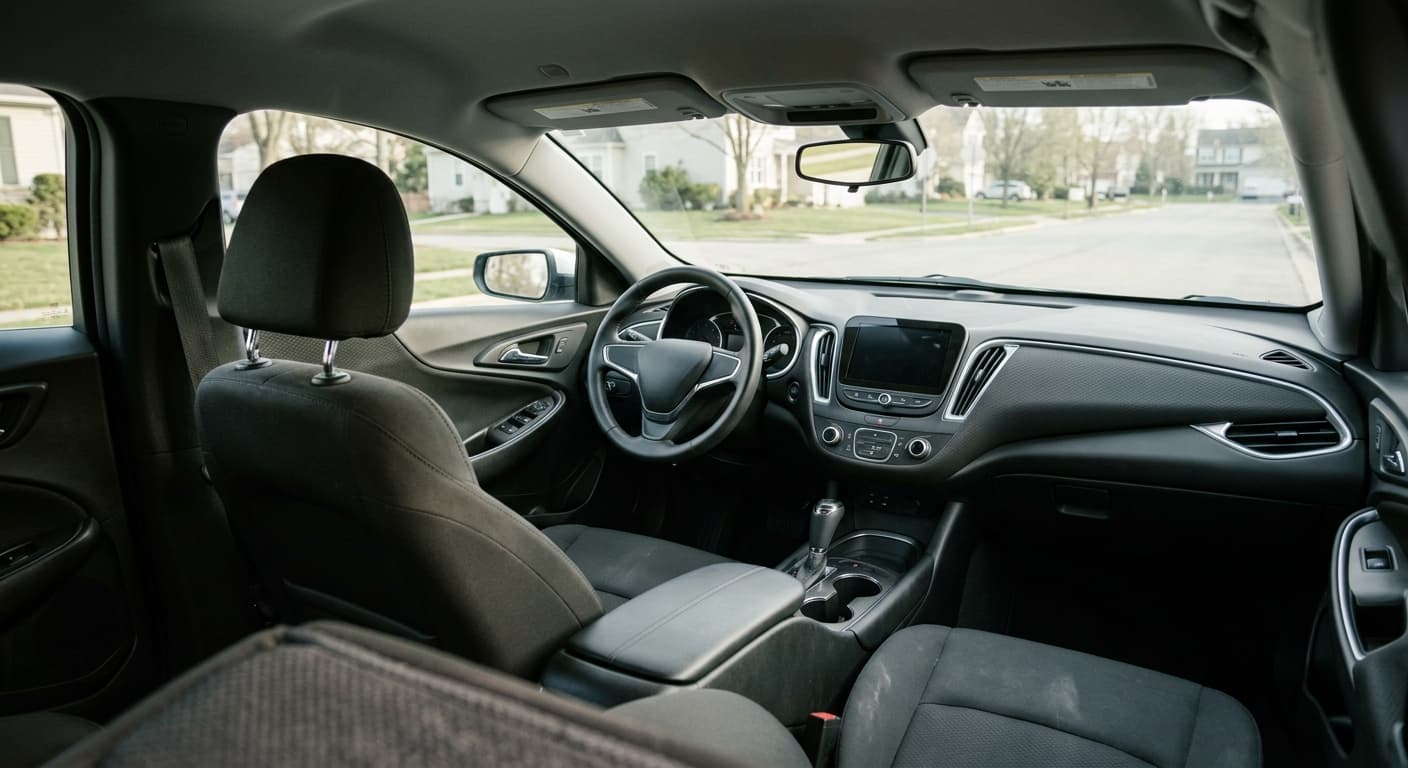
Yes, if the vehicle meets the conditions in Tennessee's Automated Vehicles Act. A self-driving car may operate on Tennessee streets and highways with no human driver aboard when it can obey the state's traffic laws, was certified to federal safety standards when it was built (unless exempted), can bring itself to a safe stop if its system fails, and is registered and identified as an ADS-operated vehicle. Tennessee requires no separate state permit.
Are self-driving cars legal in Tennessee?
Yes, within the limits of the Automated Vehicles Act, Title 55, Chapter 30 of the Tennessee Code. The Legislature passed it in 2017 as Public Chapter 474, originally numbered as chapter 54 and later redesignated as chapter 30 by the Tennessee Code Commission.
The central rule is in section 55-30-103: "An ADS-operated vehicle may drive or operate on streets and highways in this state with the ADS engaged without a human driver physically present in the vehicle if the vehicle meets the following conditions." The permission is conditional. A vehicle that does not meet the conditions gets no benefit from it.
The Act also says it "exclusively governs the authorization of the operation and use of an ADS-operated vehicle" when the system is engaged and in high or full automation mode, "including, but not limited to, commercial use" (section 55-30-108). In other words, the conditions in the Act are the state-level gate for driverless operation, including robotaxi and delivery services.
What counts as a self-driving car under Tennessee law
The Act covers vehicles equipped with an automated driving system (ADS), defined in section 55-30-102 as technology that can drive the vehicle "in high or full automation mode, without any supervision by a human operator." The definition requires the system to perform "all aspects of the dynamic driving task," including "the ability to automatically bring the motor vehicle into a minimal risk condition" if the system or vehicle fails.
That definition describes what engineers call Level 4 and Level 5 automation. A driver-assist feature that needs a person watching the road, such as adaptive cruise control or lane centering, does not drive "without any supervision by a human operator." For vehicles at those other levels, section 55-30-108 says "the motor vehicle and driver shall be held to the same laws as conventionally operated motor vehicles," including Tennessee's financial responsibility law, unless an exemption specifically covers them. If you are behind the wheel of a car with a driver-assist system, you are the driver. The levels of driving automation guide explains the difference.
Requirements to operate a self-driving car without a driver in Tennessee
Section 55-30-103 allows driverless operation only if the vehicle meets these conditions:
- It can follow the rules of the road. Unless an exemption has been granted under federal or state law, the vehicle must be "capable of being operated in compliance with" Tennessee's traffic chapters (chapters 8, 9 and 10 of Title 55).
- It met federal safety standards when built. Unless exempted, the vehicle must have been "at the time it was manufactured, certified by the manufacturer as being in compliance with applicable federal motor vehicle safety standards."
- It can fail safely. If the system fails and can no longer perform the whole driving task in its intended operating domain, the vehicle must be capable of "achieving a minimal risk condition," which the Act defines as a low-risk operating mode in which the vehicle reaches "a reasonably safe state."
- It is registered and identified. The vehicle must be registered under Tennessee's registration chapter and, "if registered in this state, the vehicle is identified on the registration as an ADS-operated vehicle."
Is a permit required?
No state permit is required. Nothing in the Act creates an application, a testing permit, a deployment permit or an approval by a state agency. The only state paperwork the Act ties to driverless operation is the registration.
The Act names the Tennessee Department of Revenue as its "department," and the Department uses form RV-1302023, "Autonomous Driving Level," to identify an ADS-operated vehicle on the certificate of registration. The applicant selects the vehicle's automation level and certifies, under penalty of perjury, that the vehicle was certified as meeting federal safety standards and can achieve a minimal risk condition.
For an ADS-operated vehicle, Tennessee also treats the requirement to carry a registration certificate as met if the certificate is "at all times carried in or available electronically through" the vehicle (Public Chapter 474, section 1, amending section 55-4-108).
The crime of driving with no one in the driver's seat
Section 55-30-107 makes it "an offense for any person to knowingly operate a motor vehicle on the public roads or highways of this state without a human driver in the driver's seat of the vehicle unless satisfying the requirements of this chapter." A violation is a Class A misdemeanor.
That rule is aimed at empty driver's seats in vehicles that do not qualify under the Act. Someone who climbs into the back seat of a car running a driver-assist system is not protected by the Act, because a driver-assist system is not an ADS.
Does a self-driving car need a human driver in Tennessee?
Not if it meets the Act's conditions. Section 55-30-103 allows operation "without a human driver physically present in the vehicle." Tennessee's driver license law also exempts "an ADS or an ADS-operated vehicle," and "a person operating an ADS-operated vehicle with the ADS engaged," from licensing (section 55-50-304, as amended by Public Chapter 474).
A 2025 bill would have changed that for commercial service. House Bill 1168 / Senate Bill 310 would have barred an ADS-operated vehicle hauling property for hire in interstate commerce, or carrying passengers for hire, from operating unless a licensed human driver sat in the driver's seat, monitored the vehicle at all times and could take control. The House Transportation Committee recommended it for passage if amended on March 17, 2026, and referred it to the Finance, Ways and Means Committee. The bill's record shows no later action and no public chapter number, so it did not become law.
Who is the "driver" of a self-driving car in Tennessee?
When the system is engaged, Tennessee law generally treats the system itself as the driver:
- Traffic law definitions. In the rules-of-the-road chapter, "driver" and "operator" mean, for an ADS-operated vehicle "and when the context requires," the ADS when it is engaged. "Person" includes "an engaged ADS" (section 55-8-101).
- Financial responsibility law. The "operator" of an ADS-operated vehicle, when the ADS is engaged, is the ADS (section 55-12-102).
Section 55-30-106(b) adds a narrower rule. When the ADS "is fully engaged, operated reasonably and in compliance with manufacturer instructions and warnings, the ADS shall be considered the driver or operator of the motor vehicle" for purposes of determining two things:
- "Liability of the vehicle owner or lessee for alleged personal injury, death, or property damage in an incident involving the ADS-operated vehicle"; and
- "Liability for nonconformance to applicable traffic or motor vehicle laws."
The rule has limits worth reading closely:
- It is conditional. It applies only when the system is fully engaged and the vehicle is used reasonably and according to the manufacturer's instructions and warnings.
- It is about the owner, the lessee and traffic violations. It does not make a passenger the driver, and it does not say that anyone is immune.
- It does not replace injury law. Section 55-30-106(a) says liability for accidents involving an ADS-operated vehicle "shall be determined in accordance with product liability law, common law, or other applicable federal or state law," and that nothing in the Act changes any right or liability under those laws.
So a person hurt by a driverless car still brings an ordinary negligence or product liability claim, often against the company that owns, operates or built the vehicle. See who is liable in a self-driving car accident.
Insurance requirements for self-driving cars in Tennessee
The Act as passed in 2017 set a high insurance floor for driverless operation. Section 55-54-103(4) (now 55-30-103) required a driverless vehicle to be covered by "primary automobile liability insurance in at least five million dollars ($5,000,000) per incident for death, bodily injury, and property damage," or a surety bond or other approved security.

The same subdivision set its own end date: "This subdivision (4) is deleted on July 1, 2021." It also directed the commissioners of safety and of commerce and insurance to report to the Legislature by February 1, 2020, on whether the amounts should be increased, decreased, extended or otherwise changed. The current Code lists three conditions for driverless operation, with the insurance condition gone.
As a result, the Act no longer sets any insurance amount for driverless vehicles. Tennessee's general financial responsibility law, Title 55, Chapter 12, is written to reach them: its definition of "operator" includes the ADS when it is engaged. For how other states handle robotaxi coverage, see self-driving car insurance.
Can a driverless car get a ticket in Tennessee?
Tennessee enacted a statute on this in 2026, but a later 2026 law replaced the Code section that held it. Public Chapter 726 (Senate Bill 2253 / House Bill 2302), signed by the Governor on April 13, 2026, and effective that day, amended section 55-8-202. It let "a state or local law enforcement agency" establish a policy for enforcing traffic offenses committed by an ADS. The procedure was optional for each agency, but an agency that adopted a policy had to follow these rules:
- Who gets the ticket. If a POST-certified or state-commissioned officer determined that an ADS committed a traffic offense, "a notice of violation or a citation must be sent by first class mail to the registered owner of the ADS-operated vehicle." Mailing to the owner's last known address was valid service.
- Deadline to send. The notice had to go out within 20 business days after the violation, absent exigent circumstances arising from registration irregularities.
- Time to pay. The notice had to allow payment within 30 days of mailing, and carry a Tennessee return address.
- No surprise penalties. No added penalty or cost could be assessed for nonpayment unless a second notice was mailed giving another 30 days to pay.
- Fine stated up front. The notice had to state the fine, and separately state any fees or court costs that might be added if the fine was not paid on time or if the owner contested and the ADS was found to have committed the offense.
The registered owner could pay the fine instead of appearing in court, or appear and contest it.
Why this may no longer be in effect. A second 2026 law, Public Chapter 854 (Senate Bill 2205, the Subterranean Transportation Infrastructure Coordination Act), signed April 27, 2026, amended the same section 55-8-202 "by deleting the section and substituting" new text. That part took effect July 1, 2026. The replacement text keeps a local-preemption rule and definitions but does not include the ticketing procedure from Public Chapter 726.
Tennessee courts have said that "the most recently enacted statute repeals by implication any irreconcilable provisions of the former act" (Vaughn v. State, 202 S.W.3d 106 (Tenn. 2006)). Under that rule the later act controls, which means the mail-ticket procedure may no longer be in effect, unless the Legislature restores it or a court reads the two acts together. Check the current text of section 55-8-202 in the Tennessee Code before relying on the mail-ticket procedure.
Either way, the underlying rule stands: section 55-30-106(b) treats a properly used, fully engaged ADS as the driver when deciding liability for breaking traffic laws. The page can a self-driving car get a ticket compares Tennessee with other states.
Seat belts, child seats and screens in a self-driving car
Public Chapter 474 also adjusted several passenger rules for vehicles with no human driver:
- Seat belts. In an ADS-operated vehicle with the ADS engaged, "neither the operator nor the owner shall be fined for the failure of any passenger, regardless of age, to wear a safety belt" (section 55-9-606). A passenger required to buckle up is "solely responsible" for doing so (section 55-9-603).
- Children. Responsibility for child restraints in a vehicle with an ADS belongs "solely to the parent, guardian, or other human person accompanying the child," not to the ADS or the vehicle's owner (section 55-9-602). If no parent or guardian is present, the person accompanying the child is responsible, and if no one accompanies the child, the parent or legal guardian is.
- Screens. Notwithstanding Tennessee's ban on video screens visible to the driver, a person inside an ADS-operated vehicle with the ADS engaged may use an integrated display, if the display automatically disables moving images visible to the operator when the autonomous technology is disengaged (section 55-30-104).
- Unattended vehicles. The rule requiring a person to stop the engine, lock the ignition and set the brake before leaving a vehicle unattended does not apply to an ADS-operated vehicle (section 55-8-162).
Can Nashville or other Tennessee cities regulate self-driving cars?
Largely no. Section 55-30-105, as rewritten effective July 1, 2026, says a political subdivision "shall not, by ordinance, resolution, or another means, prohibit or regulate" within its boundaries the use of:
- an ADS-operated vehicle "that is operating in compliance with this chapter and otherwise complies with all laws of the political subdivision"; or
- a motor vehicle operated at any level of autonomous technology not otherwise covered by the chapter.
The 2026 rewrite by Public Chapter 854 kept both items and added a third: vehicles operated in connection with a subterranean transit project governed by the new Subterranean Transportation Infrastructure Coordination Act. A separate section, 55-8-202, also bars local governments from prohibiting a vehicle equipped with autonomous technology that complies with local safety regulations.
Note the qualifier in the first item. The protection covers a vehicle that complies with the Act "and otherwise complies with all laws of the political subdivision." A robotaxi still has to follow local traffic and parking rules that apply to every vehicle. What a city cannot do is ban driverless vehicles or write rules aimed at their use.
Robotaxis in Nashville (as of September 2026)
Tennessee has no robotaxi permit, so there is no state list of approved operators. As of September 2026, Waymo's website lists Nashville among the cities where it is "serving riders." Waymo announced on April 7, 2026, that it was "welcoming the first public riders" into its fully autonomous ride-hailing service in Nashville, across an initial 60-square-mile service area that Waymo said covers spots including Broadway, 12 South, Midtown and East Nashville. Waymo said it would also start serving rides on the Lyft app later in 2026, with Lyft acting as its fleet management partner through Flexdrive. These are the company's own statements, and service areas change often.

For how claims against a robotaxi company usually work, and what the cars record, see Waymo robotaxi accidents and do robotaxis record you.
Driverless trucks in Tennessee
The Act does not limit driverless operation to passenger cars. Its definition covers "a vehicle equipped with an automated driving system," and section 55-30-108 extends its exclusive authorization rule to "commercial use of ADS-operated vehicles." The failed 2025 bill described above would have required a human driver in ADS vehicles hauling freight for hire in interstate commerce, which shows the question is live in the Legislature, but current law contains no such requirement. Federal motor carrier rules also apply to commercial trucks. See autonomous truck laws and, after a crash with a large commercial vehicle, truck accident law.
Can you get a DUI in a self-driving car in Tennessee?
Tennessee's statutes do not directly answer this for a rider. The DUI law, section 55-10-401, makes it unlawful "for any person to drive or to be in physical control of any automobile or other motor driven vehicle" while impaired or at 0.08% alcohol concentration or more. It does not mention automated driving systems.
For an ADS-operated vehicle, the rules-of-the-road chapter treats the engaged ADS as the "driver" and "operator" "when the context requires." Whether a rider in a fully driverless vehicle is "in physical control" is a question the statutes leave to courts. The line is clearer for driver-assist cars: if you are in the driver's seat of a car that needs your supervision, you are driving it, and the DUI law applies to you in full. See DUI in a self-driving car and Tennessee DUI laws.
What to do after a crash with a self-driving car in Tennessee
Tennessee adjusted its crash duties for driverless vehicles. The duties to stop and remain at the scene of an injury crash, to stop after damaging a vehicle, to give information and render aid, to stop after hitting an unattended vehicle or a fixture, and to give immediate notice to police (sections 55-10-101 through 55-10-106) are satisfied for an ADS-operated vehicle "if the motor vehicle's owner, or a person on behalf of the motor vehicle's owner, promptly contacts a law enforcement officer or agency to report the accident and the ADS-operated vehicle remains on the scene of the accident as otherwise required by law." The written crash report under section 55-10-107 "must be completed by the vehicle's owner," and the owner of an ADS-operated vehicle is "solely responsible" for filing the accident report under section 55-12-104.
So nobody may step out of the car to hand you a license or insurance card. Plan for that:
- Stop and check for injuries. Your own duties as a driver still apply. Call 911 if anyone is hurt.
- Call police yourself. The owner's duty to report does not stop you from reporting, and a police report creates a record of the vehicle, its owner and its insurer.
- Document the vehicle. Photograph the car, its plate, company markings and any fleet number, and note the time and exact location. If the vehicle has a rider-support button or phone line, use it to reach the company.
- Get medical care. Some injuries appear hours or days later, and records made close to the crash carry weight.
- Preserve the evidence. Driverless cars record video and sensor data. A lawyer can send a preservation letter early, before routine deletion.
- Watch the deadline. Under section 28-3-104, actions for "injuries to the person" must generally be filed within one year after the cause of action accrued. The deadline is two years if criminal charges are brought against the person alleged to have caused the injury and the other conditions of that section are met. In product liability cases, the injury claim accrues on the date of the injury.
For the rest of the claims process, see Tennessee car accident laws, Tennessee statutes of limitations and wrongful death. Claims involving Tesla's driver-assist systems are covered in Tesla Autopilot and FSD lawsuits.
Recent and pending changes to Tennessee's self-driving car law
| Date | Change | Status |
|---|---|---|
| 2017 | Public Chapter 474 enacts the Automated Vehicles Act | In force |
| July 1, 2021 | $5 million insurance condition in section 55-30-103(4) deleted by the Act's own terms | Deleted |
| April 13, 2026 | Public Chapter 726 creates the optional mail-ticket process for ADS traffic offenses | Section replaced by Public Chapter 854 on July 1, 2026 without it; may no longer be in effect |
| July 1, 2026 | Public Chapter 854 rewrites sections 55-30-105 and 55-8-202 (local preemption); the 55-8-202 rewrite omits the Public Chapter 726 mail-ticket text | In force |
| 2025-2026 | HB 1168 / SB 310 (human driver for commercial ADS vehicles) | Not enacted |
How Tennessee compares with other states
Tennessee sits with the permissive states: no permit, no license requirement and a broad bar on local rules, with the conditions for driverless operation written into the statute itself. It stands out for three things: an insurance floor that expired by design in 2021, detailed crash-reporting duties placed on the owner, and a 2026 statute, since overtaken by a later rewrite of the same section, on mailing traffic tickets to the owner of a driverless car.
The self-driving car laws by state hub compares every state. Nearby profiles include Georgia and North Carolina, and Texas and Arizona have similar permissive frameworks. For the national layer, see federal self-driving car laws.
Frequently Asked Questions
Is it legal to ride in a driverless car in Tennessee?
Yes, if the vehicle meets the Automated Vehicles Act. Tenn. Code 55-30-103 allows an ADS-operated vehicle to operate with no human driver aboard if it can comply with Tennessee traffic law, was certified to federal safety standards when built (unless exempted), can reach a minimal risk condition if its system fails, and is registered and identified as an ADS-operated vehicle.
Do self-driving car companies need a permit in Tennessee?
No state permit is required. The Act sets conditions in the statute itself and says it exclusively governs authorization of ADS-operated vehicles, including commercial use. The vehicle must be registered, and a Tennessee-registered vehicle must be identified on its registration as ADS-operated.
Who gets the ticket when a self-driving car breaks a traffic law in Tennessee?
Public Chapter 726, signed April 13, 2026, let a police agency adopt a policy of mailing the notice of violation or citation to the vehicle's registered owner within 20 business days, with 30 days to pay. A later act, Public Chapter 854 (signed April 27, 2026), replaced all of Tenn. Code 55-8-202 effective July 1, 2026 without that procedure, so it may no longer be in effect. Check the current Code before relying on it.
Does Tennessee require special insurance for self-driving cars?
Not any more. The 2017 Act required $5 million in primary liability coverage for driverless operation, but that requirement was deleted on July 1, 2021, by the Act's own terms. The Act now sets no insurance amount. Tennessee's general financial responsibility law defines the operator of an engaged ADS-operated vehicle as the ADS.
Can Nashville ban robotaxis?
No. Tenn. Code 55-30-105 bars cities and counties from prohibiting or regulating the use of an ADS-operated vehicle that complies with the Act and otherwise complies with local law. Robotaxis must still follow local traffic and parking rules that apply to every vehicle.
Who is responsible if a self-driving car hits me in Tennessee?
Liability is decided under product liability law, common law and other applicable law (Tenn. Code 55-30-106(a)). When the system is fully engaged and used reasonably and according to the manufacturer's instructions, the ADS is considered the driver for deciding the owner's or lessee's liability. Claims are often brought against the company that owns, operates or built the vehicle.
How long do I have to sue after a self-driving car crash in Tennessee?
Generally one year from when the claim accrued for personal injury (Tenn. Code 28-3-104), or two years if criminal charges are brought against the person alleged to have caused the injury and that section's other conditions are met. Speak with a lawyer early, because the deadline is short.
Is a Tesla on Autopilot a self-driving car under Tennessee law?
Not under the Automated Vehicles Act as written. The Act covers systems that drive without any human supervision. A driver-assist system that needs a person to watch the road is treated like a conventional car, and the person at the wheel is the driver (Tenn. Code 55-30-108).
Updates
Independently fact-checked against the cited primary sources
Sources and References
- Tennessee Public Chapter 474 (2017), Automated Vehicles Act as enacted, incl. the $5 million insurance condition and its July 1, 2021 deletion(publications.tnsosfiles.com).gov
- Tenn. Code 55-30-103 (2025): conditions for operating an ADS-operated vehicle without a human driver(law.justia.com)
- Official Code of Tennessee Annotated, Title 55 (Code Commission public release): chapter 30 and ADS provisions in chapters 8, 9, 10, 12 and 50(unicourt.github.io)
- Tennessee Public Chapter 726 (2026, SB 2253): traffic offenses committed by an ADS, mailed notice to registered owner(publications.tnsosfiles.com).gov
- SB 2253 bill history: Public Chapter 726 signed April 13, 2026, effective that day(wapp.capitol.tn.gov).gov
- Tennessee Public Chapter 854 (2026, SB 2205): rewrites Tenn. Code 55-30-105 and 55-8-202(publications.tnsosfiles.com).gov
- SB 2205 bill history: Public Chapter 854 signed April 27, 2026, effective April 27 and July 1, 2026; effective dates(wapp.capitol.tn.gov).gov
- HB 1168 / SB 310 (2025-2026): proposed human-driver requirement for commercial ADS vehicles, bill history(wapp.capitol.tn.gov).gov
- HB 1168 bill text(www.capitol.tn.gov).gov
- Tennessee Department of Revenue form RV-1302023, Autonomous Driving Level(www.tn.gov).gov
- Tenn. Code 28-3-104 (Code Commission public release): one-year limit for personal injury actions(unicourt.github.io)
- Waymo blog, April 7, 2026: public rides begin in Nashville (company statement)(waymo.com)
- Waymo homepage: cities where Waymo is serving riders (company statement, September 2026)(waymo.com)
- Vaughn v. State, 202 S.W.3d 106 (Tenn. 2006), later-enacted statute controls irreconcilable earlier provisions(courtlistener.com)