
Virginia
Virginia Knife Laws (2026): Concealed Carry, Stiletto Knife
Independently fact-checked against primary sources (last audited September 18, 2026). · 12 primary sources cited on this page. How we verify our legal content

Virginia's core concealed-carry statute bans carrying a named list of edged weapons hidden from common observation, with no intent element required, and does not by itself restrict open carry of the same items; separate place-specific statutes and a law against brandishing a long blade to intimidate restrict possession or open display regardless of concealment, and no statute sets a general blade-length limit for ordinary carry. The current list does not use the word "switchblade" by name, though a catch-all clause and a Virginia Supreme Court decision construing it mean a switchblade is very likely still reached, and a separate, older statute governing sales to minors still uses the word directly. A convicted felon faces a much harsher rule: concealing any of the listed weapons, including an ordinary knife on the list, is a felony on the first offense.
Jurisdiction scope: This page covers Virginia state law only, principally Va. Code §§ 18.2-308, 18.2-308.1, 18.2-308.2, 18.2-309, 18.2-311, 18.2-282.1, 18.2-283, 18.2-283.1, 18.2-283.3, 18.2-287.01, and 15.2-915. It does not cover Virginia's concealed handgun permit statutes in detail, since those govern firearms rather than knives.
Can you carry a knife openly or concealed in Virginia?
Open carry of any knife, including the items named in the concealed-carry statute, is not restricted by Virginia's core weapons law. Va. Code § 18.2-308(A) reaches only carrying a listed weapon "hidden from common observation." The current statute provides: "If any person carries about his person, hidden from common observation, (i) any pistol, revolver, or other weapon designed or intended to propel a missile of any kind by action of an explosion of any combustible material; (ii) any dirk, bowie knife, stiletto knife, ballistic knife, machete, razor, sling bow, spring stick, metal knucks, or blackjack; (iii) any flailing instrument consisting of two or more rigid parts connected in such a manner as to allow them to swing freely, which may be known as a nun chahka, nun chuck, nunchaku, shuriken, or fighting chain; (iv) any disc, of whatever configuration, having at least two points or pointed blades which is designed to be thrown or propelled and which may be known as a throwing star or oriental dart; or (v) any weapon of like kind as those enumerated in this subsection, he is guilty of a Class 1 misdemeanor." The statute sets no blade-length threshold; every named knife is banned from concealed carry regardless of size. A second violation, or a first violation after a conviction under a substantially similar county, city, or town ordinance, is a Class 6 felony, and a third or subsequent violation is a Class 5 felony. A convicted felon does not get the benefit of that ladder; see the felon-specific rule below.
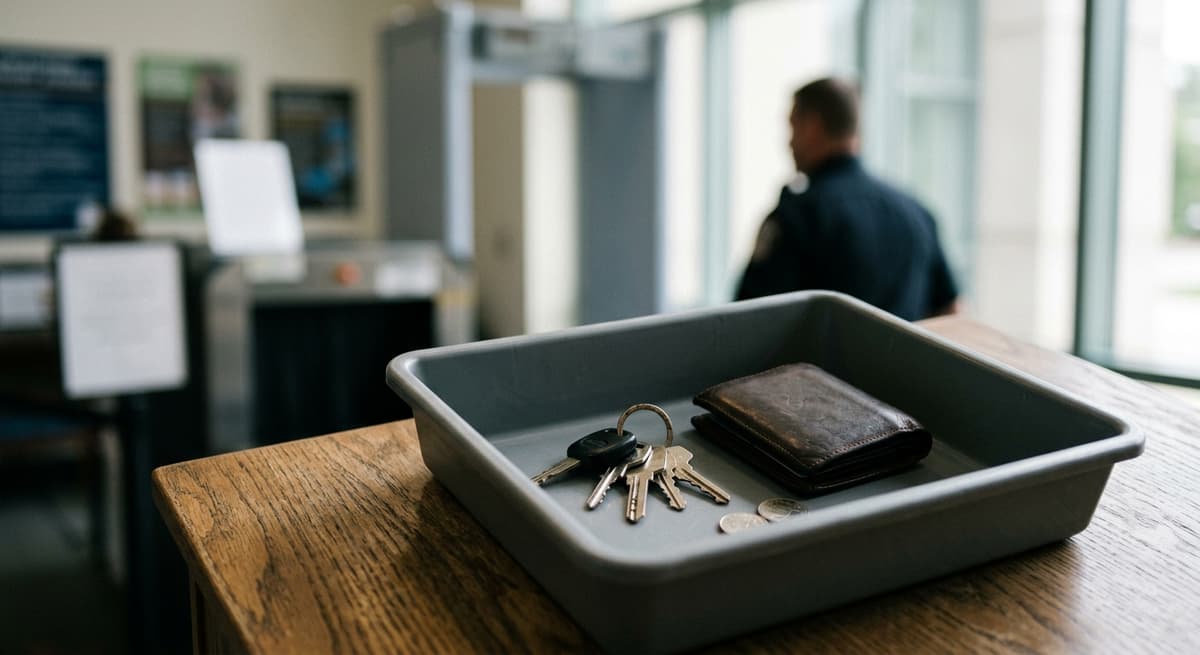
Subsection B exempts a person in their own place of abode or its curtilage, and subsection C lists further exemptions, including a person in their own place of business, a law enforcement officer, a person going to or from an established shooting range or a bona fide weapons exhibition with the weapon unloaded and securely wrapped, a person transporting the weapon between home and a place of purchase or repair, and an attorney for the Commonwealth.
Brandishing a machete or long blade to intimidate
A separate statute reaches open display, not just concealment. Va. Code § 18.2-282.1 provides: "It shall be unlawful for any person to point, hold, or brandish a machete or any weapon, with an exposed blade 12 inches or longer, with the intent of intimidating any person or group of persons and in a manner that reasonably demonstrates that intent." The statute exempts a person engaged in excusable or justifiable self-defense. A violation is a Class 1 misdemeanor, or a Class 6 felony if it occurs on any public, private, or religious elementary, middle, or high school property, including buildings and grounds, or on public property within 1,000 feet of such school property. This is a third blade-length threshold in Virginia knife law, an exposed blade of 12 inches or longer, separate from the school property exception under 3 inches and the hospital "location-restricted knife" threshold over 3.5 inches described below, and it applies statewide, not to a particular place.
The "stiletto knife," not "switchblade knife," in current Virginia law, and why that does not settle the switchblade question
The current text of § 18.2-308(A) names a "stiletto knife" and a "sling bow," not a "switchblade knife" or a "slingshot." Coverage describing Virginia's concealed-carry ban as reaching a "switchblade" by that name is describing either an outdated version of the statute or a different Virginia statute. The distinction matters because Virginia's separate minors statute, § 18.2-309, discussed below, does still use the term "switchblade knife," so the two statutes' terminology for a similar category of knife genuinely differs today.
That word swap is not the end of the analysis for concealed carry, because clause (v) of the same subsection reaches "any weapon of like kind as those enumerated in this subsection." Neither the 2023 act that made the stiletto/dirk swap nor § 18.2-307.1, the article's own definitions section (which, among the weapons named in § 18.2-308(A), defines only "ballistic knife" and "spring stick"), defines "stiletto knife," "dirk," or "bowie knife," so clause (v) is not a dead letter; it is where the practical question about an unlisted knife type has to be answered. The Supreme Court of Virginia construed this catch-all in Farrakhan v. Commonwealth, 273 Va. 177 (2007): "in order to be a 'weapon' within the definition of 'weapon of like kind,' the item must be designed for fighting purposes or commonly understood to be a 'weapon.' Upon establishing that the item in question is a 'weapon,' the analysis continues to determine if the item possesses such similar characteristics to the enumerated items in the Code § 18.2-308(A) such that its concealment is prohibited." The same opinion, describing the pre-2023 version of the list that then still named a switchblade, wrote that "[s]ome enumerated items are designed for fighting purposes such as a dirk, bowie knife, or switchblade knife." The Court has already characterized a switchblade as designed for fighting purposes, the first prong of its own test. Nothing in the 2023 word change altered that functional characterization, so the more likely reading is that concealed carry of a switchblade remains covered today, now through clause (v) rather than by name.
A felon's concealed knife carry is a felony on the first offense
Section 18.2-308's own penalty ladder, misdemeanor on the first violation, Class 6 felony on the second, Class 5 felony on the third, is not the only rule that applies to concealed carry of a listed weapon. Va. Code § 18.2-308.2(A) reaches three groups: a person convicted of a felony; a person adjudicated delinquent as a juvenile 14 years of age or older at the time of the offense of murder, kidnapping, robbery by the threat or presentation of firearms, or rape; and a person under the age of 29 who was adjudicated delinquent as a juvenile 14 years of age or older at the time of the offense of any other delinquent act that would be a felony if committed by an adult. That third group is not a short list of serious juvenile offenses; it reaches any felony-equivalent delinquency adjudication and runs until the person turns 29. Any person in one of these three groups who knowingly and intentionally carries the weapon hidden falls under the statute's operative clause: "to knowingly and intentionally carry about his person, hidden from common observation, any weapon described in subsection A of § 18.2-308." That cross-reference reaches the same dirk, bowie knife, stiletto knife, and other items described above. The statute continues: "Any person who violates this subsection is guilty of a Class 6 felony." Unlike § 18.2-308's own ladder, there is no misdemeanor first offense for a felon: a felon's first concealed carry of an ordinary knife on the § 18.2-308(A) list is itself a Class 6 felony. (Separate mandatory-minimum provisions elsewhere in § 18.2-308.2 apply to firearm possession by certain repeat felons and do not add a mandatory minimum for a knife. A new subsection A1, added in 2026, adds a separate firearm-only purchase and possession ban for certain offenders and does not affect the knife analysis above.)

School property
Va. Code § 18.2-308.1(A) makes it a Class 1 misdemeanor to knowingly possess "any knife, except a pocket knife having a folding metal blade of less than three inches," along with a stun weapon or a § 18.2-308(A) weapon other than a firearm, on the property of a child day center or a public, private, or religious preschool, elementary, middle, or high school, including buildings and grounds; on the portion of any property open to the public and exclusively used for a school-sponsored function or extracurricular activity while it is taking place; or on a school bus. This blade-length exception for an ordinary folding pocketknife under 3 inches exists only in this school-property statute; it does not appear in § 18.2-308's general concealed-carry ban, which restricts the named knife types regardless of length. Subsection D limits the reach of the child day center and private or religious preschool provisions specifically: they apply only during the operating hours of the child day center or preschool, and they do not apply to a person whose residence is on the property of the child day center or preschool while that person possesses a firearm or other weapon prohibited under this section in that residence.
Subsection E adds a further set of exemptions beyond the blade-length carve-out in subsection A. It states that this section does not apply to, among others, a person using a knife customarily used for food preparation or service for that purpose; a person who possesses a knife or blade they customarily use in their trade; a person who possesses an unloaded firearm or a stun weapon that is in a closed container, or a knife having a metal blade, in or upon a motor vehicle, or an unloaded shotgun or rifle in a firearms rack in or upon a motor vehicle; persons possessing a weapon as part of the school's curriculum or activities, or as part of a school-sponsored or school-authorized program; a law-enforcement officer or qualified retired law-enforcement officer; and a school security officer authorized to carry a firearm, or a licensed armed security officer hired by a child day center or a private or religious school for the protection of students and employees. For purposes of this exemption subsection, "weapon" includes a knife having a metal blade of three inches or longer, and "closed container" includes a locked vehicle trunk.
Hospitals providing mental health services
Va. Code § 18.2-283.3, enacted in the 2026 session with no delayed-effectiveness clause and in force since July 1, 2026, defines a "location-restricted knife" as "a knife with a blade over three and one-half inches." Subsection B makes it a Class 1 misdemeanor to knowingly and intentionally possess a firearm, a location-restricted knife, or another dangerous weapon, including explosives and stun weapons as defined in § 18.2-308.1, "in the building of any hospital that provides mental health services or developmental services in the Commonwealth, including an emergency department or other facility rendering emergency medical care." Any such knife is subject to seizure by a law-enforcement officer and forfeiture to the Commonwealth. Subsection C exempts an on-duty police officer, sheriff, law-enforcement agent or official, officer or guard of any state correctional institution, or armed security officer; a person with written authorization from the hospital, including authorization related to an employee's scope of employment; and a person brought into the hospital under an emergency custody order or involuntary detention order. Subsection D requires notice of the section to be posted conspicuously at each public entrance of the hospital; a person cannot be convicted under this section if that notice was not posted, unless the person had actual notice of the prohibition. This 3.5-inch threshold applies only inside a qualifying hospital, including its emergency department; it does not change the type-based, no-length-threshold rule for concealed carry generally under § 18.2-308, or the 3-inch pocketknife exception on school property.
Sales to minors: an older statute with older terms
Va. Code § 18.2-309(A) makes it a Class 1 misdemeanor to sell, barter, give, or furnish "a dirk, switchblade knife or bowie knife" to a minor, with good cause to believe the recipient is a minor. This statute has not been amended since 1993, and its list still uses "switchblade knife" rather than the "stiletto knife" language now used in § 18.2-308. A separate statute, § 18.2-311, makes it a Class 4 misdemeanor to sell, offer for sale, or possess with intent to sell a blackjack, brass or metal knucks, a throwing star or oriental dart, a ballistic knife as defined in § 18.2-307.1, "or like weapons"; that statute, most recently amended in 2022, does not name a switchblade, stiletto knife, dirk, or bowie knife anywhere in its own list. No reported Virginia decision settles whether a switchblade or stiletto knife falls within "or like weapons." Unlike § 18.2-308(A)'s catch-all, which follows a list that includes several knife types, § 18.2-311's list and its catch-all describe only non-knife items (a blackjack, knucks, a throwing star, and a ballistic knife), which is a weaker basis for reaching an ordinary knife.

Courthouses, places of worship, and airport terminals
Va. Code § 18.2-283.1 makes it a Class 1 misdemeanor to possess in or transport into a Virginia courthouse a gun or other weapon designed to propel a missile, a component designed for use with a dangerous weapon, or "other dangerous weapon," a term the statute extends by cross-reference to the items listed in § 18.2-308(A), including a stiletto knife. Any such weapon is subject to seizure by a law enforcement officer. The statute exempts a police officer, sheriff, other law enforcement official, magistrate, court officer, judge, and certain treasurers and Workers' Compensation Commission officials acting in their official duties. A separate, older statute, § 18.2-283, makes it a Class 4 misdemeanor to carry a gun, pistol, bowie knife, dagger, or other dangerous weapon, "without good and sufficient reason," to a place of worship while a meeting for religious purposes is being held there.
Va. Code § 18.2-287.01 reaches the same list of weapons in a third setting. It is a Class 1 misdemeanor to possess or transport into any air carrier airport terminal in Virginia a gun or other weapon designed to propel a missile, a component designed for use with a dangerous weapon, or "any other dangerous weapon, including explosives, stun weapons as defined in § 18.2-308.1, and those weapons specified in subsection A of § 18.2-308," which includes a stiletto knife and the other items on that list. Any such weapon is subject to seizure. The statute exempts a police officer, sheriff, law-enforcement agent or official, conservation police officer, a conservator of the peace employed by the airport, and a retired law-enforcement officer qualified under § 18.2-308.016(C), with no on-duty condition stated for any of them, and it exempts an airline passenger who, to the extent otherwise permitted by law, transports a lawful weapon into or out of the terminal solely to present it to U.S. Customs agents before an international flight, check it with luggage, or retrieve it from baggage claim.
Local preemption: general knife ordinances versus airport weapons ordinances
Virginia's general local-preemption statute, § 15.2-915(A), provides: "No locality shall adopt or enforce any ordinance, resolution, or motion, as permitted by § 15.2-1425, and no agent of such locality shall take any administrative action, governing the purchase, possession, transfer, ownership, carrying, storage, or transporting of firearms, ammunition, or components or combination thereof other than those expressly authorized by statute. For purposes of this section, a statute that does not refer to firearms, ammunition, or components or combination thereof shall not be construed to provide express authorization." The section reaches both a locality's ordinances and administrative action taken by its agents, but its scope is firearms and ammunition only; it does not mention a knife anywhere in its text, so a Virginia locality is not preempted by this statute from adopting its own knife-specific ordinance. That is a statement about what this one statute forbids, not about whether a Virginia locality otherwise has the power to regulate knives generally; this statute does not answer that separate question either way.
A narrower, knife-reaching preemption does exist elsewhere. § 18.2-287.01's closing paragraph provides: "Any other statute, rule, regulation, or ordinance specifically addressing the possession or transportation of weapons in any airport in the Commonwealth shall be invalid, and this section shall control." The "weapons" that section covers include the § 18.2-308(A) list, so a Virginia locality cannot adopt its own weapons ordinance addressing knives at an air carrier airport terminal, even though § 15.2-915 leaves general local knife regulation open.
Federal law: what it does and does not reach
Federal law does not ban an individual from owning or carrying a switchblade. The Federal Switchblade Act, 15 U.S.C. §§ 1241 to 1245, restricts interstate commerce in switchblade knives and, in 15 U.S.C. § 1245, makes it a federal offense to knowingly possess, manufacture, sell, or import a ballistic knife in or affecting interstate commerce or within federal territorial jurisdiction; the operative offense sections, §§ 1242 and 1243, do not apply to certain knives and people, listed as exemptions in 15 U.S.C. § 1244. A 2009 amendment, § 1244(5), exempts a knife with a spring, detent, or other closure-bias mechanism that requires hand, wrist, or arm exertion on the blade itself to overcome the bias and assist opening, the carve-out that keeps modern assisted-opening folding knives legal in interstate commerce. A separate exemption, § 1244(4), covers a person with only one arm possessing or carrying a switchblade with a blade three inches or less.
Disclaimer: This article provides general legal information about Virginia knife law as of September 2026. It is not legal advice. Consult a lawyer licensed in Virginia for advice about a specific situation.
For a state-by-state comparison, see knife laws by state. Virginia's self-defense statutes are covered separately on the Virginia self-defense laws page.
Statutes cited reflect their in-force version as of 2026-09-18. Last updated: 2026-09-18.
Frequently Asked Questions
Is it legal to carry a switchblade in Virginia?
Open carry, yes, under § 18.2-308(A) alone: nothing in that statute restricts open carry of any knife. Concealed carry is a different question, and openly brandishing a long blade to intimidate is a third question. § 18.2-308(A)'s named list no longer uses the word 'switchblade knife'; it names a 'stiletto knife' instead. But clause (v) of the same list separately bans concealing 'any weapon of like kind,' and the Supreme Court of Virginia has construed that clause to reach an item that is designed for fighting purposes or commonly understood to be a weapon and shares similar characteristics with the named items (Farrakhan v. Commonwealth, 273 Va. 177 (2007)). The same opinion described a switchblade as designed for fighting purposes, so the 2023 word swap does not mean concealing one became lawful; it is very likely still covered, now through clause (v). A separate statute, § 18.2-309, still bans selling or furnishing a switchblade knife to a minor by that name, and § 18.2-282.1 separately bans pointing, holding, or brandishing a machete or any weapon with an exposed blade 12 inches or longer, with intent to intimidate.
Does Virginia have a blade-length limit for knives?
Not for the general concealed-carry ban, which is type-based rather than length-based regardless of size. Three narrower rules do turn on blade length. On school property, § 18.2-308.1(A) excludes a pocket knife with a folding metal blade under 3 inches from the school possession ban. Under a 2026 statute, § 18.2-283.3, a knife with a blade over 3.5 inches is a 'location-restricted knife' and is banned, along with a firearm or other dangerous weapon, inside the building of any hospital that provides mental health services or developmental services in Virginia, including an emergency department. And under § 18.2-282.1, pointing, holding, or brandishing a machete or any weapon with an exposed blade 12 inches or longer, with the intent of intimidating a person or group and in a manner that reasonably demonstrates that intent, is a Class 1 misdemeanor, or a Class 6 felony on school property or on public property within 1,000 feet of school property; that rule applies statewide, regardless of concealment.
Can you carry a knife openly in Virginia?
Yes, for the items named in § 18.2-308(A) (a dirk, bowie knife, stiletto knife, ballistic knife, machete, razor, and similar items), since that statute restricts only carrying them hidden from common observation, not openly.
What happens if a convicted felon carries a concealed knife in Virginia?
It is a Class 6 felony on the first offense, not a misdemeanor. Va. Code § 18.2-308.2(A) makes it unlawful for a felon, a juvenile adjudicated delinquent at 14 or older for murder, kidnapping, robbery by threat or presentation of firearms, or rape, or a person under 29 adjudicated delinquent as a juvenile at 14 or older for any other felony-equivalent delinquent act, to knowingly and intentionally carry, hidden from common observation, any weapon described in § 18.2-308(A), which includes an ordinary dirk, bowie knife, or stiletto knife. This bypasses § 18.2-308's own misdemeanor-first, felony-later penalty ladder entirely.
Does Virginia preempt local knife ordinances?
Generally no, but there is one narrow exception. Virginia's local weapons-preemption statute, § 15.2-915, does not bar a local knife ordinance; it is scoped by its own text to firearms, ammunition, and related administrative action, and it does not mention knives. That only means this particular statute does not forbid a local knife ordinance; it is not an affirmative grant of power, and a Virginia locality's general ordinance-making authority is a separate question. § 18.2-287.01 does preempt one specific case: its closing paragraph invalidates any local ordinance specifically addressing weapons at an air carrier airport terminal, and the weapons that statute covers include the § 18.2-308(A) list, so a Virginia locality cannot adopt its own knife ordinance for an airport.
Updates
Independently fact-checked against the cited primary sources
Sources and References
- Va. Code § 18.2-308 - Carrying concealed weapons(law.lis.virginia.gov).gov
- Va. Code § 18.2-308.1 - Possession of certain weapons on school property(law.lis.virginia.gov).gov
- Va. Code § 18.2-308.2 - Possession or transportation of firearms, ammunition, stun weapons, explosives, or concealed weapons by convicted felons(law.lis.virginia.gov).gov
- Va. Code § 18.2-309 - Furnishing certain weapons to minors(law.lis.virginia.gov).gov
- Va. Code § 18.2-311 - Prohibiting the selling or having in possession blackjacks, etc.(law.lis.virginia.gov).gov
- Va. Code § 18.2-307.1 - Definitions (article definitions; 'stiletto knife' undefined)(law.lis.virginia.gov).gov
- Va. Code § 18.2-282.1 - Brandishing a machete or other bladed weapon with intent to intimidate(law.lis.virginia.gov).gov
- Va. Code § 18.2-283 - Carrying dangerous weapon to place of religious worship(law.lis.virginia.gov).gov
- Va. Code § 18.2-283.1 - Carrying weapon into courthouse(law.lis.virginia.gov).gov
- Va. Code § 18.2-283.3 - Possession of a weapon in a hospital that provides mental health services or developmental services prohibited (2026)(law.lis.virginia.gov).gov
- Va. Code § 18.2-287.01 - Carrying weapon in air carrier airport terminal(law.lis.virginia.gov).gov
- Va. Code § 15.2-915 - Preemption of local regulation of firearms(law.lis.virginia.gov).gov
- Farrakhan v. Commonwealth, 273 Va. 177 (2007) - construing 'weapon of like kind' under Va. Code 18.2-308(A)(courtlistener.com)
- 15 U.S.C. §§ 1241-1245 - Federal Switchblade Act, interstate commerce and ballistic-knife scope(law.cornell.edu)
- 15 U.S.C. § 1244 - exceptions, including the 2009 assisted-opening carve-out and the one-arm exception(law.cornell.edu)