
District of Columbia
D.C. Knife Laws (2026): Possession and Carry Rules
Independently fact-checked against primary sources (last audited September 18, 2026). · 6 primary sources cited on this page. How we verify our legal content

The District of Columbia reaches knives through two differently worded statutes rather than one. One bans a short list of named items, including a switchblade, outright. The other reaches a broader list of knife types, but only when carried with intent to use unlawfully against another. A third, more general carrying statute bans carrying "any deadly or dangerous weapon" without a license, but that phrase is not itself defined to name a knife.
Jurisdiction scope: This page covers District of Columbia law only, principally D.C. Code §§ 22-4501, 22-4504, 22-4514, 22-4515, 38-231, 38-232, and 38-234. It does not cover the District's separate assault, robbery, or armed-offense enhancement statutes, which apply to a knife used as a weapon regardless of how it was carried or possessed.
Can you own a knife in D.C.?
Most knives can be owned in the District. Two named-item bans reach specific categories regardless of intent or how they are carried. D.C. Code § 22-4514(a) provides:
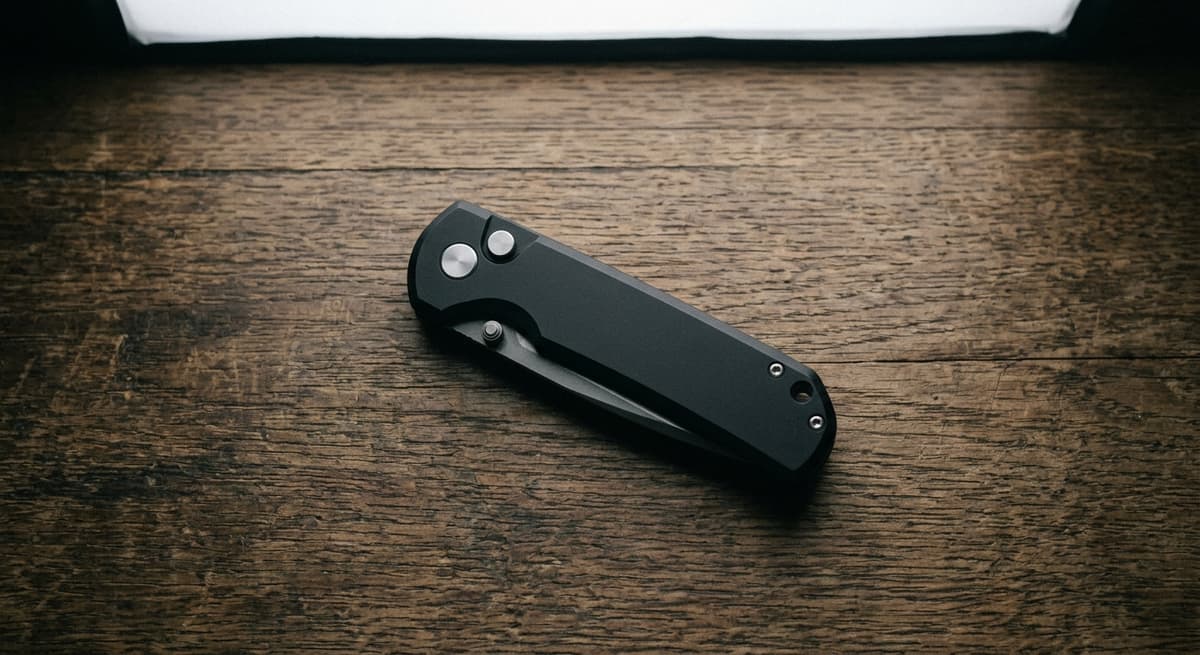
No person shall within the District of Columbia possess any item that is, in fact, a machine gun, sawed-off shotgun, bump stock, ghost gun, knuckles, or any instrument or weapon of the kind commonly known as a blackjack, slungshot, sand club, sandbag, switchblade knife, nor any instrument, attachment, or appliance for causing the firing of any firearm to be silent or intended to lessen or muffle the noise of the firing of any firearms.
A switchblade knife is named on this outright-possession list. The subsection's institutional proviso, which lets the military, certain federal and District law enforcement personnel, banking institutions, public carriers transporting mail or valuables, and dealers licensed under D.C. Code § 22-4510 possess the items on the list, names only "machine guns, or sawed-off shotgun, bump stock, ghost gun, knuckles, and blackjacks." A switchblade knife, slungshot, sand club, and sandbag are not among the items the proviso covers, so that exception does not reach a switchblade. There is no exception, institutional or personal-use, that lets anyone lawfully possess a switchblade knife under this subsection.
Open carry and concealed carry: the intent-based knife offense
A second, broader list of knife types is banned only when possessed with unlawful intent. D.C. Code § 22-4514(b) states:
No person shall within the District of Columbia possess, with intent to use unlawfully against another, an imitation pistol, or a dagger, dirk, razor, stiletto, or knife with a blade longer than 3 inches, or other dangerous weapon.
This offense turns on intent to use the item unlawfully against another person, not on how the item is carried. A dagger, dirk, razor, stiletto, or any knife with a blade over 3 inches falls within this list; a knife of any type or length can also be reached through the "other dangerous weapon" catch-all if the specific facts show unlawful intent. Mere possession or carrying of such a knife, without that intent, is not itself an offense under this subsection.
The separate carrying-without-a-license statute, and what it does not define
D.C. Code § 22-4504(a) is written more broadly on its face:

No person shall carry within the District of Columbia either openly or concealed on or about their person, a pistol, without a license issued pursuant to District of Columbia law, or any deadly or dangerous weapon.
This bans carrying, open or concealed, a pistol without a license or "any deadly or dangerous weapon." The chapter's own definitions section, D.C. Code § 22-4501, does not define "deadly weapon" or "dangerous weapon"; it defines other terms used in the chapter, such as "firearm," "knuckles," "machine gun," "pistol," and "sawed-off shotgun," but not that general phrase. The statutory text does not specify which knives fall within "deadly or dangerous weapon" for section 22-4504's carrying offense, separately from the two more specific knife provisions in section 22-4514 above. That silence is not an assurance that an ordinary knife falls outside the phrase: carrying a knife in the District, especially concealed, can still draw a charge under this section, and the undefined phrase leaves that risk open rather than closing it.
Penalties for section 22-4504 scale with the location and the person's record: carrying the covered item somewhere other than the person's own dwelling, place of business, or land they possess is punished by a fine or up to 5 years of imprisonment, or both, and a repeat offense after a prior conviction under this section or a prior felony raises that to up to 10 years.
Where you can't carry at all: schools
D.C. Code § 38-231 requires expulsion of a student who brings a weapon into a District of Columbia public school:
Absent extenuating circumstances, as determined on a case-by-case basis by the Superintendent of Schools... any student who brings a weapon into a District of Columbia Public School shall be expelled for not less than one year.
The term "weapon" is not left undefined here; it is defined for this entire subchapter by D.C. Code § 38-234(a): "For the purposes of this subchapter, the term 'weapon' means a firearm and includes" a starter gun or other device designed or readily convertible to expel a projectile by an explosive, the frame or receiver of such a device, a firearm muffler or silencer, and a "destructive device" such as a bomb, grenade, or rocket. D.C. Code § 38-232 ties the statute to the federal Gun-Free Schools Act. A knife does not fall within that definition, so § 38-231's mandatory one-year expulsion does not reach a student who brings a knife, rather than a firearm, onto school property. A knife brought onto D.C. public school property is instead handled through DCPS discipline policy and remains subject to the general possession and carrying statutes above, sections 22-4504 and 22-4514, which apply throughout the District, including on school grounds.
Penalties
A first violation of the intent-based knife offense in section 22-4514(b), or the outright switchblade-possession ban in section 22-4514(a), is punished under the chapter's default penalty provision, D.C. Code § 22-4515: a fine or imprisonment of not more than 1 year, or both. Section 22-4514(c) raises that penalty for a violation involving a sawed-off shotgun or ghost gun (up to 5 years) or a machine gun (up to 5 years, consecutive to any other sentence), neither of which applies to a knife offense, and for a repeat violation after a prior conviction under section 22-4514 or a prior felony conviction anywhere, which raises the penalty to a fine or up to 10 years.
Does D.C. preempt local knife ordinances?
The District's weapons code contains no District-wide knife preemption statute. The District of Columbia is a single, consolidated city government with no separate counties or municipalities beneath it, so there is no separate local government for a state-style preemption statute to override. The District's weapons code sets no minimum age for purchasing or possessing a knife.
Federal law: what it does and does not reach
Federal law does not ban an individual from owning or carrying a switchblade nationwide. The Federal Switchblade Act, 15 U.S.C. §§ 1241 to 1245, instead regulates interstate commerce in switchblade knives, barring their manufacture, sale, transport, or introduction into interstate commerce, and, in 15 U.S.C. § 1245, makes it a federal offense to knowingly possess, manufacture, sell, or import a ballistic knife in or affecting interstate commerce or within federal territorial jurisdiction. 15 U.S.C. § 1244, captioned "Exceptions," provides that §§ 1242 and 1243 "shall not apply to" a list of specific knives; it is an exemption from those two interstate-commerce and importation offenses, not a change to the switchblade definition itself, which sits in § 1241(b) and was not amended. A 2009 addition, § 1244(5), exempts from §§ 1242 and 1243 any knife with a spring, detent, or other closure-bias mechanism that requires hand, wrist, or arm exertion to overcome the bias and assist opening, the exception that keeps modern assisted-opening folding knives legal in interstate commerce. A separate exception, § 1244(4), exempts a person with only one arm from those same two offenses when possessing or carrying a switchblade with a blade three inches or less. None of this changes the District's own, independently operative switchblade-possession ban under D.C. Code § 22-4514(a).
Disclaimer: This article provides general legal information about District of Columbia knife laws as of September 2026. It is not legal advice. Consult a lawyer licensed in the District of Columbia for advice about a specific situation. D.C. Code § 22-4504's ban on carrying "any deadly or dangerous weapon" is not defined by statute for a knife, and the statutory text does not specify where the line falls. In practice, carrying a knife in the District, especially concealed, can and does draw a charge under this section regardless of the missing statutory definition; do not treat the statute's silence as permission.
For a state-by-state comparison, see knife laws by state. The District's self-defense statutes are covered separately on the D.C. self-defense laws page.
Statutes cited reflect their in-force version as of 2026-09-18. Last updated: 2026-09-18.
Frequently Asked Questions
Are switchblades illegal in D.C.?
Yes. D.C. Code 22-4514(a) bans possessing a switchblade knife outright, with no unlawful-intent element required and no general personal-use exception in the statute's text.
What size knife is legal to carry in D.C.?
D.C. Code 22-4514(b) bans a dagger, dirk, razor, stiletto, or 'knife with a blade longer than 3 inches' only when possessed with intent to use it unlawfully against another. A separate general carrying statute, section 22-4504(a), bans carrying without a license 'any deadly or dangerous weapon,' a phrase the chapter's own definitions section does not define.
Is it legal to carry a pocketknife in D.C.?
An ordinary pocketknife is not named on either of the District's specific knife lists. It could still fall within the intent-based offense in section 22-4514(b) if carried with intent to use it unlawfully against another, or within the general 'deadly or dangerous weapon' language in section 22-4504(a), which is not defined for a knife by statute. Carrying a knife can still draw a charge under section 22-4504's undefined 'deadly or dangerous weapon' language, so an undefined statute is not the same as no risk.
Can I carry a knife at school in D.C.?
D.C. Code 38-231's mandatory one-year expulsion for bringing 'a weapon' to a District of Columbia public school does not reach knives: D.C. Code 38-234(a) defines 'weapon' for that statute as 'a firearm' and lists only firearm-related items. A knife brought to school is handled through DCPS discipline policy, and the District's general possession and carrying statutes, sections 22-4504 and 22-4514, still apply on school property.
Updates
Independently fact-checked against the cited primary sources
Sources and References
- D.C. Code 22-4514 - Possession of certain dangerous weapons prohibited; exceptions (switchblade outright ban in (a), institutional proviso does not cover switchblade; intent-based dagger/dirk/razor/stiletto/3-inch-blade knife ban in (b); penalty tiers in (c))(code.dccouncil.gov).gov
- D.C. Code 22-4504 - Carrying concealed weapons; possession of weapons during commission of crime of violence; penalty(code.dccouncil.gov).gov
- D.C. Code 22-4501 - Definitions (does not define 'deadly weapon' or 'dangerous weapon')(code.dccouncil.gov).gov
- D.C. Code 22-4515 - Penalties (chapter default: fine or up to 1 year)(code.dccouncil.gov).gov
- D.C. Code 38-231 - Expulsion of students who bring weapons into public schools(code.dccouncil.gov).gov
- D.C. Code 38-234 - Definitions (defines 'weapon' for the school-expulsion subchapter as a firearm; excludes knives)(code.dccouncil.gov).gov
- 15 U.S.C. 1241-1245 - Federal Switchblade Act, interstate commerce and importation scope(law.cornell.edu)
- 15 U.S.C. 1244 - exceptions, including the 2009 assisted-opening carve-out and the one-arm exception(law.cornell.edu)