
California
California Knife Laws (2026): Four Blade-Length Rules
Independently fact-checked against primary sources (last audited September 18, 2026). · 7 primary sources cited on this page. How we verify our legal content

California knife law is not one contested number, it is four different statutes setting four different thresholds for four different contexts, plus the state's single most common knife offense, which uses no numeric threshold at all. Carrying a switchblade with a blade of 2 or more inches is a misdemeanor under Penal Code § 21510. Bringing a knife with a blade longer than 2.5 inches onto K-12 school grounds is a separate offense under § 626.10, which also separately bans any locking folding knife on those grounds regardless of its blade length. Carrying a knife with a fixed, or fixable, blade over 4 inches into a state or local public building or a secured airport area is a separate offense again, under §§ 171b and 171.5. And California's actual workhorse knife offense, carrying a concealed dirk or dagger under § 21310, has no blade-length number in it whatsoever: it turns on whether the blade is exposed and locked into position, not on how long it is.
Jurisdiction scope: This page covers California state law only, principally Penal Code §§ 16470, 16590, 21310, 21510, 171b, 171.5, and 626.10. It does not cover city or county knife ordinances, which California does not preempt, or the state's separate assault-with-a-deadly-weapon statutes, which apply to a knife used as a weapon regardless of how it was carried.
The dirk/dagger trap: California's most common knife offense has no length threshold
Penal Code § 21310 makes it a crime to carry concealed upon the person "any dirk or dagger," punishable by up to one year in county jail or a felony-range sentence under Penal Code § 1170(h). Unlike the switchblade, school-grounds, and public-building rules below, this offense sets no blade-length number at all.
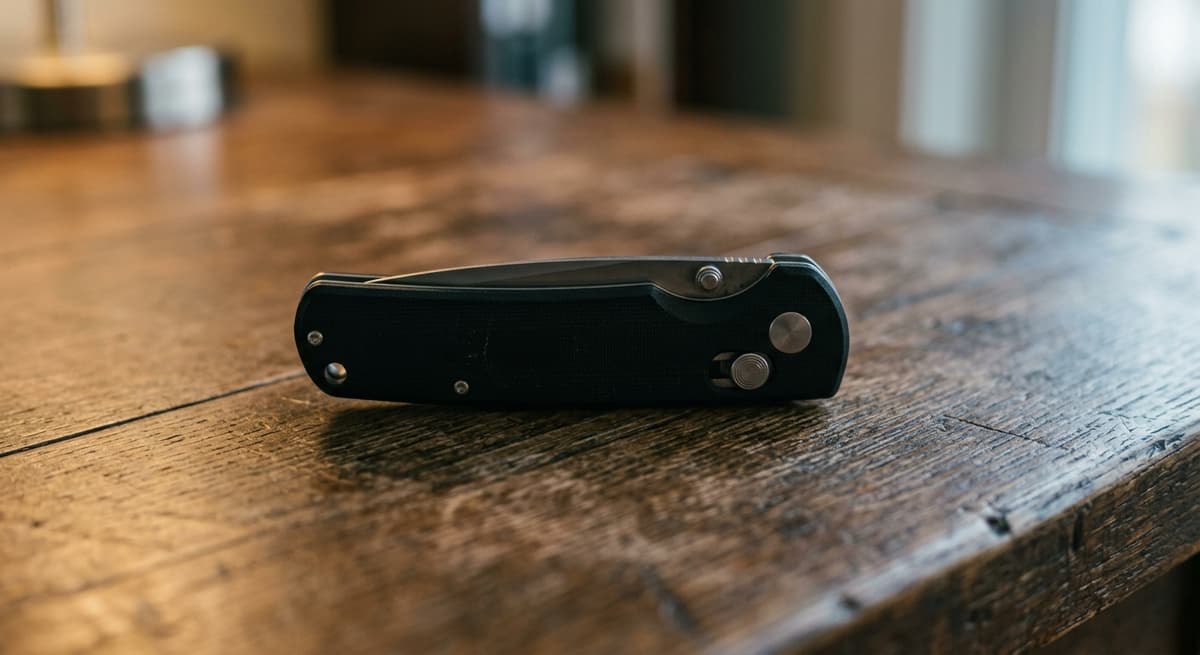
What makes something a "dirk" or "dagger" is defined in Penal Code § 16470, and the definition's limiting clause is the part most often left out of secondhand summaries:
"Dirk" or "dagger" means a knife or other instrument with or without a handguard that is capable of ready use as a stabbing weapon that may inflict great bodily injury or death. A nonlocking folding knife, a folding knife that is not prohibited by Section 21510, or a pocketknife is capable of ready use as a stabbing weapon that may inflict great bodily injury or death only if the blade of the knife is exposed and locked into position.
That second sentence is the whole trap. An ordinary folding pocketknife, closed or unlocked, is not a "dirk or dagger" no matter how sharp or long its blade is. It only becomes one for purposes of this statute if the blade is both exposed and locked into place. A fixed-blade knife has no such carve-out; it is judged only against the general "capable of ready use as a stabbing weapon" standard.
Switchblades: the 2-inch rule
Penal Code § 21510 is the one California knife statute with a genuinely simple numeric rule. It is a misdemeanor to possess a switchblade with a blade 2 or more inches long in the passenger or driver area of a vehicle in a public place, to carry one on the person, or to sell, offer for sale, expose for sale, loan, transfer, or give one to another person. A switchblade under 2 inches is not covered by this section.
School and college grounds: 2.5 inches
Penal Code § 626.10 sets a separate 2.5-inch threshold, and it applies differently depending on the campus. On the grounds of a K-12 public or private school, subsection (a) bars bringing or possessing "any dirk, dagger, ice pick, knife having a blade longer than 2½ inches, folding knife with a blade that locks into place, razor with an unguarded blade," a taser or stun gun, an air-pressure projectile device, or a spot marker gun, punishable by up to a year in county jail or a felony-range § 1170(h) sentence. A separate razor-blade or box-cutter clause under subsection (a)(2) carries the same jail exposure without the felony-range option.
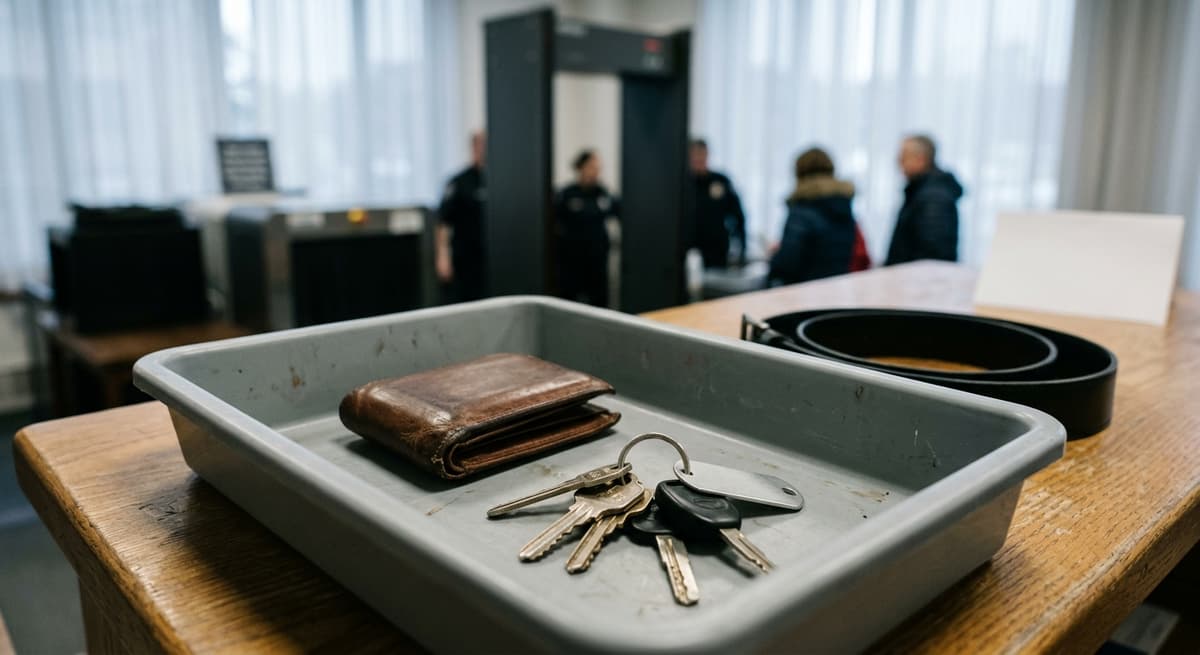
At a private university, the University of California, the California State University, or a California Community College, subsection (b) narrows the list to "any dirk, dagger, ice pick, or knife having a fixed blade longer than 2½ inches," a materially different rule than the K-12 version, which also reaches a locking folding knife. Both subsections carry exceptions for a person acting at a faculty member's or school employee's direction, for use in a school-sponsored activity or class, and, on college and university grounds only, for lawful use in or around on-campus housing or for food preparation or consumption.
Public buildings, meetings, and airports: 4 inches
A third, higher threshold governs a different set of places. Penal Code § 171b bars bringing or possessing, within a state or local public building or at a meeting required to be open to the public, "any knife with a blade length in excess of four inches, the blade of which is fixed or is capable of being fixed in an unguarded position by the use of one or two hands," alongside firearms, tasers, and several other listed weapons. A violation is punishable by up to a year in county jail or state prison. Exceptions apply to court evidence, on-duty peace officers, license holders in specific judicial roles, building residents, and licensed security personnel with the building's written permission.
Penal Code § 171.5 sets the same 4-inch fixed-or-fixable-blade threshold for airport sterile areas and passenger vessel terminals, alongside box cutters, straight razors, and certain military knives.
Other knives banned outright: the "generally prohibited weapons" list
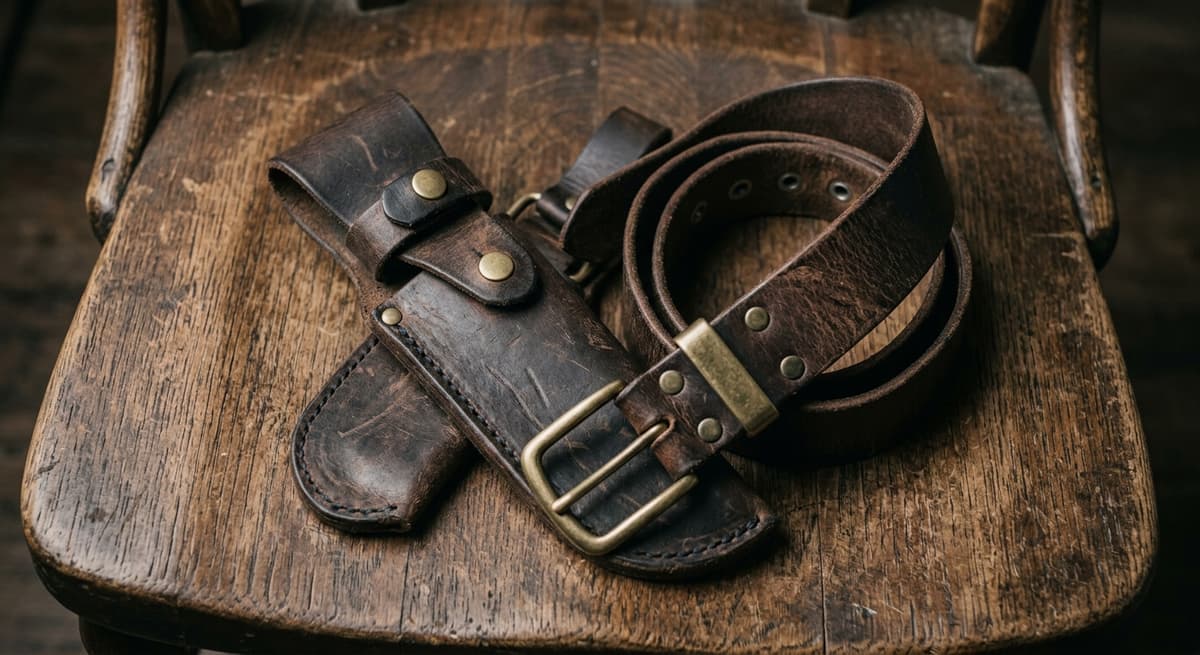
Separately from all four blade-length rules above, Penal Code § 16590 lists a set of "generally prohibited weapons" that California bans by category, regardless of where they are carried or how long the blade is. The knife-relevant entries are a ballistic knife (banned by § 21110), a cane sword (§ 20510), a belt buckle knife (§ 20410), a lipstick case knife (§ 20610), an air gauge knife (§ 20310), a writing pen knife, a device that looks like a pen but conceals a stabbing shaft (§ 20910), and a shobi-zue, a cane-style weapon (§ 20710). Manufacturing, importing, selling, or possessing any of these is a separate offense from the carry rules above.
Does California preempt local knife ordinances?
The Penal Code's weapons provisions (Part 6, Title 3) contain no section preempting local knife regulation. This stands in contrast to states like Arizona and Texas, which have express statewide knife preemption statutes voiding stricter local ordinances. Because California does not preempt the field, a city or county may adopt its own, stricter knife ordinance; this page does not attempt to catalog municipal codes, so readers in a specific California city or county should check that jurisdiction's own municipal code before assuming the state rules above are the only ones that apply.
Federal law: what it does and does not reach
Federal law does not ban an individual from owning or carrying a switchblade. The Federal Switchblade Act, 15 U.S.C. §§ 1241 to 1245, instead regulates interstate commerce in switchblade knives, barring their manufacture, sale, transport, or introduction into interstate commerce, and, in 15 U.S.C. § 1245, makes it a federal offense to knowingly possess, manufacture, sell, or import a ballistic knife in or affecting interstate commerce or within federal territorial jurisdiction, a category California independently bans as well under § 16590. Sections 1242 and 1243, the two federal offenses, do not apply to certain knives and people under 15 U.S.C. § 1244. A 2009 amendment, § 1244(5), exempts from those prohibitions any knife with a spring, detent, or other closure-bias mechanism that requires hand, wrist, or arm exertion on the blade itself to overcome the bias and assist opening, which is what keeps modern assisted-opening folding knives legal in interstate commerce. A separate exemption, § 1244(4), covers a person with only one arm possessing or carrying a switchblade with a blade three inches or less. None of this changes what California allows for ordinary carry; state law governs that question within California.
Disclaimer: This article provides general legal information about California's knife laws as of September 2026. It is not legal advice. Consult a lawyer licensed in California for advice about a specific situation. Because California is not a knife-preemption state, a local ordinance may impose a stricter rule than the statewide thresholds described here.
For a state-by-state comparison, see knife laws by state. California's self-defense statutes are covered separately on the California self-defense laws page.
Statutes cited reflect their in-force version as of 2026-09-18. Last updated: 2026-09-18.
Frequently Asked Questions
What is the legal blade length for a knife in California?
There is no single answer, because California sets different thresholds for different contexts: 2 inches for switchblade carry, 2.5 inches on K-12 school grounds (which also separately bars a locking folding knife of any blade length, or a fixed blade over 2.5 inches on college and university grounds), and over 4 inches in public buildings or airport sterile areas. The state's most commonly charged offense, concealed dirk or dagger carry, uses no length number at all, only a functional exposed-and-locked test for folding knives.
Is it illegal to carry a pocket knife in California?
An ordinary closed or nonlocking pocket knife is not a dirk or dagger under Penal Code section 16470, so carrying one concealed is not, by itself, the concealed dirk/dagger offense. A folding knife only becomes a dirk or dagger for that offense if its blade is exposed and locked into position.
Are switchblades illegal in California?
A switchblade with a blade 2 or more inches long may not be carried on the person, possessed in a vehicle's passenger area in public, or sold or transferred, under Penal Code section 21510. This is a misdemeanor.
Does California have knife preemption like some other states?
No. The Penal Code's weapons provisions contain no section preempting local knife regulation, so a city or county could adopt a rule stricter than the statewide thresholds described here. Check local ordinances for a specific jurisdiction.
Updates
Independently fact-checked against the cited primary sources
Sources and References
- Cal. Penal Code 16470 - dirk/dagger definition, exposed-and-locked functional test for folding knives(leginfo.legislature.ca.gov).gov
- Cal. Penal Code 21310 - carrying a concealed dirk or dagger(leginfo.legislature.ca.gov).gov
- Cal. Penal Code 21510 - switchblade knife, 2-inch blade threshold(leginfo.legislature.ca.gov).gov
- Cal. Penal Code 626.10 - school and college grounds knife restrictions, 2.5-inch thresholds(leginfo.legislature.ca.gov).gov
- Cal. Penal Code 171b - state and local public buildings, 4-inch fixed-blade threshold(leginfo.legislature.ca.gov).gov
- Cal. Penal Code 171.5 - airport sterile areas and passenger vessel terminals, 4-inch fixed-blade threshold(leginfo.legislature.ca.gov).gov
- Cal. Penal Code 16590 - generally prohibited weapons (ballistic knife, cane sword, belt buckle knife, lipstick case knife, air gauge knife, writing pen knife, shobi-zue)(leginfo.legislature.ca.gov).gov
- 15 U.S.C. 1241-1245 - Federal Switchblade Act, interstate commerce and importation scope(law.cornell.edu)
- 15 U.S.C. 1244 - exceptions, including the 2009 assisted-opening carve-out and the one-arm exception(law.cornell.edu)