
Colorado
Colorado Knife Laws (2026): Concealed Carry and Exceptions
Independently fact-checked against primary sources (last audited September 18, 2026). · 5 primary sources cited on this page. How we verify our legal content
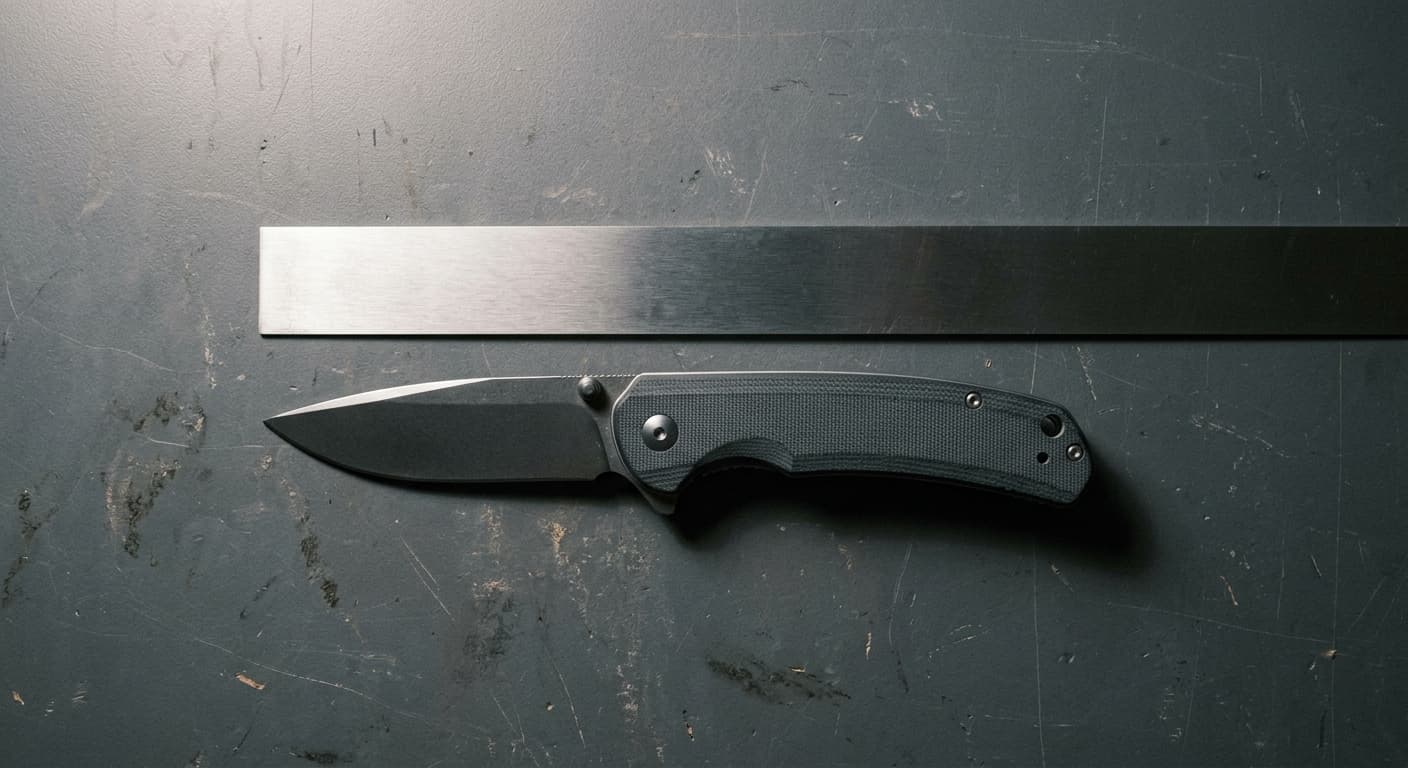
Colorado bans concealed carry of a "knife," but the criminal definition of that term is narrower than it sounds. Colo. Rev. Stat. § 18-12-101(1)(q) defines "knife," for the whole weapons article, as a dagger, dirk, knife, or stiletto with a blade over three and a half inches, or any other dangerous instrument capable of inflicting cutting, stabbing, or tearing wounds, and it excludes a hunting or fishing knife carried for sports use, which a defendant raises as an affirmative defense. Colo. Rev. Stat. § 18-12-105 makes it a class 1 misdemeanor to knowingly and unlawfully carry a knife, as that term is defined, concealed on or about the person, unless the person is in their own dwelling, business, or controlled property, traveling in a private vehicle for lawful protection, or holding a valid concealed-carry permit. Open carry of a knife is not restricted at all. A separate, stricter rule applies on school, college, and university grounds, where carrying a non-firearm deadly weapon, including a knife used or intended for use as a weapon, is a felony.
Jurisdiction scope: This page covers Colorado state law only, principally Colo. Rev. Stat. §§ 18-12-101, 18-12-102, 18-12-105, 18-12-105.5, and 22-33-102. It does not cover Colorado's concealed handgun permit statute in detail, or local municipal ordinances, which Colorado does not preempt for knives.
Is it legal to carry a knife openly in Colorado?
Yes, outside the restricted places covered below. Colorado's weapons chapter, Title 18, Article 12, has no general restriction on open carry of a knife of any type or length; its restriction on open carry is the place-based school, college, and university grounds felony described later on this page.
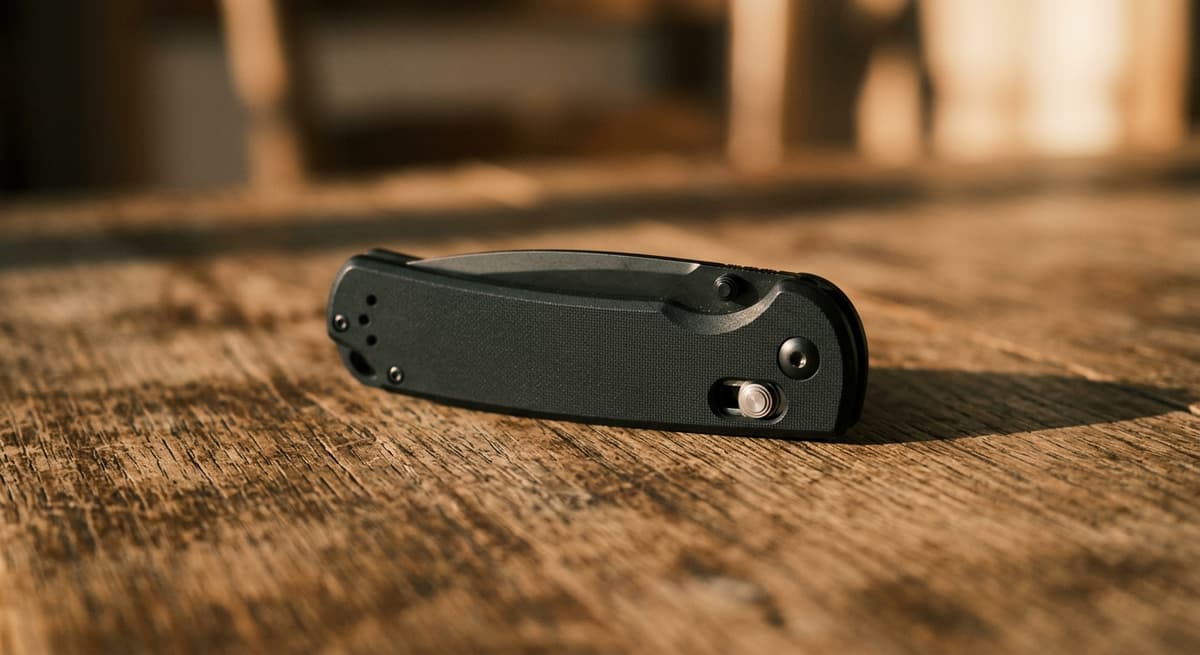
Concealed carry: Colorado's definition of "knife" sets its own 3.5-inch line
Colo. Rev. Stat. § 18-12-105(1)(a) states: "A person commits a class 1 misdemeanor if the person knowingly and unlawfully... carries a knife concealed on or about his or her person." The offense turns entirely on what "knife" means, and that term is defined for the whole of Title 18, Article 12 by § 18-12-101(1)(q): "any dagger, dirk, knife, or stiletto with a blade over three and one-half inches in length, or any other dangerous instrument capable of inflicting cutting, stabbing, or tearing wounds," but the definition excludes "a hunting or fishing knife carried for sports use," which a defendant raises as an affirmative defense rather than the state having to disprove as an element.
In practice, that means an ordinary pocketknife with a blade of 3.5 inches or less, carried concealed for no other purpose, falls outside this offense's definition of "knife" altogether, subject to the residual "any other dangerous instrument" clause, which can still reach a shorter item if it is genuinely capable of inflicting a cutting, stabbing, or tearing wound. A dagger, dirk, or stiletto-type blade over 3.5 inches, or any longer general-purpose knife, is squarely covered.
Subsection (2) then removes most everyday carry of a covered knife from the offense. It is not a crime under this section if the person was:
- In their own dwelling or place of business, or on property they own or control, at the time of carrying.
- In a private automobile or other private means of conveyance, carrying a weapon for the lawful protection of themselves, another person, or property while traveling.
- Holding a valid permit to carry a concealed weapon or handgun at the time.
- A peace officer carrying in conformance with their employing agency's policy, or specific federal probation or pretrial services officers on duty in Colorado.
Ballistic knives are banned outright
Separately from the general concealed-carry rule, Colo. Rev. Stat. § 18-12-101(1)(b) defines a "ballistic knife" as "any knife that has a blade that is forcefully projected from the handle by means of a spring-loaded device or explosive charge." Section 18-12-102(2) classifies a ballistic knife as an "illegal weapon," alongside a blackjack, gas gun, and metallic knuckles, and subsection (4) makes knowing possession of an illegal weapon a class 1 misdemeanor. This offense does not depend on concealment, and it applies regardless of the exceptions listed above for ordinary concealed knife carry, though a peace officer or permit holder acting lawfully has an affirmative defense under subsection (5).
School, college, and university grounds: a stricter felony rule
Colo. Rev. Stat. § 18-12-105.5(1)(a) makes it unlawful to knowingly carry, bring, or possess, without legal authority, a "deadly weapon as defined in section 18-1-901(3)(e) that is not a firearm" on the real estate of a public or private elementary, middle, junior high, high, or vocational school, or a public or private college, university, or seminary. Colorado's general "deadly weapon" definition, in § 18-1-901(3)(e), includes "a knife, bludgeon, or any other weapon, device, instrument, material, or substance, whether animate or inanimate, that, in the manner it is used or intended to be used, is capable of producing death or serious bodily injury," a functional test rather than a fixed blade-length number. Violating this section is a class 6 felony. Exceptions apply to unloaded weapons secured inside a vehicle on college or university grounds, a person's own home or business property, authorized school demonstrations, and an employee's job duties.
A separate, narrower definition applies only to school suspension and expulsion decisions, not to this criminal offense. Colo. Rev. Stat. § 22-33-102(4), part of the education code's discipline provisions, defines "dangerous weapon" for that administrative purpose as "a fixed-blade knife with a blade that exceeds three inches in length" or "a spring-loaded knife or a pocket knife with a blade exceeding three and one-half inches in length," among other items. That definition governs whether a school can suspend or expel a student under Colo. Rev. Stat. § 22-33-106; it is a different standard from, and does not limit, the functional "deadly weapon" definition that drives the felony charge above.
Does Colorado preempt local knife ordinances?
Colorado has no statute preempting local knife regulation. Title 29 and Title 31, which govern municipal-government and county powers, contain no such provision, so Colorado does not bar cities and counties from adopting their own, stricter knife ordinances the way preemption states such as Arizona and Texas do.
Federal law: what it does and does not reach
Federal law does not ban an individual from owning or carrying a switchblade. The Federal Switchblade Act, 15 U.S.C. §§ 1241 to 1245, instead regulates interstate commerce in switchblade knives, barring their manufacture, sale, transport, or introduction into interstate commerce, and, in 15 U.S.C. § 1245, makes it a federal offense to knowingly possess, manufacture, sell, or import a ballistic knife in or affecting interstate commerce or within federal territorial jurisdiction, a category Colorado independently bans as an illegal weapon as well. Sections 1242 and 1243, the two federal offenses, do not apply to certain knives and people under 15 U.S.C. § 1244. A 2009 amendment, § 1244(5), exempts from those prohibitions any knife with a spring, detent, or other closure-bias mechanism that requires hand, wrist, or arm exertion on the blade itself to overcome the bias and assist opening, which is what keeps modern assisted-opening folding knives legal in interstate commerce. A separate exemption, § 1244(4), covers a person with only one arm possessing or carrying a switchblade with a blade three inches or less. None of this changes what Colorado allows for ordinary carry; state law governs that question within Colorado.
Disclaimer: This article provides general legal information about Colorado's knife laws as of September 2026. It is not legal advice. Consult a lawyer licensed in Colorado for advice about a specific situation. Because Colorado is not a knife-preemption state, a local ordinance may add restrictions beyond the statewide rules described here.
For a state-by-state comparison, see knife laws by state. Colorado's self-defense statutes are covered separately on the Colorado self-defense laws page.
Statutes cited reflect their in-force version as of 2026-09-18. Last updated: 2026-09-18.
Frequently Asked Questions
Is it legal to carry a knife concealed in Colorado?
Not as a general matter, for a covered knife. Colo. Rev. Stat. 18-12-105 makes concealed carry of a 'knife,' defined by 18-12-101(1)(q) as a dagger, dirk, knife, or stiletto with a blade over 3.5 inches, or any other dangerous instrument capable of cutting, stabbing, or tearing wounds, a class 1 misdemeanor, excluding a hunting or fishing knife carried for sports use. Broad exceptions also cover most everyday situations: your own dwelling, business, or controlled property, a private vehicle while traveling for lawful protection, and holding a valid concealed-carry permit.
Does Colorado have a blade-length limit for knives?
Yes, for the concealed-carry offense: Colo. Rev. Stat. 18-12-101(1)(q) defines 'knife' for that offense as a blade over 3.5 inches, plus a residual clause for any other dangerous instrument capable of cutting, stabbing, or tearing wounds. A separate, unrelated 3-inch fixed-blade or 3.5-inch spring-loaded/pocket-knife threshold exists in Colorado's education code, and it governs only school suspension and expulsion decisions, not a criminal charge.
Are ballistic knives illegal in Colorado?
Yes. A ballistic knife, one with a blade forcefully projected from the handle by a spring-loaded device or explosive charge, is classified as an illegal weapon under Colo. Rev. Stat. 18-12-102, and possessing one is a class 1 misdemeanor.
Can you carry a knife on a Colorado school campus?
Carrying a non-firearm deadly weapon, which includes a knife used or intended for use as a weapon, on the grounds of a school, college, or university without legal authority is a class 6 felony under Colo. Rev. Stat. 18-12-105.5, subject to specific exceptions like an unloaded weapon secured in a vehicle.
Updates
Independently fact-checked against the cited primary sources
Sources and References
- Colo. Rev. Stat. 18-12-105 - Unlawfully carrying a concealed weapon (a defined 'knife' under 18-12-101(1)(q), class 1 misdemeanor, exceptions)(olls.info).gov
- Colo. Rev. Stat. 18-12-101 - Definitions ((1)(q) 'knife': dagger/dirk/knife/stiletto with a blade over 3.5in, or any other dangerous instrument capable of cutting/stabbing/tearing wounds, excluding a hunting or fishing knife carried for sports use; (1)(b) 'ballistic knife': blade forcefully projected by a spring-loaded device or explosive charge); 18-12-102 illegal-weapon classification, class 1 misdemeanor(olls.info).gov
- Colo. Rev. Stat. 18-12-105.5 - Unlawfully carrying a weapon, school/college/university grounds, class 6 felony(olls.info).gov
- Colo. Rev. Stat. 18-1-901(3)(e) - general deadly weapon definition (functional knife test)(olls.info).gov
- Colo. Rev. Stat. 22-33-102(4), 22-33-106 - dangerous weapon definition for school suspension/expulsion (separate from the criminal offense)(olls.info).gov
- 15 U.S.C. 1241-1245 - Federal Switchblade Act, interstate commerce and importation scope(law.cornell.edu)
- 15 U.S.C. 1244 - exceptions, including the 2009 assisted-opening carve-out and the one-arm exception(law.cornell.edu)