
Idaho
Idaho Audio Recording Laws: One-Party Consent Rules and Penalties (2026)
Independently fact-checked against primary sources (last audited August 15, 2026). · Reviewed by the RecordingLaw editorial team. · Law checked current as of August 15, 2026. · 3 primary sources cited on this page. How we verify our legal content
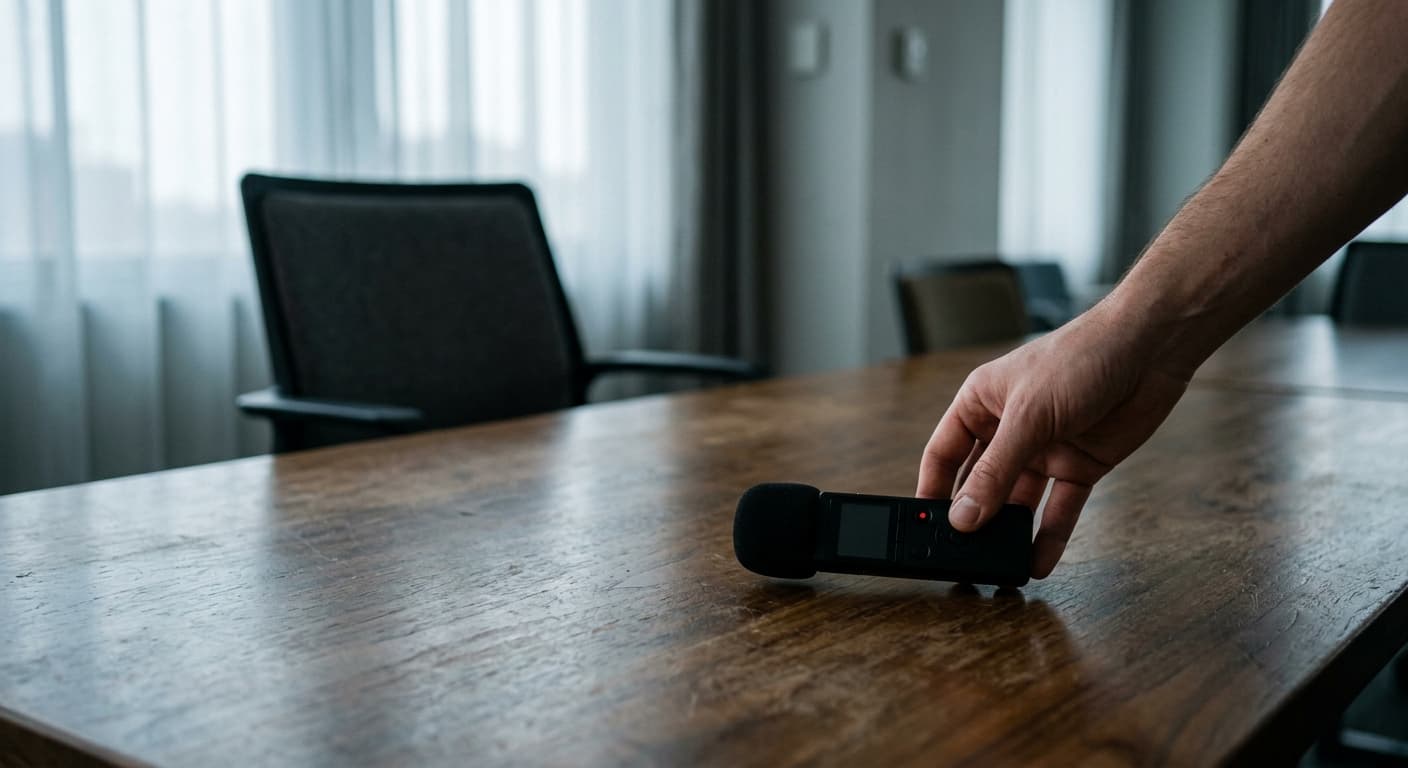
Idaho is a one-party consent state under Idaho Code 18-6702, which allows any participant in a conversation to record it without notifying or obtaining permission from other parties. This rule covers phone calls, in-person conversations, VoIP calls, and audio messages, and applies regardless of how many people are involved.
This right comes from Idaho Code 18-6702, the state's primary wiretapping and eavesdropping statute, part of Title 18, Chapter 67 of the Idaho Code, titled "Communications Security." The sections below cover what counts as illegal interception, the criminal and civil penalties, law enforcement exceptions, and how Idaho's rule compares to federal law and neighboring states.
Idaho Code 18-6702: The Core Audio Recording Statute
Idaho Code 18-6702 makes it unlawful for any person to willfully intercept, attempt to intercept, or procure another person to intercept any wire, electronic, or oral communication. However, the statute includes a critical exception: recording is lawful when at least one party to the communication has given prior consent.
What Communications Does the Statute Cover?
Idaho Code 18-6701 defines three types of communications protected under the statute:
Wire communication refers to any aural transfer made in whole or in part through wire, cable, or similar connections. This includes traditional landline telephone calls, cellular calls routed through wired infrastructure, and Voice over Internet Protocol (VoIP) calls.
Oral communication means any spoken words uttered by a person who has a reasonable expectation that the conversation is not being intercepted. This covers face-to-face conversations in private settings, whispered exchanges, and any in-person discussion where participants expect privacy.
Electronic communication covers the transfer of signs, signals, writing, images, sounds, data, or intelligence transmitted by wire, radio, electromagnetic, photoelectronic, or photo-optical systems. This definition is broad enough to encompass text messages, emails, video call audio, and audio transmitted through internet-based messaging platforms.
The One-Party Consent Standard Explained
Only one person who is part of the conversation needs to know about and agree to the recording, and that person can be you. This stands in contrast to two-party (all-party) consent states like California, Florida, and Washington, where every participant in a confidential conversation must agree before a recording can begin. The rule applies no matter how many people are involved: if five people are in a meeting and one of them records it, the recording is legal under Idaho law as long as the person recording is a participant.
When Audio Recording Is Legal in Idaho
Recording Your Own Conversations
The most common and straightforward scenario is recording a conversation you are directly participating in. Under Idaho Code 18-6702, you may legally record:
- Phone calls you are on, including landline, cellular, and VoIP calls
- In-person conversations you are part of
- Video calls where you are a participant (the audio component)
- Voice messages you receive or leave
- Business meetings, interviews, or negotiations you attend
- Conversations with government officials, landlords, doctors, or anyone else when you are present
You do not need to inform the other party or parties. You do not need to use any particular recording device. You can use a smartphone, a dedicated voice recorder, a wearable device, or any other audio capture tool.
Recording with Third-Party Consent
If you are not a party to a conversation, you can still legally record it in Idaho if you have obtained consent from at least one participant. For example, if a friend asks you to record their phone call on their behalf and that friend is participating in the call, the recording is legal because one party (your friend) has consented.
This distinction matters in investigative and legal contexts. Private investigators, attorneys, and journalists sometimes rely on third-party consent to make lawful recordings.
Recording in Public Places
Audio recording in public places in Idaho is generally legal because people in public spaces typically do not have a reasonable expectation of privacy. Conversations on sidewalks, in parks, at public events, and in other open areas can be recorded without consent from any party.
The key legal concept is "reasonable expectation of privacy," which is built into the definition of "oral communication" under Idaho Code 18-6701. If a conversation takes place where others could reasonably overhear it, the speakers have diminished privacy expectations, and recording is less likely to violate the statute.
When Audio Recording Is Illegal in Idaho

Despite Idaho's permissive one-party consent standard, there are clear situations where audio recording is illegal.
Recording Without Being a Party or Having Consent
The primary prohibition is on intercepting communications when you are not a party to the conversation and do not have consent from any party. This is classic eavesdropping or wiretapping. Examples include:
- Planting a hidden recording device in someone else's home or office when you will not be present
- Using electronic equipment to intercept phone calls between other people
- Hacking into someone's voicemail or communication system to capture audio
- Placing a bug or listening device on someone's person or property
These actions constitute illegal interception under Idaho Code 18-6702 and carry serious criminal penalties.
Recording for Criminal Purposes
Even if you are a party to a conversation, Idaho law does not protect recordings made for the purpose of committing a criminal act. Idaho's statute is narrower than the federal wiretap standard under 18 U.S.C. 2511, which excludes recordings made for a criminal or tortious purpose; Idaho Code 18-6702 excludes only criminal-purpose recordings. If you record a conversation specifically to facilitate blackmail, extortion, fraud, or another crime, the one-party consent exception does not apply.
Intercepting Electronic Communications Without Authorization
Accessing stored electronic communications without authorization, such as hacking into email accounts or message archives, may violate both Idaho Code 18-6702 and federal statutes including the Stored Communications Act (18 U.S.C. 2701).
Criminal Penalties for Illegal Audio Recording
Idaho treats illegal interception of communications as a serious criminal offense. Under Idaho Code 18-6702, willful interception of wire, electronic, or oral communications is classified as a felony.
| Penalty | Maximum |
|---|---|
| Prison time | Up to 5 years |
| Fine | Up to $5,000 |
This applies to anyone who willfully intercepts, attempts to intercept, or procures another person to intercept protected communications without proper consent. The felony classification means a conviction results in a permanent criminal record, loss of voting rights during incarceration, and potential restrictions on employment and professional licensing.
Attempted Interception
Idaho law criminalizes not just successful interception but also the attempt to intercept communications. Setting up recording equipment with the intent to capture conversations you are not a party to can result in felony charges even if the equipment malfunctions or no conversation is actually captured.
Procuring Interception
Hiring or directing someone else to illegally intercept communications carries the same penalties as performing the interception yourself. If you pay a third party to bug someone's phone or office, you face the same felony charges as the person who physically installs the device.
Civil Liability for Illegal Audio Recording

Beyond criminal penalties, Idaho provides a private right of action for victims of illegal recording. Idaho Code 18-6709 allows any person whose wire, electronic, or oral communication is intercepted, disclosed, or intentionally used in violation of Chapter 67 to bring a civil lawsuit.
The leading case applying this right is Hoskins v. Howard (1998), in which the Idaho Supreme Court held that a neighbor who used a police radio scanner to listen in on a cordless telephone call could be held civilly liable under section 18-6709. The court ruled that a cordless phone call counts as a protected "wire communication" once any part of it travels over the telecommunications network, even though the handset itself transmits over radio frequency rather than a physical wire.
Available Damages
Victims may recover several categories of damages:
Actual damages suffered as a result of the violation. This can include emotional distress, reputational harm, lost business opportunities, and any other quantifiable injury.
Statutory damages of $100 per day for each day of violation, with a minimum of $1,000. This means that even if a victim cannot prove specific financial harm, they are entitled to at least $1,000 in statutory damages.
Punitive damages at the court's discretion, which are designed to punish particularly egregious conduct and deter future violations.
Reasonable attorney fees and litigation costs. This fee-shifting provision is significant because it allows victims to pursue claims without bearing the full cost of litigation.
Good Faith Defense
Idaho Code 18-6709 also provides that a good faith reliance on a court order constitutes a complete defense to both civil and criminal actions. If a person records communications based on what they reasonably believe to be a valid court order, they are protected even if the order is later found to be invalid.
Law Enforcement Exceptions
Idaho Code 18-6702 includes several important exceptions for law enforcement audio recording.
Consensual Recording by Officers
A law enforcement officer or person acting under the direction of law enforcement may intercept wire, electronic, or oral communications when that person is a party to the conversation or when one party has given prior consent. This allows undercover officers and confidential informants to record conversations as part of investigations.
Emergency Services Personnel
Employees of law enforcement agencies, fire departments, and ambulance services may intercept and record incoming wire or electronic communications while acting within the scope of their employment and while a party to the communication. This covers recorded 911 calls, dispatch communications, and similar operational recordings.
Court-Ordered Wiretaps
Law enforcement may intercept communications without any party's consent when authorized by a court-ordered wiretap. These orders are only granted for investigations of serious crimes and must follow strict procedural requirements, including probable cause and specificity about the communications to be intercepted.
How Idaho's Law Compares to Federal Law

Idaho's one-party consent standard is consistent with the federal wiretap statute, 18 U.S.C. 2511. Under federal law, a person who is a party to a conversation or who has consent from one party may lawfully record that conversation, provided the recording is not made for the purpose of committing a criminal or tortious act.
Because Idaho's standard for who may record largely matches the federal baseline, most recordings legal under one standard are legal under the other. One gap remains: Idaho's criminal-purpose exception is narrower than the federal criminal-or-tortious-purpose exception, so a recording made for a tortious but non-criminal purpose could be lawful under Idaho Code 18-6702 while still violating federal law. This alignment simplifies compliance for individuals and businesses operating in Idaho in most circumstances.
Federal law also provides its own civil remedies under 18 U.S.C. 2520, which allows victims of illegal wiretapping to recover statutory damages of $10,000 or actual damages, whichever is greater, plus attorney fees and litigation costs.
Interstate Recording Considerations
When you are in Idaho recording a phone call with someone in another state, a conflict-of-law question arises. Idaho's one-party consent standard may not protect you if the other party is in a two-party consent state.
States With Stricter Rules
The following states require all-party consent for recording conversations:
- California
- Connecticut
- Florida
- Illinois
- Maryland
- Massachusetts
- Montana
- Nevada (for phone calls)
- New Hampshire
- Pennsylvania
- Washington
If you are in Idaho and the person you are recording is in one of these states, the stricter law may apply. Several of these states have claimed jurisdiction over recordings involving their residents, regardless of where the recording party is located. The California Supreme Court's ruling in Kearney v. Salomon Smith Barney, Inc. (2006) is the most notable example of this approach.
Best Practice for Interstate Calls
To minimize legal risk when recording calls across state lines, inform all parties that the call is being recorded and obtain their consent. This "all-party consent" approach satisfies the requirements of every U.S. jurisdiction and eliminates any conflict-of-law concerns.
Audio Recording as Evidence in Idaho Courts
Recordings made legally under Idaho's one-party consent law are generally admissible in both civil and criminal proceedings, provided the party offering the recording can authenticate it (show it is genuine and unaltered) and establish that it is relevant to the case. Under Idaho Rule of Evidence 403, a court may still exclude a relevant recording if its value is substantially outweighed by unfair prejudice, confusion of the issues, or the risk of misleading the jury.
Audio Recording in Specific Idaho Situations
Workplace Conversations
Idaho employees can record workplace conversations they participate in, including meetings with supervisors, HR discussions, performance reviews, and hallway conversations. However, employer policies may prohibit recording, and violating those policies can result in disciplinary action or termination even though the recording itself is legal. For detailed information, see our page on Idaho workplace recording laws.
Medical Appointments
Patients in Idaho can record medical consultations, diagnoses, treatment discussions, and other conversations with healthcare providers. This can be helpful for remembering complex medical instructions or sharing information with family members. Some medical facilities may have their own policies about recording. For more details, see Idaho medical recording laws.
Landlord-Tenant Interactions
Idaho tenants can record conversations with landlords about repair requests, lease disputes, security deposit discussions, and other tenancy matters. This documentation can be valuable in housing court disputes. See Idaho landlord-tenant recording laws for more information.
Phone Calls
Idaho's one-party consent law applies to all phone calls where at least one party is in Idaho. For complete details on recording phone calls, including interstate considerations, see Idaho phone call recording laws.
Idaho Recording Law Sub-Topics
Audio Recording | Video Recording | Voyeurism Laws | Workplace Recording | Recording Police | Phone Call Recording | Security Cameras | Recording in Public | Landlord-Tenant | Dashcam Laws | School Recording | Medical Recording
More Idaho Recording Topics
More Idaho Laws
Frequently Asked Questions
Can I legally record a conversation in Idaho without telling the other person?
Yes. Idaho is a one-party consent state under Idaho Code 18-6702. As long as you are a participant in the conversation, you can record it without informing or obtaining permission from anyone else involved. Your own consent as a participant satisfies the legal requirement.
What is the penalty for illegally recording audio in Idaho?
Illegal interception of audio communications is a felony in Idaho, punishable by up to 5 years in prison and a fine of up to $5,000. Victims can also file a civil lawsuit under Idaho Code 18-6709 and recover actual damages, statutory damages of $100 per day (minimum $1,000), punitive damages, and attorney fees.
Does Idaho law cover recording Zoom calls and other VoIP conversations?
Yes. Idaho Code 18-6701 defines electronic communication broadly enough to cover VoIP calls, video conferencing platforms like Zoom and Microsoft Teams, and other internet-based communication tools. As a participant in the call, you can record the audio without informing other parties.
Can I use an AI voice recorder or smart glasses to record conversations in Idaho?
Yes. Wearable recording devices like AI voice recorders (such as Plaud) and smart glasses (such as Meta Ray-Bans) are legal in Idaho for recording conversations you participate in. Your participation in the conversation provides the one-party consent required under Idaho Code 18-6702.
What happens if I record a call with someone in a two-party consent state while I am in Idaho?
Idaho law allows the recording, but the other state may not. States like California, Florida, and Washington require all-party consent, and some have claimed jurisdiction over recordings involving their residents regardless of where the recording party is located. The safest approach is to inform all parties and obtain consent when recording interstate calls.
Updates
Independently fact-checked against the cited primary sources; governing law re-checked for recent changes
Corrected the description of Idaho Code 18-6702's criminal-purpose exception, which does not extend to tortious purposes the way the federal wiretap statute does, and fixed a related claim that Idaho and federal law always produce the same result.
Governing law re-checked for recent changes
Reviewed and approved by an editor
The Law Behind This Article
This article rests on the statutory provisions below, held in our own legal record and retrieved from the official source. Tap a section to read the operative text.
Idaho Code
§ 18-6702Interception and disclosure of wire, electronic or oral communications prohibitedIn forcecited in 21 of our articles
18-6702. Interception and disclosure of wire, electronic or oral communications prohibited. (1) Except as otherwise specifically provided in this chapter, any person shall be guilty of a felony and is punishable by imprisonment in the state prison for a term not to exceed five (5) years or by a…
Official text (excerpt) · last checked 2026-08-31 · Read the full text in our law library · Verify at legislature.idaho.gov
Cited in 6 court opinions in our collectionLatest citing opinion in our collection: 2019
In the courts (editorial summary, independently checked):Idaho courts have applied section 18-6702 to intercepted phone calls. Hoskins v. Howard (1998) held cordless telephone conversations are protected wire communications, so scanning, recording and disclosing one supported a claim. Chapman v. NYK Line North America (2009) noted 18-6702(2)(d) makes one-party-consent recording lawful.
Opinions citing this section in our collection:
- Hoskins v. Howard (Idaho Supreme Court 1998, 132 Idaho 311)✓A sheriff's deputy used a scanner to record a neighbor's cordless call and passed the tape on; the court held such calls are protected wire communications when part of the call crosses the phone network, so Section 18-6702 reached him, and vacated summary judgment in his favor.
- Chapman v. NYK LINE NORTH AMERICA, INC. (Idaho Supreme Court 2009, 147 Idaho 178)“…rsation with the consent of one party to the conversation. Idaho Code § 18-6702 (2)(d). Of course, an employer could im…”
- Bartnicki v. Vopper (Supreme Court of the United States 2001, 532 U.S. 514)“…16-11-66.1 (1996); Haw. Rev. Stat. § 803-42 (1993); Idaho Code § 18-6702 (1997); Ill. Comp. Stat., ch. 720, § 5…”
Identified automatically from the court opinions citing this section — not a ranking of which case controls.
Also relied on in: Idaho Recording Laws (2026): One-Party Consent Rules, Idaho Security Camera Laws: Home, Business, and Surveillance Rules (2026), Idaho Medical Recording Laws: Patient Rights, HIPAA, and One-Party Consent (2026)
§ 18-6701Definitions. Definitions as used in this chapter:In forcecited in 5 of our articles
18-6701. Definitions. Definitions as used in this chapter: (1) "Wire communication" means any aural transfer made in whole or in part through the use of facilities for the transmission of communications by the aid of wire, cable, or other like connection between the point of origin and the point of…
Official text (excerpt) · last checked 2026-08-01 · Read the full text in our law library · Verify at legislature.idaho.gov
Cited in 3 court opinions in our collectionLatest citing opinion in our collection: 2023
Opinions citing this section in our collection:
- Hoskins v. Howard (Idaho Supreme Court 1998, 132 Idaho 311)“…and recovery of reasonable attorney fees. I.C. § 18-6709. Idaho Code § 18-6701 provides the following definitions:…”
- Chapman v. NYK LINE NORTH AMERICA, INC. (Idaho Supreme Court 2009, 147 Idaho 178)“…erviews between them. Idaho’s Communications Security Act, Idaho Code §§ 18-6701 to 6725, specifically declares it to b…”
- Project Veritas v. Michael Schmidt (Court of Appeals for the Ninth Circuit 2023, 72 F.4th 1043)“…Hawaii v. Graham, 780 P.2d 1103, 1110 (Haw. 1989) Idaho: Idaho Code Ann. §§ 18-6701(2), 18-6702(1)(a), (2)(d) Illinois: 720…”
Identified automatically from the court opinions citing this section — not a ranking of which case controls.
Also relied on in: Idaho Phone Call Recording Laws: Consent Rules for Landline, Cell, and VoIP (2026), Idaho Smart Glasses Recording Laws: One-Party Consent, Idaho GPS Tracking Laws: Is It Legal to Put a Tracker on a Car? (2026)
§ 18-6709Recovery of civil damages authorized. Any person whose wire, electronic or oral communication is intercepted, disclosed, or used in violation of this chapter shall have a civil cause of action against any person who intercepts, discloses, uses, or procures any other person to intercept, disclose, or use such communications, and shall be entitled to recover from any such person:In forcecited in 14 of our articles
18-6709. Recovery of civil damages authorized. Any person whose wire, electronic or oral communication is intercepted, disclosed, or used in violation of this chapter shall have a civil cause of action against any person who intercepts, discloses, uses, or procures any other person to intercept,…
Official text (excerpt) · last checked 2026-08-01 · Read the full text in our law library · Verify at legislature.idaho.gov
Also relied on in: Idaho Dashcam Laws: Recording Rules, Windshield Mounting, and Legal Limits (2026), Idaho Landlord-Tenant Recording Laws: Cameras, Privacy Rights, and Disputes (2026), Idaho School Recording Laws: Student Privacy, FERPA, and Classroom Rules (2026)
United States Code Title 18
§ 2511Interception and disclosure of wire, oral, or electronic communications prohibitedIn forcecited in 422 of our articles
Except as otherwise specifically provided in this chapter any person who— intentionally intercepts, endeavors to intercept, or procures any other person to intercept or endeavor to intercept, any wire, oral, or electronic communication; intentionally uses, endeavors to use, or procures any other person to use or endeavor to use any electronic, mechanical, or other device to intercept any oral communication when— such device is affixed to, or otherwise transmits a signal through, a wire, cable, or other like connection used in wire communication; or such device transmits communications by radio, or interferes with the transmission of such communication; or such person knows, or has reason to know, that such device or any component thereof has been sent through the mail or transported in interstate or foreign commerce; or such use or endeavor to use (A) takes place on the premises of any business or other commercial establishment the operations of which affect interstate or foreign commerce; or (B) obtains or is for the purpose of obtaining information relating to the operations of any business or other commercial establishment the operations of which affect interstate or foreign…
Official text (excerpt) · last checked 2026-09-17 · Read the full text in our law library · Verify at uscode.house.gov
Cited in 2,045 court opinions in our collectionLatest citing opinion in our collection: 2026
In the courts (editorial summary, independently checked):Griggs-Ryan v. Smith (1990) applied the Section 2511(2)(d) prior-consent exception, treating a tenant repeatedly told that all incoming calls were taped as having impliedly consented. United States v. United States District Court (1972) read the then-current Section 2511(3) as conferring no presidential surveillance power.
Opinions citing this section in our collection:
- Mitchell v. Forsyth (Supreme Court of the United States 1985, 472 U.S. 511)✓The Attorney General authorized a warrantless 1970 national security wiretap that caught the plaintiff's calls; the Court held the since-repealed Section 2511(3) disclaimer left the tap lawful under Title III, and that Mitchell had qualified immunity.
- United States v. United States District Court for the Eastern District of Michigan (Supreme Court of the United States 1972, 407 U.S. 297)✓The Attorney General approved warrantless wiretaps on members of a domestic group accused of bombing a CIA office; the Court read Section 2511(3) as a congressional disclaimer conferring no surveillance power, then held the Fourth Amendment required prior judicial approval.
- Forsyth v. Barr (Court of Appeals for the Fifth Circuit 1994, 19 F.3d 1527)✓Dallas police used, in an internal affairs probe of an officer, calls private parties allegedly intercepted illegally; assuming that was unlawful, the Fifth Circuit held Section 2517(1) and (2) allowed the disclosure and use, defeating the Section 2511(1)(c) and (d) claims.
Identified automatically from the court opinions citing this section — not a ranking of which case controls.
Also relied on in: Connecticut Recording Laws (2026): Hybrid Consent Rules Explained, Oregon Recording Laws (2026): Hybrid One-Party and All-Party Rules, US Recording Laws by State (2026): All 50 States Explained
§ 2520Recovery of civil damages authorizedIn forcecited in 115 of our articles
Except as provided in section 2511(2)(a)(ii), any person whose wire, oral, or electronic communication is intercepted, disclosed, or intentionally used in violation of this chapter may in a civil action recover from the person or entity, other than the United States, which engaged in that violation such relief as may be appropriate. In an action under this section, appropriate relief includes— such preliminary and other equitable or declaratory relief as may be appropriate; damages under subsection (c) and punitive damages in appropriate cases; and a reasonable attorney’s fee and other litigation costs reasonably incurred.
Official text (excerpt) · last checked 2026-07-28 · Read the full text in our law library · Verify at uscode.house.gov
Cited in 860 court opinions in our collectionLatest citing opinion in our collection: 2026
In the courts (editorial summary, independently checked):Walker v. Darby (1990) held a 2520 plaintiff need not prove the contents of intercepted conversations, only interception and a justified expectation against it. Bartnicki v. Vopper (2001) barred 2520 damages against defendants who took no part in the interception, obtained the tape lawfully, and disclosed a matter of public concern.
Opinions citing this section in our collection:
- Jessie Walker v. Thomas E. Darby, Hugh L. Robinson, Jr., and Kenneth Day (Court of Appeals for the Eleventh Circuit 1990, 911 F.2d 1573)✓A postal letter carrier said three supervisors wired an intercom near his workstation to listen in. Reversing summary judgment, the Eleventh Circuit held a section 2520 plaintiff can show interception without proving the contents of specific conversations.
- Gelbard v. United States (Supreme Court of the United States 1972, 408 U.S. 41)“…disclosure, or use is entitled to recover civil damages, 18 U. S. C. § 2520 . Title III also bars the use as eviden…”
- DirecTV, Inc. v. Hoa Huynh (Court of Appeals for the Ninth Circuit 2007, 503 F.3d 847)“…7 U.S.C. § 605 (e)(4), or alternatively, for violations of 18 U.S.C. § 2520 (a), or alternatively, for violations o…”
Identified automatically from the court opinions citing this section — not a ranking of which case controls.
Also relied on in: Alabama Audio Recording Laws: Consent Rules and Penalties, Alabama Phone Call Recording Laws: What You Need to Know, Alaska Phone Call Recording Laws: Rules for Landline, Cell, and VoIP (2026)
§ 2701Unlawful access to stored communicationsIn forcecited in 19 of our articles
Except as provided in subsection (c) of this section whoever— intentionally accesses without authorization a facility through which an electronic communication service is provided; or intentionally exceeds an authorization to access that facility; and thereby obtains, alters, or prevents authorized access to a wire or electronic communication while it is in electronic storage in such system shall be punished as provided in subsection (b) of this section. The punishment for an offense under subsection (a) of this section is— if the offense is committed for purposes of commercial advantage, malicious destruction or damage, or private commercial gain, or in furtherance of any criminal or tortious act in violation of the Constitution or laws of the United States or any State— a fine under this title or imprisonment for not more than 5 years, or both, in the case of a first offense under this subparagraph; and a fine under this title or imprisonment for not more than 10 years, or both, for any subsequent offense under this subparagraph; and in any other case— a fine under this title or imprisonment for not more than 1 year or both, in the case of a first offense under this paragraph;…
Official text (excerpt) · last checked 2026-09-16 · Read the full text in our law library · Verify at uscode.house.gov
Cited in 724 court opinions in our collectionLatest citing opinion in our collection: 2026
Opinions citing this section in our collection:
- United States v. Warshak (Court of Appeals for the Sixth Circuit 2010, 631 F.3d 266)“…ied in good faith on the Stored Communications Act (“SCA”), 18 U.S.C. §§ 2701 et seq., a statute that allows the gove…”
- Guest v. Leis (Court of Appeals for the Sixth Circuit 2001, 255 F.3d 325)“…7 *340 In their brief, plaintiffs mention in passing 18 U.S.C. § 2701 , which prohibits intentional unlawful…”
- City of Ontario v. Quon (Supreme Court of the United States 2010, 560 U.S. 746)“…Raising claims under Rev. Stat. §1979, 42 U. S. C. §1983; 18 U. S. C. §2701 et seq., popularly known as the Stored…”
Identified automatically from the court opinions citing this section — not a ranking of which case controls.
Also relied on in: Hawaii Audio Recording Laws: One-Party Consent Rules and Penalties, Iowa Audio Recording Laws: One-Party Consent Rules and Penalties (2026), Iowa Phone Call Recording Laws: One-Party Consent for Calls (2026)
Search our full record of US law — 2.1 million sections, every state + federal →
Sources and References
- Idaho Code 18-6702 - Interception and Disclosure of Wire, Electronic, or Oral Communications(legislature.idaho.gov).gov
- Idaho Code 18-6701 - Definitions for Communications Security(legislature.idaho.gov).gov
- Idaho Code 18-6709 - Civil Remedies for Illegal Interception(legislature.idaho.gov).gov
- 18 U.S.C. 2511 - Federal Wiretap Statute(law.cornell.edu)
- 18 U.S.C. 2520 - Federal Civil Remedies for Wiretap Violations(law.cornell.edu)
- 18 U.S.C. 2701 - Stored Communications Act(law.cornell.edu)
- Hoskins v. Howard (1998) - Idaho Supreme Court, Cordless Phone Interception(courtlistener.com)