
Virginia
Leyes de Montaje en el Parabrisas de Virginia (Guía 2026)
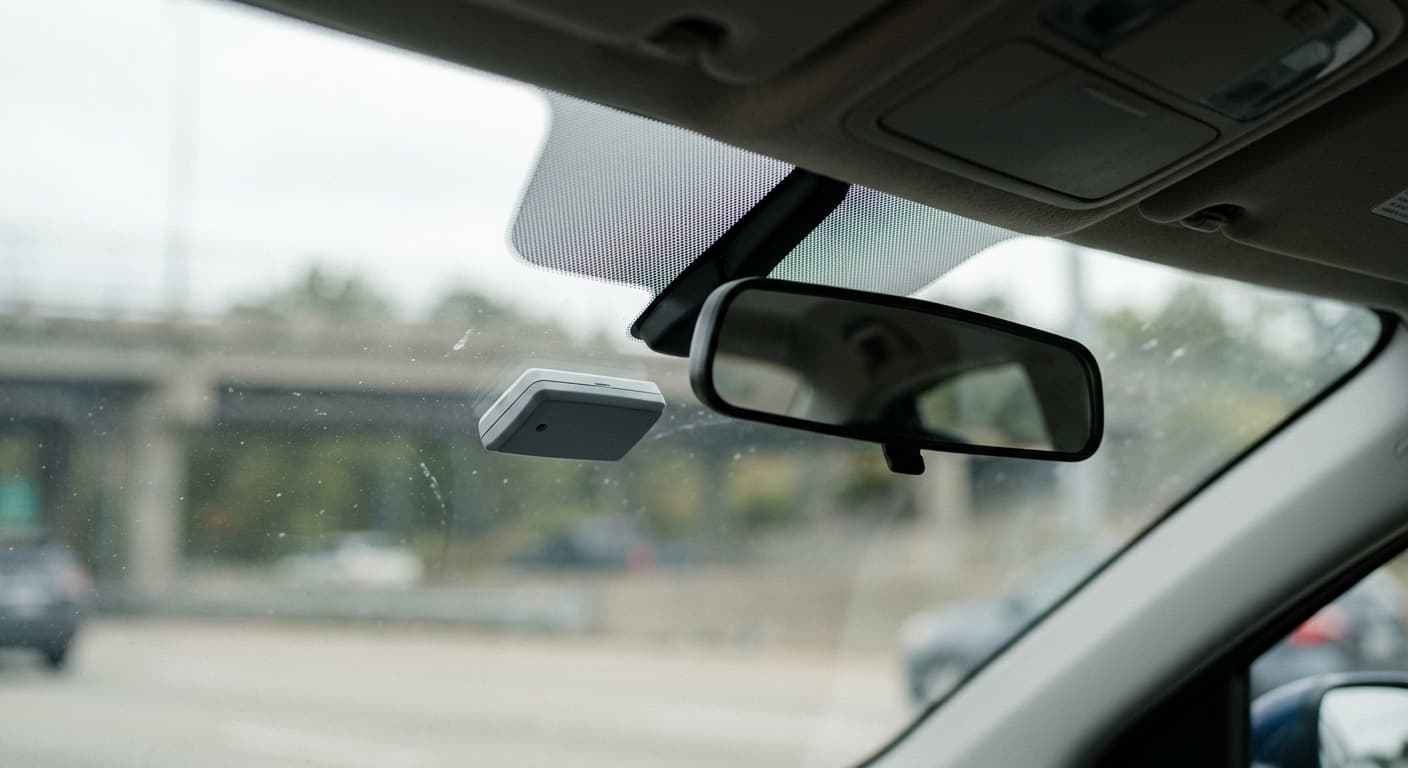
Virginia permite soportes para dashcam, GPS y teléfono en su parabrisas según el Código de Virginia 46.2-1054, siempre que el dispositivo no obstruya sustancialmente su vista. Las dashcams deben estar total o mayormente ocultas detrás del espejo retrovisor. En la inspección, los vehículos de pasajeros ordinarios están sujetos a una norma general de obstrucción que trata las unidades de GPS montadas en el parabrisas y los soportes para teléfono celular como elementos de riesgo de reprobación; existe una excepción de 4 pulgadas/7 pulgadas del área de barrido de los limpiaparabrisas según el 19 VAC 30-70-580, pero se aplica únicamente a camiones pesados (10,001 libras de GVWR o más).
Virginia regula los dispositivos montados en el parabrisas y los objetos suspendidos mediante el Código de Virginia 46.2-1054. El estado es uno de los pocos que permite explícitamente las dashcams en una posición definida y limita la fiscalización únicamente a paradas secundarias. Esta guía cubre el alcance completo de la ley, incluida la colocación de dispositivos, las sanciones y la reforma de 2020 que cambió la forma en que los oficiales manejan esta infracción.
Ley de Obstrucción del Parabrisas de Virginia (Código de Virginia 46.2-1054)
Según el Código de Virginia 46.2-1054, es ilegal conducir un vehículo automotor por una carretera con cualquier objeto suspendido de cualquier parte del vehículo de una manera que obstruya sustancialmente la vista clara del conductor sobre la carretera a través del parabrisas, las ventanas laterales delanteras o la ventana trasera.
La ley también prohíbe alterar un vehículo de transporte de pasajeros de cualquier forma que obstruya la vista del conductor a través del parabrisas. Esto abarca modificaciones como la instalación de accesorios posventa, artículos decorativos o materiales no transparentes que bloqueen la visibilidad frontal.
La palabra clave en el estatuto es "sustancialmente". Los artículos menores que no afecten de manera significativa la línea de visión del conductor no constituyen infracciones. Un pequeño permiso de estacionamiento o un cordón delgado, por ejemplo, normalmente no alcanzarían el umbral de obstrucción sustancial.
Excepción para Dashcams
La ley de Virginia aborda explícitamente las cámaras de tablero. Según la 46.2-1054, el estatuto no prohíbe la suspensión y el uso de ninguna cámara de tablero ni de los cables o accesorios que la acompañen en un vehículo automotor, siempre que:
- La cámara, los cables y los accesorios estén total o mayormente ocultos detrás del espejo retrovisor
- La cámara no genere ninguna obstrucción adicional a la vista del conductor
- La suspensión y el uso no estén prohibidos de otra manera por el Título 49 del Código de Regulaciones Federales
Esto significa que una dashcam montada directamente detrás del espejo retrovisor, donde queda oculta de la línea de visión frontal del conductor, es totalmente legal en Virginia. La referencia a las regulaciones federales garantiza que los vehículos motorizados comerciales también cumplan con las normas de parabrisas de la FMCSA.
Mejor Colocación para la Dashcam
La posición más segura y legalmente conforme para una dashcam en Virginia es centrada detrás del espejo retrovisor. El lente de la cámara debe mirar hacia adelante a través del parabrisas mientras el cuerpo de la cámara permanece oculto por la carcasa del espejo. Los cables deben dirigirse a lo largo del techo interior o el marco del parabrisas para mantenerlos fuera del campo de visión del conductor.
Solo Fiscalización Secundaria
Virginia realizó un cambio significativo a la 46.2-1054 durante la Sesión Especial de 2020 mediante el HB 5058. La enmienda agregó una disposición que establece que ningún oficial de las fuerzas del orden puede detener un vehículo automotor por una infracción a esta sección.
Esto significa que un oficial no puede detenerlo únicamente debido a un objeto colgante, un soporte de ventosa para GPS u otro artículo en su parabrisas. La infracción solo puede citarse durante una parada iniciada por una razón separada e independiente.
Regla de Exclusión de Evidencia
La enmienda de 2020 va más allá de simplemente restringir las paradas. Cualquier evidencia descubierta u obtenida como resultado de una parada realizada en infracción de la disposición de fiscalización secundaria es inadmisible en cualquier juicio, audiencia u otro procedimiento. Esto incluye evidencia obtenida con el consentimiento del conductor.
Si un oficial detiene un vehículo basándose únicamente en una obstrucción del parabrisas y luego descubre otras infracciones o contrabando, esa evidencia no puede usarse en un tribunal.
Normas para Soportes de GPS y Teléfono
Virginia no cuenta con un estatuto específico que aborde los dispositivos GPS o los soportes para teléfono en el parabrisas. Estos dispositivos se rigen por el estándar general de obstrucción en la 46.2-1054: no deben obstruir sustancialmente la vista clara del conductor.
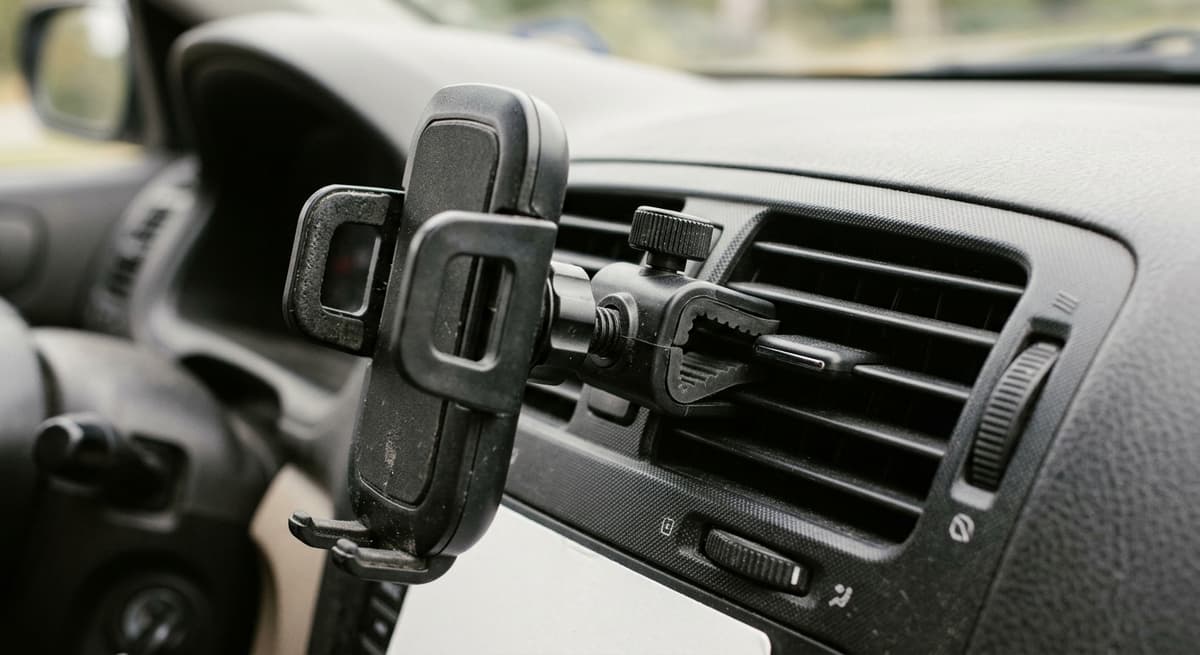
La ley de manos libres de Virginia (Código de Virginia 46.2-818.2) exige que los conductores usen dispositivos de comunicación personal en modo manos libres. Los conductores pueden usar soportes para el tablero, soportes para el parabrisas o pinzas para rejilla de ventilación para sostener su teléfono para navegación en manos libres, siempre que el soporte no genere una obstrucción sustancial.
Interacción en Modo Manos Libres
Según la ley de manos libres de Virginia, los conductores no pueden sostener un dispositivo de comunicación personal de mano mientras operan un vehículo automotor en movimiento en las carreteras de Virginia. Esta prohibición aplica incluso cuando el vehículo está detenido en un semáforo o una señal de alto.
Los conductores pueden usar tecnología de manos libres, incluidos Bluetooth, comandos de voz y dispositivos montados. Se permite un solo toque para activar o aceptar una llamada cuando el dispositivo está montado de forma segura. La primera infracción conlleva una multa de $125, y las infracciones subsiguientes conllevan una multa de $250 con tres puntos de demérito.
Normas de Inspección de Virginia
El programa de inspección de seguridad vehicular de Virginia aplica una norma general de obstrucción a los vehículos de pasajeros ordinarios. Según el 19 VAC 30-70-580, un inspector puede reprobar un vehículo por cualquier distorsión u obstrucción que interfiera con la vista del conductor, incluidos objetos grandes que cuelgan del espejo y soportes para teléfono celular, dispositivos GPS, radios CB o tacómetros montados en el tablero o el parabrisas.
Una excepción separada y más limitada dentro de la misma regulación se aplica únicamente a camiones pesados. Un vehículo con un peso bruto vehicular (GVWR) de 10,001 libras o más recibirá una calcomanía de aprobación si un dispositivo de navegación, un dispositivo de grabación de eventos de video o una cámara de prevención de choques está montado a no más de 4 pulgadas por debajo del borde superior del área de barrido de los limpiaparabrisas, o a no más de 7 pulgadas por encima de su borde inferior, y no se detectan otras infracciones. Esta excepción de 4 pulgadas/7 pulgadas no se extiende a automóviles, SUV o camionetas pickup ordinarios, que casi siempre están por debajo del umbral de 10,001 libras.
Para un vehículo de pasajeros ordinario, la colocación más segura y a prueba de inspección para una dashcam o un soporte de GPS es detrás del espejo retrovisor, de acuerdo con la excepción para dashcams del Código de Virginia 46.2-1054.
| Tipo de Vehículo | Norma de Inspección | Dispositivos Montados en el Parabrisas |
|---|---|---|
| Automóviles, SUV, camionetas pickup (menos de 10,001 libras de GVWR) | Regla general de obstrucción, 19 VAC 30-70-580 | Los soportes para teléfono celular, dispositivos GPS y artículos similares en el tablero o el parabrisas son elementos de riesgo de reprobación |
| Camiones pesados (10,001 libras de GVWR o más) | Excepción del área de barrido de los limpiaparabrisas, 19 VAC 30-70-580 | Los dispositivos de navegación, dashcams y cámaras de prevención de choques aprueban si están montados dentro de 4 pulgadas por debajo o 7 pulgadas por encima del área de barrido de los limpiaparabrisas |
| Cualquier vehículo | Código de Virginia 46.2-1054 | Las dashcams están permitidas cuando están total o mayormente ocultas detrás del espejo retrovisor |
Polarizado del Parabrisas
El polarizado del parabrisas en Virginia se rige por el Código de Virginia 46.2-1052. El parabrisas delantero puede tener una tira de polarizado en la parte superior (frecuentemente llamada "tira solar" o "tira de visera") que no se extienda por debajo de la línea AS-1 marcada por el fabricante.
Las ventanas laterales delanteras deben permitir el paso de más del 50% de la luz. En un automóvil de pasajeros ordinario, las ventanas laterales traseras y la ventana trasera deben permitir el paso de al menos un 35% de luz; solo los vehículos multipropósito de pasajeros (SUV) y las camionetas pickup pueden usar un polarizado más oscuro que ese mínimo del 35% en esas ventanas.
Sanciones por Infracciones
Una infracción del Código de Virginia 46.2-1054 es una infracción de tránsito, no un delito penal.
| Componente de la Sanción | Monto |
|---|---|
| Multa base | $30 |
| Costos judiciales/de procesamiento | $51 |
| Total | $81 |
| Puntos de demérito | Ninguno |
| Antecedente penal | No (infracción de tránsito) |
| Parada primaria permitida | No (solo fiscalización secundaria) |
Debido a que esta es una infracción secundaria, la multa solo puede imponerse cuando un conductor es detenido por una infracción separada y el oficial también observa una obstrucción del parabrisas.
Vista de Manejo Obstruida (Código de Virginia 46.2-855)
Virginia cuenta con un estatuto separado, el Código de Virginia 46.2-855, que suele mencionarse junto con la obstrucción del parabrisas, pero que abarca algo mucho más limitado de lo que su nombre sugiere. El estatuto declara culpable de conducción imprudente «a quien conduzca un vehículo cuando esté tan cargado, o cuando haya en el asiento delantero tal número de personas, que obstruya la vista del conductor hacia el frente o los costados del vehículo, o interfiera con el control del conductor sobre el mecanismo de manejo del vehículo».
La obstrucción debe provenir de una de dos fuentes específicas: la forma en que está cargado el vehículo, o el número de personas sentadas en el asiento delantero. Una dashcam, una unidad de GPS, un soporte para teléfono o un ambientador colgado del espejo no son ni una carga ni un pasajero del asiento delantero, por lo que la 46.2-855 no alcanza a los dispositivos montados en el parabrisas ni a los objetos suspendidos. Esos permanecen regidos por la 46.2-1054, con su límite de fiscalización secundaria intacto.
La distinción importa porque la 46.2-855 no es una infracción de tránsito. Es conducción imprudente, un delito menor de Clase 1 según el Código de Virginia 46.2-868, sancionable según el Código de Virginia 18.2-11 con hasta 12 meses de cárcel y una multa de hasta $2,500. Un vehículo sobrecargado o un asiento delantero con demasiadas personas es un cargo penal en Virginia, no una multa de $81.
Excepciones
| Excepción | Autoridad |
|---|---|
| Cámaras de tablero detrás del espejo retrovisor | Código de Virginia 46.2-1054 |
| Artículos que no obstruyen sustancialmente la vista | Código de Virginia 46.2-1054 |
| Calcomanías de inspección y etiquetas exigidas por el gobierno | Código de Virginia 46.2-1052 |
| Polarizado instalado de fábrica (conforme a normas federales) | Código de Virginia 46.2-1052 |
| Dispositivos dentro de la zona de barrido de los limpiaparabrisas (solo camiones pesados, 10,001 libras de GVWR o más) | 19 VAC 30-70-580 |
Más Leyes de Virginia
- Leyes de Grabación de Virginia
- Leyes del Limón de Virginia
- Leyes de Choque y Fuga de Virginia
- Leyes de Asientos de Auto para Niños de Virginia
- Leyes sobre Mordeduras de Perro de Virginia
- Leyes sobre Sexting de Virginia
- Plazo de Prescripción de Virginia
- Leyes de Manutención Infantil de Virginia
- Leyes de Denunciantes de Virginia
Preguntas frecuentes
¿Puedo montar una dashcam en mi parabrisas en Virginia?
Sí. La ley de Virginia permite explícitamente las dashcams siempre que la cámara, los cables y los accesorios estén total o mayormente ocultos detrás del espejo retrovisor sin ninguna obstrucción adicional a la vista del conductor. Esta excepción está escrita directamente en el Código de Virginia 46.2-1054.
¿Puede un oficial de policía detenerme por un objeto colgante en mi espejo en Virginia?
No. El Código de Virginia 46.2-1054 es una infracción de fiscalización secundaria. Ningún oficial de las fuerzas del orden puede detener un vehículo automotor únicamente por una infracción a esta sección. Solo puede ser citado por esto durante una parada legal realizada por una razón diferente.
¿Cuál es la multa por obstrucción del parabrisas en Virginia?
La multa base es de $30 más $51 en costos judiciales y de procesamiento, para un total de $81. No se asignan puntos de demérito por esta infracción.
¿Puedo montar un GPS o un teléfono en mi parabrisas en Virginia?
Sí, siempre que el dispositivo no obstruya sustancialmente su vista clara de la carretera según el Código de Virginia 46.2-1054. Sin embargo, en la inspección, la norma general de Virginia para los vehículos de pasajeros ordinarios trata las unidades de GPS montadas en el parabrisas y los soportes para teléfono celular como un posible elemento de reprobación por obstrucción según el 19 VAC 30-70-580; la excepción de 4 pulgadas/7 pulgadas del área de barrido de los limpiaparabrisas en esa misma regulación se aplica únicamente a camiones pesados (10,001 libras de GVWR o más), no a automóviles, SUV o camionetas pickup. Los soportes para el tablero y las pinzas para rejilla de ventilación evitan el problema por completo y siempre están permitidos.
¿Qué sucede si un oficial me detiene únicamente por una obstrucción del parabrisas en Virginia?
Cualquier evidencia descubierta durante una parada basada únicamente en una infracción de la 46.2-1054 es inadmisible en un tribunal. Esto incluye evidencia encontrada con el consentimiento del conductor. La enmienda de 2020 estableció esta regla de exclusión para prevenir paradas pretextuales.
Actualizaciones
Corregimos la descripción del Código de Virginia 46.2-855: solo se aplica a la obstrucción causada por la forma de carga del vehículo o por el número de personas en el asiento delantero, por lo que no alcanza a los dispositivos montados en el parabrisas, y ahora indicamos que se procesa como conducción imprudente, un delito menor de Clase 1.
La ley detrás de este artículo
Este artículo se apoya en las disposiciones legales a continuación, conservadas en nuestro propio registro jurídico y obtenidas de la fuente oficial. Toque una sección para leer el texto vigente.
Code of Virginia, Title 46.2: Motor Vehicles
§ 46.2-1054Suspension of objects or alteration of vehicle so as to obstruct driver's viewVigente
A. It shall be unlawful for any person (i) to drive a motor vehicle on a highway in the Commonwealth with any object or objects, other than a rear view mirror, sun visor, or other equipment of the motor vehicle approved by the Superintendent, suspended from any part of the motor vehicle in such a manner as to substantially obstruct the driver's clear view of the highway through the windshield, the front side windows, or the rear window or (ii) to alter a passenger-carrying vehicle in such a manner as to obstruct the driver's view through the windshield. However, this section shall not apply (a) when the driver's clear view of the highway through the rear window is obstructed if such motor vehicle is equipped with a mirror on each side, so located as to reflect to the driver a view of the highway for at least 200 feet to the rear of such vehicle, (b) to safety devices installed on the windshields of vehicles owned by private waste haulers or local governments and used to transport solid waste, or (c) to bicycle racks installed on the front of any bus operated by any city, county, transit authority, or transit or transportation district.
Texto oficial (extracto) · verificado el 2026-09-08 · Lea el texto completo en nuestra biblioteca legal · Verifique en law.lis.virginia.gov
Citada en 1 resoluciones judiciales de nuestra colecciónResolución más reciente que la cita en nuestra colección: 2001
Resoluciones que citan esta sección en nuestra colección:
- United States of America,plaintiff-Appellee v. Maurice Lashaw King,defendant-Appellant (Court of Appeals for the Ninth Circuit 2001, 244 F.3d 736)“…ith the view of the operator through the windshield.... ”); Va.Code Ann. § 46.2-1054 (Michie 1998) (“It shall be unlawful ..…”
Identificado automáticamente a partir de las opiniones judiciales que citan esta sección; no es un ranking de qué caso prevalece.
§ 46.2-855Driving with driver's view obstructed or control impairedVigente
A person shall be guilty of reckless driving who drives a vehicle when it is so loaded, or when there are in the front seat such number of persons, as to obstruct the view of the driver to the front or sides of the vehicle or to interfere with the driver's control over the driving mechanism of the vehicle.
Texto oficial (extracto) · verificado el 2026-07-29 · Lea el texto completo en nuestra biblioteca legal · Verifique en law.lis.virginia.gov
§ 46.2-1052Tinting films, signs, decals, and stickers on windshields, etc.; penaltiesVigentecitada en 3 de nuestros artículos
A. As used in this article, unless the context requires a different meaning: "Front side windows" means those windows located adjacent to and forward of the driver's seat. "Holographic effect" means a picture or image that may remain constant or change as the viewing angle is changed. "Multipurpose passenger vehicle" means any motor vehicle that is (i) designed to carry no more than 10 persons and (ii) constructed either on a truck chassis or with special features for occasional off-road use. "Prism effect" means a visual, iridescent, or rainbow-like effect that separates light into various colored components that may change depending on viewing angle. "Rear side windows" means those windows located to the rear of the driver's seat. "Rear window" or "rear windows" means those windows that are located to the rear of the passenger compartment of a motor vehicle and that are approximately parallel to the windshield. B.
Texto oficial (extracto) · verificado el 2026-09-01 · Lea el texto completo en nuestra biblioteca legal · Verifique en law.lis.virginia.gov
Citada en 5 resoluciones judiciales de nuestra colecciónResolución más reciente que la cita en nuestra colección: 2016
En los tribunales (resumen editorial, verificado de forma independiente):United States v. Stewart (2001) sostuvo que la Sección 46.2-1052 impone al conductor la carga de probar con recibos la exención por instalación anterior a julio de 1987, de modo que una posible exención no anula la sospecha razonable para detener el vehículo. United States v. Brooks (2008) aplicó el límite del 50% en las ventanas delanteras al validar una detención por polarizado.
Resoluciones que citan esta sección en nuestra colección:
- United States v. Michael Palmer (Court of Appeals for the Fourth Circuit 2016, 820 F.3d 640)✓Un oficial detuvo un Nissan porque sus vidrios se veían muy oscuros y luego midió 40% y 25% de transmisión frente a los límites de 50% y 35% de la ley; el tribunal sostuvo que su creencia de que el polarizado era ilegal era una base objetivamente razonable para la parada.
- United States v. Billy Howard Stanfield (Court of Appeals for the Fourth Circuit 1997, 109 F.3d 976)“…107 (1955-96); Utah Code, 1953 § 41-6-149 (Michie 1987-96); Code of Virginia § 46.2-1052(C)(1) (Michie 1982-96); Wyoming Stat. 1…”
- United States v. Stewart (District Court, E.D. Virginia 2001, 149 F. Supp. 2d 236)✓Un oficial detuvo a un conductor en el estacionamiento de una biblioteca pública por vidrios polarizados que luego midieron 3% de transmisión; el tribunal sostuvo que el lugar cuenta como carretera y que la cláusula de derechos adquiridos previa a 1987 impone la carga de prueba al conductor, así que la sospecha fue razonable.
Identificado automáticamente a partir de las opiniones judiciales que citan esta sección; no es un ranking de qué caso prevalece.
§ 46.2-818.2Use of handheld personal communications devices in certain motor vehicles; exceptions; penaltyVigente
A. It is unlawful for any person, while driving a moving motor vehicle on the highways in the Commonwealth, to hold a handheld personal communications device. B. The provisions of this section shall not apply to: 1. The operator of any emergency vehicle while he is engaged in the performance of his official duties; 2. An operator who is lawfully parked or stopped; 3. Any person using a handheld personal communications device to report an emergency; 4. The use of an amateur or a citizens band radio; or 5. The operator of any Department of Transportation vehicle or vehicle operated pursuant to the Department of Transportation safety service patrol program or pursuant to a contract with the Department of Transportation for, or that includes, traffic incident management services as defined in subsection B of § 46.2-920.1 during the performance of traffic incident management services. C. A violation of this section is a traffic infraction punishable, for a first offense, by a fine of $125. A court may order the satisfactory completion of a driver improvement clinic, as provided in § 46.2-505, in lieu of a conviction only for a first violation of this section. D.
Texto oficial (extracto) · verificado el 2026-07-29 · Lea el texto completo en nuestra biblioteca legal · Verifique en law.lis.virginia.gov
§ 46.2-868Reckless driving; penaltiesVigente
A. Every person convicted of reckless driving under the provisions of this article is guilty of a Class 1 misdemeanor. B. Every person convicted of reckless driving under the provisions of this article who, when he committed the offense, (i) was driving without a valid operator's license due to a suspension or revocation for a moving violation and, (ii) as the sole and proximate result of his reckless driving, caused the death of another, is guilty of a Class 6 felony. C. The punishment for every person convicted of reckless driving under the provisions of this article who, when he committed the offense, was in violation of § 46.2-818.2 shall include a mandatory minimum fine of $250.
Texto oficial (extracto) · verificado el 2026-07-29 · Lea el texto completo en nuestra biblioteca legal · Verifique en law.lis.virginia.gov
Citada en 2 resoluciones judiciales de nuestra colecciónResolución más reciente que la cita en nuestra colección: 2007
Resoluciones que citan esta sección en nuestra colección:
- Briggs v. Waters (District Court, E.D. Virginia 2007, 484 F. Supp. 2d 466)“…a Class 1 misdemeanor under Virginia law. See Va.Code Ann. § 46.2-868(A). His employment was not terminated a…”
- United States v. Brooks (Army Court of Criminal Appeals 2006, 64 M.J. 587)“…of any person shall be guilty of reckless driving. Under Va.Code Ann. § 46.2-868, “Every person convicted of reckless dr…”
Identificado automáticamente a partir de las opiniones judiciales que citan esta sección; no es un ranking de qué caso prevalece.
Code of Virginia, Title 18.2: Crimes and Offenses Generally
§ 18.2-11Punishment for conviction of misdemeanorVigentecitada en 13 de nuestros artículos
The authorized punishments for conviction of a misdemeanor are: (a) For Class 1 misdemeanors, confinement in jail for not more than twelve months and a fine of not more than $2,500, either or both. (b) For Class 2 misdemeanors, confinement in jail for not more than six months and a fine of not more than $1,000, either or both. (c) For Class 3 misdemeanors, a fine of not more than $500. (d) For Class 4 misdemeanors, a fine of not more than $250. For a misdemeanor offense prohibiting proximity to children as described in subsection A of § 18.2-370.2, the sentencing court is authorized to impose the punishment set forth in subsection B of that section in addition to any other penalty provided by law.
Texto oficial (extracto) · verificado el 2026-07-29 · Lea el texto completo en nuestra biblioteca legal · Verifique en law.lis.virginia.gov
Citada en 27 resoluciones judiciales de nuestra colecciónResolución más reciente que la cita en nuestra colección: 2026
Resoluciones que citan esta sección en nuestra colección:
- Commonwealth v. White (Virginia Circuit Court 2002, 58 Va. Cir. 154)“…meanors carry a possible sentence of twelve months in jail. Va. Code § 18.2-11(a). Upon discovery of this violation…”
- Virginia v. Moore (Supreme Court of the United States 2008, 553 U.S. 164)“…le under Virginia law by a year in jail and a $2,500 fine, Va. Code Ann. §§18.2-11 (Lexis 2004), 18.2-272 (Supp. 2007), 4…”
- Richard Weidman v. Exxon Mobil Corporation (Court of Appeals for the Fourth Circuit 2015, 776 F.3d 214)“…months and a fine of not more than $2,500, either or both.” Va. Code Ann. § 18.2-11(a).…”
Identificado automáticamente a partir de las opiniones judiciales que citan esta sección; no es un ranking de qué caso prevalece.
Fuentes y referencias
- Código de Virginia 46.2-1054: Suspensión de objetos o alteración del vehículo de manera que obstruya la vista del conductor(law.lis.virginia.gov).gov
- Código de Virginia 46.2-818.2: Uso de dispositivos de comunicación personal de mano(law.lis.virginia.gov).gov
- Código de Virginia 46.2-855: Conducir con la vista del conductor obstruida(law.lis.virginia.gov).gov
- 19 VAC 30-70-580: Normas de inspección de vidrio y vidriado(law.lis.virginia.gov).gov
- Virginia HB 5058 (Sesión Especial de 2020)(legiscan.com)
- Policía Estatal de Virginia - Referencia de Infracciones de Tránsito Secundarias(vsp.virginia.gov).gov
- Código de Virginia 46.2-868: Conducción imprudente; sanciones(law.lis.virginia.gov)
- Código de Virginia 18.2-11: Sanción por condena de delito menor(law.lis.virginia.gov)