
Hawaii
Leyes de Montaje en el Parabrisas de Hawái (Guía 2026)
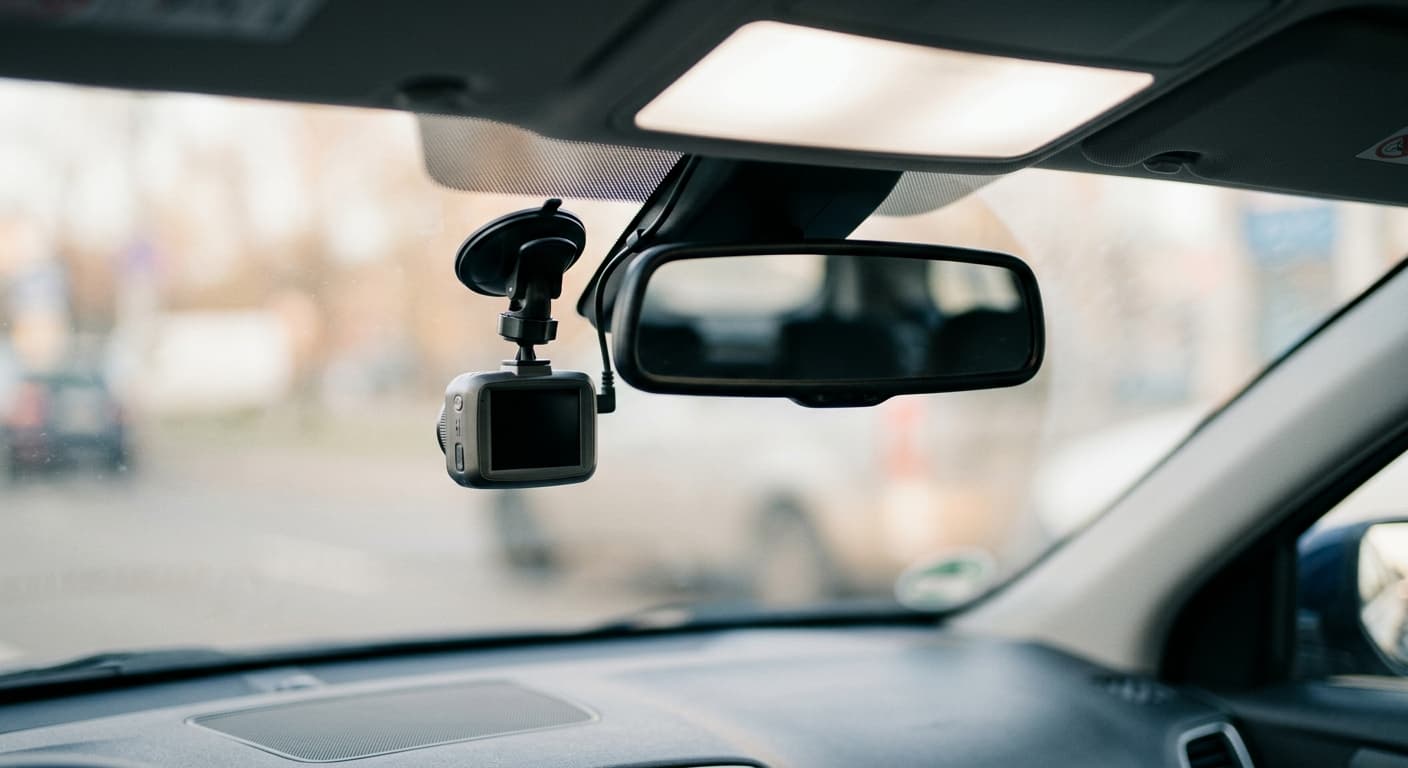
Hawái no cuenta con un estatuto que aborde específicamente los soportes para dashcams, GPS o teléfono montados en el parabrisas. El HRS 291C-124 es un estatuto limitado que alcanza la sobrecarga del vehículo, más de tres pasajeros en el asiento delantero y los objetos en el regazo del conductor o en su área inmediata que interfieran con el mecanismo de manejo, y no contiene una cláusula general de vista sin obstrucciones que alcance a un dispositivo montado. Lo que sí depende de un soporte es la ley estatal de manos libres de Hawái, el HRS 291C-137, que define el uso de un dispositivo electrónico móvil como sostenerlo mientras se conduce. Un teléfono en un soporte para parabrisas o tablero no está siendo sostenido, y esa es precisamente la razón por la que montarlo mantiene legal el uso del teléfono dentro del vehículo en Hawái.
Hawái regula los dispositivos y materiales instalados en el parabrisas mediante tres leyes que importan aquí. El HRS 291-21.5 regula los dispositivos de protección solar y los materiales no transparentes en los parabrisas. El HRS 291C-124 aborda las obstrucciones a la vista del conductor y al mecanismo de manejo, aunque en términos mucho más limitados de lo que sugiere su título. El HRS 291C-137 es la ley estatal de manos libres, y es la disposición que en realidad responde la pregunta práctica de si se puede montar y usar un teléfono dentro del auto.
Esta página cubre las reglas de Hawái sobre soportes para GPS, soportes para teléfono, dashcams, calcomanías, el polarizado del parabrisas y los cambios importantes introducidos por la Ley 129 en 2025.
Ley de Obstrucción del Parabrisas de Hawái (HRS 291C-124)
HRS 291C-124 se titula «Obstrucción a la vista del conductor o al mecanismo de manejo», pero su texto operativo es mucho más limitado de lo que sugiere el título, y leer solo el título es la forma más común en que este estatuto se aplica incorrectamente a los dispositivos montados.
El inciso (a) prohíbe conducir un vehículo únicamente cuando está «tan cargado», o cuando hay más de tres personas en el asiento delantero, de manera que obstruya la vista del conductor hacia el frente o los costados o interfiera con el control del mecanismo de manejo. El inciso (b) prohíbe sostener en el regazo, o permitir en el área inmediata, a cualquier persona, animal u objeto que interfiera con el control del mecanismo de manejo. Nótese que el inciso (b) se refiere únicamente al mecanismo de manejo, no a la vista. El inciso (c) regula dónde pueden viajar los pasajeros.
Ninguna de las tres disposiciones alcanza una cámara o un soporte para teléfono sujeto al vidrio. Un soporte de parabrisas no es sobrecarga del vehículo, no es un pasajero del asiento delantero y no interfiere con el volante, los pedales ni la palanca de cambios. Hawái no tiene una cláusula residual del tipo que usan varios otros estados, que exige que la vista del conductor a través del vidrio reglamentario permanezca sin obstrucciones, por lo que no existe una prohibición general en Hawái contra la cual medir un soporte.
Las reglas específicas de Hawái sobre materiales colocados en el parabrisas se establecen por separado en el HRS 291-21.5, que se explica más adelante.
Zonas Permitidas para Calcomanías y Etiquetas
El HRS 291-21.5 es un estatuto sobre protección solar y vidrios, y las exenciones de su inciso (e) incluyen zonas de medida específicas para los materiales exhibidos en el parabrisas.
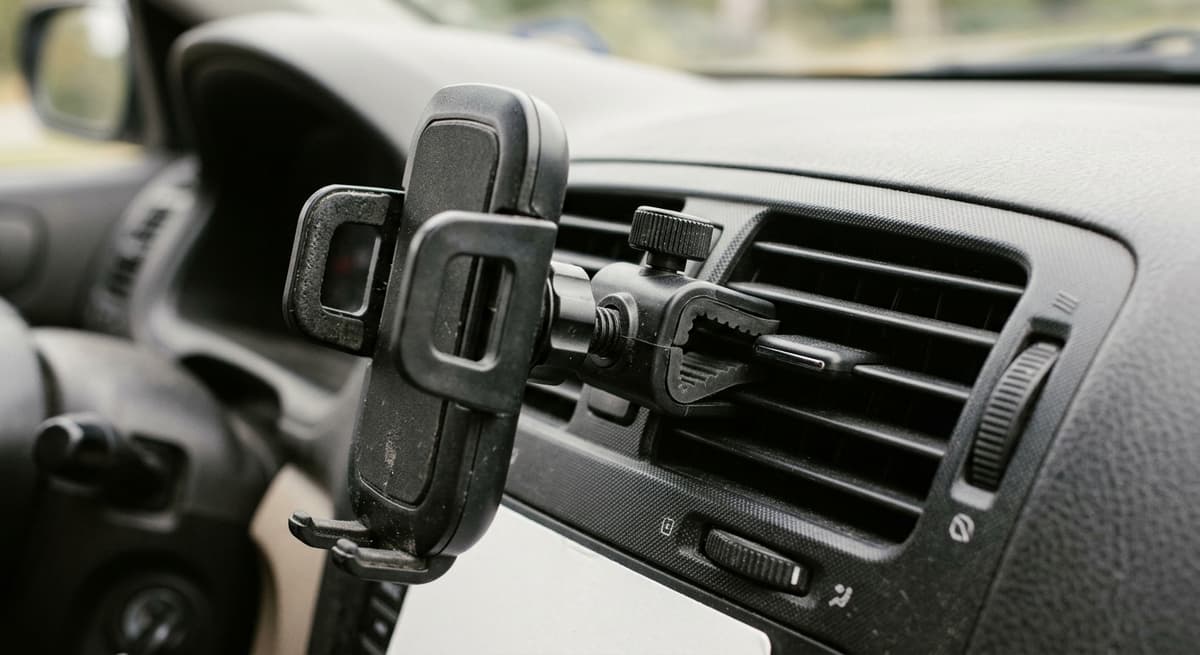
El inciso (e)(3) exime letreros, calcomanías u otros materiales exhibidos en dos áreas designadas:
| Zona | Tamaño | Ubicación |
|---|---|---|
| Lado del pasajero | Cuadro de 7 pulgadas | Esquina inferior del parabrisas más alejada del conductor |
| Lado del conductor | Cuadro de 5 pulgadas | Esquina inferior del parabrisas más cercana al conductor |
Estas zonas permiten colocar artículos como calcomanías de registro vehicular, permisos de estacionamiento, etiquetas de inspección de seguridad y transpondedores de peaje. Nótese que la exención está redactada como «letreros, calcomanías u otros materiales», no únicamente como calcomanías.
Artículos Exentos
El HRS 291-21.5(e) también exime, entre otros, lo siguiente:
- Espejos retrovisores
- Parasoles ajustables no transparentes montados por delante de las ventanas laterales y que no estén adheridos al vidrio
- Película transparente de protección solar aplicada a lo largo del borde superior del parabrisas, siempre que no invada la porción AS-1 ni se extienda más de cuatro pulgadas por debajo de la parte superior del parabrisas
- Materiales transparentes de protección solar aplicados en la porción AS-1 del parabrisas que cumplan con el Estándar Federal de Seguridad de Vehículos Motorizados 205
- Limpiaparabrisas y sus motores, manijas y bisagras de la cajuela trasera, y cortinas o persianas de privacidad dentro de casas rodantes
Soportes para GPS y Teléfono
Hawái no cuenta con un estatuto que aborde específicamente la colocación de soportes de GPS o teléfono en el parabrisas, a diferencia de estados como Georgia o California que han promulgado excepciones expresas para este tipo de dispositivos.
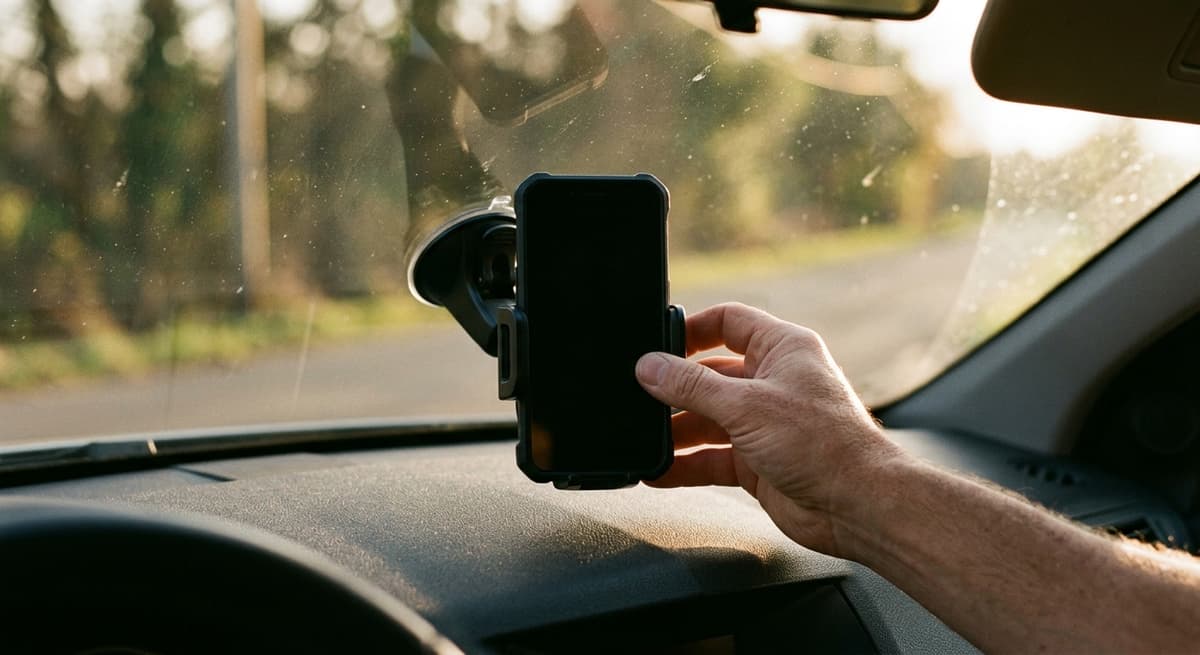
Esa ausencia importa menos de lo que parece, porque la prohibición que un soporte tendría que superar no existe. Como se explicó antes, el HRS 291C-124 no tiene una disposición general de obstrucción de la vista que alcance a un dispositivo montado, y el HRS 291-21.5 regula el material del vidrio y los dispositivos de protección solar, no el hardware sujeto al vidrio.
La única geometría legal que ofrece Hawái son los cuadros de esquina del inciso (e)(3). Como esa exención cubre «letreros, calcomanías u otros materiales» y no calcomanías específicamente, un soporte que se mantenga dentro del cuadro de 7 pulgadas del lado del pasajero o del cuadro de 5 pulgadas del lado del conductor podría, en principio, estar dentro de ella. Ninguna decisión judicial ni norma administrativa de Hawái resuelve la pregunta con claridad, así que conviene tratar esos cuadros como un refugio prudente y no como una autorización establecida. En la práctica, montar el dispositivo bajo en el parabrisas, lejos de la línea de visión directa, o en el tablero, es la colocación más defendible.
Ley Estatal de Manos Libres (HRS 291C-137)
Hawái sí cuenta con una ley estatal de manos libres, y esa es la razón por la que montar un teléfono importa legalmente. El HRS 291C-137(a) establece que ninguna persona debe operar un vehículo motorizado mientras usa un dispositivo electrónico móvil.
La definición del inciso (e) es la clave para quien busca un soporte: «uso» o «usar» significa sostener un dispositivo electrónico móvil mientras se opera un vehículo motorizado. Un teléfono colocado en un soporte para parabrisas o tablero no está siendo sostenido, por lo que usarlo de esa manera no es la conducta que prohíbe el estatuto. Esa es la respuesta práctica a por qué los conductores montan sus teléfonos en Hawái.
Vale la pena conocer algunos detalles:
- Multa. El inciso (f) fija una multa de $300, que sube a $400 si la infracción ocurre en una zona escolar o de construcción. El inciso (g) la clasifica como infracción de tránsito.
- Conductores menores de 18 años. El inciso (c) es más estricto para ellos: nadie menor de dieciocho años puede operar un vehículo mientras usa siquiera un dispositivo electrónico móvil de manos libres, excepto para llamar al 911. Un soporte no soluciona esa restricción.
- Llamadas de emergencia. El inciso (b) convierte una comunicación de emergencia al 911 en una defensa afirmativa.
- Exenciones. El inciso (d) exime a los socorristas de emergencia en servicio, a ciertos usuarios de radios de dos vías y de radioaficionado, y a los conductores completamente detenidos con el motor apagado en un lugar seguro fuera de la vía.
- Las ordenanzas municipales quedan sin efecto. El inciso (h) establece que esta sección prevalece sobre cualquier ordenanza municipal que regule el uso de dispositivos electrónicos móviles al operar un vehículo. Las antiguas ordenanzas de Honolulu y del Condado de Maui sobre el uso de dispositivos con las manos ya no son la regla vigente; lo es el estatuto estatal. Los conductores no necesitan verificar reglas isla por isla para el uso de teléfonos con las manos.
Reglas para el Montaje de Dashcams
Hawái no cuenta con un estatuto que aborde específicamente las dashcams, y el HRS 291C-124 tampoco lo hace, por las razones ya explicadas: su disposición sobre obstrucción de la vista se limita a la sobrecarga del vehículo y al exceso de pasajeros en el asiento delantero, y su disposición sobre objetos requiere interferencia con el mecanismo de manejo. Una cámara sujeta al vidrio no es ninguna de las dos cosas.
Una dashcam montada detrás del espejo retrovisor sigue siendo la colocación más sensata. Esa posición ocupa un espacio que ya está fuera de la línea de visión principal del conductor y mantiene la cámara alejada de las áreas del parabrisas que se limpian e inspeccionan.
Hawái es un estado de consentimiento de una sola parte para la grabación de audio según el HRS 803-42, por lo que una dashcam que graba conversaciones dentro del vehículo es legal siempre que al menos una persona en el auto esté al tanto de la grabación.
Polarizado del Parabrisas (HRS 291-21.5)
El HRS 291-21.5 es principalmente un estatuto sobre polarizado. Prohíbe operar o estacionar un vehículo motorizado en una carretera pública si el material del vidrio no cumple con el Estándar Federal de Seguridad de Vehículos Motorizados 205, o si el vehículo utiliza dispositivos de protección solar que caen fuera de las exenciones de la ley.
Requisitos Actuales de Polarizado
Antes de la Ley 129 (2025), las reglas de polarizado de Hawái exigían lo siguiente:
- Parabrisas delantero: debe permitir al menos un 70% de transmisión de luz visible (VLT). Esto equivale esencialmente a vidrio transparente, sin polarizado adicional permitido por debajo de la línea AS-1.
- Ventanas delanteras laterales (conductor y pasajero): deben permitir al menos un 35% de VLT.
- Ventanas traseras laterales: deben permitir al menos un 35% de VLT en sedanes; las camionetas SUV, vans y camionetas tenían estándares más flexibles.
- Parabrisas trasero: debe permitir al menos un 35% de VLT en sedanes.
Cambios de la Ley 129 (2025)
La Ley 129 (2025) introdujo los cambios más importantes a las leyes de polarizado vehicular de Hawái desde que el estatuto se promulgó por primera vez en 1983. La enmienda aparece en la nota histórica del estatuto como am L 2025, c 129.
Los cambios clave bajo la Ley 129 incluyen los siguientes.
Igualdad en las ventanas traseras de sedanes. El inciso (e)(9) ahora exime a las ventanas traseras, incluido el parabrisas trasero, de los sedanes, así como de las vans, minivans, camiones y autobuses, junto con las ventanas laterales por detrás del conductor, siempre que el vehículo cuente con espejos retrovisores en ambos lados. Anteriormente, los sedanes estaban sujetos a un estándar más estricto.
Requisito de bajar la ventana en un control de tránsito. El nuevo inciso (d) exige que todos los conductores y pasajeros de vehículos con polarizado bajen completamente sus ventanas cuando un agente del orden público los detenga. Existe una excepción para quienes no puedan hacerlo por una discapacidad física o una falla mecánica, siempre que el conductor se comunique o coopere por otros medios razonablemente disponibles. El incumplimiento puede citarse como infracción de tránsito no penal.
Certificado de cumplimiento. El instalador debe emitir un certificado al propietario del vehículo en el momento en que se instala el dispositivo de protección solar, certificando que el dispositivo cumple con la ley. El certificado debe guardarse en el vehículo en todo momento, y su ausencia al momento de una citación constituye evidencia presunta de incumplimiento por parte del instalador.
Restricciones de color. El inciso (b)(2) prohíbe los acabados espejados o altamente reflectantes que produzcan una apariencia roja, amarilla, ámbar o azul vista desde fuera del vehículo.
Parabrisas delantero y ventanas delanteras laterales. La expectativa de 70% VLT para el parabrisas delantero, que proviene del FMVSS 205, y el estándar de 35% VLT para las ventanas delanteras laterales de los incisos (e)(7) y (e)(8), no se flexibilizaron con la Ley 129. Los cambios se aplican principalmente a las ventanas traseras de los sedanes.
Sin Exención Médica para el Polarizado
A diferencia de muchos otros estados, Hawái no ofrece una exención médica para un polarizado más oscuro en el parabrisas o las ventanas. Los conductores con condiciones médicas que requieren protección contra el sol no pueden obtener una exención para un polarizado no conforme. Esto no fue modificado por la Ley 129.
Los conductores que necesitan protección solar deben usar parasoles removibles en las ventanas traseras (donde ahora se permite un polarizado más oscuro en todo tipo de vehículos) o considerar vehículos con vidrio de privacidad de fábrica que cumpla con los requisitos de VLT.
Sanciones por Infracciones
El HRS 291-21.5(f) establece una estructura de sanciones escalonada según quién sea responsable de la infracción de polarizado.
| Parte Responsable | Multa Mínima | Multa Máxima | Requisitos Adicionales |
|---|---|---|---|
| Propietario del vehículo | $300 | $550 | Por infracción separada |
| Instalador del polarizado | $700 | $1,200 | Debe reinstalar un polarizado conforme sin costo o reembolsar al propietario del vehículo |
Las infracciones del capítulo 291C para las que no se especifica otra sanción, incluido el HRS 291C-124, se multan según el HRS 291C-161(b): no más de $250 por una primera infracción, $300 por una segunda cometida dentro de un año de la primera, y $500 por una tercera o subsiguiente dentro de ese año. Estos montos los fija el estatuto estatal, no el condado.
Sostener un teléfono mientras se conduce se sanciona por separado y de forma más severa. El HRS 291C-137(f) fija una multa fija de $300, o $400 en una zona escolar o de construcción.
Bajo la Ley 129, no bajar las ventanas polarizadas durante un control de tránsito puede citarse como infracción de tránsito no penal según el HRS 291-21.5(d).
Vehículos Comerciales
Los vehículos comerciales que operan en Hawái deben cumplir tanto con las leyes estatales sobre el parabrisas como con las Regulaciones Federales de Seguridad de Transportistas Motorizados (49 CFR 393.60). Las reglas federales prohíben cualquier obstrucción que reduzca el campo de visión del conductor a través de las ventanas requeridas.
Los conductores comerciales deben instalar los dispositivos electrónicos de registro (ELD) y las unidades de GPS en el tablero en lugar del parabrisas para evitar posibles infracciones federales durante las inspecciones del Departamento de Transporte.
Inspección de Seguridad y Parabrisas
Hawái exige inspecciones anuales de seguridad para todos los vehículos registrados. Durante la inspección, se revisa el parabrisas en busca de grietas, astillas y obstrucciones. Un parabrisas con daños significativos o con polarizado no conforme reprobará la inspección.
Los inspectores también verifican que cualquier material aplicado al parabrisas (calcomanías, tiras de polarizado) se encuentre dentro de las zonas designadas y cumpla con los requisitos de VLT.
Cambios Recientes
La Ley 129 (2025) representa la actualización más importante a las leyes de parabrisas y polarizado de Hawái en más de 40 años. Las conclusiones clave de este cambio son las siguientes.
Los propietarios de sedanes ahora tienen la misma flexibilidad de polarizado que los propietarios de SUV y camionetas para las ventanas traseras. Todos los conductores con ventanas polarizadas tienen una nueva obligación de bajarlas durante los controles de tránsito. Los instaladores de polarizado enfrentan una responsabilidad más estricta a través del requisito del certificado de cumplimiento.
La Ley 129 de 2025 no introdujo cambios en las prácticas de montaje de dispositivos en el parabrisas; los cambios de la ley se limitaron al polarizado según el HRS 291-21.5.
Más Leyes de Hawái
- Leyes de Grabación de Hawái
- Leyes del Limón de Hawái
- Leyes de Choque y Fuga de Hawái
- Leyes de Asientos de Auto para Niños de Hawái
- Leyes sobre Mordeduras de Perro de Hawái
Preguntas frecuentes
¿Puedo poner el GPS o el teléfono en el parabrisas en Hawái?
Sí. Hawái no cuenta con un estatuto que aborde específicamente la colocación de dispositivos en el parabrisas, y el estatuto que suele citarse, el HRS 291C-124, no lo alcanza: su disposición sobre obstrucción de la vista se aplica solo a la sobrecarga del vehículo o a más de tres pasajeros en el asiento delantero, y su disposición sobre objetos requiere interferencia con el mecanismo de manejo. De hecho, montar el teléfono es la forma de cumplir con la ley de manos libres de Hawái, porque el HRS 291C-137 define el uso de un dispositivo como sostenerlo. La colocación más defendible es baja en el parabrisas, lejos de la línea de visión, o en el tablero.
¿Hawái tiene una ley estatal de manos libres?
Sí. El HRS 291C-137(a) prohíbe operar un vehículo motorizado mientras se usa un dispositivo electrónico móvil, y el inciso (e) define el uso como sostener el dispositivo mientras se conduce. La multa es de $300, o $400 en una zona escolar o de construcción. El inciso (h) prevalece sobre cualquier ordenanza municipal sobre el uso de dispositivos mientras se conduce, por lo que la misma regla aplica en todas las islas. Los conductores menores de dieciocho años enfrentan una regla más estricta y no pueden usar ni siquiera un dispositivo de manos libres, excepto para llamar al 911.
¿Es legal usar una dashcam en Hawái?
Sí. No existe un estatuto sobre dashcams en Hawái, y el HRS 291C-124 no alcanza a una cámara sujeta al vidrio. Se recomienda montarla detrás del espejo retrovisor porque ese espacio ya está fuera de la línea de visión principal del conductor. Hawái es un estado de consentimiento de una sola parte para la grabación de audio según el HRS 803-42.
¿Dónde puedo colocar calcomanías en el parabrisas en Hawái?
El HRS 291-21.5(e)(3) exime letreros, calcomanías u otros materiales exhibidos en un cuadro de 7 pulgadas en la esquina inferior del lado del pasajero del parabrisas, o en un cuadro de 5 pulgadas en la esquina inferior del lado del conductor. Esas dos zonas son las designadas.
¿Hawái ofrece una exención médica para un polarizado de ventana más oscuro?
No. Hawái no otorga una exención médica para un polarizado de ventana que no cumpla con la norma. Esto no fue modificado por la Ley 129 en 2025. Los conductores que necesitan protección solar deben usar parasoles removibles o vehículos con vidrio de privacidad de fábrica.
¿Qué cambió con la Ley 129 (2025) de Hawái?
La Ley 129 alineó las reglas de polarizado de las ventanas traseras y el parabrisas trasero de los sedanes con las de vans, camiones y autobuses, agregó el requisito de que conductores y pasajeros bajen las ventanas polarizadas durante un control de tránsito, exigió a los instaladores emitir un certificado de cumplimiento que debe mantenerse en el vehículo, y prohibió los acabados espejados o altamente reflectantes que produzcan una apariencia roja, amarilla, ámbar o azul.
Actualizaciones
Se corrigió esta página para reflejar la ley estatal de manos libres de Hawái (HRS 291C-137), que prevalece sobre las ordenanzas municipales que la página describía como la regla vigente, y se corrigió el alcance del HRS 291C-124 y los montos de las multas por obstrucción según el HRS 291C-161.
Se corrigió el tratamiento del HRS 291C-124 en todo el artículo: es un estatuto general sobre sobrecarga del vehículo y objetos en el regazo del conductor o su área inmediata, no la ley que rige el montaje de dispositivos GPS, de teléfono o dashcam en el parabrisas de Hawái, y no establece zonas de montaje para dispositivos.
La ley detrás de este artículo
Este artículo se apoya en las disposiciones legales a continuación, conservadas en nuestro propio registro jurídico y obtenidas de la fuente oficial. Toque una sección para leer el texto vigente.
Hawaii Revised Statutes, Chapter 291: TRAFFIC VIOLATIONS
§ 291-21.5Regulation of motor vehicle sun screening devices; penaltyVigentecitada en 2 de nuestros artículos
(a) No person shall operate, permit the operation of, cause to be operated, or park any motor vehicle on a public highway if the glazing material of the motor vehicle: (1) Does not meet the requirements of the Federal Motor Vehicle Safety Standards 205 in effect at the time of its manufacture; or (2) Is used in conjunction with sun screening devices not exempted from this section by subsection (e). (b) No person shall install, mount, adhere, affix, or use any sun screening device or combination of devices in conjunction with the glazing material of a motor vehicle: (1) That does not meet the requirements of the Federal Motor Vehicle Safety Standards 205 in effect at the time of the glazing material's manufacture except as provided in this section; and (2) With mirrored or high reflective finishes that produce a red, yellow, amber, or blue appearances as viewed from the exterior of the motor vehicle. Any person who violates this section shall be liable for the removal of any sun screening device applied contrary to this section.
Texto oficial (extracto) · verificado el 2026-09-01 · Lea el texto completo en nuestra biblioteca legal · Verifique en capitol.hawaii.gov
Hawaii Revised Statutes, Chapter 291C: [STATEWIDE TRAFFIC CODE]
§ 291C-124Obstruction to driver's view or driving mechanismVigente
(a) No person shall drive a vehicle when it is so loaded, or when there are in the front seat such a number of persons, exceeding three, as to obstruct the view of the driver to the front or sides of the vehicle, or as to interfere with the driver's control over the driving mechanism of the vehicle. (b) While operating a motor vehicle, no person shall hold in the person's lap, or allow to be in the driver's immediate area, any person, animal, or object which interferes with the driver's control over the driving mechanism of the vehicle. (c) No passenger in a vehicle shall ride in such position as to interfere with the driver's view ahead or to the sides, or to interfere with the driver's control over the driving mechanism of the vehicle. [L 1971, c 150, pt of §1; am L 1981, c 11, §1; gen ch 1985]
Texto oficial (extracto) · verificado el 2026-07-30 · Lea el texto completo en nuestra biblioteca legal · Verifique en capitol.hawaii.gov
§ 291C-137Mobile electronic devicesVigente
(a) No person shall operate a motor vehicle while using a mobile electronic device. (b) The use of a mobile electronic device for the sole purpose of making a "911" emergency communication shall be an affirmative defense to this law. (c) No person under eighteen years of age shall operate a motor vehicle while utilizing a hands-free mobile electronic device, except for the sole purpose of making a "911" emergency communication. (d) The following persons shall be exempt from subsection (a): (1) Emergency responders using a mobile electronic device while in the performance and scope of their official duties; (2) Drivers using a two-way radio or a private Land Mobile Radio System, within the meaning of title 47 Code of Federal Regulations part 90, while in the performance and scope of their work-related duties and who are operating fleet vehicles or who possess a commercial vehicle license; (3) Drivers holding a valid amateur radio operator license issued by the Federal Communications Commission and using a half-duplex two-way radio; or (4) Drivers of vehicles that are at a complete stop, while the engine is turned off, in a safe location by the side of the road out of the way…
Texto oficial (extracto) · verificado el 2026-07-30 · Lea el texto completo en nuestra biblioteca legal · Verifique en capitol.hawaii.gov
§ 291C-161Penalties; photo red light imaging detector system fines; automated speed enforcement system finesVigentecitada en 4 de nuestros artículos
(a) It shall be a violation for any person to violate any of the provisions of this chapter, except as otherwise specified in subsections (c) and (d) and unless the violation is by other law of this State declared to be a felony, misdemeanor, or petty misdemeanor. (b) Except as provided in subsections (c) and (d), every person who is determined to have violated any provision of this chapter for which another penalty is not provided shall be fined not more than: (1) $250 for a first violation thereof; (2) $300 for a second violation committed within one year after the date of the first violation; and (3) $500 for a third or subsequent violation committed within one year after the date of the first violation. (c) Every person convicted under or found in violation of section 291C-12, 291C-12.5, 291C-12.6, 291C-13, 291C-14, 291C-15, 291C-16, 291C-72, 291C-73, 291C-95, 291C-102, 291C-103, 291C-104, or 291C-105 shall be sentenced or fined in accordance with those sections.
Texto oficial (extracto) · verificado el 2026-07-30 · Lea el texto completo en nuestra biblioteca legal · Verifique en capitol.hawaii.gov
Citada en 10 resoluciones judiciales de nuestra colecciónResolución más reciente que la cita en nuestra colección: 2021
Resoluciones que citan esta sección en nuestra colección:
- State v. Gonzalez. (Hawaii Supreme Court 2012, 128 Haw. 314)“…The penalty for a violation of HRS § 291C-102 is set by HRS § 291C-161 (2011). HRS § 291C-161 provides in rele…”
- State v. Shimabukuro (Hawaii Supreme Court 2002, 100 Haw. 324)“…ot provide for any term of imprisonment as a penalty. See HRS § 291C-161 (Supp.2000). HRS § 291-4.5 was repealed…”
- State v. Barros (Hawaii Supreme Court 2002, 98 Haw. 337)“…lking is a fine. [2] No jail sentence is prescribed. See HRS §§ 291C-161 (Supp.1999) & 291C-73. HRS chapter 291C…”
Identificado automáticamente a partir de las opiniones judiciales que citan esta sección; no es un ranking de qué caso prevalece.
Hawaii Revised Statutes, Chapter 803: ARRESTS, SEARCHES, SEARCH WARRANTS
§ 803-42Interception, access, and disclosure of wire, oral, or electronic communications, use of pen register, trap and trace device, and mobile tracking device prohibitedVigentecitada en 21 de nuestros artículos
(a) Except as otherwise specifically provided in this part, any person who: (1) Intentionally intercepts, endeavors to intercept, or procures any other person to intercept or endeavor to intercept, any wire, oral, or electronic communication; (2) Intentionally uses, endeavors to use, or procures any other person to use or endeavor to use any electronic, mechanical, or other device to intercept any wire, oral, or electronic communication when: (A) Such a device is affixed to, or otherwise transmits a signal through, a wire, cable, or other similar connection used in wire communication; or (B) Such a device transmits communications by radio, or interferes with the transmission of such communication; (3) Intentionally discloses, or endeavors to disclose, to any other person the contents of any wire, oral, or electronic communication, knowing or having reason to know that the information was obtained through the interception of a wire, oral, or electronic communication in violation of this part; (4) Intentionally uses, or endeavors to use, the contents of any wire, oral, or electronic communication, knowing or having reason to know that the information was obtained through the…
Texto oficial (extracto) · verificado el 2026-09-23 · Lea el texto completo en nuestra biblioteca legal · Verifique en capitol.hawaii.gov
Citada en 14 resoluciones judiciales de nuestra colecciónResolución más reciente que la cita en nuestra colección: 2026
En los tribunales (resumen editorial, verificado de forma independiente):State v. Lo (1983) sostuvo que la HRS 803-42(b)(3) prohibía a la policía instalar en secreto dispositivos de grabación en una habitación de hotel aunque una de las participantes consintiera, y suprimió la prueba. State v. Lee (1984) sostuvo que una grabadora portada por un participante que consiente no es una instalación en un lugar privado, así que no hubo violación.
Resoluciones que citan esta sección en nuestra colección:
- State v. Lo (Hawaii Supreme Court 1983, 66 Haw. 653)✓Agentes instalaron equipo de grabación en una habitación de hotel y grabaron a un médico atraído allí por una paciente que cooperaba; la Corte Suprema de Hawái sostuvo que el estatuto prohíbe instalar un aparato de grabación en un lugar privado sin el consentimiento de quienes tienen derecho a la privacidad.
- State v. Okubo (Hawaii Supreme Court 1984, 67 Haw. 197)✓La policía grabó cerca de cuarenta conversaciones sobre soborno con grabadoras corporales y equipos telefónicos, con el consentimiento de los oficiales participantes; la Corte Suprema de Hawái consideró válida esa vigilancia consentida bajo el estatuto y la constitución estatal.
- State v. Lee (Hawaii Supreme Court 1984, 67 Haw. 307)✓Un oficial que se hizo pasar por paciente entró con una grabadora al consultorio privado de un médico; la Corte Suprema de Hawái sostuvo que un aparato colocado en el cuerpo de un participante no es una instalación en un lugar privado, por lo que no se violó el estatuto.
Identificado automáticamente a partir de las opiniones judiciales que citan esta sección; no es un ranking de qué caso prevalece.
Code of Federal Regulations Title 49
§ 393.60Glazing in specified openings.Vigentecitada en 15 de nuestros artículos
(a) Glazing material. Glazing material used in windshields, windows, and doors on a motor vehicle manufactured on or after December 25, 1968, shall at a minimum meet the requirements of Federal Motor Vehicle Safety Standard (FMVSS) No. 205 in effect on the date of manufacture of the motor vehicle. The glazing material shall be marked in accordance with FMVSS No. 205 (49 CFR 571.205, S6). (b) Windshields required. Each bus, truck and truck-tractor shall be equipped with a windshield. Each windshield or portion of a multi-piece windshield shall be mounted using the full periphery of the glazing material. (c) Windshield condition. With the exception of the conditions listed in paragraphs (c)(1), (c)(2), and (c)(3) of this section, each windshield shall be free of discoloration or damage in the area extending upward from the height of the top of the steering wheel (excluding a 51 mm (2 inch) border at the top of the windshield) and extending from a 25 mm (1 inch) border at each side of the windshield or windshield panel.
Texto oficial (extracto) · verificado el 2026-07-28 · Lea el texto completo en nuestra biblioteca legal · Verifique en ecfr.gov
Citada en 3 resoluciones judiciales de nuestra colecciónResolución más reciente que la cita en nuestra colección: 2021
En los tribunales (resumen editorial, verificado de forma independiente):El mínimo de 70 por ciento de transmisión de luz del 49 CFR 393.60(d) cubre el parabrisas y las ventanas inmediatamente a la derecha e izquierda del conductor. Grooms Hauling, LLC v. Robinson (2020) lo aplicó mediante la adopción de Pensilvania y rechazó reclamos de discriminación racial por las multas de polarizado; State v. Ford (2021) señaló que Kansas también lo adopta.
Resoluciones que citan esta sección en nuestra colección:
- United States of America, Government v. Robert L. Pierre, Defendant (District Court, D. New Hampshire 2015, 2015 DNH 083)“…rallel luminous transmittance of not less than 70 percent.” 49 C.F.R. 393.60(c). Neither the Government nor the defe…”
- GROOMS HAULING, LLC v. ROBINSON (District Court, E.D. Pennsylvania 2020)✓Agentes citaron repetidamente a una empresa de acarreo de dueños afroamericanos cuyas ventanas dejaban pasar solo del 17 al 20 por ciento de la luz; al tomar el estándar de 70 por ciento de 49 CFR 393.60 como regla aplicable, el tribunal otorgó juicio sumario a los agentes.
- State v. Ford (Court of Appeals of Kansas 2021)“…Relevant to this appeal are regulations on window tinting (49 C.F.R. § 393.60[d]), medical examiner certificates (49…”
Identificado automáticamente a partir de las opiniones judiciales que citan esta sección; no es un ranking de qué caso prevalece.
Fuentes y referencias
- HRS 291-21.5: Regulación de dispositivos de protección solar para vehículos motorizados; sanción(capitol.hawaii.gov).gov
- HRS 291C-124: Obstrucción a la vista del conductor o al mecanismo de manejo(law.justia.com)
- Ley 129 (2025): Texto del HB 226 que enmienda el HRS 291-21.5(legiscan.com)
- Hawaii News Now: Actualización de las leyes de polarizado vehicular(hawaiinewsnow.com)
- HRS 803-42: Estatuto de Hawái sobre intervención de comunicaciones y escucha ilegal(capitol.hawaii.gov).gov
- Departamento de Transporte de Hawái: Reglas Administrativas(hidot.hawaii.gov).gov
- HRS 291C-137: Dispositivos electrónicos móviles (ley estatal de manos libres de Hawái)(capitol.hawaii.gov)
- HRS 291C-124: Obstrucción a la vista del conductor o al mecanismo de manejo(capitol.hawaii.gov)
- HRS 291C-161: Sanciones por infracciones del capítulo 291C(capitol.hawaii.gov)