Poland E-Scooter Laws: No Helmet Rule, Sidewalk Limits (2026)
Independently fact-checked against primary sources (last audited July 23, 2026). · 2 primary sources cited on this page. How we verify our legal content
This article is general information about e-scooter laws in Poland and is not legal advice. For a specific fine, seizure or injury case, confirm the current text with a Polish adwokat or radca prawny, or with the Glowny Inspektorat Transportu Drogowego (GITD). Information last verified on 23 July 2026.
Are e-scooters legal in Poland?
Yes. Private e-scooters (hulajnogi elektryczne) have been regulated nationwide since a 20 May 2021 amendment to the Prawo o ruchu drogowym (Road Traffic Law) took effect. That amendment added a dedicated legal category for the electric scooter and for the broader UTO (urzadzenie transportu osobistego, personal transport device) class, according to the official explainer published by GITD, the national road transport inspectorate.
Rental e-scooters are equally legal. Bolt, Lime and other operators run large fleets in Warsaw, Krakow, Wroclaw and most major Polish cities, and there is no national ban on shared operators. The rules below apply to both a privately owned scooter and a rented one, since Poland does not run a separate legal track for rental fleets the way some other countries do.
What counts as an e-scooter here
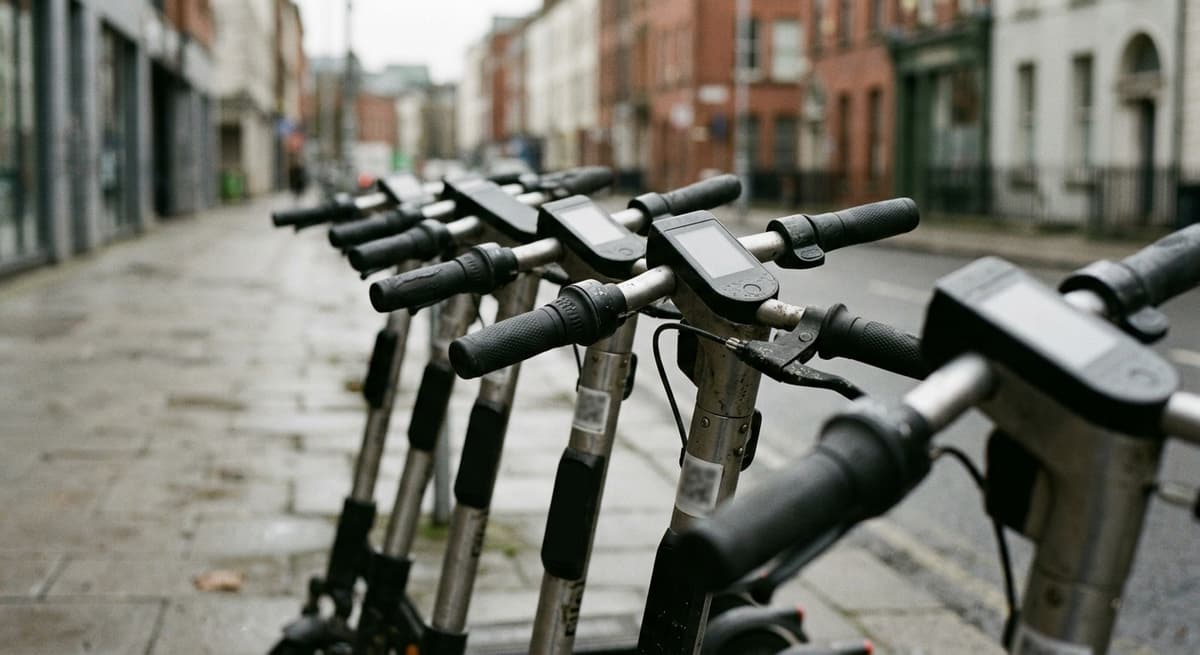
GITD's official definition describes an electric scooter as an electrically powered, two-axle vehicle with a steering bar, without a seat and without pedals, designed exclusively for a standing operator. The related UTO category covers other electrically powered personal transport devices that are not e-scooters, again without a seat or pedals.
Devices that add a seat, exceed the UTO speed and weight limits, or otherwise fall outside this definition are not covered by these rules and may instead fall under separate motor vehicle law, which brings registration and licensing requirements this article does not cover.
Where you can ride
Poland's rule sets a clear order of preference. Bike paths come first, with a 20 km/h speed cap. Where no bike path exists, riders may use roads with a speed limit of 30 km/h or less, again capped at 20 km/h for the rider.
Sidewalks are allowed only exceptionally: where there is no bike infrastructure and the road speed limit exceeds 30 km/h. Even then, GITD's guidance requires riding at a speed close to a pedestrian's pace, extra caution, and yielding right of way to pedestrians at all times.
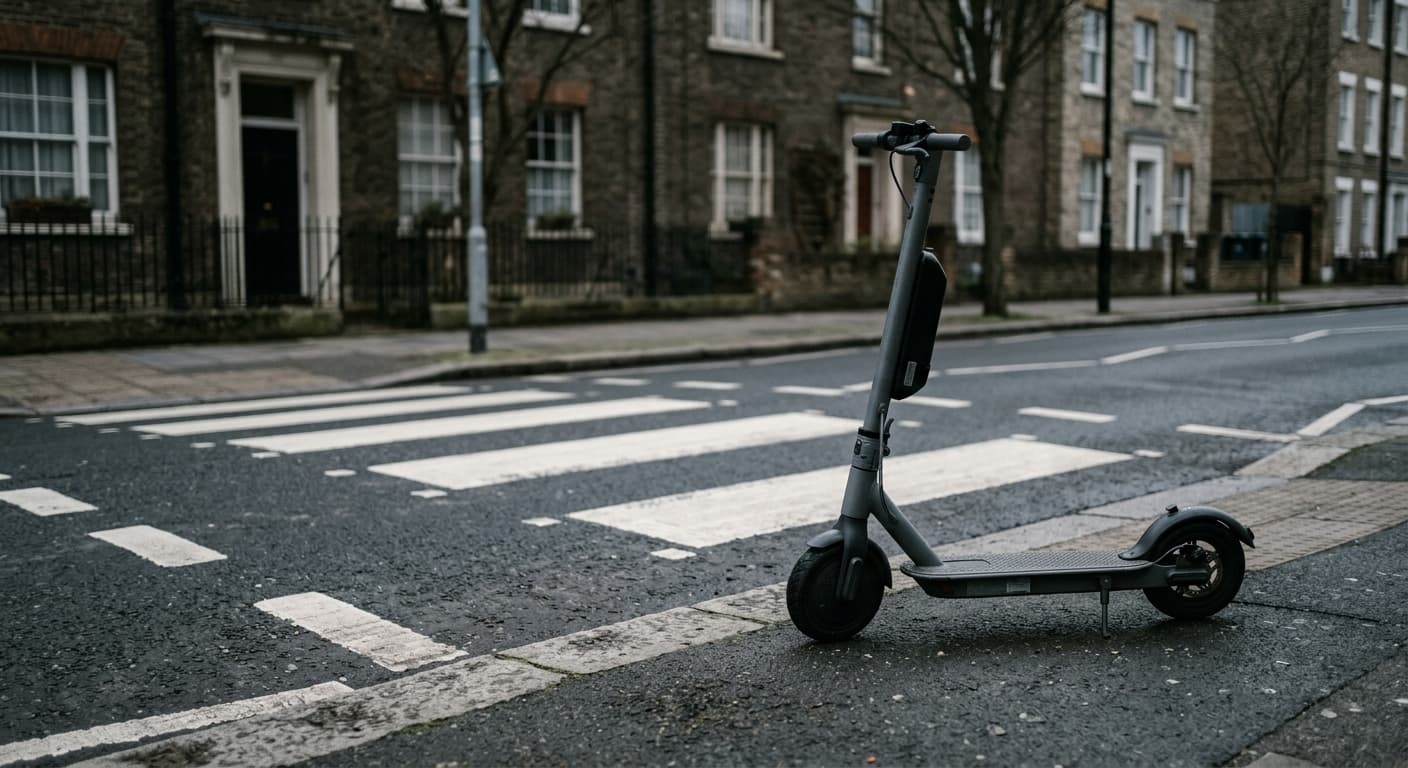
Riding an e-scooter across a marked pedestrian crossing is separately and explicitly forbidden by the same GITD guidance. A rider who reaches a crossing must dismount and walk the scooter across like a pedestrian, not ride through it.
Rider rules
Age rules are tiered. Under 10, riding on public roads is not permitted at all; younger children may only use an e-scooter in a residential zone under adult supervision. Riders aged 10 to 18 need the same qualification a cyclist of that age would need, either a karta rowerowa (bicycle card) or an AM, A1, B1 or T category driving licence. At 18 and older, no permit of any kind is required.
Poland does not mandate a helmet for e-scooter riders of any age under the official GITD rules. That is a real gap by comparison with some neighboring countries, not an oversight in this article: no helmet requirement was found in the government source, so none should be assumed.
Penalties
Poland treats e-scooters as "non-mechanical vehicles" for alcohol purposes under Article 87 of the Kodeks wykroczen (Code of Petty Offences), according to multiple converging Polish legal-explainer sources. That framing matters for two reasons: it creates real fines for impaired riding, and it means an e-scooter offence cannot cost a rider their separate car driving licence, because the scooter is not classed as a "mechanical vehicle" under that statute.
| Situation | Consequence |
|---|---|
| Riding at 0.2 to 0.5 per mille blood alcohol (impairment) | Misdemeanor fine reported from around 1,000 PLN |
| Riding above 0.5 per mille (intoxication) | Misdemeanor fine reported at 2,500 PLN or more |
| Sidewalk, speed or pedestrian-crossing violations | Fines may be issued; no single official zloty schedule was located for this article |
The exact zloty figures for the alcohol tiers rest on secondary Polish legal-explainer sources (bezprawnik.pl, smartride.pl) that consistently cite Article 87, rather than on a directly opened copy of the article text itself, so treat them as a reliable range rather than a precise statutory quote.
Enforcement in practice
Enforcement patterns do not change the legal status of a rule and are not permission to break it. With that said, Polish police run periodic checks targeting impaired riding and speeding, particularly around crackdown periods, and GITD guidance is clear that crossing an intersection without dismounting is against the rules.
In practice, the dismount-at-crossings rule is widely ignored by riders in Polish cities and is rarely proactively ticketed outside those targeted campaigns, according to the pattern described in Polish coverage of enforcement. That gap between the written rule and daily street behavior is real, but it does not make riding through a crossing lawful.
For comparison, Germany takes a different rental and registration approach to e-scooters just across Poland's western border; see our Germany e-scooter rules guide. For the wider regional and national picture, see our world e-scooter law guide.
Frequently Asked Questions
Do I need a licence to ride an e-scooter in Poland?
Only if you are between 10 and 18 years old, in which case you need a karta rowerowa (bicycle card) or an AM, A1, B1 or T category driving licence. Adults 18 and over need no permit, and children under 10 may not ride on public roads at all.
Is a helmet required for e-scooters in Poland?
No. The official GITD guidance does not set a helmet requirement for e-scooter riders of any age, unlike the mandatory rules in some neighboring countries.
Can I ride an e-scooter on the sidewalk in Poland?
Only in the specific case where no bike path exists and the road speed limit exceeds 30 km/h, and even then only at pedestrian pace with extra caution and by yielding to pedestrians. Bike paths and slow roads take priority.
What happens if I ride an e-scooter across a pedestrian crossing in Poland?
It is expressly forbidden. Riders are required to dismount and walk the scooter across a marked pedestrian crossing, the same as a pedestrian would.
Can drunk e-scooter riding cost me my car driving licence in Poland?
According to Polish legal-explainer sources describing Article 87 of the Code of Petty Offences, an e-scooter counts as a non-mechanical vehicle, so an alcohol offence on a scooter does not result in losing a separate car driving licence, even though it can still bring a real fine.
Are rental e-scooters like Bolt and Lime legal in Poland?
Yes. Rental operators run legally in Warsaw, Krakow, Wroclaw and most major Polish cities under the same national rules that apply to private e-scooters, and there is no national ban on shared fleets.
Updates
Independently fact-checked against the cited primary sources
Sources and References
- GITD (Glowny Inspektorat Transportu Drogowego), official explainer on e-scooter and UTO rules(gov.pl).gov
- isap.sejm.gov.pl, consolidated text of the Prawo o ruchu drogowym (Road Traffic Law)(isap.sejm.gov.pl).gov
- bezprawnik.pl, legal explainer on Article 87 Kodeks wykroczen and e-scooter alcohol penalties(bezprawnik.pl)
- smartride.pl, corroborating explainer on Polish e-scooter alcohol and traffic rules(smartride.pl)