Croatia E-Scooter Laws: Helmets Mandatory at Every Age (2026)
Independently fact-checked against primary sources (last audited July 23, 2026). · 3 primary sources cited on this page. How we verify our legal content
This article is general information about e-scooter laws in Croatia and is not legal advice. For a specific fine or accident case, confirm current details with the Ministarstvo unutarnjih poslova (MUP) or a Croatian odvjetnik. Information last verified on 23 July 2026.
Are e-scooters legal in Croatia?
Yes. E-scooters have been a defined legal category, "osobno prijevozno sredstvo" (personal transport device), since amendments to the Zakon o sigurnosti prometa na cestama (Road Safety Act) took effect 30 July 2022, eight days after publication in Narodne novine (the Official Gazette), issue 85/2022. Rental operators including Bolt and Lime run legally in Zagreb, Split and other Croatian cities, and no ban has been identified.
What counts as an e-scooter here
Article 2, point 104 of the 2022 amendment defines a personal transport device as a vehicle not classified into any other vehicle category, with an engine displacement no greater than 25 cubic centimeters, or an electric motor no more powerful than 0.6 kW, and a maximum speed of 25 km/h. A device that exceeds those limits falls outside this category entirely.
Rider rules: the helmet mandate that stands out region-wide
Article 30 of the amendment, which modifies Article 215 of the Road Safety Act, sets the minimum age to operate a bicycle or personal transport device at 14.
The rule that sets Croatia apart from every other country in this region is its helmet mandate. Article 15 of the amendment, which modifies Article 114 with a new paragraph 2, requires that "drivers of personal transport devices must wear a protective helmet on their head" while riding, with no age carve-out in that text. Croatian reporting (Revija HAK, the Croatian Auto Club's magazine) describes this as an all-ages helmet mandate, matched in the European Union only by Denmark, a genuinely unusual position since most EU countries in this region require a helmet only for younger riders, if at all.
Where you can ride
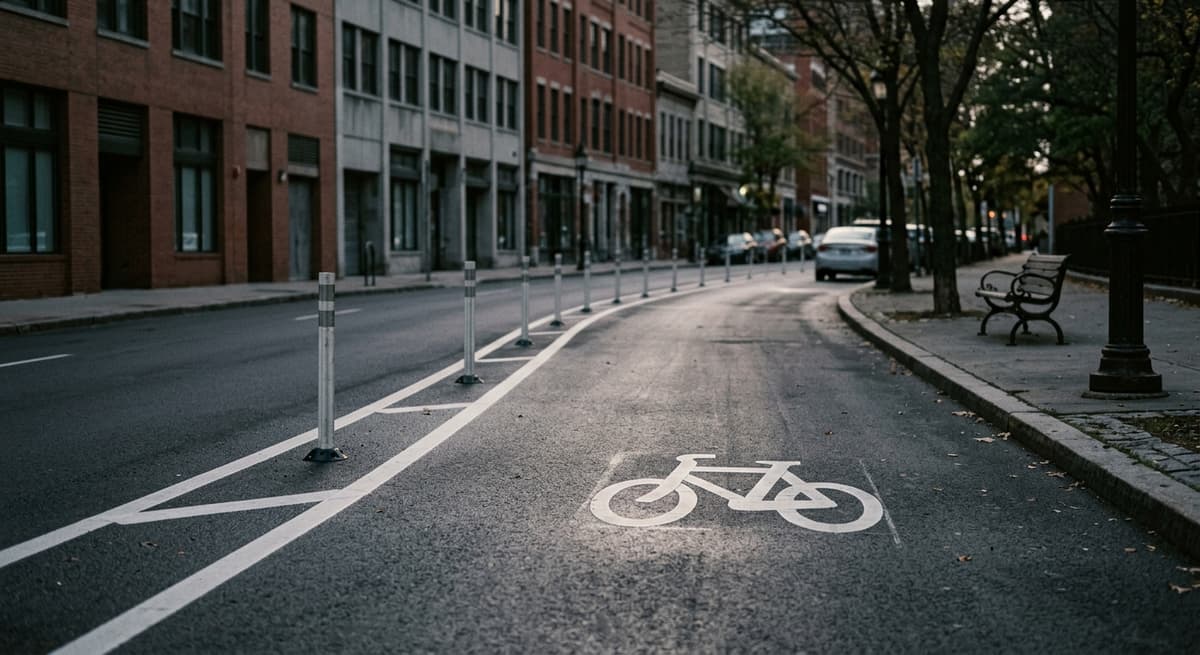
Croatian reporting describes riding primarily on bike paths and lanes, in the direction of travel; pedestrian areas or calm-traffic zones only where no cycle infrastructure exists; local or county roads with a limit of 50 km/h or less only where no cycle path is available; and a ban from highways, expressways and other motor-vehicle-only roads. This routing detail comes from Revija HAK's reporting rather than from the primary gazette excerpt reviewed for this article, so it is presented as reported rather than as a directly quoted statutory line.
Penalties
| Violation | Fine |
|---|---|
| No helmet | 30 euros |
| No reflective clothing or markings in low visibility | 30 euros |
| No lights from dusk to dawn | 60 euros |
| Not holding both hands on the handlebar | 30 euros |
| Group riding not in single file | 60 euros |
| Unauthorized parking | 130 euros |
| Riding on a prohibited road | 60 euros |
| Headphone use impairing control | 30 euros |
Only one rider is permitted per device. No licence requirement or e-scooter-specific alcohol limit was found in the sources reviewed for this article; this was not addressed in the material available and should not be assumed either way.
Enforcement in practice
Enforcement patterns do not change the legal status of a rule and are not permission to break it. Croatia's enforcement posture is the most active of the eight countries in this regional guide. Press coverage confirms that fines and warnings, including for intoxicated riders, are already being issued in meaningful numbers, which points to routine, on-street enforcement rather than a rule that exists only on paper.
That combination, an all-ages helmet mandate paired with active enforcement, is a genuine outlier for the region; readers used to a lighter-touch neighboring country should not assume Croatia's rules work the same way. For the wider regional picture, see our world e-scooter law guide.
Frequently Asked Questions
Do I have to wear a helmet on an e-scooter in Croatia?
Yes, at every age. Croatia's helmet mandate applies to all riders of personal transport devices with no age exception, a position matched in the EU only by Denmark according to Croatian reporting. The fine for non-compliance is 30 euros.
What is the minimum age to ride an e-scooter in Croatia?
14, set by the 2022 amendment to the Zakon o sigurnosti prometa na cestama.
When did e-scooter rules take effect in Croatia?
30 July 2022, when amendments to the Road Safety Act (Narodne novine, Official Gazette 85/2022) formally classified e-scooters as personal transport devices.
Are rental e-scooters legal in Zagreb and Split?
Yes, Bolt and Lime operate legally in Zagreb, Split and other Croatian cities, with no ban identified.
Is e-scooter enforcement actually happening in Croatia?
Yes. Croatia has the most active enforcement posture of the countries in this regional guide; press coverage confirms fines and warnings, including for intoxicated riders, are already being issued in meaningful numbers.
What is the top speed for e-scooters in Croatia?
25 km/h, set alongside an engine limit of no more than 25 cubic centimeters displacement or 0.6 kW electric motor power, in the same 2022 amendment that defines the personal transport device category.
Updates
Independently fact-checked against the cited primary sources
Sources and References
- Narodne novine (Official Gazette), Zakon o izmjenama i dopunama Zakona o sigurnosti prometa na cestama, issue 85/2022(narodne-novine.nn.hr).gov
- Ravnateljstvo policije (Croatian national police), notice on the 2022 Road Safety Act amendments taking effect(policija.gov.hr).gov
- Ministarstvo unutarnjih poslova (MUP, Ministry of the Interior), notice on the Road Safety Act amendments(mup.gov.hr).gov
- Revija HAK (Croatian Auto Club magazine), full e-scooter rules and fine schedule(revijahak.hr)