
Indiana
Indiana Car Seat Laws (2026): Ages, Exemptions & Penalties
Independently fact-checked against primary sources (last audited September 17, 2026). · Reviewed by the RecordingLaw editorial team. · 10 primary sources cited on this page. How we verify our legal content
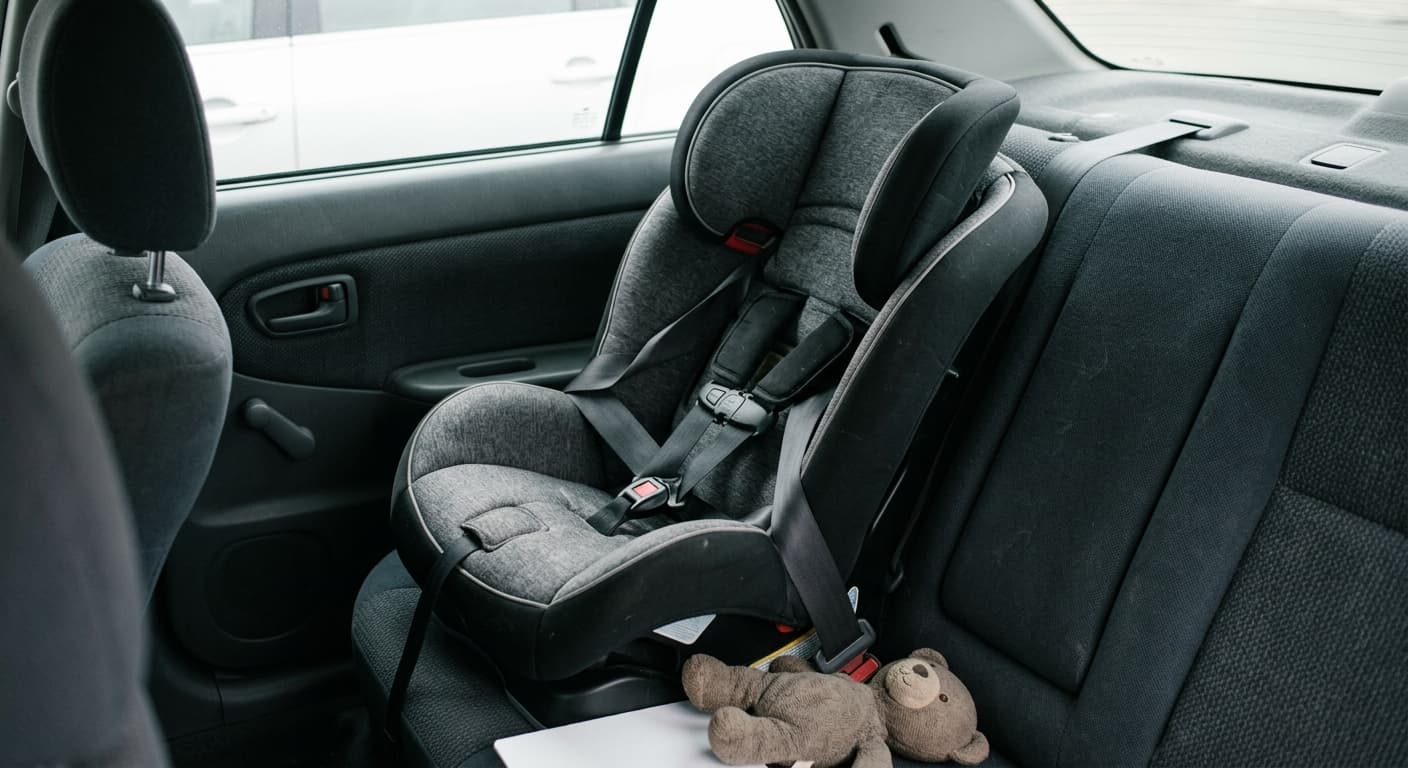
Indiana requires every child younger than 8 to ride in a child restraint system installed and used according to the manufacturer's instructions, and every child from 8 up to 16 to be restrained by a child restraint system or a seat belt, under IC 9-19-11-2 and IC 9-19-11-3.6. Unlike states that write separate rear-facing, forward-facing, and booster stages into the statute, Indiana's law leaves seat type and orientation to the restraint manufacturer's own instructions. This page reflects the statute's text as of September 2026.
Jurisdiction scope: This article covers car seat and child-restraint law in the state of Indiana only. It does not address any other state. For other states, see the car seat laws hub.
| Stage | Who | Rule | Statute |
|---|---|---|---|
| Child restraint system (undifferentiated) | Under age 8 | Restrained by a child restraint system per the manufacturer's instructions; the statute does not separately define rear-facing, forward-facing, or booster stages | IC 9-19-11-2(a) |
| Child restraint system or seat belt | Ages 8 through 15 | Restrained by either a child restraint system or a safety belt, in a vehicle equipped with a safety belt meeting FMVSS 208 | IC 9-19-11-3.6(a) |
| Lap belt only (exception) | Weighs more than 40 lb, in place of the section 2 or 3.6 duty | Lap safety belt alone permitted only if the vehicle has no lap-and-shoulder belts, or every lap-and-shoulder belt outside the front seats already restrains another child under 16 | IC 9-19-11-3.7 |
Under 8: the undifferentiated child restraint duty
IC 9-19-11-2(a) makes it a Class D infraction to operate a vehicle with a child under 8 who is "not properly fastened and restrained according to the child restraint system manufacturer's instructions by a child restraint system." Indiana's statute doesn't write its own rear-facing, forward-facing, or booster thresholds the way some states do; it points instead to whatever the restraint's own manufacturer instructions require for the child's age, weight, and height. In practice, that means the seat's labeling, not a separate Indiana age-weight-height table, decides when a child moves from one seat orientation to the next.
Ages 8 through 15: child restraint system or seat belt
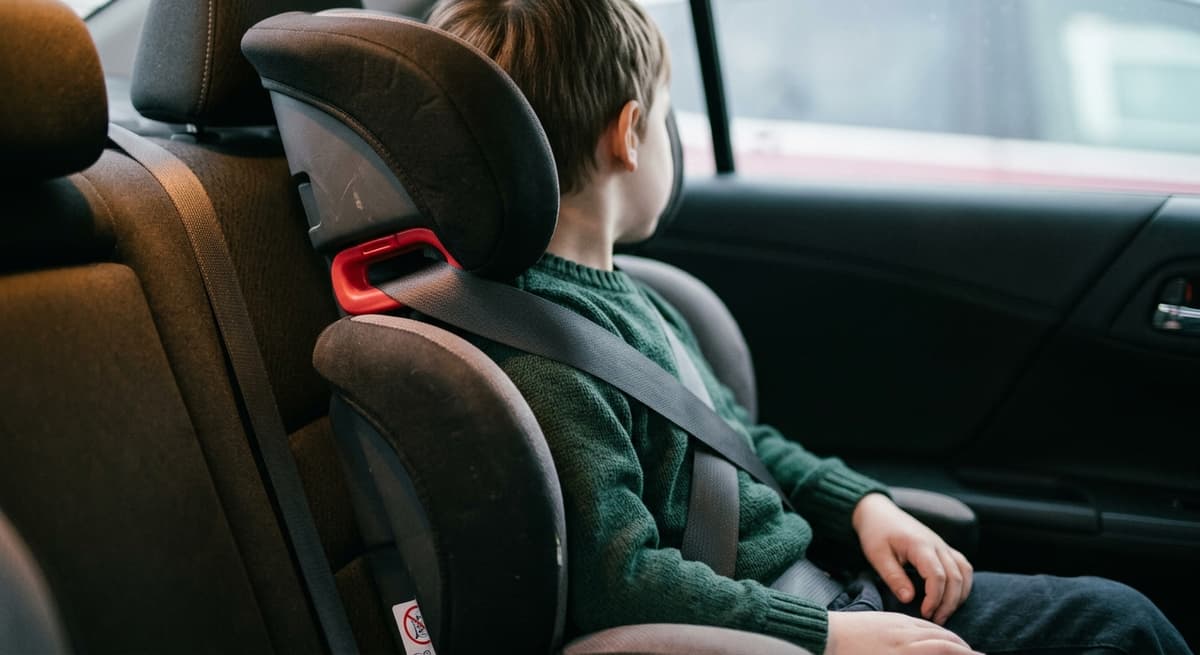
Once a child reaches 8, IC 9-19-11-3.6(a) takes over and requires the child to be "properly fastened and restrained according to the child restraint system manufacturer's instructions by a: (A) child restraint system; or (B) safety belt," through age 15. A family can keep an older child in a booster or other child restraint system past age 8, or move to a standard safety belt, as long as one of the two is used correctly. The duty applies only in a vehicle "equipped with a safety belt meeting the standards stated in the Federal Motor Vehicle Safety Standard Number 208 (49 CFR 571.208)."
The lap belt exception for a child over 40 pounds
IC 9-19-11-3.7 carves out a narrower alternative that applies "notwithstanding sections 2 and 3.6 of this chapter." A driver may restrain a child who weighs more than 40 pounds with a lap safety belt alone, instead of a child restraint system or the child restraint-system-plus-belt combination those two sections otherwise require, if either: the vehicle is not equipped with lap-and-shoulder safety belts at all, or every lap-and-shoulder safety belt in the vehicle other than the operator's seat and the front passenger seat is already being used to properly restrain another child under 16. The exception reaches both the under-8 restraint duty and the 8-to-15 duty; it does not apply to a child who weighs 40 pounds or less.
The medical exemption
A person is not in violation of the under-8 restraint duty if they carry "a certificate from a physician, physician's assistant, or advanced practice registered nurse stating that it would be impractical to require that a child be fastened and restrained by a child restraint system because of: (1) a physical condition, including physical deformity; or (2) a medical condition." The certificate has to be in hand; the exemption applies only to the under-8 child restraint system requirement in section 2, not the 8-to-15 belt duty.
Exemptions from Indiana's child restraint law
IC 9-19-11-1 lists the vehicles and situations this chapter does not reach at all:
- A school bus, a special purpose bus, a taxicab, or a medical services vehicle.
- A bus, motorcycle, motor-driven cycle, passenger motor vehicle, or truck that was originally manufactured without a safety belt as standard equipment at each designated seating position, before Indiana required safety belts meeting Federal Motor Vehicle Safety Standard Number 208 (49 CFR 571.208).
- A government-owned or leased vehicle used in the performance of official law enforcement duties, a vehicle being used in an emergency, and funeral equipment used in the operation of funeral services.
- A vehicle used by a TNC driver, such as a rideshare driver, while providing a prearranged ride to a TNC rider, as defined in IC 8-2.1-17-13.5. This exemption applies only during that prearranged ride, not to a TNC driver's personal use of the same vehicle.
That list covers vehicles and drivers the chapter never reaches at all. It is separate from the lap-belt-only exception in IC 9-19-11-3.7 above, which still applies the chapter's restraint duty but lets a child over 40 pounds satisfy it with a lap belt alone in narrower circumstances, and from the physician/PA/APRN medical exemption to the under-8 duty described next.
Penalty for violating Indiana's car seat law
Both the under-8 restraint duty and the 8-to-15 belt duty are Class D infractions under IC 9-19-11-2 and IC 9-19-11-3.6. A Class D infraction carries a judgment of up to $25 under IC 34-28-5-4(d), and a defendant found to have committed a Class D infraction is not liable for separate court costs under IC 34-28-5-5(b).
Indiana also gives a first offender a way to avoid that judgment entirely. Under IC 9-19-11-5, if a court in a proceeding to enforce the under-8 duty finds that the person violated the chapter but already possesses or has since acquired a child restraint system, the court still enters judgment, but the person is not liable for any costs or monetary judgment if they have no previous judgments of violation of the chapter. Under IC 9-19-11-6, if the person does not yet possess or have a restraint system, the court instead orders the person to provide proof of possession or acquisition within 30 days; a first offender who complies is likewise not liable for any costs or monetary judgment. This relief runs to proceedings enforcing the under-8 restraint duty in section 2 and to first offenders only; it is not written into IC 9-19-11-3.6 itself.
Leaving a child unattended
Indiana does not have a statute that specifically addresses leaving a child alone in a vehicle. A caregiver who does so can still face liability under Indiana's general neglect-of-a-dependent statute, IC 35-46-1-4, which makes it a Level 6 felony for a person having the care of a dependent to knowingly or intentionally place the dependent in a situation that endangers the dependent's life or health, among other prohibited acts. The offense escalates to a Level 5, Level 3, or Level 1 felony depending on whether the act results in bodily injury, serious bodily injury, or death or catastrophic injury to a dependent under 14. This is a general child-endangerment law, not a car-seat-specific or vehicle-specific statute, but it is the real legal exposure a caregiver faces for leaving a child unattended in a vehicle in Indiana.
Federal guidance vs. Indiana law
The federal standard governing child car seats as products, FMVSS 213 (49 CFR 571.213), sets crash-test and performance requirements a seat must meet to be sold; it creates no duty on a parent or driver to use the seat a particular way; that is Indiana's own statute's job. The National Highway Traffic Safety Administration and the American Academy of Pediatrics separately recommend keeping a child rear-facing as long as the seat's own height and weight limits allow, then moving through a forward-facing harness, a booster, and finally a seat belt. That recommendation is safety guidance layered on top of Indiana's own legal floor, not a separate legal requirement; a newer federal side-impact standard for car seats themselves, FMVSS 213a/213b, becomes mandatory for manufacturers on December 5, 2026, and changes what a seat must be built to withstand, not what Indiana law requires a driver to do.
Related Indiana traffic law pages
Disclaimer: This article provides general legal information about Indiana's car seat law as of September 2026. It is not legal advice. Statutes, exemptions, and penalties change; verify the current text of the law before relying on it, and talk to a lawyer licensed in Indiana about a specific situation.
Statutes cited reflect their in-force version as of 2026-09-17. Last updated: 2026-09-17.
Frequently Asked Questions
Until what age does a child need a car seat in Indiana?
A child under 8 must be restrained by a child restraint system used according to the manufacturer's instructions, under IC 9-19-11-2. From 8 through 15, a child restraint system or a seat belt satisfies IC 9-19-11-3.6.
Does Indiana have a medical exemption from the car seat law?
Yes. A person is not in violation of the under-8 restraint duty if they carry a certificate from a physician, physician's assistant, or advanced practice registered nurse stating that a child restraint system is impractical because of a physical or medical condition.
Are taxis and rideshare vehicles exempt from Indiana's car seat law?
Yes for both, with a limit on the rideshare exemption. Taxicabs are fully exempt under IC 9-19-11-1. Transportation network company drivers, such as rideshare drivers, are exempt only while providing a prearranged ride to a TNC rider.
What is the penalty for a car seat violation in Indiana?
Both the under-8 restraint duty and the 8-to-15 belt duty are Class D infractions, carrying a judgment of up to $25 under IC 34-28-5-4(d) with no separate court costs. In a proceeding to enforce the under-8 duty, a first offender who already owns, or provides proof within 30 days of acquiring, a compliant child restraint system is not liable for any costs or monetary judgment at all, under IC 9-19-11-5 and IC 9-19-11-6.
What happens if you leave a young child alone in a car in Indiana?
Indiana has no statute specific to leaving a child unattended in a vehicle. A caregiver can still be prosecuted under the general neglect-of-a-dependent statute, IC 35-46-1-4, a felony that can escalate based on the harm caused.
Updates
Rebuilt from the current statute text after an independent review: restraint stages, exemptions, front-seat rules and penalties re-verified against the statute.
Independently fact-checked against the cited primary sources
Rebuilt this page's Indiana car-seat requirements: Indiana Code 9-19-11-2 and 9-19-11-3.6 set no state age or weight cutoffs for rear-facing, forward-facing, or booster seats (they require restraint per the seat manufacturer's own instructions for children under 8, and a restraint system or seat belt for ages 8-15); the previous 'under 1 year/20 lb' and '30 lb booster' figures were not in the statute and have been replaced with the actual statutory standard plus NHTSA/AAP safety guidance clearly labeled as guidance rather than law.
Independently fact-checked against the cited primary sources
Reviewed and approved by an editor
The Law Behind This Article
This article rests on the statutory provisions below, held in our own legal record and retrieved from the official source. Tap a section to read the operative text.
Indiana Code, TITLE 9. MOTOR VEHICLES
§ 9-19-11-2Child less than eight years of age; child restraint system; penalty; medical exceptions; child restraint system accountIn force
Sec. 2. (a) A person who operates a motor vehicle in which there is a child less than eight (8) years of age who is not properly fastened and restrained according to the child restraint system manufacturer's instructions by a child restraint system commits a Class D infraction. A person may not be found to have violated this subsection if the person carries a certificate from a physician, physician's assistant, or advanced practice registered nurse stating that it would be impractical to require that a child be fastened and restrained by a child restraint system because of: (1) a physical condition, including physical deformity; or (2) a medical condition; of the child and presents the certificate to the police officer or the court. (b) Notwithstanding IC 34-28-5-5(c), funds collected as judgments for violations under this section shall be deposited in the child restraint system account established by section 9 of this chapter. [Pre-1991 Recodification Citation: 9-8-13-2.]
Official text (excerpt) · last checked 2026-09-10 · Read the full text in our law library · Verify at iga.in.gov
§ 9-19-11-3.6Safety belt standards; child between eight and 16 years of age; child restraint system or safety beltIn force
Sec. 3.6. (a) A person who operates a motor vehicle in which there is a child and that is equipped with a safety belt meeting the standards stated in the Federal Motor Vehicle Safety Standard Number 208 (49 CFR 571.208) commits a Class D infraction if: (1) the child is at least eight (8) years of age but less than sixteen (16) years of age; and (2) the child is not properly fastened and restrained according to the child restraint system manufacturer's instructions by a: (A) child restraint system; or (B) safety belt. (b) Notwithstanding IC 34-28-5-5(c), funds collected as judgments for violations under this section shall be deposited in the child restraint system account established by section 9 of this chapter.
Official text (excerpt) · last checked 2026-07-29 · Read the full text in our law library · Verify at iga.in.gov
Cited in 1 court opinions in our collectionLatest citing opinion in our collection: 2012
Opinions citing this section in our collection:
- Ryan K. Powell v. State of Indiana (Indiana Court of Appeals 2012)“…II, child restraint system violation, Class D infractions, I.C. § 9-19-11-3.6. On June 21, 2010, Powell pled guilty t…”
Identified automatically from the court opinions citing this section — not a ranking of which case controls.
§ 9-19-11-3.7Exception; child over 40 pounds; lap safety beltIn force
Sec. 3.7. Notwithstanding sections 2 and 3.6 of this chapter, a person may operate a motor vehicle in which there is a child who weighs more than forty (40) pounds and who is properly restrained and fastened by a lap safety belt if: (1) the motor vehicle is not equipped with lap and shoulder safety belts; or (2) not including the operator's seat and the front passenger seat: (A) the motor vehicle is equipped with one (1) or more lap and shoulder safety belts; and (B) all the lap and shoulder safety belts are being used to properly restrain other children who are less than sixteen (16) years of age.
Official text (excerpt) · last checked 2026-07-29 · Read the full text in our law library · Verify at iga.in.gov
§ 9-19-11-5Enforcement proceedings; acquisition by violator of restraint system; costs; money judgmentsIn force
Sec. 5. If at a proceeding to enforce section 2 of this chapter the court finds that the person: (1) has violated this chapter; and (2) possesses or has acquired a child restraint system; the court shall enter judgment against the person. However, notwithstanding IC 34-28-5-4, the person is not liable for any costs or monetary judgment if the person has no previous judgments of violation of this chapter against the person. [Pre-1991 Recodification Citation: 9-8-13-6.]
Official text (excerpt) · last checked 2026-07-29 · Read the full text in our law library · Verify at iga.in.gov
§ 9-19-11-6Enforcement proceedings; absence of possession by violator of restraint system; costs; money judgmentsIn force
Sec. 6. (a) If at a proceeding to enforce section 2 of this chapter the court finds that the person: (1) has violated this chapter; and (2) does not possess or has not acquired a child restraint system; the court shall enter judgment against the person and shall order the person to provide proof of possession or acquisition within thirty (30) days. (b) Notwithstanding IC 34-28-5-4, if the person: (1) complies with a court order under this section; and (2) has no previous judgments of violation of this chapter against the person; the person is not liable for any costs or a monetary judgment. [Pre-1991 Recodification Citation: 9-8-13-7.]
Official text (excerpt) · last checked 2026-07-29 · Read the full text in our law library · Verify at iga.in.gov
§ 9-19-11-1Application of chapterIn force
Sec. 1. This chapter does not apply to a person who operates any of the following vehicles: (1) A school bus. (2) A special purpose bus. (3) A taxicab. (4) A medical services vehicle. (5) A bus, motorcycle, motor driven cycle, passenger motor vehicle or truck that was originally manufactured without a safety belt as a part of the standard equipment installed by the manufacturer at each designated seating position, before the requirement of the installation of safety belts in the motor vehicle according to the standards stated in the Federal Motor Vehicle Safety Standard Number 208 (49 CFR 571.208). (6) A motor vehicle that is owned or leased by a governmental unit and is being used in the performance of official law enforcement duties. (7) A motor vehicle that is being used in an emergency. (8) A motor vehicle that is funeral equipment used in the operation of funeral services when used in: (A) a funeral procession; (B) the return trip to a funeral home (as defined in IC 25-15-2-15); or (C) both the funeral procession and return trip. (9) This subdivision applies only while a TNC driver is providing a prearranged ride to a TNC rider.
Official text (excerpt) · last checked 2026-07-29 · Read the full text in our law library · Verify at iga.in.gov
Indiana Code, TITLE 34. CIVIL LAW AND PROCEDURE
§ 34-28-5-4Costs; deposit of funds; findings required for judgment; special provisions for moving violationsIn forcecited in 4 of our articles
Sec. 4. (a) A judgment of up to ten thousand dollars ($10,000) may be entered for a violation constituting a Class A infraction. (b) A judgment of up to one thousand dollars ($1,000) may be entered for a violation constituting a Class B infraction. (c) Except as provided in subsection (f), a judgment of up to five hundred dollars ($500) may be entered for a violation constituting a Class C infraction. (d) A judgment of up to twenty-five dollars ($25) may be entered for a violation constituting a Class D infraction. (e) Subject to section 1 of this chapter, a judgment: (1) up to the amount requested in the complaint; and (2) not exceeding any limitation under IC 36-1-3-8; may be entered for an ordinance violation.
Official text (excerpt) · last checked 2026-07-29 · Read the full text in our law library · Verify at iga.in.gov
Cited in 5 court opinions in our collectionLatest citing opinion in our collection: 2024
Opinions citing this section in our collection:
- John Doe 1 v. Indiana Department of Child Services (Indiana Supreme Court 2017, 81 N.E.3d 199)“…ine of up to $10,000. See I.C. § 5-14-3-10(a) (Supp. 2012); I.C. § 34-28-5-4(a) (Supp. 2012). Second, that employee…”
- State v. Jackson (Indiana Court of Appeals 2007, 864 N.E.2d 431)“…s, and instead a judgment of only up to $500 may be issued. Ind.Code § 34-28-5-4. Also, the OWHTV statute makes no refer…”
- Rory Kerwood v. Elkhart County Sheriff's Department (Indiana Court of Appeals 2024)“…ine of up to $10,000. See Ind. Code § 5-14-3-10(a); Ind. Code § 34-28-5-4(a). [12] The Indiana legislature, i…”
Identified automatically from the court opinions citing this section — not a ranking of which case controls.
Also relied on in: Indiana Felony Levels and Misdemeanor Classes (2026 Guide), Indiana Window Tint Laws (2026): Legal VLT Limits, Indiana Windshield Mounting Laws (2026 Guide)
§ 34-28-5-5Costs; deposit of funds; findings required for judgmentIn force
Sec. 5. (a) A defendant against whom a judgment is entered is liable for costs. Costs are part of the judgment and may not be suspended except under IC 9-30-3-12. Whenever a judgment is entered against a person for the commission of two (2) or more civil violations (infractions or ordinance violations), the court may waive the person's liability for costs for all but one (1) of the violations. This subsection does not apply to judgments entered for violations constituting: (1) Class D infractions; or (2) Class C infractions for unlawfully parking in a space reserved for a person with a physical disability under IC 5-16-9-5 or IC 5-16-9-8. (b) If a judgment is entered: (1) for a violation constituting: (A) a Class D infraction; or (B) a Class C infraction for unlawfully parking in a space reserved for a person with a physical disability under IC 5-16-9-5 or IC 5-16-9-8; or (2) in favor of the defendant in any case; the defendant is not liable for costs.
Official text (excerpt) · last checked 2026-07-29 · Read the full text in our law library · Verify at iga.in.gov
Indiana Code, TITLE 35. CRIMINAL LAW AND PROCEDURE
§ 35-46-1-4Neglect of a dependent; child sellingIn force
Sec. 4. (a) A person having the care of a dependent, whether assumed voluntarily or because of a legal obligation, who knowingly or intentionally: (1) places the dependent in a situation that endangers the dependent's life or health; (2) abandons or cruelly confines the dependent; (3) deprives the dependent of necessary support; or (4) deprives the dependent of education as required by law; commits neglect of a dependent, a Level 6 felony. (b) However, the offense is: (1) a Level 5 felony if it is committed under subsection (a)(1), (a)(2), or (a)(3) and: (A) results in bodily injury; or (B) is: (i) committed in a location where a person is violating IC 35-48-4-1 (dealing in cocaine or a narcotic drug), IC 35-48-4-1.1 (dealing in methamphetamine), or IC 35-48-4-1.2 (manufacturing methamphetamine); or (ii) the result of a violation of IC 35-48-4-1 (dealing in cocaine or a narcotic drug), IC 35-48-4-1.1 (dealing in methamphetamine), or IC 35-48-4-1.2 (manufacturing methamphetamine); (2) a Level 3 felony if it is committed under subsection (a)(1), (a)(2), or (a)(3) and results in serious bodily injury; (3) a Level 1 felony if it is committed under subsection…
Official text (excerpt) · last checked 2026-07-29 · Read the full text in our law library · Verify at iga.in.gov
Cited in 213 court opinions in our collectionLatest citing opinion in our collection: 2025
Opinions citing this section in our collection:
- Davis v. State (Indiana Court of Appeals 1985, 476 N.E.2d 127)“…Davises are prohibited from challenging the overbreadth of I.C. 35-46-1-4(a). The statute is overbroad as to any…”
- Herron v. State (Indiana Court of Appeals 2000, 729 N.E.2d 1008)“…tate as: whether an unborn child is a dependent pursuant to Ind.Code § 35-46-1-4 (1998). We reverse. *…”
- Bean v. State (Indiana Supreme Court 1984, 460 N.E.2d 936)“…35-42-1-3 (Burns Repl.1979), and Neglect of a Dependent, Ind.Code § 35-46-1-4 (Burns Supp.1980), for which she receiv…”
Identified automatically from the court opinions citing this section — not a ranking of which case controls.
Indiana Code, TITLE 8. UTILITIES AND TRANSPORTATION
§ 8-2.1-17-13.5"Prearranged ride"In force
Sec. 13.5. (a) "Prearranged ride" means the provision of transportation by a TNC driver to a TNC rider: (1) beginning when the TNC driver accepts a TNC rider's request for a ride through a digital network controlled by a TNC; (2) continuing while the TNC driver transports the requesting TNC rider; and (3) ending when the last requesting TNC rider departs from the personal vehicle. (b) The term "prearranged ride" does not include transportation provided through any of the following: (1) A shared expense carpool or vanpool arrangement. (2) Use of a taxicab, limousine, or other for hire vehicle. (3) A regional transportation authority established under IC 36-9-3.
Official text (excerpt) · last checked 2026-07-29 · Read the full text in our law library · Verify at iga.in.gov
Code of Federal Regulations Title 49
§ 571.208Standard No. 208; Occupant crash protection.In forcecited in 2 of our articles
S1. Scope. This standard specifies performance requirements for the protection of vehicle occupants in crashes. S2. Purpose. The purpose of this standard is to reduce the number of deaths of vehicle occupants, and the severity of injuries, by specifying vehicle crashworthiness requirements in terms of forces and accelerations measured on anthropomorphic dummies in test crashes, and by specifying equipment requirements for active and passive restraint systems. S3. Application. (a) This standard applies to passenger cars, multipurpose passenger vehicles, trucks designed to carry at least one person, and buses. In addition, S9, Pressure vessels and explosive devices, applies to vessels designed to contain a pressurized fluid or gas, and to explosive devices, for use in the above types of motor vehicles as part of a system designed to provide protection to occupants in the event of a crash.
Official text (excerpt) · last checked 2026-07-28 · Read the full text in our law library · Verify at ecfr.gov
Cited in 173 court opinions in our collectionLatest citing opinion in our collection: 2024
Opinions citing this section in our collection:
- Geier v. American Honda Motor Co. (Supreme Court of the United States 2000, 529 U.S. 861)“…oses of meeting FMVSS 208's passive restraint requirement. 49 CFR § 571.208 , S4.1.3.4(a)(1) (1999); 49 Fed. Reg.…”
- Patricia M. Wood v. General Motors Corporation (Court of Appeals for the First Circuit 1988, 865 F.2d 395)“…[gross vehicle weight rating] of 10,-000 pounds or less.” 49 C.F.R. § 571.208 , S4.2.2 (1987). For the protection of…”
- Frederick A. Hurley and Christine A. Hurley v. Motor Coach Industries, Incorporated (Court of Appeals for the Seventh Circuit 2000, 222 F.3d 377)“…SA) Federal Motor Vehicle Safety Standard 208 (FMVSS 208), 49 C.F.R. § 571.208 . The district court’s summary judgment…”
Identified automatically from the court opinions citing this section — not a ranking of which case controls.
Also relied on in: Arizona Car Seat Laws (2026): Booster Age & Penalty Rules
§ 571.213Child restraint systems; Applicable unless a vehicle or child restraint system is certified to § 571.213b.In forcecited in 51 of our articles
S1. Scope. This standard specifies requirements for child restraint systems used in motor vehicles and aircraft. S2. Purpose. The purpose of this standard is to reduce the number of children killed or injured in motor vehicle crashes and in aircraft. S3. Application. This standard applies to passenger cars, multipurpose passenger vehicles, trucks and buses, and to child restraint systems for use in motor vehicles and aircraft, manufactured before December 5, 2026. FMVSS No. 213b applies to child restraint systems manufactured on or after December 5, 2026. S4. Definitions. Add-on child restraint system means any portable child restraint system. Backless child restraint system means a child restraint, other than a belt-positioning seat, that consists of a seating platform that does not extend up to provide a cushion for the child's back or head and has a structural element designed to restrain forward motion of the child's torso in a forward impact.
Official text (excerpt) · last checked 2026-07-28 · Read the full text in our law library · Verify at ecfr.gov
Cited in 16 court opinions in our collectionLatest citing opinion in our collection: 2022
Opinions citing this section in our collection:
- Welsh Ex Rel. Welsh v. Century Products, Inc. (District Court, D. Maryland 1990, 745 F. Supp. 313)“…afety Act”) and Federal Motor Vehicle Safety Standard 213, 49 C.F.R. § 571.213 (1989) (“FMVSS 213”). In particular, C…”
- Hendrix Ex Rel. Gp v. Evenflo Co., Inc. (Court of Appeals for the Eleventh Circuit 2010, 609 F.3d 1183)“…meets the requirements imposed by federal regulations. See 49 C.F.R. § 571.213. When used properly, the base is positio…”
- Hendrix v. Evenflo Co. (District Court, N.D. Florida 2009, 255 F.R.D. 568)“…ance requirements and a testing procedure for CRS modules. 49 C.F.R. § 571.213 . Van Arsdell’s mechanical engineering…”
Identified automatically from the court opinions citing this section — not a ranking of which case controls.
Also relied on in: Car Seat Laws by State 2026: Rear-Facing, Booster, Front Seat Rules, Alabama Car Seat Laws (2026): Ages, Stages & Penalties, Alaska Car Seat Laws (2026): 5 Stages & Penalties
Sources and References
- IC 9-19-11-2 - Restraint of children under eight (8) years of age(iga.in.gov).gov
- IC 9-19-11-3.6 - Restraint of children eight (8) years of age but less than sixteen (16) years of age(iga.in.gov).gov
- IC 9-19-11-3.7 - Lap belt exception for a child weighing more than forty (40) pounds(iga.in.gov).gov
- IC 9-19-11-1 - Application of chapter (exemptions)(iga.in.gov).gov
- IC 9-19-11-5 - Enforcement proceedings; acquisition by violator of restraint system; costs; money judgments(iga.in.gov).gov
- IC 9-19-11-6 - Enforcement proceedings; non-acquisition by violator of restraint system; proof of subsequent acquisition; costs; money judgments(iga.in.gov).gov
- IC 34-28-5-4 - Costs; deposit of funds; findings required for judgment; special provisions for moving violations(iga.in.gov).gov
- IC 34-28-5-5 - Costs; liability; multiple violations(iga.in.gov).gov
- IC 35-46-1-4 - Neglect of a dependent; child selling(iga.in.gov).gov
- 49 CFR § 571.213 - FMVSS No. 213, Child restraint systems(ecfr.gov).gov
- American Academy of Pediatrics - Car Safety Seats: Information for Families(healthychildren.org)