
North Carolina
Leyes de Montaje en el Parabrisas de Carolina del Norte (Guía 2026)
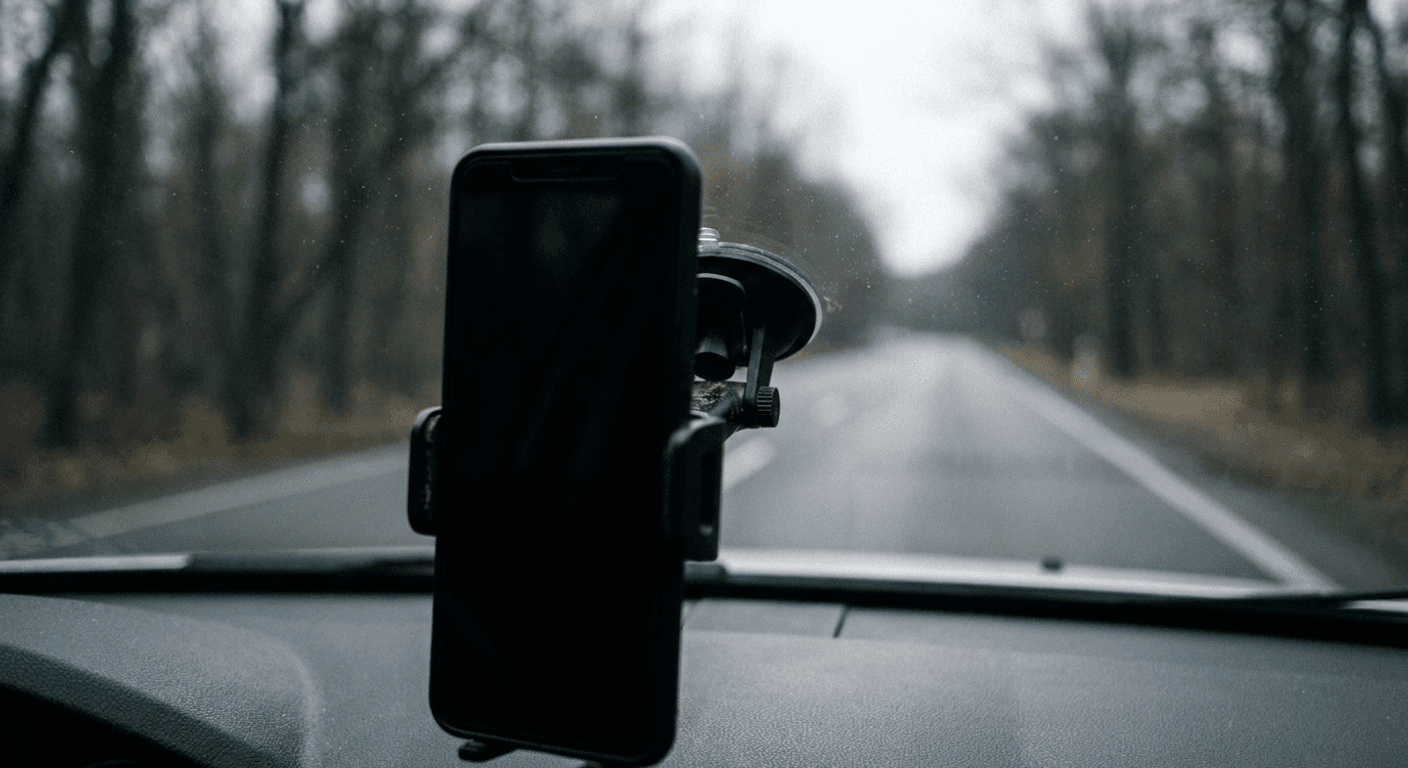
Carolina del Norte no tiene un estatuto que regule directamente las cámaras de tablero, las unidades de GPS o los soportes para teléfono colocados en el parabrisas. El G.S. 20-127 cubre únicamente los limpiaparabrisas y el polarizado de ventanas, no la colocación de dispositivos. El G.S. 20-136.1 exime explícitamente las pantallas de GPS y navegación de la prohibición estatal de ver pantallas mientras se conduce. Monte los dispositivos detrás del espejo retrovisor o en una esquina inferior para minimizar cualquier riesgo de bloquear su vista.
Carolina del Norte no tiene una prohibición general sobre materiales no transparentes, como letreros o carteles, en los parabrisas de los vehículos según el G.S. 20-127; ese estatuto regula únicamente los limpiaparabrisas y el polarizado de ventanas. Montar una unidad de GPS, una cámara de tablero o un soporte para teléfono en el parabrisas queda completamente fuera del alcance del G.S. 20-127, aunque la colocación del dispositivo debe seguir evitando bloquear la línea de visión del conductor como cuestión práctica.
Entender estas reglas importa ya sea que use un navegador GPS, una cámara de tablero, un soporte para teléfono con fines de navegación o un transpondedor de peaje. A continuación se presenta un desglose de cada estatuto relevante de Carolina del Norte, qué se puede y no se puede montar en el parabrisas, y las multas por incumplimiento.
La Ley Principal del Parabrisas: G.S. 20-127
El Estatuto General de Carolina del Norte 20-127 es la ley central que regula las ventanas y parabrisas de los vehículos. El estatuto cubre los limpiaparabrisas (inciso (a)) y las restricciones de polarizado de ventanas (incisos (b) a (g)); no contiene una prohibición general sobre letreros, carteles u otros objetos colocados en el parabrisas.
Lo Que Realmente Regula el G.S. 20-127
El G.S. 20-127 no contiene una prohibición general sobre letreros, carteles u otro material no transparente en el parabrisas. Sus únicos dos temas son los limpiaparabrisas (inciso (a)) y las restricciones de polarizado de ventanas (incisos (b) a (g)), incluyendo dónde se puede aplicar el polarizado, qué tan oscuro y reflectante puede ser, el proceso de exención médica y el requisito de bajar la ventana durante una parada de tránsito.
Qué Significa Esto para los Dispositivos Montados
Debido a que el G.S. 20-127 no regula en absoluto la colocación de dispositivos, no ofrece una regla directa para una unidad de GPS, un soporte para teléfono o una dashcam montados en el parabrisas. La ley de Carolina del Norte no contiene una prohibición explícita sobre los dispositivos electrónicos montados en el parabrisas, como sí la tienen algunos estados.
En la práctica, monte cualquier dispositivo de manera que no bloquee su vista de la carretera, los semáforos o las intersecciones que tiene por delante.
Inspecciones Vehiculares: Sin Calcomanía en el Parabrisas
Carolina del Norte ya no emite calcomanías de inspección para el parabrisas. Según el G.S. 20-183.4D(b), el mecánico que aprueba un vehículo debe emitir una autorización de inspección electrónica «en el lugar designado por la División», y los antiguos incisos sobre la calcomanía, G.S. 20-183.4D(c) y (d), fueron derogados por la S.L. 2007-503, s. 6, con vigencia a partir del 1 de octubre de 2008. No es necesario adherir nada al parabrisas después de una inspección.
Reglas de Polarizado del Parabrisas Según el G.S. 20-127
Carolina del Norte tiene restricciones específicas de polarizado que afectan la visibilidad a través del parabrisas.
Qué Está Permitido
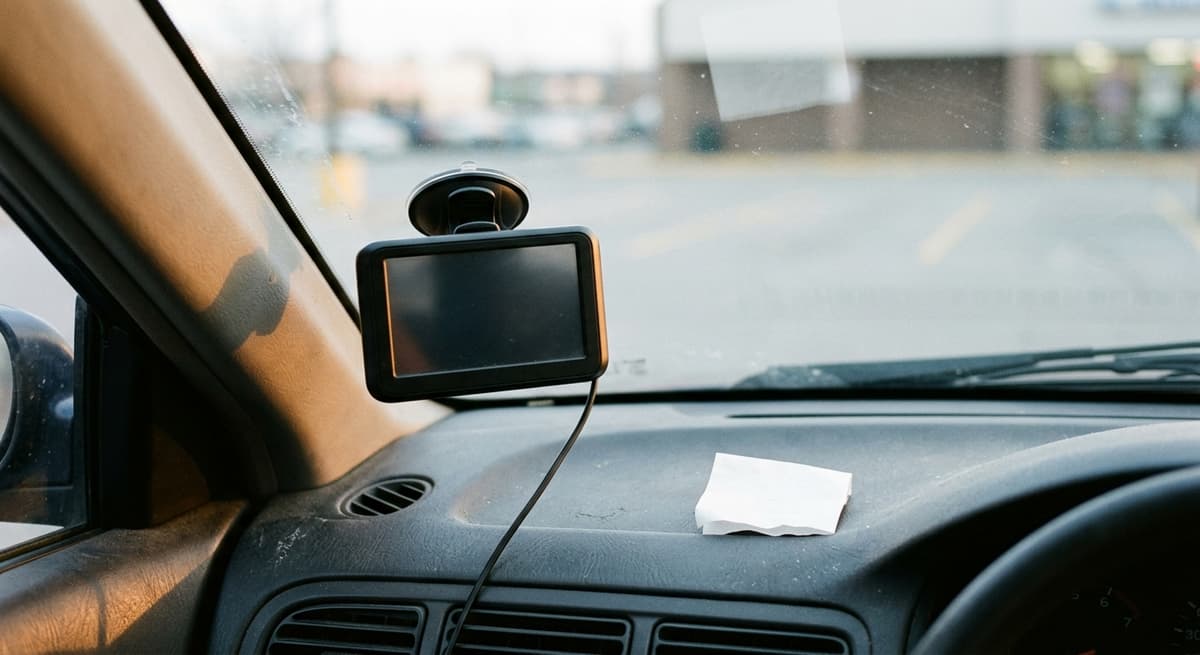
El parabrisas solo puede polarizarse a lo largo de la parte superior. El polarizado no puede extenderse más de cinco pulgadas por debajo de la parte superior del parabrisas ni por debajo de la línea AS1 (una marca del fabricante en el vidrio), lo que sea mayor.
Se puede aplicar a toda la superficie del parabrisas una película transparente sin polarizado que no obstruya la visión pero que reduzca o elimine la radiación ultravioleta. Esto significa que la película transparente de protección UV es legal en todo el estado.
Qué Está Prohibido
Cualquier polarizado que se extienda más allá del área permitida constituye una infracción. Las restricciones de polarizado se aplican a los parabrisas sin excepción, incluso para tipos de vehículos que reciben exenciones para las ventanas laterales y traseras.
Cambios de Diciembre de 2025 (S.L. 2025-47)
A partir del 1 de diciembre de 2025, Carolina del Norte eliminó la inspección separada de polarizado de ventanas durante las inspecciones de seguridad. También se eliminó la tarifa de $10 por la inspección de polarizado. Sin embargo, los estándares de polarizado en sí no cambiaron. Las autoridades aún pueden citar a los conductores por polarizado ilegal durante las paradas de tráfico.
Un nuevo requisito entró en vigor al mismo tiempo: los conductores con ventanas polarizadas deben bajar la ventana del lado por donde se acerque un oficial de policía durante una parada de tráfico.
Reglas para Dispositivos de GPS y Navegación: G.S. 20-136.1
El Estatuto General de Carolina del Norte 20-136.1 aborda las pantallas de televisión, computadora y video en vehículos motorizados. Este estatuto funciona junto con el G.S. 20-127 y ofrece exenciones importantes para dispositivos de navegación y seguridad.
La Prohibición General
La ley hace ilegal conducir mientras se ve cualquier televisor, computadora o reproductor de video que esté ubicado en el vehículo en cualquier punto adelante del respaldo del asiento del conductor y sea visible para el conductor mientras opera el vehículo.
Dispositivos Exentos
El G.S. 20-136.1 exime explícitamente lo siguiente de la prohibición de pantallas de video:
- Sistemas de posicionamiento global (GPS) y pantallas de navegación paso a paso o dispositivos de navegación similares
- Unidades de GPS instaladas de fábrica o postventa y dispositivos de comunicación inalámbrica usados para transmitir o recibir datos como parte de un sistema de despacho digital
- Equipos que muestran información del sistema de audio, funciones o controles
- Pantallas que muestran información del clima, del tráfico y de seguridad
- Pantallas de información de seguridad o equipo del vehículo
- Pantallas de imágenes que mejoran la vista del conductor en cualquier dirección, dentro o fuera del vehículo (como cámaras de reversa)
Qué Significa Esto para los Conductores
Las unidades de GPS y las pantallas de navegación paso a paso están exentas por nombre según el G.S. 20-136.1. La sección nunca menciona las cámaras de tablero, pero su prohibición solo alcanza a un televisor, computadora o reproductor de video que el conductor esté viendo, lo cual no describe a una cámara de tablero que solo graba. Puede usar una unidad de GPS montada en el parabrisas o en el tablero sin infringir la prohibición de ver pantallas, siempre que el dispositivo no obstruya materialmente su vista de la carretera. (Esto es una práctica de manejo seguro y una cuestión de criterio del oficial; ningún estatuto de Carolina del Norte establece un estándar de obstrucción de dispositivos.)
Sin embargo, ver contenido de video, transmitir películas o hacer videollamadas en cualquier pantalla visible para el conductor sigue siendo ilegal mientras se conduce.
Pautas de Montaje de la Cámara de Tablero
Carolina del Norte no tiene un estatuto específico que aborde las cámaras de tablero. Las cámaras de tablero son legales de usar, y la ley estatal de consentimiento de una sola parte (G.S. 15A-287) significa que el conductor puede grabar audio en el vehículo sin notificar a los pasajeros.
Mejores Prácticas para la Colocación de la Cámara de Tablero
Debido a que ningún estatuto de Carolina del Norte regula directamente la colocación de dispositivos, monte su cámara de tablero en una ubicación que minimice la obstrucción del parabrisas como práctica de manejo seguro:
- Detrás del espejo retrovisor es la posición más conservadora, ya que ocupa un espacio que el espejo ya bloquea
- Las esquinas inferiores del parabrisas son otra opción, aunque la esquina inferior del lado del pasajero es preferible, ya que la esquina del lado del conductor está más cerca de su línea de visión
- El montaje en el tablero evita el parabrisas por completo y elimina cualquier preocupación de obstrucción
Evite montar una cámara de tablero directamente frente al conductor o en el centro del parabrisas, donde podría bloquear la visibilidad en las intersecciones o al revisar los semáforos.
Soportes para Teléfono y Uso del Parabrisas
Montar un teléfono inteligente en el parabrisas con fines de navegación cae en una zona gris legal en Carolina del Norte.
Qué Dice Actualmente la Ley
El G.S. 20-136.1 exime las pantallas de GPS y navegación de la prohibición de ver pantallas. Un teléfono inteligente que muestra una aplicación de navegación entra en esta exención. Sin embargo, la prohibición del G.S. 20-127 sobre material no transparente en el parabrisas podría aplicarse técnicamente al hardware del soporte para teléfono.
Prohibición de Enviar Mensajes de Texto al Conducir (G.S. 20-137.4A)
La ley de Carolina del Norte prohíbe a todos los conductores escribir manualmente mensajes de texto o correo electrónico, o leer textos y correos electrónicos en un teléfono móvil mientras operan un vehículo. Las infracciones son infracciones administrativas sancionables con una multa de $100 más costos judiciales. No se aplican puntos en la licencia de conducir ni recargo del seguro.
La prohibición de mensajes de texto no se aplica al uso de GPS ni a leer nombres o números almacenados en el dispositivo. Tampoco se aplica cuando el vehículo está legalmente estacionado o detenido.
Restricciones de Teléfono para Menores de 18 Años (G.S. 20-137.3)
A los conductores menores de 18 años se les prohíbe usar un teléfono móvil o cualquier tecnología asociada mientras el vehículo está en movimiento. Las infracciones son infracciones administrativas que conllevan una multa de $25. Las únicas excepciones según el G.S. 20-137.3(d) son para comunicaciones de emergencia y para comunicarse con el padre, la madre, el tutor legal o el cónyuge del conductor; no existe una excepción para el uso de navegación o GPS.
Restricciones para Operadores de Autobuses Escolares (G.S. 20-137.4)
Los operadores de autobuses escolares no pueden usar un teléfono móvil mientras el autobús está en movimiento. Las infracciones son un delito menor de Clase 2 con una multa mínima de $100.
Sin Ley de Manos Libres (a Marzo de 2026)
Carolina del Norte no tiene una ley de manos libres al conducir. El Proyecto de Ley del Senado 526, la "Ley Hands Free NC", se introdujo en marzo de 2025, pero nunca fue promulgado por la Asamblea General. Un vocero del presidente de la Cámara, Destin Hall, confirmó que el proyecto de ley "nunca fue promulgado por la Asamblea General y no está en vigor".
Esto significa que los conductores de Carolina del Norte todavía pueden sostener un teléfono mientras conducen para propósitos distintos a enviar mensajes de texto, aunque esto no exime de la obligación de mantener una visibilidad clara a través del parabrisas.
Montaje de Transpondedores de Peaje
El transpondedor de peaje NC Quick Pass está diseñado para montarse en el parabrisas. Según la Autoridad de Autopistas de Peaje de Carolina del Norte, los transpondedores deben colocarse en el parabrisas cerca del espejo retrovisor, aproximadamente a cuatro pulgadas de la línea del techo y a al menos cuatro pulgadas de distancia de cualquier dispositivo electrónico, como sensores de lluvia o de velocidad.
Ningún estatuto de Carolina del Norte restringe los objetos montados en el parabrisas, por lo que nada en el G.S. 20-127 impide un transpondedor montado en el parabrisas; esa sección solo abarca los limpiaparabrisas y el polarizado de ventanas. Los transpondedores tipo calcomanía no deben moverse una vez instalados, ya que reposicionarlos puede dañar tanto el transpondedor como el parabrisas.
Multas por Infracciones del Parabrisas
Los Limpiaparabrisas y el Polarizado Son las Únicas Infracciones del G.S. 20-127
El G.S. 20-127 no crea una infracción de "material no transparente en el parabrisas". Sus únicas infracciones son el incumplimiento de los limpiaparabrisas y el polarizado ilegal de ventanas, cubiertas a continuación.
Polarizado Ilegal de Ventanas
Infringir las disposiciones de polarizado de ventanas del G.S. 20-127 es un delito menor de Clase 3, un delito penal, no una infracción civil. Si se elimina el polarizado ilegal dentro de 15 días y se obtiene la certificación adecuada, esto sirve como una defensa válida contra el cargo.
Ver Video Mientras se Conduce
Infringir el G.S. 20-136.1 al ver contenido de video en una pantalla orientada hacia adelante es una infracción administrativa, no un delito menor. El G.S. 20-136.1 no contiene ninguna disposición de sanción propia, y se ubica en la Parte 9 del Artículo 3 del Capítulo 20. El G.S. 20-176(a) establece que una infracción de una disposición de la Parte 9, 10, 10A u 11 de ese Artículo «es una infracción administrativa a menos que la infracción esté específicamente declarada por ley como delito menor o grave», y el G.S. 20-136.1 no hace tal declaración. Según el G.S. 20-176(b), una infracción administrativa bajo este Artículo conlleva una sanción de no más de $100 a menos que la ley establezca una sanción específica.
Enviar Mensajes de Texto al Conducir
Las infracciones al G.S. 20-137.4A son infracciones administrativas con una multa de $100 más costos judiciales. No se asignan puntos de seguro.
| Infracción | Estatuto | Clasificación | Multa |
|---|---|---|---|
| Polarizado ilegal de ventanas | G.S. 20-127(b)-(d) | Delito menor de Clase 3 | Determinada por el tribunal; no es una multa civil fija |
| Ver video mientras se conduce | G.S. 20-136.1 | Infracción administrativa (según G.S. 20-176(a)) | Hasta $100 (G.S. 20-176(b)) |
| Enviar mensajes de texto al conducir | G.S. 20-137.4A | Infracción administrativa | $100 + costos judiciales |
| Uso de teléfono por menores de 18 años | G.S. 20-137.3 | Infracción administrativa | $25 |
| Uso de teléfono por operador de autobús escolar | G.S. 20-137.4 | Delito menor de Clase 2 | Mínimo $100 |
Cómo Cumplir con la Ley en Carolina del Norte
Seguir estas pautas ayudará a evitar infracciones relacionadas con dispositivos montados en el parabrisas:
-
Coloque los dispositivos para minimizar la obstrucción. Monte las unidades de GPS, las cámaras de tablero y los soportes para teléfono detrás del espejo retrovisor o en el tablero, en lugar del centro del parabrisas.
-
Mantenga despejada la línea de visión del conductor. Ningún dispositivo debe bloquear la vista de la carretera, los semáforos o las intersecciones.
-
Use aplicaciones de navegación, no video. Los teléfonos montados en el parabrisas deben mostrar solo navegación GPS, no contenido de video ni redes sociales.
-
Cumpla con la prohibición de mensajes de texto. No escriba mensajes ni lea textos mientras conduce, sin importar dónde esté montado el teléfono.
-
Cumpla con las reglas de polarizado. El polarizado del parabrisas está limitado a las cinco pulgadas superiores o por encima de la línea AS1.
-
No espere una calcomanía de inspección. Carolina del Norte registra electrónicamente una inspección aprobada según el G.S. 20-183.4D(b); no hay nada que exhibir en el parabrisas.
-
Baje las ventanas polarizadas durante las paradas de tráfico. A partir de diciembre de 2025, esto es un requisito legal.
Más Leyes de Carolina del Norte
- Leyes de Grabación de Carolina del Norte
- Leyes de Choque y Fuga de Carolina del Norte
- Leyes de Asientos de Auto para Niños de Carolina del Norte
- Ley del Limón de Carolina del Norte
- Leyes de Mordeduras de Perro de Carolina del Norte
- Plazo de Prescripción de Carolina del Norte
Preguntas frecuentes
¿Puedo poner el GPS en el parabrisas en Carolina del Norte?
Sí, pero con condiciones. El G.S. 20-136.1 de Carolina del Norte exime explícitamente los dispositivos GPS y de navegación de la prohibición de ver pantallas mientras se conduce. El G.S. 20-127 no regula en absoluto la colocación de dispositivos en el parabrisas; solo cubre los limpiaparabrisas y el polarizado de ventanas. Monte su GPS detrás del espejo retrovisor o en una esquina inferior para minimizar la obstrucción y reducir el riesgo de una infracción.
¿Son legales las cámaras de tablero en los parabrisas en Carolina del Norte?
Sí. Carolina del Norte no tiene ningún estatuto que prohíba específicamente las cámaras de tablero. El G.S. 20-136.1 no menciona las cámaras de tablero, pero su prohibición solo alcanza a un televisor, computadora o reproductor de video que el conductor esté viendo mientras conduce, lo cual no describe a una cámara de tablero que solo graba. Monte la cámara detrás del espejo retrovisor o en una esquina inferior del parabrisas para evitar obstruir la vista; ningún estatuto de Carolina del Norte regula directamente el montaje en sí.
¿Tiene Carolina del Norte una ley de manos libres al conducir?
No. A marzo de 2026, Carolina del Norte no tiene una ley de manos libres al conducir. El Proyecto de Ley del Senado 526, la Ley Hands Free NC, se introdujo en marzo de 2025, pero nunca fue promulgado por la Asamblea General. El estado sí prohíbe enviar mensajes de texto mientras se conduce según el G.S. 20-137.4A, y los conductores menores de 18 años no pueden usar teléfonos móviles en absoluto mientras conducen según el G.S. 20-137.3.
¿Cuáles son las multas por obstrucción del parabrisas en Carolina del Norte?
Carolina del Norte no tiene una infracción por obstrucción del parabrisas vinculada al G.S. 20-127; el estatuto cubre únicamente los limpiaparabrisas y el polarizado de ventanas. El polarizado ilegal de ventanas según el G.S. 20-127 es un delito menor de Clase 3, un delito penal, no una infracción civil. Ver video en una pantalla orientada hacia adelante mientras se conduce infringe el G.S. 20-136.1, pero eso es una infracción administrativa y no un delito menor: la sección no declara una sanción propia, por lo que se aplica la regla predeterminada del G.S. 20-176(a).
¿Puedo usar mi teléfono como GPS mientras conduzco en Carolina del Norte?
Sí, puede usar su teléfono para la navegación GPS mientras conduce. El G.S. 20-136.1 exime las pantallas de navegación de la prohibición de ver pantallas, y la ley de mensajes de texto (G.S. 20-137.4A) no se aplica al uso de GPS. Sin embargo, no puede escribir mensajes de texto, leer correos electrónicos ni ver video en el teléfono mientras el vehículo está en movimiento. Los conductores menores de 18 años enfrentan restricciones adicionales según el G.S. 20-137.3, que prohíbe casi todo uso del teléfono móvil y tecnología relacionada mientras se conduce, sin excepción para la navegación; sus únicas excepciones son las comunicaciones de emergencia y comunicarse con el padre, la madre, el tutor legal o el cónyuge.
Actualizaciones
Se corrigió la sanción por ver video mientras se conduce bajo el G.S. 20-136.1 (de delito menor de Clase 2 a infracción administrativa), se eliminó una cita mal atribuida en la sección del transpondedor de peaje, se reemplazó la guía obsoleta sobre la calcomanía de inspección por el régimen actual de autorización electrónica, y se aclaró que el G.S. 20-136.1 no nombra a las cámaras de tablero.
La ley detrás de este artículo
Este artículo se apoya en las disposiciones legales a continuación, conservadas en nuestro propio registro jurídico y obtenidas de la fuente oficial. Toque una sección para leer el texto vigente.
North Carolina General Statutes, Chapter 20: Motor Vehicles.
§ 20-136.1Location of television, computer, or video players, monitors, and screensVigente
No person shall drive any motor vehicle upon a public street or highway or public vehicular area while viewing any television, computer, or video player which is located in the motor vehicle at any point forward of the back of the driver's seat, and which is visible to the driver while operating the motor vehicle. This section does not apply to the use of global positioning systems; turn-by-turn navigation displays or similar navigation devices; factory-installed or aftermarket global positioning systems or wireless communications devices used to transmit or receive data as part of a digital dispatch system; equipment that displays audio system information, functions, or controls, or weather, traffic, and safety information; vehicle safety or equipment information; or image displays that enhance the driver's view in any direction, inside or outside of the vehicle. The provisions of this section shall not apply to law enforcement or emergency personnel while in the performance of their official duties, or to the operator of a vehicle that is lawfully parked or stopped.
Texto oficial (extracto) · verificado el 2026-09-08 · Lea el texto completo en nuestra biblioteca legal · Verifique en ncleg.gov
Citada en 1 resoluciones judiciales de nuestra colecciónResolución más reciente que la cita en nuestra colección: 2022
Resoluciones que citan esta sección en nuestra colección:
- Graham v. Lambert (Court of Appeals of North Carolina 2022)“…Our General Assembly recognized as much by enacting N.C. Gen. Stat. § 20-136.1, which prohibits private citizens from…”
Identificado automáticamente a partir de las opiniones judiciales que citan esta sección; no es un ranking de qué caso prevalece.
§ 20-127Windows and windshield wipersVigentecitada en 3 de nuestros artículos
(a) Windshield Wipers. - A vehicle that is operated on a highway and has a windshield shall have a windshield wiper to clear rain or other substances from the windshield in front of the driver of the vehicle and the windshield wiper shall be in good working order. If a vehicle has more than one windshield wiper to clear substances from the windshield, all the windshield wipers shall be in good working order. (b) Window Tinting Restrictions. - A window of a vehicle that is operated on a highway or a public vehicular area shall comply with this subsection. The windshield of the vehicle may be tinted only along the top of the windshield and the tinting may not extend more than five inches below the top of the windshield or below the AS1 line of the windshield, whichever measurement is longer. Provided, however, an untinted clear film which does not obstruct vision but which reduces or eliminates ultraviolet radiation from entering a vehicle may be applied to the windshield. Any other window of the vehicle may be tinted in accordance with the following restrictions: (1) The total light transmission of the tinted window shall be at least thirty-five percent (35%).
Texto oficial (extracto) · verificado el 2026-09-01 · Lea el texto completo en nuestra biblioteca legal · Verifique en ncleg.gov
Citada en 3 resoluciones judiciales de nuestra colecciónResolución más reciente que la cita en nuestra colección: 2011
Resoluciones que citan esta sección en nuestra colección:
- State v. Schiffer (Court of Appeals of North Carolina 1999, 132 N.C. App. 22)“…than permitted under North Carolina law. See N.C. Gen. Stat. § 20-127 (b) (Cum. Supp. 1997) (containing this…”
- State v. Veazey (Court of Appeals of North Carolina 2008, 191 N.C. App. 181)“…nside rearview mirror and a driver’s-side outside mirror); N.C. Gen. Stat. § 20-127 (a)-(b) (2007) (vehicle must have a win…”
- State v. Williams (Court of Appeals of North Carolina 2011, 215 N.C. App. 1)“…ey rode had tinted windows in violation of state law, see N.C. Gen.Stat. § 20-127(b), (d) (2009), and cited Perez for the…”
Identificado automáticamente a partir de las opiniones judiciales que citan esta sección; no es un ranking de qué caso prevalece.
§ 20-137.4AUnlawful use of mobile telephone for text messaging or emailVigente
(a) Offense. - It shall be unlawful for any person to operate a vehicle on a public street or highway or public vehicular area while using a mobile telephone to: (1) Manually enter multiple letters or text in the device as a means of communicating with another person; or (2) Read any email or text message transmitted to the device or stored within the device, provided that this prohibition shall not apply to any name or number stored in the device nor to any caller identification information. (a1) Motor Carrier Offense. - It shall be unlawful for any person to operate a commercial motor vehicle subject to Part 390 or 392 of Title 49 of the Code of Federal Regulations on a public street or highway or public vehicular area while using a mobile telephone or other electronic device in violation of those Parts. Nothing in this subsection shall be construed to prohibit the use of hands-free technology. (b) Exceptions. - The provisions of this section shall not apply to: (1) The operator of a vehicle that is lawfully parked or stopped.
Texto oficial (extracto) · verificado el 2026-07-29 · Lea el texto completo en nuestra biblioteca legal · Verifique en ncleg.gov
§ 20-137.3Unlawful use of a mobile phone by persons under 18 years of ageVigente
(a) Definitions. - The following definitions apply in this section: (1) Additional technology. - Any technology that provides access to digital media including, but not limited to, a camera, music, the internet, or games. The term does not include email or text messaging. (2) Mobile telephone. - A device used by subscribers and other users of wireless telephone service to access the service. The term includes: (i) a device with which a user engages in a call using at least one hand, and (ii) a device that has an internal feature or function, or that is equipped with an attachment or addition, whether or not permanently part of the mobile telephone, by which a user engages in a call without the use of either hand, whether or not the use of either hand is necessary to activate, deactivate, or initiate a function of such telephone. (3) Wireless telephone service. - A service that is a two-way real-time voice telecommunications service that is interconnected to a public switched telephone network and is provided by a commercial mobile radio service, as such term is defined by 47 C.F.R. § 20.3. (b) Offense.
Texto oficial (extracto) · verificado el 2026-07-29 · Lea el texto completo en nuestra biblioteca legal · Verifique en ncleg.gov
§ 20-137.4Unlawful use of a mobile phoneVigente
(a) Definitions. - For purposes of this section, the following terms shall mean: (1) Additional technology. - As defined in G.S. 20-137.3(a)(1). (2) Emergency situation. - Circumstances such as medical concerns, unsafe road conditions, matters of public safety, or mechanical problems that create a risk of harm for the operator or passengers of a school bus. (3) Mobile telephone. - As defined in G.S. 20-137.3(a)(2). (4) School bus. - As defined in G.S. 20-4.01(27)n. The term also includes any school activity bus as defined in G.S. 20-4.01(27)m. and any vehicle transporting public, private, or parochial school students for compensation. (b) Offense. - Except as otherwise provided in this section, no person shall operate a school bus on a public street or highway or public vehicular area while using a mobile telephone or any additional technology associated with a mobile telephone while the school bus is in motion. This prohibition shall not apply to the use of a mobile telephone or additional technology associated with a mobile telephone in a stationary school bus. (c) Seizure.
Texto oficial (extracto) · verificado el 2026-07-29 · Lea el texto completo en nuestra biblioteca legal · Verifique en ncleg.gov
Citada en 2 resoluciones judiciales de nuestra colecciónResolución más reciente que la cita en nuestra colección: 2020
Resoluciones que citan esta sección en nuestra colección:
- State v. Dalton (Court of Appeals of North Carolina 2020)“…any caller identification information. N.C. Gen. Stat. § 20-137.4A(a)(1)-(2) (2019). However, the General…”
- King v. Town of Chapel Hill (Supreme Court of North Carolina 2014, 367 N.C. 400)“…7.4(b) (2013). The most recent amendments, codified at N.C.G.S. § 20-137.4A, broadly prohibit text messaging whil…”
Identificado automáticamente a partir de las opiniones judiciales que citan esta sección; no es un ranking de qué caso prevalece.
§ 20-183.4DProcedure when a vehicle is inspectedVigente
(a) Receipt. - When a safety inspection mechanic or an emissions inspection mechanic inspects a vehicle, the mechanic must give the person who brought the vehicle in for inspection an inspection receipt. The inspection receipt must state the date of the inspection, identify the mechanic performing the inspection, identify the station or self-inspector where the inspection was performed, and list the components of the inspection performed and indicate for each component whether the vehicle passed or failed. A vehicle that fails a component of an inspection may be repaired at any repair facility chosen by the owner or operator of the vehicle. (b) Electronic Inspection Authorization. - When a vehicle that is subject to a safety inspection only passes the safety inspection, the safety inspection mechanic who performed the inspection must issue an electronic inspection authorization to the vehicle at the place designated by the Division.
Texto oficial (extracto) · verificado el 2026-07-29 · Lea el texto completo en nuestra biblioteca legal · Verifique en ncleg.gov
§ 20-176Penalty for misdemeanor or infractionVigente
(a) Violation of a provision of Part 9, 10, 10A, or 11 of this Article is an infraction unless the violation is specifically declared by law to be a misdemeanor or felony. Except as otherwise provided in subsection (a1) of this section, violation of the remaining Parts of this Article is a misdemeanor unless the violation is specifically declared by law to be an infraction or a felony. (a1) A person who does any of the following is responsible for an infraction: (1) Fails to carry the registration card in the vehicle, in violation of G.S. 20-57(c). (2) Repealed by Session Laws 2016-90, s. 12(b), effective December 1, 2016, and applicable to registration cards issued on or after that date. (3) Fails to notify the Division of an address change for a vehicle registration card within 60 days after the change occurs, in violation of G.S. 20-67. (4) Operates a motor vehicle in violation of G.S. 20-146.2. (b) Unless a specific penalty is otherwise provided by law, a person found responsible for an infraction contained in this Article may be ordered to pay a penalty of not more than one hundred dollars ($100.00).
Texto oficial (extracto) · verificado el 2026-07-29 · Lea el texto completo en nuestra biblioteca legal · Verifique en ncleg.gov
Citada en 26 resoluciones judiciales de nuestra colecciónResolución más reciente que la cita en nuestra colección: 2024
Resoluciones que citan esta sección en nuestra colección:
- State v. Spencer (Supreme Court of North Carolina 1970, 276 N.C. 535)“…unishment for a violation of G.S. 20-174.1 is controlled by G.S. 20-176 (b) as interpreted and applied in…”
- State v. Rumfelt (Supreme Court of North Carolina 1955, 241 N.C. 375)“…y in the Superior Court charges a violation of G.S. 20-162. G.S. 20-176(a) provides that “it shall be unlawful…”
- State v. Zimmerman (Court of Appeals of North Carolina 1970, 7 N.C. App. 522)“…ve-quoted language upon the penalty otherwise authorized by G.S. 20-176 (b) and G.S. 20-180. This latter sectio…”
Identificado automáticamente a partir de las opiniones judiciales que citan esta sección; no es un ranking de qué caso prevalece.
Fuentes y referencias
- G.S. 20-127: Ventanas y limpiaparabrisas(ncleg.gov).gov
- G.S. 20-136.1: Ubicación de televisores, computadoras o reproductores de video(ncleg.net).gov
- G.S. 20-137.4A: Uso ilegal del teléfono móvil para enviar mensajes de texto(ncleg.net).gov
- G.S. 20-137.3: Uso ilegal del teléfono móvil por personas menores de 18 años(ncleg.net).gov
- G.S. 20-137.4: Uso ilegal del teléfono móvil (autobuses escolares)(ncleg.gov).gov
- G.S. 20-176: Sanción por delito menor o infracción administrativa(ncleg.net).gov
- 19A NCAC 03D .0524: Colocación de la calcomanía de inspección(law.cornell.edu)
- Instrucciones de instalación del transpondedor NC Quick Pass(ncquickpass.com).gov
- NCDOT: Polarizado de Ventanas(ncdot.gov).gov
- S.L. 2025-47: Cambios en la inspección de polarizado de ventanas(ncleg.gov).gov
- Proyecto de Ley del Senado 526: Ley Hands Free NC (no promulgada)(ncleg.gov).gov
- PolitiFact: Carolina del Norte no prohibió el uso de teléfonos celulares en autos(politifact.com)
- G.S. 20-183.4D: Procedimiento cuando se inspecciona un vehículo (autorización de inspección electrónica; los incisos (c)-(d) sobre la calcomanía fueron derogados con vigencia a partir del 1 de octubre de 2008)(ncleg.gov)