Leyes de Montaje en el Parabrisas del Distrito de Columbia
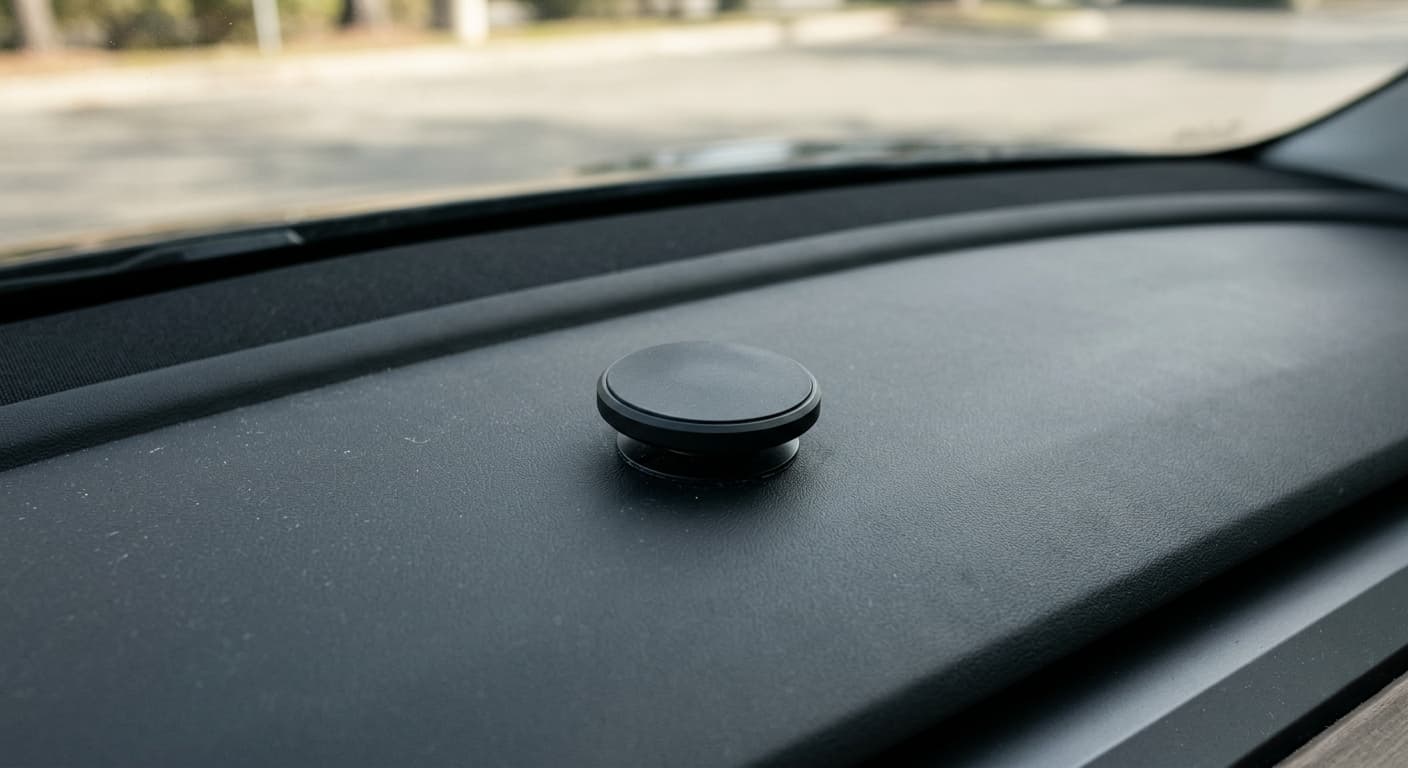
El Distrito de Columbia no prohíbe de forma general los objetos en el parabrisas. La disposición que sí lo hacía, el 18 DCMR 2213.7, fue derogada por la Ley NEAR de 2016, y el texto oficial del DCMR ahora indica «[REPEALED]» (derogado). Lo que sigue vigente es la prueba general de obstrucción del 18 DCMR 2213.1, de modo que una dashcam, una unidad de GPS o un soporte para teléfono se evalúan según si bloquean una parte significativa de la vista del conductor.
Se suele describir al Distrito de Columbia como una jurisdicción que prohíbe cualquier dispositivo montado en el parabrisas. Esa descripción está desactualizada. La disposición en la que se basaba fue derogada en 2016, y la regla que la reemplazó depende de si el dispositivo realmente obstruye la vista del conductor, no de dónde está sujeto. Junto con esto, D.C. sigue exigiendo un estricto requisito de transmitancia de luz visible (VLT) del 70% y una ley integral de conducción manos libres.
Esta guía cubre todas las regulaciones que afectan el montaje en el parabrisas en el Distrito, incluyendo lo que realmente dice hoy la ley de obstrucción, los requisitos de polarizado, las reglas de manos libres, las sanciones, las exenciones y cómo interactúan estas leyes entre sí.
Ley de Obstrucción del Parabrisas de D.C. (18 DCMR 2213)
La regulación que rige lo que se puede y no se puede colocar en un parabrisas en el Distrito de Columbia es el 18 DCMR Artículo 2213, titulado "Obstrucción de la Vista del Conductor o del Mecanismo de Conducción".
La Regla General
El 18 DCMR 2213.1 es la disposición vigente. En el texto codificado actual dice:
Ninguna persona conducirá un vehículo con un objeto en una posición que obstruya una parte significativa de la vista del conductor hacia el frente o los lados del vehículo, o que interfiera con el control del conductor sobre el mecanismo de conducción del vehículo.
De esta redacción se derivan dos cosas. Primero, el estándar es la obstrucción de una parte significativa de la vista, lo cual es una cuestión de hecho sobre el dispositivo en particular y dónde está ubicado. Segundo, la regla no dice nada sobre la sujeción física. No importa si un objeto está pegado al vidrio, colgado del espejo o apoyado en el tablero; lo que importa es qué bloquea.
Hay un matiz que vale la pena conocer. El Artículo 301(a) de la Ley de D.C. 21-125 reescribió el 2213.1 para proteger la vista del conductor "hacia el frente, los lados o la parte trasera del vehículo". El texto codificado publicado por la Oficina de Documentos de D.C. todavía dice "hacia el frente o los lados", un aparente rezago de codificación. La versión más amplia es la suposición más segura para un conductor.
La Prohibición General Derogada
D.C. tenía antes una regla mucho más estricta. El 18 DCMR 2213.7 prohibía cualquier objeto adherido o suspendido del parabrisas, la ventana trasera, las ventanillas delanteras laterales, el espejo retrovisor o sus marcos, y el 2213.8 era una disposición complementaria.
Ambas fueron derogadas. La Ley de D.C. 21-125, la Ley de Logros del Compromiso Vecinal (NEAR, por sus siglas en inglés) de 2016, las eliminó en el Artículo 301, con vigencia desde el 30 de junio de 2016. El cambio se incorporó al DCMR con vigencia desde el 8 de octubre de 2016, y el texto oficial vigente de ambas subsecciones ahora simplemente dice «[REPEALED]».
La derogación fue una decisión de política deliberada, no un descuido. Llegó dentro de un paquete de reformas orientado a reducir las infracciones menores de equipo que servían como pretexto para detenciones de tránsito. Al eliminar la infracción específica por sujeción, se eliminó también esa base para hacer una parada.
Qué Significa Esto en la Práctica
Muchas guías publicadas todavía comparan a D.C. con estados como California, que permite un cuadrado de 7 pulgadas en la esquina inferior del parabrisas, o Arkansas, que permite dispositivos dentro de 4.5 pulgadas de la parte inferior, y concluyen que D.C. es más estricto porque no reserva ninguna zona permitida. Esa comparación ya no es válida, y además apunta en la dirección equivocada.
D.C. no reserva una zona permitida porque ya no tiene una prohibición específica sobre objetos en el parabrisas de la cual reservar una excepción. Un estado con una zona segura medida le indica exactamente dónde es legal un soporte. D.C., en cambio, plantea una pregunta general en cada caso: ¿este objeto obstruye una parte significativa de la vista? Un soporte pequeño para teléfono montado en el tablero o una dashcam compacta junto al espejo retrovisor obstruye muy poco y no está prohibido por el 2213.1.
Eso se invierte para los objetos grandes. Una pantalla ancha, del tamaño de una tableta, en la línea de visión del conductor, o algo que cuelga en medio del parabrisas, puede violar el 2213.1 aunque nada esté "adherido" en el sentido anterior.
Requisitos de Condición del Parabrisas (18 DCMR 731)
El 18 DCMR Artículo 731 establece los requisitos de condición física para los parabrisas y espejos de los vehículos que circulan en el Distrito.
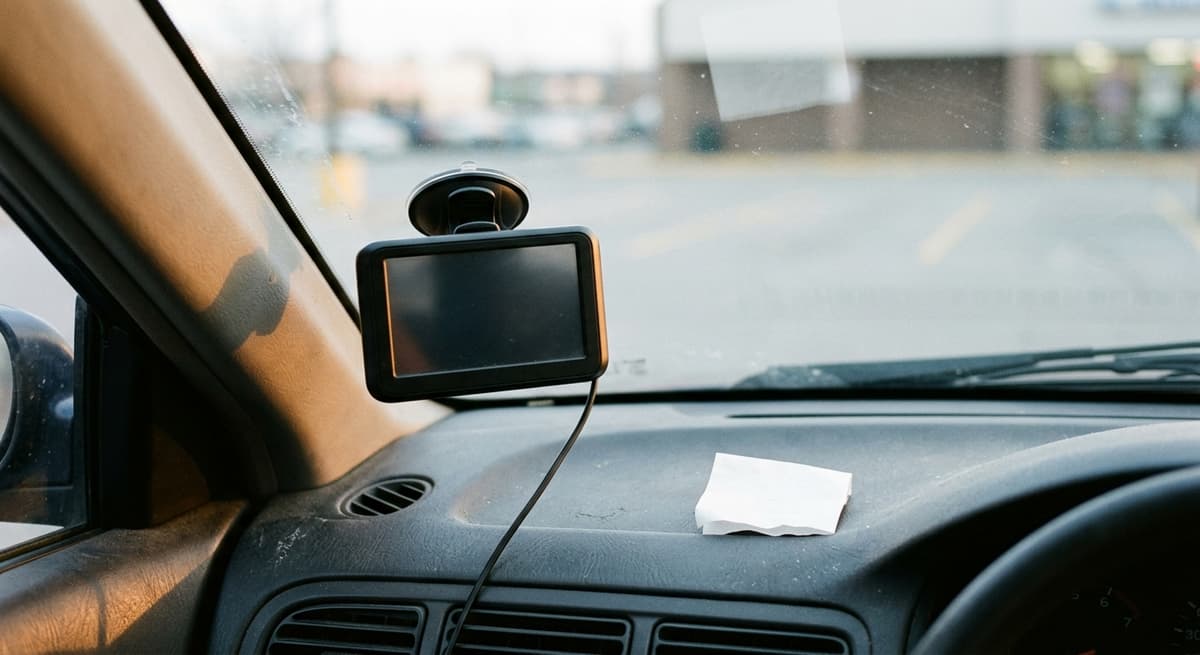
Requisitos Clave
| Requisito | Regulación |
|---|---|
| Ningún cartel, letrero u otro material no transparente en el parabrisas o las ventanas, salvo una calcomanía autorizada | 18 DCMR 731.1 |
| Dispositivo mecánico controlado por el conductor para eliminar lluvia, nieve o humedad del parabrisas | 18 DCMR 731.2 |
| Se requieren limpiaparabrisas en vehículos fabricados después del 1 de enero de 1938 | 18 DCMR 731.3 |
| Los limpiaparabrisas deben cubrir tanto el lado del conductor como el del pasajero | 18 DCMR 731.3 |
| Todos los limpiaparabrisas deben mantenerse en buen estado de funcionamiento | 18 DCMR 731.4 |
| Ningún parabrisas agrietado, rayado, empañado o defectuoso que obstruya la visión | 18 DCMR 731.5 |
| Espejo retrovisor que permita una vista de al menos 200 pies hacia atrás | 18 DCMR 731.6 |
Un parabrisas con grietas o daños que afecten la vista del conductor es una infracción separada y citable de las reglas de obstrucción. Aunque D.C. no exige inspecciones de seguridad anuales para la mayoría de los vehículos particulares, los oficiales pueden emitir citaciones por un parabrisas dañado durante cualquier encuentro de tránsito.
La Única Regla Específica del Parabrisas Que Sobrevivió
Vale la pena leer con atención el 18 DCMR 731.1, porque es lo más parecido que le queda a D.C. a una regla sobre objetos en el parabrisas. Prohíbe conducir con "cualquier cartel, letrero u otro material no transparente sobre el parabrisas delantero, las ventanillas laterales angostas o las ventanas laterales o traseras", salvo una calcomanía autorizada por el Alcalde, la Comisión de Servicio Público, la Junta Conjunta o el Director.
Su objetivo evidente es el material plano aplicado sobre el vidrio, como carteles, letreros y calcomanías. Si "otro material no transparente" alcanza también a un soporte de ventosa para teléfono o al cuerpo de una dashcam es una pregunta abierta que el texto no resuelve, y no tenemos conocimiento de jurisprudencia de D.C. que la haya zanjado. Es una razón para preferir un montaje bajo y compacto, pero no es una prohibición expresa de estos dispositivos.
Requisitos de Polarizado de Ventanas y VLT (Código de DC 50-2207.02)
El Código de DC, Artículo 50-2207.02 regula el polarizado de todas las ventanas del vehículo, incluido el parabrisas. D.C. exige un 70% de VLT en el parabrisas, lo que lo convierte en una de las jurisdicciones más estrictas del país en cuanto al polarizado del parabrisas.
Estándares de VLT por Tipo de Vehículo
| Ventana | Vehículos Estándar | Minivans |
|---|---|---|
| Parabrisas | Mínimo 70% de VLT | Mínimo 55% de VLT |
| Ventanillas delanteras laterales | Mínimo 70% de VLT | Mínimo 55% de VLT |
| Ventanillas traseras laterales | Mínimo 50% de VLT | Mínimo 35% de VLT |
| Parabrisas trasero | Mínimo 50% de VLT | Mínimo 35% de VLT |
Excepción de la Franja de Polarizado del Parabrisas
La ley permite una franja de polarizado por encima de la línea AS-1 o dentro de las 5 pulgadas desde la parte superior del parabrisas con una transmitancia de luz menor. Esta es la única zona del parabrisas donde se permite un polarizado más oscuro. Por debajo de esa línea, aplica el requisito completo del 70% de VLT.
La línea AS-1 es una marca que normalmente se encuentra en el vidrio mismo del parabrisas, colocada por el fabricante para indicar el límite de cumplimiento del polarizado de fábrica con los estándares federales de seguridad.
Vehículos Exentos
La ley de polarizado no aplica a lo siguiente:
- Limusinas
- Ambulancias
- Autobuses
- Carrozas fúnebres
- Vehículos propiedad de iglesias
- Vehículos oficiales del gobierno
- Vehículos con polarizado de fábrica que cumpla con los estándares federales
- Vehículos con exenciones médicas aprobadas
Proceso de Exención Médica
Los conductores o propietarios de vehículos con condiciones médicas que requieran protección adicional contra la luz solar pueden solicitar una Exención de Polarizado del Vehículo a través del DMV de DC. El proceso requiere lo siguiente:
- Una carta en papel membretado oficial de un médico, asistente médico, oftalmólogo u optometrista
- La carta debe certificar que la protección contra la luz solar o las luces brillantes es médicamente necesaria
- La carta debe identificar la condición médica específica
- El Formulario de Solicitud de Exención de Polarizado del Vehículo completo debe presentarse en la Estación de Inspección del DMV de DC
- La exención debe mantenerse en el vehículo en todo momento
Hacer una declaración falsa en el formulario de exención constituye una infracción de la ley de DC (Código Oficial de DC 22-2405), sancionable con una multa de hasta $1,000 o 180 días de prisión, o ambas.
Soportes de GPS y Teléfono
Debido a que el 18 DCMR 2213.7 fue derogado, no existe ninguna regla en D.C. que haga ilegal un soporte de ventosa para GPS o teléfono por el simple hecho de tocar el parabrisas. La pregunta bajo el 18 DCMR 2213.1 es si el soporte y el dispositivo que sostiene obstruyen una parte significativa de la vista hacia el frente o los lados.
En la práctica, eso favorece un soporte pequeño, bajo y fuera de la línea de visión: la esquina inferior del lado del conductor, la esquina inferior más alejada del lado del pasajero, o justo al lado o debajo del espejo retrovisor, donde el espejo ya bloquea parte de la vista. Un teléfono ubicado en el centro del vidrio, a la altura de los ojos, es la disposición con más probabilidades de generar una citación.
Alternativas de Menor Riesgo
Ninguna de las siguientes opciones es legalmente obligatoria, pero cada una mantiene al dispositivo bien alejado de la prueba de obstrucción:
- Soportes de tablero que se adhieren a la superficie del tablero o usan bases con peso, no permanentes
- Soportes de pinza para rejilla de ventilación que se sujetan a las rejillas de aire acondicionado del vehículo
- Soportes de consola que se sujetan a la consola central o al área del portavasos
- Soportes para ranura de CD, para vehículos que aún tienen reproductor de discos
- Sistemas de navegación integrados del vehículo o integración con Android Auto/Apple CarPlay
Sea cual sea la solución de montaje, el conductor debe seguir operando el dispositivo con manos libres para cumplir con el Código de DC 50-1731.04. Ese requisito tiene que ver con manipular el teléfono, no con dónde está ubicado.
Colocación de Dashcams
D.C. no tiene un estatuto específico para dashcams, y desde la derogación de 2016 no existe ninguna regla que prohíba sujetar una dashcam al parabrisas. Una dashcam montada en el parabrisas es legal en el Distrito siempre que no obstruya una parte significativa de la vista del conductor bajo el 18 DCMR 2213.1.
La colocación estándar, escondida detrás o justo al lado del espejo retrovisor, ocupa un área que el espejo ya cubre y es muy poco probable que cumpla la prueba de obstrucción. Un soporte de tablero es una opción igualmente buena, pero es una cuestión de preferencia y no de cumplimiento con una regla obligatoria.
Ley de Conducción Manos Libres (Código de DC 50-1731)
D.C. fue una de las primeras jurisdicciones del país en promulgar una ley integral de manos libres. La Ley de Seguridad contra la Conducción Distraída de 2004 (Capítulo 17A del Código de DC) regula el uso de teléfonos móviles y dispositivos electrónicos mientras se conduce.
Qué Exige la Ley
Según el Código de DC 50-1731.04, a los conductores no se les permite lo siguiente:
- Usar o intentar usar un teléfono móvil o dispositivo de comunicación inalámbrica personal sin un accesorio de manos libres
- Sostener o intentar sostener un teléfono móvil o dispositivo de comunicación inalámbrica personal mientras conducen
- Usar audífonos que cubran ambos oídos o audífonos internos en ambos oídos (excepto para conductores con discapacidad auditiva)
Qué Se Considera "Manos Libres"
Según el Código de DC 50-1731.02, un "accesorio de manos libres" es cualquier accesorio, complemento, función integrada o adición a un teléfono móvil que permita al conductor mantener ambas manos en el volante mientras usa el dispositivo. Esto incluye lo siguiente:
- Conexiones Bluetooth al sistema de audio del vehículo
- Audífonos inalámbricos (un solo oído)
- Controles activados por voz
- Soportes de tablero o de rejilla de ventilación (operados por voz, no manualmente)
Los Dispositivos de Navegación se Tratan de Manera Diferente
La definición de "dispositivo de comunicación inalámbrica personal" en el Código de DC 50-1731.02 excluye explícitamente los sistemas de navegación y los dispositivos de asistencia de emergencia instalados en un vehículo. Esto significa que una unidad de GPS dedicada instalada en el tablero no está sujeta a las mismas restricciones que un teléfono móvil. Sin embargo, un teléfono que se usa para la navegación sigue siendo un "teléfono móvil" bajo la ley y debe operarse con manos libres.
Excepciones a la Ley de Manos Libres
La ley permite el uso del teléfono sin un accesorio de manos libres en estas situaciones:
- Llamadas de emergencia al 911, 311, hospitales, servicios de ambulancia, departamentos de bomberos, fuerzas del orden o cuadrillas de primeros auxilios
- Uso por parte de personal de las fuerzas del orden y de emergencia que actúa en su capacidad oficial
- Iniciar o terminar brevemente una llamada telefónica, o encender o apagar el teléfono
- Usar un dispositivo cuando el vehículo esté detenido de forma segura y completa fuera de una vía activa
Restricciones Adicionales para Ciertos Conductores
Según el Código de DC 50-1731.05:
- Los titulares de permisos de aprendizaje y los conductores menores de 18 años no pueden usar ningún teléfono móvil o dispositivo electrónico mientras conducen, ni siquiera con un accesorio de manos libres, salvo en emergencias
- Los conductores de autobuses escolares que transportan pasajeros no pueden usar ningún teléfono móvil o dispositivo electrónico, ni siquiera con un accesorio de manos libres, salvo para llamadas de emergencia a funcionarios escolares
Sanciones y Multas
D.C. hace cumplir las infracciones de parabrisas y dispositivos mediante varias estructuras de sanciones superpuestas.
Infracciones de Parabrisas y Obstrucción
Las cifras siguientes provienen de la Lista de Sanciones del Departamento de Policía Metropolitana (MPD) para Infracciones en Movimiento, de Estacionamiento y de No Movimiento, revisada en enero de 2025. Nótese que la lista no incluye ninguna entrada por una infracción específica de objeto adherido al parabrisas, lo cual es coherente con la derogación del 2213.7. Ambas entradas de obstrucción requieren obstrucción real.
| Infracción | Código | Regulación | Multa |
|---|---|---|---|
| Obstrucción de la vista frontal o lateral | T189 | 18 DCMR 2213 | $75 |
| Objetos colgados que obstruyen | T190 | 18 DCMR 2213 | $75 |
| Parabrisas defectuoso | T192 | 18 DCMR 731.5 | $75 |
| Parabrisas obstruido | T193 | 18 DCMR 731.5 | $75 |
| Conducir un vehículo sin limpiaparabrisas | T194 | 18 DCMR 731.3 | $75 |
La lista de sanciones fija los montos de las multas pero no asigna puntos de licencia a cada entrada, y el MPD aclara que el documento es una guía general y no una autoridad legal. Consulte con el DMV de DC para conocer las consecuencias en puntos de una citación específica.
Infracciones de Polarizado de Ventanas
| Infracción | Estatuto | Multa | Consecuencias Adicionales |
|---|---|---|---|
| Primera infracción de polarizado | Código de DC 50-2207.02 | $50 | Debe presentar el vehículo en una estación de inspección dentro de 5 días hábiles |
| Incumplimiento dentro de 5 días | Código de DC 50-2207.02 | Hasta $1,000 | El vehículo puede ser retirado de las vías públicas por orden |
| Infracción de polarizado posterior | Código de DC 50-2207.02 | Hasta $5,000 | Debe aprobar una reinspección dentro de 5 días hábiles |
Las infracciones de polarizado de ventanas no conllevan puntos en el historial del conductor. Sin embargo, la estructura de multas ascendentes es significativa. Una multa inicial de $50 puede convertirse en una sanción de $5,000 para los infractores reincidentes que no pongan su vehículo en cumplimiento.
Conducción Distraída e Infracciones con el Teléfono
| Infracción | Estatuto | Multa | Notas |
|---|---|---|---|
| Usar el teléfono sin manos libres | Código de DC 50-1731.04 | $100 | La multa de primera infracción puede suspenderse con prueba de compra de accesorio de manos libres |
| Enviar mensajes de texto mientras conduce | Código de DC 50-1731.04 | $100 | No hay suspensión disponible para infracciones de mensajes de texto |
| Conducción distraída general | Código de DC 50-1731.03 | $100 | Disposición general amplia |
| Uso del teléfono por menores/permiso de aprendizaje | Código de DC 50-1731.05 | $100 | Sin excepción de manos libres |
Todas las infracciones de conducción distraída se procesan como infracciones en movimiento, pero no conllevan puntos.
Cómo Interactúan las Leyes
Las leyes de parabrisas de D.C. crean un marco regulatorio en capas. Así es como funcionan las reglas en conjunto en situaciones comunes.
Soporte pequeño para teléfono, bajo en el parabrisas, teléfono operado por voz: ninguna infracción. Nada prohíbe la sujeción, y un soporte compacto fuera de la línea de visión no obstruye una parte significativa de la vista bajo el 18 DCMR 2213.1. La operación por voz cumple con el Código de DC 50-1731.04.
Teléfono o tableta grande montado a la altura de los ojos, en el centro del parabrisas: esto puede violar el 18 DCMR 2213.1 solo por la prueba de obstrucción. Si además el conductor está sosteniendo o tocando el dispositivo mientras conduce, eso es una infracción separada del Código de DC 50-1731.04, y son posibles dos citaciones.
Ambientador u otro objeto colgado del espejo retrovisor: es legal en sí mismo desde la derogación del 2213.7, pero el MPD todavía puede emitir una multa de $75 bajo el código T190 por objetos colgados que obstruyen, si el objeto realmente bloquea la vista.
Unidad de GPS montada en el parabrisas: se evalúa únicamente por obstrucción. Los dispositivos de GPS dedicados también están excluidos de la definición de dispositivo de la ley de conducción distraída, de modo que una unidad instalada en el tablero queda igualmente fuera de las reglas de manos libres.
Polarizado oscuro del parabrisas más un dispositivo montado: el polarizado se evalúa por separado bajo el 50-2207.02 y el soporte por separado bajo el 2213.1. Un polarizado ilegal, más una pantalla grande que obstruye, más un teléfono sostenido con la mano, podrían generar tres citaciones distintas.
Transpondedores de Peaje y Permisos de Estacionamiento
Los transpondedores E-ZPass y dispositivos similares de cobro electrónico de peaje se montan comúnmente en los parabrisas en todo el país, y nada en la regulación vigente de D.C. los prohíbe. Desde la derogación del 2213.7 no existe ninguna infracción basada en la sujeción que se pueda activar, y un transpondedor pequeño no obstruye una parte significativa de la vista del conductor bajo el 2213.1.
La colocación habitual, detrás o justo debajo del espejo retrovisor, mantiene al transpondedor completamente fuera de la línea de visión. Los permisos residenciales de estacionamiento de D.C. (calcomanías de zona) normalmente se exhiben en los parachoques o las ventanas traseras.
Cambios y Actualizaciones Recientes
Ley NEAR de 2016 (Ley de D.C. 21-125)
El Artículo 301 de la Ley de Enmienda de Logros del Compromiso Vecinal (NEAR) de 2016 es el cambio que reformó esta área del derecho. Derogó el 18 DCMR 2213.7 y 2213.8, eliminando la prohibición general sobre objetos adheridos o suspendidos del parabrisas y las ventanas, y reescribió el 2213.1 para cubrir la obstrucción de la vista del conductor hacia el frente, los lados o la parte trasera. La ley entró en vigencia el 30 de junio de 2016, y el texto modificado del DCMR entró en vigencia el 8 de octubre de 2016.
Ley de Enmienda Ómnibus de Mejora Visión Cero de 2020 (Ley de D.C. 23-158)
Esta ley fortaleció el marco de conducción distraída al prohibir a los conductores usar audífonos que cubran ambos oídos o audífonos internos en ambos oídos mientras conducen (con una excepción para conductores con discapacidad auditiva). También eliminó una disposición anterior que protegía a las infracciones de conducción distraída de la asignación de puntos cuando no contribuían a un accidente.
Ley STEER de 2024 (Ley de D.C. 25-161)
La Ley de Enmienda de Fortalecimiento de la Aplicación de Tránsito, Educación y Responsabilidad de 2024 modificó varias leyes de vehículos motorizados, incluyendo aclaraciones sobre infracciones que afectan los requisitos de suspensión y reinstalación de la licencia. No modificó las reglas de obstrucción del parabrisas.
Estado Actual de las Reglas Centrales
La versión adoptada más reciente del 18 DCMR 2213 en el registro de la Oficina de Documentos de D.C. es el texto del 8 de octubre de 2016, de modo que las reglas de obstrucción no han sido modificadas desde la Ley NEAR. El estándar del 70% de VLT para los parabrisas según el Código de DC 50-2207.02 también permanece sin cambios.
Más Leyes de D.C.
Preguntas frecuentes
¿Puedo montar el GPS o el teléfono en el parabrisas en Washington, D.C.?
Ya no existe una prohibición general. El 18 DCMR 2213.7, que prohibía los objetos adheridos o suspendidos del parabrisas, fue derogado por la Ley NEAR de 2016, y el texto oficial del DCMR ahora dice «[REPEALED]». Lo que aplica en su lugar es el 18 DCMR 2213.1: un objeto no puede obstruir una parte significativa de su vista hacia el frente o los lados, ni interferir con el control del vehículo. Un soporte pequeño y bajo, o uno junto al espejo retrovisor, es poco probable que cumpla esa prueba. Una pantalla grande a la altura de los ojos, en el centro del parabrisas, sí podría hacerlo.
¿Por qué tantas fuentes dicen que D.C. prohíbe todos los soportes en el parabrisas?
Porque están repitiendo la regla anterior a 2016. El 18 DCMR 2213.7 realmente prohibía cualquier objeto adherido o suspendido del parabrisas, el espejo, la ventana trasera o las ventanillas laterales, y ese texto todavía circula en réplicas no oficiales del código y en guías antiguas. Fue derogado por el Artículo 301 de la Ley de D.C. 21-125, con vigencia desde el 30 de junio de 2016, como parte de un paquete orientado a reducir las paradas de tránsito pretextuales. El texto actual en el registro de la Oficina de Documentos de D.C. dice «2213.7 [REPEALED]».
¿Cuál es la multa por un parabrisas obstruido en D.C.?
La lista de sanciones del MPD de enero de 2025 fija $75 por obstrucción de la vista frontal o lateral (T189) y $75 por objetos colgados que obstruyen (T190), ambas bajo el 18 DCMR 2213, y ambas requieren obstrucción real. Un parabrisas defectuoso u obstruido bajo el 18 DCMR 731.5 también es de $75. Usar el teléfono sin un accesorio de manos libres suma $100 según el Código de DC 50-1731.04, y las infracciones de polarizado de ventanas comienzan en $50 y pueden escalar hasta $5,000 para los reincidentes.
¿Cuáles son los requisitos de polarizado del parabrisas en D.C.?
Los vehículos estándar deben permitir al menos un 70% de transmitancia de luz visible (VLT) a través del parabrisas según el Código de DC 50-2207.02. Las minivans requieren al menos un 55% de VLT. Se permite una franja de polarizado por encima de la línea AS-1 o dentro de las 5 pulgadas superiores del parabrisas. Hay exenciones médicas disponibles a través del DMV de DC.
¿Es legal usar una dashcam en D.C.?
Sí. D.C. no tiene un estatuto específico sobre dashcams, y la regla sobre objetos en el parabrisas que alguna vez las alcanzaba fue derogada en 2016. Una dashcam montada en el parabrisas es legal siempre que no obstruya una parte significativa de su vista bajo el 18 DCMR 2213.1. Montarla detrás o justo al lado del espejo retrovisor la mantiene fuera de la línea de visión.
¿Puedo obtener una exención médica para un polarizado más oscuro del parabrisas en D.C.?
Sí. Según el Código de DC 50-2207.02, el Director del DMV puede otorgar una exención si el propietario del vehículo tiene una condición médica que requiere una exposición reducida a la luz. Debe presentar una carta de un médico y un Formulario de Solicitud de Exención de Polarizado del Vehículo en la Estación de Inspección del DMV de DC. La exención debe mantenerse en el vehículo en todo momento. Las declaraciones falsas en el formulario conllevan sanciones de hasta $1,000 o 180 días de cárcel.
Actualizaciones
Se corrigió la afirmación legal central de esta página: la prohibición general de D.C. sobre objetos en el parabrisas (18 DCMR 2213.7) fue derogada por la Ley NEAR de 2016, así que los soportes de parabrisas, las dashcams y los GPS ahora se rigen solo por la prueba general de obstrucción significativa del 18 DCMR 2213.1, y también se corrigió una cita mal atribuida sobre la condición del parabrisas y se actualizó la tabla de multas con la lista oficial de sanciones del MPD.
La ley detrás de este artículo
Este artículo se apoya en las disposiciones legales a continuación, conservadas en nuestro propio registro jurídico y obtenidas de la fuente oficial. Toque una sección para leer el texto vigente.
Code of the District of Columbia, Title 50: Motor and Non-Motor Vehicles and Traffic. - Chapter 22: Regulation of Traffic. - Subchapter IV: Obscured Vision.
§ 50-2207.02Tinted windows prohibited.Vigentecitada en 2 de nuestros artículos
(1) Except as provided in subsection (b) of this section, no motor vehicle, other than a mini-van, may be operated or parked upon the public streets or spaces of the District of Columbia with: (A) A front windshield or front side windows that allow less than 70% light transmittance; or (B) A rear windshield or rear side windows that allow less than 50% light transmittance. (2) Except as provided in subsection (b) of this section, no mini-van may be operated or parked upon the public streets or spaces of the District of Columbia with: (A) A front windshield or front side windows that allow less than 55% light transmittance, or (B) A rear windshield or rear side windows that allow less than 35% light transmittance. (b) A motor vehicle may be operated or parked upon the public streets of the District of Columbia with a front windshield that allows less than 70% light transmittance above the AS-1 line, or within 5 inches from the top of the windshield. (c) Any person who operates or parks a motor vehicle in violation of subsection (a) of this section shall be issued a $50 citation.
Texto oficial (extracto) · verificado el 2026-09-01 · Lea el texto completo en nuestra biblioteca legal · Verifique en github.com
Citada en 6 resoluciones judiciales de nuestra colecciónResolución más reciente que la cita en nuestra colección: 2026
En los tribunales (resumen editorial, verificado de forma independiente):Griffin v. United States (2026) sostuvo que la Sección 50-2207.02 fija un mínimo de 70% de transmisión de luz para el parabrisas delantero en vehículos que no sean mini-van, por lo que la creencia del agente de que todo polarizado era ilegal no fue un error de derecho razonable. United States v. Person (2024) dejó abierto si "public streets or spaces" abarca un estacionamiento privado.
Resoluciones que citan esta sección en nuestra colección:
- Griffin v. United States (District of Columbia Court of Appeals 2026)✓La policía detuvo a un conductor porque su parabrisas delantero se veía polarizado, pero el oficial creía erróneamente que todo polarizado era ilegal y nunca midió la transmisión de luz; el tribunal sostuvo que el límite del 70% de la ley es claro, no halló sospecha razonable y anuló las condenas.
- Smith v. United States (District of Columbia Court of Appeals 2022)✓Los oficiales detuvieron un auto por lo que parecía polarizado excesivo y luego hallaron PCP; en una nota al pie el tribunal señaló la concesión del gobierno de que una infracción de polarizado no es arrestable bajo la ley, que impone una citación de $50, aunque calificó ese error de intrascendente.
- Maurice Coleman v. United States (District of Columbia Court of Appeals 2018, 194 A.3d 915)“…police officers for excessive window tint, in violation of D.C. Code § 50-2207.02 (a)(1) (2012 Repl.). The officers d…”
Identificado automáticamente a partir de las opiniones judiciales que citan esta sección; no es un ranking de qué caso prevalece.
Code of the District of Columbia, Title 50: Motor and Non-Motor Vehicles and Traffic. - Chapter 17A: Distracted Driving Prevention.
§ 50-1731.04Restricted use of mobile telephone and other electronic devices.Vigente
(a) No person shall, while operating a motor vehicle in the District: (1) Use, or attempt to use, a mobile telephone or other personal wireless communications device without using a hands-free accessory; or (2) Hold, or attempt to hold, a mobile telephone or other personal wireless communications device. (b) The provisions of subsection (a) of this section shall not apply to the following: (1) Emergency use of a mobile telephone, including calls to 911 or 311, a hospital, an ambulance service provider, a fire department, a law enforcement agency, or a first-aid squad; (2) Use of a mobile telephone by law enforcement and emergency personnel or by a driver of an authorized emergency vehicle, acting within the scope of official duties; (3) Initiating or terminating a telephone call, or turning the telephone on or off; or (4) The operation of a vehicle that has stopped on the side of, or off, an active roadway in a location where it can safely remain stationary. (c) No person shall use headphones that cover both ears or earbuds in both ears while operating a motor vehicle in the District, except if the headphones or earbuds are being used to assist a hearing-impaired driver.
Texto oficial (extracto) · verificado el 2026-07-30 · Lea el texto completo en nuestra biblioteca legal · Verifique en github.com
Citada en 3 resoluciones judiciales de nuestra colecciónResolución más reciente que la cita en nuestra colección: 2025
Resoluciones que citan esta sección en nuestra colección:
- EARL WORKMAN v. UNITED STATES (District of Columbia Court of Appeals 2014, 96 A.3d 678)“…driver of the police car, approached the 1 D.C. Code § 50-1731.04 (2012 Repl.). 2 D.C. Co…”
- Zuk v. Washington Metropolitan Area Transit Authority (District Court, District of Columbia 2025)“…ring AirPods at the time of the collision, in violation of D.C. Code § 50-1731.04(c). See ECF 15-1 at 7. In its reply, W…”
- Bussman v. Uber Technologies, Inc. (District Court, District of Columbia 2025)“…ephone or device is equipped with a hands-free accessory.” D.C. Code § 50-1731.04(a); Am. Compl., ¶ 110 (citing statute)…”
Identificado automáticamente a partir de las opiniones judiciales que citan esta sección; no es un ranking de qué caso prevalece.
§ 50-1731.02Definitions.Vigente
For the purposes of this chapter, the term: (1) “Distracted driving” means inattentive driving while operating a motor vehicle that results in the unsafe operation of the vehicle where such inattention is caused by reading, writing, performing personal grooming, interacting with pets or unsecured cargo, using personal communications technologies, or engaging in any other activity which causes distractions. (2) “Hands-free accessory” means an attachment, add-on, built-in feature, or addition to a mobile telephone or other personal wireless communications device, whether or not permanently installed in a motor vehicle, that allows the vehicle operator to maintain both hands on the steering wheel while the vehicle operator is using the mobile telephone or other personal wireless communications device. (3) “Mobile telephone” means a cellular, analog, wireless, or digital telephone capable of sending or receiving telephone messages without an access line for service.
Texto oficial (extracto) · verificado el 2026-07-30 · Lea el texto completo en nuestra biblioteca legal · Verifique en github.com
§ 50-1731.05Additional restrictions on use of mobile telephone or other electronic devices by school bus drivers and holders of learner’s permits.Vigente
(a) A person shall not use a mobile telephone or other electronic device, including those with hands-free accessories, while operating a moving school bus that is carrying passengers; provided, that this section shall not apply to a school bus driver who places an emergency call to school officials or to the exceptions set forth in § 50-1731.04(b). (b) A person who holds a learner's permit or is under the age of 18 shall be prohibited from using any mobile telephone or other electronic device, including those with hands-free accessories, while operating a moving motor vehicle on a public highway except in an emergency, as set forth in § 50-1731.04(b).
Texto oficial (extracto) · verificado el 2026-07-30 · Lea el texto completo en nuestra biblioteca legal · Verifique en github.com
§ 50-1731.06Enforcement; fines and penalties.Vigente
(a) The penalty for violating §§ 50-1731.03, 50-1731.04, or 50-1731.05 shall be a fine of $100; provided, that, for a violation of § 50-1731.04, the fine shall be suspended for a first time violator who, subsequent to the violation but prior to the imposition of a fine, provides proof of acquisition of a hands-free accessory of the type required by this chapter. The suspension shall not apply to violations related to texting. (a-1) Repealed. (a-2) Repealed. (a-3) Repealed. (a-4) Repealed. (b) A violation of the provisions of §§ 50-1731.03, 50-1731.04, or 50-1731.05 shall be processed and adjudicated under the provisions applicable to moving violations set forth in subchapter II of Chapter 23 of this title.
Texto oficial (extracto) · verificado el 2026-07-30 · Lea el texto completo en nuestra biblioteca legal · Verifique en github.com
§ 50-1731.03Prohibition on distracted driving.Vigente
Distracted driving shall be prohibited. A person found guilty of distracted driving shall be subject to the fines and penalties set forth in § 50-1731.06(a).
Texto oficial (extracto) · verificado el 2026-07-30 · Lea el texto completo en nuestra biblioteca legal · Verifique en github.com
Code of the District of Columbia, Title 22: Criminal Offenses and Penalties. - Chapter 24: Perjury; Related Offenses.
§ 22-2405False statements.Vigente
(a) A person commits the offense of making false statements if that person wilfully makes a false statement that is in fact material, in writing, directly or indirectly, to any instrumentality of the District of Columbia government, under circumstances in which the statement could reasonably be expected to be relied upon as true; provided, that the writing indicates that the making of a false statement is punishable by criminal penalties or if that person makes an affirmation by signing an entity filing or other document under Title 29 of the District of Columbia Official Code, knowing that the facts stated in the filing are not true in any material respect or if that person makes an affirmation by signing a declaration under § 1-1061.13, knowing that the facts stated in the filing are not true in any material respect; (b) Any person convicted of making false statements shall be fined not more than the amount set forth in § 22-3571.01 or imprisoned for not more than 180 days, or both. A violation of this section shall be prosecuted by the Attorney General for the District of Columbia or one of the Attorney General’s assistants.
Texto oficial (extracto) · verificado el 2026-07-30 · Lea el texto completo en nuestra biblioteca legal · Verifique en github.com
Citada en 12 resoluciones judiciales de nuestra colecciónResolución más reciente que la cita en nuestra colección: 2015
Resoluciones que citan esta sección en nuestra colección:
- Comber v. United States (District of Columbia Court of Appeals 1990, 584 A.2d 26)“…R A. Historical background Although D.C.Code § 22-2405 (1989) establishes the penalty for mans…”
- Allen v. District of Columbia Hackers' License Appeal Board (District of Columbia Court of Appeals 1984, 471 A.2d 271)“…manslaughter statute under which petitioner was convicted, D.C.Code § 22-2405 (1967), 5 was “applicable exclusively…”
- Logan v. United States (District of Columbia Court of Appeals 1984, 483 A.2d 664)“…of Columbia, manslaughter is a general intent crime. See D.C.Code § 22-2405 (1981); Bradford, 344 A.2d at 214…”
Identificado automáticamente a partir de las opiniones judiciales que citan esta sección; no es un ranking de qué caso prevalece.
Fuentes y referencias
- Código de DC 50-2207.02 - Ventanas Polarizadas Prohibidas(code.dccouncil.gov).gov
- 18 DCMR 2213 - Obstrucción de la Vista del Conductor o del Mecanismo de Conducción(dcrules.elaws.us)
- 18 DCMR 731 - Parabrisas y Espejos(dcrules.elaws.us)
- Código de DC 50-1731.04 - Uso Restringido del Teléfono Móvil y Otros Dispositivos Electrónicos(code.dccouncil.gov).gov
- Código de DC 50-1731.02 - Definiciones de Conducción Distraída(code.dccouncil.gov).gov
- Código de DC 50-1731.06 - Aplicación, Multas y Sanciones(code.dccouncil.gov).gov
- Código de DC 50-1731.05 - Restricciones Adicionales para Conductores de Autobuses Escolares y Permisos de Aprendizaje(code.dccouncil.gov).gov
- DMV de DC - Exenciones Médicas para Restricciones de Polarizado de Ventanas del Vehículo(dmv.dc.gov).gov
- Ley de D.C. 23-158 - Ley de Enmienda Ómnibus de Mejora Visión Cero de 2020(code.dccouncil.gov).gov
- Ley de D.C. 25-161 - Ley de Enmienda STEER de 2024(code.dccouncil.gov).gov
- Lista de Sanciones del MPDC para Infracciones en Movimiento y de Estacionamiento (enero de 2025)(mpdc.dc.gov).gov
- 18 DCMR 2213 - Obstrucción de la Vista del Conductor o del Mecanismo de Conducción (texto oficial vigente; 2213.7 y 2213.8 derogados, con vigencia desde el 8 de octubre de 2016)(dcregs.dc.gov)
- Ley de D.C. 21-125 - Ley NEAR de 2016, Artículo 301 (deroga el 18 DCMR 2213.7 y 2213.8 y modifica el 2213.1)(code.dccouncil.gov)
- 18 DCMR Capítulo 7, Artículo 731 - Parabrisas y Espejos (texto oficial vigente)(dcregs.dc.gov)