
Connecticut
Leyes de Montaje en el Parabrisas de Connecticut (Guía 2026)
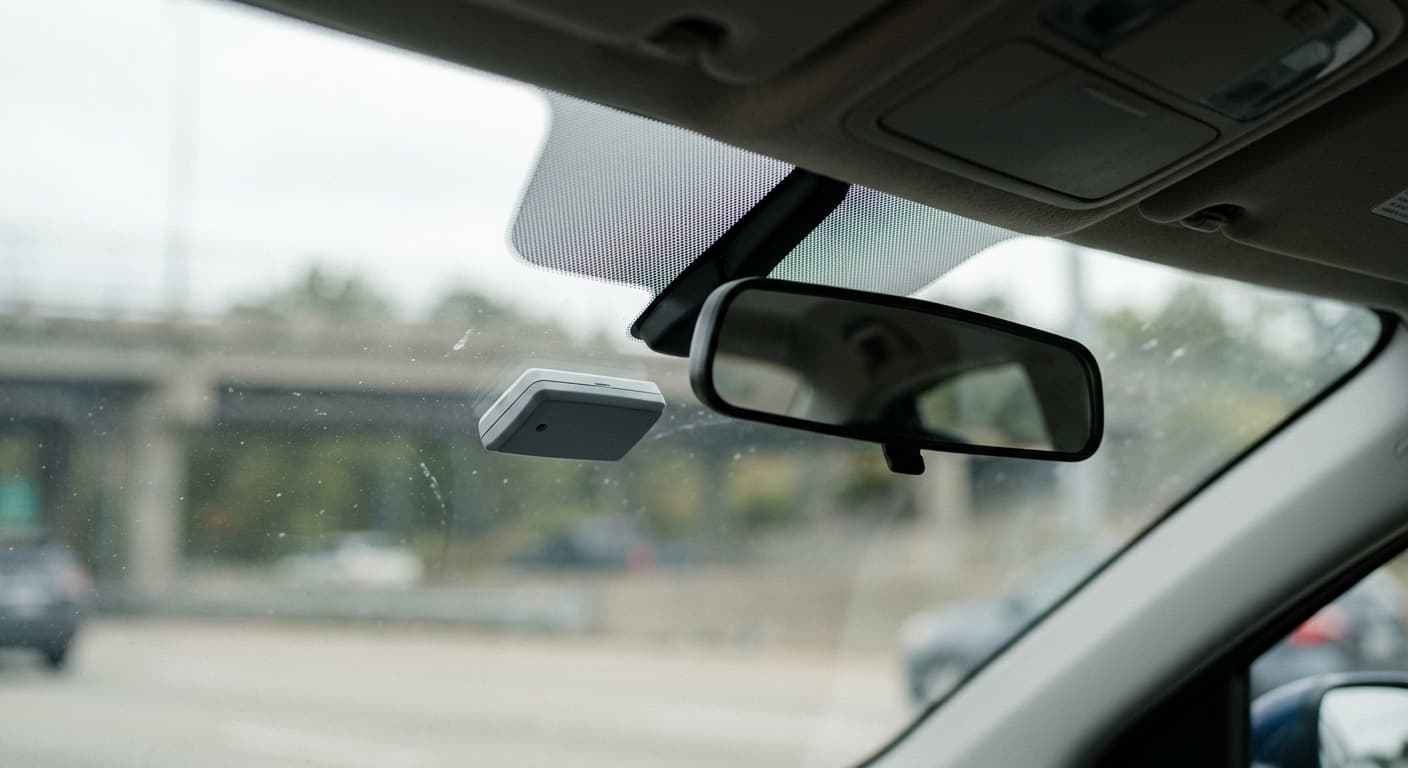
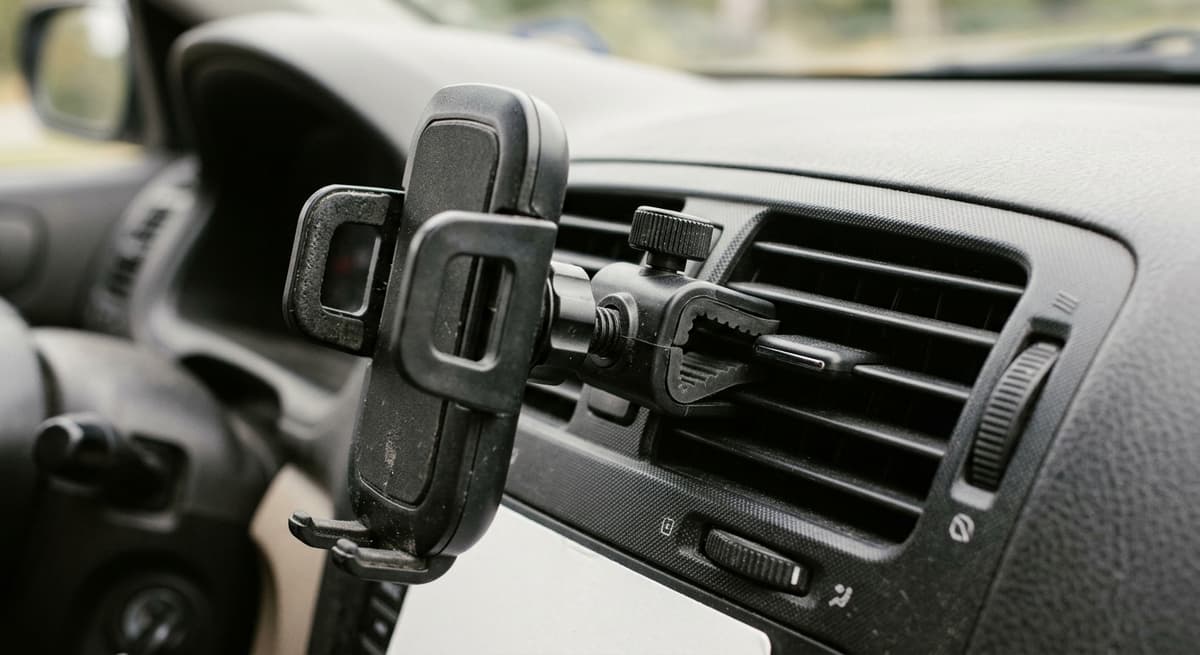
Connecticut permite las dashcams, las unidades de GPS y los soportes para teléfono en el parabrisas según el Artículo 14-99f de los Estatutos Generales de Connecticut, siempre que el dispositivo no interfiera con la visión del conductor de una manera que la bloquee o cubra significativamente. Montarlo detrás del espejo retrovisor o en las esquinas inferiores del parabrisas reduce el riesgo de obstrucción.
Connecticut regula lo que se puede colocar o adherir a su parabrisas mediante dos estatutos principales. El Artículo 14-99f de los Estatutos Generales de Connecticut cubre la condición del parabrisas, la obstrucción de la vista y el montaje de dispositivos. El Artículo 14-99g regula el polarizado de ventanas, las zonas de colocación de calcomanías y los requisitos de transmisión de luz.
Un cambio importante entró en vigor el 1 de octubre de 2025, cuando la Ley Pública 25-19 redefinió lo que constituye una infracción por obstrucción del parabrisas. Esta guía explica las reglas actuales para montar dispositivos en su parabrisas en Connecticut, las zonas designadas para calcomanías, las restricciones de polarizado y las sanciones por infracciones.
Ley de Obstrucción del Parabrisas de Connecticut (Artículo 14-99f)
El Artículo 14-99f de los Estatutos Generales de Connecticut es la ley principal que regula lo que puede y no puede estar en su parabrisas. El estatuto contiene cuatro incisos.
Inciso (a): Requisitos del Parabrisas y los Limpiaparabrisas
Todo vehículo motorizado debe tener un parabrisas que cumpla con los estándares de vidrio de seguridad establecidos en el Artículo 14-100. El vehículo también debe tener un limpiaparabrisas en buen estado de funcionamiento, ubicado directamente frente al operador.
El parabrisas debe estar razonablemente libre de defectos y de acumulaciones de nieve, hielo, condensación y suciedad tanto en la superficie interior como en la exterior. Las motocicletas y los vehículos diseñados por el fabricante para uso fuera de carretera sin parabrisas están exentos de este requisito.
Inciso (b): Conducir con un Parabrisas Obstruido
Ninguna persona puede operar un vehículo motorizado si el parabrisas se encuentra en una condición que interfiera con una visión sin obstrucciones de la carretera «de una manera que bloquee o cubra significativamente mediante el uso de un obstáculo u obstrucción, al punto de impedir que una persona razonable pueda ver la carretera». Esto aplica a daños físicos como grietas, astillas o empañamiento.
La Ley Pública 25-19 añadió ese lenguaje al inciso (b), además del inciso (c), a partir del 1 de octubre de 2025. Antes de eso, el inciso (b) prohibía cualquier condición del parabrisas que interfiriera con una visión sin obstrucciones, sin ningún umbral asociado. El estatuto sigue sin definir tamaños o ubicaciones específicas de grietas, pero el daño ahora debe bloquear o cubrir significativamente la visión al punto de que una persona razonable no pudiera ver la carretera. Un daño que el conductor puede ver claramente a través de él no cumple con el estándar legal.
Inciso (c): Dispositivos, Calcomanías y Ornamentos
Ningún artículo, dispositivo, calcomanía u ornamento puede adherirse, fijarse o colgarse en o sobre ningún vehículo motorizado de una manera o en un lugar que interfiera con la visión sin obstrucciones del operador sobre la carretera «de una manera que bloquee o cubra significativamente mediante el uso de un obstáculo u obstrucción, al punto de impedir que una persona razonable pueda ver la carretera», o que distraiga la atención del operador.
Este inciso aplica a todos los artículos colocados en el parabrisas, el área del tablero o que cuelguen del espejo retrovisor. Las unidades de GPS, los soportes para teléfono, las dashcams, los ambientadores, los permisos de estacionamiento y los artículos decorativos caen todos bajo esta disposición.
La interpretación de los tribunales ha aclarado que colgar un objeto del espejo retrovisor no constituye una infracción automática del Artículo 14-99f. El estado debe probar que el artículo específico, tal como está colocado en ese vehículo en particular, realmente interfirió con la visión del conductor o lo distrajo. Un pequeño ambientador en un espejo retrovisor no infringe automáticamente el estatuto.
Inciso (d): Sanciones
La infracción de cualquier disposición del Artículo 14-99f se clasifica como una infracción. La multa base es de $92, con costos judiciales adicionales, recargos y tarifas de evaluación que elevan el total a aproximadamente $184.
Ley Pública 25-19: El Cambio de Aplicación de la Ley de 2025
El 9 de junio de 2025, el gobernador Ned Lamont firmó la Ley Pública 25-19. La ley, originalmente presentada como el Proyecto de Ley de la Cámara 7132, fue aprobada por la Cámara de Connecticut con un voto de 143 a 0 y por el Senado con un voto de 35 a 0. Sus disposiciones relacionadas con el parabrisas entraron en vigor el 1 de octubre de 2025.
Qué Cambió
Antes de la Ley Pública 25-19, los incisos (b) y (c) del Artículo 14-99f prohibían cualquier condición del parabrisas, dispositivo, calcomanía u ornamento que interfiriera con la visión sin obstrucciones del conductor, sin ningún umbral asociado. Un ambientador colgante, una pequeña calcomanía, un dispositivo montado o un parabrisas astillado podían dar lugar a una citación si un oficial concluía que interferían con la visión.
La Sección 5 de la Ley Pública 25-19 reescribió la infracción en sí. Tanto en el inciso (b) como en el inciso (c), la interferencia ahora debe ocurrir «de una manera que bloquee o cubra significativamente mediante el uso de un obstáculo u obstrucción, al punto de impedir que una persona razonable pueda ver la carretera». La nota oficial de historial del Artículo 14-99f registra el cambio como «la Ley Pública 25-19 modificó los incisos (b) y (c) para añadir lenguaje relativo a una manera que bloquee, cubra u obstruya significativamente».
La ley no modificó la autoridad para realizar paradas de tránsito bajo el Artículo 14-99f. Elevó lo que debe demostrarse para establecer una infracción, y un oficial necesita una infracción para emitir una citación. Las disposiciones de aplicación secundaria de la ley, que prohíben una parada cuando la infracción es el único motivo, se vincularon a las infracciones de cannabis en un vehículo en los Artículos 53a-213a y 53a-213b, no al artículo sobre el parabrisas.
Qué Significa Esto en la Práctica
El cambio no legaliza obstruir su parabrisas. Colocar un dispositivo u ornamento que bloquee o cubra significativamente su visión sigue siendo una infracción del Artículo 14-99f y continúa siendo una infracción que conlleva la misma multa base de $92.
La diferencia está en qué constituye una infracción en primer lugar. La Ley Pública 25-19 redefinió los propios Artículos 14-99f(b) y 14-99f(c): una condición del parabrisas, dispositivo, calcomanía u ornamento ahora es una infracción solo si bloquea o cubre significativamente la visión del conductor al punto de impedir que una persona razonable pueda ver la carretera. Una obstrucción menor que no alcanza este umbral no constituye una infracción del estatuto, por lo que no puede sustentar una citación, sin importar si el vehículo fue detenido por ese motivo o por otro.
Las obstrucciones sustanciales que bloquean o cubren significativamente la visión del conductor siguen siendo infracciones del Artículo 14-99f. Un dispositivo grande que cubre una porción significativa del parabrisas, o un conjunto de artículos que en conjunto perjudican la visibilidad hacia adelante, todavía da a los oficiales motivos para realizar una parada de tránsito.
Por Qué Cambió la Ley
La Ley Pública 25-19 surgió de recomendaciones del Grupo de Trabajo sobre Transparencia y Responsabilidad Policial de Connecticut. Las investigaciones presentadas a este grupo de trabajo encontraron que los conductores afroamericanos en Connecticut tenían casi el doble de probabilidades de ser detenidos por infracciones de equipo en comparación con los conductores blancos, y los conductores hispanos tenían 1.5 veces más probabilidades de ser detenidos por estas infracciones.
La legislación busca enfocar la aplicación de las leyes de tránsito en infracciones relacionadas con la seguridad, a la vez que reduce las disparidades en cómo se hacen cumplir las infracciones menores de equipo.
Zonas de Calcomanías en el Parabrisas (Artículo 14-99g)
El Artículo 14-99g establece zonas específicas del parabrisas donde se permiten calcomanías, letreros y otros materiales. Estas zonas son excepciones a la prohibición general de colocar materiales no transparentes en el parabrisas.
Lado del Pasajero: Cuadrado de Siete Pulgadas
Los letreros, calcomanías u otros materiales se pueden exhibir dentro de un área cuadrada de siete pulgadas en la esquina inferior del parabrisas más alejada del conductor. En un vehículo estándar con volante a la izquierda, esta es la esquina inferior derecha del parabrisas (lado del pasajero).
Esta zona acomoda artículos como permisos de estacionamiento, calcomanías de inspección, adhesivos de registro, calcomanías de transpondedor de peaje y permisos municipales.
Lado del Conductor: Cuadrado de Cinco Pulgadas
Los letreros, calcomanías u otros materiales se pueden exhibir dentro de un área cuadrada de cinco pulgadas en la esquina inferior del parabrisas más cercana al conductor. En un vehículo estándar con volante a la izquierda, esta es la esquina inferior izquierda del parabrisas (lado del conductor).
La zona del lado del conductor es más pequeña porque está más cerca de la línea de visión directa del conductor. La ley de Connecticut restringe esta área a cinco pulgadas para minimizar el impacto en la visión periférica del conductor.
Otras Calcomanías Permitidas
El Artículo 14-99g también permite cualquier calcomanía o certificado requerido por ley federal, estatuto estatal u ordenanza municipal. Esto cubre artículos como calcomanías de inspección de emisiones, certificados de registro de vehículos y permisos municipales de estacionamiento exigidos por ley.
El estatuto también aborda las calcomanías de cumplimiento de polarizado de ventanas. Los vehículos con polarizado añadido posteriormente deben exhibir una calcomanía de cumplimiento entre la película de polarizado y el vidrio en cada ventana polarizada. Esta calcomanía debe colocarse en la esquina inferior izquierda de cada ventana polarizada, no debe exceder una pulgada cuadrada y debe ser sensible a la presión y autodestructiva al retirarse.
Soportes de GPS y Dispositivos de Navegación
La ley de Connecticut permite montar dispositivos de GPS y navegación en el parabrisas. El dispositivo debe cumplir con el Artículo 14-99f(c), lo que significa que no puede interferir con la visión sin obstrucciones del conductor sobre la carretera de una manera que la bloquee o cubra significativamente, ni distraerlo.
Connecticut no designa una zona específica del parabrisas para el montaje de dispositivos electrónicos. A diferencia de estados como California, que especifican un cuadrado de siete pulgadas en la esquina inferior del pasajero y un cuadrado de cinco pulgadas en la esquina inferior del conductor para los soportes de GPS, Connecticut se basa en el estándar general de 'visión sin obstrucciones'.
Ubicaciones de Montaje Recomendadas
Para la colocación legal más segura de un dispositivo de GPS o navegación en Connecticut, considere estas ubicaciones:
-
Detrás del espejo retrovisor. Si el dispositivo es lo suficientemente pequeño como para caber dentro del perfil del espejo, esta ubicación lo mantiene fuera de la línea de visión directa y periférica del conductor.
-
Esquina inferior del parabrisas (lado del conductor o del pasajero), por debajo de la línea de visión normal del conductor. Mantenerse dentro de la zona de siete pulgadas (lado del pasajero) o de cinco pulgadas (lado del conductor) brinda protección legal adicional.
-
En el tablero. Un soporte de tablero evita el parabrisas por completo y elimina cualquier preocupación de obstrucción del parabrisas.
Evite montar un dispositivo de GPS en el centro del parabrisas a la altura de los ojos del conductor. Aunque no es automáticamente ilegal, esta colocación crea la base más sólida para una citación por obstrucción.
Consideraciones sobre los Soportes de Ventosa
Los soportes de ventosa se usan ampliamente para GPS y soportes de teléfono. La ley de Connecticut no prohíbe específicamente los soportes de ventosa en el parabrisas. Sin embargo, el soporte y el dispositivo que sostiene no deben obstruir la vista del conductor.
Si un soporte de ventosa se desprende mientras se conduce, el dispositivo que cae podría distraer al conductor y potencialmente crear un riesgo de seguridad. Usar un soporte de ventosa junto con un método de fijación secundario (como un respaldo adhesivo o una correa) reduce este riesgo.
Soportes para Teléfono y la Ley de Manos Libres de Connecticut
Connecticut cuenta con una ley de manos libres vigente desde 2005, con sanciones que han aumentado con el tiempo. Según el Artículo 14-296aa, a todos los conductores se les prohíbe usar un teléfono móvil sostenido con la mano mientras operan un vehículo motorizado. Un soporte para teléfono ofrece uno de los métodos de manos libres aprobados.
Qué Exige la Ley
Los conductores de 18 años o más deben usar un dispositivo de manos libres para las llamadas telefónicas mientras conducen. Esto significa que el teléfono debe estar en un soporte, conectado a Bluetooth u operado mediante el sistema integrado del vehículo. Sostener el teléfono en el oído está prohibido.
A todos los conductores, sin importar la edad, se les prohíbe escribir, enviar o leer mensajes de texto, correos electrónicos o contenido de internet mientras operan un vehículo motorizado.
A los conductores menores de 18 años se les prohíbe usar un teléfono celular o dispositivo móvil en cualquier momento mientras conducen, incluso con un accesorio de manos libres.
Sanciones por Infracciones con el Teléfono Celular
| Infracción | Multa |
|---|---|
| Primera infracción | $200 |
| Segunda infracción | $375 |
| Tercera infracción y posteriores | $625 |
Estas multas se aplican al uso del teléfono sostenido con la mano, a los mensajes de texto y a otras actividades prohibidas con dispositivos móviles. Las multas son significativamente más altas que las sanciones por obstrucción del parabrisas, lo que convierte a un soporte para teléfono en una inversión práctica.
Cómo lo Ayudan los Soportes de Teléfono a Cumplir la Ley
Un soporte para teléfono montado en el parabrisas o en el tablero le permite:
- Realizar y recibir llamadas mediante Bluetooth o altavoz mientras el teléfono permanece en el soporte
- Seguir la navegación por GPS que se muestra en la pantalla del teléfono
- Usar funciones activadas por voz, como mensajes de texto por voz y asistentes virtuales
Aun así, no puede interactuar manualmente con el teléfono mientras conduce. Configurar un destino, desplazarse por listas de reproducción o leer mensajes debe hacerse antes de comenzar a conducir o mientras el vehículo está estacionado de forma segura.
Reglas de Dashcam en Connecticut
Connecticut no tiene un estatuto específico que aborde las dashcams o grabadoras de eventos en video. Una dashcam se trata como un 'dispositivo' bajo el Artículo 14-99f(c) y no debe obstruir la vista del conductor ni distraerlo.
Colocación Recomendada de la Dashcam
La colocación legal más segura para una dashcam en Connecticut es detrás del espejo retrovisor, donde la cámara tiene una vista clara de la carretera sin bloquear la línea de visión del conductor. Las dashcams pequeñas y compactas que caben dentro del perfil de la carcasa del espejo retrovisor tienen menos probabilidades de llamar la atención de las fuerzas del orden.
Las dashcams montadas en el tablero también están permitidas y evitan por completo las preocupaciones de obstrucción del parabrisas.
Consideraciones sobre la Grabación de Audio
Connecticut generalmente se considera un estado de consentimiento de todas las partes para grabar conversaciones privadas, conforme a una ley civil de grabación independiente. El Artículo 53a-187 define la 'escucha mecánica de una conversación' como grabar sin el consentimiento de al menos una de las partes, hecha por alguien que no está presente en la conversación; dado que el conductor está presente en el vehículo, esta disposición específica no rige por sí sola el audio de la propia dashcam del conductor.
Si su dashcam graba audio dentro del vehículo, lo más seguro sigue siendo informar a todas las personas en el auto que se está capturando audio, dadas las expectativas más amplias de consentimiento de todas las partes de Connecticut para grabar conversaciones privadas. Muchos propietarios de dashcams en Connecticut desactivan la grabación de audio o informan a los pasajeros que se está capturando audio. Para grabaciones que solo capturan video sin audio, no se requiere el consentimiento de otras partes.
Reglas de Polarizado del Parabrisas en Connecticut
El polarizado de ventanas está regulado por el Artículo 14-99g. Las reglas de polarizado para el parabrisas son más estrictas que para las demás ventanas.
Requisitos de Polarizado del Parabrisas
| Regla | Requisito |
|---|---|
| Ubicación del polarizado | Solo polarizado no reflectante por encima de la línea AS-1 |
| Debajo de la línea AS-1 | No se permite polarizado añadido posteriormente |
| Polarizado reflectante | No permitido en el parabrisas |
| Exención médica | Connecticut no permite exenciones médicas para un polarizado más oscuro |
La línea AS-1 está grabada en el vidrio por el fabricante, generalmente de 5 a 6 pulgadas desde la parte superior del parabrisas. Se puede aplicar película de polarizado no reflectante por encima de esta línea.
Otros Límites de Polarizado de Ventanas
| Ventana | VLT mínimo (sedanes) | VLT mínimo (SUV/camionetas) |
|---|---|---|
| Parabrisas (solo por encima de la línea AS-1) | No reflectante | No reflectante |
| Ventanas delanteras laterales | 35% | 35% |
| Ventanas traseras laterales | 35% | Cualquier oscuridad |
| Ventana trasera | Cualquier oscuridad | Cualquier oscuridad |
VLT significa transmitancia de luz visible. Un VLT del 35% significa que la ventana debe permitir el paso de al menos el 35% de la luz exterior.
Límites de Reflectividad
Las ventanas delanteras laterales no pueden reflejar más del 21% de la luz entrante. Las ventanas traseras laterales no pueden reflejar más del 27% de la luz entrante. El polarizado metálico o espejado está prohibido.
Calcomanías de Cumplimiento de Polarizado
Los vehículos con polarizado añadido posteriormente en cualquier ventana deben exhibir una calcomanía de cumplimiento entre la película de polarizado y el vidrio. La calcomanía debe mostrar el número de registro, una certificación de cumplimiento y cualquier otra información que exija el Comisionado de Vehículos Motorizados. La calcomanía no debe exceder una pulgada cuadrada, debe ser sensible a la presión y autodestructiva al retirarse.
Los fabricantes de películas deben certificar los productos de polarizado que venden en Connecticut.
Daños y Reemplazo del Parabrisas
La ley de Connecticut, según el Artículo 14-99f(a), exige que el parabrisas esté «razonablemente libre de defectos». El inciso (b), por separado, hace que sea una infracción operar con una condición del parabrisas que interfiera con la visión «de una manera que bloquee o cubra significativamente mediante el uso de un obstáculo u obstrucción, al punto de impedir que una persona razonable pueda ver la carretera».
Desde el 1 de octubre de 2025, ese umbral de bloqueo significativo, y no el criterio general de un oficial sobre la visibilidad, es lo que una citación por un parabrisas agrietado bajo el inciso (b) debe cumplir.
Cuándo el Daño al Parabrisas Puede Resultar en una Citación
Bajo el estándar vigente desde el 1 de octubre de 2025, el daño sustenta una citación bajo el inciso (b) solo cuando alcanza el nivel de bloqueo o cobertura significativa:
- Grietas o astillas en la línea de visión directa del conductor que bloquean o cubren significativamente la vista de la carretera
- Agrietamiento extenso tipo telaraña que distorsiona la visibilidad al punto de que una persona razonable no podría ver la carretera
- Múltiples grietas o astillas que en conjunto bloquean o cubren significativamente la visión del conductor
Un daño que comprometa la integridad estructural del parabrisas, o un parabrisas que no esté razonablemente libre de defectos, puede implicar por separado el inciso (a) y el requisito de vidrio de seguridad del Artículo 14-100. La Ley Pública 25-19 no modificó ninguno de los dos.
Cuándo el Daño Generalmente no se Cita
- Astillas pequeñas de menos de tres cuartos de pulgada que están fuera de la línea de visión del conductor
- Grietas menores que no se extienden hacia el área de visión principal del conductor
- Daños en el lado extremo del pasajero que no afectan la visión del conductor
Cobertura de Seguro para el Reemplazo del Parabrisas
Connecticut cuenta con una disposición de seguro favorable para los daños del parabrisas. Según el Artículo 38a-339, toda póliza de seguro de automóvil que incluya cobertura amplia debe ofrecer la opción de cobertura total para la reparación o el reemplazo de todo el vidrio de seguridad dañado sin ningún deducible ni monto mínimo.
Esto significa que, si usted tiene cobertura amplia y eligió la opción de cobertura de vidrio, el reemplazo de su parabrisas está cubierto sin costo alguno de su bolsillo. Esta disposición aplica a todo el vidrio de seguridad del vehículo, no solo al parabrisas.
Requisitos de Vidrio de Seguridad
Según el Artículo 14-100, todos los vehículos motorizados fabricados después del 1 de julio de 1937 deben tener parabrisas hechos de vidrio de seguridad. El vidrio de seguridad es un vidrio tratado o combinado con otros materiales para brindar un mayor grado de protección a los ocupantes del vehículo que el vidrio sin tratar. Los parabrisas de reemplazo deben cumplir con los mismos estándares de vidrio de seguridad que el original.
La Ley de Remoción de Hielo y Nieve (Artículo 14-252a)
Las leyes del parabrisas de Connecticut funcionan junto con el requisito estatal de remoción de hielo y nieve. El Artículo 14-252a, comúnmente llamado la ley del 'proyectil de hielo', exige que todos los conductores retiren el hielo y la nieve acumulados de sus vehículos antes de conducir.
Qué Exige la Ley
Los conductores deben retirar la nieve y el hielo de todas las superficies del vehículo, incluidos el techo, el capó, la cajuela y el parabrisas, de manera que el material no represente una amenaza para las personas o la propiedad mientras el vehículo circula por cualquier calle o carretera.
Sanciones
| Situación | Multa |
|---|---|
| Infracción básica (sin lesiones ni daños) | $75 |
| Lesiones o daños a la propiedad (vehículo particular) | $200 a $1,000 |
| Lesiones o daños a la propiedad (vehículo comercial) | $500 a $1,250 |
La ley no aplica a los conductores que ya estaban en la vía cuando comenzó a caer nieve, aguanieve o lluvia helada.
Reglas de Parabrisas para Vehículos Comerciales
Los vehículos comerciales registrados en Connecticut deben cumplir tanto con la ley estatal como con las regulaciones federales de la FMCSA bajo 49 CFR 393.60. El estándar federal aplica a los vehículos en comercio interestatal.
Zona de Montaje Federal
Las regulaciones de la FMCSA permiten que los dispositivos de tecnología de seguridad se monten en los parabrisas de vehículos comerciales dentro de zonas específicas. Los dispositivos deben colocarse a no más de 8.5 pulgadas por debajo del borde superior del área de barrido del limpiaparabrisas y a no más de 7 pulgadas por encima del borde inferior del área de barrido. El dispositivo también debe estar fuera de las líneas de visión del conductor hacia la carretera y las señales de tránsito.
Estándares Estatales vs. Federales
Para los vehículos comerciales que operan únicamente dentro de Connecticut, aplica la ley estatal. Para los vehículos en comercio interestatal, aplica el estándar federal. Cuando ambos estándares aplican, el conductor debe cumplir con el que sea más estricto para la situación específica.
Resumen de las Leyes de Montaje en el Parabrisas de Connecticut
| Tema | Estatuto | Regla Clave |
|---|---|---|
| Condición del parabrisas | 14-99f(a) | Debe estar razonablemente libre de defectos; los limpiaparabrisas deben funcionar |
| Conducir con obstrucción | 14-99f(b) | La condición del parabrisas no debe interferir con la visión de una manera que la bloquee o cubra significativamente |
| Dispositivos, calcomanías, ornamentos | 14-99f(c) | No deben bloquear o cubrir significativamente la visión, ni distraer al conductor |
| Estándar de infracción (desde el 1 de oct. de 2025) | Ley Pública 25-19, Sec. 5 | Modificó tanto el 14-99f(b) como el (c): la interferencia debe «bloquear o cubrir significativamente» la visión |
| Zona de calcomanías del pasajero | 14-99g | Cuadrado de siete pulgadas en la esquina inferior más alejada del conductor |
| Zona de calcomanías del conductor | 14-99g | Cuadrado de cinco pulgadas en la esquina inferior más cercana al conductor |
| Polarizado del parabrisas | 14-99g | Solo polarizado no reflectante por encima de la línea AS-1 |
| Polarizado de ventanas delanteras laterales | 14-99g | VLT mínimo del 35% |
| Ley de teléfono manos libres | 14-296aa | No se permite el uso del teléfono con la mano; se requiere soporte o Bluetooth |
| Remoción de nieve/hielo | 14-252a | Todo el hielo y la nieve deben retirarse antes de conducir |
| Sanción por obstrucción | 14-99f(d) | Infracción, multa base de $92 más recargos |
| Vidrio de seguridad | 14-100 | Todos los parabrisas deben ser de vidrio de seguridad |
| Cobertura de seguro | 38a-339 | Reemplazo de vidrio sin deducible opcional con cobertura amplia |
Más Leyes de Connecticut
- Leyes de Grabación de Connecticut
- Ley del Limón de Connecticut
- Leyes de Choque y Fuga de Connecticut
- Leyes de Sillas de Auto de Connecticut
- Leyes de Mordeduras de Perro de Connecticut
Preguntas frecuentes
¿Puedo poner el GPS o el teléfono en el parabrisas en Connecticut?
Sí. Connecticut no prohíbe los dispositivos de GPS o teléfono montados en el parabrisas. Según el Artículo 14-99f(c), el dispositivo no debe interferir con la visión sin obstrucciones del conductor sobre la carretera de una manera que la bloquee o cubra significativamente, y no debe distraerlo. Las colocaciones legales más seguras son detrás del espejo retrovisor, en las esquinas inferiores del parabrisas dentro de las zonas designadas para calcomanías, o en el tablero.
¿Qué cambió con la Ley Pública 25-19 en octubre de 2025?
La Ley Pública 25-19 elevó el umbral de lo que constituye una infracción del parabrisas. La Sección 5 de la ley modificó tanto el inciso (b) como el inciso (c) del Artículo 14-99f, por lo que el cambio abarca tanto la condición del parabrisas, como grietas y astillas, como los dispositivos, calcomanías y ornamentos. Desde el 1 de octubre de 2025, la interferencia debe bloquear o cubrir significativamente la visión al punto de impedir que una persona razonable pueda ver la carretera. Las obstrucciones menores ya no infringen el estatuto, sin importar el motivo por el cual se detuvo el vehículo. La ley no modificó la autoridad para realizar paradas de tránsito bajo este artículo.
¿Cuáles son las zonas de calcomanías en un parabrisas de Connecticut?
El Artículo 14-99g permite calcomanías y letreros en dos áreas: un cuadrado de siete pulgadas en la esquina inferior del parabrisas del lado del pasajero (la más alejada del conductor) y un cuadrado de cinco pulgadas en la esquina inferior del lado del conductor (la más cercana). También se permiten las calcomanías requeridas por ley federal, estatal o municipal.
¿Es legal usar una dashcam en Connecticut?
Sí. Connecticut no tiene un estatuto específico para dashcams. Una dashcam se trata como un dispositivo bajo el Artículo 14-99f(c) y está permitida siempre que no obstruya la vista del conductor. Móntela detrás del espejo retrovisor o en el tablero. Connecticut generalmente se considera un estado de consentimiento de todas las partes para grabar conversaciones privadas, por lo que es una buena práctica informar a los pasajeros si su dashcam graba audio dentro del vehículo, aunque la propia presencia del conductor en el auto limita cómo se aplica la definición específica de escucha ilegal del Artículo 53a-187.
¿Cuál es la multa por obstrucción del parabrisas en Connecticut?
Violar el Artículo 14-99f es una infracción con una multa base de $92 más costos judiciales, recargos y tarifas de evaluación que elevan el total a aproximadamente $184. Si el hielo o la nieve en el parabrisas causan lesiones o daños a la propiedad, las multas bajo la ley separada del proyectil de hielo (Artículo 14-252a) van de $200 a $1,250 dependiendo de si el vehículo es comercial o particular.
Actualizaciones
Se corrigió la página en español para reflejar que la Ley Pública 25-19 modificó tanto el inciso (b) como el (c) del Artículo 14-99f, se actualizó la guía sobre daños al parabrisas al estándar vigente de bloqueo significativo, se eliminó la descripción incorrecta de la ley como un cambio de autoridad para paradas de tránsito, y se redirigieron las citas del Artículo 14-99f al texto vigente del Suplemento 2026.
Se corrigió el análisis del consentimiento de audio: el Artículo 53a-187 define la 'escucha mecánica' como grabar sin el consentimiento de una parte hecha por alguien que no está presente, por lo que no convierte por sí solo a Connecticut en un estado de consentimiento de todas las partes para la propia dashcam de un conductor; también se corrigió el tope de la multa comercial por hielo/nieve de $1,200 a $1,250 conforme al Artículo 14-252a(d), incluidas las repeticiones en KeyTakeaways y en el FAQ.
La ley detrás de este artículo
Este artículo se apoya en las disposiciones legales a continuación, conservadas en nuestro propio registro jurídico y obtenidas de la fuente oficial. Toque una sección para leer el texto vigente.
Connecticut General Statutes, Title 14 (Motor Vehicles. Use of the Highway By Vehicles. Gasoline), Chapter 246
§ 14-99fWindshield. Obstruction of view.Vigentecitada en 2 de nuestros artículos
(a) Each motor vehicle shall be equipped with a windshield of a type prescribed by section 14-100 and a windshield cleaner or wiper in effective working order located directly in front of the operator while in use on the highway. The windshield shall be reasonably free of defects and accumulations, inside and out, of snow, ice, condensation and dirt. The provisions of this subsection shall not apply to a motorcycle or a vehicle designed by the manufacturer for nonhighway operation without a windshield. (b) No person shall operate a motor vehicle required to be equipped with such a windshield if the windshield is in a condition to interfere with an unobstructed view of the highway. (c) No article, device, sticker or ornament shall be attached or affixed to or hung on or in any motor vehicle in such a manner or location as to interfere with the operator's unobstructed view of the highway or to distract the attention of the operator. (d) Violation of any provision of this section shall be an infraction.
Texto oficial (extracto) · verificado el 2026-09-07 · Lea el texto completo en nuestra biblioteca legal · Verifique en cga.ct.gov
Citada en 6 resoluciones judiciales de nuestra colecciónResolución más reciente que la cita en nuestra colección: 2013
Resoluciones que citan esta sección en nuestra colección:
- State v. Cyrus (Supreme Court of Connecticut 2010, 297 Conn. 829)“…ing a motor vehicle with an obstructed view in violation of General Statutes § 14-99f(c). [2] State v. *61 Cyrus, 111…”
- Pinheiro v. Board of Education (Connecticut Appellate Court 1993, 30 Conn. App. 263)“…99; (4) it is not equipped with a windshield as required by General Statutes § 14-99f; (5) it is not equipped with fenders or…”
- HVT, INC. v. Law (Supreme Court of Connecticut 2011, 300 Conn. 623)“…tatutes § 14-80h (failure to satisfy braking requirements); General Statutes § 14-99f (operating vehicle with obstructed wind…”
Identificado automáticamente a partir de las opiniones judiciales que citan esta sección; no es un ranking de qué caso prevalece.
§ 14-99gDefinitions. Tinted or reflectorized windows. Obstruction of view prohibited. Exceptions. Sale or delivery of motor vehicles having tinted or reflectorized windows prohibited. Stickers required. Penalty. Window tinting businesses. Regulations.Vigentecitada en 2 de nuestros artículos
(a) As used in this section, unless the context otherwise requires: (1) “Light transmission” means the ratio of the amount of total light, expressed in percentages, which is allowed to pass through a product or material including the glazing to the amount of total light falling on the product or material and the glazing. (2) “Luminous reflectance” means the ratio of the amount of total light, expressed in percentages, which is reflected outward by a product or material to the amount of total light falling on the product or material. (3) “Manufacturer” means (A) a person who engages in the manufacturing or assembling of sun screening products or materials designed to be used in conjunction with vehicle glazing materials, or (B) a person who fabricates, laminates or tempers the glazing material incorporating the capacity to reflect or to reduce the transmittance of light during the manufacturing process.
Texto oficial (extracto) · verificado el 2026-09-01 · Lea el texto completo en nuestra biblioteca legal · Verifique en cga.ct.gov
Citada en 1 resoluciones judiciales de nuestra colecciónResolución más reciente que la cita en nuestra colección: 2025
Resoluciones que citan esta sección en nuestra colección:
- United States v. Poller (Court of Appeals for the Second Circuit 2025, 129 F.4th 169)“…than thirty-five per cent plus or minus three per cent.” Conn. Gen. Stat. Ann. § 14-99g(c)(1) & (5). Indeed, Poller conceded t…”
Identificado automáticamente a partir de las opiniones judiciales que citan esta sección; no es un ranking de qué caso prevalece.
§ 14-100Safety glass. Use of plastics.Vigente
(a) The commissioner shall not register any motor vehicle manufactured after July 1, 1937, unless the windshield, the doors, windows and glass partitions are equipped with safety glass, except that, in lieu of safety glass, the commissioner may permit the use of plastic materials manufactured and processed into transparent sheets, at such locations as he designates. The commissioner shall issue regulations, in accordance with nationally accepted standards, concerning the specifications for safety glass and plastic materials and the locations where they may be used. (b) The term “safety glass”, as used in this chapter, means glass so treated or combined with other materials that its use in motor vehicles will afford a greater degree of protection to occupants thereof than the use of glass not so treated or combined.
Texto oficial (extracto) · verificado el 2026-07-29 · Lea el texto completo en nuestra biblioteca legal · Verifique en cga.ct.gov
Citada en 3 resoluciones judiciales de nuestra colecciónResolución más reciente que la cita en nuestra colección: 2023
Resoluciones que citan esta sección en nuestra colección:
- American Leasing Corp. v. Automated Disposal Systems, Inc. (District Court, W.D. North Carolina 1974, 64 F.R.D. 576)“…s plus twelve pages of exhibits interpreting North Carolina General Statutes § 14-100. The written material will be produce…”
- Rocco v. United States (District Court, D. Connecticut 2023)“…on any highway,” subject to exceptions not applicable here. Conn. Gen. Stat. § 14-100(c)(1).…”
- Brown v. Ford Motor Company (Court of Appeals for the Fourth Circuit 2001, 10 F. App'x 39)“…ing inadmissibility on a "violation" of statute. See, e.g., Conn. Gen. Stat. Ann. § 14-100A ("Failure to wear a seat safety belt s…”
Identificado automáticamente a partir de las opiniones judiciales que citan esta sección; no es un ranking de qué caso prevalece.
Code of Federal Regulations Title 49
§ 393.60Glazing in specified openings.Vigentecitada en 15 de nuestros artículos
(a) Glazing material. Glazing material used in windshields, windows, and doors on a motor vehicle manufactured on or after December 25, 1968, shall at a minimum meet the requirements of Federal Motor Vehicle Safety Standard (FMVSS) No. 205 in effect on the date of manufacture of the motor vehicle. The glazing material shall be marked in accordance with FMVSS No. 205 (49 CFR 571.205, S6). (b) Windshields required. Each bus, truck and truck-tractor shall be equipped with a windshield. Each windshield or portion of a multi-piece windshield shall be mounted using the full periphery of the glazing material. (c) Windshield condition. With the exception of the conditions listed in paragraphs (c)(1), (c)(2), and (c)(3) of this section, each windshield shall be free of discoloration or damage in the area extending upward from the height of the top of the steering wheel (excluding a 51 mm (2 inch) border at the top of the windshield) and extending from a 25 mm (1 inch) border at each side of the windshield or windshield panel.
Texto oficial (extracto) · verificado el 2026-07-28 · Lea el texto completo en nuestra biblioteca legal · Verifique en ecfr.gov
Citada en 3 resoluciones judiciales de nuestra colecciónResolución más reciente que la cita en nuestra colección: 2021
En los tribunales (resumen editorial, verificado de forma independiente):El mínimo de 70 por ciento de transmisión de luz del 49 CFR 393.60(d) cubre el parabrisas y las ventanas inmediatamente a la derecha e izquierda del conductor. Grooms Hauling, LLC v. Robinson (2020) lo aplicó mediante la adopción de Pensilvania y rechazó reclamos de discriminación racial por las multas de polarizado; State v. Ford (2021) señaló que Kansas también lo adopta.
Resoluciones que citan esta sección en nuestra colección:
- United States of America, Government v. Robert L. Pierre, Defendant (District Court, D. New Hampshire 2015, 2015 DNH 083)“…rallel luminous transmittance of not less than 70 percent.” 49 C.F.R. 393.60(c). Neither the Government nor the defe…”
- GROOMS HAULING, LLC v. ROBINSON (District Court, E.D. Pennsylvania 2020)✓Agentes citaron repetidamente a una empresa de acarreo de dueños afroamericanos cuyas ventanas dejaban pasar solo del 17 al 20 por ciento de la luz; al tomar el estándar de 70 por ciento de 49 CFR 393.60 como regla aplicable, el tribunal otorgó juicio sumario a los agentes.
- State v. Ford (Court of Appeals of Kansas 2021)“…Relevant to this appeal are regulations on window tinting (49 C.F.R. § 393.60[d]), medical examiner certificates (49…”
Identificado automáticamente a partir de las opiniones judiciales que citan esta sección; no es un ranking de qué caso prevalece.
Connecticut General Statutes, Title 14 (Motor Vehicles. Use of the Highway By Vehicles. Gasoline), Chapter 248
§ 14-296aaUse of hand-held mobile telephones and mobile electronic devices by motor vehicle operators and school bus drivers prohibited or restricted. Exceptions. Penalties. Amounts remitted to municipality. Record of violation.Vigente
(a) For purposes of this section, the following terms have the following meanings: (1) “Mobile telephone” means a cellular, analog, wireless or digital telephone capable of sending or receiving telephone communications without an access line for service. (2) “Using” or “use” means holding a hand-held mobile telephone to, or in the immediate proximity of, the user's ear. (3) “Hand-held mobile telephone” means a mobile telephone with which a user engages in a call using at least one hand. (4) “Hands-free accessory” means an attachment, add-on, built-in feature, or addition to a mobile telephone, whether or not permanently installed in a motor vehicle, that, when used, allows the vehicle operator to maintain both hands on the steering wheel. (5) “Hands-free mobile telephone” means a hand-held mobile telephone that has an internal feature or function, or that is equipped with an attachment or addition, whether or not permanently part of such hand-held mobile telephone, by which a user engages in a call without the use of either hand, whether or not the use of either hand is necessary to activate, deactivate or initiate a function of such telephone.
Texto oficial (extracto) · verificado el 2026-07-29 · Lea el texto completo en nuestra biblioteca legal · Verifique en cga.ct.gov
Citada en 5 resoluciones judiciales de nuestra colecciónResolución más reciente que la cita en nuestra colección: 2025
Resoluciones que citan esta sección en nuestra colección:
- State v. JIMENEZ-JARAMILL (Connecticut Appellate Court 2012, 134 Conn. App. 346)“…peal from the judgment of dismissal. 2 General Statutes § 14-296aa prohibits the use of a hand-held cell p…”
- Gusan v. Commissioner of Correction (Connecticut Appellate Court 2025, 231 Conn. App. 429)“…a telephone or an electronic device in violation of General Statutes § 14-296aa (b) (1) and operating a motor Page 2…”
- State v. Dunbar (Connecticut Appellate Court 2016, 165 Conn. App. 93)“…magistrate, who also found that the defendant had violated General Statutes § 14-296aa (b). 2 General Statutes § 14-29…”
Identificado automáticamente a partir de las opiniones judiciales que citan esta sección; no es un ranking de qué caso prevalece.
§ 14-252aRemoval of ice and snow from motor vehicle required. Penalty.Vigente
(a) The operator of any noncommercial motor vehicle, as defined in section 14-1, shall remove any accumulated ice or snow from such motor vehicle, including the hood, trunk and roof of such motor vehicle, so that any ice or snow accumulated on such vehicle does not pose a threat to persons or property while the vehicle is being operated on any street or highway of this state. Any such operator who fails to remove accumulated ice or snow that poses such a threat shall be fined seventy-five dollars and shall be deemed to have committed an infraction. (b) If the operator of a noncommercial motor vehicle violates the provisions of subsection (a) of this section and snow or ice is dislodged from such vehicle and causes personal injury or property damage, such operator shall be fined not less than two hundred dollars but not more than one thousand dollars for each offense.
Texto oficial (extracto) · verificado el 2026-07-29 · Lea el texto completo en nuestra biblioteca legal · Verifique en cga.ct.gov
Connecticut General Statutes, Title 38a (Insurance), Chapter 700
§ 38a-339(Formerly Sec. 38-175t). Comprehensive automobile coverage to include optional coverage for repair or replacement of damaged safety glass without deductible or minimum amount.Vigente
Each automobile insurance policy providing comprehensive coverage, whether designated as such or included in a policy providing broader coverage, shall provide at the option of the insured complete coverage for repair or replacement of all damaged safety glass without regard to any deductible or minimum amount.
Texto oficial (extracto) · verificado el 2026-07-29 · Lea el texto completo en nuestra biblioteca legal · Verifique en cga.ct.gov
Connecticut General Statutes, Title 53a (Penal Code), Chapter 952
§ 53a-187Definitions. Applicability.Vigentecitada en 22 de nuestros artículos
(a) The following definitions are applicable to sections 53a-188 and 53a-189: (1) “Wiretapping” means the intentional overhearing or recording of a telephonic or telegraphic communication or a communication made by cellular radio telephone by a person other than a sender or receiver thereof, without the consent of either the sender or receiver, by means of any instrument, device or equipment. The normal operation of a telephone or telegraph corporation and the normal use of the services and facilities furnished by such corporation pursuant to its tariffs shall not be deemed “wiretapping”. (2) “Mechanical overhearing of a conversation” means the intentional overhearing or recording of a conversation or discussion, without the consent of at least one party thereto, by a person not present thereat, by means of any instrument, device or equipment. (3) “Unlawfully” means not specifically authorized by law. For purposes of this section, “cellular radio telephone” means a wireless telephone authorized by the Federal Communications Commission to operate in the frequency bandwidth reserved for cellular radio telephones.
Texto oficial (extracto) · verificado el 2026-07-29 · Lea el texto completo en nuestra biblioteca legal · Verifique en cga.ct.gov
Citada en 12 resoluciones judiciales de nuestra colecciónResolución más reciente que la cita en nuestra colección: 2021
En los tribunales (resumen editorial, verificado de forma independiente):Los tribunales de Connecticut han interpretado las definiciones de la sección 53a-187 como limitadas al monitoreo subrepticio y sin consentimiento. State v. Grullon (1989) la aplicó para dejar las grabaciones con consentimiento de una parte fuera de esas normas, y Washington v. Meachum (1996) sostuvo que solo se violan cuando ninguna de las partes sabe que la llamada se monitorea.
Resoluciones que citan esta sección en nuestra colección:
- State v. Grullon (Supreme Court of Connecticut 1989, 212 Conn. 195)✓La policía grabó las llamadas del acusado con su hermano, quien dio su consentimiento; el tribunal sostuvo que sustituir la antigua ley penal de escuchas por la sección 53a-187, que solo alcanza grabaciones hechas sin el consentimiento de ninguna parte, no justificaba excluir las transcripciones.
- Washington v. Meachum (Supreme Court of Connecticut 1996, 238 Conn. 692)✓Reclusos impugnaron reglamentos que permitían monitorear llamadas no privilegiadas tras letreros, formularios firmados y un tono periódico; al leer las definiciones de consentimiento de la sección 53a-187, el tribunal sostuvo que los delitos de escuchas solo se violan cuando ninguna parte sabe del monitoreo.
- State v. McVeigh (Supreme Court of Connecticut 1993, 224 Conn. 593)✓La policía usó un escáner en el apartamento de un vecino para grabar las llamadas de una pareja por teléfono inalámbrico; el tribunal rechazó el argumento del Estado de que la reforma de 1989 a la definición de wiretapping de la sección 53a-187 dejaba esas llamadas sin protección, y ordenó suprimir la prueba.
Identificado automáticamente a partir de las opiniones judiciales que citan esta sección; no es un ranking de qué caso prevalece.
Fuentes y referencias
- Estatutos Generales de Connecticut, Artículo 14-99f - Parabrisas. Obstrucción de la Vista(cga.ct.gov).gov
- Estatutos Generales de Connecticut, Artículo 14-99g - Ventanas Polarizadas, Zonas de Calcomanías(cga.ct.gov).gov
- Ley Pública 25-19 - Cambio en el Estándar de Infracción por Obstrucción del Parabrisas(cga.ct.gov).gov
- Estatutos Generales de Connecticut, Artículo 14-296aa - Ley de Teléfono Manos Libres(cga.ct.gov).gov
- Estatutos Generales de Connecticut, Artículo 14-252a - Remoción de Hielo y Nieve(cga.ct.gov).gov
- Estatutos Generales de Connecticut, Artículo 14-100 - Requisitos de Vidrio de Seguridad(cga.ct.gov).gov
- Estatutos Generales de Connecticut, Artículo 38a-339 - Cobertura de Seguro de Vidrio(cga.ct.gov).gov
- DMV de Connecticut - Leyes sobre Teléfono Celular y Mensajes de Texto(portal.ct.gov).gov
- 49 CFR 393.60 - Estándares Federales de Acristalamiento y Construcción de Ventanas(ecfr.gov).gov
- Estatutos Generales de Connecticut, Artículo 53a-187 - Escucha Ilegal (Eavesdropping)(cga.ct.gov).gov
- Estatutos Generales de Connecticut, Artículo 14-99f (Suplemento 2026, según enmendado por la Ley Pública 25-19) - Parabrisas. Obstrucción de la Vista(cga.ct.gov)
- Votación de la Cámara de Connecticut, Registro 84, sobre el HB 7132 (143-0), 8 de mayo de 2025(cga.ct.gov)