South Korea Self-Driving Car Laws: Level 3, Level 4, FSD (2026)
Independently fact-checked against primary sources (last audited October 1, 2026). · 15 primary sources cited on this page. How we verify our legal content
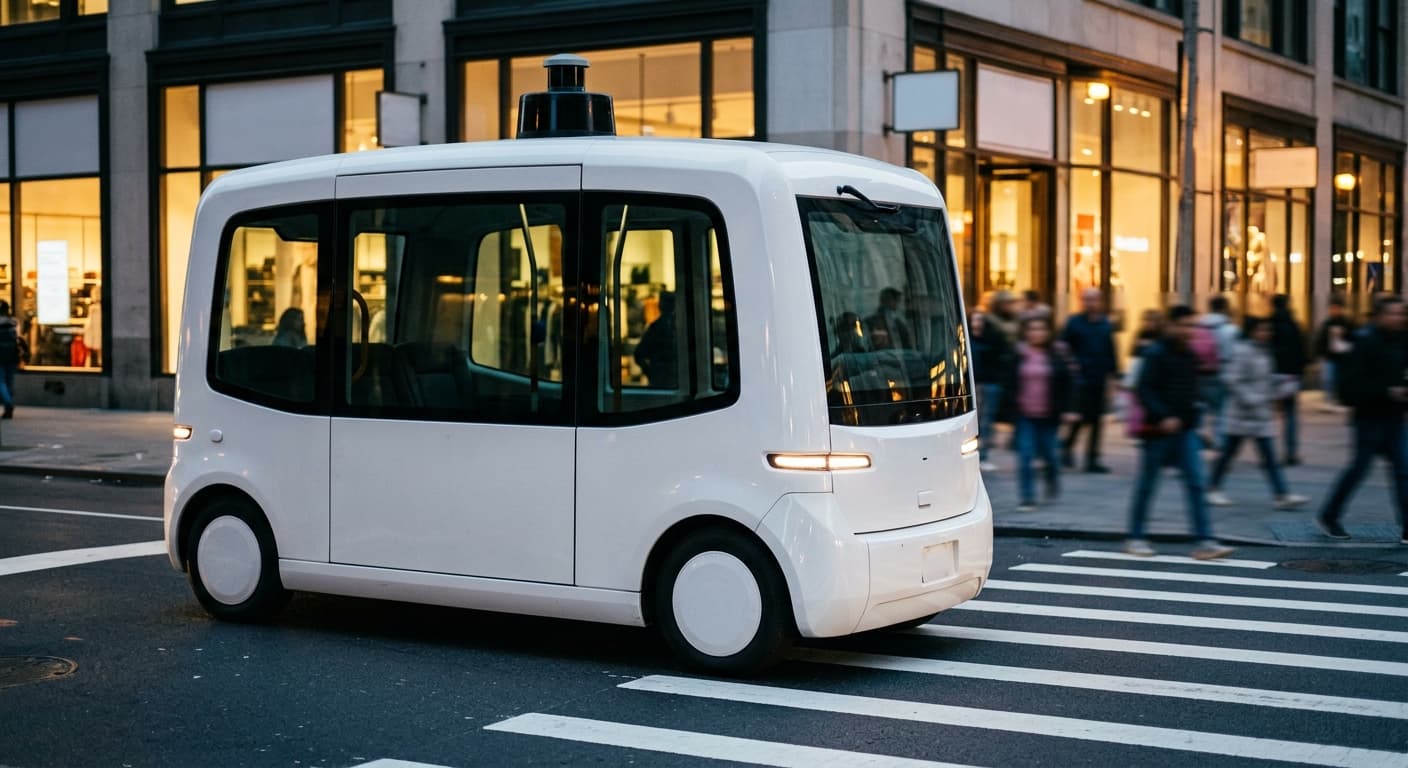
Yes, self-driving cars are legal in South Korea, but only through specific permits. Testing on public roads needs a temporary operation permit from the transport ministry (MOLIT). Paid robotaxi and shuttle rides are allowed only inside designated pilot zones, under the Autonomous Vehicles Act (자율주행자동차법). Since 2025, a separate certification route lets public bodies and incorporated transport companies run fully driverless vehicles that no existing safety standard covers.
Private buyers cannot buy a Level 4 car for personal use under any of these routes. Driver-assistance systems such as Tesla FSD (Supervised) are not automated driving under Korean law: the driver stays fully responsible, and on 31 March 2026 MOLIT warned that switching FSD on without authorisation is illegal.
Scope and date: This page covers South Korean national law on automated and driverless vehicles as of 30 September 2026. It does not cover city ordinances or the conditions attached to individual permits. Approval and deployment status changes quickly, so each status statement carries a date. Statute quotations are in the original Korean, taken from the national law database (law.go.kr), with an English gloss in parentheses; the gloss is our translation, not official text.
Are self-driving cars legal in South Korea?
Yes, within a permit system. Korea has a dedicated statute, the Act on the Promotion and Support of Commercialization of Autonomous Vehicles (자율주행자동차 상용화 촉진 및 지원에 관한 법률, short title 자율주행자동차법). It was enacted as Act No. 16421 on 30 April 2019 and took effect on 1 May 2020. Its stated purpose is to promote and support the commercialisation of autonomous vehicles by building the operating base and support they need.
The Act does not stand alone. Four statutes work together:
- The Autonomous Vehicles Act creates pilot zones where normal transport rules are relaxed, allows paid rides inside them, and, since 2025, sets up a certification and approval route for driverless vehicles that ordinary safety standards do not yet cover.
- The Motor Vehicle Management Act (자동차관리법) issues the temporary operation permit that every test vehicle needs, and bans tampering with safety-relevant software.
- The Road Traffic Act (도로교통법) sets what the person behind the wheel must do when a self-driving system is engaged. It is administered by the National Police Agency.
- The Motor Vehicle Damage Compensation Guarantee Act (자동차손해배상 보장법) decides who pays an injured person, and sets up an investigation committee and data recorder duties for self-driving car accidents.
How Korean law defines a self-driving car
Article 2(1)(1) of the Autonomous Vehicles Act borrows the Motor Vehicle Management Act definition: a "자율주행자동차" is a vehicle that can operate "운전자 또는 승객의 조작 없이 자동차 스스로" (by itself, without operation by a driver or passenger). Article 2(1)(2) defines the self-driving system ("자율주행시스템") as the automated equipment, software and related devices that let the car "주변상황과 도로 정보 등을 스스로 인지하고 판단하여" (perceive and judge its surroundings and road information by itself) and drive without the driver's or passenger's operation.
Article 2(2) then splits self-driving cars into two kinds:
- "부분 자율주행자동차" (partially autonomous vehicle): can run on its self-driving system "제한된 조건에서" (under limited conditions) but requires the driver to intervene when needed, for example at the system's operating limits.
- "완전 자율주행자동차" (fully autonomous vehicle): can run on the self-driving system alone, so there is no driver or no intervention by a driver or passenger is needed.
The vehicle safety rules use a three-way split for the systems themselves (Article 111 of the Rules on Performance and Standards for Motor Vehicles and Parts):
| Korean legal category | Plain meaning | Approximate SAE level | Who is driving |
|---|---|---|---|
| Not a self-driving system (driver assistance) | Adaptive cruise, lane keeping, assisted lane change, Tesla FSD (Supervised) | Level 2 | The human driver, at all times |
| 부분 자율주행시스템 (partial self-driving system) | Drives under designated conditions; asks the driver to intervene when needed | Level 3 | The person in the driver's seat, who must take over on request |
| 조건부 완전자율주행시스템 (conditional full self-driving system) | Drives without driver intervention under designated conditions | Level 4 | No driver needed within its operating area |
| 완전 자율주행시스템 (full self-driving system) | Drives without driver intervention everywhere | Level 5 | No driver needed |
The SAE levels in the table are an approximate match for orientation; Korean law does not use SAE numbers. MOLIT's own press material does, describing Level 3 as a car where the driver responds only in emergencies and Level 4 as a car where the system responds even in emergencies, so no driver needs to be aboard. For what each level means in general, see the levels of driving automation.
Testing self-driving cars: the temporary operation permit
Every self-driving car tested on Korean public roads runs on a temporary operation permit; a production car whose Level 3 system meets the safety standard is registered like any other car, and driverless vehicles that no standard covers use the certification route below. Article 27(1) of the Motor Vehicle Management Act says that anyone who wants to run an autonomous vehicle "시험ㆍ연구 목적으로" (for testing or research) must meet safety requirements set by MOLIT ordinance, covering the vehicles eligible, fault detection and warning devices, a function-disabling device, the operating area and the driver's duties, and must obtain "국토교통부장관의 임시운행허가" (a temporary operation permit from the Minister of Land, Infrastructure and Transport).
Permit holders must report to MOLIT changes to major devices and functions, operating records and accident information (Article 27(5)). If an investigation finds the car no longer meets the safety requirements or is likely to cause an accident, MOLIT can order corrections and a temporary suspension, and after an accident that affects safe operation it can suspend operation immediately (Article 27(7)).
Anyone who drives a car under a temporary operation permit must first complete autonomous vehicle safety training ("자율주행자동차 안전교육") under Road Traffic Act Article 56-3.
MOLIT's July 2026 guideline for driverless test cars
On 7 July 2026, MOLIT published a guideline on the safe-operation requirements for driverless (unmanned) self-driving cars, so companies can obtain temporary operation permits for Level 4 testing before international rules are written into Korean law. According to MOLIT, the main requirements are:
- Driving record: at least 15,000 km of test driving, with no more than one takeover by the test driver per 160 km. Vehicles with the same system and specifications may combine their mileage, up to five vehicles that have each driven at least 3,000 km.
- Remote control centre: real-time monitoring of driving and traffic conditions, remote emergency stopping and two-way voice contact between the control centre and the vehicle.
- Safety design: a redundant self-driving system, an emergency stop for passengers (such as a request-to-alight button) and an emergency brake that works independently of the system.
- Minimal risk condition: on a fault or exit from the operating area, the car must alert the control centre in real time, switch on its hazard lights and stop safely.
The guideline is administrative guidance attached to the permit process, not a statute. In the same release, MOLIT listed among recent regulatory changes an amendment of the Motor Vehicle Management Act enforcement decree extending the temporary operation permit period from five years to up to nine years, and said it plans to prepare an amendment to the Motor Vehicle Management Act within 2026 to bring in the details of the UN automated driving system regulation adopted on 24 June 2026.
Pilot zones and paid robotaxi rides (Autonomous Vehicles Act Articles 7 and 9)
What is a self-driving pilot zone?
A pilot zone (자율주행자동차 시범운행지구) is an area where regulatory exemptions apply to promote research and trial operation of self-driving cars (Article 2(1)(5)). Under Article 7(1) as it stands today, MOLIT designates a zone on the application of a provincial governor, after deliberation and resolution by the national pilot zone committee. Zones spanning two or more provinces can be applied for jointly or, since 2024, designated by MOLIT itself, and each designation is published in the official gazette (Article 7(5)).
MOLIT said in February 2026 that the entire expressway network had been designated as a pilot zone in 2025, and that it expected the country's first paid freight transport permit in 2026.
The December 2026 change: governors can designate zones within their province
On 22 September 2026, Korea promulgated Act No. 21967, which amends the Autonomous Vehicles Act with effect from 23 December 2026. It adds a new Article 7(4): where a provincial governor considers it necessary to designate part of the province as a pilot zone, the governor may do so "국토교통부장관과의 협의 및 ... 지방위원회의 심의ㆍ의결을 거쳐" (after consulting MOLIT and after deliberation and resolution by a local committee). The same act lets MOLIT designate a pilot zone on its own initiative anywhere, not only across provincial lines, after consulting the governor concerned and a resolution of the national pilot zone committee (Article 7(3)). New Article 16-2 lets a governor set up that local pilot zone committee where needed, with its details set by provincial ordinance. MOLIT said the change lets local governments designate zones at any time instead of waiting for a ministry decision.
Can you take a paid robotaxi ride in Korea?
Yes, but only inside a pilot zone and only from a permitted operator. Article 9(1) creates an exception to the ban in the Passenger Transport Service Act on carrying passengers for payment in non-commercial vehicles:
"「여객자동차 운수사업법」 제81조에도 불구하고 사업용 자동차가 아닌 자율주행자동차를 활용하여 시범운행지구에서 유상으로 여객의 운송용으로 제공하거나 임대할 수 있다." (Notwithstanding Article 81 of the Passenger Transport Service Act, an autonomous vehicle that is not a commercial vehicle may be provided or rented for the paid carriage of passengers in a pilot zone.)
The operator needs a permit from the provincial governor, who must consult MOLIT (Article 9(2)); MOLIT issues the permit for zones crossing provincial lines (Article 9(3)). The permitting authority may attach conditions for traffic safety and transport order (Article 9(4)). For a fixed-route service, MOLIT or the governor may issue a "한정운수면허" (limited transport licence) instead (Article 9(5)), which the enforcement decree confines to specific kinds of bus and route-based on-demand services.
The enforcement decree (Article 8(1)) adds that the vehicles used for paid rides must hold a temporary operation permit under Motor Vehicle Management Act Article 27(1), must not exceed the cap on vehicle numbers in the zone's operating plan, and must be covered by the insurance required by Article 19. Paid freight carriage in a pilot zone needs a separate MOLIT permit (Article 10).
What is actually running
As of 30 September 2026, most passenger services in pilot zones still carry a test driver. MOLIT said in July 2026 that services in pilot zones across the country "그간 ... 레벨3 수준으로 운영되어 온" (have so far been operated at Level 3), and that it will support moving them to fully driverless operation. In February 2026, MOLIT said Seoul planned to run, in Sangam, the country's first self-driving taxi service with the driver's seat empty, with a test driver sitting in the front passenger seat to respond in an emergency.
Level 4 driverless cars: performance certification (Articles 40 to 47)
What changed on 20 March 2025
Act No. 20391, promulgated on 19 March 2024, added a certification and approval route for driverless vehicles. It took effect on 20 March 2025. Article 40(1) lets MOLIT certify the safety and performance of an autonomous vehicle type where "자동차안전기준이 없는 경우" (no motor vehicle safety standard exists) for its structure and devices. This is a gap-filler: it applies only while there is no ordinary safety standard for that kind of vehicle.
The enforcement decree (Article 35-2(2)) narrows the target further. A vehicle can be certified only if there is no safety standard for its self-driving system, it is a "완전 자율주행자동차" (fully autonomous vehicle) under Article 2(2)(2), and it is a passenger car, bus, truck or special vehicle under the Motor Vehicle Management Act. Certification involves a check of the operational design domain and a safe-driving performance test (Article 40(3)), followed by a production inspection.
Who can run a certified driverless car?
Not a private individual. Article 41(1) says that when one of three listed kinds of operator, "대통령령으로 정하는 자" (as specified by presidential decree), wants to run a certified vehicle, it must obtain MOLIT's "적합성 승인" (conformity approval) that the vehicle type suits the road, weather and communication conditions of the planned operating area, and then register it. The three kinds are public institutions, licensed passenger transport operators and licensed freight transport operators.
The decree (Article 35-4(1), in force since 30 April 2025) narrows the list again:
- public institutions, excluding schools and certain other bodies;
- licensed passenger transport operators "인 법인" (that are corporations); and
- licensed freight transport operators that are corporations.
The Act and decree provide no conformity-approval route for an individual buyer. An approved operator must stay within the approved purpose, use and scope (Article 41(5)), and its application must state the operating purpose, area and maximum speed (decree Article 35-4(2)).
Duties of a certified operator and the manufacturer
An operator with conformity approval must:
- carry insurance to compensate for personal injury and property damage (Article 43(1)); the decree points to the compulsory insurance under Article 5 of the compensation act;
- keep the data from the event data recorder and the autonomous-driving data recorder for at least six months and not alter or damage them (Article 43(2); decree Article 35-7(2));
- have periodic inspections (Article 43(3)); and
- take technical, managerial and physical safety measures (Article 43(4)). The decree requires a designated safety manager who checks the system before operation and monitors operation, remotely or by riding on board where no remote monitoring device is fitted, plus external marking that the car is self-driving, an emergency response plan and accident reports to MOLIT.
A manufacturer that sells a certified vehicle must explain its operational design domain and fit an event data recorder and an autonomous-driving data recorder (Article 44(1)). It must disclose and fix safety defects without delay (Article 45). Concealing, downplaying or falsely disclosing a defect, or failing to fix it without delay, is punishable by up to 10 years in prison or a fine of up to 100 million won (Article 54(1)).
MOLIT can demand recorder data, monitor faults and exits from the operating area, and after a serious accident it "임시검사를 명하여야 한다" (must order a temporary inspection) (Article 46). It can cancel an approval or restrict operation after an accident that affects safe operation (Article 42(2)). Dismantling or tampering with the self-driving system of a certified vehicle without authorisation is banned (Article 47) and punishable by up to 3 years in prison or a fine of up to 30 million won (Article 54(3)).
The Motor Vehicle Management Act (Article 70(2)) leaves self-certification, maintenance and inspection of these vehicles to a separate law ("따로 법률로"). That law is the Autonomous Vehicles Act itself, which (Article 48) hands the details to the enforcement decree, and the decree (Article 35-11) treats the Article 43(3) periodic inspection as the ordinary roadworthiness inspection.
As of 30 September 2026, MOLIT has announced no vehicle certified under Article 40.
Level 3 in Korea: what the driver must do
The Level 3 safety standard for passenger cars
Article 111-3 of the vehicle safety rules says the safety standard for a "부분 자율주행시스템" (partial self-driving system) fitted to a passenger car is set out in Annex 27. Annex 27 is written around an automated lane-keeping function (자동차로유지기능). Among its requirements:
- The function may start only when the driver deliberately activates it, the driver is in the driver's seat with the seatbelt fastened, the driver monitoring system confirms the driver can take over, and the self-diagnosis, driver monitoring and autonomous-driving data recorder all work.
- It may operate only on roads "보행자와 자전거 탑승자의 통행이 금지된" (closed to pedestrians and cyclists) and physically separated from oncoming traffic, such as by a median, and only within the operational design domain.
- Its "최대작동속도는 110km/h를 초과하지 않을 것" (maximum operating speed must not exceed 110 km/h), and it must not exceed the road's speed limit.
- If the driver does not respond within 10 seconds of a takeover request, the system must automatically start a minimal-risk manoeuvre.
Separately, Article 111-2 requires the manufacturer to designate each system's operational design domain, including road and weather conditions and the system's operating limits.
Are you still the driver?
Yes. The Road Traffic Act defines "운전" (driving) as using a vehicle according to its intended use, "(조종 또는 자율주행시스템을 사용하는 것을 포함한다)" (including steering it or using a self-driving system) (Article 2, item 26). So the person in the driver's seat of a Level 3 car remains the driver in law.
Article 56-2(1) then sets the core Level 3 duty:
"행정안전부령으로 정하는 완전 자율주행시스템에 해당하지 아니하는 자율주행시스템을 갖춘 자동차의 운전자는 자율주행시스템의 직접 운전 요구에 지체 없이 대응하여 조향장치, 제동장치 및 그 밖의 장치를 직접 조작하여 운전하여야 한다." (The driver of a car equipped with a self-driving system that is not a full self-driving system as prescribed by Ministry of the Interior and Safety ordinance must respond without delay to the system's request to drive directly, and drive by directly operating the steering, brakes and other devices.)
Failing to respond to a takeover request without delay is an offence under Article 156, item 6-2, punishable by a fine of up to 200,000 won, detention or a petty fine.
Can you use your phone while a self-driving car drives in Korea?
Only while a real self-driving system is driving. Article 56-2(2) says:
"운전자가 자율주행시스템을 사용하여 운전하는 경우에는 제49조제1항제10호, 제11호 및 제11호의2를 적용하지 아니한다." (Where a driver drives using a self-driving system, Article 49(1) items 10, 11 and 11-2 do not apply.)
Those three items are the ban on using a mobile phone while driving, the ban on video being displayed where the driver can see it, and the ban on operating a video display while driving. On its face, Article 56-2(2) carries no further conditions, but the takeover duty in Article 56-2(1) still applies, so a Level 3 driver must stay able to respond at once.
This exemption most likely does not cover Level 2 driver-assistance systems. The Road Traffic Act borrows the Autonomous Vehicles Act definition of a self-driving system, which requires the system to perceive and judge its surroundings and drive without the driver's operation. The Road Traffic Act enforcement rules apply the safety rule categories (Article 2-2), and a supervised Level 2 system that needs constant driver attention does not fit any of them. No police or ministry interpretation applies the exemption to Level 2 systems. If you are using Tesla FSD (Supervised) or any other Level 2 system, the ordinary phone and video bans apply: do not use your phone.
Is Tesla FSD legal in South Korea?
FSD (Supervised) is a Level 2 driver-assistance system under Korean law, not a self-driving system, so the person behind the wheel is the driver with all ordinary duties. Its legal position in Korea, as of 30 September 2026, has two parts.
Unauthorised activation is illegal. In a press release of 31 March 2026, MOLIT said that Tesla Korea had reported a vehicle software vulnerability and that there was a risk owners would try to switch FSD on using unofficial external equipment or published source code. MOLIT said that a car with FSD activated this way is judged not to meet safety standards under Motor Vehicle Management Act Article 29, so it cannot be driven, and that activation counts as a prohibited act under Article 35. Article 35(2) says:
"누구든지 자동차의 안전한 운행에 영향을 줄 수 있는 소프트웨어를 임의로 변경, 설치, 추가 또는 삭제하여서는 아니 된다." (No one may arbitrarily change, install, add or delete software that may affect the safe operation of a motor vehicle.)
MOLIT said violators face up to 2 years in prison or a fine of up to 20 million won, which matches Article 80 of the Motor Vehicle Management Act.
Officially supplied FSD: reported to be limited to US-built cars. Korean media reported on 1 September 2026 (Bloter) that MOLIT, replying to a citizen's petition on 31 August 2026, said supervised FSD and FSD V14 Lite activated on ordinary roads do not comply with Article 89 and Annex 6-2 of the vehicle safety rules (the steering standard). The reported reason is that the Korean rule assumes the driver operates the turn signal before an assisted lane change, while FSD can change lanes on its own. According to the same report, MOLIT said that US-origin vehicles meeting US safety standards are recognised as compliant with Korean rules under the Korea-US free trade agreement, that MOLIT is moving to adopt the UN driver control assistance (DCAS) standard, that DCAS cannot accommodate FSD's urban hands-off functions, and that no start date or plan had been fixed for further measures such as a safety guideline or a regulatory sandbox. These are reports of MOLIT's position, not a published ministry decision.
For FSD status in other countries, see where Tesla FSD is legal, and for US litigation over FSD and Autopilot, see Tesla Autopilot and FSD lawsuits.
Who is liable if a self-driving car crashes in Korea?
The vehicle holder pays first

Korea did not create a separate fault rule for self-driving cars. Compensation for death or injury runs through Article 3 of the Motor Vehicle Damage Compensation Guarantee Act:
"자기를 위하여 자동차를 운행하는 자는 그 운행으로 다른 사람을 사망하게 하거나 부상하게 한 경우에는 그 손해를 배상할 책임을 진다." (A person who operates a motor vehicle for their own benefit is liable for the damage if that operation kills or injures another person.)
For a victim who is not a passenger, the holder escapes liability only by proving that the holder and the driver took due care, that the victim or a third party was at fault, and that the car had "구조상의 결함이나 기능상의 장해가 없었다는 것" (no structural defect or functional impairment). All three must be proved. For a self-driving car, the third condition is the hard one.
The insurer can recover from the manufacturer for defects
Article 29-2, added in 2020, deals with defects:
"자율주행자동차의 결함으로 인하여 발생한 자율주행자동차사고로 ... 보험회사등이 피해자에게 보험금등을 지급한 경우에는 보험회사등은 법률상 손해배상책임이 있는 자에게 그 금액을 구상할 수 있다." (Where an insurer has paid a victim for a self-driving car accident caused by a defect in the self-driving car, the insurer may recover the amount from the person legally liable for the damage.)
In practice the victim is compensated through the holder's compulsory insurance, and whether the manufacturer ultimately bears a defect is fought out between the insurer and the manufacturer. Article 29-2 does not itself make the manufacturer liable; it lets the insurer claim against "법률상 손해배상책임이 있는 자" (whoever is legally liable), which depends on other law such as product liability.
For how other countries answer the liability question, see who is liable in a self-driving car accident (US law) and the German self-driving car laws.
Accident investigation and data recorders
The compensation act also builds an investigation layer for self-driving car accidents:
- Where necessary, MOLIT "구성ㆍ운영할 수 있다" (may form and run) a self-driving car accident investigation committee to establish causes by collecting and analysing recorder data (Article 39-14). Since a 2024 amendment, MOLIT may also dissolve the committee once its purpose is achieved.
- The committee may secure the recorder from the car and require the holder, driver, victim, witnesses and manufacturer to provide documents (Article 39-15). It keeps the information for 3 years from the accident.
- Manufacturers must fit an autonomous-driving data recorder to self-driving cars they make, import or sell; insurers must notify the committee of a self-driving car accident without delay; and the holder must keep the recorded data for a period set by decree of up to 1 year and must not damage it (Article 39-17).
- Victims, manufacturers and insurers who paid out may ask the committee for access to the recorder data and its analysis (Article 39-17(4)).
Selling a self-driving car without the recorder, failing to keep or damaging its data, or ignoring the committee's request without good reason each carries an administrative fine of up to 20 million won (Article 48(2)).
Insurance for pilot-zone operations
Anyone running research or trial operations in a pilot zone must carry insurance prescribed by decree (Autonomous Vehicles Act Article 19), and failing to do so is punishable by up to 2 years in prison or a fine of up to 20 million won (Article 54(4)). The decree (Article 15) sets the minimum cover at 150 million won per person for death, 30 million won per person for injury, 150 million won per person for permanent disability and 1 billion won per accident for property damage.
Camera data from self-driving cars
The amendment in force since 18 June 2026 lets holders of a temporary operation permit film and collect video that includes personal information, and use it without anonymising or pseudonymising it, but only "자율주행시스템의 성능 및 안전성을 향상시키기 위한 목적으로" (to improve the performance and safety of the self-driving system) (Article 20-2(1)).
The limits are strict. No one may use the footage to identify a specific person or for purposes outside the Act (Article 20-2(2)), which is punishable by up to 5 years in prison or a fine of up to 50 million won (Article 54(2)). The permit holder must take security measures and must destroy footage containing personal information once 5 years have passed since collection (Article 20-2(3) and (4)). For footage collected before 18 June 2026, the transitional rule requires destruction 5 years after that date.
Act No. 21482 also requires MOLIT to build high-definition road maps for self-driving and to update them periodically (Article 22(1)); that duty took effect on 17 March 2026, the day the act was promulgated. For Korea's general privacy rules, see South Korea's data privacy laws, and for rules on recording people, South Korea's recording laws.
What changed in 2026?
- 17 March 2026: Act No. 21482 was promulgated; its duty on MOLIT to build and periodically update HD road maps took effect that day.
- 18 June 2026: the rest of Act No. 21482 took effect, adding the camera-data exception (Article 20-2), destruction duties and new penalties.
- 7 July 2026: MOLIT published its guideline on safe-operation requirements for driverless test vehicles (15,000 km of test driving, remote monitoring, redundancy, minimal-risk stop).
- 22 September 2026: Act No. 21967 was promulgated. From 23 December 2026, provincial governors can designate pilot zones within their own area after consulting MOLIT and with the approval (deliberation and resolution) of a provincial pilot zone committee.
- Pending: MOLIT said in July 2026 that it plans to prepare a Motor Vehicle Management Act amendment within 2026 to bring in the UN automated driving system regulation.
On 15 July 2026, MOLIT also said that no direction had been decided on how to regulate the entry of foreign self-driving companies into Korea, responding to a press report that it was considering conditional licensing.
Korean legal terms for self-driving cars
| Korean | Romanisation | Meaning |
|---|---|---|
| 자율주행자동차 | jayul juhaeng jadongcha | Autonomous (self-driving) vehicle |
| 자율주행시스템 | jayul juhaeng siseutem | Self-driving system |
| 부분 / 완전 자율주행자동차 | bubun / wanjeon | Partially / fully autonomous vehicle |
| 임시운행허가 | imsi unhaeng heoga | Temporary operation permit (for testing) |
| 시범운행지구 | sibeom unhaeng jigu | Pilot operation zone |
| 유상운송 | yusang unsong | Paid carriage (of passengers or goods) |
| 성능인증 | seongneung injeung | Performance certification (Level 4 route) |
| 적합성 승인 | jeokhapseong seungin | Conformity approval for a certified vehicle's operating area |
| 운행가능영역 | unhaeng ganeung yeongyeok | Operational design domain |
| 직접 운전 요구 | jikjeop unjeon yogu | Request to take over driving |
| 자율주행정보 기록장치 | jayul juhaeng jeongbo girok jangchi | Autonomous-driving data recorder |
| 자율주행자동차사고조사위원회 | sago josa wiwonhoe | Self-driving car accident investigation committee |
For the global picture, see the world self-driving car laws hub, and for the UK's approach, the UK self-driving car laws.
This page provides general legal information about South Korean law as of 30 September 2026, not legal advice. Permits, approvals and ministry positions change frequently. For advice about a specific vehicle, accident or service, consult a lawyer qualified in South Korea.
Frequently Asked Questions
Is it legal to own a self-driving car in South Korea?
You can own a car with driver-assistance features or an approved Level 3 lane-keeping system, and you remain its driver. There is no route for an individual to own and run a fully driverless Level 4 car: under the Autonomous Vehicles Act and its decree, conformity approval to run a certified driverless vehicle is available only to public institutions and incorporated licensed passenger or freight transport operators, and test vehicles run under MOLIT temporary operation permits.
Are robotaxis legal in South Korea?
Yes, inside designated pilot zones. Article 9 of the Autonomous Vehicles Act lets an operator carry passengers for payment in a self-driving car within a pilot zone with a permit from the provincial governor (or MOLIT for cross-province zones). As of 30 September 2026, MOLIT describes pilot-zone services as having run at Level 3, with a test driver aboard.
Can I use my phone in a self-driving car in Korea?
Only while a genuine self-driving system is driving. Road Traffic Act Article 56-2(2) disapplies the phone and video bans when the driver drives using a self-driving system, but the driver must still take over without delay when asked. A Level 2 driver-assistance system such as Tesla FSD (Supervised) most likely does not count, so the ordinary phone ban applies.
Is Tesla FSD legal in South Korea?
Activating FSD without authorisation is illegal: on 31 March 2026 MOLIT said it breaches Motor Vehicle Management Act Articles 29 and 35, with penalties of up to 2 years in prison or a fine of up to 20 million won. As for factory-supplied FSD (Supervised), Korean media reported in September 2026 that MOLIT considers it non-compliant with the domestic steering standard, but accepts US-built cars under the Korea-US free trade agreement. Where it is used, it is a Level 2 system and the driver is fully responsible.
Who pays if a self-driving car hits someone in Korea?
The vehicle holder is liable first under Article 3 of the Motor Vehicle Damage Compensation Guarantee Act, as with any car, and the victim is paid through compulsory insurance. If the accident was caused by a defect in the self-driving car, the insurer may then recover what it paid from whoever is legally liable, such as the manufacturer (Article 29-2).
When did Korea's Autonomous Vehicles Act take effect?
The Act was enacted on 30 April 2019 as Act No. 16421 and took effect on 1 May 2020. The Level 4 performance certification provisions took effect on 20 March 2025, the camera-data amendment on 18 June 2026, and an amendment letting governors designate pilot zones takes effect on 23 December 2026.
What speed can a Level 3 car drive at in Korea?
Under Annex 27 of the vehicle safety rules, the automated lane-keeping function of a passenger car may not operate above 110 km/h or above the road's speed limit, and only on roads closed to pedestrians and cyclists and physically separated from oncoming traffic.
Do self-driving cars in Korea record data?
Yes. Manufacturers must fit an autonomous-driving data recorder, holders must keep its data for a period of up to 1 year set by decree, and operators of certified driverless vehicles must keep recorder data for at least 6 months. Where MOLIT has formed a self-driving car accident investigation committee, it may secure the recorder after an accident and keep the information it collects for 3 years.
Updates
Independently fact-checked against the cited primary sources
Sources and References
- Autonomous Vehicles Act (자율주행자동차법), Act No. 21482, promulgated 17 Mar 2026 (Art. 22(1) in force that day), rest in force 18 June 2026: Arts 1, 2, 7, 9, 10, 19, 20-2, 22, 40-48, 54, 55 and supplementary provisions(law.go.kr).gov
- Autonomous Vehicles Act amendment, Act No. 21967, promulgated 22 Sept 2026, in force 23 Dec 2026 (Art. 7(3), 7(4), Art. 16-2)(law.go.kr).gov
- Enforcement Decree of the Autonomous Vehicles Act (Presidential Decree No. 36414, in force 18 June 2026; Arts 35-2 and 35-4 dated 30 Apr 2025): Arts 8, 15, 35-2, 35-4, 35-7, 35-11(law.go.kr).gov
- Road Traffic Act (도로교통법), Act No. 21246, in force 1 July 2026: Art. 2 items 18-2, 26; Art. 49(1) items 10, 11, 11-2; Arts 56-2, 56-3; Art. 156 item 6-2(law.go.kr).gov
- Enforcement Rule of the Road Traffic Act, Art. 2-2 (kinds of self-driving system follow safety rule Art. 111)(law.go.kr).gov
- Motor Vehicle Management Act (자동차관리법): Art. 27 (temporary operation permit), Art. 35 (tampering, software), Art. 70(2) (certified-vehicle inspection left to separate law, i.e. AV Act Art. 48), Art. 80 (penalties)(law.go.kr).gov
- Rules on Performance and Standards for Motor Vehicles and Parts: Arts 111, 111-2, 111-3 and Annex 27 (partial self-driving system standard)(law.go.kr).gov
- Motor Vehicle Damage Compensation Guarantee Act (자동차손해배상 보장법), Act No. 21065: Arts 3, 29-2, 39-14, 39-15, 39-17, 48(2)(law.go.kr).gov
- law.go.kr amendment history of the Autonomous Vehicles Act (in-force dates of Acts 16421, 20391, 21482, 21967)(law.go.kr).gov
- MOLIT press reference, 31 Mar 2026: unauthorised activation of Tesla FSD is illegal (Motor Vehicle Management Act Arts 29 and 35)(korea.kr).gov
- MOLIT press release, 7 July 2026: guideline on safe-operation requirements for driverless autonomous vehicles(korea.kr).gov
- MOLIT press reference, 26 Aug 2026: Autonomous Vehicles Act amendment passed (governors may designate pilot zones)(korea.kr).gov
- MOLIT press reference, 18 June 2026: Autonomous Vehicles Act camera-data exception in force(korea.kr).gov
- MOLIT press release, 24 Feb 2026: pilot-zone service support (expressway pilot zone 2025; Seoul Sangam empty-driver-seat taxi plan)(korea.kr).gov
- MOLIT explanatory release, 15 July 2026: no decision on regulating entry of foreign self-driving companies(korea.kr).gov
- Bloter, 1 Sept 2026: report of MOLIT's 31 Aug 2026 petition reply on supervised FSD and the Korea-US FTA exception(bloter.net)