Self-Driving Car Laws in the UK: What Is Legal Now (2026)
Independently fact-checked against primary sources (last audited September 30, 2026). · 24 primary sources cited on this page. How we verify our legal content
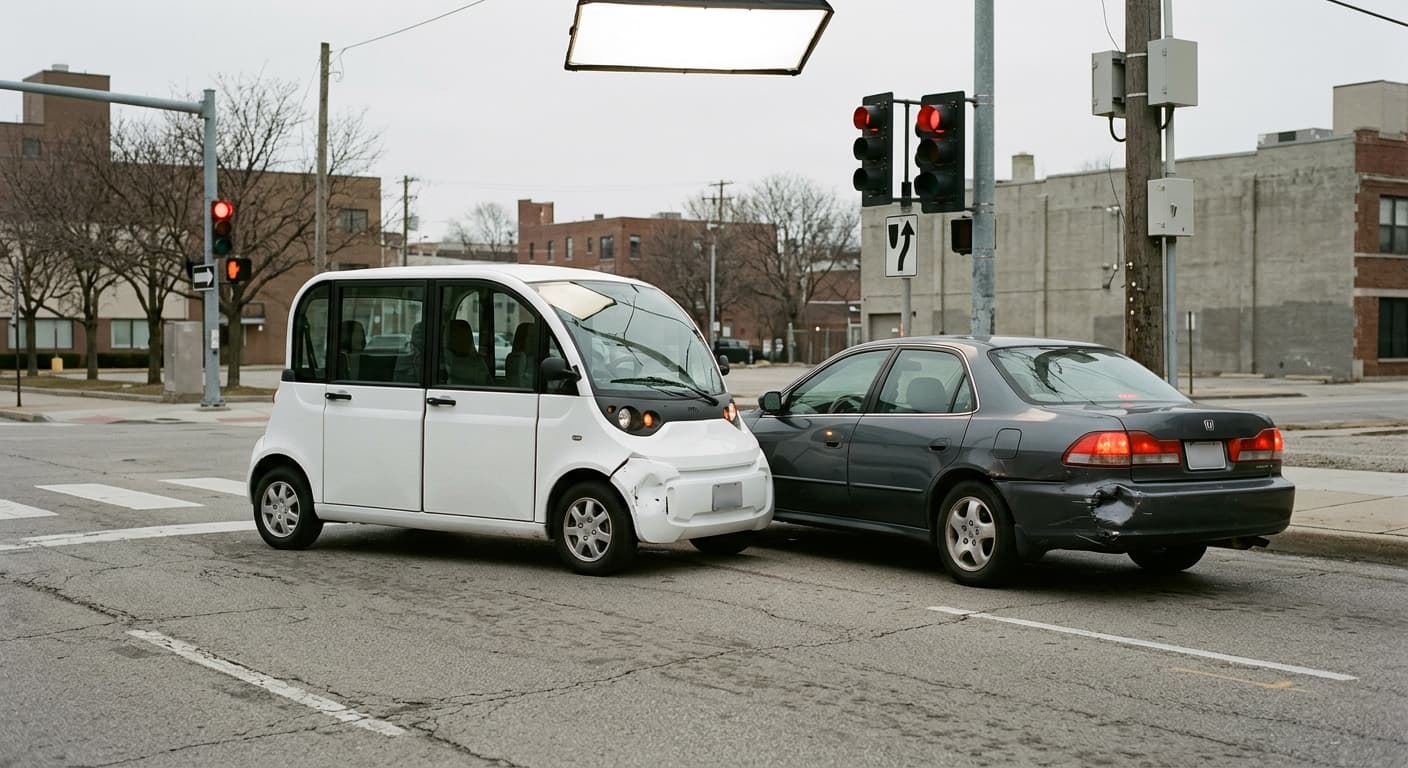
As of 30 September 2026, no car on sale in the UK is legally allowed to drive itself while the person behind the wheel stops paying attention. The self-driving rules in British law apply only to vehicles on a government list of self-driving vehicles, and that list has never had a vehicle on it. The Automated Vehicles Act 2024 became law in May 2024, but its core scheme for authorising self-driving cars has not been switched on, and the government says it will implement the Act in 2027.
What has changed in 2026 is at the edges. The permit scheme for driverless taxi- and bus-style passenger pilots has been in force since 15 May 2026, with applications open since 22 May 2026. The existing tampering and unsuitable-parts offences were extended to vehicle software on 1 January 2026. And from 7 January 2027, calling a car "self-driving" in UK marketing can be a criminal offence unless the vehicle is authorised.
Are self-driving cars legal in the UK?
Not in the sense most people mean. A vehicle is only treated as self-driving in Great Britain if the Secretary of State for Transport has put it on the list kept under section 1 of the Automated and Electric Vehicles Act 2018. The official list page, first published on 20 April 2022 and still the current version in September 2026, says: "At present, there are no self-driving vehicles listed for use in Great Britain."

So every car a consumer can buy in the UK today is, legally, a conventional car with a driver. Features that steer, brake, change lanes or hold speed are driver assistance. The person in the driving seat remains the driver, responsible for speed, standard of driving and phone use.
Two things sit outside that picture. First, companies can test automated vehicles on public roads with a safety driver under the Department for Transport's trialling code of practice, last updated on 24 June 2026. Second, since May 2026 there has been a separate pilot route for driverless passenger services, covered below. Neither lets a private owner switch off and let their own car drive.
The two UK laws on self-driving cars: the 2018 Act and the Automated Vehicles Act 2024
The UK has two statutes on self-driving vehicles, and they do different jobs.
| Law | What it does | Status as of 30 September 2026 |
|---|---|---|
| Automated and Electric Vehicles Act 2018, Part 1 | Creates the list of self-driving vehicles (s.1) and makes the insurer liable for accidents caused by a listed vehicle driving itself (s.2 to s.6) | In force since 21 April 2021; no vehicle has been listed |
| Automated Vehicles Act 2024, Part 1 (authorisation, operator licensing, safety principles) | The full regulatory scheme: authorising vehicles, licensing operators of vehicles with no user-in-charge | Not in force |
| Automated Vehicles Act 2024, s.47 and related sections (Part 2) | User-in-charge is not liable for how the vehicle drives | Not in force |
| Automated Vehicles Act 2024, ss.55 and 56 | Tampering and unsuitable-parts offences extended to software | In force since 1 January 2026 (SI 2025/1339) |
| Automated Vehicles Act 2024, Part 4 (ss.78 to 81) | Restricted marketing terms and misleading-communication offences | In force from 7 January 2027 (SI 2026/731) |
| Automated Vehicles Act 2024, Part 5 | Permits for automated passenger services | In force since 15 May 2026, except s.84 and s.89(8)(b) and (10) (SI 2026/437) |
Automated and Electric Vehicles Act 2018: the list and insurance
Section 1 requires the Secretary of State to keep and publish a list of motor vehicles that are, in the Secretary of State's opinion, "designed or adapted to be capable, in at least some circumstances or situations, of safely driving themselves" and that may lawfully be used that way on roads in Great Britain. In the 2018 Act, an "automated vehicle" means a vehicle on that list, so every other part of the Act depends on a listing.
Section 2 is the insurance rule. Where an accident is caused by a listed vehicle while it is driving itself on a road in Great Britain and the vehicle is insured, "the insurer is liable for that damage." The injured person claims against the insurer directly, instead of having to prove which person, or which piece of software, was at fault. The insurer can then recover from anyone else who was liable, such as a manufacturer (section 5).
Section 3 keeps ordinary contributory negligence: if the injured person partly caused the accident, their award is reduced as in any other road claim. It also says the insurer is not liable to the person in charge where the accident was wholly due to that person's negligence in letting the vehicle begin driving itself when it was not appropriate to do so.
Section 4 lets a policy exclude or limit cover for the insured person where the accident was a direct result of software alterations prohibited by the policy, or of a failure to install safety-critical software updates that the insured person knew, or ought reasonably to have known, were safety-critical. Victims outside the policy are still paid, and the insurer can then recover the money from the insured person to the extent the policy allows.
Because no vehicle is listed, none of these sections has yet been applied to a real accident. When a driver-assistance car crashes today, fault is decided under the ordinary law of negligence and product liability. The equivalent US questions are covered in who is liable in a self-driving car accident.
Automated Vehicles Act 2024: passed, mostly not yet in force
The Automated Vehicles Act 2024 was enacted on 20 May 2024. Section 99 says its provisions "come into force on a day appointed by regulations made by the Secretary of State," and allows different days for different purposes. Three commencement regulations have been made so far:
- Commencement No. 1 (SI 2025/1339), made 15 December 2025: brought sections 55 and 56 into force on 1 January 2026, and sections 78, 88 and 89 only for the purpose of making regulations.
- Commencement No. 2 (SI 2026/437), made 20 April 2026: brought Part 5 (permits for automated passenger services) into force on 15 May 2026, except section 84 (civil sanctions) and section 89(8)(b) and (10). It also brought section 93 into force.
- Commencement No. 3 (SI 2026/731), made 1 July 2026: brings Part 4 (marketing restrictions) and Schedule 5 into force on 7 January 2027.
No fourth commencement order appears on legislation.gov.uk as of 30 September 2026. Part 1 of the Act, which contains the self-driving test, the statement of safety principles, authorisation of vehicles and licensing of operators, is still marked as not in force.
What the 2024 Act will do once it is commenced
The Act's central test is in section 1: a vehicle "satisfies the self-driving test" if it is designed to travel autonomously by means of a feature and is capable of doing so "safely and legally." A vehicle travels autonomously when it is controlled by equipment rather than an individual and nobody is monitoring it "with a view to immediate intervention in the driving of the vehicle."
Once the Act is commenced, a vehicle that passes the test can be authorised for automated use. For features that need a person in the driving seat, that person becomes a "user-in-charge." Section 47 says an individual "does not commit an offence arising from the way in which a vehicle is driven" while they are the user-in-charge. The immunity covers how the car drives, such as speeding or running a red light; section 47(4) says it does not cover the condition or qualifications of the driver.
Section 47 is not in force yet. Today, a person in the driving seat of any car remains fully answerable for its driving.
Vehicles authorised for use with no user-in-charge at all would need a licensed operator under the Act's operator licensing scheme, which is also not yet in force.
When will the Automated Vehicles Act come into force?
The government has been consistent about the year but not the month. The Automated Vehicles Act implementation programme page says the programme is responsible for the work "to implement the Automated Vehicles Act 2024 in 2027." DfT's pilot scheme guidance for applicants, published 31 March 2026, says "the remaining provisions of the AV Act are due to come into force in late 2027."
There is also a legal sequence to follow. Section 2 requires a statement of safety principles to be consulted on, laid before Parliament and approved by both Houses, and section 2(10) says the power to authorise vehicles "may not be exercised until a statement has effect." DfT's consultation on the draft statement ran until 9 September 2026 and proposed that authorised vehicles achieve a level of safety "equivalent to careful and competent human drivers." The government had not published its response as of 30 September 2026, so authorisation cannot happen yet.
Dates could still move, and nothing in the Act fixes a deadline for commencement.
Driverless taxis and buses: the pilot permit scheme
Part 5 of the 2024 Act lets the government grant a permit for an "automated passenger service," meaning carrying passengers in a vehicle designed to travel autonomously or being trialled with that aim. While a permit holder runs a service within its permit, section 83 disapplies the ordinary taxi, private hire and bus licensing laws for that vehicle.
The Automated Vehicles (Permits for Automated Passenger Services) Regulations 2026 (SI 2026/439) took effect on 15 May 2026. They extend to England and Wales and Scotland. They apply to bus-like services across Great Britain and to other automated passenger services in England.
A permit may last up to five years under the regulations. DfT's guidance, however, says that before full implementation of the Act the permit period is likely to be "up to a maximum between 12 to 18 months." The Secretary of State can vary, suspend or withdraw a permit, including for serious or repeated traffic infractions by the vehicles.
DfT's guidance says "DVSA will grant permits on behalf of the Secretary of State for Transport," and says taxi- or private-hire-like services also need consent from the local licensing authority, and bus-like services from any franchising body such as Transport for London. A pilot vehicle is also expected to get a vehicle special order from the VCA and to be listed under the 2018 Act.
DfT announced that applications opened on 22 May 2026. In that announcement, Uber said it wanted to offer autonomous rides in London "this year," Wayve said it expected to bring its "supervised passenger service to market here this year," and Waymo said it hoped to "soon become part of London's transport network." Those are company statements. As of 30 September 2026, GOV.UK has not announced any issued permit, and the list of self-driving vehicles still shows no vehicle, so no driverless passenger pilot has been publicly confirmed.
Pilots with a safety driver on board are different. The pilot guidance says they are "trialling," which "falls under the code of practice" and requires "a safety driver who is ready, able and willing to resume control of the vehicle."
Highway Code rules for self-driving cars
In July 2022 the Highway Code gained a new section on self-driving vehicles. It defines them as vehicles "listed as automated vehicles by the Secretary of State for Transport under the Automated and Electric Vehicles Act 2018." For those vehicles only, it says: "While the vehicle is driving itself, you do not need to monitor it," and while the vehicle drives itself in a valid situation "you are not responsible for how it drives" and may view content through the vehicle's built-in infotainment screen.

Even then, you must still be fit to drive, the car must be taxed, insured and roadworthy, and you must not use a hand-held phone. The Code also says: "You MUST always be able and ready to take control, and do it when the vehicle prompts you."
Because the list is empty, these rules do not apply to any car on the road today. The same section says that if you are driving a vehicle using only its assisted driving features, Rule 150 applies instead.
Is Tesla Full Self-Driving legal in the UK?
Tesla's systems, including Autopilot and Full Self-Driving (Supervised), are driver-assistance systems, not self-driving vehicles under UK law. No Tesla model is on the list of self-driving vehicles, and no GB approval of FSD (Supervised) has been published as of 30 September 2026.
Rule 150 of the Highway Code sets the standard for using any assistance system: "You MUST exercise proper control of your vehicle at all times," and "As the driver, you are still responsible for the vehicle if you use a driver assistance system (like motorway assist)." Watching a screen, using a hand-held phone or taking your hands and attention off the task while an assistance system is active leaves you exposed to the same offences as any other driver.
The approval rules are also changing. DfT's consultation "Updating GB type approval for passenger and goods vehicles," which closed on 29 September 2026, proposes requiring compliance with UN Regulation 171 (driver control assistance systems, or DCAS) for all passenger and goods vehicles fitted with DCAS. DfT describes DCAS as systems that "provide greater support in the driving tasks but do not completely take over control from the driver." It aims to publish a summary of responses within 3 months and then lay a statutory instrument.
That would create a GB route for approving more advanced Level 2 systems. It would not give drivers permission to stop supervising.
For where FSD (Supervised) has been approved or recognised elsewhere, see where Tesla FSD is legal. For litigation over Tesla's systems in the US, see Tesla Autopilot and FSD lawsuits.
What about Level 3 systems like ALKS?
Automated Lane Keeping Systems (ALKS), approved under UN Regulation 157, can take over steering and speed on motorway-type roads. According to DfT, SI 2025/661 added a requirement to GB type approval for passenger cars fitted with ALKS to comply with Regulation 157. The August 2026 consultation proposes updating that requirement to the 01 series and extending it to all passenger and goods vehicles.
The Vehicle Certification Agency says vehicles approved to Regulation 157 with the United Kingdom in their operational design domain "should meet the threshold of self-driving and therefore be added to the Secretary of State's List," with decisions made "on a case by case basis." The VCA's review also requires details of how to access data from the vehicle's Data Storage System for Automated Driving (DSSAD).
No ALKS vehicle has been listed so far, so a Level 3 approval elsewhere does not make a car self-driving in Britain.
Marketing ban: "self-driving" and "driverless" from 7 January 2027
Part 4 of the 2024 Act comes into force on 7 January 2027. The Automated Vehicles (Marketing Restrictions) Regulations 2026 (SI 2026/733) list the restricted terms: automated, automated driving, autonomous, autonomous driving, drive autonomously, drive itself, driverless and self-driving, including other grammatical forms. "Automated" and "autonomous" are restricted only when used to describe "a vehicle as a whole, or the overall driving functionality or capability of a vehicle."
Under section 78, a business commits an offence if it uses a restricted term in promoting or supplying a road vehicle aimed at end-users, where it is reasonable to expect the term to reach end-users in Great Britain, and the vehicle is not an authorised automated vehicle. Until the rest of the Act is commenced, section 81(5) treats a vehicle listed under the 2018 Act as authorised for this purpose. No vehicle is listed.
Section 79 adds a wider offence: a business communication that "would be likely to confuse" end-users in Great Britain about whether a vehicle that is not authorised can travel "autonomously, safely and legally."
Each offence has defences. Under section 78, these include that a term was used in a way that was not intended to convey, and could not reasonably be understood as conveying, any meaning to do with automation, or that its use was aimed only at end-users outside Great Britain with all reasonable precautions taken. Section 79's defences include that the business took all reasonable precautions and exercised all due diligence to prevent the confusion.
Both offences carry up to 2 years in prison or a fine on indictment, and directors can also be liable under section 80. The offences apply to businesses acting in the course of business, not to drivers. Whether any particular product name crosses the line would be a question for enforcement and the courts.
Software tampering: in force since January 2026
Sections 55 and 56 of the 2024 Act took effect on 1 January 2026. According to the explanatory note to SI 2025/1339, they amend the Road Traffic Act 1988 "to include tampering with any equipment of the vehicle, including software, as part of the tampering offence, and to include software within the offence concerning the fitting of unsuitable vehicle parts." Unauthorised changes to a car's driving software are therefore covered by the same offences as physical tampering, whether or not the car has any automated features.
Does the law apply in Scotland, Wales and Northern Ireland?
Mostly the rules cover Great Britain, not Northern Ireland. Part by part:
- 2018 Act. The insurance and listing rules (Part 1) extend to England, Wales and Scotland, and the list is defined by use "in Great Britain."
- 2024 Act, authorisation and user-in-charge. Part 1 (authorisation and operator licensing) and section 47 (user-in-charge immunity) extend to England, Wales and Scotland.
- 2024 Act, marketing. The offences in sections 78 to 80 extend to England, Wales and Scotland, with only an enforcement provision (section 81(4) and paragraph 2 of Schedule 5) extending to Northern Ireland. The offences turn on communications reaching end-users in Great Britain and can be committed anywhere in the world (section 81(3)). The marketing regulations extend to England and Wales and Scotland.
- Passenger permits. The permit regulations cover services in England, Wales and Scotland, with non-bus-like services limited to England.
Northern Ireland is largely outside these driving provisions. DfT also notes that EU vehicle regulations apply to vehicles made available in Northern Ireland under the Windsor Framework, which is a different approval route from the GB scheme.
Do self-driving cars record you in the UK?
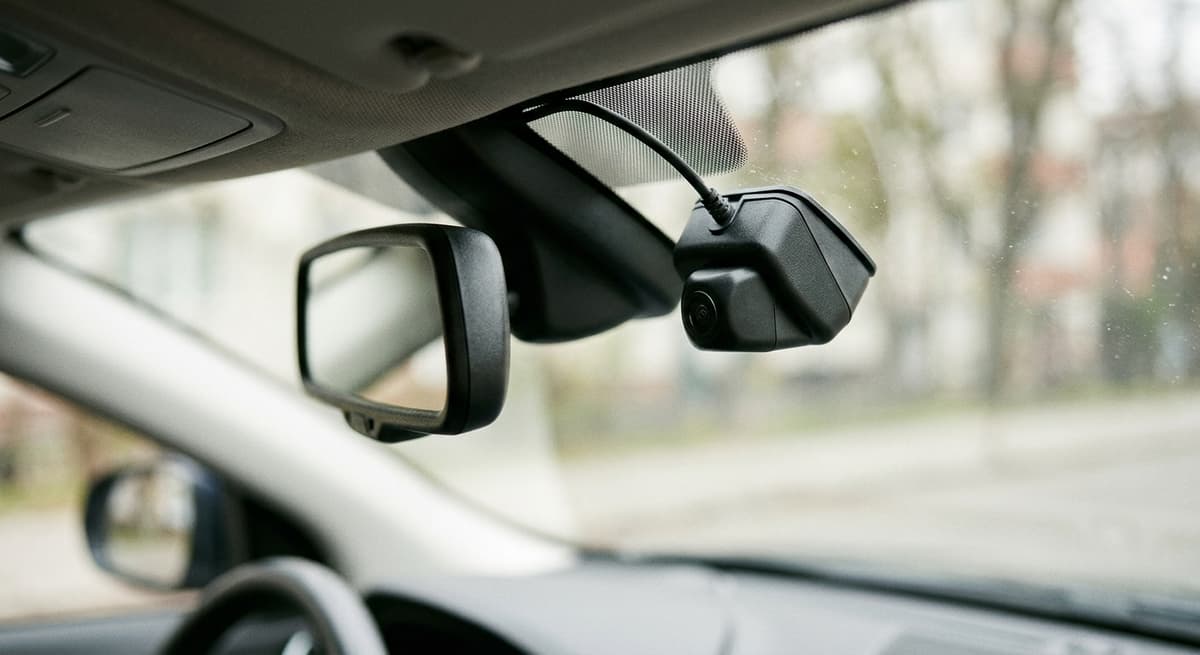
Automated driving systems log data. For ALKS listing, the VCA requires manufacturers to explain how to access and download data from the DSSAD and how long it is kept in the UK. Ordinary cars with driver assistance often have cameras too. Footage from vehicle and dashboard cameras can be personal data under UK data protection law; the rules on recording people with in-car cameras are covered in UK recording laws.
What happens next
These are the known dates and pending decisions as of 30 September 2026. None of them has a guaranteed outcome.
| Date | What | Source |
|---|---|---|
| By around the end of December 2026 | DfT summary of responses on GB type approval, including UN R171 for DCAS | DfT consultation (closed 29 September 2026) |
| Not yet announced | Government response to the statement of safety principles consultation, then approval by both Houses of Parliament | DfT consultation (closed 9 September 2026) |
| 7 January 2027 | Marketing restrictions (Part 4) take effect | SI 2026/731 and SI 2026/733 |
| 2027 ("late 2027" in DfT pilot guidance) | Remaining provisions of the 2024 Act, including authorisation and user-in-charge rules | DfT implementation programme and pilot guidance |
| Not yet announced | First automated passenger services permits and first listed vehicle | DVSA / DfT |
For other countries, see the world self-driving car laws hub, including Germany's self-driving car laws, which sets out a federal legal framework for Level 4 driverless operation. For the US position, see US self-driving car laws.
This page provides general legal information about UK self-driving car law as of 30 September 2026. It is not legal advice. Commencement dates, permits and approvals in this area change often. For advice about a specific accident, vehicle or marketing question, consult a solicitor or advocate qualified in the relevant part of the UK.
Frequently Asked Questions
Are self-driving cars legal in the UK?
As of 30 September 2026, no vehicle has been listed as self-driving under the Automated and Electric Vehicles Act 2018, so no car on sale in the UK may legally be left to drive itself while the driver stops paying attention. Cars with driver-assistance features are legal to drive, but the driver remains responsible at all times. Driverless passenger pilots can be permitted under a scheme in force since 15 May 2026, but no permit has been announced on GOV.UK.
Is the Automated Vehicles Act 2024 in force?
Only in part. Sections 55 and 56, which extend the existing tampering and unsuitable-parts offences to vehicle software, took effect on 1 January 2026, and the automated passenger services permit scheme (Part 5) on 15 May 2026. The marketing restrictions take effect on 7 January 2027. The authorisation scheme, the user-in-charge immunity in section 47 and operator licensing have not been commenced. The government says it will implement the Act in 2027.
Is Tesla FSD legal in the UK?
Tesla Full Self-Driving (Supervised) is a driver-assistance system, not a self-driving vehicle under UK law, and no GB approval of it has been published as of 30 September 2026. Under Highway Code Rule 150, a driver using any assistance system is still responsible for the vehicle and must keep proper control at all times.
Can I watch a film or use my phone while my car drives itself in the UK?
No, not in any car available today. The Highway Code only allows a driver to stop monitoring and view content on the built-in infotainment screen in a vehicle listed as self-driving under the 2018 Act, and none is listed. Even in a listed vehicle, using a hand-held phone would remain illegal.
Who pays if a self-driving car crashes in the UK?
For a listed self-driving vehicle, section 2 of the Automated and Electric Vehicles Act 2018 makes the insurer liable to the injured person when the vehicle caused the accident while driving itself. The insurer can then recover from anyone else responsible, such as a manufacturer. No vehicle is listed yet, so a crash involving today's driver-assistance cars is handled under ordinary negligence and product liability rules.
Can a car company call its car self-driving in the UK?
From 7 January 2027, a business can commit an offence under section 78 of the Automated Vehicles Act 2024 by using restricted terms such as self-driving, driverless or drive itself to promote a vehicle to end-users in Great Britain unless the vehicle is authorised, subject to statutory defences. The maximum penalty on indictment is 2 years in prison or a fine.
When will robotaxis start in London?
No date is fixed. Applications for driverless passenger pilot permits opened on 22 May 2026, and Uber, Wayve and Waymo have each said they want to operate in London. As of 30 September 2026, GOV.UK had not announced any issued permit. Services would also need local consent from Transport for London.
Do the UK self-driving laws apply in Northern Ireland?
Mostly not. The 2018 Act's listing and insurance rules and the 2024 Act's authorisation and user-in-charge provisions extend to England, Wales and Scotland. According to DfT, EU vehicle regulations apply to vehicles made available in Northern Ireland under the Windsor Framework.
Updates
Independently fact-checked against the cited primary sources
Sources and References
- GOV.UK: Self-driving vehicles listed for use in Great Britain (no vehicles listed; new Highway Code section)(www.gov.uk).gov
- Code of Practice: automated vehicle trialling (updated 24 June 2026)(www.gov.uk).gov
- Automated and Electric Vehicles Act 2018, Part 1: list of automated vehicles (s.1), insurer liability (s.2), contributory negligence (s.3), software alterations and updates (s.4), insurer recovery (s.5)(www.legislation.gov.uk).gov
- Automated Vehicles Act 2024, contents (enacted 20 May 2024)(www.legislation.gov.uk).gov
- Automated Vehicles Act 2024, section 99: commencement by regulations(www.legislation.gov.uk).gov
- Automated Vehicles Act 2024 (Commencement No. 1) Regulations 2025, SI 2025/1339: ss.55 and 56 in force 1 January 2026(www.legislation.gov.uk).gov
- Automated Vehicles Act 2024 (Commencement No. 2) Regulations 2026, SI 2026/437: Part 5 in force 15 May 2026(www.legislation.gov.uk).gov
- Automated Vehicles Act 2024 (Commencement No. 3) Regulations 2026, SI 2026/731: Part 4 in force 7 January 2027(www.legislation.gov.uk).gov
- Automated Vehicles Act 2024, Part 1: self-driving test, statement of safety principles, authorisation (not in force)(www.legislation.gov.uk).gov
- Automated Vehicles Act 2024, section 47: user-in-charge not liable for manner of driving (not in force)(www.legislation.gov.uk).gov
- DfT: Automated Vehicles Act implementation programme (implement the Act in 2027)(www.gov.uk).gov
- DfT: Self-driving vehicle pilot scheme, information for applicants (31 March 2026)(www.gov.uk).gov
- DfT consultation: Automated vehicles statement of safety principles (closed 9 September 2026)(www.gov.uk).gov
- Automated Vehicles Act 2024, Part 5: permits for automated passenger services(www.legislation.gov.uk).gov
- Automated Vehicles (Permits for Automated Passenger Services) Regulations 2026, SI 2026/439(www.legislation.gov.uk).gov
- DfT news, 22 May 2026: applications open for self-driving passenger pilot scheme (with company statements)(www.gov.uk).gov
- The Highway Code: Introduction, self-driving vehicles section(www.gov.uk).gov
- The Highway Code: Rules 149 and 150 (driver assistance systems)(www.gov.uk).gov
- DfT consultation: Updating GB type approval for passenger and goods vehicles (UN R157 and R171; closed 29 September 2026)(www.gov.uk).gov
- Vehicle Certification Agency: Automated Lane Keeping Systems (ALKS) and listing of self-driving vehicles (updated 22 May 2026)(www.vehicle-certification-agency.gov.uk).gov
- Automated Vehicles Act 2024, Part 4: marketing restrictions (ss.78 to 81)(www.legislation.gov.uk).gov
- Automated Vehicles (Marketing Restrictions) Regulations 2026, SI 2026/733: restricted terms(www.legislation.gov.uk).gov
- Automated Vehicles Act 2024, section 98: extent(www.legislation.gov.uk).gov
- The Highway Code: change history (self-driving section added July 2022)(www.gov.uk).gov