Self-Driving Car Laws in Germany: Level 3, Level 4 and FSD (2026)
Independently fact-checked against primary sources (last audited September 30, 2026). · 31 primary sources cited on this page. How we verify our legal content
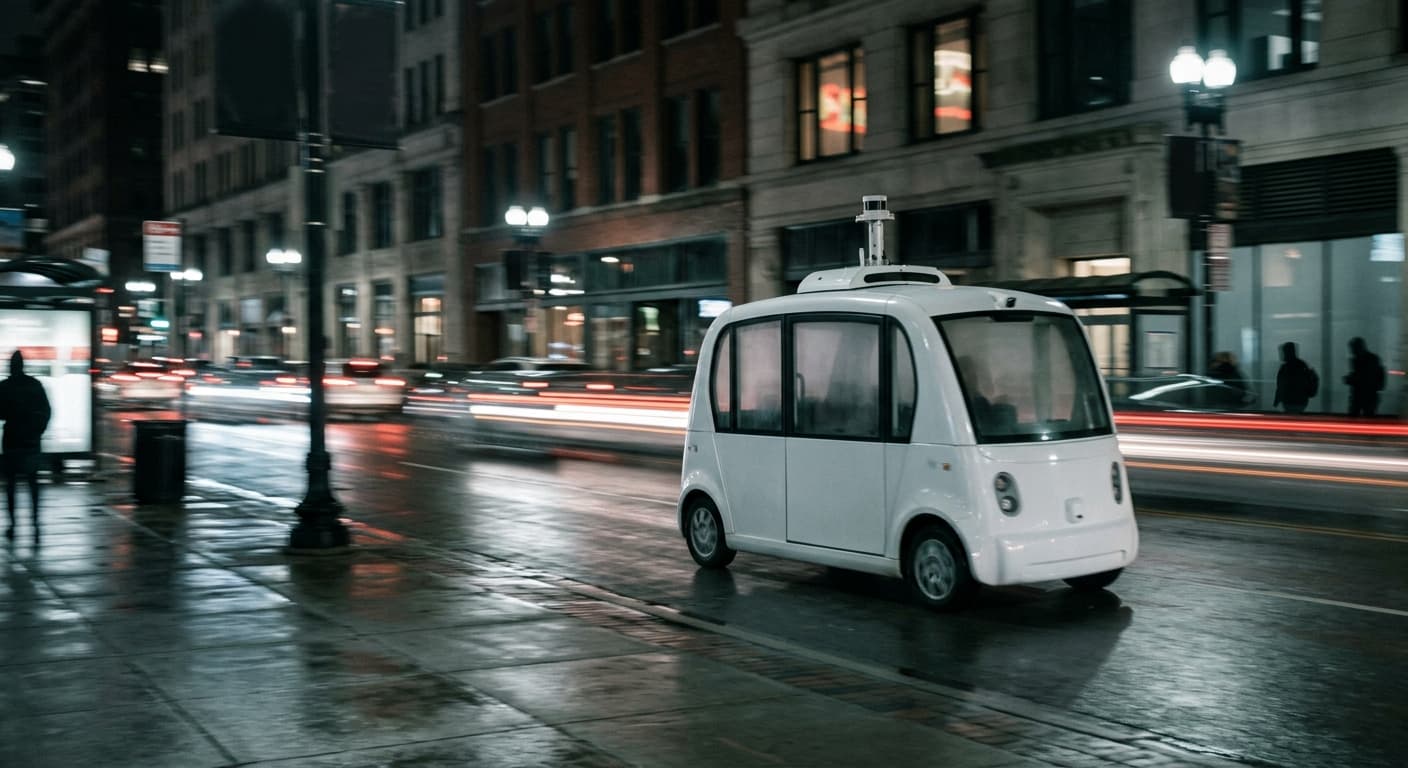
Yes, self-driving cars are legal in Germany, but only within the limits the Road Traffic Act (Straßenverkehrsgesetz, StVG) sets. A car with an approved automated driving function (the kind usually called SAE Level 3) may drive itself when used as intended, and the person who switched it on still counts as the driver.
A driverless vehicle (Level 4) may run only with an operating permit from the Federal Motor Transport Authority (Kraftfahrt-Bundesamt, KBA) or an EU type-approval, inside an operating area a public authority has approved, and with a Technische Aufsicht (technical supervisor) who can deactivate it and approve its driving manoeuvres.
Tesla FSD (Supervised) falls under neither regime. It is a supervised driver-assistance system, and as of September 2026 Germany has not recognised the Dutch approval that lets it run in the Netherlands.
Scope and date: This page covers German federal road-traffic law on automated and autonomous vehicles, current as of 30 September 2026. Approval and deployment status can change quickly, so each status statement below carries its date.
Is autonomous driving legal in Germany?
Yes, within the limits the StVG sets. Germany was one of the first countries to write automated driving into its road-traffic statute. The StVG contains two sets of rules, and a separate regulation covers remote driving:
- Automated driving functions (§§ 1a to 1c StVG): the car drives itself for stretches, while a human driver stays on board and must take over on request. This is roughly what the industry calls SAE Level 3.
- Autonomous driving functions in approved operating areas (§§ 1d to 1l StVG, plus the AFGBV regulation): the vehicle drives with no driver at all, inside a defined, approved area. A Technische Aufsicht does not have to watch every trip permanently but must be able to deactivate the vehicle and approve manoeuvres. The KBA calls this Level 4.
- Remote-controlled vehicles (StVFernLV): a person outside the vehicle actually steers it. This is a separate, time-limited regime in force since 1 December 2025.
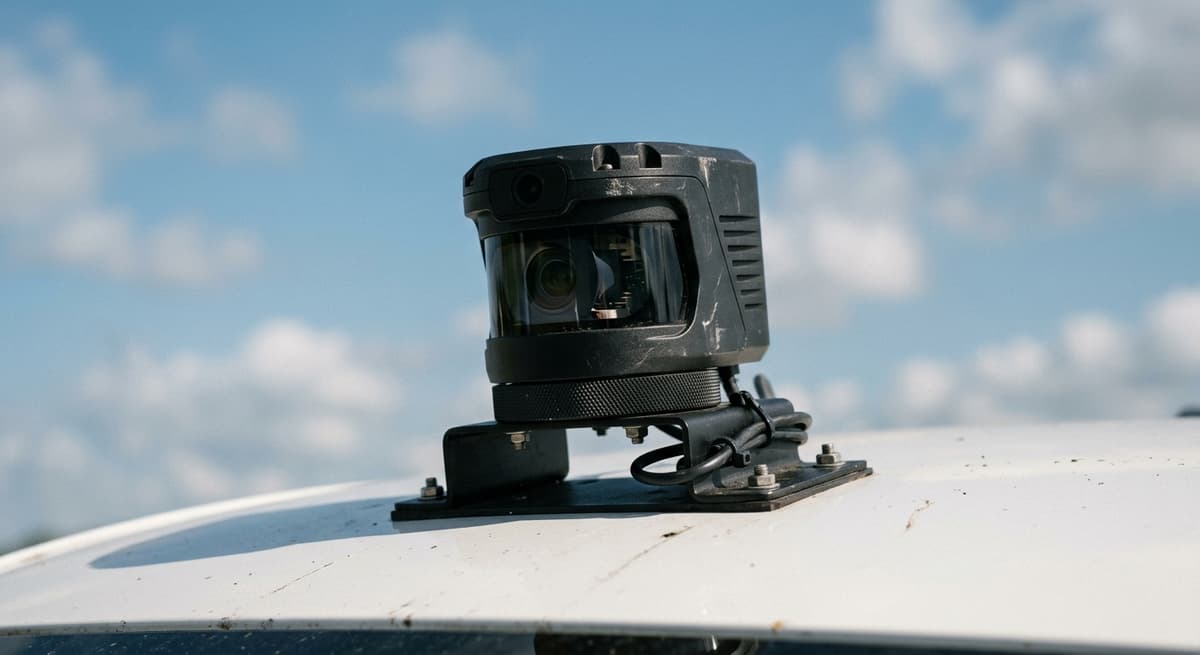
Driver-assistance systems (Level 2 and below), such as adaptive cruise control, lane-centring or Tesla's FSD (Supervised), are not "automated driving functions" in this sense. The ordinary rules for drivers apply to them in full.
| Type | Legal basis | Who is responsible while it drives | Approval needed |
|---|---|---|---|
| Driver assistance (Level 2, e.g. FSD Supervised) | General traffic rules (StVO) and vehicle approval rules | The human driver, who must supervise at all times | Vehicle type-approval (EU or national) |
| Automated driving function (Level 3) | §§ 1a, 1b StVG | The person who activated it is the driver, may turn away, must take over on request | Function described in international rules or type-approved (§ 1a(3)) |
| Autonomous driving function (Level 4) | §§ 1d to 1l StVG, AFGBV | No driver; keeper (Halter) and Technische Aufsicht carry duties | KBA Betriebserlaubnis or EU type-approval, plus approval of the operating area |
| Testing Level 3 or Level 4 | § 1i StVG, § 16 AFGBV | Test driver (Level 3) or on-site Technische Aufsicht (Level 4) | KBA Erprobungsgenehmigung (test permit) |
| Remote driving | StVFernLV | The remote driver is the Fahrzeugführer | KBA operating permit plus operating-area approval |
What changed in 2026: "automatisiert" replaces "hoch- oder vollautomatisiert"
The Fifth Act amending the Road Traffic Act (Fünftes Gesetz zur Änderung des Straßenverkehrsgesetzes und anderer straßenverkehrsrechtlicher Vorschriften) of 12 May 2026 was published in the Federal Law Gazette as BGBl. 2026 I Nr. 142 on 18 May 2026. Its main automated-driving changes took effect on 1 July 2026:
- In §§ 1a and 1b StVG, and in the liability caps in § 12, "hoch- oder vollautomatisiert" (highly or fully automated) is replaced by "automatisiert" (automated). Many guides still use the old wording, but the legal content of the Level 3 rules did not otherwise change.
- § 1e now says a Level 4 vehicle may also operate on the basis of an EU type-approval under Implementing Regulation (EU) 2022/1426, or a comparable approval, instead of only a national KBA Betriebserlaubnis.
- The test-permit rules in § 1i StVG and § 16 AFGBV were reworded.
Article 9 of the Act sets the dates. The Act applies from 1 July 2026 and Article 5 (a change to the vehicle-registration regulation) from 1 November 2026. Articles 2, 4 and 7 (the digital driving licence) apply on a date the transport ministry will announce once the technology is ready. None of the later-dated articles changes the automated-driving rules.
Level 3 in Germany: what the driver may and must do
When can you let the car drive?
Under § 1a(1) StVG, operating a car by means of an automated driving function "ist zulässig, wenn die Funktion bestimmungsgemäß verwendet wird": it is permitted when the function is used as intended. "As intended" is tied to the manufacturer's system description, which § 1a(2) requires the manufacturer to issue as a binding declaration. In practice, the conditions the carmaker states (road type, speed, weather, lane) are the legal limits of your permission.
The system itself must meet six requirements in § 1a(2). It must be able to:
- steer the car, including longitudinal and lateral control;
- comply with traffic rules;
- be overridden or switched off by the driver at any time;
- recognise when manual control is needed;
- warn the driver with enough time in hand; and
- warn against use contrary to the system description.
Are you still the driver?
Yes. § 1a(4) StVG says the person who activates an automated driving function and uses it to control the vehicle is the Fahrzeugführer (driver), "auch wenn er ... das Fahrzeug nicht eigenhändig steuert", even when not steering personally. That single sentence is why the ordinary driver rules keep applying to you.
What does § 1b allow?
§ 1b(1) lets the driver turn away from the traffic and from controlling the vehicle ("vom Verkehrsgeschehen und der Fahrzeugsteuerung abwenden") while the automated function drives. The same sentence sets the limit: the driver must remain "wahrnehmungsbereit", ready to perceive, so that the takeover duty can be met at any time.
Under § 1b(2) the driver must take back control without undue delay ("unverzüglich"):
- when the automated system asks them to, or
- when they realise, or on obvious circumstances should realise, that the conditions for intended use are no longer met.
Can I use my phone in a Level 3 car?
Germany's phone rule is § 23(1a) of the Road Traffic Regulations (StVO), which limits how a driver may use a phone or other electronic device. The provision ends by stating that § 1b StVG "bleiben unberührt", meaning it is left untouched. Read together, the phone rule does not take away the § 1b permission to turn away from the traffic while an automated function is lawfully active.
That permission has two built-in limits:
- It exists only while the function is being used as intended. The moment the system requests a takeover, or conditions fall outside the system description, you are an ordinary driver again and the full phone rule applies.
- You must stay ready to perceive the takeover request at all times.
The statute does not list which activities are fine; the manufacturer's description of the function does much of that work.
§ 23(1a) also separately bars drivers from using head-worn visual displays such as video glasses. The rule does not say whether that ban gives way to § 1b while an automated function is active, so the safe course is to treat it as applying.
In an ordinary car or one using a Level 2 system (including Tesla FSD Supervised), § 23(1a) applies without any § 1b allowance. See our guide to phone use while driving in Germany.
Can I be drunk in a self-driving car in Germany?
Not in a Level 3 car. Because § 1a(4) makes you the driver, the drink-driving rules still reach you: the 0.5 per mille administrative offence for whoever "ein Kraftfahrzeug führt" (§ 24a StVG), and the criminal offence of driving a vehicle while unfit through drink (§ 316 of the Criminal Code, StGB). You must also be able to take over without delay under § 1b(2), which a person unfit to drive cannot do. The limits and penalties are covered in Germany's drink-driving limits.
Level 4 vehicles are designed differently: the statute describes them as vehicles that perform the driving task "ohne eine fahrzeugführende Person", without a person driving. They may run only with an operating permit or EU type-approval, in an approved operating area and with a Technische Aufsicht, however, and as of 30 September 2026 the KBA lists no granted Level 4 operating permit.
Level 3 cars you can buy: Mercedes DRIVE PILOT
The best-known Level 3 system in Germany is Mercedes-Benz DRIVE PILOT for the S-Class and EQS. According to TÜV Rheinland, which carried out the approval tests as technical service, the KBA extended the type-approval in December 2024 to allow automated driving up to 95 km/h on motorways, where the earlier version was limited to 60 km/h in heavy traffic and jams.
These are statements by the technical service and the manufacturer about a vehicle approval. What the law lets you do while the system is active comes from §§ 1a and 1b above.

A manufacturer's decision to offer, or stop offering, a Level 3 function on a new model is a product decision. It does not change what the StVG permits for cars that have an approved function.
Level 4 driverless vehicles: §§ 1d to 1l StVG and the AFGBV
What counts as an autonomous vehicle?
§ 1d(1) StVG defines a vehicle with an autonomous driving function as one that can perform the driving task on its own, without a person driving, in a "festgelegten Betriebsbereich" (defined operating area), and that has the technical equipment listed in § 1e(2). The operating area is "den örtlich und räumlich bestimmten öffentlichen Straßenraum", a specific, geographically defined stretch of public road (§ 1d(2)).
The four conditions for driverless operation
Under § 1e(1) StVG, operating a vehicle by means of an autonomous driving function is permitted when:
- the vehicle meets the technical requirements of § 1e(2);
- it has a KBA Betriebserlaubnis (operating permit) under § 1e(4), an EU type-approval under Implementing Regulation (EU) 2022/1426, or a comparable approval;
- it is used in an operating area approved by the competent federal or state (Land) authority, or on federal trunk roads by the federal motorway company; and
- it is registered for use on public roads.
The KBA grants the Betriebserlaubnis on the manufacturer's application (§ 1e(4) StVG; § 4 AFGBV). The keeper defines the operating area, which then needs approval by the competent authority (§ 7 AFGBV). The AFGBV (Autonome-Fahrzeuge-Genehmigungs-und-Betriebs-Verordnung) is the implementing regulation of 24 June 2022. It has been in force since 1 July 2022 and was last amended by Article 8 of BGBl. 2026 I Nr. 142.
What the vehicle must be able to do
§ 1e(2) lists ten capabilities. Among them, the vehicle must comply with traffic rules on its own. It must also have an accident-avoidance system that gives the protection of human life the highest priority and does not weigh one human life against another by personal characteristics.
The vehicle must put itself into a "risikominimaler Zustand" (minimal-risk condition: a stop at the safest possible place with hazard lights on, § 1d(4)) when it reaches a system limit, suffers a relevant fault, reaches the edge of its operating area, loses its radio link, or is deactivated.
The Technische Aufsicht
The Technische Aufsicht is the natural person who can deactivate the vehicle during operation and approve driving manoeuvres for it (§ 1d(3)). Under § 1f(2) StVG, they must assess and release alternative manoeuvres the vehicle proposes, deactivate it when prompted, evaluate its status signals, and contact the occupants without delay when it stops in a minimal-risk condition.
The AFGBV sets their qualifications (§ 14): a degree or state technician qualification in mechanical, vehicle, electrical or aerospace engineering, manufacturer training on the vehicle, a driving licence of the matching class, and reliability. Under § 14 AFGBV, a person with more than three penalty points in the driving-licence register (Fahrerlaubnisregister) is not considered reliable.
Duties of the keeper and the manufacturer
The keeper must keep the vehicle roadworthy, ensure regular maintenance of the systems needed for autonomous driving, and make sure the Technische Aufsicht's tasks are carried out (§ 1f(1)).
The manufacturer must prove protection against cyberattacks, carry out a risk assessment, show a sufficiently secure radio connection, issue a system description and operating manual, offer training, and report manipulation it detects to the KBA and the competent authority (§ 1f(3)).
Has any driverless vehicle got a KBA operating permit?
As of 30 September 2026, the KBA's page on the national Betriebserlaubnis for autonomous vehicles does not list any permit granted. The page explains that § 4 AFGBV enables the KBA to issue Level 4 operating permits and describes the application process. The KBA does publish a list of test permits, covered next, so deployment claims in company or press material should be read against that distinction.
Test permits (Erprobungsgenehmigung) under § 1i StVG
Vehicles used to test or develop automated or autonomous functions may run on public roads only with a KBA test permit (Erprobungsgenehmigung), vehicle registration, use exclusively for testing, and permanent supervision (§ 1i(1) StVG). For Level 3 functions, a reliable driver supervises; for Level 4 functions, a Technische Aufsicht who is present on site does.
The KBA grants the permit on the keeper's application and can attach conditions at any time (§ 1i(2)). Under § 16(2) AFGBV, a test permit must be time-limited, normally to no more than four years, with two-year extensions possible. The KBA handles test permits for automated and autonomous functions from Level 3 upward; testing of Level 2 driver-assistance systems goes to the competent Land authority.
The KBA's published list of test permits (edition dated 18 August 2026) runs to more than 250 entries across Level 3 and Level 4. Holders include carmakers and suppliers (among them Volkswagen AG, Mercedes-Benz AG, BMW, Audi AG, Bosch and ZF), public-transport operators (DB Regio Bus Mitte, Stadtwerke München), shuttle maker HOLON, Momenta Europe and university research teams.
Entry EPG00280 is a Level 4 test permit to Einride Technologies Germany GmbH, issued 14 August 2026 and valid until 28 February 2027, with a local restriction of the test area. Lidl has described the Einride truck project near Kassel as operating "unter einer offiziellen Genehmigung des Kraftfahrt-Bundesamtes". The release does not name the permit type, and the only Einride entry the KBA publishes is this test permit, not a Betriebserlaubnis.
Remote driving: the Straßenverkehr-Fernlenk-Verordnung (StVFernLV)
Teleoperation, where a person outside the vehicle actually drives it through a control station, has its own regulation: the StVFernLV. It has been in force since 1 December 2025 (§ 20) and expires at the end of 30 November 2030 (§ 19). It covers vehicles of classes M and N and leaves §§ 1a to 1k StVG untouched (§ 1).
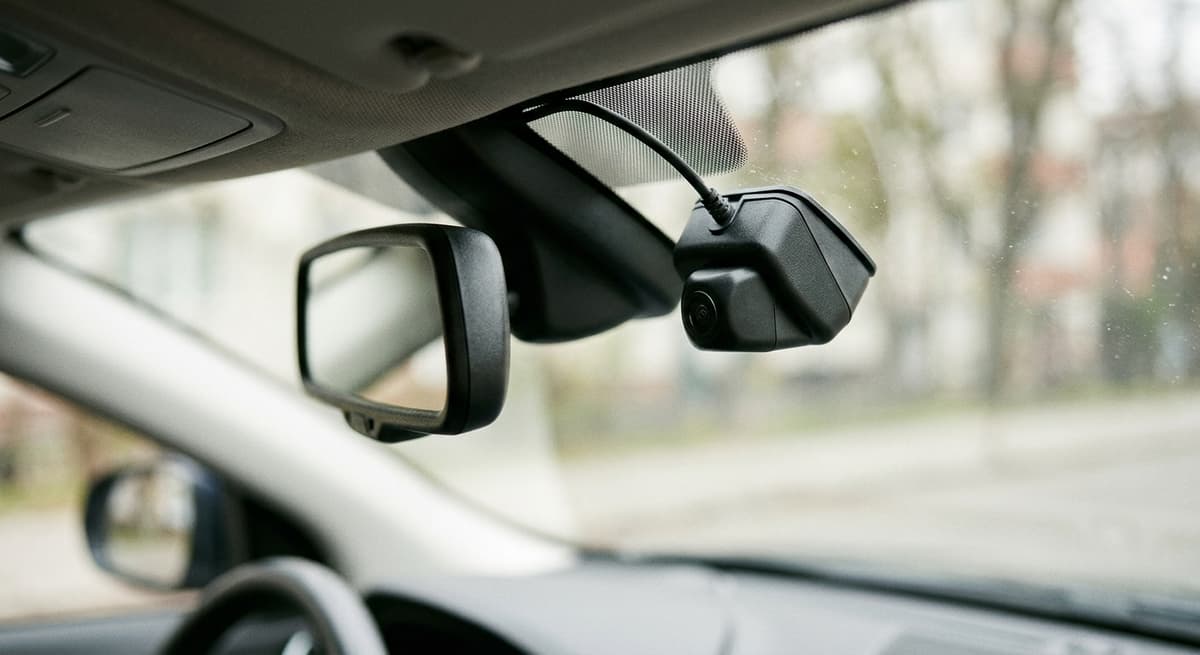
Under § 3, a remote-controlled vehicle may operate on public roads only if four conditions are met: it has a KBA operating permit (§ 4), it runs inside an operating area approved by the competent authority (§ 7), it has a qualified remote driver, and both the control equipment and the remote driver are physically in Germany. The remote driver is the Fahrzeugführer (driver) while steering or required to steer (§ 3(2)).
Remote drivers must be employed by the keeper, be at least 21, have held the matching EU, EEA or Swiss licence continuously for at least three years, and be trained and fit (§ 10). While remote-driving, they may not drive another vehicle at the same time and must observe driving and rest-time rules (§ 12(2)). An operating-area approval can require a safety driver for a period, or rule out carrying passengers or goods (§ 7(3)).
Who pays after a crash with a self-driving car in Germany?
The keeper's strict liability (§ 7 StVG)
German road-accident liability starts with the Halter (keeper). Under § 7(1) StVG, if a person is killed or injured, or property is damaged, "bei dem Betrieb eines Kraftfahrzeugs" (in the operation of a motor vehicle), the keeper must compensate the injured party. Fault is not required; liability is excluded only for force majeure ("höhere Gewalt", § 7(2)).
This applies equally to automated and autonomous vehicles. The keeper must also carry compulsory liability insurance covering the keeper, owner and driver (§ 1 Pflichtversicherungsgesetz).
Higher liability caps for automated and autonomous functions (§ 12 StVG)
Keeper liability without fault is capped. The caps double where the damage is caused through use of an automated function under § 1a or operation of an autonomous function under § 1e:
| Damage | Standard cap | Automated (§ 1a) or autonomous (§ 1e) function |
|---|---|---|
| Death or personal injury, per event | 5 million euros | 10 million euros |
| Property damage, per event | 1 million euros | 2 million euros |
For paid, commercial passenger transport, the personal-injury cap rises by 600,000 euros for each further killed or injured passenger beyond eight (§ 12(1) Nr. 1).
The driver's liability (§ 18 StVG)
The driver is also liable under § 18(1) StVG in the cases covered by § 7(1), unless the damage was not caused by the driver's fault. In a Level 3 car, the person who activated the function is the driver (§ 1a(4)). Whether they breached a § 1b duty, for example by ignoring a takeover request, is therefore central to their personal liability. A Level 4 vehicle has no driver in the statute's sense.
The manufacturer
Separately, a manufacturer is liable under § 1 of the Product Liability Act (ProdHaftG) where a product defect kills or injures someone or damages another item of private property. The US version of this question is covered in who is liable in a self-driving car accident.
What data do automated cars record?
Level 3 (§ 63a StVG). Cars with an automated driving function store satellite-based position and time data whenever control changes between driver and system, when the system asks the driver to take over, and when a technical fault occurs. Authorities responsible for traffic offences may request the data. The keeper must arrange disclosure to third parties who need it to pursue or defend claims arising from an accident covered by § 7(1). The data must be deleted after six months, or after three years if the car was involved in such an accident (§ 63a(4)).
Level 4 (§ 1g StVG). The keeper of an autonomous vehicle must store a longer list of data on defined occasions, including interventions by the Technische Aufsicht, accidents and near-accidents, unplanned lane changes or evasive manoeuvres, and operational faults. The list covers vehicle identification number, position, activation and deactivation times, speed, acceleration, system-monitoring data and commands sent to the vehicle from outside.
The KBA and the operating-area authority may collect the data for supervision and must delete it at the latest three years after the vehicle stops operating. Third parties may request it for claims arising from an accident involving the vehicle (§ 1g(7)). The manufacturer must inform the keeper clearly about privacy settings (§ 1g(3)).
For wider EU privacy rules, see our world data privacy laws guide, and for filming and dashcams, Germany's recording laws.
Is Tesla FSD legal in Germany?
Not as of 30 September 2026. Germany has not announced a national recognition of Tesla FSD (Supervised), and no EU-wide approval exists, so the system is not approved for use in Germany.
- What it is: FSD (Supervised) is a driver-assistance system. The Dutch approval authority RDW, which approved it, states that a vehicle with FSD Supervised "is not self-driving" and that "the driver remains responsible and must always remain in control". It is not an automated driving function under § 1a StVG, so the § 1b permission to turn away does not cover it.
- The Dutch approval: RDW granted a provisional type-approval on 10 April 2026, which RDW describes as "currently valid only in the Netherlands"; EU-wide use requires a majority vote in the responsible EU committee. Other EU states can recognise the Dutch approval nationally under Article 39 of Regulation (EU) 2018/858. Czechia's transport ministry, for example, announced on 21 September 2026 that it had recognised it under that article.
- Germany's position: In a reply dated 8 July 2026 to a freedom-of-information request, the KBA said it was still examining both the documents and national acceptance of RDW's provisional EU type-approval, and that "kann derzeit kein Zeitpunkt für eine Entscheidung über eine nationale Anerkennung genannt werden" (no date can currently be given for a decision on national recognition).
- EU timing: The EU Technical Committee on Motor Vehicles (TCMV) meeting on 6 October 2026 is reported to list the Dutch request for discussion only, with no vote; a vote is not expected before December 2026. The outcome cannot be predicted.
If FSD (Supervised) is later recognised in Germany, it would still be a Level 2 system: the driver supervises, § 23 StVO's phone rule applies in full, and the keeper and driver liability rules above apply as for any car. Country-by-country status is tracked in where is Tesla FSD legal.
How Germany compares
Germany is unusual in writing both a Level 3 driver-duty regime and a Level 4 driverless-operation regime into its main traffic statute, and in adding a separate teleoperation regulation. Other countries' approaches, including the UK's Automated Vehicles Act 2024, are summarised on the world self-driving car laws hub and the UK self-driving car laws page. General German road rules are collected in our Germany traffic law guide.
This page provides general legal information about German law as of 30 September 2026, not legal advice. Approvals, test permits and EU decisions change frequently. For advice about a specific accident or vehicle, consult a lawyer admitted in Germany.
Frequently Asked Questions
Is Level 3 autonomous driving legal in Germany?
Yes. Under § 1a StVG, operating a car by means of an approved automated driving function is permitted when the function is used as intended, meaning within the conditions the manufacturer states in its binding system description. The person who activates it remains the legal driver.
Can I sleep or read while a Level 3 car drives in Germany?
You may turn away from the traffic and the steering under § 1b StVG, but you must stay ready to perceive a takeover request at all times. You must take back control without delay when the system asks, or when it is obvious the function can no longer be used as intended. Sleeping is hard to reconcile with that duty to stay ready to perceive.
Can I use my phone while a Level 3 system is driving?
The phone rule in § 23(1a) StVO expressly leaves § 1b StVG untouched, so the permission to turn away from the traffic survives while the automated function is lawfully active. Once the system asks you to take over or its conditions stop being met, you are an ordinary driver again and the full phone rule applies. The same paragraph separately bars drivers from using head-worn displays such as video glasses. It does not say whether that ban gives way to § 1b, so the safe course is to treat it as applying.
Who is liable if a self-driving car crashes in Germany?
The keeper (Halter) is strictly liable under § 7 StVG, whether or not anyone was at fault, unless the accident was caused by force majeure. The caps double for damage caused by an automated or autonomous function: 10 million euros for personal injury and 2 million euros for property damage per event. The driver of a Level 3 car is also liable under § 18 StVG unless the damage was not their fault, and the manufacturer can be liable for a defect under the Product Liability Act.
Are robotaxis and driverless shuttles allowed in Germany?
The law allows Level 4 vehicles without a driver, but only with a KBA operating permit or an EU type-approval, in an operating area approved by the competent authority, and with a Technische Aufsicht. As of 30 September 2026 the KBA's operating-permit page lists no granted permit. Many Level 4 projects run under KBA test permits instead, which require a Technische Aufsicht present on site.
Is Tesla FSD approved in Germany?
No, as of 30 September 2026. The Netherlands approved FSD (Supervised) provisionally on 10 April 2026 and some EU states recognised that approval, but the KBA said on 8 July 2026 that it was still reviewing it and could not give a decision date. According to press reports on the committee's agenda, an EU-wide committee vote is not expected before December 2026.
What data does a self-driving car store in Germany?
A Level 3 car stores position and time data when control changes, when a takeover is requested and when a fault occurs; the data is deleted after six months, or three years after an accident (§ 63a StVG). A Level 4 vehicle's keeper must store a wider set of operating data on defined occasions such as accidents and interventions (§ 1g StVG).
Is remote driving (teleoperation) legal in Germany?
Yes, under the StVFernLV, in force from 1 December 2025 until the end of 30 November 2030. A remote-controlled vehicle needs a KBA operating permit and an approved operating area, and the remote driver must be in Germany, employed by the keeper, at least 21 and licensed for at least three years.
Updates
Independently fact-checked against the cited primary sources
Sources and References
- StVG § 1a: operation with an automated driving function permitted when used as intended; the activating person is the driver(gesetze-im-internet.de).gov
- StVG § 1b: driver's rights and duties when using automated driving functions(gesetze-im-internet.de).gov
- BGBl. 2026 I Nr. 142: Fifth Act amending the Road Traffic Act of 12 May 2026 (renaming to 'automatisiert', § 1e EU type-approval route, Art. 9 entry into force)(recht.bund.de).gov
- StVG § 1d: definitions of autonomous driving function, defined operating area, Technische Aufsicht, minimal-risk condition(gesetze-im-internet.de).gov
- StVG § 1e: conditions for operating autonomous vehicles; KBA operating permit(gesetze-im-internet.de).gov
- StVG § 1f: duties of keeper, Technische Aufsicht and manufacturer(gesetze-im-internet.de).gov
- StVG § 1g: data processing for autonomous vehicles(gesetze-im-internet.de).gov
- StVG § 1i: testing of automated and autonomous driving functions (Erprobungsgenehmigung)(gesetze-im-internet.de).gov
- AFGBV: regulation on approval and operation of vehicles with autonomous driving function (§§ 4, 7, 14, 16)(gesetze-im-internet.de).gov
- KBA: national operating permit (Betriebserlaubnis) for vehicles with autonomous driving function (Level 4)(kba.de).gov
- KBA: Erprobungsgenehmigung (test permit) procedure; Level 2 testing handled by Land authorities(kba.de).gov
- KBA: list of granted test permits under § 1i StVG and § 16 AFGBV (as of 18 August 2026)(kba.de).gov
- StVFernLV § 1: scope of the remote-driving regulation(gesetze-im-internet.de).gov
- StVFernLV § 3: conditions for operating a remote-controlled vehicle; the remote driver is the driver(gesetze-im-internet.de).gov
- StVFernLV § 7: operating-area approval for remote-controlled vehicles(gesetze-im-internet.de).gov
- StVFernLV § 10: requirements for the remote driver(gesetze-im-internet.de).gov
- StVFernLV § 12: duties of the remote driver(gesetze-im-internet.de).gov
- StVFernLV § 19: expiry at the end of 30 November 2030(gesetze-im-internet.de).gov
- StVFernLV § 20: entry into force 1 December 2025(gesetze-im-internet.de).gov
- StVO § 23: driver duties including the electronic-device rule in (1a), which leaves § 1b StVG untouched(gesetze-im-internet.de).gov
- StVG § 24a: 0.5 per mille administrative offence(gesetze-im-internet.de).gov
- StGB § 316: driving while unfit through drink (Trunkenheit im Verkehr)(gesetze-im-internet.de).gov
- StVG § 7: keeper's strict liability(gesetze-im-internet.de).gov
- StVG § 12: liability caps, doubled for automated and autonomous functions(gesetze-im-internet.de).gov
- StVG § 18: driver's liability, excluded where damage not caused by the driver's fault(gesetze-im-internet.de).gov
- Pflichtversicherungsgesetz § 1: keeper's compulsory liability insurance(gesetze-im-internet.de).gov
- Produkthaftungsgesetz § 1: manufacturer's product liability(gesetze-im-internet.de).gov
- StVG § 63a: data processing for vehicles with automated driving function(gesetze-im-internet.de).gov
- TUV Rheinland (technical service) press release of 19 December 2024: KBA extended the DRIVE PILOT type-approval to 95 km/h(tuv.com)
- Lidl press release of 15 September 2026: Einride Level 4 truck in Edermuende operating under a KBA permit(lidl.de)
- RDW: explanation of the provisional type approval of Tesla FSD Supervised (10 April 2026)(rdw.nl).gov
- Czech Ministry of Transport: recognition of the RDW FSD Supervised approval under Art. 39 of Regulation (EU) 2018/858 (21 September 2026)(md.gov.cz).gov
- KBA reply of 8 July 2026 to a freedom-of-information request on the Tesla FSD (Supervised) review, published on FragDenStaat(fragdenstaat.de)
- electrive, 28 September 2026: EU vote on Tesla FSD not expected before December (press report)(electrive.com)
- AFGBV § 7: the keeper defines the operating area, which needs approval by the competent authority(gesetze-im-internet.de).gov