
Colorado
Colorado Self-Driving Car Laws (2026): Driverless Rules Explained
Independently fact-checked against primary sources (last audited September 30, 2026). · 15 primary sources cited on this page. How we verify our legal content
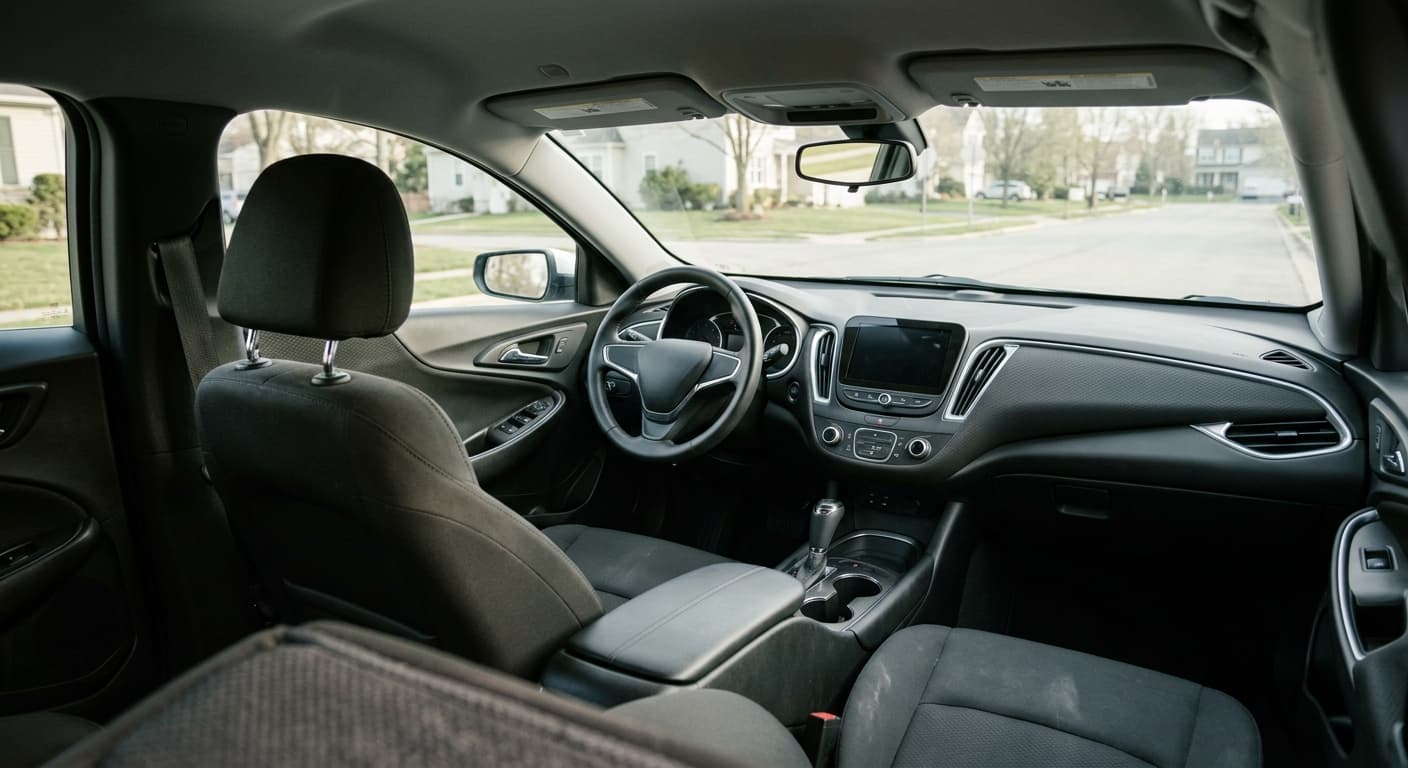
Yes, driverless cars may operate in Colorado, with or without a person inside, if the automated driving system is capable of complying with every state and federal law that applies to what it is doing. That is the core of C.R.S. 42-4-242, Colorado's 2017 "safe harbor" law. A system that cannot meet every law may be tested only with approval from the Colorado State Patrol and the Colorado Department of Transportation (CDOT), and cities and state agencies may not hold a self-driving system to different standards than a human driver.
This page covers Colorado state law on self-driving vehicles. Federal vehicle safety rules apply on top of it; see federal self-driving car laws. For other states, see the self-driving car laws by state hub.
Are self-driving cars legal in Colorado?
Yes, if the system can follow the law. Section 42-4-242(1) says a person "may use an automated driving system to drive a motor vehicle or to control a function of a motor vehicle if the system is capable of complying with every state and federal law that applies to the function that the system is operating."
That one sentence does most of the work. It does not create a license, permit or registration step for self-driving cars. It sets a performance condition: the system has to be capable of obeying the laws that apply to whatever it is controlling. The legislature called the section a "safe harbor," and it was added by Senate Bill 17-213, effective August 9, 2017.
CDOT's summary of the law puts it this way: highly automated systems at Level 4 and Level 5, "with or without a human driver, are authorized to operate in Colorado if they can meet all applicable state and federal laws."
What counts as a self-driving system in Colorado
Colorado law uses the term automated driving system, defined in C.R.S. 42-1-102(7.7) as hardware and software that are collectively capable, "without any intervention or supervision by a human operator," of performing all aspects of the dynamic driving task on a part-time or full-time basis. The definition ties this to Levels 4 and 5 of SAE International's standard J3016, as it existed in September 2016.
Two related definitions matter:
- The dynamic driving task means the operational side of driving (steering, braking, accelerating, and monitoring the vehicle and the roadway) and the tactical side (responding to events, deciding when to change lanes, turning and signaling). It does not include strategic choices such as picking a destination (42-1-102(27.8)).
- A human operator is "a natural person in the vehicle with immediate access to controls for steering, braking, and acceleration" (42-1-102(43.3)).
What about Tesla and other driver-assist features?
They are not automated driving systems under Colorado law. A Level 2 feature that needs a person to supervise it, such as adaptive cruise control or hands-on lane centering, cannot drive "without any intervention or supervision," so the person at the wheel remains the driver.
When lawmakers passed SB 17-213, they declared that vehicles with Level 0 to 3 automation are "legal under Colorado law with a human driver in the vehicle" and did not need to be addressed in the act. The Colorado State Patrol has also said that when a vehicle has automated features, "the driver remains legally responsible for the vehicle's safe operation" and will still be cited and held responsible in a crash even with those features engaged. The levels of driving automation guide explains the difference between the levels.
Does a self-driving car need a human driver in Colorado?
No, not if the system can comply with the law. Nothing in 42-4-242 requires a person in the vehicle, and CDOT reads the statute as authorizing Level 4 and Level 5 systems "with or without a human driver."
The same is true of heavy trucks. Colorado lawmakers tried twice to require a licensed commercial driver in the cab of large automated trucks, and both bills were vetoed (see self-driving trucks below).
Who is the driver or operator of a self-driving car in Colorado?
Colorado's statute answers this differently from Arizona, which says an engaged system is considered the driver or operator for purposes of traffic law. Colorado does not name a driver or operator for an engaged system at all. Instead, Section 42-4-242(2) sorts the traffic code into two groups:
- Rules aimed at the person. "Any provision in articles 1 to 3 of this title 42 and this article 4 that by its nature regulates a human driver, including section 42-2-101, does not apply to an automated driving system." Section 42-2-101 is the requirement to hold a driver's license, so a self-driving system does not need one.
- Rules about how the car moves. The exception is "laws regulating the physical driving of a vehicle." Speed limits, signals, right of way and the other rules of the road still apply to a vehicle an automated system is driving.
The general definition of driver in C.R.S. 42-1-102(27) is "every person ... who drives or is in actual physical control of a vehicle." The statute does not say whether a rider in a driverless vehicle, the company that runs it, or anyone else fills that role when the system is driving. The only "operator" the self-driving definitions mention is the human operator, the person in the vehicle with immediate access to the controls, and the definition of an automated driving system is built around a system that needs no intervention or supervision from that person.
Read Section 42-4-242(2) for what it says. It decides which traffic laws apply to the system. It does not make a passenger responsible for the car's driving, and it does not decide who pays for injuries. Civil liability is a separate question with its own rule (see crash liability below).
When a self-driving system cannot follow every law: the State Patrol and CDOT approval process
Some systems cannot meet every requirement. A vehicle might lack equipment a statute assumes, or be designed for a use the traffic code does not contemplate. For those systems, Section 42-4-242(3)(a) says "a person shall not test the system unless approved by the Colorado state patrol and the Colorado department of transportation, in accordance with a process overseen by" those two agencies.
Two limits in the text are worth noticing. The approval requirement applies only to a system that is not capable of complying with every applicable law. And the statute speaks of testing such a system. It does not describe a separate process for commercial deployment.
The Autonomous Mobility Task Force
CDOT and the State Patrol run the approval process through the Autonomous Mobility Task Force, a joint body that also includes the Colorado Department of Revenue's Division of Motor Vehicles. CDOT leads it and it meets as needed. According to the Task Force's application packet posted on CDOT's website, the review works like this:
- What an applicant submits. A single PDF covering the system's operational design domain and how it detects and responds to objects and events, the specific state and federal laws it cannot comply with, proposed test locations, routes and dates, a communications plan for local jurisdictions, a safety and compliance plan, incident and crash history on public roads for the past three years, any pending legal actions about the system, disengagement reports, data-sharing and cybersecurity practices, and certifications for each vehicle and any test drivers.
- A physical inspection. The packet says any automated system operating on Colorado roads "must successfully demonstrate" basic safety functions during an inspection by the State Patrol: avoiding stationary and moving objects, falling back to a minimal risk condition after a malfunction or crash, informing the operator or occupant when it is engaged or handing back control, and, if designed for it, transferring control to a human safely.
- Insurance certification. For testing under this process, the packet requires umbrella insurance of at least $5 million, commercial general liability insurance of at least $1 million, vehicle insurance of at least $1 million, and, if the umbrella or excess coverage is missing or lower, a surety bond of at least $5 million. These are Task Force requirements for approved testing, not a statutory insurance minimum for every self-driving car.
- Timing. Complete applications can generally expect a response within two months, and the agencies may ask for more information. An expedited review is available at the agencies' discretion for an applicant whose earlier deployment completed the full process and whose new deployment is nearly identical.
- Public records. The packet warns that submitted materials will likely be subject to the Colorado Open Records Act, and asks applicants to mark trade secrets.
- Limited review. The packet describes the review as "largely, if not entirely, ministerial" and mostly self-certified, and says the applicant "is solely responsible for ensuring the safe operation of its vehicle(s)." Neither the Task Force nor the state agencies make any guarantee about the safety of a tested vehicle.
Penalty for testing without approval
Testing a noncompliant system without approval is a class B traffic infraction (42-4-242(3)(b)). Colorado's general penalty table sets a class B infraction at $15 to $100 (42-4-1701(3)(a)(I)).
The more serious consequence is the vehicle. If a State Patrol officer has probable cause to believe a vehicle was used to test without approval, the officer "may impound or immobilize the motor vehicle" until the person obtains approval or signs an affidavit, under penalty of perjury, stating an intention to stop using the system in Colorado without approval.
CDOT's annual report to the legislature
Section 42-4-242(4) requires CDOT to report to the legislature's transportation legislation review committee by September 1 of each year "concerning the testing of automated driving systems in Colorado." The duty began with a first report due September 1, 2018, and the statute says it "continues indefinitely."
Can Colorado cities ban or regulate self-driving cars?
Not with separate standards. In Section 42-4-110(6)(a), the legislature found that self-driving systems will help people who have difficulty driving, including older adults and people with disabilities, and that this access "requires traveling across and in multiple jurisdictions. Therefore, the regulation of automated driving systems is a matter of statewide concern."

Section 42-4-110(6)(b) then sets the rule: "A state agency or a political subdivision of the state shall not adopt or enforce a policy, rule, or ordinance that sets standards for an automated driving system that are different from the standards set for a human driver."
By labeling the subject a matter of statewide concern, the legislature signaled that one set of rules should apply across Colorado. A city can still enforce its ordinary traffic rules, which apply to self-driving vehicles the same way they apply to human drivers. What it cannot do is write a different standard just for automated systems, such as a rule that only self-driving cars must carry a safety driver.
The rule binds state agencies as well as cities.
Robotaxis in Colorado
Colorado's self-driving statute contains no separate rule for robotaxi or ride-for-hire service by driverless vehicles. The safe-harbor test in 42-4-242(1) applies to the driving; it does not create a robotaxi permit. A company carrying paying passengers is still subject to the Public Utilities Commission's ordinary passenger-carrier permits, which apply to human-driven services too (for example, C.R.S. 40-10.1-302 for luxury limousines).
As of September 2026, Waymo says it began offering fully autonomous rides to public riders in Denver on September 1, 2026, and describes the launch as the start of a gradual opening, with riders added over time as it works toward serving everyone. That is the company's own announcement, not a state finding.
If you ride in a robotaxi, the company's terms of service and privacy policy govern much of the relationship, including in-cabin cameras and data. See do robotaxis record you.
Self-driving trucks in Colorado: two vetoed bills
Colorado law does not require a human in a self-driving truck. The legislature passed bills to require one in 2025 and again in 2026. Neither became law.
| Bill | What it would have done | Outcome |
|---|---|---|
| HB25-1122, Automated Driving System Commercial Motor Vehicle | Barred using an automated driving system to drive a commercial motor vehicle unless a commercial driver's license holder was in the vehicle, monitoring it and ready to intervene (in the driver's seat if hauling hazardous materials). Penalty of $1,000 for a first offense and $2,000 for a second, doubling after that. Did not apply to light-duty vehicles. | Passed the House 55-9 and the Senate 27-8. Vetoed by the Governor on May 29, 2025. |
| HB26-1286, Automated Driving System Commercial Vehicles | Same core rule for commercial motor vehicles with a gross vehicle or combination weight rating of 26,001 pounds or more, with the same escalating penalties. Exempted light-duty vehicles and truck-mounted attenuators, would have repealed itself September 1, 2031, and directed the State Patrol chief to report on its effects by November 1, 2030. | Passed the House 59-4 and the Senate 27-8. Vetoed by the Governor on May 28, 2026. |
The General Assembly's bill records list both as "Governor Vetoed," and the final fiscal notes state that because of the vetoes, the impacts "do not take effect." Both bills are listed as "Did Not Become Law," so the general rule in 42-4-242(1) governs automated trucks the same way it governs cars.
Federal rules on commercial vehicles and drivers still apply to interstate trucking. See autonomous truck laws for the federal picture and other states, and truck accident law if you were hurt in a crash with a commercial truck.
Insurance for self-driving cars in Colorado
Colorado sets no insurance amount specific to self-driving cars. The ordinary rules apply. Section 10-4-620 requires liability coverage of at least:
- $25,000 for bodily injury or death to any one person in any one accident,
- $50,000 for all persons in any one accident, and
- $15,000 for property damage in any one accident.
Section 42-4-1409 makes it an offense for an owner to operate a vehicle, or let it be operated, on Colorado's public highways without a complying policy or certificate of self-insurance. The higher amounts in the Task Force packet ($5 million umbrella, $1 million vehicle coverage and so on) apply to testing approved under the 42-4-242(3) process, not to every self-driving vehicle on the road.
These minimums are low next to the harm a serious crash can cause, and a large fleet operator will often carry far more than the minimum. For how coverage works when no human is driving, see self-driving car insurance.
Can a self-driving car get a ticket in Colorado?
The rules of the road apply to it. Section 42-4-242(2) keeps "laws regulating the physical driving of a vehicle" in force for an automated driving system, so a self-driving car must stop at red lights, yield and keep to the speed limit like any other vehicle.

What the statute does not do is say who receives a ticket when no human is driving. Colorado has no rule like Arizona's, where the person who files a written statement with the state for a driverless vehicle acknowledges it may be issued a traffic citation if the vehicle breaks a traffic law. The only penalty written into 42-4-242 is the class B infraction for testing a noncompliant system without approval.
If a person is behind the wheel using a driver-assist feature, the answer is simpler: that person is the driver, and the State Patrol has said drivers "will still be cited for traffic violations" even when automation features are engaged. For a comparison of state approaches, see can a self-driving car get a ticket.
DUI and self-driving cars in Colorado
Colorado's self-driving statute does not address impaired riders. For a car with driver-assist features, the person at the wheel is the driver, and the State Patrol has emphasized that "impairment laws still apply" when a vehicle is operating in an automated mode, because the driver must stay able to take control.
A rider in a fully driverless vehicle with no access to the controls is in a different position, and Colorado's traffic statutes do not address that situation directly. See DUI in a self-driving car for the actual-physical-control question and Colorado DUI laws for the state's impaired-driving rules.
Who is liable for a self-driving car crash in Colorado?
Colorado did not write a special liability rule. Section 42-4-242(5) says: "Liability for a crash involving an automated driving system driving a motor vehicle that is not under human control is determined in accordance with applicable state law, federal law, or common law."
In practice, that points to the familiar theories:
- Negligence against a person or company whose careless conduct caused the crash, which may include the company operating a driverless fleet.
- Product liability against a manufacturer or seller if a defect in the vehicle or its software caused the harm.
- Comparative fault. In an ordinary negligence claim, such as one against another driver or a fleet operator, C.R.S. 13-21-111 reduces damages by the injured person's share of fault and bars recovery if that share is as great as the negligence of the person sued. In a product liability action against a manufacturer or seller, on any legal theory including negligence, 13-21-111 does not apply; under 13-21-406 the injured person's fault reduces damages but does not bar recovery.
For how these theories play out when software is driving, see who is liable in a self-driving car accident and Waymo and robotaxi accidents.
What to do after a crash with a self-driving car in Colorado
Colorado's crash-reporting rules are written for the "driver" of a vehicle, and the state's statutes do not spell out how a driverless vehicle meets them. So the injured person may need to do more of the work.
- Get to safety and call 911 if anyone is hurt or the vehicles block traffic. Ask for the police report number; officers who investigate a crash must report it to the state on the official form.
- Record the vehicle. Photograph the car, its license plate, any fleet or unit number on the body, the scene and your injuries. Note the time and exact location.
- Identify the company. A robotaxi usually displays the operator's name and a support number. If you contact the company, write down any report or claim number you receive.
- Find witnesses and take their contact information.
- Get medical care and keep every record and bill.
- Ask that data be kept. Self-driving vehicles record camera and sensor data. Ask the operating company in writing to preserve the footage and data from your crash. A lawyer can send a formal preservation request.
- Watch the deadlines. Colorado generally allows three years for a tort action for bodily injury or property damage "arising out of the use or operation of a motor vehicle" (C.R.S. 13-80-101(1)(n)). But a personal injury, death or property damage claim against a manufacturer or seller of a product generally must be brought within two years after the claim arises, whatever the legal theory, apart from warranty claims under the Uniform Commercial Code (13-80-106), and a wrongful-death action generally within two years (13-80-102(1)(d)). Because a self-driving crash can involve both the operator and the maker of the vehicle, the shorter deadline may control part of the case.
For the full claim process, see Colorado car accident laws, Colorado statutes of limitations and, where a death occurred, wrongful death.
How Colorado compares with other states
Colorado's law is short and permissive. It gives any system that can follow the law a safe harbor, sends only noncompliant systems through a State Patrol and CDOT review, blocks local standards that differ from those for human drivers, and leaves liability to ordinary law. Unlike Arizona, it does not name the system as the driver or require a filing before driverless operation, and unlike Texas it has no driverless-specific state authorization step for commercial service. See Arizona self-driving car laws and Texas self-driving car laws for those models, the self-driving car laws by state hub for every state, and world self-driving car laws for other countries.
Frequently Asked Questions
Are driverless cars legal in Colorado?
Yes, if the automated driving system is capable of complying with every state and federal law that applies to the function it is operating (C.R.S. 42-4-242(1)). No human needs to be in the vehicle. A system that cannot comply with every applicable law may be tested only with approval from the Colorado State Patrol and CDOT.
Do you need a permit to run a self-driving car in Colorado?
Not for a system that can comply with every applicable law. Colorado issues no general self-driving permit. Only a system that cannot comply must be approved by the State Patrol and CDOT before testing, through the Autonomous Mobility Task Force application process. Testing without that approval is a class B traffic infraction, and the vehicle may be impounded or immobilized.
Does a self-driving car need a driver's license in Colorado?
No. Section 42-4-242(2) says provisions that by their nature regulate a human driver, including the driver's license requirement in 42-2-101, do not apply to an automated driving system. Laws regulating the physical driving of a vehicle, such as the rules of the road, still apply.
Is Tesla Full Self-Driving a self-driving car under Colorado law?
Not if the system needs a human to supervise it. Colorado's definition of an automated driving system covers only Level 4 and 5 systems that perform the driving without any intervention or supervision by a human operator. When a driver must supervise the feature, the person at the wheel is the driver, and the Colorado State Patrol has said the driver remains legally responsible and can be cited even when automation features are engaged.
Can Denver ban robotaxis?
Colorado has declared the regulation of automated driving systems a matter of statewide concern. No state agency or political subdivision may adopt or enforce a policy, rule or ordinance that sets standards for an automated driving system different from those set for a human driver (C.R.S. 42-4-110(6)). Ordinary traffic rules that apply to everyone still apply.
Does Colorado require a human in self-driving trucks?
No, not as of September 2026. Bills requiring a commercial driver's license holder in the cab of large automated trucks, HB25-1122 and HB26-1286, both passed the legislature and were vetoed by the Governor, on May 29, 2025 and May 28, 2026. Neither became law.
How much insurance does a self-driving car need in Colorado?
Colorado sets no separate amount for self-driving cars. The standard minimum under C.R.S. 10-4-620 is $25,000 per person and $50,000 per accident for bodily injury and $15,000 for property damage. Companies testing a noncompliant system through the State Patrol and CDOT process must show much higher coverage, including at least $5 million in umbrella insurance.
Who is at fault if a self-driving car hits me in Colorado?
Colorado has no special fault rule. Liability for a crash involving an automated driving system that is not under human control is decided under ordinary state law, federal law or common law (C.R.S. 42-4-242(5)), which usually means negligence claims against the operator and product liability claims against the manufacturer. Most motor vehicle injury claims must be filed within three years, but product claims generally within two.
Is Waymo operating in Colorado?
As of September 2026, Waymo says it began welcoming its first public riders in Denver on September 1, 2026 and plans to expand access over time. That is the company's announcement. Colorado's self-driving statute creates no robotaxi permit for a system that can comply with state and federal law. A company carrying paying passengers is still subject to the Public Utilities Commission's ordinary passenger-carrier permits, which apply to human-driven services too (for example, C.R.S. 40-10.1-302 for luxury limousines).
Updates
Independently fact-checked against the cited primary sources
Sources and References
- C.R.S. 42-4-242, automated driving systems safe harbor (operation, human-driver provisions, State Patrol and CDOT testing approval, penalty and impound, CDOT annual report, crash liability); C.R.S. 42-1-102 definitions; 42-4-110(6) statewide concern; 42-4-1409 compulsory insurance; 42-4-1606 accident reports; 42-4-1701 penalties (Colorado Revised Statutes, Title 42)(leg.colorado.gov).gov
- C.R.S. 10-4-620, required motor vehicle liability coverage(leg.colorado.gov).gov
- C.R.S. 13-80-101(1)(n), 13-80-102(1)(d) and 13-80-106 limitation periods; 13-21-111 comparative negligence; 13-21-406 comparative fault in product liability actions(leg.colorado.gov).gov
- Senate Bill 17-213 (enrolled), legislative declaration and enactment of Colorado's automated driving system law(leg.colorado.gov).gov
- Colorado Department of Transportation, Autonomous Vehicles program page and Autonomous Mobility Task Force(www.codot.gov).gov
- CDOT and Colorado State Patrol, Autonomous Mobility Task Force application packet posted on CDOT's website(www.codot.gov).gov
- Colorado State Patrol via CDOT, Colorado requires drivers to be responsible (March 2026)(www.codot.gov).gov
- Colorado General Assembly, HB25-1122 Automated Driving System Commercial Motor Vehicle, bill summary and history (Governor Vetoed May 29, 2025)(leg.colorado.gov).gov
- Legislative Council Staff, HB25-1122 final fiscal note (bill vetoed by the Governor on May 29, 2025)(leg.colorado.gov).gov
- Colorado General Assembly, HB26-1286 Automated Driving System Commercial Vehicles, bill summary and history (Governor Vetoed May 28, 2026)(leg.colorado.gov).gov
- HB26-1286 enrolled act text as sent to the Governor(leg.colorado.gov).gov
- Legislative Council Staff, HB26-1286 final fiscal note (bill vetoed by the Governor on May 28, 2026)(leg.colorado.gov).gov
- Waymo, Welcoming our first riders in Denver, San Diego, and Tampa (September 1, 2026), company announcement(waymo.com)
- A.R.S. 28-9702, Arizona operation of autonomous vehicles (comparison)(www.azleg.gov).gov
- Texas Department of Motor Vehicles, Automated Vehicle program (comparison)(www.txdmv.gov).gov
- C.R.S. 40-10.1-302, Public Utilities Commission permit requirement for charter bus, luxury limousine and other passenger carriers(olls.info).gov