China Self-Driving Car Laws: Level 3, Robotaxis, Liability (2026)
Independently fact-checked against primary sources (last audited October 1, 2026). · 26 primary sources cited on this page. How we verify our legal content
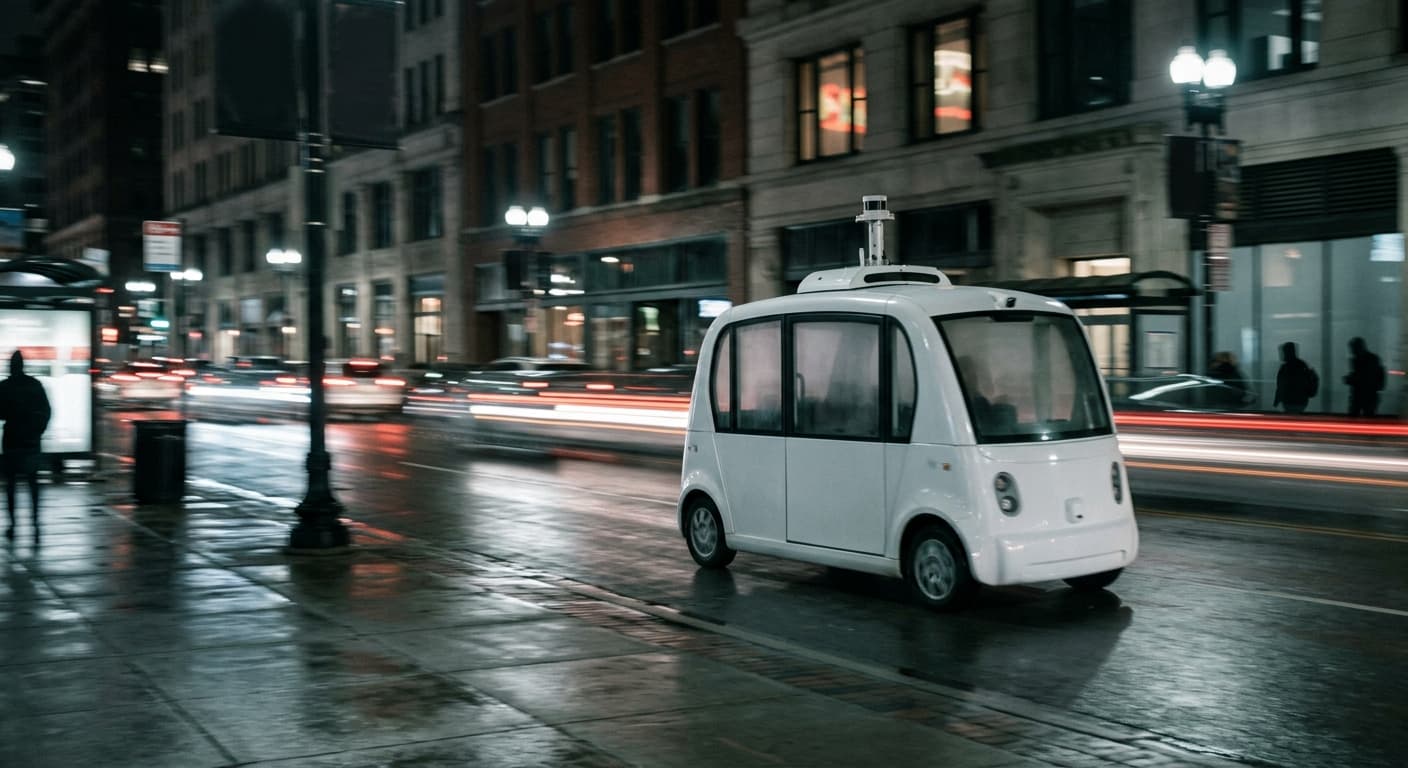
China has no single national law that makes self-driving cars legal everywhere. As of 30 September 2026, driver-assistance features (Level 2) are legal on ordinary cars, but the driver remains fully responsible. Level 3 and Level 4 vehicles may run only through a national product-access pilot run by the Ministry of Industry and Information Technology (MIIT) or through city testing and pilot permits. Driverless robotaxis carry paying passengers only in areas that city governments designate.
A revision of the national Road Traffic Safety Law with a new chapter on autonomous vehicles received its first reading on 25 August 2026. It is a draft, not law. Until it passes, the most detailed rules on who answers for a driverless car are in city regulations, above all Shenzhen's, Beijing's, Guangzhou's and Shanghai Pudong's.
Scope and date: This page covers mainland China's national rules and the main city regulations on automated and driverless vehicles as of 30 September 2026. It does not cover Hong Kong or Macau, which have their own laws. Statute quotations are in the original Chinese, taken from official government sites, with an English gloss in parentheses; the gloss is our translation, not official text. Approval and deployment status changes quickly, so each status statement carries a date.
Are self-driving cars legal in China?
Partly, and only within permits. China regulates automated driving in layers rather than through one statute:
- National traffic law. The Road Traffic Safety Law (道路交通安全法), in force since 2004 and last amended in 2021, still assumes a human driver. It has no chapter on automated driving yet.
- National product access. MIIT decides which vehicle models may be produced and sold. Since 2023 it has run a pilot that lets selected Level 3 and Level 4 models onto public roads in limited areas.
- National transport guidance. The Ministry of Transport (MOT) sets safety rules for using automated vehicles in taxi, bus and freight services.
- City regulations. Cities including Shenzhen, Beijing, Guangzhou, Hangzhou, Wuhan and Shanghai's Pudong New Area have their own regulations on testing, pilots, driverless operation and, in most cases, liability. Chongqing's takes effect on 1 November 2026.
- Data and mapping rules. Separate national rules govern what car cameras and sensors may collect and where the data may go.
The practical result: a private owner can legally use Level 2 driver assistance anywhere, with full responsibility for the car. Anything above that runs on a specific permission tied to a vehicle model, an operator and a place.
How Chinese rules classify driving automation
Chinese rules use the national standard GB/T 40429-2021, Taxonomy of driving automation for vehicles (《汽车驾驶自动化分级》), which tracks the familiar 0 to 5 scale. The MIIT pilot notice and the MOT transport guide both define their scope by reference to it.
| Chinese term | Approximate SAE level | Who is driving | How it is regulated |
|---|---|---|---|
| 组合驾驶辅助 (combined driver assistance) | Level 2 | The human driver, at all times | Ordinary vehicle rules; MIIT product access and software-update filing; GB 47955-2026 from 1 January 2027 |
| 有条件自动驾驶 (conditional automated driving) | Level 3 | The system, within its conditions; a driver must be ready to take over | MIIT conditional product access and road pilots; city rules; GB 44721-2026 from 1 July 2027 |
| 高度自动驾驶 (highly automated driving) | Level 4 | The system, within its operating area; no driver needed | MIIT pilots; city testing, demonstration and commercial pilots; GB 44721-2026 from 1 July 2027 |
| 完全自动驾驶 (fully automated driving) | Level 5 | The system, everywhere | Recognised in city regulations; no national product approval |
For what each level means in general, see the levels of driving automation.
MIIT defines combined driver assistance as a system that assists the driver with steering and speed control "在驾驶人持续观察交通状况并控制车辆的前提下" (on the premise that the driver continuously observes traffic and controls the vehicle). That premise is the legal heart of Level 2 in China: the system helps, the person drives.
Driver assistance (Level 2): the driver is still driving
Level 2 features such as lane centring and navigate-on-autopilot (NOA, often marketed in China as 智驾) are legal and widespread. Xinhua reported in August 2026 that combined driver assistance was fitted to 70.5% of new passenger cars sold so far that year. None of them changes who is driving.
Article 22 of the Road Traffic Safety Law requires every motor vehicle driver to "按照操作规范安全驾驶、文明驾驶" (drive safely and courteously in accordance with operating rules). Nothing in the current law relieves the driver of that duty because an assistance system is switched on. The draft revision says the same thing expressly: a car with only driver-assistance functions is managed "按照非自动驾驶汽车的规定" (under the rules for non-autonomous vehicles).
Software updates and marketing after 2025
On 25 February 2025, MIIT and the State Administration for Market Regulation (SAMR) issued Notice No. 45 of 2025 (工信部联通装〔2025〕45号) on product access, recalls and over-the-air (OTA) updates for intelligent connected vehicles. Its main rules:
- OTA filing. "企业实施OTA升级活动,应当按要求向工业和信息化部、市场监管总局备案" (companies carrying out OTA upgrades must file them with MIIT and SAMR as required).
- Approval for bigger changes. An update that changes a vehicle's main technical parameters needs a product change permit before it ships. An update involving automated driving functions "应当按照准入管理有关规定,取得相应许可" (must obtain the corresponding permit under the product-access rules).
- Crash reporting. Carmakers must report to both agencies when a driver-assistance system fails and drops out, or when a car fitted with one is in a collision.
- Marketing. Carmakers must "规范营销宣传行为" (regulate their marketing and promotional conduct).
- Deadline already passed. Models already approved had to submit their driver-assistance and OTA parameters by 1 June 2025.
Weeks later, a serious crash put those rules in the spotlight. China News Service reported that Xiaomi said one of its SU7 sedans had been in NOA driver-assistance mode at 116 km/h on an expressway in Anhui on 29 March 2025 when the system detected a construction closure, warned and began slowing; the driver then took over before the car hit a concrete post in the median. On 16 April 2025, MIIT's equipment industry department met nearly 60 carmaker representatives and stressed that companies "不得进行夸大和虚假宣传" (must not engage in exaggerated or false advertising) and must clearly set system boundaries and fulfil their duty to inform users.
City rules point the same way. Beijing requires automated vehicle companies to "真实、准确宣传" (advertise truthfully and accurately) and to tell users about safe use (Article 7). Shenzhen's amended regulation puts the same duty on producers and sellers (Article 31). The national draft would prohibit false or exaggerated promotion of autonomous driving functions.
Mandatory national standards
- Already in force since 1 January 2026: three mandatory national standards issued on 23 August 2024: GB 44495-2024 (vehicle cybersecurity), GB 44496-2024 (software updates) and GB 44497-2024 (automated driving data recording system). A Fujian provincial government notice described them as the first mandatory national standards in the intelligent connected vehicle field.
- From 1 January 2027: GB 47955-2026, Safety requirements for combined driver assistance systems, issued on 27 June 2026. It covers basic single-lane systems, multi-lane systems and navigation-assisted driving (NOA), and sets requirements on driver state monitoring, human-machine interaction, user instructions and training. MIIT says it is aligned in its core content with UN Regulation No. 171 but more detailed.
Level 3 and Level 4 cars: MIIT product access
The 2023 pilot
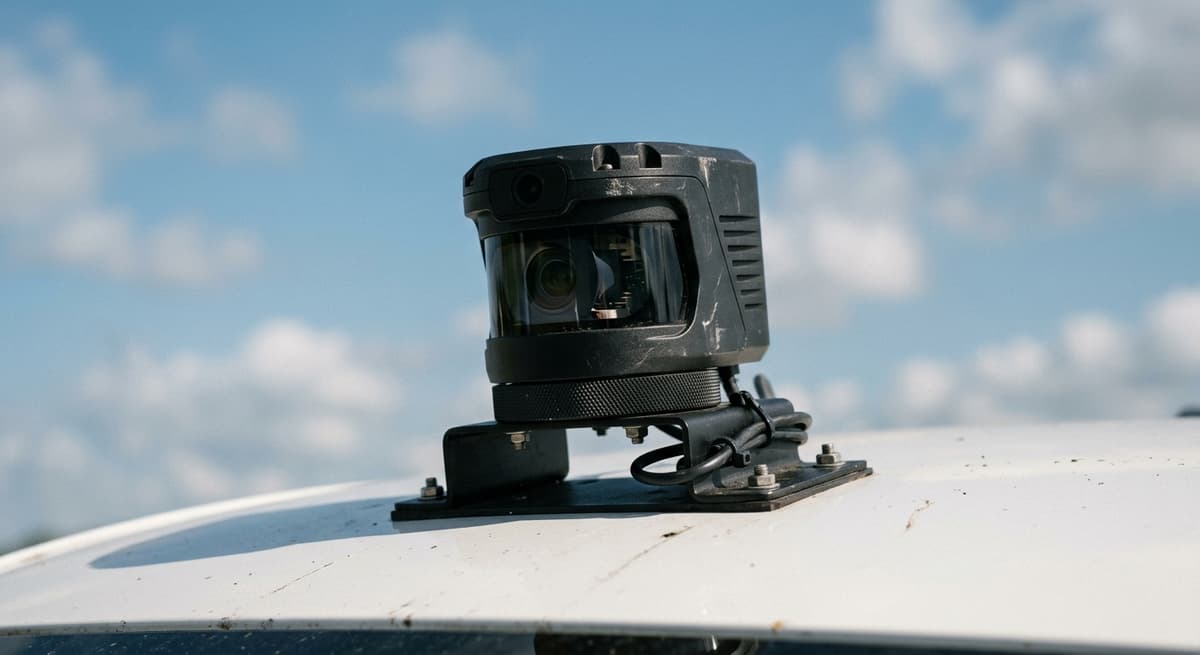
On 17 November 2023, MIIT, the Ministry of Public Security, the Ministry of Housing and Urban-Rural Development and MOT issued the Notice on Pilot Work on Access and Road Use of Intelligent Connected Vehicles (工信部联通装〔2023〕217号). It covers "3级驾驶自动化(有条件自动驾驶)和4级驾驶自动化(高度自动驾驶)功能" (Level 3 conditional and Level 4 high automation functions) as defined in GB/T 40429-2021.
The pilot works in steps. A carmaker and a user entity form a consortium; the vehicle passes testing and safety assessment; MIIT decides on product access and publishes any restrictions, such as the validity period and the area of use; the approved vehicles then run on roads only within a limited area. Responsibilities are split:
- The carmaker "承担智能网联汽车产品质量和生产一致性主体责任" (bears primary responsibility for product quality and production conformity) and must not change automated driving functions without authorisation.
- The user entity "应当落实道路交通安全、网络安全和数据安全主体责任" (bears primary responsibility for road traffic safety, cybersecurity and data security), and must insure and register the vehicles.
- A pilot must be paused after violations or crashes that point to a hidden safety risk, and ended if the system has "严重安全隐患且无法消除" (a serious safety hazard that cannot be eliminated).
The first Level 3 approvals (December 2025)
On 15 December 2025, Xinhua reported that MIIT had granted conditional approval ("附条件许可") to the first two models with Level 3 conditional automated driving:
| Model | Function | Where it may be switched on | Pilot operator |
|---|---|---|---|
| Changan SC7000AAARBEV (battery-electric sedan) | Single-lane automated driving in congested traffic on expressways and urban expressways | Named sections of Chongqing's Inner Ring Expressway, New Inner Ring Expressway and Yudu Avenue | Chongqing Changan Connected Vehicle Technology Co. |
| Arcfox BJ7001A61NBEV (battery-electric sedan) | Single-lane automated driving on expressways and urban expressways | Named sections of the Jingtai Expressway, Airport North Line Expressway and Daxing Airport Expressway in Beijing | Beijing Travel Automobile Service Co. |
The function may be used only on those road sections, and the cars run under a road pilot by the named operators, not as a general sale to private buyers. In an August 2026 report on the draft law, Xinhua said the first Level 3 models had begun running on roads in specific areas. MIIT's August 2026 release refers to two Level 3 models conditionally approved in 2025, the Changan and Arcfox sedans in the table above. Any later approvals appear in MIIT's product announcements.
A national safety standard for Level 3 and Level 4 systems
On 30 July 2026, SAMR and the Standardization Administration approved GB 44721-2026, Safety requirements for automated driving systems of intelligent connected vehicles, which takes effect on 1 July 2027. It applies to M and N category vehicles with Level 3 or Level 4 systems (not automated parking). According to MIIT, it requires the system's safety level to be at least that of "合格且专注驾驶人" (a competent and attentive driver), sets rules for minimal-risk manoeuvres and for safe activation and exit, and requires Level 3 systems to monitor whether the driver is able to take over.
Can a private owner buy a self-driving car?
Not a Level 3 or Level 4 car for general use, as of 30 September 2026. Beijing's regulation allows it in principle: "列入汽车产品目录并符合国家规定条件的自动驾驶汽车,可以用于个人乘用车出行" (an automated vehicle listed in the vehicle product catalogue and meeting national conditions may be used for personal travel), and the driver must master and properly use the automated function (Article 30). The two Level 3 models approved in December 2025, however, run under operator pilots on named roads.
The draft Road Traffic Safety Law revision (2026)
On 25 August 2026, the State Council's draft revision of the Road Traffic Safety Law was submitted to the 24th session of the 14th National People's Congress Standing Committee for first review. According to reports republished on the NPC's official website, the draft has 9 chapters and 170 articles and adds a chapter titled "自动驾驶汽车的特别规定" (special provisions on autonomous vehicles). The draft text was open for public comment from 28 August to 26 September 2026.
As reported on the NPC site and by Xinhua, the chapter would:
- Define the terms. An autonomous vehicle is one that, within its design operating conditions, "代替驾驶人持续自动地执行全部动态驾驶任务" (continuously and automatically performs the entire dynamic driving task in place of the driver). Driver assistance helps the driver perform part of the task.
- Set conditions for road use. An autonomous vehicle may go on the road only after passing road-rules compliance testing and being registered. It may activate its autonomous function only within its design operating conditions, and the manufacturer or importer must make sure it cannot be activated outside them. No one may alter the autonomous function without authorisation.
- Shift traffic-violation handling to the maker. A violation committed while the autonomous function is active "由自动驾驶汽车生产企业、进口企业接受处理" (is to be dealt with against the manufacturer or importer). A manufacturer or importer that says the violation had nothing to do with the function "应当承担举证责任" (bears the burden of proof). Detailed rules would be drawn up by the State Council's public security department.
- Give police access to data. After a crash with the function active, traffic police may obtain the vehicle's data and commission qualified testing or appraisal.
- Apply compulsory insurance. Autonomous vehicles would be covered by compulsory traffic accident liability insurance, with details set by the State Council.
- Leave Level 2 alone. Autonomous vehicles with the function switched off, and cars with only driver-assistance functions, would be managed as ordinary vehicles.
- Bind the companies. Manufacturers and importers would have to ensure road safety, cybersecurity and data security, and must not falsely or exaggeratedly promote autonomous functions.
Two cautions. First, the violation rule is about who receives traffic penalties, not a complete answer to who pays compensation after a crash. Second, a first reading is an early stage: the NPC Standing Committee normally reviews a law more than once, and any of this can change. As of 30 September 2026 the current law, amended in 2021, still applies.
City rules: who answers for a driverless car
Because the national law is not yet amended, city regulations fill the gap. The table compares five of the city regulations in force (others, such as Hangzhou's, in force since 1 May 2024, also exist) and the one coming.
| City regulation | In force | Driverless operation | Traffic violations | Accident compensation |
|---|---|---|---|---|
| Shenzhen Special Economic Zone ICV Regulation (amended 2026) | 1 Aug 2022; amended text from 1 Jul 2026 | Level 4 and 5 may operate without a driver, only in areas and road sections set by city traffic police | Driver, if a person drives or a Level 3 system is active; owner or manager for active Level 4 or 5 (registered vehicles; testing and demonstration follow national testing rules where the regulation is silent) | Same split for registered vehicles: driver, or owner or manager; recourse against producer or seller for defects |
| Beijing Autonomous Vehicle Regulation | 1 Apr 2025 | Road-use pilots with safety officers and platform safety monitors | Handled by traffic police under national rules | No specific allocation; national rules apply |
| Guangzhou ICV Innovation and Development Regulation | 28 Feb 2025 | Level 4 and above may use remote emergency handling by a safety officer after testing | Driver or onboard safety officer for their own errors; operating entity if the system caused it | The entity running the vehicle, with recourse against responsible third parties |
| Shanghai Pudong New Area Provisions on driverless ICVs | 1 Feb 2023 | Vehicles with no driver or safety officer aboard, on designated road sections | Vehicle owner or manager | The company that owns the vehicle pays first, with recourse against system developer, maker or equipment supplier |
| Wuhan ICV Development Promotion Regulation | 1 Mar 2025 | Commercial pilots under city licensing | No liability allocation covered here | No liability allocation covered here |
| Chongqing ICV Development Promotion Regulation | 1 Nov 2026 (adopted 23 Sep 2026) | Testing, demonstration and demonstration operation, then commercial operation | Takes effect 1 Nov 2026; liability provisions not covered here | Takes effect 1 Nov 2026; liability provisions not covered here |
Shenzhen: liability by automation level
Shenzhen passed the first city regulation of its kind in 2022. Its Standing Committee amended it on 25 May 2026, with effect from 1 July 2026, and the amendment rewrote the liability rules around automation levels.
- Which cars may lack a driver. A Level 3 vehicle must have a manual driving mode and a driver. A Level 4 vehicle, except special types or uses, must have a manual mode but "可以不配备驾驶人" (need not carry a driver). A Level 5 vehicle may have neither. And "无驾驶人的智能网联汽车只能在市公安机关交通管理部门划定的区域、路段行驶" (a vehicle without a driver may run only in areas and road sections designated by the city traffic police) (Article 34).
- The Level 3 driver's duty. With the system active, the driver must stay in the driver's seat, monitor the vehicle and its surroundings, be ready to take over at any time, and take over immediately when the car requests it or conditions are unsuitable (Article 35).
- Violations. When a person is driving, or a Level 3 car is running with its system active, traffic police deal with the driver. When a Level 4 or Level 5 car is running with its system active, they deal with "车辆所有人、管理人" (the vehicle owner or manager), and no licence penalty points apply (Article 51).
- Accident compensation. Article 53, as amended, reads: "智能网联汽车由驾驶人驾驶时或者有条件自动驾驶的智能网联汽车在自动驾驶系统激活状态下行驶时发生交通事故造成损害,属于该智能网联汽车一方责任的,由驾驶人承担赔偿责任" (where damage is caused in a traffic accident while a person is driving, or while a conditionally automated vehicle is running with its automated driving system active, and the vehicle's side is responsible, the driver is liable to compensate). For highly or fully automated vehicles with the system active, "由车辆所有人、管理人承担赔偿责任" (the vehicle owner or manager is liable).
- Recourse. After paying, the driver or the owner or manager may claim from the producer or seller if a defect caused the damage (Article 54).
- Registered vehicles only. These rules (Articles 51 to 55) apply to registered vehicles (Article 50). Crashes and violations during road testing or demonstration are handled under national testing rules where the regulation is silent (Article 19).
- Evidence. Data recorded by the vehicle, roadside equipment and the government monitoring platform "可以作为认定智能网联汽车交通事故责任的重要依据" (may serve as an important basis for determining accident responsibility) (Article 55). Vehicles must record at least 90 seconds of data before a crash or fault and keep it for at least 30 days (Article 37).
- Sale and registration. A vehicle must be in the national or Shenzhen product catalogue to be sold or registered (Article 20), and registration requires compulsory and third-party liability insurance, plus passenger liability insurance for vehicles that carry people (Article 28).
Note the condition that runs through all of this: the system must be active. If a Level 4 car's system was switched off and a person was driving, the ordinary driver rules apply.
Beijing: pilots, safety officers and personal use
Beijing's Autonomous Vehicle Regulation (北京市自动驾驶汽车条例) was adopted on 31 December 2024 and took effect on 1 April 2025. It covers vehicles with "有条件自动驾驶、高度自动驾驶、完全自动驾驶功能" (conditional, high and full automation functions) under national standards (Article 2).
It sets out a ladder. Companies apply to the city's economy and information technology bureau for road testing, then for demonstration use carrying people or goods (Article 24). After a safety assessment they may apply for autonomous vehicle plates and a road-use pilot (Article 26), which needs a pilot qualification from the transport department (Article 27). Supported uses include personal travel, buses (but not school buses), taxis and car rental, freight other than dangerous goods, and city services such as shuttles and street cleaning (Article 23).
Pilot operators must staff their vehicles: "开展道路应用试点活动应当按照规定配备安全员、平台安全监控人员" (road-use pilots must be staffed with safety officers and platform safety monitors as required), who must issue warnings and take over control when needed (Article 37). Running a road-use pilot without approval can bring a fine of 30,000 to 100,000 yuan (Article 44).
On liability, Beijing does not create its own rule. Violations and crashes involving automated vehicles are investigated "由公安机关交通管理部门按照国家有关规定调查和处理" (by the traffic police in accordance with relevant national rules) (Article 31). Testing, demonstration and pilot operators must carry compulsory traffic accident insurance, carrier liability insurance and other supplementary commercial insurance (Article 42).
Guangzhou: the operating company pays
Guangzhou's Intelligent Connected Vehicle Innovation and Development Regulation (广州市智能网联汽车创新发展条例) took effect on 28 February 2025. A Level 3 vehicle on the road must carry a driver or safety officer; vehicles at Level 4 and above, once tested and certified, may have a safety officer handle emergencies remotely (Article 24). Companies with the right transport licences may charge fares (Article 22).
Its liability rules are simple. A violation caused by the driver's or onboard safety officer's operation is dealt with against that person; one caused by the automated driving system is dealt with against "智能网联汽车使用主体" (the entity using the vehicle) (Article 33). For accident damage where the vehicle's side is responsible, "由智能网联汽车使用主体承担赔偿责任" (the using entity is liable to compensate), with recourse under the Civil Code and the Product Quality Law against responsible third parties (Article 34). The regulation defines the using entity as the company or other body running the testing, demonstration or commercial operation (Article 36).
Shanghai Pudong: rules for cars with no one aboard
The Shanghai Pudong New Area Provisions on Promoting Innovative Application of Driverless Intelligent Connected Vehicles (上海市浦东新区促进无驾驶人智能网联汽车创新应用规定) took effect on 1 February 2023. It applies only to vehicles "车内不配备驾驶人和测试安全员" (with no driver and no test safety officer inside), operating on designated road sections in Pudong (Article 2).
Operators need remote monitoring and emergency takeover staff holding the right driving licence, and compulsory plus commercial insurance. Traffic violations are dealt with against the vehicle owner or manager (Article 28). If a crash causes damage and the vehicle's side is responsible, "由该无驾驶人智能网联汽车所属的企业先行赔偿" (the company that owns the driverless vehicle compensates first), and may then claim from the automated driving system developer, the vehicle maker or the equipment supplier (Article 29). After a crash, the company must stop the vehicle, switch on hazard warnings, call the police and upload at least 90 seconds of pre-crash video within two hours (Article 27).
Wuhan, Hangzhou and Chongqing
Wuhan's Intelligent Connected Vehicle Development Promotion Regulation took effect on 1 March 2025. In January 2026, the city's economy and information technology bureau said Wuhan had opened more than 3,800 km of roads for automated vehicle testing, that over a thousand automated vehicles were in road testing and demonstration, and that it had issued commercial autonomous driving licences.
Hangzhou's Intelligent Connected Vehicle Testing and Application Promotion Regulation has been in force since 1 May 2024. Article 27 provides that when a vehicle commits a traffic violation, the traffic police may deal with the driver or safety officer aboard or, where there is neither, with the vehicle's owner or manager. Accident responsibility is set by each party's conduct and fault (Article 28).
Chongqing's Intelligent Connected Vehicle Development Promotion Regulation was adopted on 23 September 2026 and takes effect on 1 November 2026, according to Chongqing's official news portal. It sets a ladder of road testing, demonstration and demonstration operation, with commercial operation to be explored after that.
Who is liable in a self-driving car crash in China?
It depends on the level, on whether the system was active, and on the city.
Level 2 (driver assistance). The driver. Under Article 76 of the Road Traffic Safety Law, the insurer pays first up to the compulsory insurance limit. Above that, fault decides between motor vehicles, and a motor vehicle that hits a pedestrian or cyclist who was not at fault is liable in full; even with no fault of its own, the vehicle side bears up to 10%. Driver assistance does not change that allocation.
Product defects, at any level. Article 1202 of the Civil Code says "因产品存在缺陷造成他人损害的,生产者应当承担侵权责任" (where a defective product causes harm to others, the producer bears tort liability). Under Article 1203, an injured person may claim from either the producer or the seller. So a crash victim, or a driver who paid compensation, can pursue the carmaker if a defect in the system caused the crash. Shenzhen and Guangzhou write this recourse into their regulations.
Level 3 with the system active. In Shenzhen, for registered vehicles, the driver, because the driver must stay ready to take over. Elsewhere, national traffic and civil rules apply, which still centre on the driver and the vehicle's insured side.
Level 4 and 5, no driver. City rules put it on the company or owner: the owner or manager in Shenzhen (for registered vehicles), the operating entity in Guangzhou, the owning company in Pudong. Crashes during road testing or demonstration in Shenzhen are handled under national testing rules where the local regulation is silent. Robotaxi passengers are also covered by carrier or passenger liability insurance, which Beijing, Pudong and the MOT guide require for passenger services.
For how this compares with other countries, see who is liable in a self-driving car accident (United States) and the world self-driving car laws hub.
Robotaxis in China
The national transport rules
MOT's Guide to Transport Safety Services for Autonomous Vehicles (Trial) (交办运〔2023〕66号), issued on 21 November 2023, applies when automated vehicles are used for buses, taxis, intercity passenger transport or freight. Its key rules:
- Where. Services must run in designated areas and pass a road traffic safety assessment. Taxi services may run "在交通状况良好、交通安全可控场景下" (where traffic conditions are good and safety is controllable). Road passenger transport services are to be approached cautiously. Carrying dangerous goods with automated vehicles is prohibited.
- Who must be aboard. Bus services and road passenger transport services need one driver or safety officer aboard. Taxis at Level 3 and Level 4 "应随车配备1名安全员" (must carry one safety officer). Only fully automated taxis, in designated areas and with the consent of the city government, may use remote safety officers, and the ratio "不得低于 1:3" (must not be lower than 1:3), meaning at least one remote officer for every three vehicles.
- Data. Vehicles must record at least 90 seconds of operating data before a crash or system failure, covering ten categories including control mode, speed, 360-degree exterior video and in-cabin video and audio.
- Insurance and licences. Ride-hailing and passenger operators must hold the usual transport licences and carrier liability insurance.
The guide is a trial administrative guide, not a statute, and local transport authorities may set stricter requirements than the guide. City pilot rules nonetheless authorise Level 4 robotaxis with no one aboard in designated areas, which the guide's text reserves for fully automated taxis, so the guide and city practice do not line up neatly.
What is running, as of September 2026
Beijing's high-level autonomous driving demonstration zone office announced in July 2022 the country's first commercial pilot for robotaxis with no one in the driver's seat, letting Baidu and Pony.ai run 30 vehicles with paid service across 60 square kilometres of the Beijing Economic-Technological Development Area (Yizhuang). In July 2023 it opened a commercial pilot for vehicles with no one aboard at all ("车内无人"), requiring companies to staff remote drivers one to one.
In August 2026, a Xinhua reporter described hailing a car with an empty driver's seat in Yizhuang through an app. Operators describe wider services in their own filings: Pony.ai said in its second-quarter 2026 results that its global robotaxi fleet reached 1,975 vehicles by 30 June 2026, and that its Guangzhou operating area had grown by more than 300 square kilometres since the start of the year. Baidu said its Apollo Go service had reached 28 cities worldwide. These are company statements, not permits, and the permitted areas and staffing differ by city.
Is Tesla FSD legal in China?
Tesla said on X on 21 May 2026 that FSD (Supervised) is available in China; it gave no details of regulatory filings or rollout scope. Legally, that places it in the Level 2 category: the driver must keep watching the road and controlling the car, is responsible for any violation or crash, and the system is subject to MIIT's product-access, OTA-filing and marketing rules. From 1 January 2027 it will also have to meet GB 47955-2026, like every combined driver-assistance system.
FSD (Supervised) is not among the Level 3 products MIIT approved in December 2025, the Changan and Arcfox models. Tesla's announcement is a company statement, not a regulator decision. For the country-by-country picture, see where Tesla FSD is legal.
Car data, cameras and mapping
Self-driving and assisted cars collect large amounts of data, and China treats some of it as a national-security matter.
Vehicle data rules. The Several Provisions on Automobile Data Security Management (Trial) (汽车数据安全管理若干规定(试行)), issued by the Cyberspace Administration of China and four other agencies, took effect on 1 October 2021. They classify as "important data" items such as geographic information, people flows and vehicle flows around military zones and Party and government bodies, and "包含人脸信息、车牌信息等的车外视频、图像数据" (exterior video and images containing faces, number plates and similar information) (Article 3). Personal information of people outside the car, collected for driving safety without consent and then provided outside the vehicle, must be anonymised, for example by blurring faces (Article 8). Sensitive personal information such as location tracks, audio and video needs separate consent and must be deleted within ten working days on request (Article 9). Important data "应当依法在境内存储" (must be stored within China in accordance with law), and sending it abroad requires a security assessment (Article 11).
City rules add to this. Shenzhen requires automated vehicle companies to keep their data servers in China and bars transfers abroad without approval (Article 47). Beijing requires companies to give vehicle owners a way to look up operating data, and users a way to look up crash- and fault-related data from their own period of use (Article 39). For China's general privacy and cross-border data rules, see China data privacy laws. For dashcams and recording other people, see China recording laws.
Mapping is surveying. A 2022 notice from the Ministry of Natural Resources says that when a car's satellite positioning, cameras, lidar and other sensors collect, store, transmit and process spatial coordinates, images and point clouds of the car and surrounding roads, that "属于《中华人民共和国测绘法》规定的测绘活动" (is a surveying and mapping activity under the Surveying and Mapping Law). The carmakers and service providers handling the data are the regulated parties; drivers and passengers who simply use assisted driving are not. Domestic companies need a surveying qualification or must entrust a qualified unit; foreign-invested companies "应委托具有相应测绘资质的单位开展相应测绘活动" (must entrust a unit holding the corresponding qualification). The notice also cites the foreign-investment negative list then in force, which closed ground mobile surveying and navigation electronic map compilation to foreign investment. A further notice in 2024, as summarised by a Nanjing government bureau, treats the maps used for driver assistance and automated driving as navigation electronic maps and requires the geodata to be stored in China.
What to do after a crash with a self-driving or assisted car in China
This is general information, not legal advice.
- Stop and make the scene safe. Article 70 of the Road Traffic Safety Law requires the driver to stop immediately and protect the scene; if anyone is injured, give first aid and report to the traffic police at once. In a robotaxi or other driverless car, call the police yourself: Shenzhen's rule is that "当事人应当立即报警" (the parties must report to the police immediately), and the owner or manager must preserve the crash data.
- Note whether the system was on. Liability in Shenzhen, and under the national draft, turns on whether the automated system was active. Note the vehicle's markings, its number plate or test plate, and the operator's name.
- Ask for the data. City rules treat recorded vehicle data as key evidence. In Beijing, companies must provide owners and users with a way to look up crash-related data. Ask the police to secure the vehicle and platform records early, before short retention periods run out (Shenzhen requires at least 30 days).
- Claim against the right party. The compulsory insurance of the vehicle pays first. Beyond that, depending on the city, the claim lies against the driver, the vehicle owner or manager, or the operating company, and in every case a defect claim can be brought against the maker or seller under the Civil Code.
- Robotaxi passengers. Operators of passenger services must carry carrier or passenger liability insurance. Keep your ride record from the app.
- Get local advice. Rules differ between cities and are changing fast. A lawyer qualified in mainland China can confirm which rules apply to your crash.
Related pages
- World self-driving car laws, with the country comparison table
- Japan self-driving car laws and South Korea self-driving car laws
- Germany self-driving car laws and UK self-driving car laws
- US self-driving car laws
Frequently Asked Questions
Are self-driving cars legal in China?
Only within permits, as of 30 September 2026. Level 2 driver assistance is legal on ordinary cars, with the driver fully responsible. Level 3 and Level 4 vehicles need MIIT product access under a national pilot or city testing and pilot permits, and driverless robotaxis run only in areas designated by city governments. There is no national self-driving statute in force yet.
Has China passed a national self-driving car law?
Not as of 30 September 2026. A draft revision of the Road Traffic Safety Law with a chapter on autonomous vehicles had its first reading in the NPC Standing Committee on 25 August 2026, and public comments closed on 26 September 2026. It must still pass further review before it becomes law.
Who is responsible if a driverless car crashes in China?
It depends on the city and on whether the automated system was active. In Shenzhen, for registered vehicles whose side is responsible, the owner or manager is liable for a Level 4 or 5 vehicle with its system active, and the driver for a Level 3 vehicle; crashes during road testing or demonstration are handled under national testing rules where the regulation is silent. Guangzhou puts liability on the company running the vehicle, and Shanghai Pudong makes the owning company pay first. In every case, a defect claim can also be made against the maker or seller under the Civil Code.
Can I take my hands off the wheel with driver assistance in China?
No. Level 2 systems, including navigate-on-autopilot features, work only on the premise that the driver continuously watches traffic and controls the car. The driver remains responsible for violations and crashes. The draft national law would keep it that way: cars with only driver-assistance functions are managed as ordinary vehicles.
Which Level 3 cars are approved in China?
MIIT's August 2026 release refers to two Level 3 models conditionally approved in 2025; Xinhua reported them on 15 December 2025 as a Changan sedan (model SC7000AAARBEV) and an Arcfox sedan (model BJ7001A61NBEV). Later approvals, if any, appear in MIIT's product announcements. The function may be used only on named expressway sections in Chongqing and Beijing, and the cars run under road pilots by designated operators rather than general sale.
Is Tesla FSD approved in China?
Tesla said on 21 May 2026 that FSD (Supervised) is available in China, without giving details of regulatory filings or rollout scope. It is treated as Level 2 driver assistance: the driver is responsible, and it is subject to MIIT software-update filing and marketing rules. It is not among the Level 3 products MIIT approved in December 2025.
Do robotaxis in China have safety drivers?
It depends on the city and the permit. The Ministry of Transport's 2023 guide requires one onboard safety officer for Level 3 and Level 4 taxis, and allows remote safety officers, at least one per three vehicles, only for fully automated taxis in designated areas with city government consent. Cities such as Beijing, Shenzhen, Guangzhou and Shanghai Pudong authorise operation with no one aboard in designated areas, with remote monitoring. The guide's text and city practice do not line up neatly; Beijing's Yizhuang demonstration zone, for example, required one remote driver per vehicle when it opened its no-one-aboard pilot in July 2023.
When do China's new self-driving safety standards take effect?
GB 47955-2026 for Level 2 combined driver-assistance systems takes effect on 1 January 2027. GB 44721-2026 for Level 3 and Level 4 automated driving systems takes effect on 1 July 2027. Three mandatory standards issued on 23 August 2024, GB 44495-2024 (vehicle cybersecurity), GB 44496-2024 (software updates) and GB 44497-2024 (automated driving data recording system), have applied since 1 January 2026.
Can foreign carmakers map Chinese roads with their cars?
Not by themselves. China's natural resources ministry treats the collection and processing of road geodata by car sensors as surveying and mapping. Foreign-invested companies must entrust a Chinese unit holding the relevant surveying qualification, and the geodata must be stored in China.
Updates
Independently fact-checked against the cited primary sources
Sources and References
- Beijing Autonomous Vehicle Regulation (北京市自动驾驶汽车条例), adopted 31 Dec 2024, in force 1 Apr 2025: Arts 2, 7, 23, 24, 26, 27, 30, 31, 37, 39, 42, 44, 48(www.beijing.gov.cn).gov
- Shenzhen Standing Committee Announcement No. 225: decision amending the Shenzhen SEZ ICV Regulation, adopted 25 May 2026, in force 1 Jul 2026, with consolidated text(www.sz.gov.cn).gov
- Shenzhen SEZ ICV Regulation (2026 amendment), consolidated text (national laws database via MOFCOM): Arts 5, 20, 28, 31, 34, 35, 37, 47, 51-55(policy.mofcom.gov.cn).gov
- Guangzhou ICV Innovation and Development Regulation, in force 28 Feb 2025: Arts 22, 24, 33, 34, 36(ghzyj.gz.gov.cn).gov
- Shanghai Pudong New Area Provisions on Promoting Innovative Application of Driverless ICVs, in force 1 Feb 2023: Arts 2, 27-30(www.shanghai.gov.cn).gov
- MIIT and SAMR Notice No. 45 of 2025 on ICV product access, recall and OTA update management (25 Feb 2025)(www.miit.gov.cn).gov
- MIIT equipment industry department: meeting on ICV product access and OTA management, 16 Apr 2025 (no exaggerated or false advertising)(www.miit.gov.cn).gov
- MIIT: mandatory national standard GB 47955-2026 on combined driver assistance systems issued 27 Jun 2026, effective 1 Jan 2027(www.miit.gov.cn).gov
- MIIT: mandatory national standard GB 44721-2026 on automated driving system safety (L3/L4) issued 30 Jul 2026, effective 1 Jul 2027(www.miit.gov.cn).gov
- MIIT, MPS, MOHURD and MOT Notice on ICV access and road-use pilots (工信部联通装〔2023〕217号), 17 Nov 2023 (government mirror)(www.ncsti.gov.cn).gov
- Xinhua: MIIT conditionally approves two Level 3 models (Changan, Arcfox), named roads and operators, 15 Dec 2025(www.news.cn)
- NPC website: draft Road Traffic Safety Law revision, first reading 25 Aug 2026, autonomous vehicle chapter (People's Court Daily report)(www.npc.gov.cn).gov
- NPC website: Minister of Justice's explanation of the draft revision, autonomous vehicle safety system (People's Daily report)(www.npc.gov.cn).gov
- Xinhua: first systematic overhaul of the Road Traffic Safety Law; draft definitions; L2 share 70.5%; first L3 models on roads (26 Aug 2026)(www.news.cn)
- Xinhua (NPC official account): draft open for comment until 26 Sep 2026(www.news.cn)
- Ministry of Transport Guide to Transport Safety Services for Autonomous Vehicles (Trial), 交办运〔2023〕66号, 21 Nov 2023(xxgk.mot.gov.cn).gov
- Several Provisions on Automobile Data Security Management (Trial), in force 1 Oct 2021 (State Council Gazette)(www.gov.cn).gov
- Road Traffic Safety Law (2021 amendment): Arts 22, 70, 76 (Beijing traffic management bureau)(jtgl.beijing.gov.cn).gov
- Civil Code Arts 1202-1207 on product liability (Hunan market regulation bureau excerpt)(amr.hunan.gov.cn).gov
- Ministry of Natural Resources notice on ICV development and surveying and geographic information security (2022), Hunan natural resources department mirror(zrzyt.hunan.gov.cn).gov
- Nanjing planning and natural resources bureau summary of the 2024 MNR notice on ICV surveying and geographic information security(ghj.nanjing.gov.cn).gov
- Hubei postal administration: Wuhan ICV Development Promotion Regulation in force 1 Mar 2025(hb.spb.gov.cn).gov
- Wuhan economy and information technology bureau: ICV pilot project, 3,800 km of test roads, commercial licences (Jan 2026)(jxj.wuhan.gov.cn).gov
- Chongqing official news portal (Hualong): Chongqing ICV Development Promotion Regulation adopted 23 Sep 2026, in force 1 Nov 2026(www.cqnews.net)
- Fujian industry and IT department: first three mandatory ICV national standards effective 1 Jan 2026(gxt.fujian.gov.cn).gov
- Beijing government: first commercial pilot with no one in the driver's seat, Baidu and Pony.ai, Jul 2022(www.beijing.gov.cn).gov
- Beijing science commission: no-one-in-car commercial robotaxi pilot, remote drivers 1:1, Jul 2023(kw.beijing.gov.cn).gov
- China News Service: Xiaomi SU7 crash statement and Tongling working group, 1 Apr 2025(www.chinanews.com.cn)
- Pony AI Inc. second quarter 2026 results (company statement)(www.globenewswire.com)
- Baidu second quarter 2026 results, Apollo Go (company statement)(www.prnewswire.com)
- Tesla statement listing FSD (Supervised) markets including China, May 2026 (company statement)(x.com)
- Hangzhou ICV Testing and Application Promotion Regulation, in force 1 May 2024: Art. 27 (text read on Hangzhou city news portal; the official city page reset the connection)(hznews.hangzhou.com.cn)
- SAMR national standards open platform: GB 44497-2024, ICV automated driving data recording system, issued 2024-08-23, in force 2026-01-01(openstd.samr.gov.cn).gov
- SAMR national standards open platform: GB 44495-2024, vehicle information security technical requirements, issued 2024-08-23, in force 2026-01-01(openstd.samr.gov.cn).gov
- SAMR national standards open platform: GB 44496-2024, general technical requirements for vehicle software updates, issued 2024-08-23, in force 2026-01-01(openstd.samr.gov.cn).gov