France Self-Driving Car Laws: Level 3, Shuttles, FSD (2026)
Independently fact-checked against primary sources (last audited October 1, 2026). · 25 primary sources cited on this page. How we verify our legal content
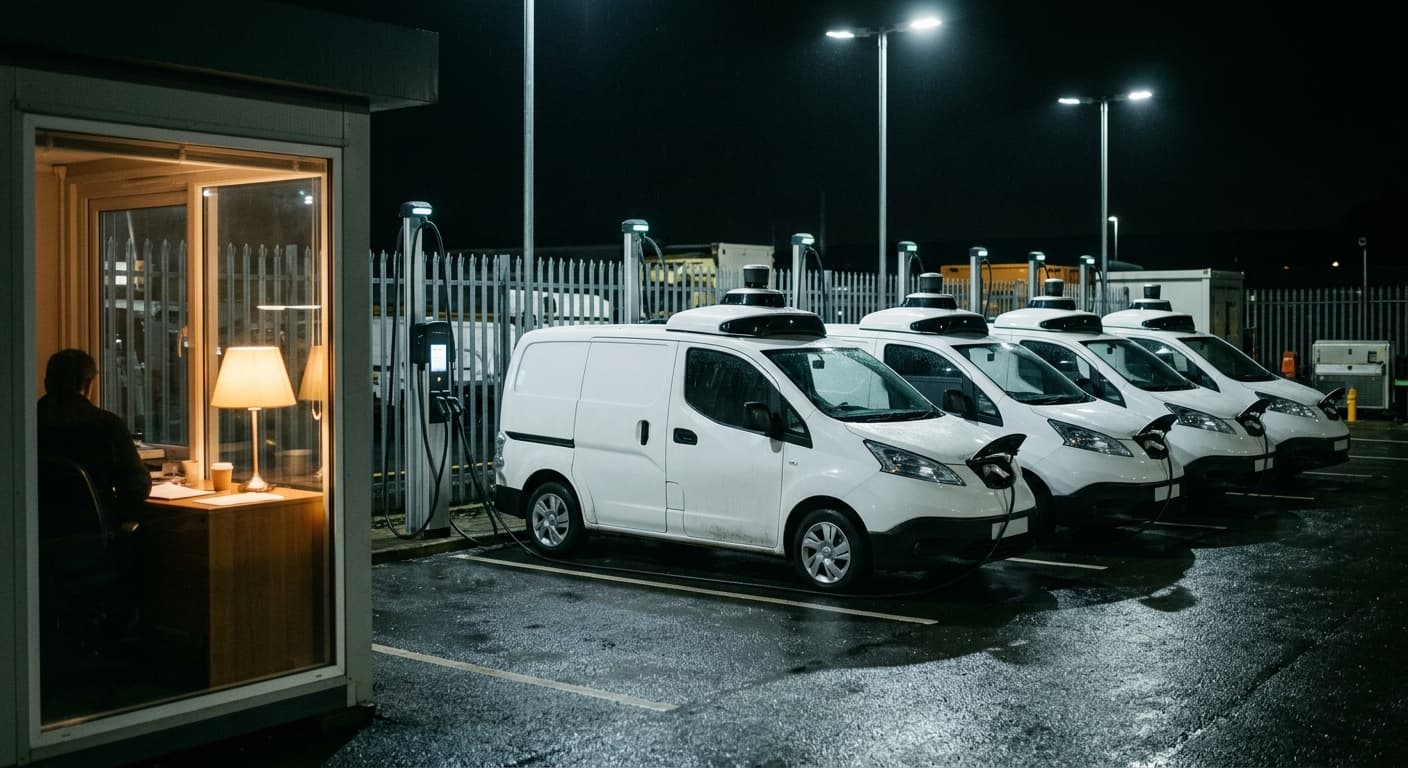
France allows cars that drive themselves for stretches, but only within a framework the Code de la route has carried since 2021. When an approved automated driving system is engaged and used within its conditions of use, the person at the wheel is not criminally liable for traffic offences caused by the system's manoeuvres, and the manufacturer can be prosecuted for death or injury offences if fault is established, and pays the fine for minor traffic offences. Apart from road tests under an experimental authorisation (Ordonnance n° 2016-1057 of 3 August 2016, which allows testing with no driver on board if a remote driver can take control), driverless vehicles may run in service only as part of an automated road transport system (STRA) put into service by a transport organiser after independent safety assessment, not as private cars.
Tesla FSD (Supervised) fits neither regime. It is a supervised driver-assistance system, and as of 30 September 2026, according to press reports and the transport minister's own statements, France had not recognised the provisional Dutch approval that lets it run in the Netherlands. A driver who uses it remains fully responsible.
Scope and date: This page covers French national law on automated and driverless road vehicles (Code de la route, Code des transports) and how EU vehicle approval interacts with it. It is current as of 30 September 2026. Approval and deployment status can change quickly; each status statement carries its date.
Are self-driving cars legal in France?
Yes, within limits. France does not have a single "self-driving car law". It has three separate sets of rules, and which one applies depends on what the vehicle actually does:
| Type of system | French legal basis | Who answers for traffic offences while it drives | Approval route |
|---|---|---|---|
| Driver assistance (SAE Level 2, e.g. adaptive cruise, lane centring, Tesla FSD Supervised) | Ordinary driver rules of the Code de la route | The human driver, at all times (L121-1) | EU vehicle type-approval |
| Delegated driving: a system that drives itself within a defined domain and asks the driver to take over (roughly SAE Level 3) | Code de la route L123-1 to L123-4, L319-1 to L319-4, R319-1, R412-17, R412-17-1 | Not the driver, for offences caused by the system's manoeuvres within its conditions of use; the manufacturer pays the fine for contraventions and can be prosecuted for death or injury offences if fault is established; the driver otherwise | EU vehicle type-approval of the system |
| Highly or fully automated vehicles in a transport service (driverless shuttles, freight) | Code des transports L3151-1 and following, R3151-1 to R3153-1 | Rules specific to the service; a remote intervention role exists | Organiser's decision after vehicle approval and independent safety assessment |
The key distinction is between assistance and delegation. A Level 2 system helps the driver, who keeps driving and supervising. A delegated driving system takes over the driving task itself, within the conditions its manufacturer sets, and only then does the special liability regime apply.
The legal framework: Ordonnance 2021-443 and Décret 2021-873
The government adopted Ordonnance n° 2021-443 of 14 April 2021, "relative au régime de responsabilité pénale applicable en cas de circulation d'un véhicule à délégation de conduite et à ses conditions d'utilisation" (on the criminal liability regime for driving a vehicle with delegated driving, and its conditions of use). It was published in the Journal officiel on 15 April 2021. It:
- created Chapter III of Book I of the Code de la route (L123-1 to L123-4), on criminal liability;
- created Chapter IX of Book III (L319-1 to L319-4), on the conditions of use of a delegated-driving vehicle;
- created a new Title V in the Code des transports (L3151-1 and following) for automated road transport systems, extended to goods transport by its article 6.
The Code de la route provisions have been in force since 16 April 2021. Article 7 of the ordonnance delayed the transport-system provisions until the day after publication of the decree publishing the amendments to the 1968 Vienna Convention on Road Traffic, "et au plus tard le 1er septembre 2022" (and at the latest on 1 September 2022). Légifrance shows Code des transports L3151-1 in force from 1 September 2022.
The implementing Décret n° 2021-873 of 29 June 2021 (JO of 1 July 2021) added the definitions (R311-1 and R311-1-1), the conditions of use (R319-1), the driver duties (R412-17 and R412-17-1), the data-recorder rule in the Code de procédure pénale, and the regulatory part of the STRA regime (R3151-1 to R3153-1). The Code de la route parts took effect on 2 July 2021.
The national technical service for ropeways and guided transport (STRMTG) lists the 2019 mobility law, Loi n° 2019-1428 of 24 December 2019 (LOM), as the starting point, followed by the 2021 ordonnance and the decrees of 2021 and 2024.
How French law classifies automated vehicles
French law uses its own vocabulary, and it does not map neatly onto the SAE levels most English-language guides use. Article R311-1 of the Code de la route defines three kinds of vehicle with an automated driving system:
- Véhicule partiellement automatisé (partially automated vehicle): the system exercises "le contrôle dynamique du véhicule dans un domaine de conception fonctionnelle particulier" (dynamic control of the vehicle in a particular operational design domain), and must hand back control when it needs to. Despite the name, this is the French category for a system that drives itself, roughly SAE Level 3. It is not the same thing as SAE Level 2 "partial automation".
- Véhicule hautement automatisé (highly automated vehicle): the system can respond to any traffic event or failure within its domain without a takeover request, and the vehicle may be part of an STRA.
- Véhicule totalement automatisé (fully automated vehicle): the same, within the technical design domain of the STRA the vehicle is integrated into.
Article R311-1-1 defines the automated driving system itself as a "système associant des éléments matériels et logiciels, permettant d'exercer le contrôle dynamique d'un véhicule de façon prolongée" (a system combining hardware and software that can exercise dynamic control of a vehicle on a sustained basis). The operational design domain covers "conditions notamment géographiques, météorologiques, horaires, de circulation, de trafic et d'infrastructure" (geographic, weather, time, traffic and infrastructure conditions, among others).
A Level 2 system such as Tesla FSD (Supervised) does not exercise dynamic control on a sustained basis in this sense. The driver keeps doing the driving task, so none of the delegated-driving rules below protect the driver.
Who is responsible when the car is driving itself?
The default rule in France is in Code de la route L121-1: "Le conducteur d'un véhicule est responsable pénalement des infractions commises par lui dans la conduite dudit véhicule" (the driver of a vehicle is criminally liable for offences they commit while driving it).
Article L123-1 switches that rule off while the system drives:
"Les dispositions du premier alinéa de l'article L. 121-1 ne sont pas applicables au conducteur, pour les infractions résultant d'une manœuvre d'un véhicule dont les fonctions de conduite sont déléguées à un système de conduite automatisé, lorsque ce système exerce, au moment des faits et dans les conditions prévues au I de l'article L. 319-3, le contrôle dynamique du véhicule."
In English: the driver is not criminally liable for offences resulting from a manoeuvre of a vehicle whose driving functions are delegated to an automated driving system, when that system is in dynamic control of the vehicle at the time, under the conditions in L319-3 I.
The same article sets a standing duty: "Le conducteur doit se tenir constamment en état et en position de répondre à une demande de reprise en main du système de conduite automatisé" (the driver must remain constantly in a condition and position to respond to a takeover request from the automated driving system).
The driver's ordinary liability under L121-1 applies again in three situations listed in L123-1:
- from the moment the driver takes back dynamic control of the vehicle;
- if the driver has not taken back control by the end of the transition period that follows a takeover request from the system;
- for a driver who does not obey police orders, instructions or signals, or the rules giving way to priority emergency vehicles.
This is a rule about criminal liability for traffic offences. It does not say who pays compensation to an accident victim; that question is covered below under accident compensation.
When can the manufacturer be prosecuted?
Article L123-2 places criminal exposure on the manufacturer while the system drives. Légifrance shows the current version "en vigueur depuis le 11/07/2025", as amended by Loi n° 2025-622 of 9 July 2025 "créant l'homicide routier et visant à lutter contre la violence routière" (creating road homicide and combating road violence), article 10.

The first paragraph opens: "Pendant les périodes où le système de conduite automatisé exerce le contrôle dynamique du véhicule conformément à ses conditions d'utilisation, le constructeur du véhicule ou son mandataire, au sens de l'article 3 du règlement (UE) 2018/858 du Parlement européen et du Conseil du 30 mai 2018, est pénalement responsable..." (during periods when the automated driving system exercises dynamic control of the vehicle in line with its conditions of use, the vehicle manufacturer or its authorised representative, within the meaning of Article 3 of EU Regulation 2018/858, is criminally liable...).
That liability covers:
- the offences of unintentional harm to life or physical integrity in Code pénal articles 221-6-1, 222-19-1 and 222-20-1;
- since the 2025 amendment, the road homicide and road injury offences in Code pénal articles 221-18, 221-19 and 221-20.
It applies "lorsqu'il est établi une faute, au sens de l'article 121-3 du même code" (when a fault is established, within the meaning of Article 121-3 of the Penal Code). It is not automatic liability for every crash.
The second paragraph deals with minor traffic offences. Except in the case covered by L123-1 3° (failing to obey police or give way to emergency vehicles), when a manoeuvre performed by the system breaks a rule punished as a contravention, the manufacturer or its representative "est redevable pécuniairement de l'amende encourue" (is liable to pay the fine incurred).
Many French guides still describe L123-2 in its 2021 wording and do not mention the road homicide offences. The amendment matters because the 2025 law reclassified the most serious road deaths and injuries as their own offences; without it, the manufacturer limb would have missed them.
What the driver must do, and may do, while the system drives
The decision to switch the system on belongs to the driver. Article L319-3 I: "La décision d'activer un système de conduite automatisé est prise par le conducteur, préalablement informé par le système que ce dernier est en capacité d'exercer le contrôle dynamique du véhicule conformément à ses conditions d'utilisation" (the decision to activate an automated driving system is made by the driver, after being informed by the system that it can exercise dynamic control of the vehicle in accordance with its conditions of use).
Once it is engaged and used within its conditions of use, Article R412-17 lifts one ordinary driving rule: "les dispositions de l'article R. 412-6 ne sont pas applicables au conducteur" (the provisions of Article R412-6 do not apply to the driver). R412-6 II is the general rule that every driver must be constantly in a state and position to carry out, without delay, all the manoeuvres that fall to them. This is the legal basis for the driver no longer having to drive.
What the driver still must do (R412-17-1, created by Décret 2021-873):
- In a partially or highly automated vehicle, stay "constamment en état et en position de répondre" (constantly in a state and position to respond) to a takeover request. Passengers, transported objects or non-transparent items on the windows must not restrict the driver's movement or field of vision.
- Stay ready to take back control without delay in order to obey police stop orders and traffic officers' instructions, and to give way to emergency and priority vehicles.
- Breaching these duties is punished by the fine for a second-class contravention, and the vehicle can be immobilised under L325-1 to L325-3.
What R412-17 does not do: it names only R412-6. It does not mention the separate rules on handheld phones (R412-6-1) or on screens in the driver's field of view (R412-6-2). Do not assume a Level 3 system makes it lawful to hold your phone; for the general phone and screen rules see our guide to French driving laws and licence points in France.
None of this applies to a Level 2 system. With driver assistance, the driver is still driving, R412-6 applies in full, and every offence is the driver's.
Takeover requests, the transition period and the minimal-risk manoeuvre
The law describes what the system must do when it reaches the edge of its abilities. Under L319-3 II, when its conditions of use are no longer met, or about to stop being met, the system must alert the driver and issue a takeover request; if the driver does not respond in time, or in case of a serious failure, it must carry out a minimal-risk manoeuvre (manœuvre à risque minimal) to bring the vehicle to a safe state.
Article R311-1-1 defines the transition period as the time between the takeover request and the start of the minimal-risk manoeuvre, during which the driver must take back control. The Code does not fix a number of seconds; it is part of the system's conditions of use.
Article R319-1, in force since 2 July 2021, lists what those conditions of use must define, including:
- the vehicle's operational design domain;
- the state and position the driver must keep in order to respond to a takeover request;
- how and when a takeover request is sent, including the transition period;
- when a minimal-risk manoeuvre or an emergency manoeuvre is triggered.
It also requires that the system "doit pouvoir être désactivé à tout moment par une reprise en main du conducteur" (must be capable of being deactivated at any time by the driver taking back control), subject to the rules on emergency manoeuvres.
Buying or renting a Level 3 car in France
The French delegated-driving articles regulate how the system is used and who is liable. Approval of the vehicle and its system is an EU matter: L123-2 and L319-1 both refer to the manufacturer "au sens de l'article 3 du règlement (UE) 2018/858", the EU type-approval regulation. For automated lane-keeping on motorways, the international technical rule is UN Regulation No 157 on Automated Lane Keeping Systems, which the EU applies.
Three French rules then frame how the car may be used:
- Conditions of use. L319-1: "Le système de conduite automatisé est soumis à des conditions d'utilisation définies par le constructeur du véhicule ou son mandataire" (the system is subject to conditions of use defined by the manufacturer or its representative). The driver's protection under L123-1 exists only within them.
- Information before sale or rental. L319-2 points to Article L224-68-1 of the Code de la consommation, which sets the information a seller or renter must give before a delegated-driving vehicle is made available.
- Speed and weather limits come from the system's approval and conditions of use, not from a figure in the Code de la route articles above. Read the owner's documentation for the specific system.
Which models offer a Level 3 system in France, and on which roads, is a product question that changes with each model year. Press reports in early 2026 said some German manufacturers were dropping Level 3 from refreshed models. That is a commercial decision, not a change in French law: the delegated-driving regime remains in the Code.
Driverless shuttles and freight: the STRA regime
A vehicle with nobody driving it cannot use the private-car rules above. Apart from road tests under an experimental authorisation (Ordonnance n° 2016-1057 of 3 August 2016, which allows testing with no driver on board if a remote driver located outside the vehicle can take control), it can operate in service only as part of a système de transport routier automatisé (STRA), an automated road transport system, under Title V of the Code des transports.

Article R3151-1 defines an STRA as a "système technique de transport routier automatisé, déployé sur des parcours ou zones de circulation prédéfinis" (a technical automated road transport system deployed on predefined routes or traffic zones), completed by operating and maintenance rules. A trained and medically fit "personne habilitée" (authorised person) may intervene remotely.
The core rule is Code des transports L3151-1, in force since 1 September 2022:
"I.-La mise en service et l'exploitation d'un système de transport routier automatisé tel que défini par voie réglementaire font l'objet d'une décision de l'organisateur du service."
In English: putting an STRA into service and operating it requires a decision by the service organiser, typically the local transport authority for public transport. Under L3151-1 II, that decision depends on:
- prior approval (réception) of the vehicles used;
- a prior safety demonstration, certified by an organisme qualifié agréé (approved qualified body), both for the system as designed for that type of route or zone and for the system as deployed on the actual route;
- periodic safety audits of the system in operation by an approved qualified body.
Under R3152-11, the organiser notifies its decision to the préfet before the service starts. The préfet can require a safety diagnosis and suspend operation in case of imminent serious risk.
The safety benchmark is the "GAME" principle (globalement au moins équivalent): the overall safety level for users, staff and third parties must be at least equivalent to existing comparable systems. STRMTG, the state technical service, approves the qualified bodies, writes the technical guides and analyses incidents, but it states that it "n'a pas pour mission de contrôler, ni d'autoriser la mise en service des systèmes" (does not have the task of inspecting or authorising the putting into service of systems). The decision sits with the organiser.
The regime has since been extended and detailed:
- Décret n° 2024-1063 of 25 November 2024 on automated road transport of goods, in force from 28 November 2024.
- Arrêté of 15 April 2025 on the operating safety of STRA using fully automated vehicles for public passenger transport (JO of 18 April 2025, in force the next day).
The STRA framework is not a robotaxi licence for private cars. Each service is approved for its own defined route or zone. The Ministry for Ecological Transition publishes France's national strategy for automated and connected road mobility, most recently a "Review and update proposals 2025-2027" document.
Is Tesla FSD legal in France?
As of 30 September 2026, according to press reports and the transport minister's own statements, Tesla FSD (Supervised) had not been approved for use in France. It is a Level 2 driver-assistance system: even where it is available, the driver must supervise it constantly and is responsible for everything the car does. The French delegated-driving regime does not apply to it.
The route to Europe runs through the Netherlands. The Dutch vehicle authority RDW granted a provisional type approval on 10 April 2026, which it described as "currently valid only in the Netherlands". Other EU states can recognise that approval nationally, and press reports say several have. As of 30 September 2026 France had not, according to press reports and the minister's own statements below. An EU-wide approval needs a vote of member states in the Technical Committee on Motor Vehicles (TCMV); according to press reports on its draft agenda, the 6 October 2026 meeting lists the request for discussion only, with a vote not expected before December 2026. See where Tesla FSD is legal for the country-by-country status.
What French ministers have said, as reported in the press (these are statements, not legal decisions):
- 22 July 2026: Transport Minister Philippe Tabarot said France would not authorise FSD at that stage, citing concerns including the system's ability to exceed speed limits by up to 50% in some conditions and how driver attention is monitored.
- 2 September 2026: after an exchange with Elon Musk, he announced that Tesla had made two FSD-equipped vehicles available and that France was entering "une nouvelle étape : celle des essais sur route" (a new stage: that of road tests).
- Early September 2026: the ministry told AFP that no blocking point impossible to resolve had been identified so far in initial tests, and that adjusting the system's settings might bring it into line with European and international rules.
Road tests are an evaluation, not an authorisation. Using FSD (Supervised) in France would require French recognition of an approval or an EU-wide decision. Driving a Tesla with Autopilot features in France leaves the driver fully responsible, as with any driver-assistance system.
Who pays after an accident with an automated car?
Compensation for road accident victims in France runs through the Loi n° 85-677 of 5 July 1985 (loi Badinter), which applies to "victimes d'un accident de la circulation dans lequel est impliqué un véhicule terrestre à moteur" (victims of a traffic accident involving a land motor vehicle), together with compulsory motor insurance.
The 2021 ordonnance is about criminal liability and conditions of use. Its articles set no separate compensation scheme for accidents involving a delegated-driving system, so the L123-1 and L123-2 rules on who can be prosecuted should not be read as rules on who compensates the victim. Whether an insurer can later recover from a manufacturer is a separate product-liability question. For the US comparison, see who is liable in a self-driving car accident.
Data from the vehicle's delegated-driving recorder
Article L123-3 gives specific officials access to the data of the "dispositif d'enregistrement des données d'état de délégation de conduite" (the device recording delegated-driving status), which shows whether the system or the driver was in control:
- national police officers of the command or supervisory corps, when the vehicle is involved in an accident causing bodily injury;
- officials competent to record traffic offences, during vehicle and driver checks;
- the registration holder and certain other persons, when an offence is detected.
The manufacturer or its representative must guarantee the integrity of the data and access to it. Where the manufacturer can access data remotely, a decree sets the access rules and retention, which cannot exceed six years from an injury accident or one year from the facts in other cases. From 1 January 2029, Ordonnance n° 2025-1091 of 19 November 2025 (art. 37) updates only the Code de procédure pénale cross-references in L123-3; the access list and retention limits are unchanged. For how French privacy law treats vehicle data more generally, see France data privacy laws, and for filming on the road, France recording laws.
What the EU decides and what France decides
| Question | Decided by |
|---|---|
| Whether a vehicle or driving system is approved (type-approval, UN regulations such as R157) | EU type-approval law (Regulation (EU) 2018/858) and national approval authorities applying it |
| Whether a Level 2 system with a national provisional approval (Tesla FSD) can be used in France | French recognition of that approval, or an EU-wide decision after a TCMV vote |
| Who is criminally liable while a delegated-driving system drives | France: Code de la route L123-1, L123-2 |
| What the driver must do while the system drives | France: L319-3, R412-17, R412-17-1 |
| Whether a driverless shuttle or freight service may run on a route | France: Code des transports L3151-1 (organiser decision, approved qualified body) |
| Compensation of accident victims | France: loi Badinter and compulsory motor insurance |
For how other countries handle the same questions, compare Germany's self-driving car laws, the UK's self-driving car laws, and the world overview of self-driving car laws. For the SAE levels themselves, see levels of driving automation.
Not legal advice. This page gives general legal information about French law on automated and driverless vehicles, verified against Légifrance and French government sources as of 30 September 2026. Approval and deployment status changes quickly. For advice on a specific situation, consult an avocat admitted in France.
Frequently Asked Questions
Is Level 3 autonomous driving legal in France?
Yes, if the vehicle's automated driving system is type-approved and used within the conditions of use its manufacturer defines. Since 2021 the Code de la route has allowed delegated driving (L319-1 to L319-4), and while the system drives within those conditions the driver is not criminally liable for offences caused by its manoeuvres (L123-1). The driver must stay ready to take back control at all times.
Can I take my hands off the wheel in a self-driving car in France?
Only while an approved delegated-driving (Level 3) system is engaged within its conditions of use. Article R412-17 then lifts the general rule that a driver must be ready to perform every manoeuvre, but R412-17-1 still requires you to stay in a state and position to respond to a takeover request. With a Level 2 assistance system you are still driving and the normal rules apply in full.
Can I use my phone while a Level 3 system drives in France?
Do not assume so. Article R412-17 lifts only the general rule in R412-6; it does not mention the separate handheld-phone rule (R412-6-1) or the screen rule (R412-6-2). You must also stay ready to respond to a takeover request at any moment.
Who is responsible if a self-driving car crashes in France?
For criminal liability, it depends on who was in control. While the system drives within its conditions of use, the driver is not liable for offences caused by its manoeuvres, and the manufacturer can be prosecuted for the listed death or injury offences, including road homicide since 11 July 2025, if fault is established, and pays the fine for minor traffic offences (L123-2). Victims are compensated under the 1985 Badinter law and compulsory motor insurance.
Is Tesla FSD allowed in France?
Not as of 30 September 2026, according to press reports and the transport minister's own statements: France had not recognised the provisional Dutch approval of FSD (Supervised), and no EU-wide approval exists; press reports say an EU committee vote is not expected before December 2026. The transport minister announced road tests in September 2026, which are an evaluation, not an authorisation.
Are there driverless shuttles or robotaxis in France?
Apart from road tests under an experimental authorisation (Ordonnance n° 2016-1057 of 3 August 2016), driverless vehicles may run in service only as part of an automated road transport system (STRA). Under Code des transports L3151-1, the service organiser decides on putting it into service after vehicle approval and a safety demonstration certified by an approved qualified body, and must notify the prefect. Each service is approved for its own route or zone; this is not a general robotaxi licence.
Is there a 60 km/h limit for Level 3 driving in France?
The Code de la route articles on delegated driving do not set a speed figure. Speed, road type and weather limits come from the system's type-approval and the manufacturer's conditions of use, which the driver must respect for the liability shield in L123-1 to apply.
Updates
Independently fact-checked against the cited primary sources
Sources and References
- Ordonnance n° 2021-443 du 14 avril 2021 (criminal liability regime and conditions of use for delegated-driving vehicles; art. 7 entry into force)(legifrance.gouv.fr).gov
- Ordonnance n° 2016-1057 du 3 août 2016 on experimental vehicles with delegated driving (road tests; no driver on board if a remote driver can take control)(legifrance.gouv.fr).gov
- Décret n° 2021-873 du 29 juin 2021 implementing Ordonnance 2021-443 (R311-1, R311-1-1, R319-1, R412-17, R412-17-1, Code des transports R3151-1 to R3153-1)(legifrance.gouv.fr).gov
- Code de la route L121-1: the driver is criminally liable for offences committed while driving(legifrance.gouv.fr).gov
- Code de la route L123-1: driver liability disapplied while the automated system drives; duty to stay ready; three exceptions(legifrance.gouv.fr).gov
- Code de la route L123-2 (version in force since 11 July 2025): manufacturer criminal liability during automated control(legifrance.gouv.fr).gov
- Loi n° 2025-622 du 9 juillet 2025 créant l'homicide routier (art. 10 amends Code de la route L123-2)(legifrance.gouv.fr).gov
- Code de la route L123-3: access to delegated-driving status recorder data; retention limits; version in force until 1 January 2029(legifrance.gouv.fr).gov
- Code de la route L319-1 to L319-4: conditions of use, pre-sale information, activation by the driver, takeover and minimal-risk manoeuvre(legifrance.gouv.fr).gov
- Code de la route R311-1: definitions of partially, highly and fully automated vehicles(legifrance.gouv.fr).gov
- Code de la route R311-1-1: definitions of automated driving system, dynamic control, operational design domain, transition period(legifrance.gouv.fr).gov
- Code de la route R319-1: what the conditions of use must define; driver can deactivate the system at any time(legifrance.gouv.fr).gov
- Code de la route R412-17: R412-6 does not apply to the driver while the automated system drives(legifrance.gouv.fr).gov
- Code de la route R412-17 and R412-17-1 (Section 2 bis, delegated driving): driver readiness duties, second-class contravention, immobilisation(legifrance.gouv.fr).gov
- Code de la route R412-6: general duty to be in a state and position to perform all manoeuvres(legifrance.gouv.fr).gov
- Code des transports L3151-1: organiser's decision to put an automated road transport system into service; approved qualified body(legifrance.gouv.fr).gov
- Code des transports Title V, R3151-1 to R3153-1: automated road transport systems (definitions, safety, R3152-11 notification to the prefect)(legifrance.gouv.fr).gov
- Décret n° 2024-1063 du 25 novembre 2024 relatif au transport routier automatisé de marchandises(legifrance.gouv.fr).gov
- Arrêté du 15 avril 2025 on operating safety of automated road transport systems using fully automated vehicles for public passenger transport(legifrance.gouv.fr).gov
- STRMTG: legal foundations of automated road transport, GAME principle, role of approved qualified bodies and of STRMTG(strmtg.developpement-durable.gouv.fr).gov
- Ministry for Ecological Transition: automated and connected road transport policy and national strategy 2025-2027(ecologie.gouv.fr).gov
- Loi n° 85-677 du 5 juillet 1985 (loi Badinter), art. 1: compensation of road traffic accident victims(legifrance.gouv.fr).gov
- UN Regulation No 157 on Automated Lane Keeping Systems, as published in the EU Official Journal(eur-lex.europa.eu).gov
- RDW: provisional type approval of Tesla FSD Supervised, valid only in the Netherlands (10 April 2026)(rdw.nl).gov
- electrive (press): TCMV 6 October 2026 agenda lists Tesla FSD for discussion only; vote not expected before December(electrive.com)
- Next (press, 7 Sept 2026): minister's July 2026 refusal and September 2026 road-test announcement on Tesla FSD(next.ink)
- Journal de l'Automobile (press, AFP, 4 Sept 2026): ministry says no blocking point identified in initial FSD tests(journalauto.com)
- bmw-clubs.fr (press, 25 Feb 2026): BMW and Mercedes drop Level 3 on refreshed models(bmw-clubs.fr)
- Code de la route L123-3, version in force from 1 January 2029 (as amended by Ordonnance n° 2025-1091 du 19 novembre 2025, art. 37: updates Code de procédure pénale cross-references only)(legifrance.gouv.fr).gov