Mozambique E-Scooter Laws: Swept Into the Ciclomotor Rule (2026)
Independently fact-checked against primary sources (last audited July 23, 2026). · 1 primary source cited on this page. How we verify our legal content
This article is general information about e-scooter laws in Mozambique and is not legal advice. Mozambique's e-scooter classification rests on reading a general road code provision, so for a specific situation consult a Mozambican advogado or INATRO directly. Information last verified on 23 July 2026.
Are e-scooters legal in Mozambique?
Mozambique's Código da Estrada (road code) does not name e-scooters directly, but unlike several of its regional neighbors, it does define an electric-power vehicle threshold, which gives an e-scooter a plausible legal home even without being named. Article 110 defines a "ciclomotor" as a two or three wheeled vehicle with a maximum built speed of 45 km/h, and for an electric one, a maximum power that does not exceed 4 kW.
That is meaningfully more specific than a code that only mentions combustion engines. It suggests Mozambique's lawmakers already anticipated electric two- and three-wheelers when they wrote this provision. The open question is whether a stand-up, pedal-free electric kick scooter actually fits the ciclomotor definition's wheel-count wording, or falls into a gap between "ciclomotor" and "velocípede," the code's fully human-powered pedal-cycle category, which by definition excludes any motor.
No source resolves that question directly. The honest legal position for Mozambique is that a fast or powerful e-scooter most plausibly reads as a ciclomotor, carrying that category's registration and licensing obligations, while a slower or more toy-like device sits in a genuinely undefined space between two categories. Neither reading means an e-scooter is free to ride without consequence.
What counts as an e-scooter here
Article 110 also defines "Motociclos" (2 to 4 wheels, over 50cm3 or faster than 45 km/h) and "Triciclos"/"Quadriciclos" (four-wheel vehicles under 550kg unladen), neither of which fits a two-wheel stand-up scooter either. "Velocípede," defined elsewhere in the code, covers only fully pedal-powered cycles and by definition excludes any motorized device, electric or otherwise.
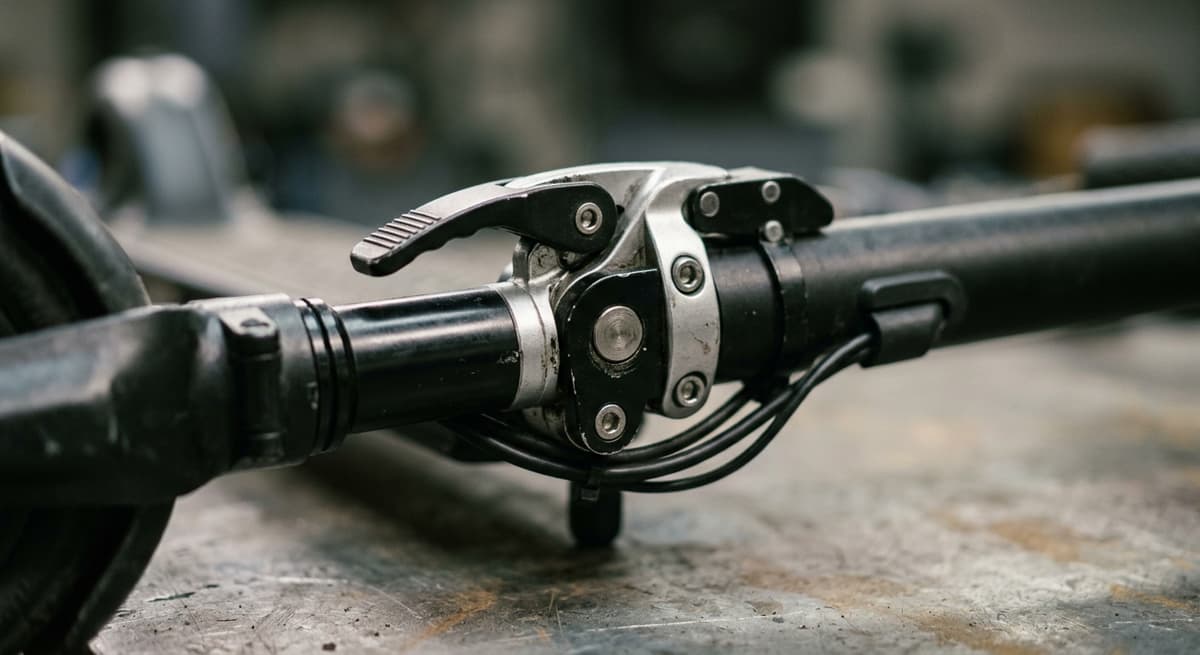
That leaves "ciclomotor," with its explicit 4kW electric clause, as the closest fit, even though the provision was written with a seated two- or three-wheeled moped in mind rather than a stand-up scooter.
Where you can ride
No source found this session describes a specific road, cycle lane, or sidewalk rule written for e-scooters in Mozambique. If the ciclomotor classification applies, the vehicle would be expected to follow the same road-use rules as any other motorized ciclomotor, meaning travel with motor traffic rather than on the sidewalk, though this was not separately confirmed in the sections reviewed.
Rider rules
Article 127 of the Código da Estrada sets out a system of driving licence categories, including A1, A, B, C1, C, and several others, that a ciclomotor rider would need to be slotted into. Which specific category letter applies to ciclomotores was not extracted from the source text this session, so the exact licence class remains an open question, though the existence of a licensing requirement for the category is confirmed.
Penalties
No source found this session lists a specific fine schedule for unregistered or unlicensed ciclomotor use that could be confidently attributed to e-scooters. Given the ciclomotor classification carries standard vehicle obligations, a genuine violation would likely fall under Mozambique's general unregistered-vehicle and unlicensed-driving penalties, but no exact figures were confirmed for this session's research.
Enforcement in practice
No news report, police statement, or other source found this session describes an actual enforcement action, a fine, a seizure, or even a warning, against an e-scooter rider in Mozambique specifically. That silence is a genuine information gap rather than proof that riding is tolerated.
A code with an explicit electric-power threshold already on the books is a stronger basis for future enforcement than a code that ignores electric vehicles entirely, even where no case has been documented yet.
Legal history and what may change
Mozambique's government has a proposed road code revision under public consultation as of April 2026 that would go further than the current ciclomotor reading. The proposal explicitly classifies electric bicycles and e-scooters up to 25 km/h as regulated vehicles, alongside other changes including reduced in-town speed limits, a points-based driving licence system, and stricter drunk-driving limits.
This is a proposal, not enacted law. As of the access date, no source confirms it has passed. If it is adopted as drafted, it would replace today's indirect ciclomotor reading with an explicit e-scooter category for the first time in Mozambique's road code, which would be a meaningful change from the current, more uncertain legal position.
For how South Africa, a regional neighbor, handles the same device, see our South Africa e-scooter laws guide. For how other countries handle e-scooters, see our global e-scooter law guide.
Frequently Asked Questions
Are e-scooters legal in Mozambique?
There is no law naming e-scooters directly, but Mozambique's road code defines a "ciclomotor" category with an explicit electric-power threshold of 4 kW, which most plausibly covers a fast or powerful e-scooter. Whether every stand-up e-scooter fits that category's wheel-count wording is not fully resolved.
Do I need to register an e-scooter in Mozambique?
If it is treated as a ciclomotor, which the road code's definition suggests, then yes, registration and a driving licence category would apply, the same as for a moped.
Is Mozambique introducing a new e-scooter law?
A proposed 2026 revision to the road code, published for public consultation in April 2026, would explicitly classify e-scooters and e-bikes up to 25 km/h as regulated vehicles. As of this writing it has not been confirmed as enacted.
Is there an e-scooter rental service in Maputo?
No evidence was found of an authorized rental or share scheme operating in Maputo or elsewhere in Mozambique.
What speed limit applies to e-scooters in Mozambique?
The current ciclomotor category caps at 45 km/h. The proposed 2026 revision would separately define a 25 km/h threshold for e-scooters and e-bikes specifically, but that threshold is not yet law.
Has anyone been fined for riding an e-scooter in Mozambique?
No documented enforcement case was found. That is a gap in available information, not confirmation that e-scooters go unenforced.
Updates
Independently fact-checked against the cited primary sources
Sources and References
- Código da Estrada, Article 110, ciclomotor and motociclo definitions including the 4kW electric threshold(codest.co.mz)
- Código da Estrada, Article 127, driving licence categories(codest.co.mz)
- INATRO (Instituto Nacional de Transportes Rodoviários), official hosted text of the Código da Estrada(inatro.gov.mz).gov
- checka.co.mz, report on Mozambique's proposed April 2026 road code revision classifying e-scooters and e-bikes up to 25 km/h(checka.co.mz)