18 U.S.C. § 2511 Explained: The Federal Wiretap Ban
Independently fact-checked against primary sources (last audited August 12, 2026). · 4 primary sources cited on this page. How we verify our legal content
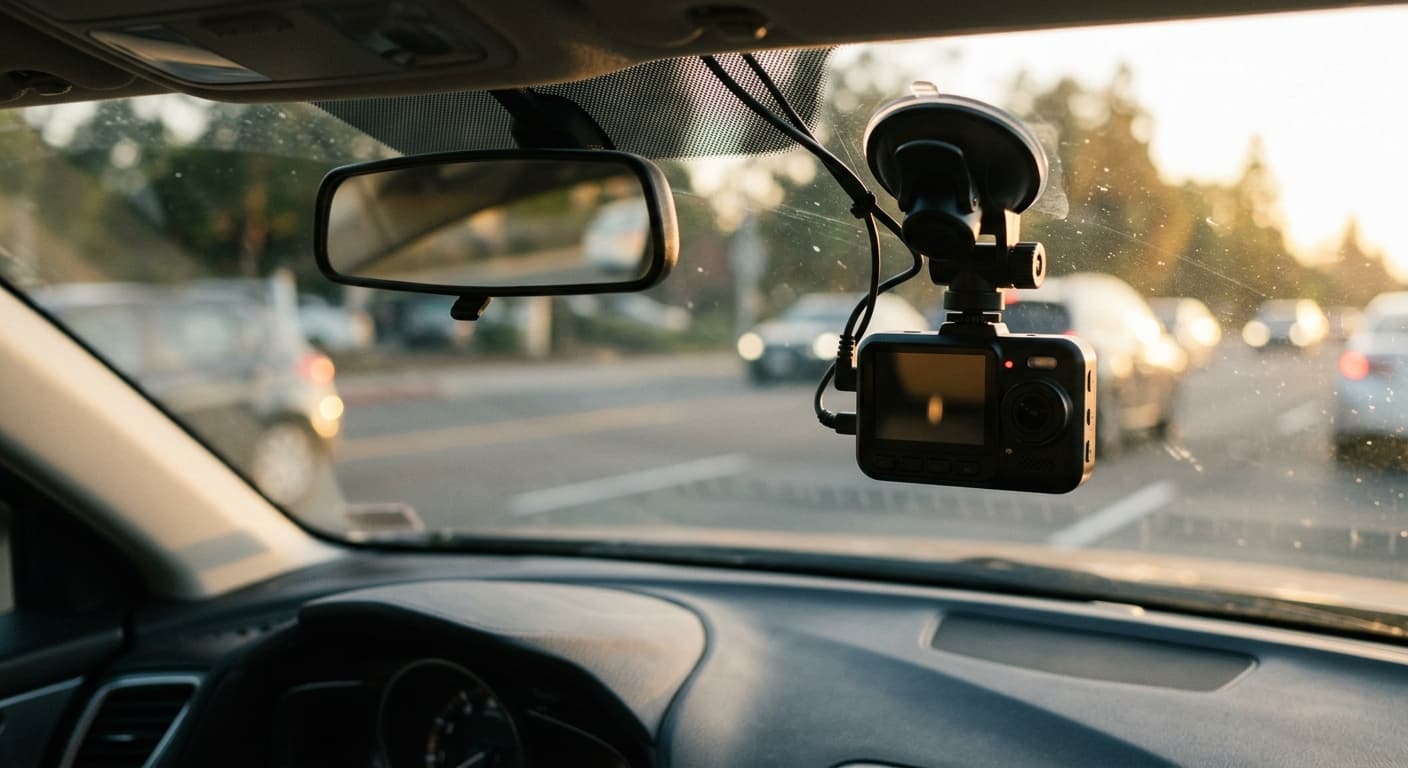
18 U.S.C. § 2511 is the core criminal and civil prohibition in the federal Wiretap Act. It bans intentionally intercepting, disclosing, or using the contents of a wire, oral, or electronic communication, subject to specific statutory exceptions, most importantly the one-party-consent rule at § 2511(2)(d).
This article covers the federal statute only, the version of § 2511 currently codified at 18 U.S.C. § 2511. It does not restate every rule in the broader ECPA framework or work through any single state's recording law; for the fuller statutory picture see the Federal Wiretap Act and ECPA guide, and for a specific state's consent rule see US Recording Laws by State.
Information last verified against primary federal sources on August 12, 2026. This article has not yet been reviewed by a licensed lawyer.
What 18 U.S.C. § 2511 Actually Prohibits
Section 2511(1) prohibits several distinct acts, not just one. Read together, its prongs make it unlawful to: (a) intentionally intercept, endeavor to intercept, or procure another person to intercept any wire, oral, or electronic communication; (b) intentionally use a device to intercept an oral communication where a jurisdictional hook applies, such as a device affixed to a wire or cable, a device that transmits by radio, a device shipped in interstate commerce, or conduct occurring on or targeting a business affecting interstate commerce; (c) intentionally disclose the contents of a communication knowing or having reason to know it was obtained through an unlawful interception; (d) intentionally use those contents knowing or having reason to know they came from an unlawful interception; and (e) a narrower disclosure ban tied to communications lawfully intercepted during a criminal investigation, where the disclosure is made with intent to improperly obstruct, impede, or interfere with that investigation.
The structure matters because it reaches more than the person who physically wiretaps a line. Someone who never touches the interception equipment can still violate section 2511 by knowingly disclosing or using contents obtained through someone else's unlawful interception.
Wire, Oral, and Electronic Communications, and the Extension-Phone Rule
Section 2511 only reaches communications that fit the statute's defined categories. An oral communication, under 18 U.S.C. § 2510(2), is defined as "any oral communication uttered by a person exhibiting an expectation that such communication is not subject to interception under circumstances justifying such expectation, but such term does not include any electronic communication." Words have to actually be spoken, and the speaker's expectation of privacy has to be both genuine and objectively reasonable.
That definition is why a silent security or doorbell camera with no audio component falls outside section 2511 entirely. With no words uttered and no wire or electronic communication being intercepted, there is nothing for the statute to reach; purely visual surveillance is instead a matter of state video-voyeurism law and Fourth Amendment doctrine, not the federal Wiretap Act. Turning on audio capture on the same device brings it back within the statute's reach.
A separate and frequently misplaced rule is the ordinary extension-phone exclusion. It is not an exception written into section 2511(2); it lives in the definition of "electronic, mechanical, or other device" at 18 U.S.C. § 2510(5)(a), which excludes "any telephone or telegraph instrument, equipment or facility, or any component thereof, (i) furnished to the subscriber or user by a provider of wire or electronic communication service in the ordinary course of its business and being used by the subscriber or user in the ordinary course of its business or furnished by such subscriber or user for connection to the facilities of such service and used in the ordinary course of its business." A second sub-clause, (ii), separately excludes such equipment when it is being used by a provider of wire or electronic communication service in the ordinary course of its business, or by an investigative or law enforcement officer in the ordinary course of his duties. The practical effect: listening in on an ordinary business extension phone covered by either sub-clause never even qualifies as an interception by a covered "device," so it never reaches section 2511(1) in the first place. That is a different mechanism than the exceptions discussed below, which excuse conduct that would otherwise be a violation.
The One-Party-Consent Exception, § 2511(2)(d)
The exception that defines federal recording law reads:

"It shall not be unlawful under this chapter for a person not acting under color of law to intercept a wire, oral, or electronic communication where such person is a party to the communication or where one of the parties to the communication has given prior consent to such interception unless such communication is intercepted for the purpose of committing any criminal or tortious act in violation of the Constitution or laws of the United States or of any State."
Two things have to both be true for the exception to apply. First, the recorder must either be a party to the communication or have obtained the prior consent of one of the parties; a third party who is not on the call and has no party's consent gets no protection from this exception at all. Second, the interception itself must not be for the purpose of committing a criminal or tortious act. That second piece is a carve-out, not an afterthought: a recording made to facilitate blackmail, stalking, or another crime or state-law tort loses the consent defense even though a party consented to it.
Consent under section 2511(2)(d) does not have to be spoken aloud. In Griggs-Ryan v. Smith, 904 F.2d 112 (1st Cir. 1990), a tenant kept using his landlady's phone line after she repeatedly and unambiguously warned him that incoming calls were being recorded. The First Circuit held his continued use of the line manifested implied consent, reasoning that "consent inheres where a person's behavior manifests acquiescence or a comparable voluntary diminution of his or her otherwise protected rights," and upheld use of the recording after it captured him discussing a drug deal.
Section 2511 also creates liability for private individuals, not only government wiretaps. In Forsyth v. Barr, 19 F.3d 1527 (5th Cir. 1994), neighbors rerouted a family's phone line to eavesdrop on and record their calls; the Fifth Circuit's analysis confirmed that section 2511 reaches ordinary civil disputes between private parties who intercept wire communications without authorization, carrying both potential criminal exposure and civil liability under section 2520.
The Provider and Ordinary-Course-of-Business Exception, § 2511(2)(a)(i)
A separate exception covers communication service providers rather than ordinary recorders:
"It shall not be unlawful under this chapter for an operator of a switchboard, or an officer, employee, or agent of a provider of wire or electronic communication service, whose facilities are used in the transmission of a wire or electronic communication, to intercept, disclose, or use that communication in the normal course of his employment while engaged in any activity which is a necessary incident to the rendition of his service or to the protection of the rights or property of the provider of that service, except that a provider of wire communication service to the public shall not utilize service observing or random monitoring except for mechanical or service quality control checks."
Courts construe this narrowly, requiring a real connection between the interception and the provider's ability to deliver the underlying service. It is not a general business-monitoring right, and it should not be confused with the separate extension-phone definition in section 2510(5)(a) discussed above; that provision covers ordinary phone equipment, while this one covers the entity providing the communication service itself. An employer that is not a communication service provider cannot rely on section 2511(2)(a)(i) simply because it owns the phone system its employees use.
Other § 2511(2) Exceptions in Brief
Section 2511(2) contains several narrower exceptions beyond the two above. The exceptions with the most day-to-day relevance:
| Provision | What it allows | Key limit |
|---|---|---|
| § 2511(2)(a)(i) | A communication service provider intercepting, disclosing, or using a communication in the normal course of rendering or protecting its service | Construed narrowly by courts; public wire providers cannot use service observing or random monitoring except for quality control checks |
| § 2511(2)(a)(ii) | Providers giving information, facilities, or technical assistance to a person authorized by law to intercept communications or conduct electronic surveillance | Requires a court order or other statutorily specified authorization directing the assistance |
| § 2511(2)(d) | Interception by a party to the communication, or with one party's prior consent | Void if the interception itself is for the purpose of a criminal or tortious act |
| § 2511(2)(g) | Accessing an electronic communication on a system configured to be readily accessible to the general public, and certain public or distress radio communications | Narrow, tied to specific readily-accessible or public-safety-radio categories |
| § 2510(5)(a) (a definition, not a § 2511(2) exception) | Ordinary telephone or telegraph equipment furnished by the provider and used in the ordinary course of business | Not a covered "device" at all, so use of it never reaches § 2511(1) |
Criminal Penalties Under § 2511(4)
Section 2511(4)(a) sets the general criminal penalty: "Except as provided in paragraph (b) of this subsection or in subsection (5), whoever violates subsection (1) of this section shall be fined under this title or imprisoned not more than five years, or both." Section 2511(4)(b) carves out a narrower, largely penalty-free rule for interception of an unencrypted, unscrambled satellite transmission retransmitted to the general public or distributed as a public audio subcarrier signal, covering neither data nor phone calls, unless the interception was done for commercial advantage or private financial gain.
Civil Remedies Under § 2520
18 U.S.C. § 2520 gives "any person whose wire, oral, or electronic communication is intercepted, disclosed, or intentionally used in violation of this chapter" a private right of action against the violator. Available relief includes preliminary and other equitable or declaratory relief, damages, and, in appropriate cases, punitive damages and reasonable attorney's fees and litigation costs. Damages are generally computed as the greater of actual damages plus the violator's profits, or statutory damages of 100 dollars per day of violation or 10,000 dollars, whichever is greater, with a lower statutory tier for private unscrambled satellite or radio transmissions.

A civil suit under section 2520 generally "may not be commenced later than two years after the date upon which the claimant first has a reasonable opportunity to discover the violation." Good-faith reliance on a court warrant or order, a grand jury subpoena, legislative or statutory authorization, or a good-faith determination that section 2511(3) permitted the conduct is a complete defense to a civil claim.
How Courts Have Applied § 2511
According to recordinglaw.com's case-law index, more than 2,045 federal court decisions have cited section 2511 since the 1960s. Citation volume rose through the 1970s, 80s, and 90s to a peak in the 2000s, dropped back in the 2010s, and has climbed again in the 2020s, with the most recent citing decision recorded May 26, 2026. Several decisions shape how the section's exceptions and its interaction with government surveillance actually work.
United States v. United States District Court for the Eastern District of Michigan, 407 U.S. 297 (1972), known as the Keith case, held 8-0 that the Fourth Amendment requires prior judicial approval before the government wiretaps for domestic-security surveillance, even when the President authorizes it through the Attorney General. The Court read section 2511(3) as it read in 1968, which disclaimed any intent to limit "the constitutional power of the President," as "merely a disclaimer of congressional intent to define presidential powers in matters affecting national security," not a grant of authority to bypass the warrant requirement, and expressly limited the ruling to domestic threats. Congress struck that paragraph in 1978 through the Foreign Intelligence Surveillance Act (Pub. L. 95-511, section 201(c)); the current section 2511(3) is an unrelated rule barring a public electronic communication service provider from intentionally divulging the contents of communications in transmission, and it is that current provision the section 2520 good-faith defense refers to.
Mitchell v. Forsyth, 472 U.S. 511 (1985), addressed the aftermath of a 1970 warrantless national-security wiretap authorized by former Attorney General John Mitchell. The Supreme Court held Mitchell was entitled to qualified immunity, because in 1970 the legality of warrantless domestic-security surveillance was still unsettled; only the Court's later Keith decision clearly established that such wiretaps violate the Fourth Amendment, so Mitchell's earlier conduct did not violate law that was "clearly established" at the time he acted.
United States v. Giordano, 416 U.S. 505 (1974), held that authorization to apply for a Title III wiretap order under section 2516(1) may be exercised only by the Attorney General or a specially designated Assistant Attorney General, not the Attorney General's Executive Assistant as the government had argued. Communications intercepted under an improperly authorized application had to be suppressed, because the pre-application approval requirement directly implements Congress's intent to limit use of intercept procedures, and derivative evidence from extension orders based on the tainted authorization was suppressed along with it.
Griggs-Ryan v. Smith and Forsyth v. Barr, discussed above under the one-party-consent exception, round out the leading cases: together they establish that the consent exception can be satisfied by conduct alone, and that section 2511 reaches ordinary disputes between private individuals, not just government surveillance.
Does the 2026 FISA Note Change § 2511?
No. Public Law 119-84 (April 18, 2026) and Public Law 119-87 (April 30, 2026) each amend the "18 U.S.C. 2511 note," a codification note attached to section 2511 that carries a repeal-date marker for FISA Title VII, the Foreign Intelligence Surveillance Act's Section 702 authority; as far as section 2511 is concerned, that note edit is all either law does, though PL 119-87 separately amends the corresponding date in 50 U.S.C. 1881, FISA Title VII's own sunset provision, in parallel. PL 119-84 moved the note's date to April 30, 2026; PL 119-87 moved it again, to June 12, 2026. Neither law touches the operative text of section 2511(1) or section 2511(2), the interception prohibition or the consent exceptions covered above.
That June 12, 2026 date has since passed. FISA Section 702 reached its statutory sunset at midnight that day after the House rejected a further short-term extension, H.R. 9238, by a 198-218 vote, the first lapse of the authority since 2008; see recordinglaw.com's news coverage, FISA Section 702 Lapses for the First Time After House Vote. As of August 2026, no subsequent reauthorization law has been verified against a primary source. Whatever Congress does next with Section 702 would arrive through a separate law; it would not retroactively change what PL 119-84 and PL 119-87 already did, which is limited to the note (and, for PL 119-87, the parallel 50 U.S.C. 1881 date) and leaves section 2511's wiretap prohibition and its exceptions unchanged.
Common Misconceptions About § 2511
"One-party consent means I can record anything as long as I consent." Not quite. The section 2511(2)(d) exception only reaches interceptions where the recorder is a party to the communication or has one party's prior consent; it does not cover a third party secretly recording a conversation they are not part of. And even where one-party consent applies, the exception is void if the interception is for the purpose of committing a criminal or tortious act. Consent does not launder an unlawful purpose.

"Federal law is all that matters for recording a call or conversation." Section 2511 sets a federal floor, not a ceiling. States remain free to impose stricter rules, and roughly a dozen states require all parties to consent for at least some kinds of recording. A recording that is lawful under section 2511(2)(d) can still violate state law if a stricter state's rule applies to that call.
"If I record a call that crosses state lines, my one-party-consent state's law protects me." This is genuinely disputed. Courts have not settled on one uniform choice-of-law rule for interstate calls, and some apply the law of the location with the greater privacy protection, which can mean a two-party-consent state's law reaches a call even though the recorder is physically located in a one-party state. Treat this as a real practical risk, not a resolved question with a single bright-line answer.
"A silent security or doorbell camera with video only is regulated the same as an audio recorder." Section 2511 only reaches wire, oral, or electronic communications, and oral communication under section 2510(2) requires words actually uttered. Purely silent video with no audio capture is outside section 2511 entirely; it is governed, if at all, by state video-voyeurism law and the Fourth Amendment. Turning on audio on the same device brings it back within the statute's reach.
"The provider or ordinary-course-of-business exception lets employers monitor employee calls freely." Section 2511(2)(a)(i) is construed narrowly: it applies to providers of wire or electronic communication service acting to render or protect that service, not to a general "my business, my rules" monitoring right, and public wire-service providers are expressly barred from service observing or random monitoring except for quality control checks. Ordinary extension-phone equipment used in the ordinary course of business is a separate, textually distinct point under section 2510(5)(a).
Disclaimer
This article provides general information about the federal Wiretap Act's interception prohibition, 18 U.S.C. § 2511, as in effect and verified against primary federal sources on the date noted above. It is not legal advice and does not create an attorney-client relationship. Whether a specific recording is lawful depends on the state or states involved, the parties' roles in the communication, and the purpose behind the recording; consult a licensed attorney in the relevant jurisdiction before relying on anything here for a specific situation. For state-by-state consent rules, see US Recording Laws by State; for employer and workplace monitoring specifically, see Can an Employer Record Conversations Without Consent?.
Last updated: August 12, 2026.
Frequently Asked Questions
Is it illegal to record a phone call without telling the other person under federal law?
Not by itself. Under 18 U.S.C. section 2511(2)(d), a person who is a party to the call, or who has the prior consent of one party, can lawfully intercept and record it under federal law. That exception disappears if the recording itself is made for the purpose of a criminal or tortious act. Many states impose a stricter all-party consent rule on top of this federal floor, so the answer can differ by state.
What is the difference between one-party consent and two-party consent, and which one does federal law use?
Federal law follows one-party consent. Under section 2511(2)(d), only one participant in the communication, which can be the person doing the recording, needs to consent. Some states instead require all parties to consent for at least some kinds of recording. Federal law does not require states to follow the one-party rule; it only sets the federal floor.
Can I be criminally prosecuted under 18 U.S.C. 2511 for recording my own conversation?
Generally no, if you are a genuine party to the conversation and are not recording it for a criminal or tortious purpose. In that situation, section 2511(2)(d) applies and the interception is not unlawful under the federal statute. Prosecution risk rises sharply if the recording is made to blackmail someone, stalk them, or commit another crime or tort, because the consent exception is void in that situation.
What happens if I record a call for a bad reason, like to blackmail someone?
Section 2511(2)(d)'s one-party-consent exception has a built-in carve-out: it does not apply where the communication is intercepted for the purpose of committing a criminal or tortious act. A recording made to blackmail, stalk, or otherwise unlawfully target someone can lose the consent defense entirely and expose the recorder to both the criminal penalties in section 2511(4) and civil liability under section 2520.
Does federal one-party consent override my state's stricter two-party consent law?
No. Section 2511 sets a federal floor; it does not preempt states from imposing stricter consent rules. A recording that is lawful under the federal one-party-consent exception can still violate a state two-party or all-party consent statute if that state's law applies to the call.
Can an employer legally listen to or record employee phone calls under federal law?
Only in narrow circumstances. The provider exception in section 2511(2)(a)(i) is written for phone and electronic communication service providers monitoring in the normal course of rendering or protecting that service, and courts construe it narrowly rather than as a general workplace-monitoring right. Separately, using ordinary business extension-phone equipment in the ordinary course of business is not a covered device at all under the definition in section 2510(5)(a), a related but distinct point from the section 2511(2)(a)(i) exception.
What's the federal penalty for illegal wiretapping under 2511(4)?
Under section 2511(4)(a), violating the interception ban in section 2511(1) is punishable by a fine, imprisonment of not more than five years, or both. Section 2511(4)(b) sets a narrower rule for certain unencrypted satellite transmissions retransmitted to the public, unless the interception was for commercial advantage or private financial gain.
Can I sue someone who illegally recorded me, and how much can I recover under 2520?
Yes. Section 2520 lets a person whose wire, oral, or electronic communication was unlawfully intercepted, disclosed, or used sue the violator for equitable relief, damages, and in appropriate cases punitive damages and attorney's fees. Damages are generally the greater of actual damages plus the violator's profits, or statutory damages of 100 dollars per day of violation or 10000 dollars, whichever is greater. The suit generally must be filed within two years of when the claimant first had a reasonable opportunity to discover the violation.
Does the Wiretap Act cover a silent security camera with no audio?
No. Section 2511 only reaches wire, oral, or electronic communications, and an oral communication under section 2510(2) requires words actually uttered under circumstances justifying an expectation of privacy. A purely silent video camera with no audio component falls outside section 2511 entirely; it is governed, if at all, by state video-voyeurism law and Fourth Amendment doctrine. Turning on audio on the same device brings it back within the statute's reach.
Can a parent legally record their child's phone calls without the child's consent?
This is a fact-specific, circuit-dependent question rather than a settled nationwide rule. Some federal appellate courts have addressed whether a parent can consent on a minor child's behalf under section 2511(2)(d) in limited circumstances, but the standard is not uniform across the country. It is not a blanket right to record any child's calls for any reason, and the specifics of the situation matter a great deal.
If I'm on a call with someone in a different state, whose consent law applies?
There is no single, settled nationwide rule. Courts have not adopted one uniform choice-of-law approach for interstate calls, and some apply the law of the location with the greater privacy protection, meaning a two-party-consent state's law can potentially reach a call even when the person recording is physically located in a one-party-consent state. This is a genuine practical risk for anyone recording a call that crosses state lines, not just a theoretical one.
Do the 2026 FISA Section 702 extension laws, PL 119-84 and PL 119-87, change my rights under 2511?
No. Public Law 119-84 and Public Law 119-87, enacted in April 2026, amend a note attached to section 2511 that carries a repeal-date marker for FISA Title VII surveillance authority, moving that date forward twice, most recently to June 12, 2026, and PL 119-87 separately amends the parallel date in 50 U.S.C. 1881. That date has since passed: FISA Section 702 reached its statutory sunset at midnight on June 12, 2026 after the House rejected a further extension, and as of August 2026 no reauthorization has been verified against a primary source. Either way, neither law changes the operative prohibition in section 2511(1) or the consent exceptions in section 2511(2).
Updates
Clarified that the section 2511(3) presidential-power disclaimer discussed in the Keith case was repealed in 1978 and differs from the current section 2511(3).
Independently fact-checked against the cited primary sources
The Law Behind This Article
This article rests on the statutory provisions below, held in our own legal record and retrieved from the official source. Tap a section to read the operative text.
United States Code Title 18
§ 2511Interception and disclosure of wire, oral, or electronic communications prohibitedIn forcecited in 422 of our articles
Except as otherwise specifically provided in this chapter any person who— intentionally intercepts, endeavors to intercept, or procures any other person to intercept or endeavor to intercept, any wire, oral, or electronic communication; intentionally uses, endeavors to use, or procures any other person to use or endeavor to use any electronic, mechanical, or other device to intercept any oral communication when— such device is affixed to, or otherwise transmits a signal through, a wire, cable, or other like connection used in wire communication; or such device transmits communications by radio, or interferes with the transmission of such communication; or such person knows, or has reason to know, that such device or any component thereof has been sent through the mail or transported in interstate or foreign commerce; or such use or endeavor to use (A) takes place on the premises of any business or other commercial establishment the operations of which affect interstate or foreign commerce; or (B) obtains or is for the purpose of obtaining information relating to the operations of any business or other commercial establishment the operations of which affect interstate or foreign…
Official text (excerpt) · last checked 2026-09-17 · Read the full text in our law library · Verify at uscode.house.gov
Cited in 2,045 court opinions in our collectionLatest citing opinion in our collection: 2026
In the courts (editorial summary, independently checked):Griggs-Ryan v. Smith (1990) applied the Section 2511(2)(d) prior-consent exception, treating a tenant repeatedly told that all incoming calls were taped as having impliedly consented. United States v. United States District Court (1972) read the then-current Section 2511(3) as conferring no presidential surveillance power.
Opinions citing this section in our collection:
- Mitchell v. Forsyth (Supreme Court of the United States 1985, 472 U.S. 511)✓The Attorney General authorized a warrantless 1970 national security wiretap that caught the plaintiff's calls; the Court held the since-repealed Section 2511(3) disclaimer left the tap lawful under Title III, and that Mitchell had qualified immunity.
- United States v. United States District Court for the Eastern District of Michigan (Supreme Court of the United States 1972, 407 U.S. 297)✓The Attorney General approved warrantless wiretaps on members of a domestic group accused of bombing a CIA office; the Court read Section 2511(3) as a congressional disclaimer conferring no surveillance power, then held the Fourth Amendment required prior judicial approval.
- Forsyth v. Barr (Court of Appeals for the Fifth Circuit 1994, 19 F.3d 1527)✓Dallas police used, in an internal affairs probe of an officer, calls private parties allegedly intercepted illegally; assuming that was unlawful, the Fifth Circuit held Section 2517(1) and (2) allowed the disclosure and use, defeating the Section 2511(1)(c) and (d) claims.
Identified automatically from the court opinions citing this section — not a ranking of which case controls.
Also relied on in: Connecticut Recording Laws (2026): Hybrid Consent Rules Explained, Oregon Recording Laws (2026): Hybrid One-Party and All-Party Rules, US Recording Laws by State (2026): All 50 States Explained
§ 2510DefinitionsIn forcecited in 126 of our articles
As used in this chapter— “wire communication” means any aural transfer made in whole or in part through the use of facilities for the transmission of communications by the aid of wire, cable, or other like connection between the point of origin and the point of reception (including the use of such connection in a switching station) furnished or operated by any person engaged in providing or operating such facilities for the transmission of interstate or foreign communications or communications affecting interstate or foreign commerce; “oral communication” means any oral communication uttered by a person exhibiting an expectation that such communication is not subject to interception under circumstances justifying such expectation, but such term does not include any electronic communication; “State” means any State of the United States, the District of Columbia, the Commonwealth of Puerto Rico, and any territory or possession of the United States; “intercept” means the aural or other acquisition of the contents of any wire, electronic, or oral communication through the use of any electronic, mechanical, or other device.1 So in original. The period probably should be a semicolon.
Official text (excerpt) · last checked 2026-07-28 · Read the full text in our law library · Verify at uscode.house.gov
Cited in 2,382 court opinions in our collectionLatest citing opinion in our collection: 2026
In the courts (editorial summary, independently checked):United States v. New York Telephone Co. (1977) held that pen registers fall outside Title III because they do not acquire the contents of a communication as Section 2510(4) and (8) define interception. Forsyth v. Barr (1994) applied the same definitions, treating the defendant officers as law enforcement officers under Section 2510(7).
Opinions citing this section in our collection:
- Forsyth v. Barr (Court of Appeals for the Fifth Circuit 1994, 19 F.3d 1527)✓Neighbors tapped an informant's home line and the overheard charges reached Dallas internal affairs; the Fifth Circuit saw no evidence the police defendants intercepted anything and held they were 2510(7) law enforcement officers, so 2517(1) and (2) allowed their use of it.
- Nixon v. Administrator of General Services (Supreme Court of the United States 1977, 433 U.S. 425)“…of the Omnibus Crime Control and Safe Streets Act of 1968, 18 U. S. C. §§ 2510 et seq. 408 F. Supp., at 363 . We…”
- Gannett Co. v. DePasquale (Supreme Court of the United States 1979, 443 U.S. 368)“…of the Omnibus Crime Control and Safe Streets Act of 1968, 18 U. S. C. § 2510 et seq., be preserved prior to the d…”
Identified automatically from the court opinions citing this section — not a ranking of which case controls.
Also relied on in: Surveillance Camera Laws by State (2026 Guide), Georgia Recording Laws (2026): One-Party Audio, All-Party Video, District of Columbia Recording Laws (2026): One-Party Consent Rules
§ 2520Recovery of civil damages authorizedIn forcecited in 115 of our articles
Except as provided in section 2511(2)(a)(ii), any person whose wire, oral, or electronic communication is intercepted, disclosed, or intentionally used in violation of this chapter may in a civil action recover from the person or entity, other than the United States, which engaged in that violation such relief as may be appropriate. In an action under this section, appropriate relief includes— such preliminary and other equitable or declaratory relief as may be appropriate; damages under subsection (c) and punitive damages in appropriate cases; and a reasonable attorney’s fee and other litigation costs reasonably incurred.
Official text (excerpt) · last checked 2026-07-28 · Read the full text in our law library · Verify at uscode.house.gov
Cited in 860 court opinions in our collectionLatest citing opinion in our collection: 2026
In the courts (editorial summary, independently checked):Walker v. Darby (1990) held a 2520 plaintiff need not prove the contents of intercepted conversations, only interception and a justified expectation against it. Bartnicki v. Vopper (2001) barred 2520 damages against defendants who took no part in the interception, obtained the tape lawfully, and disclosed a matter of public concern.
Opinions citing this section in our collection:
- Jessie Walker v. Thomas E. Darby, Hugh L. Robinson, Jr., and Kenneth Day (Court of Appeals for the Eleventh Circuit 1990, 911 F.2d 1573)✓A postal letter carrier said three supervisors wired an intercom near his workstation to listen in. Reversing summary judgment, the Eleventh Circuit held a section 2520 plaintiff can show interception without proving the contents of specific conversations.
- Gelbard v. United States (Supreme Court of the United States 1972, 408 U.S. 41)“…disclosure, or use is entitled to recover civil damages, 18 U. S. C. § 2520 . Title III also bars the use as eviden…”
- DirecTV, Inc. v. Hoa Huynh (Court of Appeals for the Ninth Circuit 2007, 503 F.3d 847)“…7 U.S.C. § 605 (e)(4), or alternatively, for violations of 18 U.S.C. § 2520 (a), or alternatively, for violations o…”
Identified automatically from the court opinions citing this section — not a ranking of which case controls.
Also relied on in: Alabama Audio Recording Laws: Consent Rules and Penalties, Alabama Phone Call Recording Laws: What You Need to Know, Alaska Phone Call Recording Laws: Rules for Landline, Cell, and VoIP (2026)
United States Code Title 50
§ 1881DefinitionsIn force
In this subchapter, the terms “agent of a foreign power”, “Attorney General”, “contents”, “electronic surveillance”, “foreign intelligence information”, “foreign power”, “person”, “United States”, and “United States person” have the meanings given such terms in section 1801 of this title, except as specifically provided in this subchapter. In this subchapter: The term “congressional intelligence committees” means— the Select Committee on Intelligence of the Senate; and the Permanent Select Committee on Intelligence of the House of Representatives. The terms “Foreign Intelligence Surveillance Court” and “Court” mean the court established under section 1803(a) of this title. The terms “Foreign Intelligence Surveillance Court of Review” and “Court of Review” mean the court established under section 1803(b) of this title.
Official text (excerpt) · last checked 2026-07-28 · Read the full text in our law library · Verify at uscode.house.gov
Cited in 14 court opinions in our collectionLatest citing opinion in our collection: 2025
Opinions citing this section in our collection:
- Koepke v. Fontecchio (Court of Appeals for the Ninth Circuit 1949, 177 F.2d 125)“…91 L.Ed. 1209 . The Housing and Rent Act of 1947, 50 U.S.C.A. 1881 et seq., provides, among, other things,…”
- Amnesty International USA v. McConnell (District Court, S.D. New York 2009, 646 F. Supp. 2d 633)“…for approval or will be submitted with the certification. 50 U.S.C. § 1881 a(g)(2) (A) (i-ii). The certification…”
- United States v. Fogaley (Court of Appeals for the Tenth Circuit 1951, 190 F.2d 163)“…ction 205 of the Housing and Rent Act of 1947, as amended, 50 U.S.C.A. § 1881 et seq. In United States v. Moo…”
Identified automatically from the court opinions citing this section — not a ranking of which case controls.
Search our full record of US law — 2.1 million sections, every state + federal →
Sources and References
- 18 U.S.C. § 2511 (Interception and disclosure of wire, oral, or electronic communications prohibited), Cornell Legal Information Institute(law.cornell.edu)
- 18 U.S.C. § 2510 (Definitions), Cornell Legal Information Institute(law.cornell.edu)
- 18 U.S.C. § 2520 (Recovery of civil damages authorized), Cornell Legal Information Institute(law.cornell.edu)
- 18 U.S.C. § 2511, official U.S. Code (House Office of the Law Revision Counsel)(uscode.house.gov).gov
- United States v. United States District Court for the Eastern District of Michigan, 407 U.S. 297 (1972)(law.cornell.edu)
- Mitchell v. Forsyth, 472 U.S. 511 (1985)(law.cornell.edu)
- United States v. Giordano, 416 U.S. 505 (1974)(law.cornell.edu)
- Forsyth v. Barr, 19 F.3d 1527 (5th Cir. 1994)(ca5.uscourts.gov).gov
- Griggs-Ryan v. Smith, 904 F.2d 112 (1st Cir. 1990)(law.resource.org)
- Public Law 119-84 (Apr. 18, 2026), govinfo.gov(govinfo.gov).gov
- Public Law 119-87 (Apr. 30, 2026), govinfo.gov(govinfo.gov).gov
- 18 U.S.C. § 2511 with amendment notes (2023 edition), govinfo.gov(govinfo.gov)