California Penal Code § 632 Explained: Recording Consent
Independently fact-checked against primary sources (last audited September 16, 2026). · 7 primary sources cited on this page. How we verify our legal content

California Penal Code section 632 is the state's core anti-eavesdropping statute. It makes it a crime to use a recording or amplifying device to eavesdrop on or record a confidential communication unless every party to that communication consents, California's well-known all-party consent rule.
This article covers the California statute itself, Penal Code section 632, along with the two provisions that appear throughout it and that readers most often confuse it with: section 632.7 (cellular and cordless telephone calls) and section 633 (the narrow law-enforcement exception). It does not walk through every California recording scenario in depth; for that, see California Recording Laws (2026): All-Party Consent Rules, the site's practical companion guide to this statute.
Information last verified against primary sources on August 12, 2026. This article has not yet been reviewed by a licensed lawyer.
What Penal Code § 632 Actually Prohibits
Penal Code § 632(a) targets one specific act: intentionally using an electronic amplifying or recording device to eavesdrop upon or record a confidential communication, without the consent of every party to it. The prohibition reaches conversations happening face to face as well as those carried by telephone, telegraph, or another device, but by its own terms it excludes radio. In the statute's own words:
A person who, intentionally and without the consent of all parties to a confidential communication, uses an electronic amplifying or recording device to eavesdrop upon or record the confidential communication, whether the communication is carried on among the parties in the presence of one another or by means of a telegraph, telephone, or other device, except a radio, shall be punished by a fine not exceeding two thousand five hundred dollars ($2,500) per violation, or imprisonment in a county jail not exceeding one year, or in the state prison, or by both that fine and imprisonment.
(Penal Code § 632(a))
Two definitions in the statute do most of the work in deciding whether a given recording violates it.
Who counts as a "person" under § 632. Subdivision (b) defines "person" broadly: an individual, business association, partnership, corporation, limited liability company, or other legal entity, and anyone acting for a government agency, federal, state, or local. But it carves out an important exception: an individual who is known by all parties to the communication to be overhearing or recording it is not a "person" who can violate § 632. An announced participant or observer on a call, in other words, isn't a secret eavesdropper.
What makes a communication "confidential." Subdivision (c) defines a confidential communication as one carried on "in circumstances as may reasonably indicate that any party to the communication desires it to be confined to the parties thereto." That definition excludes communication made in a public gathering, in a public legislative, judicial, executive, or administrative proceeding, or in any other circumstance where the parties may reasonably expect to be overheard or recorded.
That statutory language left room for dispute over exactly what "confidential" means, and the California Supreme Court resolved it. In Flanagan v. Flanagan, 27 Cal.4th 766 (2002), the Court held that a conversation is confidential if a party has an objectively reasonable expectation that it is not being overheard or recorded, rejecting a narrower rival test that would have limited confidentiality to conversations whose content a party expects will never be repeated to anyone else. The Court found the broader test more protective of privacy. That reading matters in practice: Shulman v. Group W Productions, Inc., 18 Cal.4th 200 (1998), applied it to hold that a television crew's hidden-microphone recording of an accident victim's conversation with a nurse at the scene, not behind closed doors, could still be confidential, since location alone doesn't defeat an objectively reasonable expectation that a conversation with a medical provider won't be overheard or recorded.
Because § 632 is built around recording a "communication," it targets audio, not video. A hidden camera that captures video only, without audio of a confidential exchange, does not by itself implicate § 632, though a camera that also records sound can. For the rules that specifically govern filming and cameras, see California Video Recording Laws: Filming, Surveillance, and Consent.
Penalties for Violating § 632
A first violation of § 632 is punishable by a fine of up to $2,500 per violation, imprisonment in county jail of up to one year, imprisonment in state prison, or both the fine and imprisonment. If the person has a prior conviction under § 632 itself, or under § 631 (wiretapping), § 632.5, § 632.6, § 632.7, or § 636, the maximum fine rises to $10,000 per violation, with the same jail, prison, or combined exposure.
Both the $2,500 and $10,000 caps are expressly stated per violation in the statute's text, not as a single flat ceiling. A defendant who records several separate confidential calls can face the fine multiplied by the number of violations, not one capped penalty for the whole course of conduct.
The Civil Lawsuit Under Penal Code § 637.2
A § 632 violation isn't only a criminal matter. Penal Code § 637.2 gives a person injured by a violation of the eavesdropping statutes a separate civil right of action. Under § 637.2, a plaintiff can recover the greater of $5,000 per violation or three times any actual damages, and the statutory $5,000 floor applies even where the plaintiff cannot prove any actual harm. The statute also authorizes injunctive relief, and a plaintiff isn't required to choose exclusively between damages and an injunction; both can be sought in the same lawsuit.
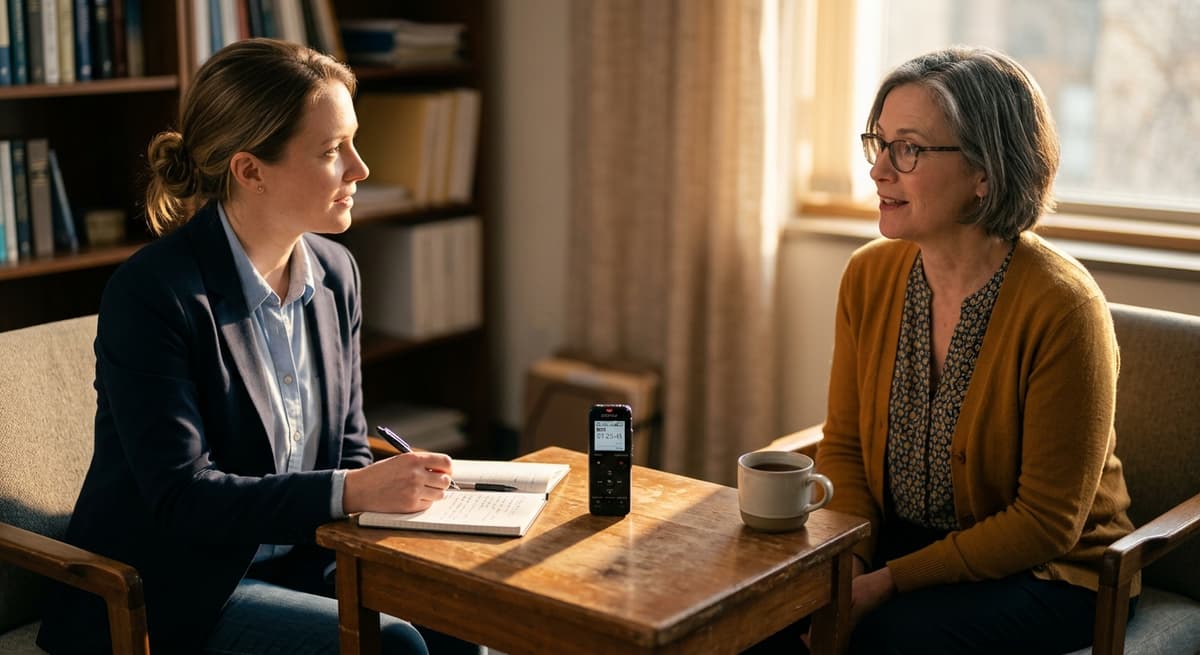
That civil exposure exists independently of whether a prosecutor ever files criminal charges. It's also the mechanism behind a wave of recent CIPA lawsuits over website chat tools and AI meeting notetakers; see Otter.ai Wiretap Lawsuit Explained: AI Notetakers and All-Party Consent and Serial CIPA Website-Wiretap Filer Declared a Vexatious Litigant for how that civil-suit exposure has played out in practice.
§ 632 vs. § 632.7 vs. § 631: Three Different California Recording Laws
People often use "California's two-party consent law" to mean a single rule, but the state's Invasion of Privacy Act contains several distinct offenses that overlap in places and diverge in others.
| Statute | What it covers | Must the communication be confidential? | Applies to a party on the call? |
|---|---|---|---|
| Penal Code § 632 | Recording or eavesdropping on a communication, in person or by device, using a recording or amplifying device | Yes, only confidential communications | Yes |
| Penal Code § 632.7 | Recording a call between two cellular phones, a cellular and a landline phone, two cordless phones, or a cordless and a landline or cellular phone | No, applies regardless of confidentiality | Yes, per Smith v. LoanMe (2021) |
| Penal Code § 631 | Tapping or making an unauthorized connection to a telephone or telegraph line, or reading a message in transit, without consent | Not defined by a confidentiality requirement; targets the line itself | Generally targets outside interception of the line |
The most frequently missed distinction is between § 632 and § 632.7. Section 632 only reaches confidential communications. Section 632.7 does not: as the California Supreme Court put it in Smith v. LoanMe, Inc., 11 Cal.5th 183 (2021), quoting a footnote from Flanagan, "Section 632.7, enacted in 1992, prohibits intentionally intercepting or recording communications involving cellular telephones and cordless telephones. This prohibition applies to all communications, not just confidential communications." A cellular or cordless call can trigger § 632.7 even if nothing about the conversation was private.
The second distinction is who § 632.7 reaches. Before 2021, the California Court of Appeal had read § 632.7 to apply only to third-party eavesdroppers, not to a person who was actually on the call and recorded it themselves. Smith v. LoanMe reversed that reading. The California Supreme Court held: "We reach a contrary conclusion and hold that section 632.7 applies to parties as well as nonparties." A business or individual who secretly records their own cellular or cordless call with someone else can now be liable under § 632.7, closing a gap that businesses had previously relied on.
One textual wrinkle worth flagging: unlike § 632(a), which expressly caps its fine "per violation," § 632.7(a)'s fine language does not include that phrase in its own text. Both statutes otherwise share the same $2,500 first-offense and $10,000 repeat-offense structure and the same jail or prison exposure.
Penal Code § 631 is the wiretapping statute. It targets tapping or making an unauthorized connection to a telephone or telegraph line, or reading or attempting to read a message in transit without consent, and using information obtained that way, and it carries the same $2,500/$10,000 fine structure as § 632. Where § 632 is about recording a communication with a device such as a phone's own recorder, § 631 is about intercepting the transmission line itself.
Can California Police Record Without Consent? The § 633 Exception
Penal Code § 633 exempts certain law-enforcement officials, the Attorney General, district attorneys, California Highway Patrol officers, police chiefs, sheriffs, and people acting under their direction, from §§ 631, 632, 632.5, 632.6, and 632.7. But the exemption is narrower than it sounds: it applies only to overhearing or recording that those officials could lawfully have done before January 1, 1968. It is a historically anchored carve-out tied to pre-1968 law-enforcement practice, not a general rule that police in California may record without consent whenever they want.
Illegally Recorded Evidence: Civil Courts vs. Criminal Courts
Penal Code § 632(d) states that evidence obtained by illegally eavesdropping on or recording a confidential communication "is not admissible in any judicial, administrative, legislative, or other proceeding," except as proof in a civil action or criminal prosecution for violating § 632 itself.
That bar functions differently depending on the kind of case. In civil and administrative proceedings generally, § 632(d)'s exclusionary rule operates as written, with one specific carve-out built into its own text: because the exception covers an "action or prosecution for violation of this section," a plaintiff's own § 637.2 lawsuit over the recording falls within it, so the recording can still be used as proof in that plaintiff's suit about the very violation it documents. The bar still excludes the recording from other, unrelated civil or administrative proceedings. In criminal cases, the exception works differently: California voters adopted Proposition 8's "Right to Truth-in-Evidence" provision (Cal. Const. art. I, § 28(f)), and the California Supreme Court held in People v. Guzman, 8 Cal.5th 673 (2019), that later legislative amendments to § 632 did not revive an exclusionary remedy for criminal proceedings. In practical terms, that means an illegally recorded conversation can still be introduced as evidence against a criminal defendant, subject to whatever federal constitutional limits otherwise apply, even though the same recording would be excluded in a civil lawsuit. Readers who assume an illegal recording can never be used against them in court should note that assumption holds in civil court, not in a criminal prosecution.
How California Courts Have Applied § 632
More than 267 California and federal court decisions have cited Penal Code § 632, according to recordinglaw.com's case-law index. Beyond Flanagan, Smith v. LoanMe, and Guzman, several other California Supreme Court and appellate decisions shape how § 632 actually operates.
Choice of law across state lines: Kearney v. Salomon Smith Barney, Inc. In Kearney v. Salomon Smith Barney, Inc., 39 Cal.4th 95 (2006), an out-of-state brokerage headquartered in a one-party-consent state recorded calls with its California clients. The California Supreme Court held that California's all-party consent rule governs going forward for calls involving a California resident, because California's privacy interest predominates even when the other party or the recording equipment is located in a state that only requires one party's consent. As the Court put it, quoted in Smith v. LoanMe, "it is unlawful under California law for a party to a telephone conversation to record the conversation without the knowledge of all other parties to the conversation." The Court's ruling is generally understood to apply prospectively, limiting damages exposure for conduct that predated the decision, since out-of-state businesses could reasonably have been relying on their home state's one-party rule up to that point. The practical upshot: calling into or out of California with a party physically present in the state generally triggers California's all-party consent rule regardless of where the other party or the recording equipment sits, though liability for older conduct that predates a clear ruling on the point can be limited.
The litigation privilege doesn't cover secret recording. Kimmel v. Goland, 51 Cal.3d 202 (1990), and later Rubin v. Green, 4 Cal.4th 1187 (1993), both held that California's litigation privilege (Civil Code § 47(b)), which shields communicative acts made in connection with litigation, does not immunize the nonconsensual recording of a conversation, even where the recording is later used to build a lawsuit. Both decisions treat recording someone secretly as noncommunicative conduct, so the privilege that protects what parties say to and about each other in litigation doesn't reach the separate act of recording without consent, which remains a § 632 offense.
Recording is the violation, not disclosure of it. Lieberman v. KCOP Television, Inc., 110 Cal.App.4th 156 (2003), involved a physician who sued a television station for secretly recording undercover consultations that were later broadcast. The Court of Appeal held that § 632 prohibits the act of recording a confidential communication, and provides statutory damages for that, but damages flowing from a later broadcast or disclosure of the recording are not recoverable under § 632, since the statute does not separately prohibit disclosing information gathered in violation of its terms.
Common Misconceptions About Penal Code § 632
"It's only illegal if I share or publish the recording." Not under § 632. Lieberman v. KCOP confirms the statute punishes the act of recording a confidential communication. Recording alone, even if the recording is never shared with anyone, is the violation.
"California's all-party consent law only applies to phone calls." No. Section 632(a) expressly covers confidential communications carried on among the parties in each other's presence as well as those by telephone or another device. A hidden recorder in an in-person meeting is covered just as much as a recorded phone call.
"If the other person is in a one-party-consent state, I can legally record without telling them." Not reliably true. Kearney v. Salomon Smith Barney held that California's all-party consent rule can still govern when a California resident is a party to the call, regardless of the other party's location.
"Section 632.7 only stops eavesdroppers, not the people actually on the call." Corrected by Smith v. LoanMe in 2021, which held § 632.7 applies to a party who records their own cellular or cordless call, not just an outside interceptor.
"An illegally recorded conversation can never be used in court." True in civil and administrative proceedings under § 632(d). Not true in a criminal case: after Proposition 8, People v. Guzman held that an illegally recorded conversation can still be used as evidence against a criminal defendant.
"The civil penalty under § 637.2 is capped at $5,000 total." No. Section 637.2 allows $5,000 per violation, meaning potentially per call or per recording, or three times actual damages, whichever is greater, and it doesn't require the plaintiff to prove actual harm to recover the statutory floor.
"A conversation is only confidential if it happens somewhere fully private." Shulman v. Group W shows the test is an objectively reasonable expectation of not being overheard or recorded, which can exist even at a public accident scene depending on the content and relationship, such as a patient's conversation with a medical provider.
Disclaimer
This article provides general information about California Penal Code section 632, as in effect and verified against primary California sources on the date noted above. It is not legal advice and does not create an attorney-client relationship. Statutory penalties, related sections, and how courts apply this law can change; confirm current details with the official California Legislative Information website or a licensed California attorney before relying on anything here for a specific situation.
Last updated: August 12, 2026.
Frequently Asked Questions
Is it illegal to record a phone call in California without telling the other person?
Generally yes, if the call is a confidential communication. Penal Code section 632 makes it a crime to record a confidential communication using a recording device without the consent of every party to it, and this applies to phone calls as well as in-person conversations.
What are the penalties for violating California Penal Code 632?
A first violation carries a fine of up to $2,500 per violation, up to a year in county jail, imprisonment in state prison, or both. A prior conviction under section 632, 631, 632.5, 632.6, 632.7, or 636 raises the maximum fine to $10,000 per violation.
Can I record a conversation with my boss or coworker in California?
It depends on whether the conversation is confidential, meaning a party has an objectively reasonable expectation it is not being overheard or recorded. Many workplace conversations meet that test, which is why recording a coworker or supervisor without consent commonly raises section 632 exposure. See the site's California Workplace Recording Laws guide for how this plays out in employment settings.
Does California's all-party consent law still apply if I'm calling someone in a one-party-consent state?
Often yes. In Kearney v. Salomon Smith Barney, Inc., the California Supreme Court held that California's all-party consent rule can still govern a call involving a California resident even when the other party or the recording equipment is located in a state that only requires one party's consent.
Can I be sued civilly even if no one presses criminal charges under Penal Code 632?
Yes. Penal Code section 637.2 creates a separate civil right of action for the greater of $5,000 per violation or three times actual damages, and it does not require a criminal conviction, or even proof of actual harm, to recover the statutory amount.
Is an illegally recorded conversation admissible in a California criminal case?
It can be. Section 632(d) bars illegally recorded evidence from civil and administrative proceedings, but the California Supreme Court held in People v. Guzman that this exclusionary rule does not apply in criminal cases because of Proposition 8's Truth-in-Evidence provision, so prosecutors can use an illegally recorded conversation as evidence.
What counts as a confidential communication under California law?
A communication is confidential under section 632(c) if circumstances reasonably indicate a party wants it confined to the people involved, which the California Supreme Court in Flanagan v. Flanagan defined as an objectively reasonable expectation the conversation is not being overheard or recorded. Conversations in public gatherings or open public proceedings are excluded.
What's the difference between Penal Code 632, 632.7, and 631?
Section 632 covers confidential communications generally, in person or by device, and requires the communication be confidential. Section 632.7 covers cellular and cordless calls specifically and does not require confidentiality, applying to a party who records their own call. Section 631 targets tapping or unauthorized connection to a phone or telegraph line, rather than recording the conversation itself.
Does a warning beep or recorded disclosure count as consent to record a call?
Penal Code section 632 requires the consent of all parties, but its text does not specify a required method for obtaining that consent. A recorded disclosure or automated tone is one way to notify a party a call is being recorded, but the underlying legal requirement is that every party actually consents, not that any particular signal be used.
Can California police record conversations without consent?
Only in a narrow circumstance. Penal Code section 633 exempts specified law-enforcement officials from sections 631, 632, 632.5, 632.6, and 632.7, but only for overhearing or recording that those officials could already have lawfully done before January 1, 1968. It is not a general exemption allowing police to record without consent whenever they choose.
Updates
Independently fact-checked against the cited primary sources
Independently fact-checked against the cited primary sources
The Law Behind This Article
This article rests on the statutory provisions below, held in our own legal record and retrieved from the official source. Tap a section to read the operative text.
California Penal Code
§ 632In forcecited in 44 of our articles
(a) A person who, intentionally and without the consent of all parties to a confidential communication, uses an electronic amplifying or recording device to eavesdrop upon or record the confidential communication, whether the communication is carried on among the parties in the presence of one another or by means of a telegraph, telephone, or other device, except a radio, shall be punished by a fine not exceeding two thousand five hundred dollars ($2,500) per violation, or imprisonment in a county jail not exceeding one year, or in the state prison, or by both that fine and imprisonment. If the person has previously been convicted of a violation of this section or Section 631, 632.5, 632.6, 632.7, or 636, the person shall be punished by a fine not exceeding ten thousand dollars ($10,000) per violation, by imprisonment in a county jail not exceeding one year, or in the state prison, or by both that fine and imprisonment.
Official text (excerpt) · last checked 2026-09-23 · Read the full text in our law library · Verify at leginfo.legislature.ca.gov
Cited in 267 court opinions in our collectionLatest citing opinion in our collection: 2026
In the courts (editorial summary, independently checked):Kimmel v. Goland (1990) held the section 47(2) litigation privilege does not bar a damages claim under Section 632 for recording confidential conversations without consent. Lieberman v. KCOP Television, Inc. (2003) held a Section 632 violation is complete the moment the recording is made, whether or not it is disclosed.
Opinions citing this section in our collection:
- Rubin v. Green (California Supreme Court 1993, 4 Cal. 4th 1187)“…f telephone conversations with defendants, an offense under Penal Code section 632. We noted that defendants alleged that…”
- Kimmel v. Goland (California Supreme Court 1990, 51 Cal. 3d 202)✓Mobilehome owners secretly taped phone calls with park management in anticipation of suing; the court held the section 47(2) litigation privilege did not bar the cross-complaint for damages under Penal Code section 632, since the injury came from recording, not publication.
- Shulman v. Group W Productions, Inc. (California Supreme Court 1998, 74 Cal. Rptr. 2d 843)✓A TV producer put a wireless microphone on the flight nurse treating a crash victim. No section 632 claim was before the court, but it called section 632 and the intrusion tort laws of general applicability and said the press may not eavesdrop in violation of section 632.
Identified automatically from the court opinions citing this section — not a ranking of which case controls.
Also relied on in: California Recording Laws (2026): All-Party Consent Rules, US Recording Laws by State (2026): All 50 States Explained, Can an Employer Record Conversations Without Consent? (2026)
§ 632.7In forcecited in 5 of our articles
(a) Every person who, without the consent of all of the parties to a communication, intercepts or receives and intentionally records, or assists in the interception or reception and intentional recordation of, a communication transmitted between two cellular radio telephones, a cellular radio telephone and a landline telephone, two cordless telephones, a cordless telephone and a landline telephone, or a cordless telephone and a cellular radio telephone, shall be punished by a fine not exceeding two thousand five hundred dollars ($2,500), or by imprisonment in a county jail not exceeding one year, or in the state prison, or by both that fine and imprisonment. If the person has been convicted previously of a violation of this section or of Section 631, 632, 632.5, 632.6, or 636, the person shall be punished by a fine not exceeding ten thousand dollars ($10,000), by imprisonment in a county jail not exceeding one year, or in the state prison, or by both that fine and imprisonment.
Official text (excerpt) · last checked 2026-07-28 · Read the full text in our law library · Verify at leginfo.legislature.ca.gov
Cited in 67 court opinions in our collectionLatest citing opinion in our collection: 2026
Opinions citing this section in our collection:
- Smith v. LoanMe, Inc. (California Supreme Court 2021, 276 Cal. Rptr. 3d 746)“…Opinion of the Court by Cantil-Sakauye, C. J. Under Penal Code section 632.7, subdivision (a) (hereinafter section 6…”
- People v. Chavez (California Court of Appeal 1996, 44 Cal. App. 4th 1144)“…Smith (5th Cir. 1992) 978 F.2d 171, 178 ; Pen. Code, § 632.7, subd. (c)(2).) The CI sought au…”
- Gruber v. Yelp Inc. (California Court of Appeal 2020)“…al courts have refused to dismiss or summarily adjudicate a Penal Code section 632.7 claim based merely on the fact that the…”
Identified automatically from the court opinions citing this section — not a ranking of which case controls.
Also relied on in: California Audio Recording Laws: Two-Party Consent Rules and Penalties (2026), California Phone Call Recording Laws: Consent Rules for Cell and Landline (2026), California Surveillance Camera Laws: Complete 2026 Guide
§ 631In forcecited in 10 of our articles
(a) Any person who, by means of any machine, instrument, or contrivance, or in any other manner, intentionally taps, or makes any unauthorized connection, whether physically, electrically, acoustically, inductively, or otherwise, with any telegraph or telephone wire, line, cable, or instrument, including the wire, line, cable, or instrument of any internal telephonic communication system, or who willfully and without the consent of all parties to the communication, or in any unauthorized manner, reads, or attempts to read, or to learn the contents or meaning of any message, report, or communication while the same is in transit or passing over any wire, line, or cable, or is being sent from, or received at any place within this state; or who uses, or attempts to use, in any manner, or for any purpose, or to communicate in any way, any information so obtained, or who aids, agrees with, employs, or conspires with any person or persons to unlawfully do, or permit, or cause to be done any of the acts or things mentioned above in this section, is punishable by a fine not exceeding two thousand five hundred dollars ($2,500), or by imprisonment in the county jail not exceeding one year,…
Official text (excerpt) · last checked 2026-09-16 · Read the full text in our law library · Verify at leginfo.legislature.ca.gov
Cited in 202 court opinions in our collectionLatest citing opinion in our collection: 2026
Opinions citing this section in our collection:
- Ribas v. Clark (California Supreme Court 1985, 38 Cal. 3d 355)“…iminal statutes prohibiting various forms of eavesdropping (Pen. Code, §§ 631, subd. (a), and 637), as well as for in…”
- Warden v. Kahn (California Court of Appeal 1979, 99 Cal. App. 3d 805)“…not to be found elsewhere among the states of the nation. Penal Code section 631 provides: "Any person who, by means of…”
- Rogers v. Ulrich (California Court of Appeal 1975, 52 Cal. App. 3d 894)“…nowledge the incident amounted to wiretapping as defined by Penal Code section 631; a statutory penalty in the amount of $…”
Identified automatically from the court opinions citing this section — not a ranking of which case controls.
Also relied on in: Serial CIPA Website-Wiretap Filer Declared a Vexatious Litigant, California Pixel-Wiretap Rulings Split the Same Week: Blue Shield Claim Dismissed, BlueChew Claims Advance, Otter.ai Faces Consolidated Wiretap Class Action Over Its AI Meeting Notetaker and All-Party Consent
§ 633In forcecited in 3 of our articles
(a) Nothing in Section 631, 632, 632.5, 632.6, or 632.7 prohibits the Attorney General, any district attorney, or any assistant, deputy, or investigator of the Attorney General or any district attorney, any officer of the California Highway Patrol, any peace officer of the Office of Internal Affairs of the Department of Corrections and Rehabilitation, any chief of police, assistant chief of police, or police officer of a city or city and county, any sheriff, undersheriff, or deputy sheriff regularly employed and paid in that capacity by a county, police officer of the County of Los Angeles, or any person acting pursuant to the direction of one of these law enforcement officers acting within the scope of his or her authority, from overhearing or recording any communication that they could lawfully overhear or record prior to January 1, 1968. (b) Nothing in Section 631, 632, 632.5, 632.6, or 632.7 renders inadmissible any evidence obtained by the above-named persons by means of overhearing or recording any communication that they could lawfully overhear or record prior to January 1, 1968.
Official text (excerpt) · last checked 2026-07-28 · Read the full text in our law library · Verify at leginfo.legislature.ca.gov
Cited in 21 court opinions in our collectionLatest citing opinion in our collection: 2015
Opinions citing this section in our collection:
- People v. Ayers (California Court of Appeal 1975, 51 Cal. App. 3d 370)“…nder police direction and supervision would be admissible. (Pen. Code, § 633.) 1 They argue, however, t…”
- People v. Chavez (California Court of Appeal 1996, 44 Cal. App. 4th 1144)“…fully subject to the law enforcement exception codified in Penal Code section 633. Consequently, we reverse the order gra…”
- Untitled California Attorney General Opinion (California Attorney General Reports 1996)“…Does the designation "district attorney" as used in Penal Code section 633 with respect to the overhearing or reco…”
Identified automatically from the court opinions citing this section — not a ranking of which case controls.
§ 637.2In forcecited in 20 of our articles
(a) Any person who has been injured by a violation of this chapter may bring an action against the person who committed the violation for the greater of the following amounts: (1) Five thousand dollars ($5,000) per violation. (2) Three times the amount of actual damages, if any, sustained by the plaintiff. (b) Any person may, in accordance with Chapter 3 (commencing with Section 525) of Title 7 of Part 2 of the Code of Civil Procedure, bring an action to enjoin and restrain any violation of this chapter, and may in the same action seek damages as provided by subdivision (a). (c) It is not a necessary prerequisite to an action pursuant to this section that the plaintiff has suffered, or be threatened with, actual damages. (d) This section shall not be construed to affect Title 4 (commencing with Section 3425.1) of Part 1 of Division 4 of the Civil Code.
Official text (excerpt) · last checked 2026-07-28 · Read the full text in our law library · Verify at leginfo.legislature.ca.gov
Cited in 103 court opinions in our collectionLatest citing opinion in our collection: 2026
In the courts (editorial summary, independently checked):Ribas v. Clark (1985) held the section 637.2 award accrues at the moment of the Privacy Act violation, so the Civil Code section 47 litigation privilege does not bar it, though damages flowing solely from privileged testimony fail. Kimmel v. Goland (1990) applied that reasoning to recordings made in anticipation of litigation.
Opinions citing this section in our collection:
- Rubin v. Green (California Supreme Court 1993, 4 Cal. 4th 1187)“…asion of privacy and related torts as well as damages under Penal Code section 637.2, granting persons injured by eavesdropp…”
- Ribas v. Clark (California Supreme Court 1985, 38 Cal. 3d 355)✓A wife asked a third party to listen on an extension phone while she called her husband, and that listener later testified about it; the court held the judicial privilege barred damages from the testimony but not Section 637.2's fixed award, which accrues at the violation.
- Kimmel v. Goland (California Supreme Court 1990, 51 Cal. 3d 202)✓Mobilehome residents secretly taped calls with park management to gather evidence for a planned lawsuit; the court held the litigation privilege did not bar management's Section 637.2 claim, because the injury came from the recording itself and not from any publication.
Identified automatically from the court opinions citing this section — not a ranking of which case controls.
Also relied on in: Can I Sue Someone for Recording Me on Private or Public Property?, How to Detect and Block Listening Devices in Your Home (2026), Is It Illegal to Video Record Someone Without Their Consent? (2026)
Search our full record of US law — 2.1 million sections, every state + federal →
Sources and References
- California Penal Code § 632 (eavesdropping on or recording confidential communications), California Legislative Information(leginfo.legislature.ca.gov).gov
- California Penal Code § 632.7 (cellular and cordless telephone communications), California Legislative Information(leginfo.legislature.ca.gov).gov
- California Penal Code § 631 (wiretapping), California Legislative Information(leginfo.legislature.ca.gov).gov
- California Penal Code § 633 (law enforcement exemption), California Legislative Information(leginfo.legislature.ca.gov).gov
- California Penal Code § 637.2 (civil action for eavesdropping or recording violations), California Legislative Information(leginfo.legislature.ca.gov).gov
- Smith v. LoanMe, Inc., 11 Cal. 5th 183 (2021), California Supreme Court opinion(courts.ca.gov).gov
- People v. Guzman, 8 Cal. 5th 673 (2019), California Supreme Court opinion(courts.ca.gov).gov