
Indiana
Indiana Ring Doorbell Laws: What You Need to Know in 2026
Independently fact-checked against primary sources (last audited August 17, 2026). · Reviewed by the RecordingLaw editorial team. · Law checked current as of August 17, 2026. · 3 primary sources cited on this page. How we verify our legal content
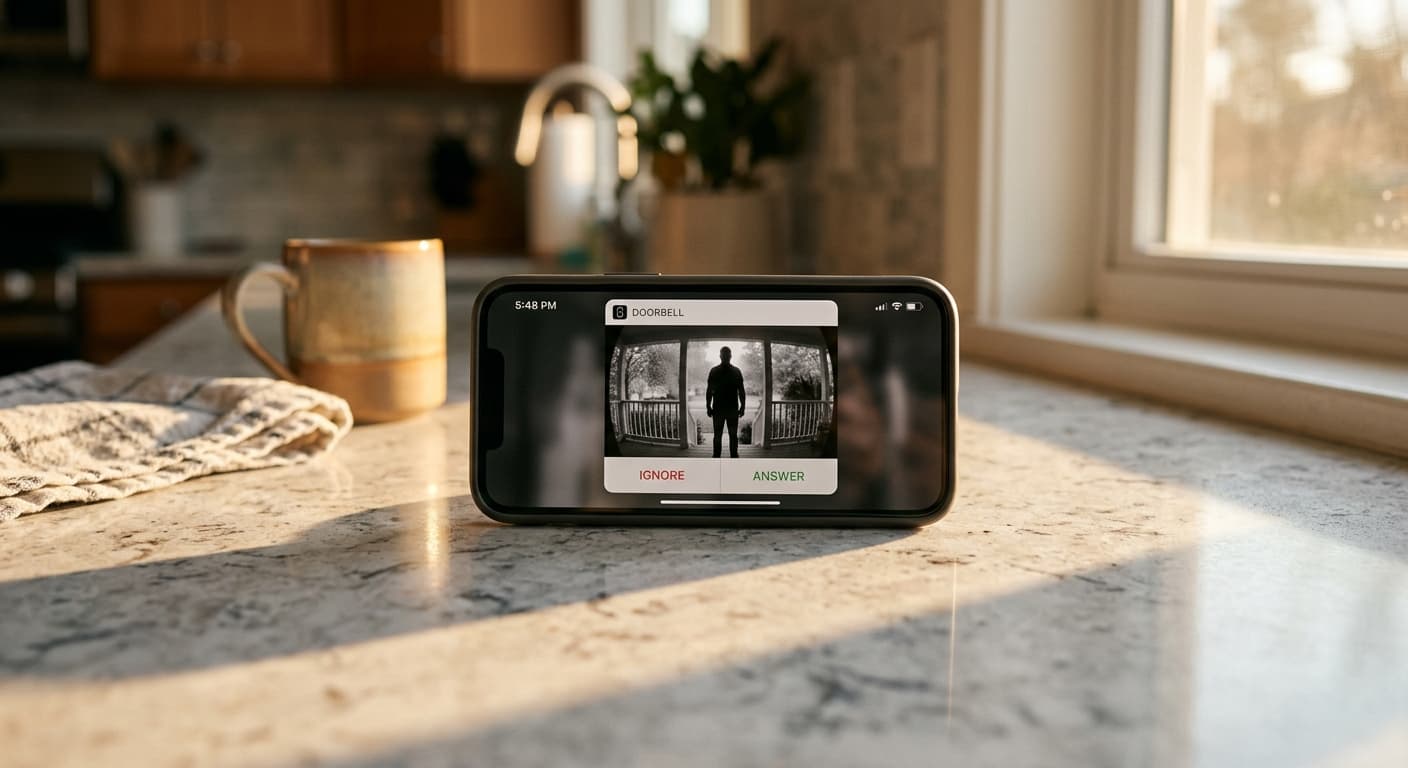
Indiana is a one-party consent state for audio recording, which makes using a Ring doorbell significantly less complicated than in stricter states. Ring doorbell owners in Indiana can legally record audio as long as they are a party to the conversation or one participant consents. Video recording on your own property is broadly permitted.
That said, Indiana law does impose limits. Voyeurism statutes, the unlawful surveillance statute, and privacy protections for renters and neighbors all shape how Ring doorbells can be used legally. Knowing the boundaries helps Indiana residents avoid criminal charges and civil disputes.
Audio Recording Laws and Ring Doorbells in Indiana
Indiana follows the one-party consent rule for audio recording. Under the Indiana Wiretap Act (IC 35-33.5-5), recording an electronic communication is an "interception" only when it is done by a person other than the sender or receiver and without the consent of the sender or receiver (IC 35-31.5-2-176). "Electronic communication" is defined broadly and covers oral communication transmitted by wire, radio, or an electromagnetic, photoelectronic, or photo-optical system (IC 35-31.5-2-110). This means that as long as one person involved in a conversation agrees to the recording, the recording is lawful.
For Ring doorbell owners, this is a meaningful legal advantage. When you answer your Ring doorbell and speak with a visitor through the two-way audio feature, you are a party to that conversation. Your consent satisfies Indiana's one-party consent requirement, making that audio recording legal.

When One-Party Consent Gets Complicated
The one-party consent rule protects Ring doorbell owners during active two-way conversations. The legal picture becomes less clear when the Ring doorbell records audio of conversations between other people, such as two visitors talking to each other on your porch, where you are not a participant.
Under Indiana law, "interception" requires the intentional recording of a communication by a person other than a sender or receiver without the consent of either party. If your Ring doorbell passively records a conversation between two strangers on your porch, you are not a party to that conversation. Whether this constitutes an unlawful interception depends on the circumstances, including whether the individuals had a reasonable expectation of privacy.
Conversations held in a public or semi-public area like a front porch generally carry a lower expectation of privacy. Posting visible signage that audio recording is in progress further reduces the risk by eliminating any claim to private conversation.
Penalties for Unlawful Interception
A person who knowingly or intentionally intercepts a communication in violation of the Indiana Wiretap Act commits unlawful interception, classified as a Level 5 felony. A Level 5 felony in Indiana carries a sentence of 1 to 6 years in prison, with an advisory sentence of 3 years, and a fine of up to $10,000.
Video Recording Laws and Ring Doorbells
Indiana places few restrictions on video recording in public or semi-public spaces. Ring doorbells that record video of your front porch, driveway, sidewalk, and other areas visible from public view are generally lawful.
The primary video recording restrictions in Indiana come from two statutes: the voyeurism law (IC 35-45-4-5) and the unlawful surveillance statute (IC 35-46-8.5-1).
Voyeurism (IC 35-45-4-5)
Indiana's voyeurism statute prohibits recording in areas where individuals have a reasonable expectation of privacy, such as bathrooms, bedrooms, and dressing rooms. "Peeping" is defined as any looking of a clandestine, surreptitious, prying, or secretive nature, or using a concealed camera with the intent of capturing an intimate image.
A Ring doorbell installed on your own front door and pointed outward does not trigger this statute under normal circumstances. The statute becomes relevant if a camera is positioned to capture images inside a neighbor's home or in any area where someone could reasonably be expected to disrobe.
Voyeurism is a Class B misdemeanor in its basic form for peeping into a dwelling, restroom, or similar private space (up to 180 days in jail, $1,000 fine). Recording images in those private areas with a camera elevates the charge to a Level 6 felony (6 months to 2.5 years in prison, up to $10,000 fine).
Indiana also has a separate "public voyeurism" offense for using a camera to record someone's private area even outside a dwelling or restroom, such as recording underneath a person's clothing in public. This is the tier most relevant to a doorbell camera capturing a passerby. A first offense is a Class A misdemeanor (up to 1 year in jail, $5,000 fine), rising to a Level 6 felony with a prior conviction under the statute or if the image is published, posted online, or shared.
House Bill 1047, signed into law on March 12, 2024, amended the definition of "peeping" to include "using a concealed camera with the intent of capturing an intimate image," effective July 1, 2024.
Unlawful Surveillance on Private Property (IC 35-46-8.5-1)
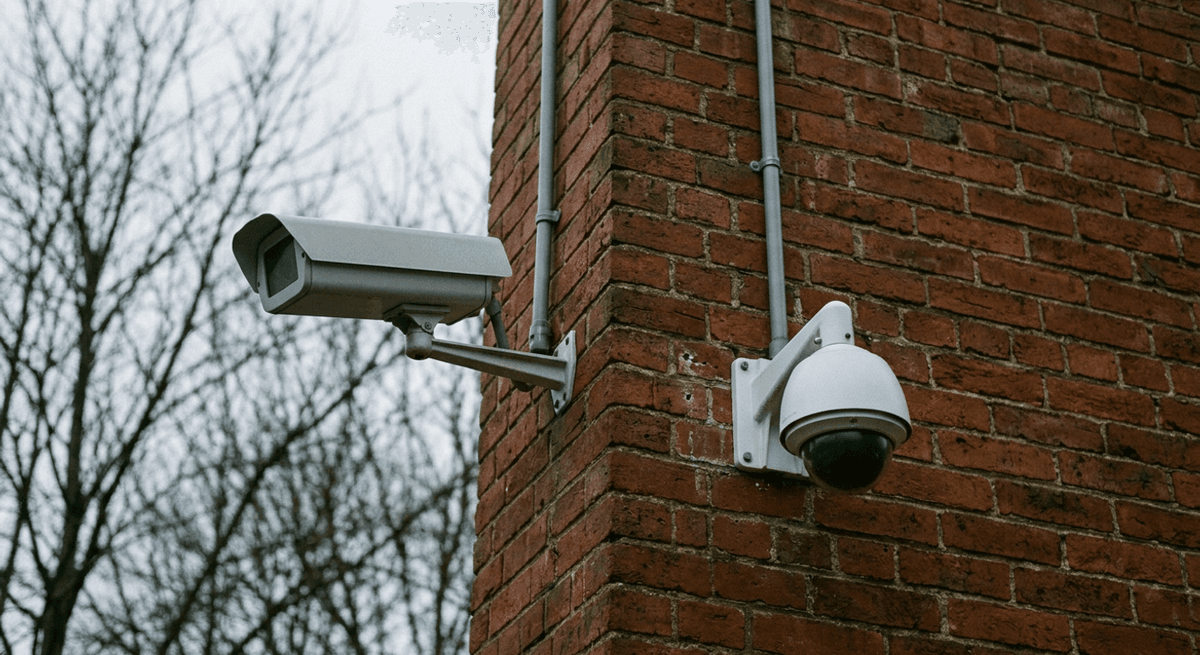
Indiana law makes it a Class A misdemeanor to knowingly or intentionally place a camera or electronic surveillance equipment that records images or data of any kind while unattended on the private property of another person without the consent of the owner or tenant. The statute names the offense unlawful surveillance. This means you cannot mount a Ring camera on a neighbor's property, a shared fence that belongs to your neighbor, or any structure you do not own or have permission to use.
A Class A misdemeanor carries up to 1 year in jail and a fine of up to $5,000. The offense rises to a Level 6 felony if the person has a prior unrelated conviction under the same section or for a crime of domestic violence, stalking, or invasion of privacy, or if the person is the subject of a protective order.
HOA and Ring Doorbells in Indiana
Indiana HOAs have the authority to regulate Ring doorbell installations through their governing documents, bylaws, and architectural review committees.
Common HOA Restrictions
Indiana homeowners associations that allow Ring doorbells typically require:
- Approval from the architectural review committee (ARC) before installation.
- Specific placement guidelines to prevent cameras from recording neighboring units or common areas excessively.
- Restrictions on camera models that may not conform to the community's aesthetic standards.
- Rules against audio recording in shared common areas.
Can an Indiana HOA Ban Ring Doorbells?
Yes. Indiana HOAs have the implied power to adopt reasonable rules governing the use of individually owned property to protect the common property and community standards. An HOA can prohibit exterior cameras, including Ring doorbells, through its covenants, conditions, and restrictions (CC&Rs). Indiana does not have a state statute that overrides an HOA's authority to ban doorbell cameras.
Homeowners who disagree with an HOA camera ban may challenge the rule if they believe it is unreasonable, but Indiana courts generally defer to HOA governing documents that were in place when the homeowner purchased the property.
Landlord and Tenant Rights
Indiana landlord-tenant law does not include specific provisions for Ring doorbell cameras, but general property and privacy principles apply.
Tenant Installation Rights
Tenants in Indiana can generally install security devices inside their own rental units without landlord approval. Exterior installations, including Ring doorbells on the front door, typically require the landlord's permission because the tenant does not own the exterior structure.
Unless the lease explicitly addresses surveillance devices, tenants should request written approval from the landlord before installing a Ring doorbell. Some Indiana landlords include lease provisions that specifically address smart home devices, security cameras, and modifications to exterior doors.
Landlord-Installed Ring Doorbells
Landlords in Indiana may install Ring doorbells on rental properties as part of the property's security infrastructure. The landlord should disclose the presence of any recording devices to tenants and obtain consent for audio recording. A landlord who monitors a tenant's comings and goings through a Ring doorbell without disclosure could face privacy complaints, even though Indiana's one-party consent law may not be technically violated.
Landlords cannot use Ring doorbells or any other surveillance device to record inside a tenant's rental unit. This would violate Indiana's voyeurism and privacy statutes.
Shared Access Disputes
Disputes can arise when a landlord retains access to a Ring doorbell account on a rental property after a tenant moves in. Indiana courts have not established definitive precedent on Ring doorbell account ownership in landlord-tenant relationships, but tenants who pay for Ring Protect subscriptions may have stronger claims to account control during their tenancy.
Law Enforcement Access to Ring Footage
Indiana law enforcement can access Ring doorbell footage through established legal channels.
How Police Obtain Footage
- Search warrants: Police can obtain a warrant from an Indiana court requiring Ring (through Amazon) to disclose footage. A warrant requires a showing of probable cause.
- Voluntary consent: Ring doorbell owners can voluntarily share footage with law enforcement at any time. No warrant or subpoena is needed when the owner agrees.
- Court orders: A court order based on specific facts can compel Ring to provide non-content subscriber information.
- Emergency disclosures: Under federal law (18 U.S.C. 2702), Ring may share footage without a warrant when there is an imminent threat of death or serious bodily injury.
Ring's Current Policy
All law enforcement requests for Ring footage go through Amazon's Law Enforcement Request Tracker (ALERT). Ring does not produce video or audio content in response to subpoenas. A valid search warrant is required for content data.
In January 2024, Ring sunset the Neighbors app's Request for Assistance tool, which had let police request and receive video from users in the app. In September 2025, Ring began rolling out Community Requests: verified local public safety agencies that use Axon Evidence can post a request tied to a specific incident, location, and timeframe, the request appears publicly in the Neighbors feed, and Ring users in the area choose whether to share clips, which go to Axon Evidence. Participation is optional, and agencies cannot see who received a request or who declined.
Ring Footage as Evidence in Indiana Courts
Ring doorbell footage is regularly used as evidence in Indiana criminal and civil cases. Indiana Evidence Rule 901 requires authentication, meaning the party offering the footage must establish that it accurately depicts what it claims to show. Courts evaluate factors including the camera's positioning, timestamp accuracy, and chain of custody.
Penalties for Illegal Recording in Indiana
Indiana imposes criminal penalties for recording violations at several levels:
| Offense | Classification | Jail/Prison | Fine |
|---|---|---|---|
| Unlawful interception (IC 35-33.5-5) | Level 5 felony | 1-6 years | Up to $10,000 |
| Voyeurism, basic peeping (IC 35-45-4-5) | Class B misdemeanor | Up to 180 days | Up to $1,000 |
| Voyeurism, camera recording in a dwelling/restroom (IC 35-45-4-5) | Level 6 felony | 6 months-2.5 years | Up to $10,000 |
| Public voyeurism, camera recording in public, first offense (IC 35-45-4-5) | Class A misdemeanor | Up to 1 year | Up to $5,000 |
| Public voyeurism, with prior conviction or dissemination | Level 6 felony | 6 months-2.5 years | Up to $10,000 |
| Unlawful surveillance on private property (IC 35-46-8.5-1) | Class A misdemeanor | Up to 1 year | Up to $5,000 |
| Unlawful surveillance, prior qualifying conviction or protective order (IC 35-46-8.5-1) | Level 6 felony | 6 months-2.5 years | Up to $10,000 |
Civil liability is also possible. An Indiana resident whose privacy is invaded by a Ring doorbell may pursue a civil lawsuit for damages, including claims for invasion of privacy, trespass, or nuisance.

How to Use a Ring Doorbell Legally in Indiana
Indiana's one-party consent framework makes Ring doorbell use relatively straightforward, but following these guidelines helps avoid legal issues:
-
Keep audio recording enabled only during active conversations. Indiana's one-party consent rule protects you when you are a party to the conversation. Consider disabling continuous audio recording to reduce risk from passively captured third-party conversations.
-
Post visible signage. A sign notifying visitors that video and audio recording is in progress eliminates any reasonable expectation of privacy and strengthens your legal position.
-
Point your camera at your own property. Aim your Ring doorbell at your front door, porch, and driveway. Avoid positioning it to capture the interior of a neighbor's home or areas where individuals might reasonably expect privacy.
-
Get HOA or landlord approval. Check your HOA's CC&Rs or lease agreement before installation. Obtain written permission if required to avoid fines or removal orders.
-
Do not place cameras on others' property. Mounting a Ring camera on a neighbor's structure, fence, or property without consent is unlawful surveillance, a Class A misdemeanor under IC 35-46-8.5-1.
-
Understand voluntary sharing with police. You have the right to share or refuse to share Ring footage with law enforcement. Sharing is voluntary unless police present a valid warrant.
More Indiana Laws
Explore other Indiana legal guides on Recording Law:
- Indiana Recording Laws cover the full scope of the state's wiretap statute and one-party consent rules.
- Indiana Hit and Run Laws explain penalties and reporting requirements for leaving the scene of an accident.
- Indiana Lemon Law covers protections for buyers of defective vehicles.
This article provides general legal information about Ring doorbell laws in Indiana. Laws change, and their application depends on specific facts and circumstances. Consult an attorney licensed in Indiana for advice specific to your situation.
Frequently Asked Questions
Is it legal to have a Ring doorbell in Indiana?
Yes. Indiana law permits Ring doorbells for residential security. As a one-party consent state, Ring doorbell owners can legally record audio of conversations they participate in. Video recording of your own property and public-facing areas is broadly permitted under Indiana law.
Can my Ring doorbell record audio in Indiana?
Yes, as long as at least one party to the conversation consents. Under Indiana's Wiretap Act (IC 35-33.5-5), you can record audio of conversations you participate in through the Ring two-way talk feature. Passively recording conversations between other people carries more legal uncertainty.
Can my neighbor complain about my Ring doorbell in Indiana?
A neighbor can raise concerns if your Ring doorbell is positioned to record inside their home or private areas. Indiana law prohibits voyeurism (IC 35-45-4-5) and unlawful surveillance on private property (IC 35-46-8.5-1). Pointing your camera at your own porch and public areas generally avoids these issues.
Can my Indiana HOA ban Ring doorbells?
Yes. Indiana HOAs have the legal authority to ban or restrict Ring doorbell installations through their CC&Rs and architectural review committees. There is no Indiana statute that overrides an HOA's authority to prohibit doorbell cameras.
Can police in Indiana access my Ring doorbell footage?
Police can access your Ring footage with your voluntary consent or through a valid search warrant. Ring processes all law enforcement requests through Amazon's ALERT system. Ring ended its original in-app video request tool in January 2024, but since September 2025 verified agencies can post Community Requests in the Neighbors app; responding is optional and the owner chooses what, if anything, to share.
Updates
Corrected our description of how police can request Ring footage through the Neighbors app, reflecting Ring's Community Requests feature launched in September 2025.
Corrected the Indiana wiretap rule to track the statutory definition of "electronic communication" rather than "telephonic or telegraphic" communication, restored the "while unattended" element and the Level 6 felony enhancement to the IC 35-46-8.5-1 summary, and renamed the offense to its statutory name, unlawful surveillance.
Deep-linked all four Indiana statute citations to their specific code sections or enrolled act instead of a generic Title 35 landing page, and added Indiana's separate 'public voyeurism' Class A misdemeanor tier for camera recordings made in public (outside a dwelling or restroom), which the page's penalty summary had omitted.
Independently fact-checked against the cited primary sources; governing law re-checked for recent changes
Governing law re-checked for recent changes
Reviewed and approved by an editor
The Law Behind This Article
This article rests on the statutory provisions below, held in our own legal record and retrieved from the official source. Tap a section to read the operative text.
Indiana Code, TITLE 35. CRIMINAL LAW AND PROCEDURE
§ 35-33.5-5-5Nonapplicability to interceptions authorized under federal law; classification of offensesIn forcecited in 15 of our articles
Sec. 5. (a) This section does not apply to a person who makes an interception authorized under federal law. (b) A person who knowingly or intentionally intercepts a communication in violation of this article commits unlawful interception, a Level 5 felony. (c) A person who, by virtue of the person's employment or official capacity in the criminal justice system, knowingly or intentionally uses or discloses the contents of an interception in violation of this article commits unlawful use or disclosure of an interception, a Level 5 felony.
Official text (excerpt) · last checked 2026-08-28 · Read the full text in our law library · Verify at iga.in.gov
Cited in 2 court opinions in our collectionLatest citing opinion in our collection: 2007
Opinions citing this section in our collection:
- Edwards v. State (Indiana Court of Appeals 2007, 862 N.E.2d 1254)“…or disclosure of an interception, a Class C felony. I.C. § 35-33.5-5-5. The Indiana Wiretap Act defines interc…”
- State of Indiana v. John Lombardo (Indiana Supreme Court 2000)“…disclosure of an interception, a Class C felony. Ind. Code § 35-33.5-5-5 (1993) (emphases added). The statute…”
Identified automatically from the court opinions citing this section — not a ranking of which case controls.
Also relied on in: Indiana Recording Laws (2026): One-Party Consent Rules, Indiana Audio Recording Laws: One-Party Consent Rules and Penalties, Indiana Dashcam Laws: Mounting Rules, Audio Recording, and Legal Use
§ 35-45-4-5Voyeurism; public voyeurism; aerial voyeurismIn forcecited in 16 of our articles
Sec. 5. (a) The following definitions apply throughout this section: (1) "Camera" means a camera, a video camera, a device that captures a digital image, or any other type of video recording device. (2) "Peep" means: (A) any looking of a clandestine, surreptitious, prying, or secretive nature; or (B) using a concealed camera with the intent of capturing an intimate image (as defined by IC 34-21.5-2-1). (3) "Private area" means the naked or undergarment clad genitals, pubic area, or buttocks of an individual. (b) A person: (1) who knowingly or intentionally: (A) peeps; or (B) goes upon the land of another with the intent to peep; into an occupied dwelling of another person; or (2) who knowingly or intentionally peeps in or into an area where an occupant of the area reasonably can be expected to disrobe or is actually expected to disrobe, including: (A) restrooms; (B) baths; (C) showers; and (D) dressing rooms; without the consent of the other person, commits voyeurism, a Class B misdemeanor.
Official text (excerpt) · last checked 2026-07-29 · Read the full text in our law library · Verify at iga.in.gov
Cited in 19 court opinions in our collectionLatest citing opinion in our collection: 2026
In the courts (editorial summary, independently checked):Casady v. State (2010) held restrooms and showers are areas where occupants reasonably can be expected to disrobe under 35-45-4-5, whether or not they actually did. Steven M. Sandleben v. State of Indiana (2014) read the public voyeurism definition of private area disjunctively, covering undergarment-clad or naked areas.
Opinions citing this section in our collection:
- Casady v. State (Indiana Court of Appeals 2010, 934 N.E.2d 1181)✓A man videotaped men at urinals and in a shower while hiding in a stall and a doorway; the court affirmed his voyeurism convictions, holding the filming was a clandestine peep and that restrooms are listed places where occupants can reasonably be expected to disrobe.
- Steven M. Sandleben v. State of Indiana (Indiana Court of Appeals 2014, 22 N.E.3d 782)✓A man put a camera under a four-year-old's skort in a store and filmed two girls underwater at a pool; the court upheld his public voyeurism convictions, holding the statute reaches naked or undergarment clad areas and was not vague as applied to him.
- David Delagrange v. State of Indiana (Indiana Court of Appeals 2013, 981 N.E.2d 1227)“…e other person, commits voyeurism, a Class B misdemeanor. Ind.Code § 35-45-4-5(a) (2005). After Delagrange committed t…”
Identified automatically from the court opinions citing this section — not a ranking of which case controls.
Also relied on in: Indiana Surveillance Camera Laws (2026 Guide), Indiana Smart Glasses Recording Laws 2025, Indiana Landlord-Tenant Recording Laws: Rights for Renters and Property Owners
§ 35-46-8.5-1Unlawful photography, surveillance, and tracking on private propertyIn forcecited in 10 of our articles
Sec. 1. (a) This section does not apply to any of the following: (1) Electronic or video toll collection facilities or activities authorized under any of the following: (A) IC 8-15-2. (B) IC 8-15-3. (C) IC 8-15.5. (D) IC 8-15.7. (E) IC 8-16. (F) IC 9-21-3.5. (2) A law enforcement officer who has obtained: (A) a search warrant; or (B) the consent of the owner of private property; to place a camera, electronic surveillance equipment, or tracking device on the private property, with respect to the placement of a camera, electronic surveillance equipment, or tracking device. (3) A law enforcement officer who uses a law enforcement recording device in performance of the officer's duties, with respect to the use of the law enforcement recording device. (4) A person who uses a tracking device to determine the location of a family member (as defined in IC 35-44.1-3-1), unless the person is the subject of a protective order obtained by the family member.
Official text (excerpt) · last checked 2026-08-31 · Read the full text in our law library · Verify at iga.in.gov
Also relied on in: Indiana Video Recording Laws: Surveillance Rules and Privacy Limits, Indiana Voyeurism and Hidden Camera Laws: Statutes and Penalties, Indiana Security Camera Laws: Residential, Business, and Rental Rules
§ 35-31.5-2-176"Interception"In forcecited in 8 of our articles
Sec. 176. "Interception", for purposes of IC 35-33.5, means the intentional recording or acquisition of the contents of an electronic communication by a person other than a sender or receiver of that communication, without the consent of the sender or receiver, by means of any instrument, device, or equipment under this article. This term includes the intentional recording or acquisition of communication through the use of a computer or a fax (facsimile transmission) machine. The term does not include recording or acquiring the contents of a radio transmission that is not: (1) scrambled or encrypted; (2) transmitted using modulation techniques whose essential parameters have been withheld from the public with the intention of preserving the privacy of the communication; (3) carried on a subcarrier or other signal subsidiary to a radio transmission; (4) transmitted over a communication system provided by a common carrier, unless the communication is a tone only paging system communication; or (5) transmitted on frequencies allocated under part 25, subpart D, E, or F of part 74, or part 94 of the Rules of the Federal Communications Commission, unless, in the case of…
Official text (excerpt) · last checked 2026-07-29 · Read the full text in our law library · Verify at iga.in.gov
Cited in 1 court opinions in our collectionLatest citing opinion in our collection: 2019
Opinions citing this section in our collection:
- Edward Gaeta v. The Huntington National Bank (mem. dec.) (Indiana Court of Appeals 2019)“…App. 2005) (citing Ind. Code § 35-33.5-1-5 (now codified at Ind. Code § 35-31.5-2-176)), trans. denied; see also Wynne…”
Identified automatically from the court opinions citing this section — not a ranking of which case controls.
Also relied on in: Indiana Phone Call Recording Laws: One-Party Consent Rules Explained, Indiana Employee Monitoring Laws (2026): Tracking, GPS & More, Indiana AI Meeting Recording Laws (2026)
§ 35-31.5-2-110"Electronic communications"In forcecited in 10 of our articles
Sec. 110. "Electronic communication", for purposes of IC 35-33.5, means any transfer of signs, signals, writing, images, sounds, data, oral communication, digital information, or intelligence of any nature transmitted in whole or in part by a wire, a radio, or an electromagnetic, a photoelectronic, or a photo-optical system.
Official text (excerpt) · last checked 2026-07-29 · Read the full text in our law library · Verify at iga.in.gov
Also relied on in: Indiana Nursing Home Camera Laws: No Statute After SB 378 Died, Indiana School Recording Laws: Student Privacy, FERPA, and Parent Rights, Indiana Workplace Recording Laws: Employee Rights and Employer Rules
United States Code Title 18
§ 2702Voluntary disclosure of customer communications or recordsIn forcecited in 19 of our articles
Except as provided in subsection (b) or (c)— a person or entity providing an electronic communication service to the public shall not knowingly divulge to any person or entity the contents of a communication while in electronic storage by that service; and a person or entity providing remote computing service to the public shall not knowingly divulge to any person or entity the contents of any communication which is carried or maintained on that service— on behalf of, and received by means of electronic transmission from (or created by means of computer processing of communications received by means of electronic transmission from), a subscriber or customer of such service; solely for the purpose of providing storage or computer processing services to such subscriber or customer, if the provider is not authorized to access the contents of any such communications for purposes of providing any services other than storage or computer processing; and a provider of remote computing service or electronic communication service to the public shall not knowingly divulge a record or other information pertaining to a subscriber to or customer of such service (not including the contents of…
Official text (excerpt) · last checked 2026-07-28 · Read the full text in our law library · Verify at uscode.house.gov
Cited in 259 court opinions in our collectionLatest citing opinion in our collection: 2026
In the courts (editorial summary, independently checked):Freeman v. Directv, Inc. (2006) held Sections 2702 and 2707 do not support secondary liability claims such as aiding and abetting or conspiracy. Alexander v. Verizon Wireless (2017) applied Section 2702(c)(4)'s emergency exception and found a provider's good-faith reliance on a law enforcement request a complete defense.
Opinions citing this section in our collection:
- Matthew Alexander v. Verizon Wireless Services, LL (Court of Appeals for the Fifth Circuit 2017, 875 F.3d 243)✓A detective sent Verizon a certified emergency form after an arson, and Verizon released the subscriber's non-content cell records; the Fifth Circuit applied an objective good faith standard to section 2702(c)(4) and held Verizon statutorily immune from the SCA suit.
- Doe 1 v. AOL LLC (Court of Appeals for the Ninth Circuit 2009, 552 F.3d 1077)“…rs, alleging violations of federal electronic privacy law, 18 U.S.C. § 2702 (a). A subclass of AOL members who are…”
- Freeman v. Directv, Inc. (Court of Appeals for the Ninth Circuit 2006, 457 F.3d 1001)✓Users whose message board posts were seized from a website operator and passed to DirecTV sued for aiding and abetting and conspiracy; the Ninth Circuit held sections 2702 and 2707 name who can be liable and do not support secondary liability, affirming dismissal.
Identified automatically from the court opinions citing this section — not a ranking of which case controls.
Also relied on in: Stored Communications Act Explained: 18 U.S.C. § 2701, Georgia Ring Doorbell Laws: What You Need to Know in 2026, Hawaii Ring Doorbell Laws: What You Need to Know in 2026
Search our full record of US law — 2.1 million sections, every state + federal →
Sources and References
- IC 35-33.5-5-5 - Indiana Wiretap Act (Unlawful Interception)(law.justia.com)
- IC 35-45-4-5 - Indiana Voyeurism Statute(law.justia.com)
- IC 35-46-8.5-1 - Unauthorized Surveillance on Private Property(law.justia.com)
- Indiana HB 1047 (2024, P.L. 79-2024) - Enrolled Act Amending IC 35-45-4-5(iga.in.gov).gov
- Survey of Indiana Cyber Laws(in.gov).gov
- Indiana Title 68, Article 12 - Security and Surveillance(iar.iga.in.gov).gov
- FTC Ring Settlement (2024)(claimsjournal.com)
- Ring Law Enforcement Information Requests(ring.com)
- Indiana Voyeurism Law Overview - Keffer Hirschauer LLP(indyjustice.com)
- IC 35-31.5-2-110 - Definition of "Electronic Communication" (Indiana Code Title 35)(iga.in.gov)
- IC 35-31.5-2-176 - Definition of "Interception" (Indiana Code Title 35)(iga.in.gov)
- IC 35-46-8.5-1 - Unlawful Photography, Surveillance, and Tracking on Private Property(iga.in.gov)
- Ring Launches Community Requests: A New Way to Help Your Community (Ring, Sept. 4, 2025)(blog.ring.com)
- Ring Announces New Neighbors App Features, Sunsets Request for Assistance Post (Ring, Jan. 24, 2024)(blog.ring.com)