Colombia E-Scooter Laws: New National Statute, Plates Coming 2027 (2026)
Independently fact-checked against primary sources (last audited July 23, 2026). · 1 primary source cited on this page. How we verify our legal content
This article is general information about e-scooter laws in Colombia and is not legal advice. If you are cited for a traffic violation or need advice for a specific situation, consult a Colombian traffic lawyer or the Ministerio de Transporte. Information last verified on 23 July 2026.
Are e-scooters legal in Colombia?
Yes, and Colombia's framework is more developed on paper than most countries in the region. In 2025, Colombia's Congress passed Ley 2486 de 2025, reported by multiple Colombian outlets to be the country's first genuine national statute (not just a ministry resolution) covering "vehículos eléctricos livianos de movilidad personal urbana," including electric scooters, small electric mopeds, and e-bikes.
Separately, in July 2026 the Ministerio de Transporte published a draft resolution creating a formal category called VELMPU with its own numbers, described below. This research independently opened and verified the ministry's own VELMPU announcement, but could not independently open Ley 2486's full text from the Congress record or the official gazette. Every Ley 2486 figure in this article is attributed as reported by Colombian press, not quoted from the statute itself, and should be treated accordingly until you can confirm it against the primary text for your own purposes.
What counts as an e-scooter here
Ley 2486 is reported to apply to individual-use electric light vehicles powered by a motor not exceeding 1,000W, a category that groups electric scooters, small mopeds, and e-bikes together as "vehículos eléctricos livianos." The separate, still-draft VELMPU resolution from the Ministry of Transport creates its own formal name for essentially the same category. Where no local ordinance exists, that draft resolution would allow up to 25 km/h on bike lanes and recreational spaces inside the urban perimeter, and up to 40 km/h outside it.
An older instrument, Resolución 160 de 2017, defined a separate, narrower pedal-assist e-bike category and a heavier "ciclomotor" threshold (above 35 kg, above 25 km/h, or above 350W) that triggers SOAT and vehicle-inspection requirements. That 2017 resolution predates and is legally distinct from the 2025 statute and the 2026 VELMPU proposal, so do not conflate the three.
Where you can ride
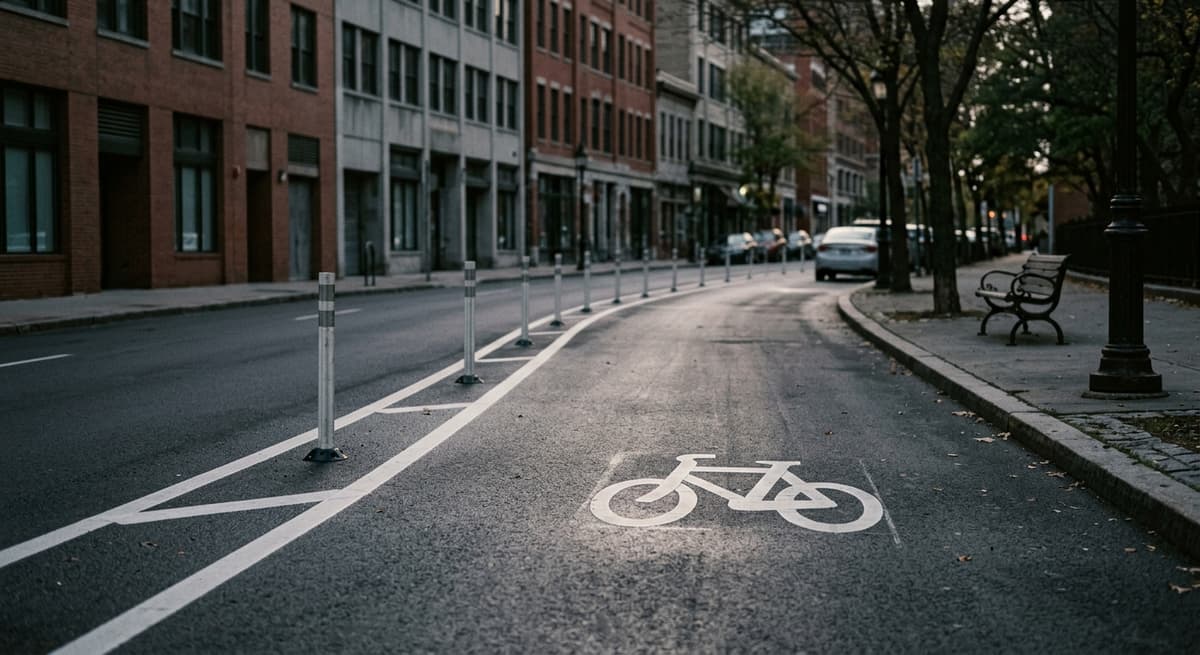
Ley 2486 is reported to require these devices to stay on ciclorrutas (bike lanes) or other authorized ways, and to explicitly prohibit sidewalks (andenes) and pedestrian zones. Multiple Colombian outlets describe the same 25 km/h (cycle infrastructure) and 40 km/h (authorized streets) split that appears in the Ministry's own VELMPU draft, though the two instruments have not yet been formally reconciled in a primary source this research could open.
Rider rules
- Minimum age: reported as 16 for general public-road use, with riders 12 to 15 restricted to bike lanes only.
- Helmet: reported as mandatory, certified, with reflective gear required between 6 p.m. and 6 a.m.
- License, registration, SOAT: none reported to be required for a device that meets the technical specifications (primarily the 1,000W power cap).
- Passengers: reported as prohibited. These are single-rider devices.
- Lights and signals: front and rear lights and hand signals for turns are reported requirements.
Penalties
Colombian press consistently reports fines around six daily legal minimum wages (seis salarios mínimos diarios legales vigentes) for violations under Ley 2486, translating to roughly 350,000 to 360,000 Colombian pesos in 2026 figures, covering infractions such as riding while intoxicated, speeding, entering prohibited zones like sidewalks, or missing required safety equipment. Vehicle impoundment is reported as a possible consequence, particularly for underage riders.
These figures come from consistent reporting across several independent Colombian outlets, which raises confidence relative to a single-source claim, but this research still did not open the statute's own penalty article directly, so treat the exact peso figure as reported rather than as a quoted legal minimum.
Enforcement in practice
Bogotá, as Colombia's largest rental and private e-scooter market, is reported to have the most routine enforcement, layered with its own district-level zone and siting rules for dockless operators. Enforcement in smaller cities is described as more targeted and inconsistent.
The starting-2027 licence-plate requirement under the draft VELMPU resolution is meant to give enforcement a physical identifier it currently lacks, since neither Ley 2486 nor the draft resolution require registration today. Until plates exist, on-the-ground identification of a violating rider depends on being stopped in person. Enforcement patterns do not change the legal status of any rule; a scooter that meets every technical spec is still subject to age, zone, and equipment rules regardless of how visibly those get policed in a given city.
Legal history and what may change
Three separate instruments are now in play in Colombia, and confusing them is a real risk for anyone researching this topic. Resolución 160 de 2017 is the oldest, narrower, and covers pedal-assist e-bikes and the ciclomotor threshold. Ley 2486 de 2025 is the new, broader, Congress-passed national statute described throughout this page. A mid-2026 Ministry of Transport draft resolution, independently confirmed by this research, proposes the formal VELMPU category and the January 1, 2027 licence-plate mandate; as of this writing it remained a draft under public comment, not a final, binding rule.
How Ley 2486 and the VELMPU resolution will formally reconcile, and whether the plate mandate survives the comment period unchanged, is not yet settled in any primary source this research could confirm. For how a European market with a similar recent-statute pattern handles e-scooters, see our guide to Spain's e-scooter laws, and our global e-scooter law guide for the full country picture.
Frequently Asked Questions
Are e-scooters legal in Colombia?
Yes. Colombia's Congress passed a national statute, Ley 2486 de 2025, reported to cover electric scooters, small mopeds, and e-bikes up to 1,000W, alongside a separate 2026 ministry resolution still in draft.
What is the minimum age to ride an e-scooter in Colombia?
Reported as 16 for general public-road use, with 12 to 15 year olds restricted to bike lanes only. This figure is attributed as reported, since the primary statute text could not be independently opened.
Do e-scooters need a licence plate in Colombia?
Not yet. A draft Ministry of Transport resolution would add a licence-plate requirement starting January 1, 2027, but as of this writing it remained a draft under public comment.
Can I ride an e-scooter on the sidewalk in Bogotá?
No. Ley 2486 is reported to explicitly prohibit sidewalks (andenes) and pedestrian zones, requiring bike lanes or other authorized ways instead.
Do I need a license or SOAT insurance for an e-scooter in Colombia?
No, not for a device that meets the technical specifications, primarily the 1,000W power cap, according to consistent Colombian reporting on Ley 2486.
What is the fine for an e-scooter violation in Colombia?
Colombian press reports fines around six daily legal minimum wages, roughly 350,000 to 360,000 pesos in 2026, for violations such as speeding, sidewalk riding, or missing safety gear.
Updates
Independently fact-checked against the cited primary sources
Sources and References
- Ministerio de Transporte, MinTransporte publica proyecto que establece por primera vez reglas para la micromovilidad en Colombia(mintransporte.gov.co).gov
- Pulzo, ley de patinetas eléctricas en Colombia: requisitos, límites y sanciones en 2026(pulzo.com)
- Movicity, Ley 2486 de 2025: nuevas reglas para movilidad eléctrica(movicity.co)
- Autocosmos Colombia, ley para patinetas y bicicletas eléctricas: reglas, multas y velocidad máxima(autocosmos.com.co)