Are Radar Detectors Legal? State Laws Explained (2026)
Independently fact-checked against primary sources (last audited September 17, 2026). · 24 primary sources cited on this page. How we verify our legal content
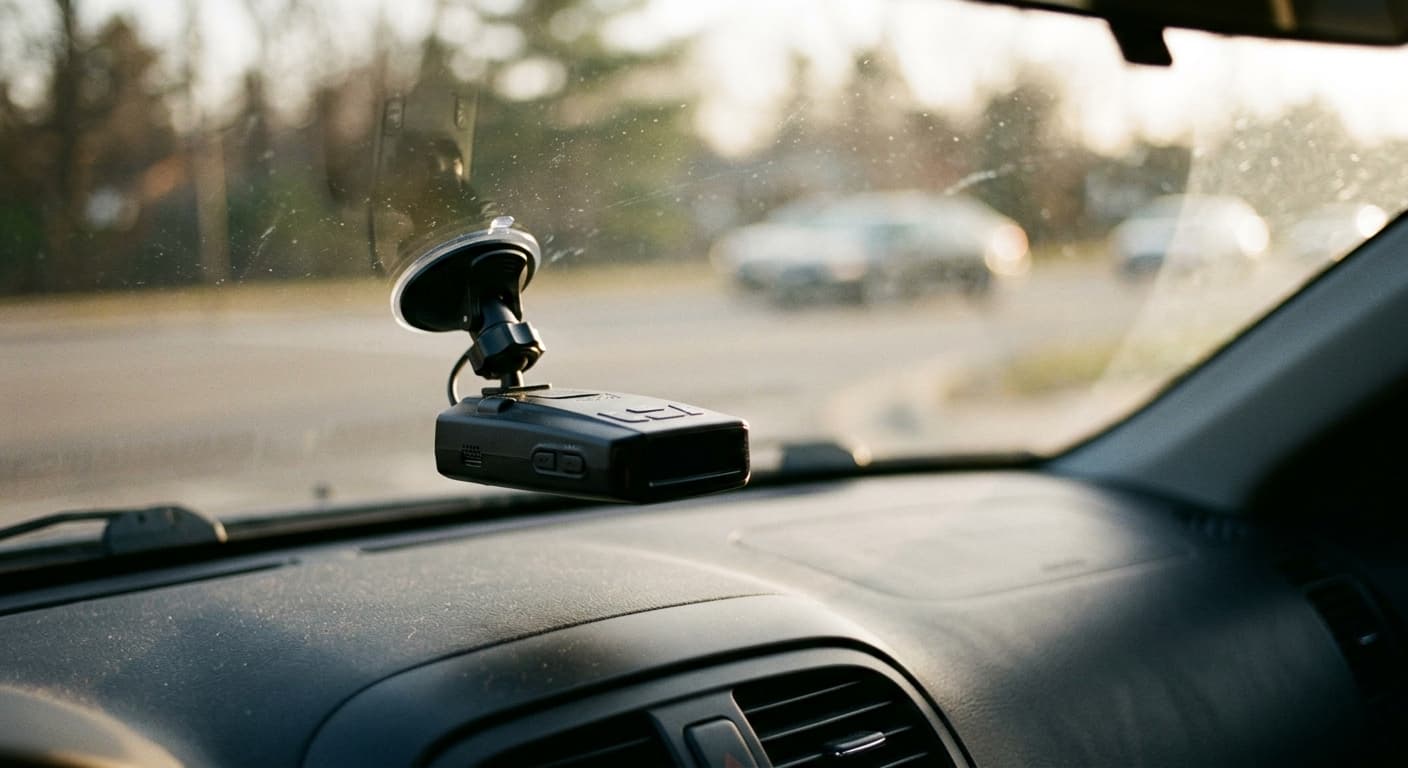
As of September 2026, radar detectors are legal in ordinary passenger vehicles in 49 states. Virginia bans them outright, and Washington DC likely does too. A separate rule bans laser and radar jammers, active interference devices, in at least 12 more states, and federal law bans detectors in commercial trucks nationwide, with no exception in the rule itself for drivers or motor carriers.
Jurisdiction scope: This article covers federal law governing commercial motor vehicles (49 CFR 392.71) and the passive radar-detector and active laser/radar-jammer laws of all 50 states and Washington DC, as identified through primary-source legal research current as of September 2026. It does not cover local or municipal ordinances beyond Washington DC's regulation, military installation policy, or countries outside the United States.
Are radar detectors legal? The direct answer
Yes, in nearly every state. Radar detectors, devices that passively receive police radar and laser signals to warn a driver of speed enforcement ahead, are legal to own and use in an ordinary passenger vehicle in 49 states. Virginia is the only state with an outright ban, and Washington DC likely bans them too under a municipal regulation discussed below.
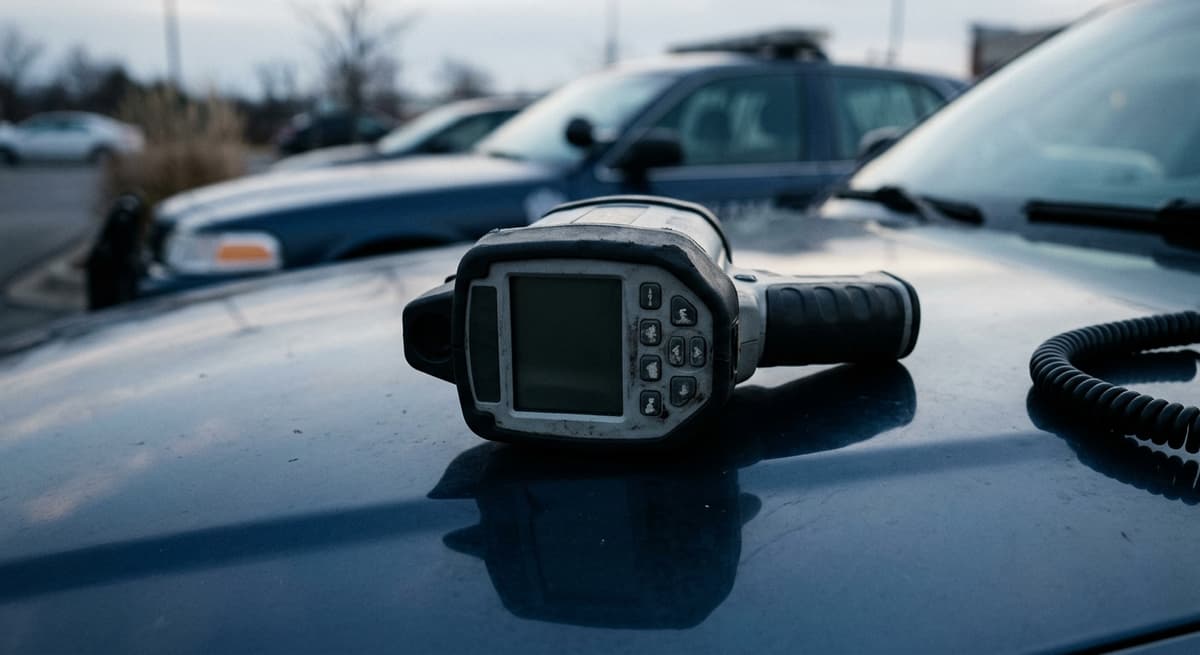
That direct answer covers detectors only. A second, separate legal question covers laser and radar jammers, active devices designed to interfere with or defeat a radar or laser gun rather than merely detect it. At least 12 states ban jammers specifically, even in states where a passive detector is completely legal. The two device categories are covered by different laws for a reason explained below, and mixing them up is the most common error on sites that rank for this topic.
A third layer sits above both: federal law bans radar detectors outright in commercial motor vehicles nationwide, regardless of what any individual state allows for passenger cars. The full state-by-state breakdown, covering both detectors and jammers, is in the table further down this page.
The federal rule: radar detectors are banned in commercial vehicles nationwide
Federal regulation bans radar detectors in commercial motor vehicles, with no exception in the rule itself for drivers or motor carriers; it applies to CMVs in interstate commerce and, through state adoption of the federal safety regulations, to intrastate CMVs in every state. Under 49 CFR 392.71:
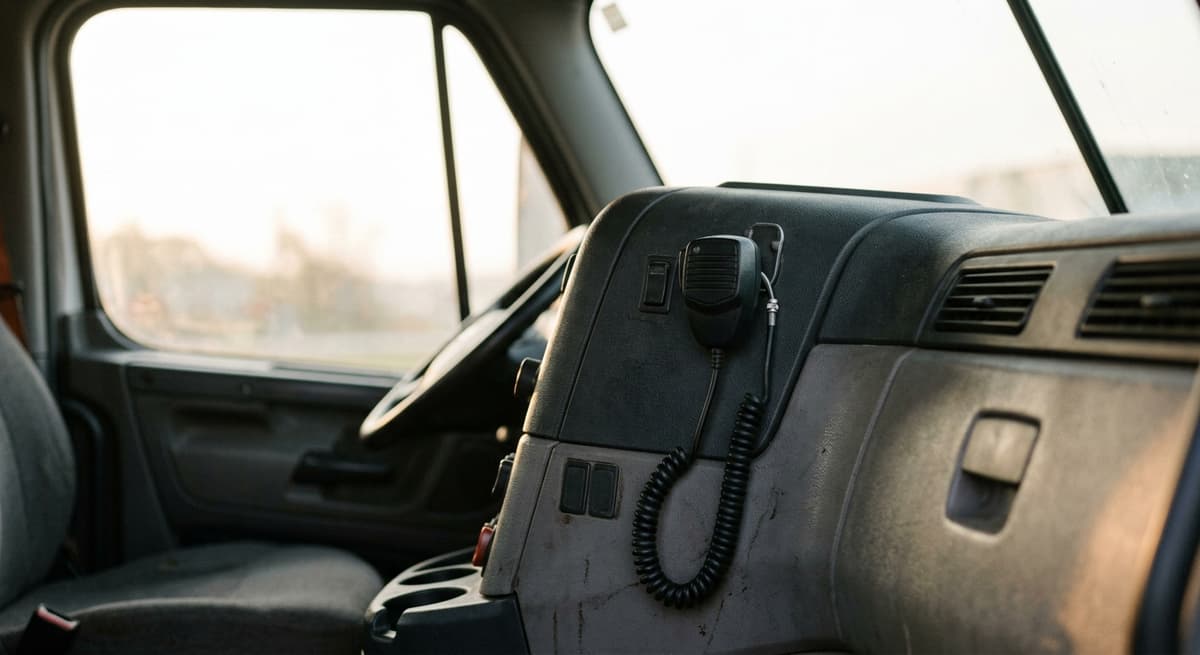
"(a) No driver shall use a radar detector in a commercial motor vehicle, or operate a commercial motor vehicle that is equipped with or contains any radar detector. (b) No motor carrier shall require or permit a driver to violate paragraph (a) of this section."
This rule applies to commercial motor vehicles as defined under 49 CFR 390.5: a vehicle used on a highway in interstate commerce with a gross vehicle weight rating, gross combination weight rating, gross vehicle weight, or gross combination weight of 10,001 pounds or more; or designed or used to transport more than 8 passengers (including the driver) for compensation; or designed or used to transport more than 15 passengers, including the driver, not for compensation; or that transports placardable quantities of hazardous material. That threshold starts well below the 26,001-pound gross vehicle weight rating that triggers a commercial driver's license under 49 CFR 383.5, so a 10,001-pound box truck, a contractor's pickup-and-trailer combination used in commerce, or a 9-passenger shuttle for hire is a CMV under this rule even though none of them is "CDL-scale." An ordinary passenger car used for personal, non-commercial driving is not covered by 49 CFR 392.71 even in a state that otherwise has no radar-detector restriction of its own.
Several states mirror this federal rule at the state level rather than leaving it to federal enforcement alone. New York bans detectors in vehicles with a gross vehicle weight rating over 18,000 pounds, and in commercial vehicles over 10,000 pounds, under N.Y. Veh. & Traf. Law 397-a; a connected, operable detector in a covered vehicle is presumptive, rebuttable evidence of use. New Mexico's director of motor transportation is directed by NMSA 65-3-9 to adopt commercial-motor-vehicle equipment regulations no more stringent than the federal safety standards; the regulations adopted under that authority bring the federal detector ban into New Mexico practice, and NMSA 66-8-116.2 sets a 50 dollar penalty assessment for possession of a radar detector in a commercial motor carrier vehicle. Oklahoma separately bans detectors in commercial motor vehicles only, under 47 Okla. Stat. 11-808.1, a rule distinct from Oklahoma's all-driver jammer ban covered below. In all three states, an ordinary passenger vehicle is unaffected.
Detectors vs. jammers: two different legal questions
Most sites that rank for radar-detector searches conflate two different devices and two different bodies of law. A radar detector is a passive receiver. It listens for radar and laser signals and alerts the driver; it does not transmit anything or interfere with anyone else's equipment. A radar or laser jammer is an active device. It is designed to interfere with, scramble, or defeat a police radar or laser gun's own signal.
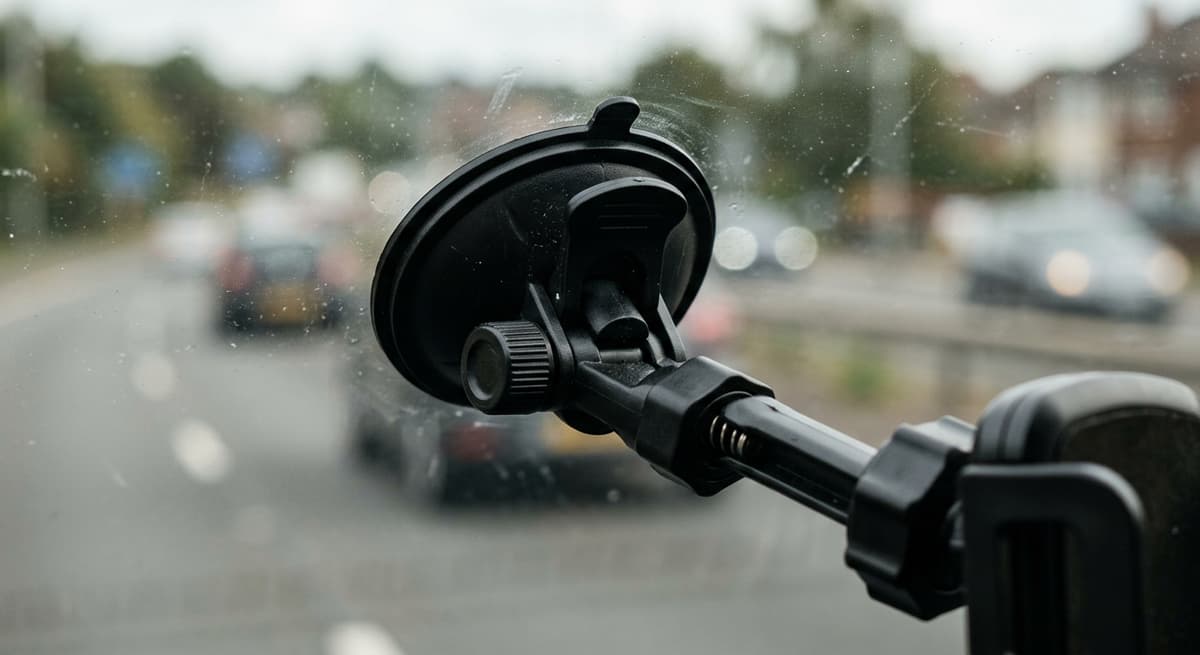
The FCC treats a radar detector as a Part 15 receiver, defined in its rules as "a receiver designed to signal the presence of radio signals used for determining the speed of motor vehicles" (47 CFR 15.3(ee), with related certification requirements at 47 CFR 15.101, 15.109, and 15.37). That classification makes owning and marketing a detector a certification and labeling issue, not a use-ban issue, at the federal level.
Jamming is a different matter. The general federal statute against interfering with licensed radio communications states:
"No person shall willfully or maliciously interfere with or cause interference to any radio communications of any station licensed or authorized by or under this chapter or operated by the United States Government."
That is 47 U.S.C. 333. It was written as a general anti-jamming statute for any licensed radio service, not specifically for police radar, and it is several inferential steps removed from the question "is a radar detector legal." It is the statutory hook regulators and courts use against jamming devices generally, and it helps explain why states treat detecting and jamming so differently: at least 12 states ban jammers as a category distinct from detectors, and only Virginia and Washington DC ban passive detecting itself.
Virginia and Washington DC: the two full bans
Virginia. Virginia has the broadest radar-detector law in the country. Under Va. Code 46.2-1079, it is unlawful to operate a vehicle equipped with, to use, or to sell any device, passive or active, that detects or interferes with police radar or laser speed-measurement equipment. The statute covers detecting and jamming in a single provision; Virginia does not need a separate jammer law because its detector ban already reaches both. Mere presence of a covered device in the vehicle is prima facie evidence of a violation. The one narrow defense is that the device had no power source and was not readily accessible to the driver or a passenger, meaning it was effectively stowed away, unplugged, and out of reach. Licensed radio receivers are exempt, as are law-enforcement vehicles.
Washington DC. DC likely bans both detectors and jammers under a District municipal regulation, 18 DCMR 736 ("Radar Detectors and Jammers"), reportedly structured as: section 736.1 banning the sale or offer for sale of a device designed to detect or counteract police radar; section 736.2 banning the use or possession of such a device in an automobile; and section 736.3 exempting the Armed Forces. The section number and its title were confirmed directly on the official DC regulations site, dcregs.dc.gov, which lists section 18-736 as "RADAR DETECTORS AND JAMMERS." The operative text of 736.1 through 736.3 sits behind that site's document viewer and could not be retrieved this session, so this page presents the subsection breakdown as likely correct and corroborated by independent secondary sources, not as a confirmed primary-source fact.
What can be stated with full confidence is a debunk: a citation widely repeated across vendor and retailer sites for DC's rule, "DC Code 50-1401.01(a)," is false. That exact section was opened directly and is a driver's license fee, exam, and age-requirement statute. It has nothing to do with radar detectors. Any source repeating that citation for a DC radar-detector ban is citing the wrong law.
States that ban laser and radar jammers (but not detectors)
In the following 12 states, passive radar detectors remain legal. What each state bans is a jamming device built to interfere with or defeat police speed-measuring equipment. All twelve reach radar jammers; most also name laser jammers, while Nebraska and Indiana write their bans around radio-frequency interference rather than laser (the table gives each state's actual wording).

| State | What's banned | Section |
|---|---|---|
| California | Equipping, using, buying, possessing, manufacturing, selling, or distributing a radar or laser jamming device | Cal. Veh. Code 28150 |
| Colorado | Using, possessing, selling, or driving with a radar jamming device inside the vehicle (class 2 misdemeanor traffic offense) | C.R.S. 42-4-1415 |
| Illinois | Operating or controlling a vehicle equipped with a radar or laser jamming device | 625 ILCS 5/12-613 |
| Indiana | Signal jammers generally, under a broad anti-jamming law that also names police radar | Ind. Code 35-45-2-6 |
| Iowa | Selling, operating, or possessing a speed-detection jamming device, a simple misdemeanor with device seizure and forfeiture | Iowa Code 321.232; 321.482 |
| Minnesota | Selling, offering for sale, using, or possessing a radar jammer | Minn. Stat. 169.14, subd. 12 |
| Nebraska | Operating or possessing a device designed to interfere with police speed-measurement radar | Neb. Rev. Stat. 60-6,274 to 60-6,276 |
| Oklahoma | Using, possessing, manufacturing, or selling a radar or laser jamming device, for any vehicle | 47 Okla. Stat. 11-808 |
| South Carolina | Equipping a vehicle with, or using, a device that jams, scrambles, neutralizes, disables, or interferes with police radar or laser | S.C. Code 56-5-3870 |
| Tennessee | Possessing, selling, driving with, or actively using a laser or radar jammer | Tenn. Code 39-16-610 |
| Texas | Using, installing, operating, or selling a radar interference device (jammer, scrambler, or diffuser) | Tex. Transp. Code 547.616 |
| Utah | Driving with a radar jamming device inside the vehicle, or knowingly using one to interfere with police radar or laser | Utah Code 41-6a-609 |
Two jurisdictions that ban detecting itself, Virginia and the District of Columbia, are not listed again here because their statutes already fold jammer coverage into the detector ban described above rather than treating jammers as a separate offense.
Two statutes deserve a specific note because they are easy to miss. Indiana's law is not written as a radar statute at all; it is a general "signal jammer" law covering personal communications services, GPS, and wireless networking that happens to name police radar, and it carries the harshest penalty on this list. Nebraska's statute is titled a "radar transmission device" law, wording that could mislead a reader into thinking it targets detectors, but its operative definition targets interference devices, not passive ones, and it bans possessing one, not just using it.
Windshield mounting and placement rules
Where a radar detector is mounted can raise a separate legal question from whether owning one is legal at all. General windshield-mounting restrictions apply to any suction-mounted device, including dashcams and GPS units, and most states list narrow exceptions for what may sit between the driver and the windshield.
Minnesota is a specific example worth flagging. Its windshield-obstruction statute, Minn. Stat. 169.71, subd. 1, bans objects suspended between the driver and the windshield except an enumerated list: sun visors, mirrors, driver-monitoring equipment, GPS and navigation units placed near the bottom of the windshield, electronic toll-collection devices, and one specific authorized device. Radar detectors are not on that exception list, so a suction-mounted unit read literally against the statute's text carries a placement risk distinct from Minnesota's separate jammer ban described above.
California's general windshield-obstruction statute, Cal. Veh. Code 26708, works similarly: its enumerated exceptions cover mirrors, small corner stickers, sun visors, and a 5-inch-square electronic communication device at the top center of the windshield, and radar detectors are not named. A suction-mounted unit sitting directly in the driver's sightline could be read as an obstruction under the statute's plain language, though a dash-mounted or visor-clipped unit is not typically swept up in practice.
The same placement question applies to other windshield-mounted electronics, including dashcams and window-tint compliance more broadly; see the window tint laws page for the related visibility rules that apply near the windshield.
Radar detector and laser jammer laws by state: full 51-jurisdiction table
| State | Radar detectors | Laser/radar jammers | Section | Notes |
|---|---|---|---|---|
| Alabama | Legal | Legal | N/A | No radar-detector or jammer statute identified (as of September 2026). |
| Alaska | Legal | Legal | N/A | No radar-detector or jammer statute identified (as of September 2026). |
| Arizona | Legal | Legal | N/A | No radar-detector or jammer statute identified (as of September 2026). |
| Arkansas | Legal | Legal | N/A | No radar-detector or jammer statute identified (as of September 2026). |
| California | Legal | Banned | Cal. Veh. Code 28150 | Infraction (misdemeanor for 4 or more devices) to equip, use, buy, possess, manufacture, sell, or distribute a jamming device. Passive detectors are legal. |
| Colorado | Legal | Banned | C.R.S. 42-4-1415 | Class 2 misdemeanor traffic offense to use, possess, sell, or drive with a jamming device inside the vehicle. FCC-legal equipment (CB, ham radio) is excluded. |
| Connecticut | Legal | Legal | N/A | No radar-detector or jammer statute identified (as of September 2026). |
| Delaware | Legal | Legal | N/A | No radar-detector or jammer statute identified (as of September 2026). |
| District of Columbia | Likely banned (unconfirmed) | Likely banned (unconfirmed) | 18 DCMR 736 | The official regulations host (dcregs.dc.gov) lists section 18-736, titled Radar Detectors and Jammers; the operative text of 736.1 to 736.3 sits behind a document viewer and was not retrieved, so the rule is stated as likely rather than confirmed. |
| Florida | Legal | Legal | N/A | No radar-detector or jammer statute identified (as of September 2026). |
| Georgia | Legal | Legal | N/A | No radar-detector or jammer statute identified (as of September 2026). |
| Hawaii | Legal | Legal | N/A | No radar-detector or jammer statute identified (as of September 2026). |
| Idaho | Legal | Legal | N/A | No radar-detector or jammer statute identified (as of September 2026). |
| Illinois | Legal | Banned | 625 ILCS 5/12-613 | Petty offense, with a minimum fine of $50 for a first offense and $100 for a second or subsequent offense, for operating a vehicle equipped with a jamming device. Device seizure is mandatory at the time of the violation. Safe harbor if the device is locked in an opaque box, or outside the passenger compartment and not in operation. |
| Indiana | Legal | Banned | Ind. Code 35-45-2-6 | Level 6 felony, up to Level 5 if used against critical infrastructure or public-safety communications. The harshest jammer penalty identified in this research. |
| Iowa | Legal | Banned | Iowa Code 321.232; 321.482 | Selling, operating, or possessing a speed-detection jamming device is prohibited, a simple misdemeanor under the chapter's general penalty section (321.482); the device is also subject to seizure and forfeiture (321.232(3)). Peace-officer use and FCC-legal equipment are excluded. |
| Kansas | Legal | Legal | N/A | No radar-detector or jammer statute identified (as of September 2026). |
| Kentucky | Legal | Legal | N/A | No radar-detector or jammer statute identified (as of September 2026). |
| Louisiana | Legal | Legal | N/A | No radar-detector or jammer statute identified (as of September 2026). |
| Maine | Legal | Legal | N/A | No radar-detector or jammer statute identified (as of September 2026). |
| Maryland | Legal | Legal | N/A | No radar-detector or jammer statute identified (as of September 2026). |
| Massachusetts | Legal | Legal | N/A | No radar-detector or jammer statute identified (as of September 2026). |
| Michigan | Legal, explicitly exempted | Not researched | MCL 750.508(4) | Michigan's police-scanner statute states in plain text that it does not apply to the use of radar detectors, an affirmative exemption rather than a mere absence of a hit. |
| Minnesota | Legal | Banned | Minn. Stat. 169.14, subd. 12 | Selling, offering for sale, using, or possessing a radar jammer is prohibited statewide. See the mounting section above for a separate windshield-placement caveat that applies to detectors specifically. |
| Mississippi | Legal | Legal | N/A | No radar-detector or jammer statute identified (as of September 2026). |
| Missouri | Legal | Legal | N/A | No radar-detector or jammer statute identified (as of September 2026). |
| Montana | Legal | Legal | N/A | No radar-detector or jammer statute identified (as of September 2026). |
| Nebraska | Legal | Banned | Neb. Rev. Stat. 60-6,274 to 60-6,276 | Titled a "radar transmission device" law, but its operative definition targets interference devices, not passive detectors. Operating or possessing, not just using, one is unlawful. |
| Nevada | Legal | Legal | N/A | No radar-detector or jammer statute identified (as of September 2026). |
| New Hampshire | Legal | Legal | N/A | No radar-detector or jammer statute identified (as of September 2026). |
| New Jersey | Legal | Legal | N/A | No radar-detector or jammer statute identified (as of September 2026). |
| New Mexico | Legal (banned in commercial vehicles) | Not researched | NMSA 65-3-9; penalty table at NMSA 66-8-116.2 | NMSA 65-3-9 directs the director of motor transportation to adopt commercial-motor-vehicle equipment regulations no more stringent than federal safety standards; those adopted regulations bring the federal detector ban into New Mexico practice, enforced under a 50 dollar penalty-assessment line item (NMSA 66-8-116.2). Ordinary passenger vehicles are unrestricted. |
| New York | Legal (banned in heavy/commercial vehicles) | Not researched | N.Y. Veh. & Traf. Law 397-a | Restricted to vehicles with a gross vehicle weight rating over 18,000 pounds, and commercial vehicles over 10,000 pounds. A connected, operable detector in a covered vehicle is presumptive, rebuttable evidence of use. Ordinary passenger cars are unrestricted. |
| North Carolina | Legal | Legal | N/A | No radar-detector or jammer statute identified (as of September 2026). |
| North Dakota | Legal | Legal | N/A | No radar-detector or jammer statute identified (as of September 2026). |
| Ohio | Legal | Legal | N/A | No radar-detector or jammer statute identified (as of September 2026). |
| Oklahoma | Legal (banned in commercial vehicles) | Banned | 47 Okla. Stat. 11-808 (jammers); 11-808.1 (commercial-vehicle detectors) | Two separate rules. Section 11-808 bans jammers for every driver in every vehicle. Section 11-808.1 bans detectors only in commercial motor vehicles, mirroring the federal CMV rule. Passenger-car detectors are legal. |
| Oregon | Legal | Legal | N/A | No radar-detector or jammer statute identified (as of September 2026). |
| Pennsylvania | Legal | Legal | N/A | No radar-detector or jammer statute identified (as of September 2026). |
| Rhode Island | Legal | Legal | N/A | No radar-detector or jammer statute identified (as of September 2026). |
| South Carolina | Legal | Banned | S.C. Code 56-5-3870 | Misdemeanor, up to a 1,000 dollar fine, for equipping a vehicle with or using a device that jams, scrambles, neutralizes, disables, or interferes with police radar or laser. |
| South Dakota | Legal | Legal | N/A | No radar-detector or jammer statute identified (as of September 2026). |
| Tennessee | Legal | Banned | Tenn. Code 39-16-610 | Tiered offense: possessing or selling a jammer, or driving with one inside, is a Class C misdemeanor; actively using one to interfere with police radar or laser is a Class B misdemeanor, up to 6 months. FCC-legal equipment is excluded. |
| Texas | Legal | Banned | Tex. Transp. Code 547.616 | Class C misdemeanor to use, install, operate, or sell a radar interference device (the statute names jammer, scrambler, and diffuser). CB and ham radio equipment is excluded. |
| Utah | Legal | Banned | Utah Code 41-6a-609 | Infraction to drive with a radar jamming device inside the vehicle, or to knowingly use one to interfere with police radar or laser. Affirmative defense if the device was inoperative at the time. |
| Vermont | Legal | Legal | N/A | No radar-detector or jammer statute identified (as of September 2026). |
| Virginia | Banned | Banned (same statute) | Va. Code 46.2-1079 | Unlawful to operate a vehicle equipped with, use, or sell any device, passive or active, that detects or interferes with police radar or laser. Mere presence is prima facie evidence of a violation. |
| Washington | Legal | Legal | N/A | No radar-detector or jammer statute identified (as of September 2026). |
| West Virginia | Legal | Legal | N/A | No radar-detector or jammer statute identified (as of September 2026). |
| Wisconsin | Legal | Legal | N/A | No radar-detector or jammer statute identified (as of September 2026). |
| Wyoming | Legal | Legal | N/A | No radar-detector or jammer statute identified (as of September 2026). |
Penalties: what happens if you're caught
Penalty severity for the jammer-ban states varies enormously, from an infraction to a felony. Iowa makes a violation a simple misdemeanor under the chapter's general penalty (Iowa Code 321.482), and additionally subjects the device to seizure and forfeiture under 321.232(3). Illinois treats it as a petty offense with a minimum fine of $50 for a first offense and $100 for a second or subsequent offense, not a capped range, and its statute specifically bars officers from stopping or searching a vehicle solely on suspicion of that violation. Colorado and Tennessee sit at misdemeanor level: Colorado's is a Class 2 misdemeanor traffic offense, and Tennessee tiers the offense from a Class C misdemeanor for mere possession up to a Class B misdemeanor, punishable by up to 6 months, for actively using a jammer against police radar. South Carolina's misdemeanor carries a fine up to 1,000 dollars. Indiana stands alone at the top of the scale: a Level 6 felony, escalating to Level 5 if the jamming targets critical infrastructure or public-safety communications, is the most severe penalty identified anywhere in this research.
Virginia and DC work differently, since their statutes reach the detector itself rather than only a jamming device. In Virginia, simply having a covered device in the car is prima facie evidence of a violation of Va. Code 46.2-1079, shifting the practical burden onto the driver to show the narrow no-power-source, not-readily-accessible defense. DC's penalty framework could not be independently verified from primary source this session, for the reasons explained above.
Federal enforcement of the commercial-vehicle detector ban under 49 CFR 392.71 runs through the motor-carrier safety compliance system rather than an ordinary traffic-ticket penalty schedule, and applies uniformly regardless of which state the commercial vehicle is operating in. A related question, traffic camera ticket exposure, and broader DUI stop procedure, are governed by entirely separate statutes from anything on this page.
Disclaimer: This article provides general legal information about radar detector and laser jammer laws in the United States as of September 2026. It covers federal law (49 CFR 392.71, 47 U.S.C. 333) and the laws of all 50 states and the District of Columbia as identified through primary-source legal research; it is not legal advice. Laws change, and enforcement can vary by jurisdiction and by officer. If you are facing a citation or have a specific legal question about your situation, consult a lawyer licensed in your state.
Related articles
- Windshield mounting restrictions
- Window tint laws
- Dashcam legality and privacy laws
- Traffic camera ticket laws
- DUI laws
Statutes cited reflect their in-force version as of September 16, 2026. Last updated: September 16, 2026.
Frequently Asked Questions
Are radar detectors legal in my state?
Yes, in 49 of the 50 states. Virginia bans radar detectors outright under Va. Code 46.2-1079, and Washington DC likely bans them under a municipal regulation. In every other state, passive detectors are legal for ordinary passenger vehicles, though at least 12 states separately ban laser or radar jammers. Check the full state-by-state table above for your state.
Is it illegal to have a radar detector in your car?
Only in Virginia, where mere presence of the device is prima facie evidence of a violation, and likely in Washington DC. In the other 49 states, owning and using a passive radar detector in a passenger vehicle is legal, subject to state jammer bans that reach only active interference devices; DC's status is unconfirmed.
Are laser jammers legal?
Not in at least 12 states. California, Colorado, Illinois, Indiana, Iowa, Minnesota, Nebraska, Oklahoma, South Carolina, Tennessee, Texas, and Utah all ban radar jammers, and most of them laser jammers as well, even though passive radar detectors remain legal in every one of those states. Virginia and DC fold jammer coverage into their broader detector bans.
Can you get a ticket just for having a radar detector?
In most states, no, since a passive detector by itself is not independently illegal. In Virginia, simple presence of the device is prima facie evidence of a violation. In commercial motor vehicles nationwide, having a radar detector at all violates 49 CFR 392.71 regardless of use.
Are radar detectors legal in commercial trucks?
No. Federal law, 49 CFR 392.71, bans radar detectors in commercial motor vehicles, with no exception in the rule itself for the driver or the motor carrier; it applies to CMVs in interstate commerce and, through state adoption of the federal safety regulations, to intrastate CMVs in every state. New York, Oklahoma, and New Mexico separately write a version of this rule into state law for covered heavy or commercial vehicles.
Where can I mount a radar detector legally?
General windshield-obstruction rules, not radar-detector-specific rules, govern this. Minnesota's exception list for objects near the windshield does not include radar detectors, and California's windshield-obstruction statute does not name them either, so a suction-mounted unit sitting directly in the driver's sightline carries some placement risk in those states. See the windshield mounting restrictions page for the general rule.
Will a radar detector get you pulled over?
No primary source in this research addresses general police practice around detector possession alone. What is sourced: in Virginia, presence of the device is prima facie evidence of a violation, which is a legal standard rather than a stop-justification rule. Illinois's jammer statute specifically bars officers from stopping or searching a vehicle solely on suspicion of that particular violation. Outside ban states and CMVs, passive possession of a detector is not itself illegal.
Updates
Independently fact-checked against the cited primary sources
Sources and References
- 49 CFR 392.71 - Radar detectors banned in commercial motor vehicles(ecfr.gov).gov
- 49 CFR 390.5 - Commercial motor vehicle definition (10,001+ lbs GVWR/GCWR, 8+ paid or 15+ unpaid passengers, or placarded hazmat; below the 26,001 lb CDL threshold at 49 CFR 383.5)(law.cornell.edu)
- NMSA 65-3-9 - New Mexico rulemaking delegation directing the director of motor transportation to adopt CMV equipment regulations no more stringent than federal safety standards (does not itself name radar detectors)(nmonesource.com).gov
- NMSA 66-8-116.2 - New Mexico penalty-assessment schedule, including the $50.00 line item for possession of a radar detector in a commercial motor carrier vehicle(nmonesource.com).gov
- N.Y. Veh. & Traf. Law 397-a - Radar detectors restricted in heavy and commercial vehicles(legislation.nysenate.gov).gov
- 47 Okla. Stat. 11-808.1 - Radar detectors banned in commercial motor vehicles(oklegislature.gov).gov
- 47 U.S.C. 333 - Federal prohibition on willful interference with licensed radio communications(uscode.house.gov).gov
- 47 CFR 15.3(ee) - FCC definition of a radar detector as a Part 15 receiver(ecfr.gov).gov
- Va. Code 46.2-1079 - Virginia ban on radar detectors and interference devices(law.lis.virginia.gov).gov
- D.C. Code 50-1401.01(a) - driver's license fee and exam statute, confirmed unrelated to radar detectors despite being widely miscited(code.dccouncil.gov).gov
- 18 DCMR 736, "RADAR DETECTORS AND JAMMERS" - section number and title confirmed on the official DC Office of Documents and Administrative Issuances regulations site; operative subsection text (736.1-736.3) sits behind that site's document viewer and was not independently retrieved this session(dcregs.dc.gov).gov
- 18 DCMR 736 - secondary-source mirror of the reported subsection breakdown (sale ban / use-and-possession ban / Armed Forces exemption); mirror returned HTTP 503 this session and was not opened(dcrules.elaws.us)
- Cal. Veh. Code 28150 - California ban on radar/laser jamming devices(leginfo.legislature.ca.gov).gov
- C.R.S. 42-4-1415 - Colorado ban on radar jamming devices; subsection (4) classifies a violation as a class 2 misdemeanor TRAFFIC offense under 42-4-1701(3)(a)(II)(A), a distinct, lighter classification from a plain class 2 misdemeanor(olls.info).gov
- 625 ILCS 5/12-613 - Illinois ban on radar or laser jamming devices; subsection (c) sets a minimum fine of $50 for a first offense and $100 for a second or subsequent offense (statutory minimums, not a capped range); subsection (d) makes device seizure mandatory(ilga.gov).gov
- Ind. Code 35-45-2-6 - Indiana signal jammer law including police radar(iga.in.gov).gov
- Iowa Code 321.232 (ban and seizure/forfeiture under 321.232(3)) and 321.482 (general chapter penalty: a violation is a simple misdemeanor) - Iowa ban on speed-detection jamming devices(legis.iowa.gov).gov
- Minn. Stat. 169.14, subd. 12 - Minnesota ban on radar jammers(revisor.mn.gov).gov
- Neb. Rev. Stat. 60-6,274 to 60-6,276 - Nebraska ban on radar interference devices(nebraskalegislature.gov).gov
- 47 Okla. Stat. 11-808 - Oklahoma ban on radar/laser jamming devices for all vehicles(oklegislature.gov).gov
- S.C. Code 56-5-3870 - South Carolina ban on radar/laser jamming devices(scstatehouse.gov).gov
- Tenn. Code 39-16-610: Tennessee ban on laser/radar jammers (text from the recordinglaw statute corpus; Tennessee publishes its code through LexisNexis, official public portal)(lexisnexis.com)
- Tex. Transp. Code 547.616 - Texas ban on radar interference devices(statutes.capitol.texas.gov).gov
- Utah Code 41-6a-609 - Utah ban on radar jamming devices(le.utah.gov).gov
- MCL 750.508(4) - Michigan statutory exemption for radar detectors(legislature.mi.gov).gov
- Minn. Stat. 169.71, subd. 1 - Minnesota windshield obstruction exceptions, radar detectors not listed(revisor.mn.gov).gov
- Cal. Veh. Code 26708 - California windshield obstruction exceptions, radar detectors not listed(leginfo.legislature.ca.gov).gov