
Hawaii
Hawaii Nursing Home Camera Laws: No Statute, Private-Place Risk
Independently fact-checked against primary sources (last audited August 14, 2026). · 3 primary sources cited on this page. How we verify our legal content
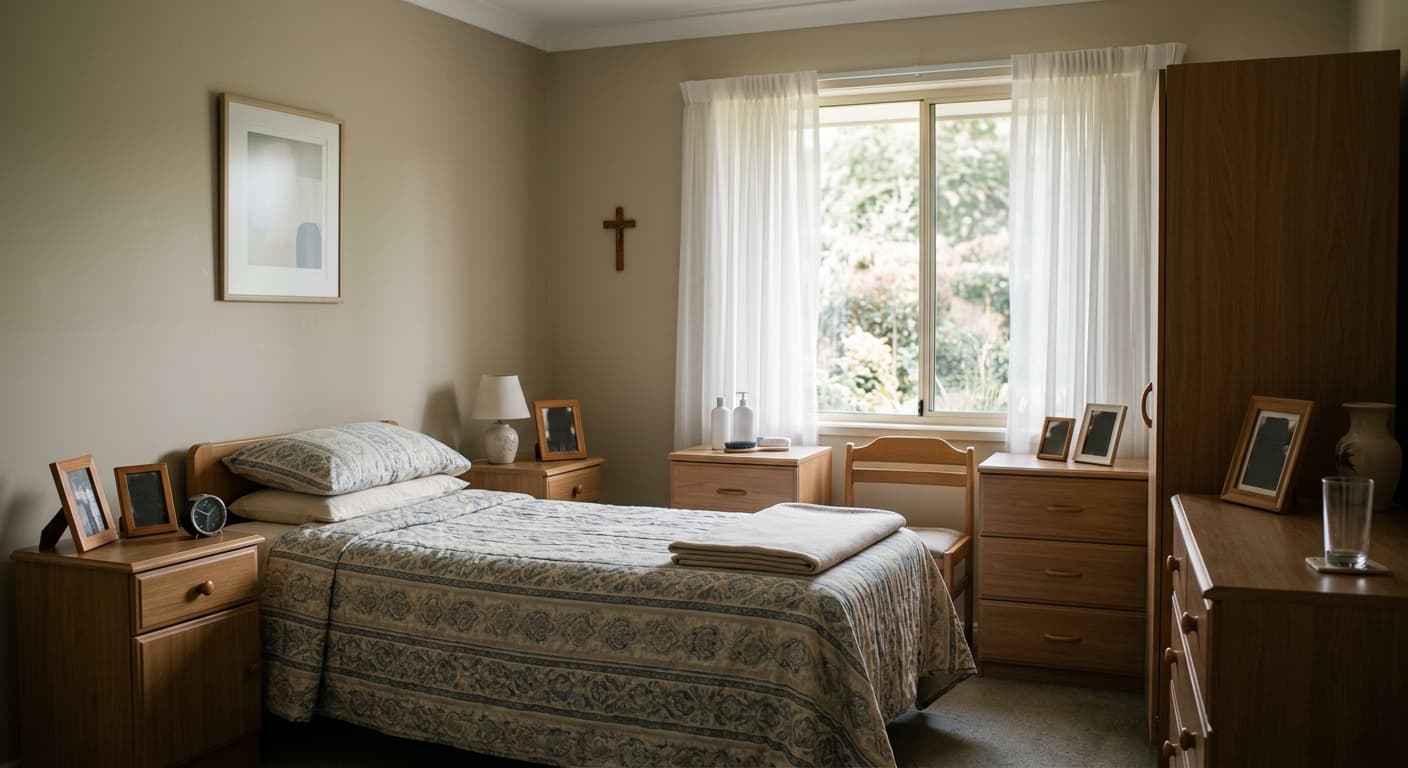
Hawaii has no statute or administrative rule giving a nursing home resident or family a right to install a camera in a resident's room. This article covers what a real search of Hawaii law found, the state's own recording-consent rules that apply instead, and where to turn if a facility interferes.
This page addresses Hawaii specifically. For the 18 states with an enacted electronic-monitoring statute, see the nursing home camera laws hub and the state-by-state comparison.
Does Hawaii Have a Nursing Home Camera Law?
No. A search of Hawaii's health and licensing statutes found no provision addressing electronic monitoring or cameras in a nursing home resident's room. HRS Chapter 321 (Department of Health administration), the Nursing Home Administrators Act (HRS Chapter 457B), and that act's implementing rule (Hawaii Administrative Rules Chapter 90-C, examined section by section) contain nothing on the subject. Hawaii's 2025 and 2026 Legislature passed-bill lists were also checked directly and contain no nursing-home electronic-monitoring bill.
Hawaii Administrative Rules Chapter 94.2, the Department of Health's operating rule for nursing facilities, was also reviewed in full, all 76 sections across admission and discharge, resident care, staffing, and physical-facility standards, including the resident-rights section that lists everything from the right to refuse treatment to the right to personal privacy. None of it mentions a camera, video, audio, or electronic monitoring device in a resident's own room. The one appearance of the words "closed circuit television" in the chapter concerns a facility's own equipment for observing an infection-control isolation room, not a family-installed monitoring device, and does not change this article's conclusion. Readers should not treat any negative finding as permanent; Hawaii's Legislature meets every year, and a facility or the Hawaii Department of Health can confirm current policy directly.
Hawaii's Recording and Consent Law: What Applies to a Camera
With no nursing-home-specific statute, the general recording-consent law governs a camera installed without the facility's agreement. Hawaii is a hybrid consent state. HRS § 803-42(b)(3)(A) sets one-party consent as the baseline for wire, oral, and electronic communications: a participant in a conversation may record it without telling the others.
But HRS § 711-1111(1)(d) creates a separate, stricter rule for a "private place." It is a misdemeanor to install or use, "in any private place, without consent of the person or persons entitled to privacy therein, any means or device for observing, recording, amplifying, or broadcasting sounds or events in that place other than another person in a stage of undress or sexual activity."
HRS § 711-1100 supplies the definition: a private place is "a place where one may reasonably expect to be safe from casual or hostile intrusion or surveillance, but does not include a place to which the public or a substantial group thereof has access." The statute gives no examples of a private place. The only list in that definitions section is of public places, and it expressly leaves out the rooms of hotels and apartment houses "designed for actual residence." A nursing home resident's own room is the strongest real-world candidate for a private place under that reasonable-expectation standard, which matters most for a hidden camera capturing a roommate or staff member who never learned it was there. See our Hawaii recording laws guide for the full framework, including how the one-party baseline and the private-place rule interact outside a nursing home too.
The final clause of that misdemeanor matters as much as the rule itself. Installing or using a device to observe or record "another person in a stage of undress or sexual activity" in a private place is carved out of HRS 711-1111 because a different statute covers it: HRS § 711-1110.9(1)(a), violation of privacy in the first degree, which § 711-1110.9(4) makes a class C felony. A camera trained on a bed in a room where a resident is dressed, bathed, toileted, or catheterized sits close to that line, and the felony is the charge that fits if the device is knowingly installed or used to capture that.
Facility Policy Decides Whether a Camera Is Allowed
Because no Hawaii law grants or forecloses a camera right, the facility's admission agreement is what actually controls. A facility can permit a camera, condition it on written notice or a roommate's agreement, or prohibit one outright as a matter of its own contract terms. Nothing in Hawaii's Nursing Home Administrators Act requires a facility to allow one.
A facility that cites HIPAA as its reason for banning a resident's own camera is invoking a law that does not reach that situation. HIPAA's restrictions apply only to a "covered entity," defined under 45 CFR § 160.103 as a health plan, a health care clearinghouse, or a health care provider that transmits health information electronically for certain transactions. A resident's family installing their own device does not fall into any of those categories. A facility can still restrict a camera through its own policy or admission agreement, but that is a contract decision, not a HIPAA requirement.
The Practical Risk of a Hidden Camera
A family considering a camera without the facility's knowledge should weigh two distinct risks. First, an undisclosed device capturing staff conversations or a roommate without their consent risks HRS 711-1111's misdemeanor private-place rule, separate from any question about the resident's own recording.
That exposure is not capped at a misdemeanor. Because HRS 711-1111(1)(d) reaches only sounds and events "other than another person in a stage of undress or sexual activity," a device knowingly installed or used to observe or record someone undressed in that room falls under HRS 711-1110.9 instead, violation of privacy in the first degree and a class C felony. In a room where a resident is dressed, bathed, toileted, or catheterized in view of the lens, that is a realistic scenario rather than an edge case, and it applies to a roommate on the other side of the curtain as much as to the resident.
Second, installing a camera against a facility's stated policy can strain the relationship between the family and the facility, since Hawaii has no statute protecting a resident's right to monitor over facility objection the way roughly 18 other states now do. Openly disclosing a camera to the facility and any roommate, and getting written acknowledgment where possible, is the more defensible path in a state with no statutory right either way.
Using Camera Footage as Evidence of Abuse or Neglect
Footage that appears to show abuse or neglect can support a report to Adult Protective Services or the state ombudsman, and it can support a civil claim. Footage alone rarely settles a case; it is usually reviewed alongside medical records, staffing records, and the resident's care plan. For a broader look at how a nursing home abuse or neglect claim works, see Nursing Home Abuse & Neglect.
Harmed by a product or exposure? Speak with an attorney about your options
If you or a loved one may have been harmed, you can speak with an attorney about your legal options at no cost. Whether you have a claim depends on the specific facts. This is attorney advertising, not a guarantee that you qualify or of any particular outcome.
Where to Turn: Hawaii's Long-Term Care Ombudsman
The Hawaii Long-Term Care Ombudsman Program investigates complaints affecting the health, safety, welfare, and rights of residents in nursing homes and assisted living facilities alike, under authority tracing to the federal Older Americans Act, 42 U.S.C. § 3058g. A camera dispute, a facility's refusal to discuss monitoring, or a suspected retaliation concern are all within its scope. Its "Know Your Rights" resource is a useful starting point before any dispute escalates.
Information last verified on 2026-08-14, drawn from Hawaii Revised Statutes Chapters 321, 457B, 711, and 803, Hawaii Administrative Rules Chapters 90-C and 94.2, and the 2025-2026 Hawaii Legislature bill records. This article has not yet been reviewed by a licensed lawyer and is general legal information, not legal advice for your specific situation.
Related Resources
- Nursing Home Camera Laws by State covers every state's regime, including the 18 states with an enacted statute.
- Nursing Home Camera Laws: State-by-State Comparison breaks down the 18 states with a full statutory right.
- Hawaii Recording Laws covers Hawaii's general one-party consent framework and the private-place exception in full.
- Nursing Home Abuse & Neglect covers how an abuse or neglect claim works once evidence, including camera footage, is in hand.
- US Recording Laws by State covers the general consent framework nationwide.
Last updated: 2026-08-14.
Frequently Asked Questions
Is it legal to put a camera in a nursing home room in Hawaii?
Hawaii has no statute addressing the question either way. Whether a camera is allowed depends on the facility's own policy and admission agreement, since no state law grants or forbids the right.
Can a hidden camera in Hawaii violate the law even without a nursing-home statute?
Possibly. HRS 711-1111 makes it a misdemeanor to install a recording device in a private place without the consent of the people entitled to privacy there, and a resident's own room is a plausible private place under the reasonable-expectation definition in HRS 711-1100. That misdemeanor expressly does not cover recording a person in a stage of undress: a device knowingly used that way falls under HRS 711-1110.9, violation of privacy in the first degree, which is a class C felony.
Does HIPAA stop a family from installing their own camera in Hawaii?
No. HIPAA's restrictions apply only to covered entities such as health plans and providers, not to a family installing their own personal camera. A facility can still restrict a camera through its own policy, but that is a contract decision, not a HIPAA requirement.
Has Hawaii ever considered a nursing home camera bill?
No nursing-home electronic-monitoring bill was found in the 2025 or 2026 Hawaii Legislature's passed-bill lists after a direct review of both years.
What can I do if a Hawaii facility refuses to let me install a camera?
Contact the Hawaii Long-Term Care Ombudsman Program, which investigates complaints affecting resident rights at nursing homes and assisted living facilities and covers monitoring disputes.
Can camera footage help with a nursing home abuse claim in Hawaii?
Yes. Footage that appears to show abuse or neglect can support a report to the ombudsman or Adult Protective Services and a civil claim, though it is typically evaluated alongside medical and staffing records rather than on its own.
Updates
Corrected the description of Hawaii's private-place recording law: removed a statutory example list that does not exist, restated the definition from HRS 711-1100, and added the class C felony under HRS 711-1110.9 that applies when a device captures a person in a stage of undress.
Independently fact-checked against the cited primary sources
The Law Behind This Article
This article rests on the statutory provisions below, held in our own legal record and retrieved from the official source. Tap a section to read the operative text.
Hawaii Revised Statutes, Chapter 711: OFFENSES AGAINST PUBLIC ORDER
§ 711-1111Violation of privacy in the second degreeIn forcecited in 20 of our articles
(1) A person commits the offense of violation of privacy in the second degree if, except in the execution of a public duty or as authorized by law, the person intentionally: (a) Trespasses on property for the purpose of subjecting anyone to eavesdropping or other surveillance in a private place; (b) Peers or peeps into a window or other opening of a dwelling or other structure adapted for sojourn or overnight accommodations for the purpose of spying on the occupant thereof or invading the privacy of another person with a lewd or unlawful purpose, under circumstances in which a reasonable person in the dwelling or other structure would not expect to be observed; (c) Trespasses on property for the sexual gratification of the actor; (d) Installs or uses, or both, in any private place, without consent of the person or persons entitled to privacy therein, any means or device for observing, recording, amplifying, or broadcasting sounds or events in that place other than another person in a stage of undress or sexual activity; provided that this paragraph shall not prohibit a person from making a video or audio recording or taking a photograph of a law enforcement officer while the…
Official text (excerpt) · last checked 2026-08-31 · Read the full text in our law library · Verify at capitol.hawaii.gov
Cited in 10 court opinions in our collectionLatest citing opinion in our collection: 2026
In the courts (editorial summary, independently checked):Hawaii decisions have construed HRS 711-1111 mainly alongside neighboring statutes. State v. Kaakimaka (2026) read subsections (1)(d) and (1)(e) as an inside and outside pair while construing the first-degree offense. State v. Lee (1984) treated 711-1111(1) as drawn from Model Penal Code 250.12 in reading the wiretap statute.
Opinions citing this section in our collection:
- State v. Lee (Hawaii Supreme Court 1984, 67 Haw. 307)✓An undercover officer wearing a recorder taped conversations in a doctor's private office; construing the wiretap consent provision drawn from HRS 711-1111(1)(b) and (c), the court held a body-worn device is not an "installation" in a private place, so the tapes were admissible.
- State v. Kaakimaka (Hawaii Supreme Court 2026)“…711-1110.9 and second degree violation of privacy under HRS § 711-1111 (2014 & Supp. 2025) convinces me that…”
- State v. Lester (Hawaii Supreme Court 1982, 64 Haw. 659)“…The Code provision covering wiretapping and eavesdropping, HRS § 711-1111, permits "consensual eavesdropping".…”
Identified automatically from the court opinions citing this section — not a ranking of which case controls.
Also relied on in: Hawaii Recording Laws (2026): Hybrid Consent State Rules, Hawaii Audio Recording Laws: One-Party Consent Rules and Penalties, Hawaii Dashcam Laws: Recording Rules, Audio Consent, and Legal Limits (2026)
§ 711-1100DefinitionsIn forcecited in 2 of our articles
In this chapter, unless a different meaning is plainly required, or the definition is otherwise limited by this section: "Animal" includes every living creature, except a human being. "Equine animal" means an animal of or belonging to the family Equidae, including horses, ponies, mules, donkeys, asses, burros, and zebras. "Facsimile" means a document produced by a receiver of signals transmitted over telecommunication lines, after translating the signals, to produce a duplicate of an original document. "Law enforcement animal" means any dog, horse, or other animal used by law enforcement or corrections agencies and trained to work in areas of tracking, suspect apprehension, victim assistance, crowd control, or drug or explosive detection for law enforcement purposes.
Official text (excerpt) · last checked 2026-07-30 · Read the full text in our law library · Verify at capitol.hawaii.gov
Cited in 15 court opinions in our collectionLatest citing opinion in our collection: 2026
Opinions citing this section in our collection:
- State v. Kauhane. (Hawaii Supreme Court 2019, 145 Haw. 362)“…the charge did not define “obstructs,” which is defined in HRS § 711-1100 (Supp. 2015) as “renders impassable wi…”
- State v. Kaeo. (Hawaii Supreme Court 2021, 151 Haw. 329)“…the DKIST. The State disagreed. It said that HRS § 711-1100’s (Supp. 2015) definition of “public” a…”
- State v. Kaakimaka (Hawaii Intermediate Court of Appeals 2025)“…public or a substantial group thereof has access." HRS § 711-1100 (2014). The record does not…”
Identified automatically from the court opinions citing this section — not a ranking of which case controls.
Also relied on in: Hawaii Employee Monitoring Laws: Employer Rules (2026)
§ 711-1110.9Violation of privacy in the first degreeIn forcecited in 18 of our articles
(1) A person commits the offense of violation of privacy in the first degree if, except in the execution of a public duty or as authorized by law: (a) The person intentionally or knowingly installs or uses, or both, in any private place, without consent of the person or persons entitled to privacy therein, any device for observing, recording, amplifying, or broadcasting another person in a stage of undress or sexual activity in that place; (b) The person knowingly discloses or threatens to disclose an image or video of another identifiable person either in the nude, as defined in section 712‑1210, or engaging in sexual conduct, as defined in section 712-1210, without the consent of the depicted person, with intent to harm substantially the depicted person with respect to that person's health, safety, business, calling, career, education, financial condition, reputation, or personal relationships or as an act of revenge or retribution; or (c) The person intentionally creates or discloses or threatens to disclose an image or video of a composite fictitious person depicted in the nude as defined in section 712-1210, or engaged in sexual conduct as defined in section 712-1210, that…
Official text (excerpt) · last checked 2026-09-03 · Read the full text in our law library · Verify at capitol.hawaii.gov
Cited in 7 court opinions in our collectionLatest citing opinion in our collection: 2026
In the courts (editorial summary, independently checked):Hawaii courts have construed HRS 711-1110.9 in the Kaakimaka litigation. State v. Kaakimaka (2026) held subsection (1)(a) requires the device, or the person using it, to be inside the private place, and reversed a conviction where the phone stayed outside. A 2025 Kaakimaka opinion upheld the charge as drawn.
Opinions citing this section in our collection:
- State v. Kaakimaka (Hawaii Supreme Court 2026)✓A man stood outside a vacation home and aimed his phone at a bathroom window where a 15-year-old was showering; the court held the statute requires the device or the person using it to be inside the private place, found the evidence insufficient, and reversed the conviction.
- State v. Kaakimaka. ICA s.d.o., filed 01/31/2025 [ada], 155 Haw. 297. Opinion by Hiraoka, J. Concurring in Part and Dissenting in Part. Opinion by Guidry J. Concurring in Part and Dissenting in Part. Application for Writ of Certiorari, filed 05/16/2025. S.Ct. Order Accepting Application for Writ of Certiorari, filed 06/23/2025. S.Ct. Amended Order Accepting Application for Writ of Certiorari, filed 06/23/2025 [ada]. (Hawaii Supreme Court 2025)✓Charged with recording a girl showering, the defendant argued his indictment was defective because it did not define "private place"; the court held that term is an attendant circumstance whose statutory definition need not be alleged, and upheld the charge.
- State v. Olive (Hawaii Intermediate Court of Appeals 2025)“…and (b). These offenses are classified as Class C felonies. HRS § 711-1110.9(2) (2014 & 2018 Supp.). HR…”
Identified automatically from the court opinions citing this section — not a ranking of which case controls.
Also relied on in: Hawaii Laws on Recording in Public: Your Rights in Public Spaces, Hawaii School Recording Laws: Student Privacy, FERPA, and Classroom Rules (2026), Hawaii Security Camera Laws: Residential and Business Surveillance Rules
Hawaii Revised Statutes, Chapter 803: ARRESTS, SEARCHES, SEARCH WARRANTS
§ 803-42Interception, access, and disclosure of wire, oral, or electronic communications, use of pen register, trap and trace device, and mobile tracking device prohibitedIn forcecited in 21 of our articles
(a) Except as otherwise specifically provided in this part, any person who: (1) Intentionally intercepts, endeavors to intercept, or procures any other person to intercept or endeavor to intercept, any wire, oral, or electronic communication; (2) Intentionally uses, endeavors to use, or procures any other person to use or endeavor to use any electronic, mechanical, or other device to intercept any wire, oral, or electronic communication when: (A) Such a device is affixed to, or otherwise transmits a signal through, a wire, cable, or other similar connection used in wire communication; or (B) Such a device transmits communications by radio, or interferes with the transmission of such communication; (3) Intentionally discloses, or endeavors to disclose, to any other person the contents of any wire, oral, or electronic communication, knowing or having reason to know that the information was obtained through the interception of a wire, oral, or electronic communication in violation of this part; (4) Intentionally uses, or endeavors to use, the contents of any wire, oral, or electronic communication, knowing or having reason to know that the information was obtained through the…
Official text (excerpt) · last checked 2026-09-23 · Read the full text in our law library · Verify at capitol.hawaii.gov
Cited in 14 court opinions in our collectionLatest citing opinion in our collection: 2026
In the courts (editorial summary, independently checked):State v. Lo (1983) held HRS 803-42(b)(3) barred police from secretly installing recording devices in a hotel room even though one participant consented, and suppressed the evidence. State v. Lee (1984) held a recorder worn by a consenting participant is not an installation in a private place, so no violation.
Opinions citing this section in our collection:
- State v. Lo (Hawaii Supreme Court 1983, 66 Haw. 653)✓Agents wired a hotel room and recorded a doctor lured there by a cooperating patient; the Hawaii Supreme Court held the statute bars installing a recording device in any private place without the consent of those entitled to privacy, and affirmed suppression.
- State v. Okubo (Hawaii Supreme Court 1984, 67 Haw. 197)✓Police recorded roughly forty bribery conversations using body recorders and phone taps with the participating officers' consent; the Hawaii Supreme Court found the consensual monitoring valid under the statute and the state constitution.
- State v. Lee (Hawaii Supreme Court 1984, 67 Haw. 307)✓An officer posing as a patient wore a recorder into a doctor's private office; the Hawaii Supreme Court held a device worn on a participant's body is not an installation in a private place, so the statute was not violated, distinguishing Lo.
Identified automatically from the court opinions citing this section — not a ranking of which case controls.
Also relied on in: Hawaii Smart Glasses Recording Laws (2026), Hawaii Landlord-Tenant Recording Laws: Surveillance and Privacy Rights, Hawaii Laws on Recording Police: Your Rights Under Act 164
Code of Federal Regulations Title 42
§ 483.10Resident rights.In forcecited in 19 of our articles
(a) Residents rights. The resident has a right to a dignified existence, self-determination, and communication with and access to persons and services inside and outside the facility, including those specified in this section. (1) A facility must treat each resident with respect and dignity and care for each resident in a manner and in an environment that promotes maintenance or enhancement of his or her quality of life, recognizing each resident's individuality. The facility must protect and promote the rights of the resident. (2) The facility must provide equal access to quality care regardless of diagnosis, severity of condition, or payment source. A facility must establish and maintain identical policies and practices regarding transfer, discharge, and the provision of services under the State plan for all residents regardless of payment source. (b) Exercise of rights. The resident has the right to exercise his or her rights as a resident of the facility and as a citizen or resident of the United States.
Official text (excerpt) · last checked 2026-07-28 · Read the full text in our law library · Verify at ecfr.gov
Cited in 85 court opinions in our collectionLatest citing opinion in our collection: 2026
In the courts (editorial summary, independently checked):Courts reviewing CMS penalties have applied the notice duty then codified at section 483.10(b)(11). Claiborne-Hughes Health Center v. Sebelius (2010) upheld noncompliance where a facility did not promptly consult the physician or notify family after a resident's decline; Senior Rehabilitation (2010) sustained a similar finding.
Opinions citing this section in our collection:
- Roudachevski v. All-American Care Centers, Inc. (Court of Appeals for the Eighth Circuit 2011, 648 F.3d 701)✓A doctor cut off from his nursing home patients sought an injunction, arguing residents' right under Section 483.10(d)(1) to choose a physician made the public interest favor him; the Eighth Circuit affirmed the denial, finding that interest not presently ascertainable.
- CLAIBORNE-HUGHES HEALTH CENTER v. Sebelius (Court of Appeals for the Sixth Circuit 2010, 609 F.3d 839)✓A resident's food intake fell sharply for three weeks and he lost 18.5 pounds before the nursing home called his doctor or family; the Sixth Circuit upheld findings that it violated Section 483.10(b)(11)'s immediate-notification duty and that the lapse was immediate jeopardy.
- Gray Panthers Advocacy Committee v. Louis W. Sullivan, M.D., Secretary, Department of Health and Human Services (Court of Appeals for the D.C. Circuit 1991, 936 F.2d 1284)“…how to apply for and use Medicare and Medicaid benefits.” 42 C.F.R. § 483.10 (b)(9) (1990). On the topic of property…”
Identified automatically from the court opinions citing this section — not a ranking of which case controls.
Also relied on in: Alabama Nursing Home Camera Laws: No Statute, What Applies, Colorado Nursing Home Camera Laws: No Statute, What Applies, Massachusetts Nursing Home Camera Laws: All-Party Consent Risks
Code of Federal Regulations Title 45
§ 160.103Definitions.In forcecited in 16 of our articles
Except as otherwise provided, the following definitions apply to this subchapter: Act means the Social Security Act. Administrative simplification provision means any requirement or prohibition established by: (1) 42 U.S.C. 1320d-1320d-4, 1320d-7, 1320d-8, and 1320d-9; (2) Section 264 of Pub. L. 104-191; (3) Sections 13400-13424 of Public Law 111-5; or (4) This subchapter. ALJ means Administrative Law Judge. ANSI stands for the American National Standards Institute. Business associate: (1) Except as provided in paragraph (4) of this definition, business associate means, with respect to a covered entity, a person who: (i) On behalf of such covered entity or of an organized health care arrangement (as defined in this section) in which the covered entity participates, but other than in the capacity of a member of the workforce of such covered entity or arrangement, creates, receives, maintains, or transmits protected health information for a function or activity regulated by this subchapter, including claims processing or administration, data analysis, processing or administration, utilization review, quality assurance, patient safety activities listed at 42 CFR 3.20, billing,…
Official text (excerpt) · last checked 2026-07-28 · Read the full text in our law library · Verify at ecfr.gov
Cited in 374 court opinions in our collectionLatest citing opinion in our collection: 2026
In the courts (editorial summary, independently checked):Courts apply the Section 160.103 definitions inside and outside HIPAA. Zani v. Rite Aid Headquarters Corp. (2017) used its health care definition to hold pharmacy flu shot calls fell within the TCPA health care exemption. Kenneth Wilson v. UnitedHealthcare Insurance Co (2022) applied its individually identifiable health information test.
Opinions citing this section in our collection:
- Northwestern Memorial Hospital v. John Ashcroft, Attorney General of the United States (Court of Appeals for the Seventh Circuit 2004, 362 F.3d 923)“…mation” as “individually identifiable health information.” 45 C.F.R. § 160.103 . Both Congress and HHS define “individ…”
- Florida Ex Rel. Attorney General v. United States Department of Health & Human Services (Court of Appeals for the Eleventh Circuit 2011, 648 F.3d 1235)“…is paid for health care in the normal course of business.” 45 C.F.R. § 160.103. And in 2009, Congress expanded HIPAA’s…”
- Zani v. Rite Aid Headquarters Corp. (District Court, S.D. New York 2017, 246 F. Supp. 3d 835)✓Rite Aid sent a prerecorded flu shot reminder to a pharmacy customer's cell phone. Reading the TCPA health care exemption against 160.103, the court held the call conveyed a health care message made on behalf of a covered entity, and granted Rite Aid summary judgment.
Identified automatically from the court opinions citing this section — not a ranking of which case controls.
Also relied on in: Does a Failed Drug Test Show Up on Your Record?, When Is a Business Associate Agreement Required? (2026), South Dakota Data Breach Notification Laws: Reporting Rules & Timelines (2026)
United States Code Title 42
§ 3058gState Long-Term Care Ombudsman programIn forcecited in 12 of our articles
In order to be eligible to receive an allotment under section 3058b of this title from funds appropriated under section 3058a of this title and made available to carry out this subpart, a State agency shall, in accordance with this section— establish and operate an Office of the State Long-Term Care Ombudsman; and carry out through the Office a State Long-Term Care Ombudsman program. The Office shall be headed by an individual, to be known as the State Long-Term Care Ombudsman, who shall be selected from among individuals with expertise and experience in the fields of long-term care and advocacy. The Ombudsman shall be responsible for the management, including the fiscal management, of the Office.
Official text (excerpt) · last checked 2026-07-28 · Read the full text in our law library · Verify at uscode.house.gov
Cited in 18 court opinions in our collectionLatest citing opinion in our collection: 2022
In the courts (editorial summary, independently checked):Rackley v. Fairview Care Centers, Inc. (2001) held 42 U.S.C. 3058g(a)(3) and (5) govern the ombudsman office's duties and do not state a public policy clear enough to support a wrongful discharge claim. Northwestern Illinois Area Agency on Aging v. Basta (2022) applied 3058g(f) to uphold a state conflict of interest form.
Opinions citing this section in our collection:
- Puerto Rico Office of the Ombudsman for the Elderly Ex Rel. Leon v. Puerto Rico (District Court, D. Puerto Rico 2009, 665 F. Supp. 2d 74)“…an enforceable right under § 1983). PROOE also cites 42 U.S.C. § 3058g(j), in support of its proposition that…”
- Newman v. Kelly (District Court, District of Columbia 1994, 848 F. Supp. 228)“…uant to the federal Older Americans Act Amendments of 1992, 42 U.S.C. § 3058g, Pub.L. No. 102-375, § 712 , 106 Stat…”
- Northwestern Illinois Area Agency on Aging v. Basta (Appellate Court of Illinois 2022, 468 Ill. Dec. 773)✓An area agency on aging argued a state ombudsman conflict-of-interest form was a rule needing rulemaking. Reading 42 U.S.C. 3058g(f) as putting the duty to identify conflicts on the state agency, the court held the form merely exercised that duty, so no rulemaking was required.
Identified automatically from the court opinions citing this section — not a ranking of which case controls.
Also relied on in: Nursing Home Camera Laws by State, Arkansas Nursing Home Camera Laws: SB616 and What Applies Today, Indiana Nursing Home Camera Laws: No Statute After SB 378 Died
Search our full record of US law — 2.1 million sections, every state + federal →
Sources and References
- Haw. Rev. Stat. § 711-1111, Violation of Privacy in the Second Degree(capitol.hawaii.gov).gov
- Haw. Rev. Stat. § 803-42, Interception and Disclosure of Wire, Oral, or Electronic Communications(capitol.hawaii.gov).gov
- Hawaii Administrative Rules Chapter 11-94.2, Nursing Facilities (Dept. of Health rule-adoption text)(health.hawaii.gov).gov
- 42 CFR § 483.10, Resident Rights(law.cornell.edu)
- 45 CFR § 160.103, Definitions (HIPAA covered entity)(law.cornell.edu)
- 42 U.S.C. § 3058g, State Long-Term Care Ombudsman Program(law.cornell.edu)
- Hawaii Long-Term Care Ombudsman Program, Know Your Rights(hi-ltc-ombudsman.org)
- Haw. Rev. Stat. § 711-1110.9, Violation of Privacy in the First Degree (class C felony)(capitol.hawaii.gov)
- Haw. Rev. Stat. § 711-1100, Definitions (including "private place" and "public place")(capitol.hawaii.gov)