
Colorado
Colorado Nursing Home Camera Laws: No Statute, What Applies
Independently fact-checked against primary sources (last audited August 14, 2026). · 3 primary sources cited on this page. How we verify our legal content
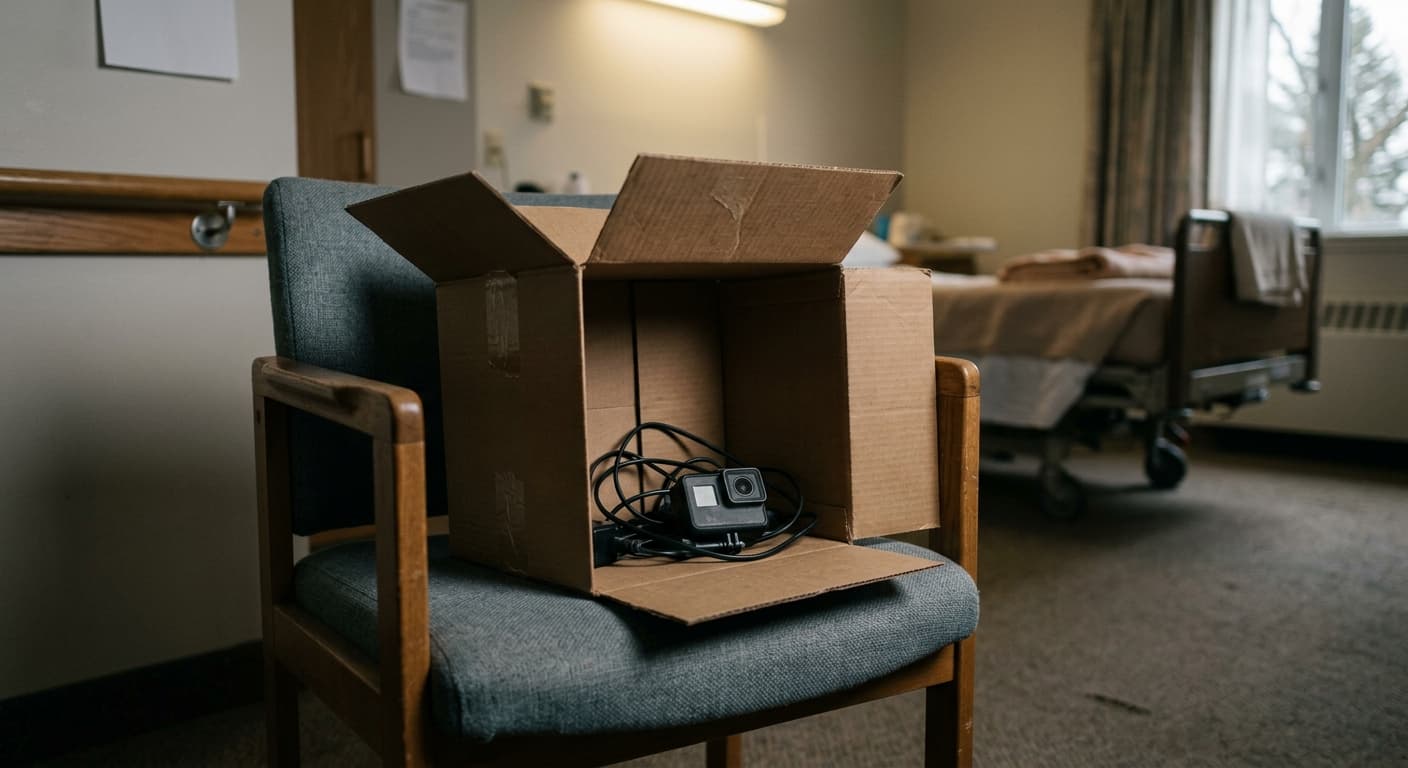
Colorado has no statute or nursing-facility regulation giving residents or families a right to install a camera in a resident's room. Colorado does have one regulation worth knowing about: assisted living residences must disclose to incoming residents whether the facility itself uses video surveillance. This page covers what Colorado law says today, that disclosure rule, and practical guidance for Colorado families.
This page is part of our Nursing Home Camera Laws hub, which compares all 50 states, and our national Nursing Home Camera Laws guide covering the states that do have an enacted statute.
Colorado Has No Nursing Home Camera Statute
Colorado has not enacted a statute letting a resident or family install a camera in a nursing home or assisted living resident's room. A search of Colorado General Assembly bill records covering roughly the last ten years, using multiple search terms including "nursing home camera," "granny cam," and "electronic monitoring device nursing," found no bill proposing such a right. Colorado's nursing facility patient-rights statute, C.R.S. § 25-1-120, sets out the standard bill of rights covering privacy in treatment, private communications, and freedom from restraint, but contains no camera or electronic-monitoring provision. The Colorado Department of Public Health and Environment's implementing regulation for nursing care facilities, 6 CCR 1011-1, Chapter 5, was reviewed in full; its only use of the word "camera" is in a records-security rule listing cameras as an example of electronic equipment that must be secured against unauthorized access, unrelated to resident monitoring.
Assisted Living's Video Surveillance Disclosure Rule
Colorado's regulation for assisted living residences, 6 CCR 1011-1, Chapter 7, does contain one genuinely on-topic provision, though it works differently than a "granny cam" law. Part 11.7(F), part of the written disclosures a facility must give a resident at move-in, requires disclosing "whether the assisted living residence has resident location monitoring devices (such as video surveillance), when and where they are used, and how the assisted living residence determines that a resident requires monitoring."
This is a transparency requirement aimed at the facility's own surveillance systems, typically used for wandering or safety monitoring in common areas, not a right for a resident or family to install their own personal camera in a room. It applies only to assisted living residences, not nursing facilities; no equivalent disclosure requirement exists in the Nursing Care Facilities regulation. If you are evaluating a Colorado assisted living residence, this is worth asking about directly and comparing against what the facility's written disclosure actually says.
Watch out: Do not read Colorado's assisted living disclosure rule as a personal camera right. It requires a facility to tell you what surveillance the facility itself runs; it says nothing about whether you can install your own device in a resident's room.
Audio vs. Video: Colorado's General Recording Law Still Applies
Even without a nursing-home-specific statute, Colorado's general eavesdropping law governs any camera or audio device placed in a resident's room. Colorado is a one-party consent state under C.R.S. § 18-9-304, and the statute's opening line sets the first element: "any person not visibly present during a conversation or discussion" commits eavesdropping if they knowingly overhear or record it without the consent of at least one principal party. Consent from one party, including the resident recording their own conversation, is sufficient. Eavesdropping is a class 2 misdemeanor.
The visible-presence element matters in the nursing home setting. A hidden device is the posture the statute most squarely reaches. A camera mounted in plain view and disclosed to the facility is a different posture, and whether the element is met at all becomes a live argument rather than a given. That is a reason to install openly rather than covertly, not a guarantee of how a Colorado court would rule.
That framework covers a resident, or someone recording with the resident's consent, capturing their own conversations. It is less clear where a camera with audio also picks up conversations the resident is not part of, such as staff talking among themselves or a roommate speaking with a visitor. Neither of those parties has consented, which can raise separate exposure under Colorado's eavesdropping statute. A video-only device avoids this issue, since the statute, like the federal Wiretap Act, reaches conversations, not silent video. For the general mechanics of Colorado's one-party consent rule, see our Colorado recording law guide and its security camera page.
What This Means in Practice
Because Colorado has no statute either granting or barring a resident's right to a camera, the facility's admission agreement controls. Before installing any device:

- Ask the administrator directly and get any permission in writing, and for assisted living, review the facility's Part 11.7(F) disclosure to understand what surveillance the facility itself already runs.
- Address a shared room separately, since Colorado has no statutory roommate-consent framework for personal devices; a facility that permits cameras will typically set its own rule, which may mean seeking the roommate's agreement or requesting a private room.
- Consider a video-only device if consent from everyone who might be recorded, including staff and a roommate's visitors, cannot realistically be obtained.
- An undisclosed camera carries real practical risk. A facility that discovers it may treat it as a violation of the admission agreement, and a concealed device that captures audio from a conversation no party consented to sits squarely inside what § 18-9-304 describes, since the offense begins with a person "not visibly present." Installing openly and disclosing the camera weakens that exposure, but it does not resolve the separate problem of recording staff and visitors who have not consented.
If You Suspect Abuse or Neglect
Camera footage, whether from a facility system or a family device installed with permission, is sometimes the evidence that first reveals abuse or neglect. If footage or another source raises a genuine concern about how a resident is being treated, that concern may support a legal claim separate from whether the camera itself was properly authorized.
Harmed by a product or exposure? Speak with an attorney about your options
If you or a loved one may have been harmed, you can speak with an attorney about your legal options at no cost. Whether you have a claim depends on the specific facts. This is attorney advertising, not a guarantee that you qualify or of any particular outcome.
Reporting a Concern: The Colorado Long-Term Care Ombudsman
Colorado residents, families, and staff can raise complaints about facility policy, retaliation, or suspected abuse or neglect with the Colorado Long-Term Care Ombudsman. Under the federal Older Americans Act, the program covers assisted living residents as well as nursing home residents, regardless of whether Colorado has a camera statute.
Information last verified on 2026-08-14, drawn from C.R.S. § 25-1-120, C.R.S. § 18-9-304, and CDPHE regulations 6 CCR 1011-1 Chapters 5 and 7. This article has not yet been reviewed by a licensed lawyer and is not legal advice.
Related Resources
- Nursing Home Camera Laws by State
- Nursing Home Camera Laws: 50-State Comparison
- Colorado Recording Laws
- Nursing Home Abuse & Neglect Claims
- Colorado Power of Attorney Laws
Last updated: 2026-08-14.
Frequently Asked Questions
Is it legal to put a camera in a nursing home room in Colorado?
Colorado has no statute either granting or barring this right. Whether a camera is allowed depends on the individual facility's admission agreement, since no state law addresses a personal camera right.
Does Colorado require assisted living facilities to disclose video surveillance?
Yes, but only for the facility's own surveillance. Under 6 CCR 1011-1, Chapter 7, Part 11.7(F), a Colorado assisted living residence must disclose at move-in whether it uses resident location monitoring devices such as video surveillance. This does not apply to nursing facilities and is not a right for a family to install its own camera.
Can a nursing home refuse to allow a camera in Colorado?
Yes. Because no Colorado statute grants residents a right to install a camera, a facility can lawfully permit, condition, or prohibit cameras as a matter of its own admission agreement and policy.
Is Colorado a one-party or two-party consent state for recording?
Colorado is a one-party consent state under C.R.S. § 18-9-304. A person who is a party to a conversation, or has the consent of at least one principal party, may lawfully record it. The eavesdropping offense applies to a person 'not visibly present' during the conversation who knowingly overhears or records it without any principal party's consent, and it is a class 2 misdemeanor.
Has Colorado ever considered a nursing home camera bill?
A search of Colorado General Assembly bill records covering roughly the last ten years found no bill proposing a resident or family right to install electronic monitoring devices in nursing homes or assisted living.
Who do I contact if I suspect abuse at a Colorado nursing home?
The Colorado Long-Term Care Ombudsman investigates complaints about nursing home and assisted living residents' care and rights at no cost. Suspected abuse can also be reported to Colorado Adult Protective Services or local law enforcement.
Updates
Corrected the description of Colorado's eavesdropping offense to include the statute's opening element, which limits it to a person not visibly present during the conversation.
Independently fact-checked against the cited primary sources
The Law Behind This Article
This article rests on the statutory provisions below, held in our own legal record and retrieved from the official source. Tap a section to read the operative text.
Colorado Revised Statutes, Title 18: Criminal Code
§ 18-9-304Eavesdropping prohibited - penaltyIn forcecited in 17 of our articles
(1) Any person not visibly present during a conversation or discussion commits eavesdropping if he: (a) Knowingly overhears or records such conversation or discussion without the consent of at least one of the principal parties thereto, or attempts to do so; or (b) Intentionally overhears or records such conversation or discussion for the purpose of committing, aiding, or abetting the commission of an unlawful act; or (c) Knowingly uses for any purpose, discloses, or attempts to use or disclose to any other person the contents of any such conversation or discussion while knowing or having reason to know the information was obtained in violation of this section; or (d) Knowingly aids, authorizes, agrees with, employs, permits, or intentionally conspires with any person to violate the provisions of this section. (2) Eavesdropping is a class 2 misdemeanor.
Official text (excerpt) · last checked 2026-09-23 · Read the full text in our law library · Verify at olls.info
Also relied on in: Colorado Security Camera Laws: Residential, Commercial, and Privacy Rules, Colorado Audio Recording Laws: One-Party Consent Rules and Penalties, Colorado Medical Recording Laws: Patient Rights, HIPAA, and Provider Rules
Colorado Revised Statutes, Title 25: Public Health and Environment
§ 25-1-120Nursing facilities - rights of patientsIn force
(1) The department shall require all skilled nursing facilities and intermediate care facilities to adopt and make public a statement of the rights and responsibilities of the patients who are receiving treatment in such facilities and to treat their patients in accordance with the provisions of said statement. The statement shall ensure each patient the following: (a) The right to civil and religious liberties, including knowledge of available choices and the right to independent personal decisions, which will not be infringed upon, and the right to encouragement and assistance from the staff of the facility in the fullest possible exercise of these rights; (b) The right to have private and unrestricted communications with any person of the patient's choice, except as specified in section 25-3-125 (2) and (3); (c) The right to present grievances on behalf of himself or others to the facility's staff or administrator, to governmental officials, or to any other person, without fear of reprisal, and to join with other patients or individuals within or outside of the facility to work for improvements in patient care; (d) The right to manage his own financial affairs or to have a…
Official text (excerpt) · last checked 2026-07-29 · Read the full text in our law library · Verify at olls.info
Cited in 2 court opinions in our collectionLatest citing opinion in our collection: 1998
Opinions citing this section in our collection:
- Williams v. Correctional Medical Systems, Inc. (Court of Appeals for the Tenth Circuit 1998, 153 F.3d 730)“…e a health care facility, which he claims are guaranteed by Colo.Rev.Stat. § 25-1-120(1)(a) and (m). These statutory protect…”
Identified automatically from the court opinions citing this section — not a ranking of which case controls.
Code of Federal Regulations Title 42
§ 483.10Resident rights.In forcecited in 19 of our articles
(a) Residents rights. The resident has a right to a dignified existence, self-determination, and communication with and access to persons and services inside and outside the facility, including those specified in this section. (1) A facility must treat each resident with respect and dignity and care for each resident in a manner and in an environment that promotes maintenance or enhancement of his or her quality of life, recognizing each resident's individuality. The facility must protect and promote the rights of the resident. (2) The facility must provide equal access to quality care regardless of diagnosis, severity of condition, or payment source. A facility must establish and maintain identical policies and practices regarding transfer, discharge, and the provision of services under the State plan for all residents regardless of payment source. (b) Exercise of rights. The resident has the right to exercise his or her rights as a resident of the facility and as a citizen or resident of the United States.
Official text (excerpt) · last checked 2026-07-28 · Read the full text in our law library · Verify at ecfr.gov
Cited in 85 court opinions in our collectionLatest citing opinion in our collection: 2026
In the courts (editorial summary, independently checked):Courts reviewing CMS penalties have applied the notice duty then codified at section 483.10(b)(11). Claiborne-Hughes Health Center v. Sebelius (2010) upheld noncompliance where a facility did not promptly consult the physician or notify family after a resident's decline; Senior Rehabilitation (2010) sustained a similar finding.
Opinions citing this section in our collection:
- Roudachevski v. All-American Care Centers, Inc. (Court of Appeals for the Eighth Circuit 2011, 648 F.3d 701)✓A doctor cut off from his nursing home patients sought an injunction, arguing residents' right under Section 483.10(d)(1) to choose a physician made the public interest favor him; the Eighth Circuit affirmed the denial, finding that interest not presently ascertainable.
- CLAIBORNE-HUGHES HEALTH CENTER v. Sebelius (Court of Appeals for the Sixth Circuit 2010, 609 F.3d 839)✓A resident's food intake fell sharply for three weeks and he lost 18.5 pounds before the nursing home called his doctor or family; the Sixth Circuit upheld findings that it violated Section 483.10(b)(11)'s immediate-notification duty and that the lapse was immediate jeopardy.
- Gray Panthers Advocacy Committee v. Louis W. Sullivan, M.D., Secretary, Department of Health and Human Services (Court of Appeals for the D.C. Circuit 1991, 936 F.2d 1284)“…how to apply for and use Medicare and Medicaid benefits.” 42 C.F.R. § 483.10 (b)(9) (1990). On the topic of property…”
Identified automatically from the court opinions citing this section — not a ranking of which case controls.
Also relied on in: Alabama Nursing Home Camera Laws: No Statute, What Applies, Massachusetts Nursing Home Camera Laws: All-Party Consent Risks, Nursing Home Camera Laws by State
Search our full record of US law — 2.1 million sections, every state + federal →
Sources and References
- C.R.S. § 25-1-120, Nursing facilities - rights of patients(content.leg.colorado.gov).gov
- C.R.S. § 18-9-304, Eavesdropping prohibited - penalty(content.leg.colorado.gov).gov
- 6 CCR 1011-1, Chapter 7, Assisted Living Residences (Colorado Department of Public Health and Environment)(sos.state.co.us).gov
- Colorado Long-Term Care Ombudsman(coombudsman.org)
- 42 CFR § 483.10, Nursing home resident rights (federal)(law.cornell.edu)
- C.R.S. § 18-9-304, Eavesdropping prohibited - penalty (2025 Colorado Revised Statutes, Title 18)(olls.info)