
Hawaii
Hawaii Fireworks Laws (2026): License Required for All
Independently fact-checked against primary sources (last audited September 18, 2026). · 15 primary sources cited on this page. How we verify our legal content
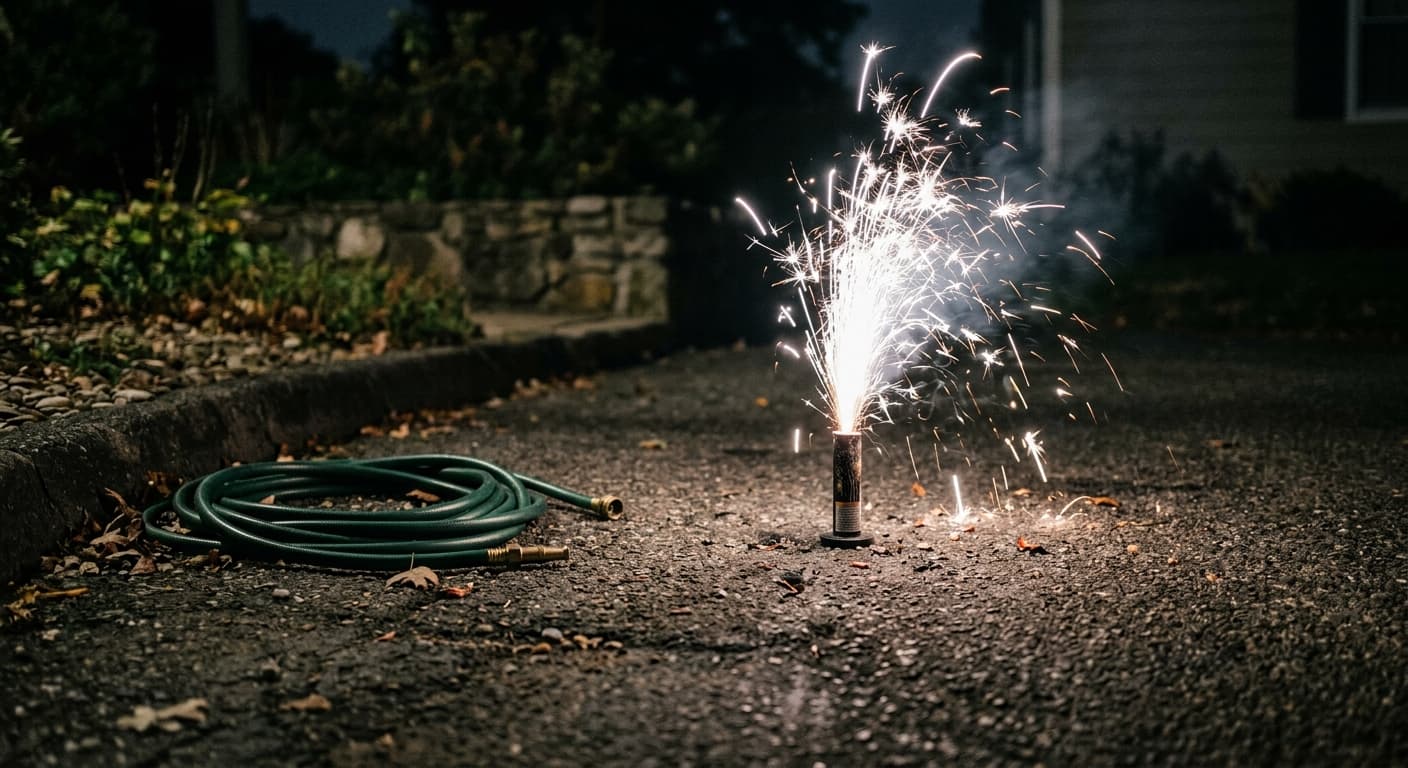
Hawaii runs the strictest baseline fireworks regime in this comparison. Every category, aerial devices, articles pyrotechnic, consumer fireworks, and display fireworks, requires a state license just to import, store, distribute, or possess, before a county's own rules are even layered on top. Consumer fireworks are further limited to three narrow calendar windows, or a separate paid cultural-use permit, and require their own purchase permit on top of that, under Haw. Rev. Stat. ch. 132D.
Jurisdiction scope: This article addresses Hawaii's statewide fireworks licensing and permit baseline under Haw. Rev. Stat. ch. 132D, including the consumer-fireworks use windows, distribution window, and penalty structure. It does not describe any specific county's own stricter ordinance in detail, since county rules vary and are layered on top of the state chapter.
A License-Everything Baseline
Most states in this comparison start from either a general ban with carve-outs or a broadly legal consumer category. Hawaii starts from a licensing requirement that reaches every category of firework: "A person shall not: (1) Import, store, or distribute, including at wholesale or retail, any aerial devices, articles pyrotechnic, consumer fireworks, or display fireworks unless the person has a valid license issued pursuant to this chapter; or (2) Possess any aerial devices, articles pyrotechnic, or display fireworks without a valid license to import, store, or distribute aerial devices, articles pyrotechnic, or display fireworks, or a valid display permit issued pursuant to this chapter." There is no unlicensed walk-into-a-store-and-buy category the way there is in a broad-allow state; the license requirement sits underneath the entire chapter, and consumer fireworks specifically layer a separate purchase permit on top of it.
Consumer Fireworks: Permit Required, Three Windows
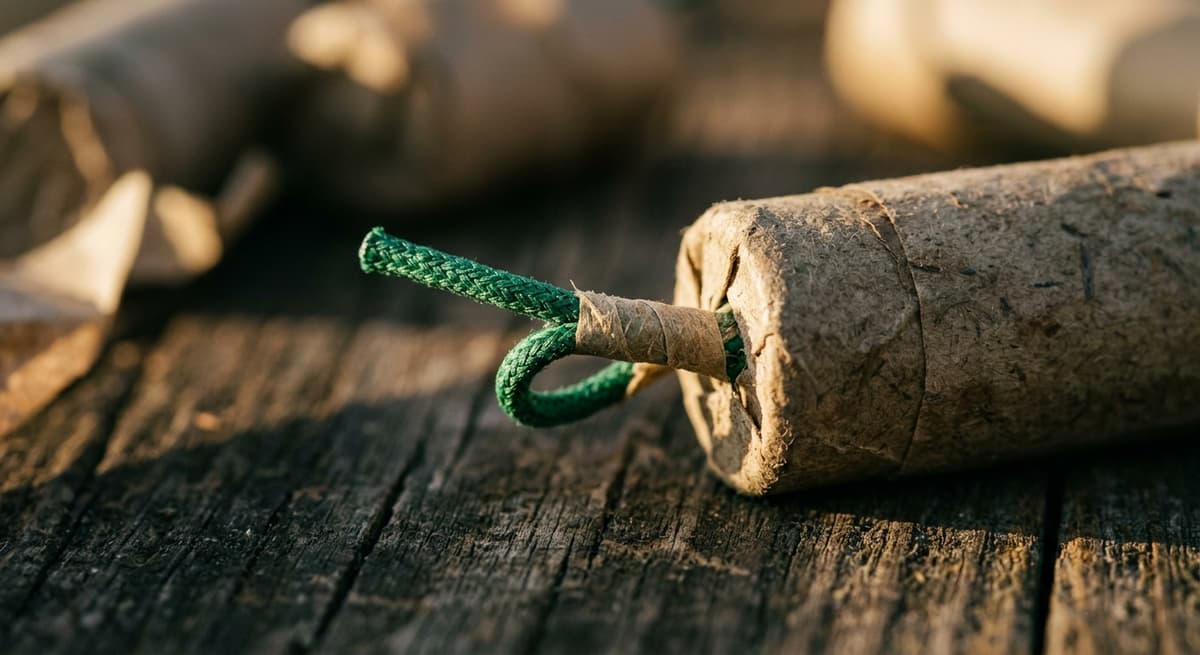
Ground-based consumer fireworks, firecrackers, snakes, sparklers, fountains, and novelty or trick items, can only be set off within three narrow calendar windows: "From 9:00 p.m. on New Year's Eve to 1:00 a.m. on New Year's Day; from 7:00 a.m. to 7:00 p.m. on Chinese New Year's Day; and from 1:00 p.m. to 9:00 p.m. on the Fourth of July." A separate cultural-use permit opens a fourth option: use from 9:00 a.m. to 9:00 p.m. on any other date. Section 132D-3's cap on purchasing more than 5,000 individual firecrackers applies under each permit, not only the cultural-use permit.
Using consumer fireworks during any of those windows also requires a permit, but the statute is narrower than it might read at first. Section 132D-10(a)(1) creates a permit "for the purchase and use of... any consumer fireworks commonly known as firecrackers upon payment of a fee of $25," capped at 50 permits per person per year. That section names only firecrackers. Section 132D-5.5(a)(1), added in 2025, separately makes it unlawful to "purchase, possess, set off, ignite, discharge, or otherwise cause to explode any consumer fireworks without a permit required pursuant to section 132D-10," using the broader term "any consumer fireworks," which on its face reaches sparklers, snakes, fountains, and novelty items even though § 132D-10 never creates a permit instrument for them specifically. The statute does not resolve that gap cleanly, so the practical, safe reading is that a $25 permit is required for any consumer firework, not just firecrackers.
Hawaii's statute does not set a separate weight or size cap on consumer fireworks the way some other states do. Weight thresholds do function as penalty-severity tiers under § 132D-14, but only for aerial devices, articles pyrotechnic, and display fireworks, not for consumer fireworks; the consumer-fireworks penalty structure is a flat civil-fine scheme, described in Penalties below.
When You Can Buy: The Distribution Window
Retail distribution of consumer fireworks to the public is time-limited on the sale side as well as the use side. It is unlawful to distribute consumer fireworks "more than five calendar days before the time periods for permissible use," or "after 12:01 a.m. on New Year's Day, 6:00 p.m. on Chinese New Year's Day, or 8:00 p.m. on the Fourth of July." That five-day pre-holiday window, and the fixed cutoff time on the use date itself, apply to retail distribution to the public; a licensed wholesaler distributing to a licensed retailer is not bound by this specific window. On both the use-timing offense and the distribution-timing offense, the statute imposes strict liability as to date and time: "A person shall be strictly liable with respect to the date and time of any act proven to have occurred," so not realizing the clock had passed the cutoff is not a defense.
Mailing, Courier Delivery, and Extracting Contents
Two offenses added in 2025 reach conduct that has nothing to do with a county fireworks stand and everything to do with how an island state actually gets illegal fireworks in. Section 132D-5.2 makes it a crime to intentionally, knowingly, or recklessly send or receive "any amount of aerial devices, articles pyrotechnic, consumer fireworks, or display fireworks via any form of air delivery, including but not limited to any private courier, commercial carrier, or mail or postal services." The base offense is a class C felony, rising to a class B felony if the person has a chapter 132D conviction within the last ten years or the total weight involved is five pounds or more but under twenty-five, and to a class A felony at twenty-five pounds or more. The only exception is for someone holding a current federal ATF explosives license who sends or receives the shipment in compliance with federal law. This pairs directly with the federal mailing ban described in Crossing State Lines, below.

Section 132D-5.4 separately makes it a class C felony to remove or extract the pyrotechnic contents from any aerial device, article pyrotechnic, consumer firework, or display firework, whether or not the person holds a permit for the item itself.
Aerial Devices, Articles Pyrotechnic, and Display Fireworks
Aerial devices, articles pyrotechnic, and display fireworks sit on a separate, stricter track from consumer fireworks. An aerial device is defined partly by a federal Department of Transportation explosive-content threshold, "any device classified as fireworks under UN0336 and UN0337 by the United States Department of Transportation... that contains one hundred thirty milligrams or less of explosive materials," alongside a 12-foot rise-and-travel-radius test. These categories are restricted to licensed public displays: a permit costs $110, has no annual cap, and there is no calendar window for individual public purchase or use the way consumer fireworks have.
Age and Minors
Chapter 132D does not state a specific numeric purchaser-age minimum anywhere in its text. Instead, it regulates minors indirectly. Distributing fireworks to a minor is a felony under § 132D-12. Separately, a parent or guardian who knowingly permits a minor to possess, purchase, or use fireworks commits an offense under § 132D-13, unless the minor is under the immediate supervision of a parent or another adult; that offense escalates to a higher felony class if the minor's use causes substantial or serious bodily injury or death.
Local Ordinances: Counties Can Only Go Stricter
Hawaii's four counties, Honolulu, Maui, Hawaii, and Kauai, each layer their own fireworks ordinances on top of the state chapter. Section 132D-17.5 is explicit that a county ordinance may not be looser than the state baseline: "Nothing in this chapter shall be construed to supersede or in any manner affect a county fireworks ordinance; provided that the ordinance is at least as stringent in the control or prohibition of aerial devices, articles pyrotechnic, consumer fireworks, and display fireworks as the law under this chapter." Counties remain free to go further: "Nothing in this chapter shall prohibit a county from enacting ordinances that are more stringent." A separate proviso, in § 132D-10(b) rather than § 132D-17.5, lets a county specifically set stricter rules for the firecracker permit and the cultural-use permit described above: "nothing in this section shall prohibit a county from enacting ordinances more stringent than this section for permits issued under subsection (a)(1) or (3)."
That floor-not-ceiling structure has real teeth on Oahu, where roughly seventy percent of the state's population lives. A Honolulu ordinance banning the importation of consumer fireworks into the city was upheld in federal court as an ordinance "more stringent in the control or prohibition of fireworks," enacted within the county's power under this chapter. Chapter 132D functions as a statewide floor, not a ceiling, so the real, on-the-ground rule for a given address depends on both the state chapter and that county's own ordinance, and a state permit does not guarantee a legal purchase or use if the county has gone further.
Penalties
Hawaii's penalty structure under § 132D-14 splits sharply by conduct, and the split matters for which reader it applies to. Unlicensed import, storage, or distribution of ANY of the four categories, aerial devices, articles pyrotechnic, consumer fireworks, or display fireworks, without the § 132D-7 license is a class C felony, rising to a class B felony if the total weight involved is 25 pounds or more; this part reaches consumer fireworks too.
The weight-tiered ladder that follows it does not. Section 132D-14(a)(2) applies only to "purchasing, possessing, setting off, igniting, discharging, or otherwise causing to explode aerial devices, articles pyrotechnic, or display fireworks without a valid permit required pursuant to sections 132D-10 and 132D-16," a list that by its own text excludes consumer fireworks: a class B felony at 50 pounds or more of those devices, a class C felony at 25 pounds or more, a misdemeanor at 5 pounds or more, and, below 5 pounds or where the weight cannot be determined, a flat $300 fine handled as a chapter 291D infraction rather than a criminal charge.
Unpermitted purchase, possession, or use of consumer fireworks specifically is NOT covered by that weight ladder. It is instead a $200 civil fine under § 132D-5.5(d)(1), and distributing consumer fireworks outside the allowed distribution window under § 132D-5.5(b) is a $1,000 civil fine under § 132D-5.5(d)(2), both handled under chapter 291D. Using this civil track does not prevent prosecution under § 132D-7, § 132D-8.6, or any other provision of the chapter instead.
Anything the chapter does not otherwise specifically address falls under the § 132D-14(e) catch-all: a violation fined no less than $500 and no more than $5,000 for each violation. Fines collected under the chapter are split 20 percent to the State and 80 percent to the county where the fine was imposed, for that county's law enforcement use.
Two escalators stack on top of the felony and weight-based tiers above (they do not apply to the flat consumer-fireworks civil fines). A prior conviction under chapter 132D within the preceding 10 years bumps the current offense one class or grade higher. An offense that causes substantial bodily injury also bumps it one class higher, and one causing serious bodily injury or death bumps it two classes higher.
Crossing State Lines
Federal law adds a further layer on top of Hawaii's own license requirement, and for an island state the mailing rule matters more than the interstate-transport rule most readers picture. The U.S. Postal Service categorically bans all fireworks from the mail, for both international and domestic shipment (USPS Publication 52 § 341.22), and that federal ban lines up directly with Hawaii's own § 132D-5.2 felony for sending or receiving fireworks by mail, courier, or any other form of air delivery, described above; a private carrier that agrees to ship fireworks to or from Hawaii is not offering a legal shortcut around either law. Separately, under 18 U.S.C. § 836, it is a federal offense, punishable by a fine, up to one year in prison, or both, to transport fireworks into a state whose law specifically prohibits or regulates their use, or to deliver them for that transportation, knowing they will be delivered, possessed, stored, sold, or otherwise dealt with in a manner that state's law forbids; the statute excludes fireworks merely passing through a state in continuous interstate transportation, and it does not apply to common or contract carriers, to water carriers engaged in interstate commerce, or to transportation for the use of a federal agency. Federal consumer-product-safety rules also set the device and packaging standards fireworks must meet to be sold anywhere in the country (16 C.F.R. § 1500.17 and Part 1507), and a federal explosives-licensing exemption (27 C.F.R. § 555.141(a)(7)) covers only the importation, distribution, and storage of consumer fireworks, not their manufacture. Given how restrictive Hawaii's own baseline already is, an unlicensed device brought in from elsewhere is independently illegal under Hawaii's own chapter regardless of the federal question.
For a much more permissive approach, see Georgia fireworks laws. For the complete state-by-state picture, see the fireworks laws by state comparison. Hawaii also maintains a separate open container law worth knowing if fireworks and holiday drinking overlap.
Disclaimer: This article provides general legal information about fireworks laws in the United States as of September 2026. It is not legal advice. Fireworks statutes, local ordinances, sale and use windows, and penalties change frequently and are often further restricted by county ordinance beyond what state law requires; verify the current rule for your specific county before buying, selling, or using fireworks, and consult a lawyer licensed in your state for advice about a specific situation.
Statutes cited reflect their in-force version as of 2026-09-17. Last updated: 2026-09-17.
Frequently Asked Questions
Are consumer fireworks legal in Hawaii?
Only with a permit and only within limited windows, though the statute has a real gap on exactly which permit. Section 132D-10(a)(1) creates a $25 purchase-and-use permit, capped at 50 per person per year, but names only consumer fireworks commonly known as firecrackers; § 132D-5.5(a)(1), added in 2025, separately bars possessing or setting off 'any consumer fireworks' without a permit 'required pursuant to section 132D-10,' a broader phrase that on its face reaches sparklers, fountains, and novelty items even though § 132D-10 never creates a permit instrument for them. The statute does not resolve that gap cleanly; the safest reading treats the $25 permit as required for any consumer firework, not just firecrackers. Use is allowed only from 9:00 p.m. New Year's Eve to 1:00 a.m. New Year's Day, 7:00 a.m. to 7:00 p.m. Chinese New Year's Day, 1:00 p.m. to 9:00 p.m. July 4, or 9:00 a.m. to 9:00 p.m. on another date under a separate cultural-use permit.
When can you buy fireworks in Hawaii?
Retail distribution to the public is limited to no more than five calendar days before each permissible-use period and must stop by 12:01 a.m. New Year's Day, 6:00 p.m. Chinese New Year's Day, or 8:00 p.m. July 4, under § 132D-5.5(b). A person is strictly liable for the date and time of that distribution, so not knowing the cutoff had passed is not a defense.
Can Hawaii counties set their own fireworks rules?
Yes, and they must be at least as strict as the state chapter, never looser, under § 132D-17.5. A separate provision, § 132D-10(b), lets a county set stricter rules specifically for the firecracker and cultural-use permits. Honolulu's ban on importing consumer fireworks into the city was upheld under this power.
What is the minimum age to buy fireworks in Hawaii?
Chapter 132D sets no numeric purchaser-age minimum. It instead makes distributing fireworks to a minor a felony under § 132D-12 and makes it a separate offense for a parent or guardian to knowingly permit a minor to possess, purchase, or use fireworks under § 132D-13.
What is the penalty for a fireworks violation in Hawaii?
It depends on the category. Unlicensed import, storage, or distribution of any category (including consumer fireworks) is a class C felony, class B at 25 pounds or more. The weight-tiered felony/misdemeanor/$300-fine ladder in § 132D-14(a)(2) applies only to aerial devices, articles pyrotechnic, and display fireworks, never to consumer fireworks. Unpermitted consumer-fireworks use is instead a flat $200 civil fine, and mistimed distribution is a $1,000 civil fine, both under § 132D-5.5(d). Anything else the chapter does not specifically address is fined $500 to $5,000 per violation under § 132D-14(e). A prior offense within 10 years, or an offense causing injury, raises a criminal classification further. Sending or receiving any fireworks by mail or courier is a separate class C to class A felony under § 132D-5.2.
Is it legal to mail fireworks to or from Hawaii?
No. Section 132D-5.2 makes it a felony, class C at baseline and up to class A depending on weight and prior record, to send or receive any amount of aerial devices, articles pyrotechnic, consumer fireworks, or display fireworks by mail, courier, or any other form of air delivery. Federal law bans mailing fireworks entirely under USPS Publication 52 Section 341.22, so both layers apply.
Updates
Independently fact-checked against the cited primary sources
Sources and References
- Haw. Rev. Stat. § 132D-7 - License or permit required for all four fireworks categories(capitol.hawaii.gov).gov
- Haw. Rev. Stat. § 132D-2 - Definitions: aerial device DOT threshold and 12-foot rise/radius test(capitol.hawaii.gov).gov
- Haw. Rev. Stat. § 132D-3 - Permissible use windows for consumer fireworks(capitol.hawaii.gov).gov
- Haw. Rev. Stat. § 132D-5.2 - Sending or receiving fireworks by air delivery (mail/courier); class C-A felony (added 2025)(capitol.hawaii.gov).gov
- Haw. Rev. Stat. § 132D-5.4 - Removal or extraction of pyrotechnic contents; class C felony (added 2025)(capitol.hawaii.gov).gov
- Haw. Rev. Stat. § 132D-5.5 - Consumer-fireworks prohibitions; distribution timing window; strict liability as to date/time; $200/$1,000 civil fines (added 2025)(capitol.hawaii.gov).gov
- Haw. Rev. Stat. § 132D-10 - Permits: firecracker ($25, subsection (a)(1)), aerial/display ($110, (a)(2)), cultural-use ($25, (a)(3)); subsection (b) lets a county set stricter rules for the (a)(1)/(a)(3) permits(capitol.hawaii.gov).gov
- Haw. Rev. Stat. § 132D-12 - Distribution to minors(capitol.hawaii.gov).gov
- Haw. Rev. Stat. § 132D-13 - Liability of parents and guardians(capitol.hawaii.gov).gov
- Haw. Rev. Stat. § 132D-14 - (a)(1) unlicensed import/store/distribute felony (all 4 categories); (a)(2) weight-tiered felony ladder for AERIAL DEVICES/ARTICLES PYROTECHNIC/DISPLAY FIREWORKS ONLY, not consumer fireworks; (b)-(d) repeat-offense/injury escalators; (e) $500-$5,000 catch-all; (f) 20/80 State/county fine split(capitol.hawaii.gov).gov
- Haw. Rev. Stat. § 132D-17.5 - County ordinances may be stricter, never looser, than the state chapter; case note on the upheld Honolulu importation ban(capitol.hawaii.gov).gov
- 18 U.S.C. § 836 - Transportation of fireworks into a state that specifically prohibits or regulates their use; carrier and federal-agency exclusions; one-year maximum penalty(uscode.house.gov).gov
- USPS Publication 52 § 341.22 - All fireworks are nonmailable explosives, prohibited from domestic and international mail(pe.usps.com).gov
- 16 C.F.R. § 1500.17 - CPSC banned-hazardous-substance device standards for fireworks(ecfr.gov).gov
- 27 C.F.R. § 555.141(a)(7) - ATF explosives-licensing exemption for the importation, distribution, and storage (not manufacture) of consumer fireworks(ecfr.gov).gov