
Georgia
Georgia Fireworks Laws (2026): Legal Statewide, No Local Ban
Independently fact-checked against primary sources (last audited September 18, 2026). · 6 primary sources cited on this page. How we verify our legal content
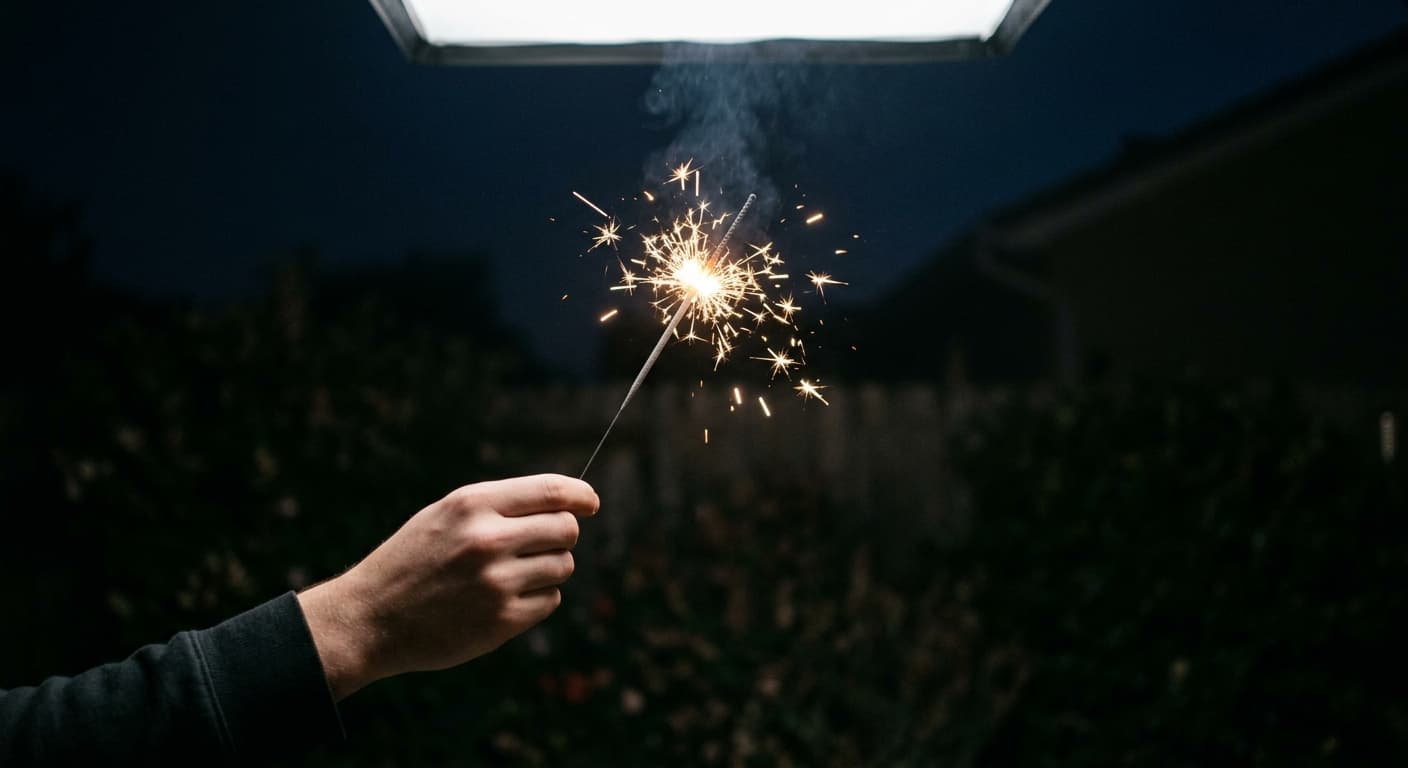
Georgia allows consumer fireworks broadly statewide for adults 18 and older, and it goes further than most permissive states by expressly barring a county or city from banning that sale, use, or ignition outright, under O.C.G.A. § 36-60-24. The chapter pairs that broad legality with a specific set of banned devices, a fixed daily use window, and, as of a 2024 amendment, a felony tier for using or selling fireworks outside the channels the chapter itself creates.
Jurisdiction scope: This article addresses Georgia's state fireworks law, covering statewide legality, banned devices, use hours, local preemption, licensing, and the 2024 penalty amendment, under O.C.G.A. ch. 25-10 and § 36-60-24. It does not address specific county permitting fee schedules beyond what is cited below, or federal explosives law beyond the interstate-transport point below.
What's Legal and What's Banned Outright
Georgia treats consumer fireworks as a broadly legal, licensed product rather than a banned category with narrow exceptions. The statute states plainly: "It shall be lawful for any person 18 years of age or older to use or ignite or cause to be ignited or to possess, manufacture, transport, or store consumer fireworks." Sale to the public runs through a licensed permanent retail facility, store, or temporary stand, described in Licensing and Permits below.
A handful of categories stay banned regardless of age or license. It is unlawful to sell, offer for sale, or release sky and fire lanterns, meaning any "balloon, bag, parachute, or other similar device which requires fire underneath for propulsion," statewide, along with floating water or wish lanterns "which use[] a flame to create a lighting effect" in a public waterway, lake, pond, stream, or river. Using fireworks indoors, or within the right-of-way of a public road, street, highway, or railroad, is also banned outright. And a seller cannot sell consumer fireworks from a motor vehicle, a trailer towed by a motor vehicle, or a tent, canopy, or membrane structure, regardless of that seller's license status.
Beyond those, Georgia law bans use in a long list of specific places, even where the person is otherwise licensed and of age. Consumer fireworks cannot be used anywhere the person is not lawfully present or otherwise permitted to be. They cannot be used within 100 yards of an electric plant; a water or waste-water treatment plant; a retail facility storing more than 500 gallons of gasoline or another flammable or combustible liquid or gas; a facility that produces, refines, processes, or blends flammable or combustible liquids or gases for retail; a public or private electric substation; or a jail or prison. The same 100-yard buffer applies around a public-use airport and around any landing area or platform marked for helicopter use. A county or municipal park, historic site, recreational area, or other locally controlled property is off-limits unless the user has a special use permit, described below, and state-controlled property is off-limits except as the controlling state agency's own rules allow. Within 100 yards of a hospital, nursing home, or other health care facility regulated under Title 31, chapter 7, use is banned unless the facility's owner or operator uses fireworks there itself or grants written permission to someone else to do so. And it is separately unlawful to ignite consumer fireworks while under the influence, covered next.
Igniting Fireworks While Impaired
O.C.G.A. § 25-10-2.1 makes it a misdemeanor to ignite consumer fireworks or fireworks while under the influence of alcohol or any drug, or a combination, to a degree that makes it unsafe to do so, or while any amount of marijuana or a controlled substance is present in the person's blood or urine. Being legally entitled to use a drug is not a defense unless the person is not actually rendered incapable of igniting fireworks safely by using it. This impairment rule is one of the conditions the daily-use grant above is expressly made subject to.
Device Categories and Weight Caps
Georgia's statute does not set its own gram, tube, or length cap on "consumer fireworks" as a defined category. Instead, that category is defined by reference to federal Consumer Product Safety Commission and Department of Transportation rules and the pyrotechnics industry's own 2001 standard, which functionally means the federal 1.4G consumer classification, and it always includes Roman candles specifically.
The gram caps that do appear in the statute belong to a separate, narrower list of items the chapter exempts from "consumer fireworks" regulation entirely: "Wire or wood sparklers of 100 grams or less of mixture per item; other sparkling items which are nonexplosive and nonaerial and contain 75 grams or less of chemical compound per tube or a total of 500 grams or less for multiple tubes; snake and glow worms; smoke devices; or trick noise makers which include paper streamers, party poppers, string poppers, snappers, and drop pops each consisting of 0.25 grains or less of explosive mixture."
When You Can Use Fireworks
Georgia sets a fixed daily use window rather than leaving it unaddressed. Consumer fireworks may be used "on any day beginning at the time of 10:00 A.M. and up to and including the ending time of 11:59 P.M.," unless the noise from that use conflicts with a qualifying local noise ordinance (see Local Ordinances, below); the same daily-window grant also lets a county or municipal corporation require its own special use permit for use or ignition. On January 1, the last Saturday and Sunday in May, July 3, July 4, the first Monday in September, and December 31, that same 10:00 A.M. to 11:59 P.M. window applies without a noise-ordinance override, and January 1 gets an additional window from midnight to 1:00 A.M.

Purchase Age and Sale Requirements
The purchase age is 18. It is unlawful to sell consumer fireworks, or any of the exempted novelty items described above, to anyone under 18, and the sale must be conducted in person with government-issued proof-of-age identification checked. A narrow carve-out lets 16- and 17-year-olds possess, transport, or sell consumer fireworks, but only as an assistant to a licensed distributor or the nonprofit group benefiting from that distributor's temporary-stand license, and only off Interstate highways for transport; it is not a general purchase-age exception for a 16- or 17-year-old buying fireworks for personal use.
Local Ordinances: Georgia Preempts Bans
Georgia's law is unusually protective of statewide legality against local override. O.C.G.A. § 36-60-24 states that "the governing authority of a county or municipal corporation shall not prohibit the sale or use or ignition of consumer fireworks or other products or services which are lawful under Chapter 10 of Title 25, unless such prohibition is expressly authorized by general law," and that "any ordinance enacted before, on, or after July 1, 2006, by a county or municipal corporation in violation of this Code section is void."
Within that preemption, a handful of narrow, expressly authorized local-option channels remain. A general (not fireworks-specific) noise ordinance enacted or reenacted on or after July 1, 2018, following a 15-day published-notice procedure, can narrow the default 10:00 A.M. to 11:59 P.M. daily use window. A county or municipal corporation may also require a special use permit for the use or ignition of consumer fireworks under § 25-10-2(b)(3)(D), including for use in its own parks, historic sites, and recreational areas; that permit designates the time and location of use, and the fee a locality can charge for it cannot exceed $100. A county or municipality may license or permit the sale or use of consumer fireworks under § 25-10-5.1(c). As of July 1, 2025, a county or municipal governing authority may also adopt an ordinance prohibiting consumer-fireworks use or ignition within 200 yards of a facility housing equines in a confined area, and that ordinance may itself carve out special-event permits. Separately, the Governor may impose additional drought-triggered use restrictions statewide or county by county through Keetch-Byram Drought Index declarations.
Licensing and Permits
Georgia runs several separate licensing tracks depending on what you're doing. A distributor selling from a permanent retail facility or store needs a license from the Safety Fire Commissioner under § 25-10-5.1, with a $1,500 initial fee and $1,000 annual renewal (plus $250 per added store location); a temporary retail stand costs $500, paid to the local fire department or political subdivision, and a distributor may operate no more than two temporary stands per licensed location per year, each tied to a benefiting nonprofit group. All these licenses expire January 31.
Manufacturing, storing, or transporting fireworks separately requires a license and compliance with safety regulations from the Safety Fire Commissioner under § 25-10-5, and a nonmanufacturer storing fireworks in a magazine needs a license under § 25-10-3.1, which itself requires an existing federal ATF explosives permit and a valid display permit.
A public exhibition or display needs a permit from the probate court judge of the county, filed at least 10 days before the display, backed by a $10,000 bond or liability insurance ($25,000 per person and $50,000 per accident for bodily injury, $25,000 per accident and $50,000 aggregate for property damage), for a permit that runs no more than two weeks and cannot be transferred. A pyrotechnics display staged close to a "proximate audience," meaning combustion, explosion, deflagration, detonation, or ignition of pyrotechnics near spectators, additionally needs its own license from the Safety Fire Commissioner under § 25-10-3.2, on top of the probate-court permit, backed by at least $1,000,000 in liability insurance.
Penalties
Georgia restructured its fireworks penalties effective July 1, 2024, through Senate Bill 417, and the chapter now runs three tiers. Running an unlicensed proximate-audience pyrotechnics display is a felony: "imprisonment for not less than two nor more than ten years, or a fine of not more than $10,000.00, or both." Since the 2024 amendment, violating the chapter's base prohibition in § 25-10-2(a), meaning using, selling, igniting, possessing, manufacturing, transporting, or storing fireworks outside the channels the chapter itself authorizes, is also a felony, "punished pursuant to Code Section 16-7-23," and additionally subject to a monetary penalty of up to $10,000 under § 25-10-8(b). Section 16-7-23(b), the criminal-damage-to-property statute SB 417 amended in the same act to reach fireworks damage, sets that sentencing range at imprisonment "for not less than one nor more than five years." Any other violation of the chapter, the catch-all that covers most day-to-day issues like selling outside licensed hours or to a minor, is a misdemeanor, additionally subject to the Safety Fire Commissioner's administrative penalties under § 25-10-9 of up to $2,500 per violation, or up to $5,000 for knowingly selling from a tent, canopy, or membrane structure. The chapter does not create an escalating subsequent-offense penalty on top of these tiers; instead, § 25-10-9's own separate-offense clause makes each sales transaction in violation independently punishable as its own separate offense.
Crossing State Lines
Federal law adds a layer on top of Georgia's own rules for anyone bringing fireworks in from elsewhere. Under 18 U.S.C. § 836, it is a federal offense, punishable by a fine, up to one year in prison, or both, to transport fireworks into a state whose law specifically prohibits or regulates their use, or to deliver them for that transportation, knowing they will be delivered, possessed, stored, sold, or otherwise dealt with in a manner that state's law forbids; the statute excludes fireworks merely passing through a state in continuous interstate transportation, and it does not apply to common or contract carriers, to water carriers engaged in interstate commerce, or to transportation for the use of a federal agency. Separately, the U.S. Postal Service bans all fireworks from the mail entirely, for both international and domestic shipment (USPS Publication 52 § 341.22); federal consumer-product-safety rules set the device and packaging standards fireworks must meet to be sold anywhere in the country (16 C.F.R. § 1500.17 and Part 1507); and a federal explosives-licensing exemption (27 C.F.R. § 555.141(a)(7)) covers only the importation, distribution, and storage of consumer fireworks, not their manufacture. Since Georgia is broadly permissive for consumer fireworks bought through a licensed channel, this matters most for a device Georgia itself bans, such as sky lanterns, or one a neighboring state prohibits.
For a neighboring state's different approach, see Florida fireworks laws. For the complete state-by-state picture, see the fireworks laws by state comparison. Georgia also maintains a separate open container law worth knowing if fireworks and holiday drinking overlap.
Disclaimer: This article provides general legal information about fireworks laws in the United States as of September 2026. It is not legal advice. Fireworks statutes, local ordinances, sale and use windows, and penalties change frequently and are often further restricted by county or city ordinance beyond what state law requires; verify the current rule for your specific city and county before buying, selling, or using fireworks, and consult a lawyer licensed in your state for advice about a specific situation.
Statutes cited reflect their in-force version as of 2026-09-17. Last updated: 2026-09-17.
Frequently Asked Questions
Are fireworks legal in Georgia?
Yes. Consumer fireworks are broadly legal statewide for anyone 18 or older to use, ignite, possess, manufacture, transport, or store, and for a licensed distributor to sell, under O.C.G.A. § 25-10-2(b)(4)(A).
Can a Georgia city or county ban fireworks?
No, not outright. O.C.G.A. § 36-60-24 preempts a county or municipal governing authority from banning the sale, use, or ignition of consumer fireworks that are lawful under state law, and any ordinance that tries is void. A locality can shorten the daily use window with a qualifying noise ordinance, require a special use permit for use or ignition (fee capped at $100), license sale or use, and, since July 1, 2025, restrict use within 200 yards of a facility housing equines.
What time can you legally set off fireworks in Georgia?
10:00 A.M. to 11:59 P.M. on any day, unless a qualifying local noise ordinance narrows that window or a county or municipal corporation requires its own special use permit for use or ignition. That same window applies without a noise-ordinance override on January 1, the last Saturday and Sunday in May, July 3, July 4, the first Monday in September, and December 31, with an added midnight-to-1:00 A.M. window on January 1.
Where in Georgia are you not allowed to set off fireworks?
Beyond indoors and public rights-of-way, Georgia bans consumer-fireworks use within 100 yards of an electric plant, water or waste-water treatment plant, large-volume fuel retailer, electric substation, jail or prison, public-use airport, or marked helicopter landing area; within 100 yards of a hospital, nursing home, or other regulated health care facility without that facility's permission; and in a county, municipal, or state park or recreational area without a permit. It is also a misdemeanor under § 25-10-2.1 to ignite fireworks while under the influence of alcohol or a drug to an unsafe degree.
What is the minimum age to buy fireworks in Georgia?
18. Sale must be face-to-face with government-issued proof-of-age ID, and selling to anyone under 18 is unlawful. A narrow exception lets 16- and 17-year-olds work as an assistant to a licensed distributor or benefiting nonprofit, which is not a general purchase exception.
What is the penalty for a fireworks violation in Georgia?
As of July 1, 2024, using, selling, or possessing fireworks outside the chapter's authorized channels is a felony under O.C.G.A. § 25-10-8(b), punished under § 16-7-23(b), which sets imprisonment of one to five years, plus a monetary penalty of up to $10,000. Running an unlicensed proximate-audience pyrotechnics display is a felony carrying 2 to 10 years or a fine up to $10,000. Any other violation, such as wrong hours or selling to a minor, is a misdemeanor with administrative penalties up to $2,500 (up to $5,000 for a tent or canopy sale).
Updates
Independently fact-checked against the cited primary sources
Sources and References
- O.C.G.A. § 25-10-2 - Lawful use/possession for persons 18+; banned indoor/right-of-way use and vehicle/tent sales; daily use hours; place restrictions (100-yard buffers, parks, health facilities); special use permits; purchase age; base felony prohibition, as amended by 2024 Georgia SB 417 and 2025 Georgia HB 614. Official Code of Georgia Annotated, public access portal maintained by LexisNexis under contract with the Georgia Code Revision Commission, linked from the Georgia General Assembly site(lexisnexis.com)
- O.C.G.A. § 25-10-1 - Definitions: consumer fireworks (federal CPSC/DOT classification) and exempted novelty items with gram caps. Official Code of Georgia Annotated, public access portal maintained by LexisNexis under contract with the Georgia Code Revision Commission, linked from the Georgia General Assembly site(lexisnexis.com)
- O.C.G.A. § 25-10-2.1 - Misdemeanor for igniting consumer fireworks or fireworks while under the influence of alcohol or a drug, or with marijuana/a controlled substance in blood or urine. Official Code of Georgia Annotated, public access portal maintained by LexisNexis under contract with the Georgia Code Revision Commission, linked from the Georgia General Assembly site(lexisnexis.com)
- O.C.G.A. § 25-10-10 - Sale, offer for sale, and release of sky lanterns, fire balloons, and floating water/wish lanterns banned, as amended by 2024 Georgia SB 417 Section 12. Official Code of Georgia Annotated, public access portal maintained by LexisNexis under contract with the Georgia Code Revision Commission, linked from the Georgia General Assembly site(lexisnexis.com)
- O.C.G.A. § 36-60-24 - State preemption of local consumer-fireworks bans; narrow local-option channels. Official Code of Georgia Annotated, public access portal maintained by LexisNexis under contract with the Georgia Code Revision Commission, linked from the Georgia General Assembly site(lexisnexis.com)
- O.C.G.A. §§ 25-10-3.1, 25-10-3.2, 25-10-4, 25-10-5, 25-10-5.1 - Licensing: magazine storage, proximate-audience pyrotechnics, public display permits, manufacture/storage/transport, retail/temporary-stand sale. Official Code of Georgia Annotated, public access portal maintained by LexisNexis under contract with the Georgia Code Revision Commission, linked from the Georgia General Assembly site(lexisnexis.com)
- Georgia SB 417 (2024 session), signed act - Section 2 (rewrites O.C.G.A. § 16-7-23 to reach fireworks damage, sets 1-5 year felony range), Section 10 (adds § 25-10-8(b), the base-prohibition felony plus $10,000 penalty), Section 11 (rewrites § 25-10-9's administrative penalties)(gov.georgia.gov).gov
- Georgia HB 614 (2025 session), signed act - Adds O.C.G.A. § 25-10-2(d), the county/municipal 200-yard equine-facility ordinance power, effective July 1, 2025(gov.georgia.gov).gov
- O.C.G.A. § 16-7-23 - Criminal damage to property in the second degree; 1-5 year sentencing range applied to the base fireworks felony under § 25-10-8(b), as amended by 2024 Georgia SB 417 Section 2. Official Code of Georgia Annotated, public access portal maintained by LexisNexis under contract with the Georgia Code Revision Commission, linked from the Georgia General Assembly site(lexisnexis.com)
- O.C.G.A. § 25-10-9 - Misdemeanor administrative penalties up to $2,500 ($5,000 for tent/canopy/membrane sales), as amended by 2024 Georgia SB 417 Section 11. Official Code of Georgia Annotated, public access portal maintained by LexisNexis under contract with the Georgia Code Revision Commission, linked from the Georgia General Assembly site(lexisnexis.com)
- 18 U.S.C. § 836 - Transportation of fireworks into a state that specifically prohibits or regulates their use; carrier and federal-agency exclusions; one-year maximum penalty(uscode.house.gov).gov
- USPS Publication 52 § 341.22 - All fireworks are nonmailable explosives, prohibited from domestic and international mail(pe.usps.com).gov
- 16 C.F.R. § 1500.17 - CPSC banned-hazardous-substance device standards for fireworks(ecfr.gov).gov
- 27 C.F.R. § 555.141(a)(7) - ATF explosives-licensing exemption for the importation, distribution, and storage (not manufacture) of consumer fireworks(ecfr.gov).gov